Comparing AI chatbots for e-commerce platforms comes down less to which vendor has the longest feature list and more to which of four categories fits how your store actually operates: an e-commerce-native helpdesk with AI built in (Gorgias), a standalone AI chatbot widget you bolt onto your storefront (Tidio, Fin), an AI chatbot module inside a legacy enterprise suite (Zendesk, Salesforce), or a native omnichannel AI Agent that unifies chat, voice, and marketplace messaging in one system (Sobot). Most comparison lists rank tools by feature count and skip this distinction — which is the reason so many “best chatbot” picks turn out to be the wrong fit once a store scales past a single sales channel.
At a Glance: AI Chatbots for E-commerce Platforms Compared
| Platform | Category | Platform / Channel Coverage | AI Pricing Model | Best For |
|---|---|---|---|---|
| Sobot | Native omnichannel AI Agent | Chat, voice, WhatsApp, Amazon, Lazada, TikTok Shop, Shopify | AI included, no per-resolution fee | Stores selling across multiple marketplaces that want voice + chat unified |
| Gorgias | E-commerce-native helpdesk + AI | Shopify-first, also BigCommerce, WooCommerce | Per-conversation billing tiers | Shopify stores wanting ticketing and AI chat in one tool |
| Tidio | Standalone AI chatbot widget | Shopify, WooCommerce, Wix (widget install) | Per-conversation AI credits on paid plans | Small stores wanting a fast-to-install chat widget |
| Fin (Intercom) | Point-solution AI resolution agent | Chat, email; Shopify app available, no SEA marketplace integration | $0.99 per resolution (min. $49.5/month) | Stores already on Intercom’s inbox |
| Ada | Point-solution AI resolution agent | Chat, email, social | Custom/quote-based | Mid-market brands with resources to build custom flows |
| Zendesk | Enterprise suite + AI add-on | Chat, email, voice (since 2024); no native e-commerce platform integration, relies on Marketplace apps | Suite $55-$209/seat/month + Advanced AI add-on ~$50/seat/month | Zendesk shops extending an existing ticketing deployment |
| Salesforce | Enterprise suite + AI add-on | Chat, email, voice; native for Salesforce Commerce Cloud | Consumption-based add-on | Brands already running Salesforce Commerce Cloud |
| ManyChat / Chatfuel | Marketing broadcast bot | Instagram, Facebook, WhatsApp broadcast messaging | Per-contact/subscriber pricing | Marketing teams running promo campaigns, not full support |
How We Evaluated
Each platform was scored against what actually determines whether an AI chatbot helps an e-commerce store resolve conversations, not just deflect them:
- Order and platform integration depth (25%) — does the AI chatbot see live order, shipping, and inventory data from your actual sales channels, or does it only answer from a static knowledge base?
- Channel coverage (25%) — chat only, or chat plus voice, WhatsApp, and marketplace messaging (Amazon, Lazada, Shopee, TikTok Shop) in one system?
- Deployment overhead (20%) — does it ship as one platform, or does it require stitching an AI layer onto a separate ticketing tool?
- Pricing predictability (15%) — fixed cost, or a per-resolution/per-conversation fee that spikes with traffic during sales events?
- Escalation and human handoff (15%) — how cleanly does an unresolved chat move to a live agent with full context?
A chatbot that answers FAQs well but can’t see your Shopee order status, or one that bills per resolution and gets expensive the moment a flash sale hits, qualifies as good — not best — for a store trying to control cost and complexity at scale.
E-commerce-Native Helpdesk with AI Chatbot Built In
Gorgias built its entire product around Shopify, and that shows in how its AI chatbot is wired: ticketing, order data, and the chat widget live in the same system, so the AI can reference order status or initiate a return without a separate integration step. The tradeoff is channel breadth — Gorgias is built around chat, email, and social, without a native voice product or marketplace-specific messaging for platforms like Lazada or Shopee.
Gorgias is best for Shopify or BigCommerce stores that want ticketing and AI chat unified in one tool and don’t need voice or Southeast Asian marketplace channels.
Standalone AI Chatbot Widgets and Resolution Agents
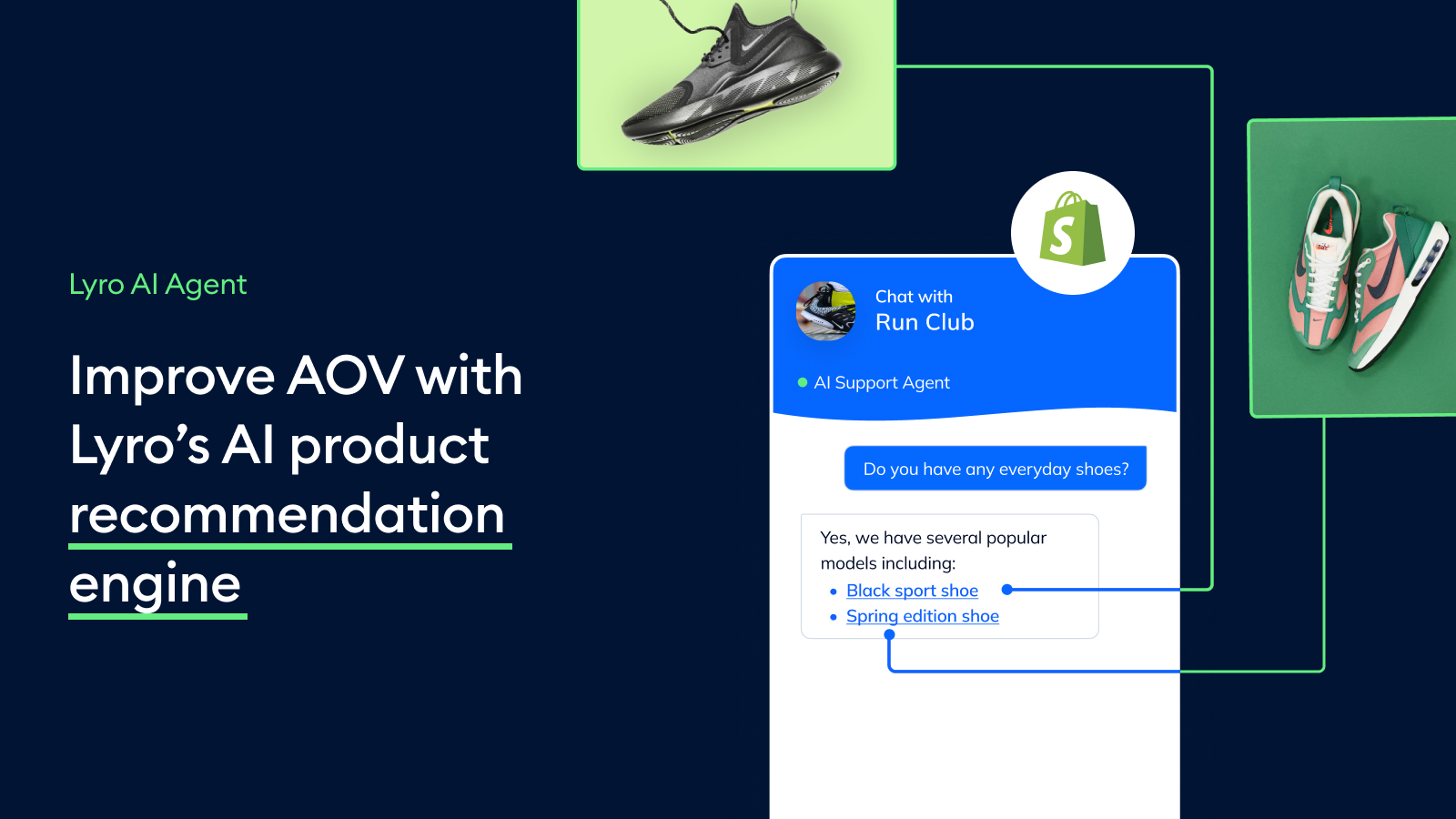
This is the most crowded category, and it splits into two flavors. Tidio and similar widget tools are chat-first plugins: install a script tag on your storefront, and the AI chatbot answers from a knowledge base and product catalog. Fin (Intercom’s AI agent) and Ada are a step up — resolution-focused engines designed to close a conversation end-to-end rather than just answer FAQs — but they’re priced and built as point solutions that sit on top of an existing inbox rather than replace it. Fin, for example, bills $0.99 per resolution with a $49.5 monthly minimum, a transparent model that becomes harder to budget for when resolution volume spikes during a promotional sale.
Neither Tidio-style widgets nor Fin/Ada ship native voice or marketplace-channel support — a Shopee or TikTok Shop buyer message still routes through a separate system, if it’s covered at all.
Tidio is best for small stores that want a fast, low-commitment chat widget. Fin and Ada are best for teams already invested in Intercom’s inbox or with the engineering resources to integrate a standalone resolution agent into a broader stack.
Enterprise Suites with AI Chatbot Add-Ons
Zendesk and Salesforce both added AI chatbot capability to platforms originally built around human-staffed ticketing, and that heritage shows up in pricing and integration depth. Zendesk has no native e-commerce platform integration — connecting Amazon, Shopify, or a marketplace requires a third-party Marketplace app — and its Advanced AI is a separately priced module (roughly $50/seat/month) layered on top of Suite plans that already range from $55 to $209/seat/month. Salesforce’s AI chatbot capability is strongest when a store already runs Salesforce Commerce Cloud, since the AI can pull order data natively from the same ecosystem; outside of that, integration work looks similar to Zendesk’s.
Zendesk is best for existing Zendesk customers extending a ticketing deployment they’ve already invested in. Salesforce is best for brands already running Salesforce Commerce Cloud who want AI chat tied directly into the same CRM and commerce data.
A Caution on Marketing Broadcast Bots
Tools like ManyChat and Chatfuel show up frequently in “AI chatbot for e-commerce” comparisons because they’re genuinely popular — but they were built for broadcast marketing on Instagram, Facebook, and WhatsApp, not for support ticketing or escalation. They’re strong at abandoned-cart nudges and promotional drip sequences; they’re not a substitute for a chatbot that needs to handle order disputes, returns, or a live handoff to a human agent. Worth separating from the support-focused tools above before comparing pricing.
Native Omnichannel AI Agent Built for E-commerce Platforms
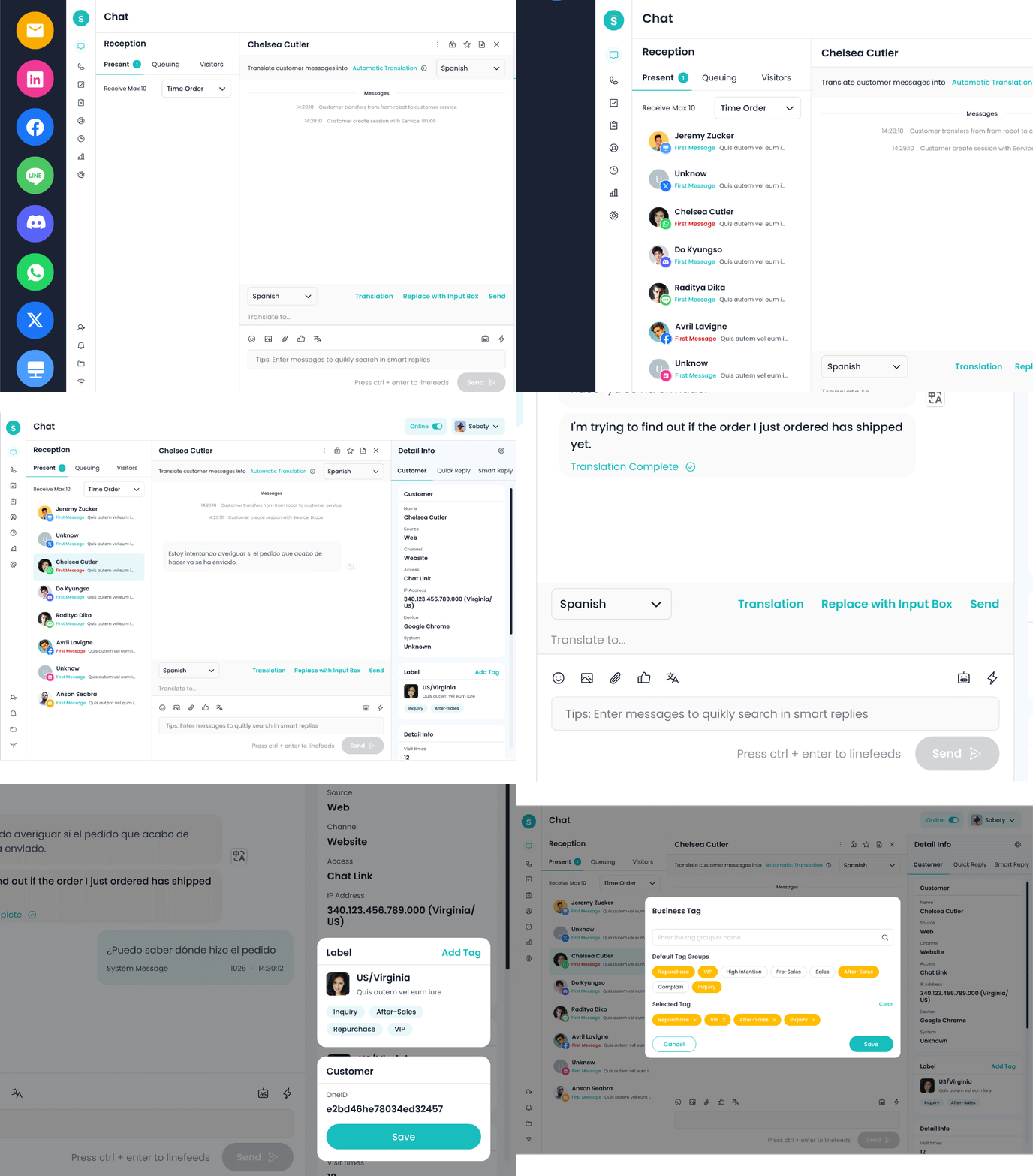
Sobot occupies a category by itself: rather than a chat widget layered onto a separate helpdesk, its AI Agent runs across live chat, voice, WhatsApp, and marketplace messaging — including Amazon buyer messages, Lazada, Shopee, and TikTok Shop — from one data layer, on a choice of underlying models (OpenAI, Claude, DeepSeek, or Bedrock). That matters concretely for a multi-channel seller: a buyer who messages on WhatsApp and later calls in doesn’t reset context, because both channels report to the same AI and the same conversation history.

The AI Agent is included in the platform rather than metered per resolution or per seat — a structural difference from Fin’s $0.99-per-resolution model and Zendesk’s ~$50/seat Advanced AI add-on, which matters most during high-volume periods like flash sales, when per-resolution billing scales up right when budgets are tightest.
Results from e-commerce deployments back this up: OPPO reached an 81%+ self-service rate after deploying Sobot’s AI Agent across retail support channels; Renogy’s resolution rate rose 45% with CSAT holding above 95%; Weee! cut resolution time by 50% while lifting CSAT to 96%; and DFS saw support efficiency rise more than 80% alongside a 44% lift in conversion.
Sobot is best for e-commerce brands selling across multiple platforms and marketplaces — particularly Amazon, Shopify, and Southeast Asian channels like Lazada, Shopee, and TikTok Shop — that want chat and voice AI unified without a variable per-resolution bill.
Which Category Fits Your Store
| Your situation | Recommended category | Example platform |
|---|---|---|
| Shopify-only store wanting ticketing + AI chat in one tool | E-commerce-native helpdesk | Gorgias |
| Want a low-commitment chat widget, no ticketing needed | Standalone AI chatbot | Tidio |
| Already on Intercom or have engineering resources for a custom build | Point-solution resolution agent | Fin, Ada |
| Already run Zendesk or Salesforce Commerce Cloud | Enterprise suite + AI add-on | Zendesk, Salesforce |
| Sell on Amazon, Shopee, Lazada, or TikTok Shop and need one AI across channels | Native omnichannel AI Agent | Sobot |
| Need phone support handled by the same AI as chat | Native omnichannel AI Agent | Sobot |
| Just need cart-recovery and promo messaging, not full support | Marketing broadcast bot | ManyChat, Chatfuel |
Bottom Line
There’s no single best AI chatbot for every e-commerce platform — there’s a best fit for how many channels you sell on and how your support stack is already built. A Shopify-only store gets the fastest path to AI chat by adding Gorgias or Tidio directly to its existing setup. A brand already on Zendesk or Salesforce gets more value extending what it has. Stores selling across Amazon, Shopify, and Southeast Asian marketplaces — where a buyer might message on WhatsApp, browse on TikTok Shop, and call in with a shipping question — get more out of a native omnichannel AI Agent like Sobot, which handles all of it from one system without a per-resolution bill that scales against you during peak season.
Frequently Asked Questions
Does an AI chatbot for e-commerce need to integrate with Shopify, WooCommerce, or Magento specifically?
Yes, if it’s expected to reference live order and shipping data. A generic chat widget without platform integration can only answer from a static knowledge base — it can’t tell a customer where their order is. Gorgias and Tidio are built Shopify-first; Sobot connects to Shopify alongside Amazon, Lazada, Shopee, and TikTok Shop, which matters for sellers who aren’t Shopify-exclusive.
Which AI chatbots work with Lazada, Shopee, or TikTok Shop, not just Shopify?
Few of the widely-cited options do natively. Fin, Ada, and Zendesk’s AI chatbot rely on general APIs or third-party Marketplace apps rather than native marketplace messaging integration. Sobot connects directly to Amazon buyer messages, Lazada, Shopee, and TikTok Shop alongside WhatsApp and live chat, so order context carries across channels without a separate connector.
What’s the difference between an AI chatbot widget and a full AI Agent?
A chatbot widget typically answers from a knowledge base and escalates anything unfamiliar to a human. An AI Agent — the category Fin, Ada, and Sobot’s AI Agent fall into — uses a large language model to understand intent and take actions, like checking an order or issuing a refund, and can resolve a conversation end-to-end rather than just deflecting it.
Do these tools charge per resolution, per seat, or a flat rate?
All three models exist. Fin charges $0.99 per resolved conversation with a $49.5 monthly minimum. Zendesk’s Advanced AI is a per-seat add-on (~$50/seat/month) on top of Suite pricing. Sobot includes AI Agent capability in the platform without a separate per-resolution or per-seat AI fee — a flat-inclusion model that stays predictable when conversation volume spikes during a sale.
Can the same AI chatbot handle phone calls, not just chat messages?
Not usually. Most of the names in “best AI chatbot for e-commerce” comparisons — Tidio, Fin, Ada, Gorgias — are chat/email tools with no native voice product. Sobot runs the same AI Agent across voice and digital channels from one system, which matters if phone support is still a meaningful share of order-related inquiries.