At a Glance: Top Picks by Use Case
- Sobot — Best all-in-one AI customer support for Asian and global ecommerce brands needing omnichannel + WhatsApp
- Gorgias — Best for Shopify stores that want deep order management and revenue attribution built into support
- Tidio — Best simple AI chatbot for small ecommerce stores on a tight budget
- Richpanel — Best for mid-size DTC brands wanting a self-service portal alongside live chat
- Re:amaze — Best for multi-storefront ecommerce businesses managing several brands at once
- Intercom — Best for ecommerce SaaS or subscription brands combining support with product-led growth
- Zendesk — Best for large ecommerce enterprises needing a deeply customisable helpdesk
- Freshdesk — Best budget-friendly option for growing ecommerce teams wanting structured ticketing
- Kustomer — Best for high-volume ecommerce brands that want CRM and support natively combined
- LiveChat — Best simple, fast-to-deploy live chat for solo operators or very small ecommerce stores
Introduction
Every ecommerce business eventually hits the same wall: your order volume grows, your support tickets triple, and your small team can no longer respond fast enough to stop cart abandonment, returns disputes, and one-star reviews.
According to Salesforce’s State of the Connected Customer report, 88% of customers say good service makes them more likely to purchase again — yet only 37% say they regularly receive personalised experiences. That gap is where AI-powered customer support creates real competitive advantage.
We evaluated 10 platforms across seven dimensions — AI automation depth, ecommerce integrations, omnichannel channel coverage, pricing transparency, ease of deployment, multilingual capability, and customer reviews from G2 and Capterra — to help you find the right fit for your ecommerce business in 2026.
How We Evaluated These Tools
Before diving into the list, here’s the framework we used to assess each platform:
- AI automation depth — Does the AI resolve tickets end-to-end, or just suggest replies to agents?
- Ecommerce integrations — Native Shopify, WooCommerce, Amazon, Lazada, Shopee connectors; order lookup without copy-pasting
- Omnichannel coverage — Can it unify WhatsApp, Instagram DM, email, live chat, and voice in one agent workspace?
- Pricing transparency — Is pricing publicly available and predictable as you scale?
- Ease of deployment — How long does it take a non-technical team to go live?
- Multilingual & regional capability — Critical for Asian markets: Malay, Mandarin, Bahasa, Thai support
- Customer evidence — Real G2/Capterra ratings with review volume, plus published case study metrics
Quick Comparison: 10 Best AI Customer Support Tools for Ecommerce
| Tool | Best For | AI Automation | Key Ecommerce Integration | Starting Price | G2 Rating |
|---|---|---|---|---|---|
| Sobot | Asian & global omnichannel ecommerce | High (end-to-end) | Shopify, Amazon, WhatsApp, custom | Custom (free trial) | 4.9/5 |
| Gorgias | Shopify-native DTC brands | High (revenue-focused) | Shopify, WooCommerce, BigCommerce | $10/month | 4.6/5 ★ 1,700+ reviews |
| Tidio | Small stores, budget-conscious | Medium (Lyro AI) | Shopify, WooCommerce, Wix | Free / $19/month | 4.7/5 ★ 1,500+ reviews |
| Richpanel | Mid-size DTC + self-service | Medium | Shopify, WooCommerce, Magento | ~$29/seat/month | 4.8/5 |
| Re:amaze | Multi-storefront brands | Medium | Shopify, BigCommerce, WooCommerce | $29/seat/month | 4.8/5 |
| Intercom | SaaS-ecommerce hybrid brands | High (Fin AI) | Shopify, Stripe, Salesforce | $39/seat/month | 4.5/5 ★ 2,800+ reviews |
| Zendesk | Large enterprise ecommerce | High (Zendesk AI) | 1,000+ integrations | $19/agent/month | 4.3/5 ★ 5,000+ reviews |
| Freshdesk | Budget-conscious growing teams | Medium | Shopify, WooCommerce, Amazon | Free / $15/agent/month | 4.4/5 ★ 3,000+ reviews |
| Kustomer | High-volume brands, CRM-first | High | Shopify, Magento, custom CRM | $89/user/month | 4.4/5 ★ 400+ reviews |
| LiveChat | Solo operators, fast setup | Low-medium | Shopify, WooCommerce, Wix | $20/agent/month | 4.6/5 ★ 1,700+ reviews |
The 10 Best AI Customer Support Tools for Ecommerce
❶ Sobot – Best all-in-one AI customer support for Asian and global ecommerce brands needing omnichannel + WhatsApp
Sobot Best for: Asia-based and global ecommerce brands managing high ticket volumes across WhatsApp, email, live chat, and voice
Sobot is an AI-first omnichannel customer service platform built for ecommerce teams that need to support customers across multiple channels — and in multiple languages — without stitching together separate tools. For ecommerce businesses targeting consumers in Singapore, Southeast Asia, the Middle East, or any market where WhatsApp is the dominant messaging channel, Sobot stands out as the most complete fit.
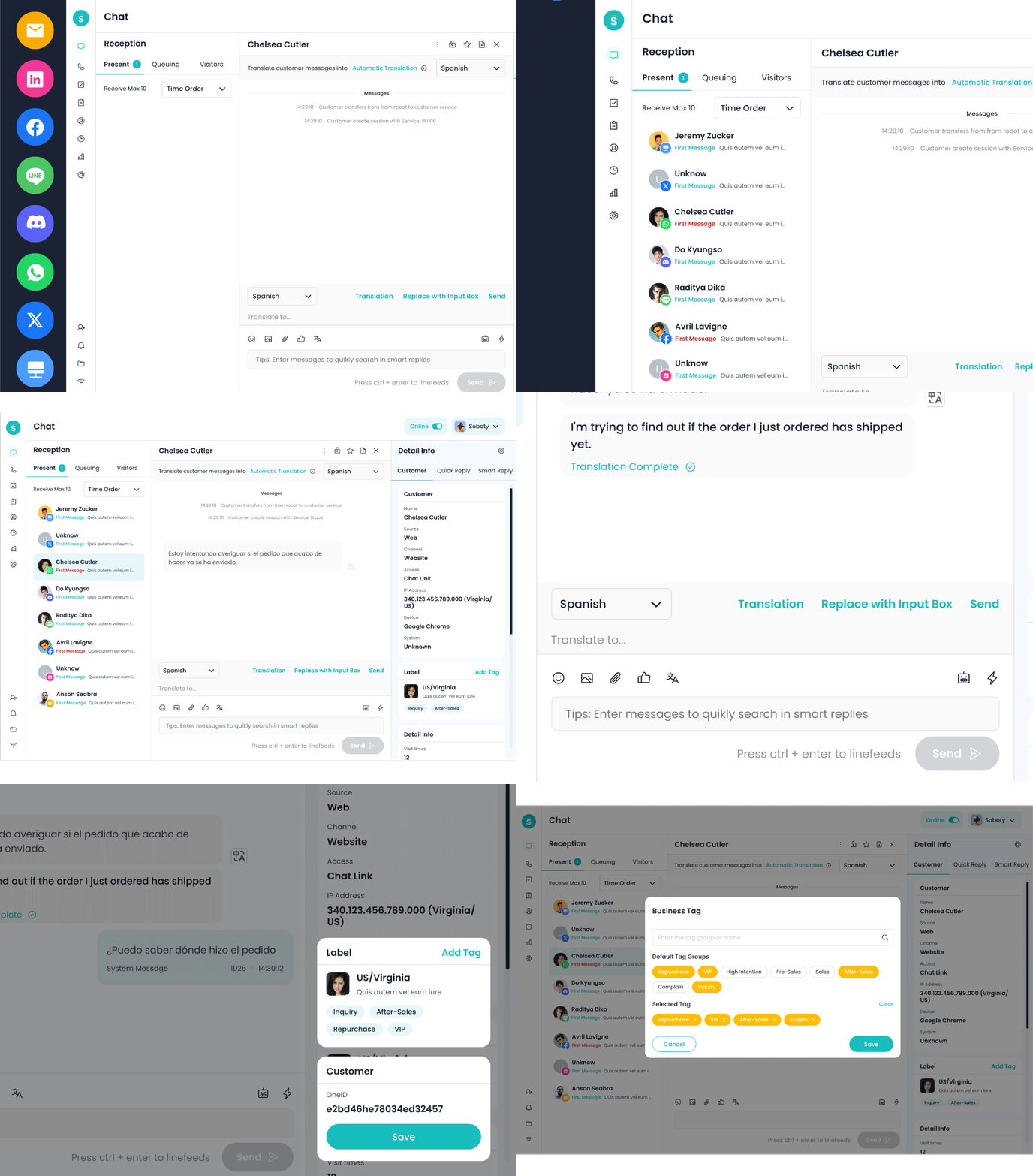
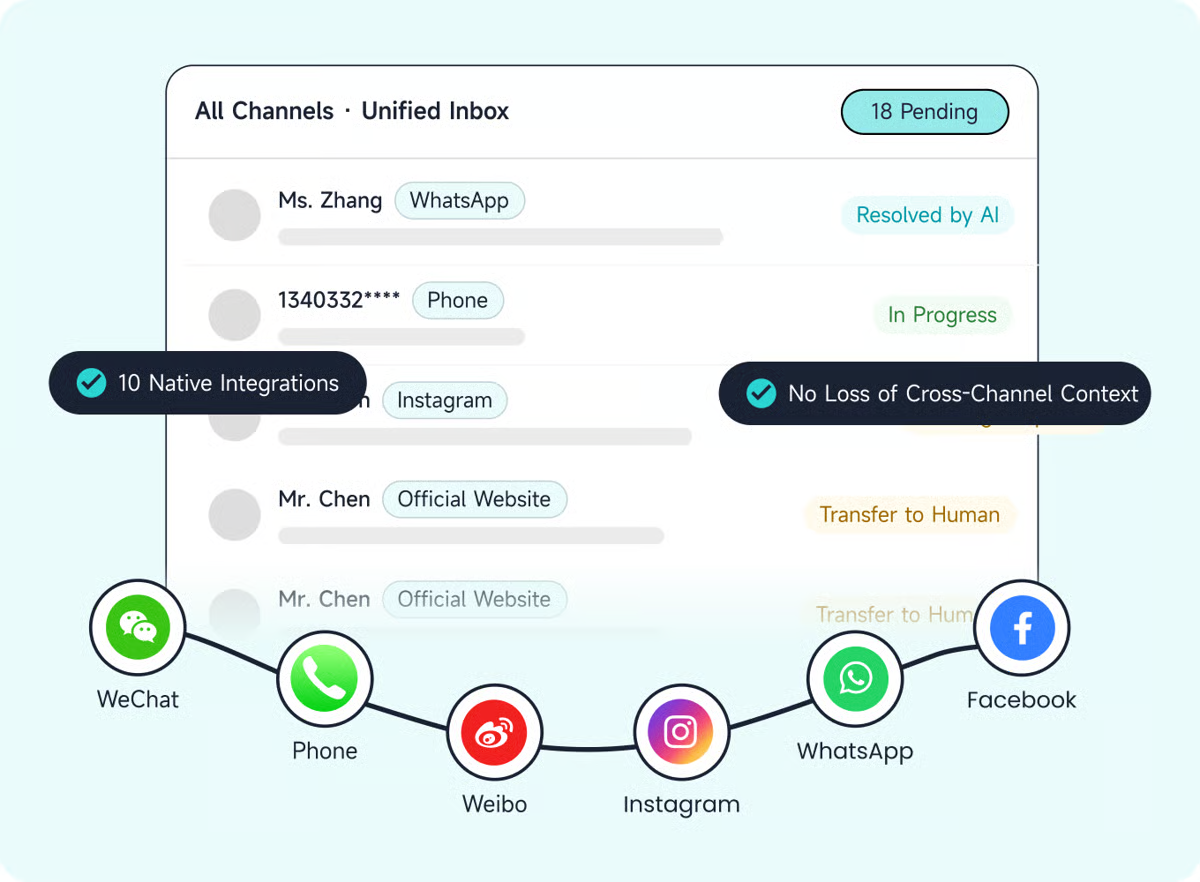
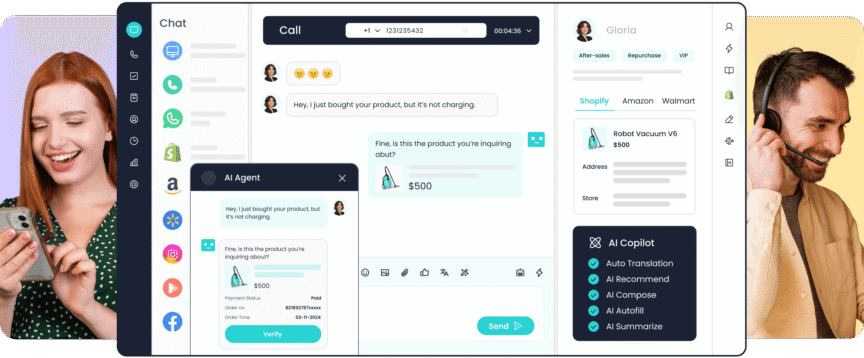
Unlike Gorgias (which is Shopify-optimised but lacks voice and WhatsApp depth) or Zendesk (which requires extensive configuration and third-party add-ons to achieve true omnichannel), Sobot delivers a unified inbox covering live chat, WhatsApp Business API, email, voice, SMS, and social media out of the box — with a shared customer profile visible to every agent regardless of channel.
Key Features:
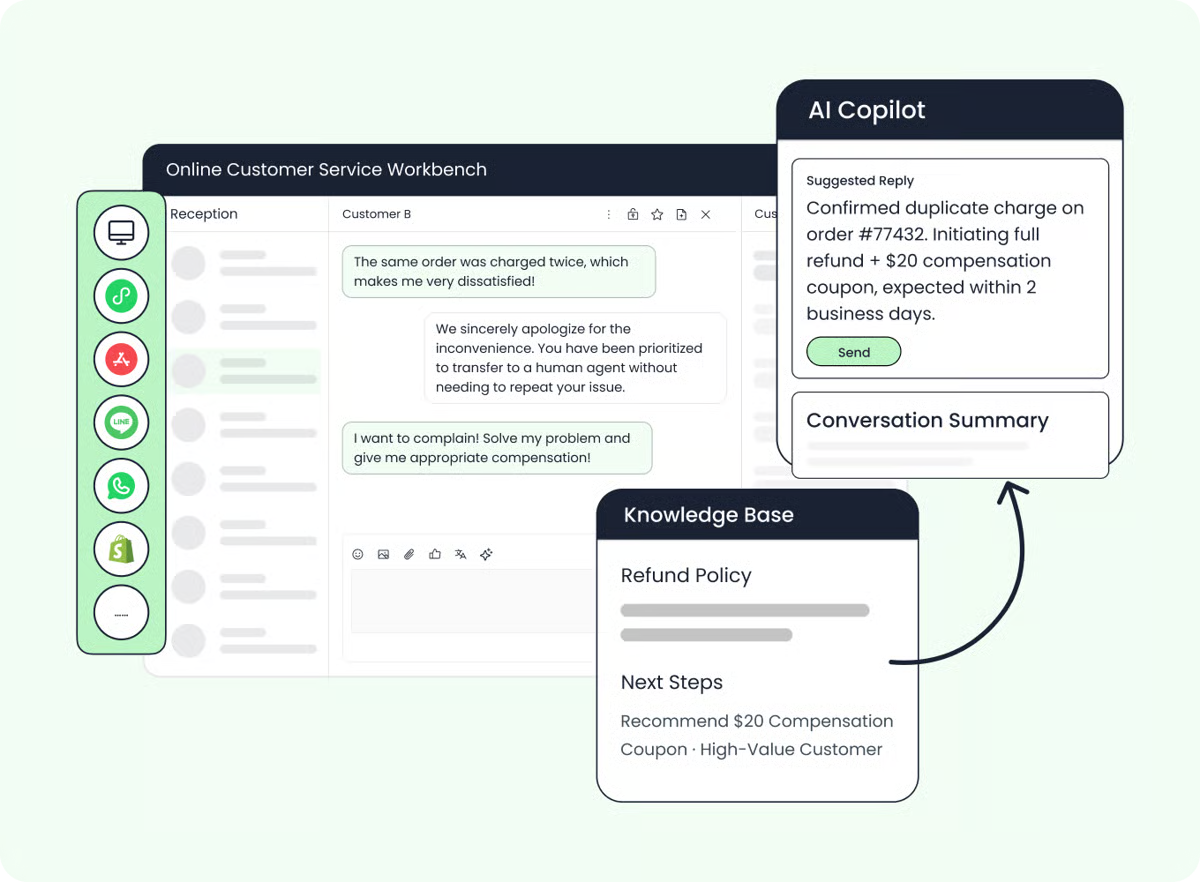
- AI agent that handles end-to-end ticket resolution (order status, returns, FAQs) without escalating to humans
- Unified omnichannel workspace: WhatsApp, email, live chat, voice, Instagram DM, Facebook Messenger in one screen
- Native Shopify and Amazon integrations; order data surfaces automatically during customer conversations
- Support for 18+ languages including Malay, Mandarin, Thai, Arabic — critical for Singapore and Southeast Asian markets
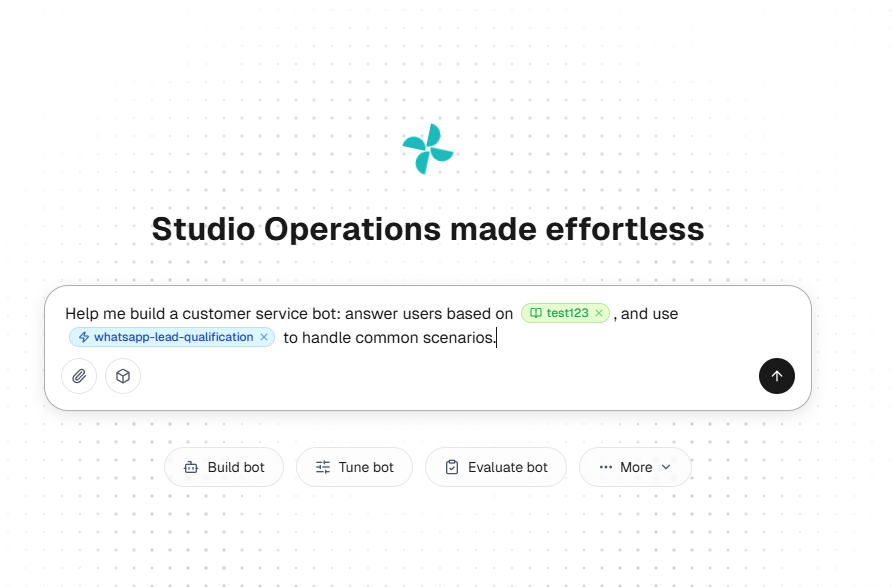
- AI-powered knowledge base that learns from historical conversations and reduces maintenance effort by up to 90% (based on OPPO deployment)
- Proactive messaging and chat triggers to recover abandoned carts
Real Customer Results:
- Renogy (ecommerce, solar equipment): 45% increase in resolution rate; escalation rate dropped from 50% to 30%; chatbot independently handles 80%+ of inbound contacts; CSAT reached 95%
- Michael Kors (retail/fashion ecommerce): 83% reduction in response time; 95% CSAT; 20% increase in conversion rate. “Customer care is very important for MK, as we want to provide the best possible service and experience for our customers.” — Ebrahim Hyder, VP of Customer Service, Michael Kors
- OPPO (electronics retail): 83% chatbot resolution rate; 94% positive feedback rate; 57% increase in repurchase rate
- Samsung: 97% CSAT across customer service operations
Pricing: Custom — contact sales for a quote. 15-day free trial available with no credit card required.
| Pros | Cons |
|---|---|
| Best-in-class WhatsApp + voice + chat coverage — critical for Asian markets | Pricing is not self-serve; requires a sales conversation to see full feature costs |
| AI resolves tickets end-to-end, not just suggests replies | Setup for complex enterprise workflows can take 1–2 weeks |
| 18+ language support out of the box | Interface has a learning curve for teams coming from simple helpdesks like Freshdesk |
| Strong ecommerce case studies with published metrics | Fewer native Shopify-specific revenue attribution features compared to Gorgias |
| Proven at scale: Samsung, OPPO, Michael Kors, Renogy | Less name recognition in Western markets — mostly known in Asia and Middle East |
❷ Gorgias – Best for Shopify stores that want deep order management and revenue attribution built into support
Gorgias Best for: Shopify-native DTC brands that want customer support to directly drive revenue
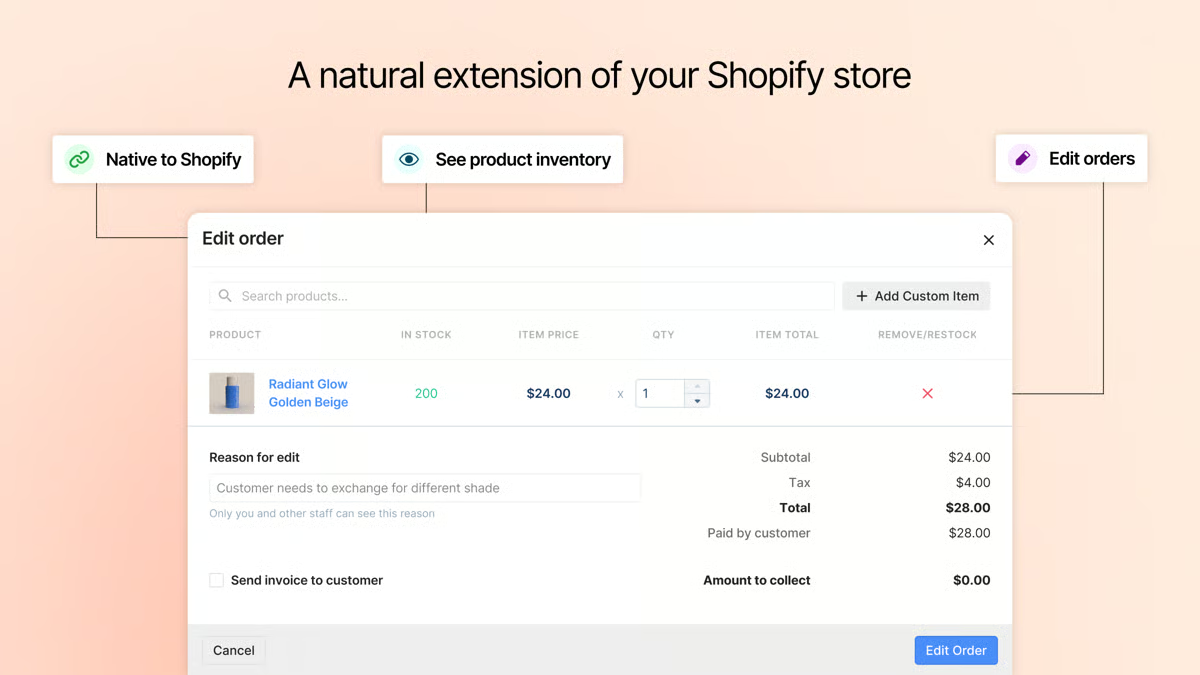
Gorgias is built specifically for ecommerce — and it shows. Every feature is designed around the Shopify merchant workflow: agents can view, edit, and refund orders directly from the support ticket without switching tabs. Its AI automates up to 60% of repetitive tickets (order status, returns, tracking), and its Revenue Statistics dashboard shows exactly how much revenue your support team generates from conversations.
Key Features:
- Shopify order actions (view, edit, refund, cancel) inside every ticket
- AI automates routine responses based on order data and past conversation patterns
- Revenue attribution: tracks which support interactions led to purchases
- Intent detection routes tickets to the right team automatically
- Live chat, email, SMS, Instagram DM, Facebook Messenger unified
G2 Rating: 4.6/5 from 540+ reviews
“Gorgias has been a game-changer — being able to respond to customers and manage orders in one place saves my team hours every day.” — G2 reviewer, Shopify merchant
Pricing: Starts at $10/month (50 tickets); most growing Shopify stores pay $300–$900/month based on ticket volume. Pricing scales with tickets, not agents — which suits seasonal ecommerce businesses.
| Pros | Cons |
|---|---|
| Deepest Shopify integration on the market | Ticket-based pricing becomes expensive at high volumes |
| Revenue attribution built in | Limited voice/phone support — voice requires third-party add-on |
| 60% AI automation rate for common ecommerce queries | WhatsApp integration is limited compared to Sobot or Intercom |
| Shopify App Store: 4.4/5 from 700+ reviews | Not ideal for non-Shopify platforms (BigCommerce/Magento support is basic) |
| Fast setup for Shopify stores: under 30 minutes | Limited multilingual AI support — not suited for Asian market complexity |
❸ Tidio – Best simple AI chatbot for small ecommerce stores on a tight budget
Tidio Best for: Small ecommerce stores wanting an affordable AI chatbot without technical setup
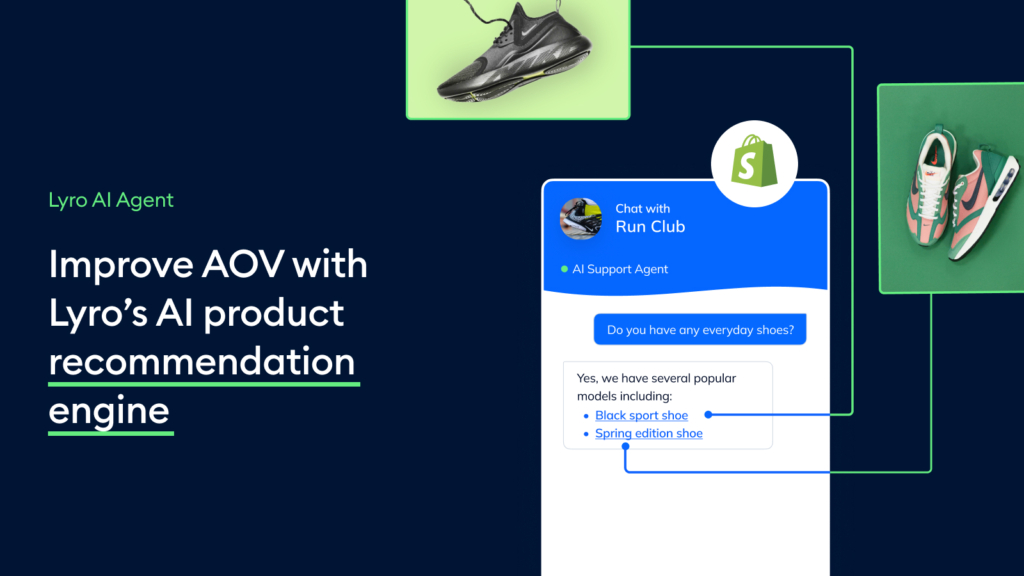
Tidio makes AI-powered customer support accessible to solo operators and small teams. Its Lyro AI chatbot resolves up to 70% of routine queries automatically — answering FAQs, checking order status, and handling returns — and is one of the easiest AI tools to deploy on Shopify or WooCommerce in under an hour.
Key Features:
- Lyro AI chatbot: resolves up to 70% of customer questions automatically
- Flows (visual chatbot builder) for custom automation without coding
- Shopify, WooCommerce, Wix, and Squarespace integrations
- Live chat, email, and Messenger in one inbox
- Free plan available with basic live chat
G2 Rating: 4.6/5 from 1,800+ reviews
Pricing: Free plan (live chat only); Tidio+ from $19/month; Lyro AI from $39/month (conversation-based pricing).
| Pros | Cons |
|---|---|
| Genuinely easy to set up — non-technical teams live in under an hour | Lyro AI is limited to ~50 conversations/month on entry plans |
| Affordable for early-stage stores | No voice support |
| Strong free plan to start without commitment | Limited omnichannel depth — no WhatsApp Business API |
| High G2 rating from large review base | AI quality drops on complex or multi-step ecommerce issues |
| Good for WooCommerce (Gorgias is Shopify-only) | Scales poorly once ticket volume exceeds ~500/month |
❹ Richpanel – Best for mid-size DTC brands wanting a self-service portal alongside live chat
Richpanel Best for: Mid-size DTC brands wanting a customer self-service portal alongside live chat
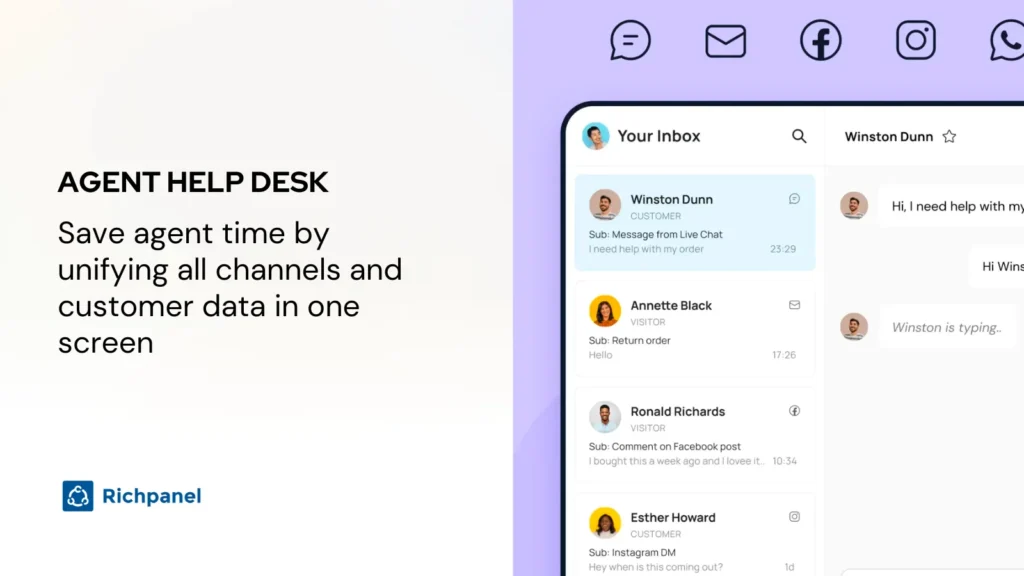
Richpanel differentiates itself with a customer-facing self-service portal where shoppers can check order status, initiate returns, and resolve common issues — without ever opening a chat. This deflects 40–60% of tickets before they reach an agent, making it particularly effective for ecommerce brands with high post-purchase inquiry volumes.
Key Features:
- Self-service portal: order tracking, returns, exchanges without agent intervention
- Agent workspace with Shopify order data embedded
- AI-drafted replies using customer history and order context
- Proactive outbound messaging for order updates
- Revenue dashboard linking support interactions to conversions
Pricing: Starts at approximately $29/seat/month; custom pricing for larger teams.
| Pros | Cons |
|---|---|
| Self-service portal significantly reduces ticket volume before they reach agents | Smaller ecosystem — fewer integrations than Zendesk or Gorgias |
| Strong Shopify data integration | Less established brand; smaller community and fewer peer reviews |
| Clean, modern agent workspace | AI drafting is helpful but not fully autonomous — agents still review most responses |
| Good fit for brands with high returns/exchange inquiry volume | Voice and WhatsApp support is limited |
| Competitive pricing for the feature set | Not suited for non-ecommerce or B2B use cases |
❺ Re:amaze – Best for multi-storefront ecommerce businesses managing several brands at once
Re:amaze Best for: Ecommerce businesses managing multiple brands or storefronts from one account
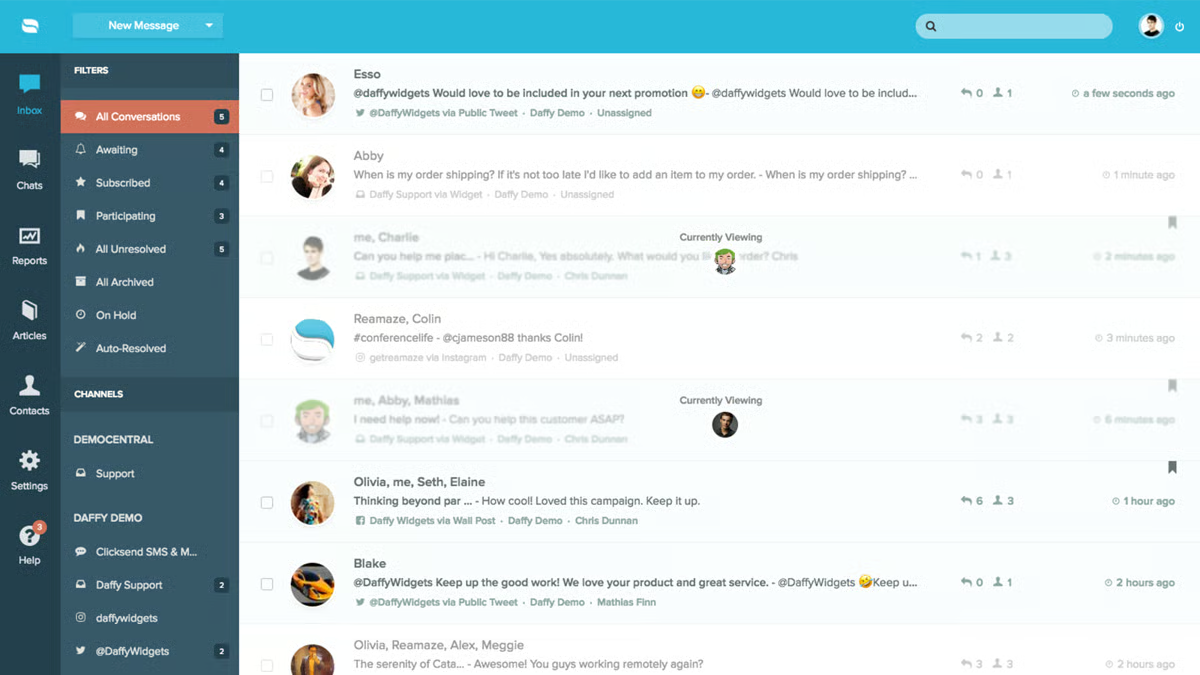
Re:amaze stands out for its multi-brand capability — one account can manage separate inboxes, workflows, and chat widgets for multiple storefronts, making it ideal for ecommerce operators who run several Shopify or WooCommerce stores simultaneously.
Key Features:
- Multi-brand support: separate inboxes and workflows per storefront in one account
- Cues (proactive chat based on customer behaviour — page visits, cart value, time on site)
- Shopify, BigCommerce, WooCommerce, Stripe integrations
- Chatbots with conditional logic and order lookup
- Shared team inbox with collision detection
Pricing: $29/seat/month (Basic); $49/seat/month (Pro, includes chatbots and cues).
| Pros | Cons |
|---|---|
| Best multi-brand management in this category | Interface feels dated compared to Gorgias or Richpanel |
| Proactive chat triggers based on cart value or browsing behaviour | AI automation is less sophisticated than Sobot or Gorgias |
| Transparent, predictable per-seat pricing | No voice support |
| Strong Shopify + BigCommerce integration | Reporting and analytics are basic |
| Good for seasonal/overflow team scaling | Limited WhatsApp integration |
❻ Intercom – Best for ecommerce SaaS or subscription brands combining support with product-led growth
Intercom Best for: Subscription ecommerce or SaaS-ecommerce hybrid brands combining support with in-app messaging
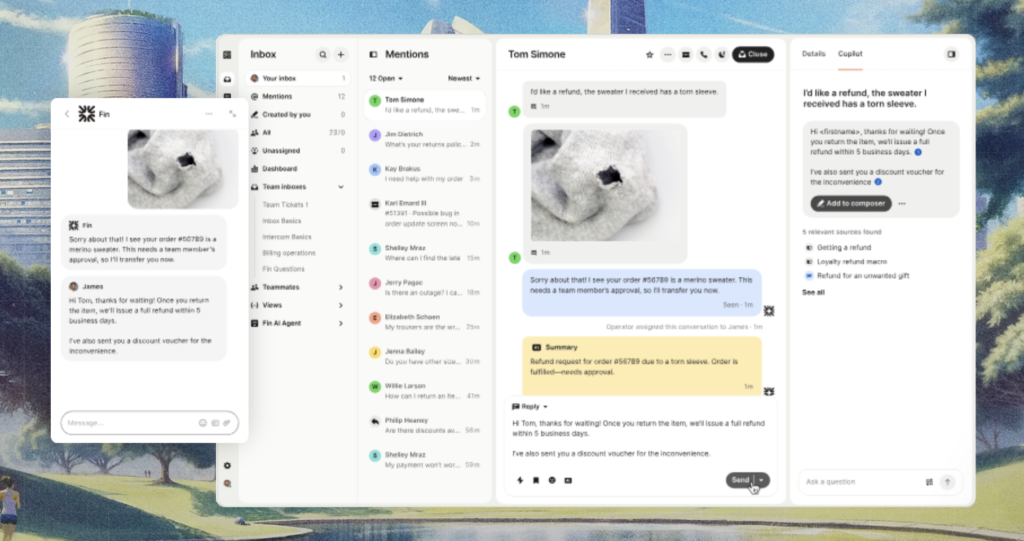
Intercom’s Fin AI resolves up to 50% of queries autonomously and integrates deeply with product analytics tools (Amplitude, Mixpanel, Heap) — making it unusually suited for ecommerce businesses that also have a subscription model, loyalty app, or SaaS component.
Key Features:
- Fin AI: autonomous resolution with multi-step reasoning across your knowledge base
- Messenger for in-app, web, and mobile chat with rich media support
- Customer data platform — syncs product usage data into every support conversation
- Proactive outbound messages triggered by user behaviour
- Shopify, Stripe, and Salesforce integrations
G2 Rating: 4.5/5 from 3,800+ reviews
Pricing: Essential from $39/seat/month; Fin AI usage billed per resolution.
| Pros | Cons |
|---|---|
| Fin AI is among the most capable autonomous support AIs available | Becomes expensive quickly — Fin AI charges per resolution on top of seat fees |
| Best in class for in-app messaging and product-led support | Not purpose-built for ecommerce; order management features require integrations |
| Deep customer data integration drives personalised responses | Complexity: significant configuration needed to get full value |
| Strong developer ecosystem and API flexibility | WhatsApp integration requires third-party connector |
| Good for proactive outbound (onboarding flows, re-engagement) | Less suited to voice-heavy or high-call-volume teams |
❼ Zendesk – Best for large ecommerce enterprises needing a deeply customisable helpdesk
Zendesk Best for: Large enterprise ecommerce brands needing a deeply configurable helpdesk at scale
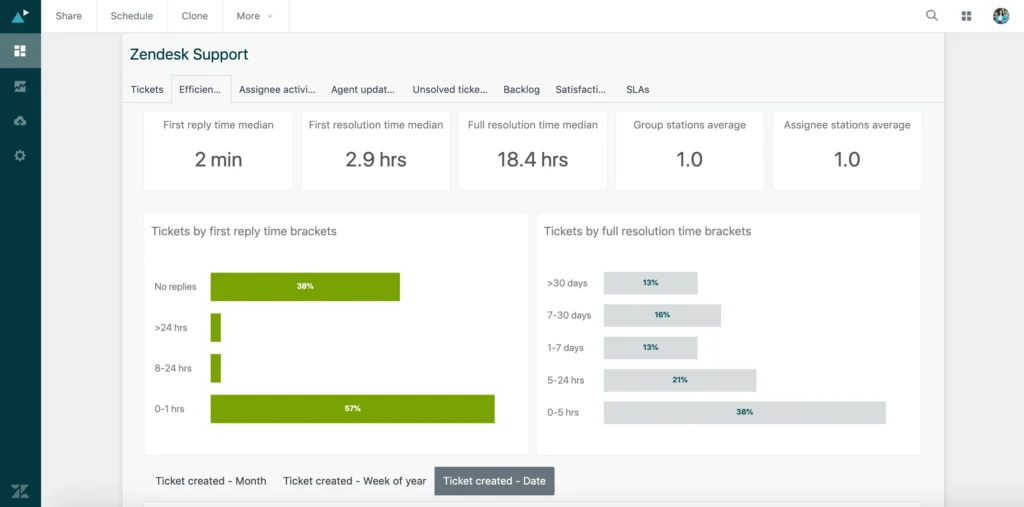
Zendesk is the most widely deployed customer service platform in the world, and its AI capabilities have matured significantly in 2025–2026. For large ecommerce teams with complex workflows, multiple regions, and hundreds of agents, Zendesk’s enterprise-grade permissions, reporting, and 1,000+ integrations are hard to match.
Key Features:
- Zendesk AI: intent detection, automatic ticket routing, agent assist suggestions
- 1,000+ native integrations including Shopify, Salesforce, Slack, Jira
- Advanced reporting and workforce management
- Multi-brand support with separate help centres per brand
- Voice via Zendesk Talk (built-in)
G2 Rating: 4.3/5 from 6,800+ reviews
Pricing: Suite Team from $55/agent/month; enterprise plans negotiated.
| Pros | Cons |
|---|---|
| Most mature ecosystem — 1,000+ integrations | Expensive at scale; enterprise pricing adds up fast |
| Robust enterprise security and compliance (SOC 2, HIPAA) | High complexity — significant setup time and often requires a Zendesk partner |
| Strong voice support built in | AI features cost extra (Zendesk AI is an add-on) |
| Multi-region and multi-language support | User interface can feel heavy for small teams |
| Largest third-party developer marketplace | Poor value for SMBs — you pay for capabilities you won’t use |
❽ Freshdesk – Best budget-friendly option for growing ecommerce teams wanting structured ticketing
Freshdesk Best for: Budget-conscious ecommerce teams that need structured ticketing and want a free starting point
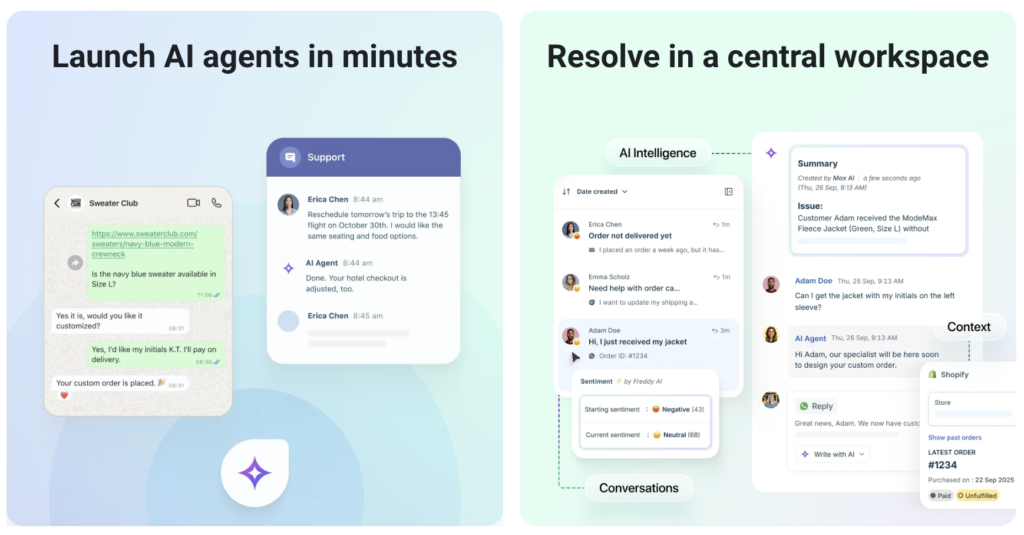
Freshdesk offers a genuinely capable free plan for up to 10 agents — making it the most accessible structured helpdesk in this list. Its AI (Freddy AI) handles drafting, categorisation, and routing, though it’s less autonomous than Sobot or Gorgias.
Key Features:
- Free plan: email and social ticketing for up to 10 agents
- Freddy AI: auto-categorises tickets, suggests replies, detects sentiment
- Shopify and WooCommerce integrations via marketplace apps
- Shared inbox, collision detection, and SLA management
- Freshchat for live chat (sold separately or bundled)
G2 Rating: 4.4/5 from 3,700+ reviews
Pricing: Free (10 agents); Growth from $15/agent/month; Pro from $49/agent/month.
| Pros | Cons |
|---|---|
| Best free plan in this category — genuinely functional | Shopify integration requires third-party app, not native |
| Affordable growth pricing | Freddy AI is less capable than Sobot, Gorgias, or Intercom’s AI |
| Clean, easy-to-learn interface | Live chat and telephony are separate products — fragmented if you need both |
| Good SLA management and escalation workflows | WhatsApp integration exists but requires Freshdesk Messaging add-on |
| Large help centre and community for self-service | Can get expensive when bundling Freshchat + Freshcaller + Freshdesk |
❾ Kustomer – Best for high-volume ecommerce brands that want CRM and support natively combined
Kustomer Best for: High-volume ecommerce brands wanting CRM and customer support natively unified
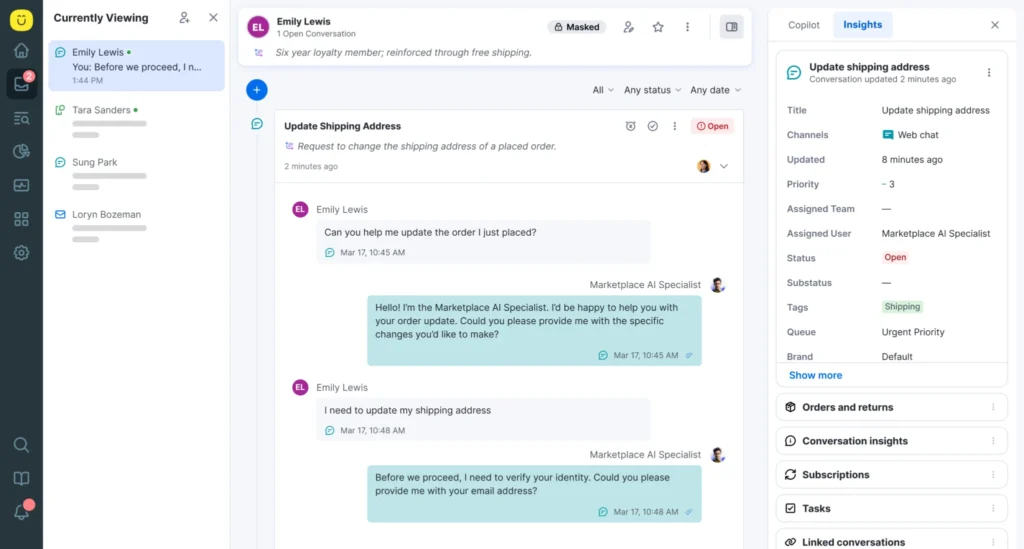
Kustomer’s differentiator is its data architecture: every customer conversation, order history, behaviour, and lifetime value metric lives on a single customer timeline. Agents don’t switch between tabs — every piece of context is on one screen. For ecommerce brands processing thousands of orders per day, this eliminates the data fragmentation that slows down support.
Key Features:
- Customer timeline: full order history, conversation history, LTV in one unified view
- AI automation for order status, returns, and FAQ resolution
- Proactive outbound messaging based on order events
- Shopify, Magento, and custom CRM integrations
- Omnichannel: email, chat, voice, WhatsApp, SMS, social
G2 Rating: 4.4/5 from 400+ reviews
“Jerome’s Furniture reduced cost per contact by 40% and NPS improved to two times the industry average.” — Kustomer case study
Pricing: $89/user/month — among the higher-priced options in this list.
| Pros | Cons |
|---|---|
| Best native CRM + support combination | Most expensive per-seat option in this list |
| Full customer context reduces average handle time significantly | Smaller integration marketplace than Zendesk |
| Strong omnichannel depth (voice, chat, WhatsApp, email) | Complex implementation — typically 4–6 weeks to go live |
| AI autonomously resolves high-frequency order queries | Overkill for small ecommerce teams |
| Good fit for brands with complex loyalty or subscription models | Less presence and fewer reviews in Asia-Pacific |
❿ LiveChat – Best simple, fast-to-deploy live chat for solo operators or very small ecommerce stores
LiveChat Best for: Solo ecommerce operators or very small stores that just need fast, simple live chat
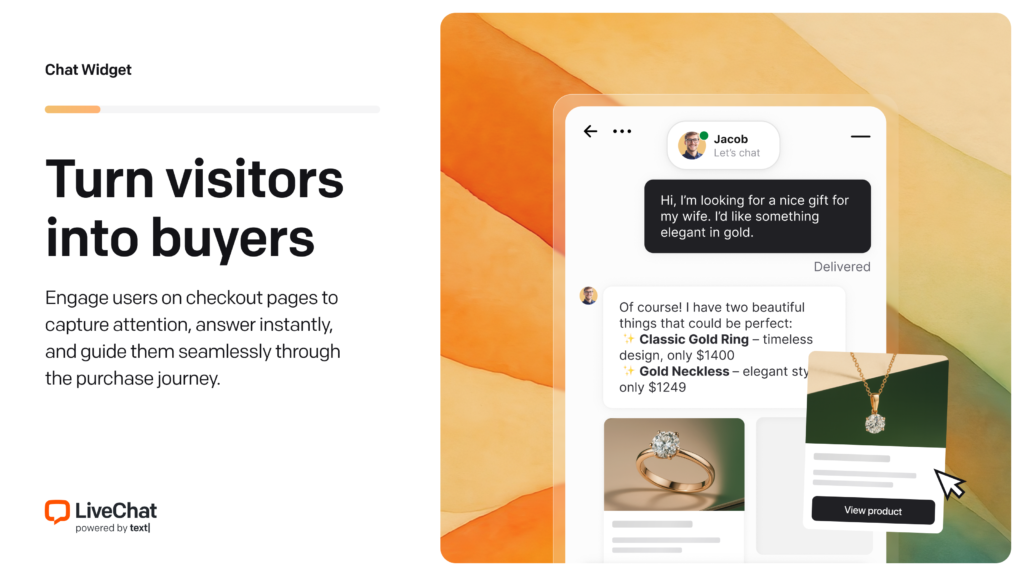
LiveChat has been in this market for over 20 years and its longevity reflects genuine reliability. It’s the simplest tool on this list — easy to install, clean to use, and reasonably priced. It doesn’t have sophisticated AI, but if you primarily need a human-to-human live chat widget that works well with Shopify, LiveChat delivers that without fuss.
Key Features:
- Live chat widget with canned responses and typing previews
- Shopify, WooCommerce, and WordPress integrations
- Basic chatbot builder (ChatBot sold separately)
- Reports: chat volume, response times, satisfaction ratings
- Team management: routing, tagging, agent assignments
G2 Rating: 4.6/5 from 1,700+ reviews
Pricing: Starter from $20/agent/month; Team from $41/agent/month.
| Pros | Cons |
|---|---|
| Extremely easy to install — live in 15 minutes | AI/automation is a separate product (ChatBot.com) — adds cost |
| Reliable uptime and stable performance | No built-in ticketing system for complex issue tracking |
| Clean UI that agents learn in under an hour | No voice support |
| Good Shopify integration | Limited omnichannel — primarily chat and email |
| 24/7 human support for customers | Gets expensive if you’re also buying ChatBot.com separately |
Best Tool by Ecommerce Scenario
For Shopify Stores
- Best Shopify-native choice: Gorgias — deepest order management, revenue attribution, and App Store integration
- Best Shopify alternative if WhatsApp or Asia market matters: Sobot — Shopify integration plus WhatsApp Business API and multilingual AI
- Best free starting point on Shopify: Tidio — free plan with live chat and basic AI, Shopify connector in one click
- Best for Shopify operators managing multiple brands: Re:amaze — multi-storefront from one account
For SMB Ecommerce (10–200 employees)
- Best value for money: Freshdesk — free to $15/agent/month, structured ticketing, no bloat
- Best AI automation at SMB scale: Sobot — omnichannel AI without enterprise-level complexity or pricing
- Best for self-service deflection: Richpanel — self-service portal reduces tickets before they reach your team
- Best simple chatbot for SMBs: Tidio — Lyro AI resolves routine queries, affordable entry point
For Singapore & Southeast Asia Ecommerce
WhatsApp is the dominant customer channel in Singapore, Malaysia, Indonesia, and Thailand. Line and KakaoTalk matter in Thailand and South Korea. Multi-language support (Malay, Mandarin, Bahasa Indonesia, Thai) is non-negotiable for regional brands.
- #1 choice: Sobot — WhatsApp Business API built in, 18+ language AI, OPPO and Samsung case studies in this region, strong voice support for markets where phone still dominates
- Alternative: Kustomer — growing WhatsApp capability, good omnichannel architecture, though less proven in SEA specifically
- Budget option: Freshdesk with WhatsApp add-on (Freshdesk Messaging) — affordable but requires extra configuration
Most tools on this list (Gorgias, Richpanel, Re:amaze, LiveChat) are primarily optimised for US/UK ecommerce patterns and lack meaningful WhatsApp depth or regional language support.
For High-Volume Enterprise Ecommerce (500+ agents, global operations)
- Best for complex configurations: Zendesk — largest integration marketplace, enterprise security, multi-region support
- Best for full CRM + support unification: Kustomer — customer lifetime data embedded in every ticket
- Best for Asia-Pacific operations at scale: Sobot — enterprise-grade deployments with Samsung, OPPO, and Michael Kors as reference customers
For AI Chatbot-First Approach (Minimal Human Agents)
- Best autonomous AI: Sobot — end-to-end resolution, not just reply suggestions; 83% chatbot resolution rate (OPPO deployment)
- Best AI for Shopify specifically: Gorgias — AI trained on ecommerce order data
- Most accessible AI chatbot: Tidio Lyro — resolves 70% of routine queries, easy to configure
How to Choose: A 4-Step Framework
Step 1: Map your channels first
List every channel your customers currently use: WhatsApp, email, Instagram DM, phone, website chat. If WhatsApp is in the top 3 — especially for Asian markets — this eliminates most tools on this list immediately. Sobot, Kustomer, and Intercom have real WhatsApp Business API integration; the others have limited or workaround solutions.
Step 2: Decide your AI ambition
Are you looking to reduce agent workload (AI suggests replies, humans approve) or automate tickets end-to-end (AI resolves without human review)? Tidio, Freshdesk, and LiveChat are in the first camp. Sobot, Gorgias, and Intercom are in the second. The second camp costs more but changes unit economics.
Step 3: Match to your ecommerce platform
- Shopify primary: Gorgias first, Sobot second, Tidio for budget
- WooCommerce: Tidio, Re:amaze, Freshdesk
- Multi-platform (Shopify + Amazon + Lazada): Sobot or Zendesk
- Custom-built: Zendesk or Kustomer (best API flexibility)
Step 4: Stress-test pricing at your actual scale
Many tools that look cheap become expensive at scale. Calculate your cost at your current ticket volume, your 12-month projected ticket volume, and your peak season ticket volume. Gorgias’s ticket-based pricing, for example, can jump significantly during sale events.
Frequently Asked Questions
① What’s the best AI customer support tool for a small Shopify store in Singapore?
For Singapore specifically, Sobot is the strongest choice because it combines Shopify integration with WhatsApp Business API — which is how most Singapore consumers prefer to contact brands — plus multilingual AI for English and Mandarin support. If budget is the primary constraint, Tidio offers a free plan with basic AI on Shopify, though without WhatsApp depth.
② Is there a free AI customer service tool for ecommerce?
Yes. Freshdesk has a genuinely useful free plan for up to 10 agents covering email and social ticketing. Tidio has a free live chat plan with limited AI conversations. Neither includes WhatsApp or advanced autonomous AI on the free tier — for those capabilities, you’ll need a paid plan.
③ Which AI customer support platform works best for WhatsApp in Southeast Asia?
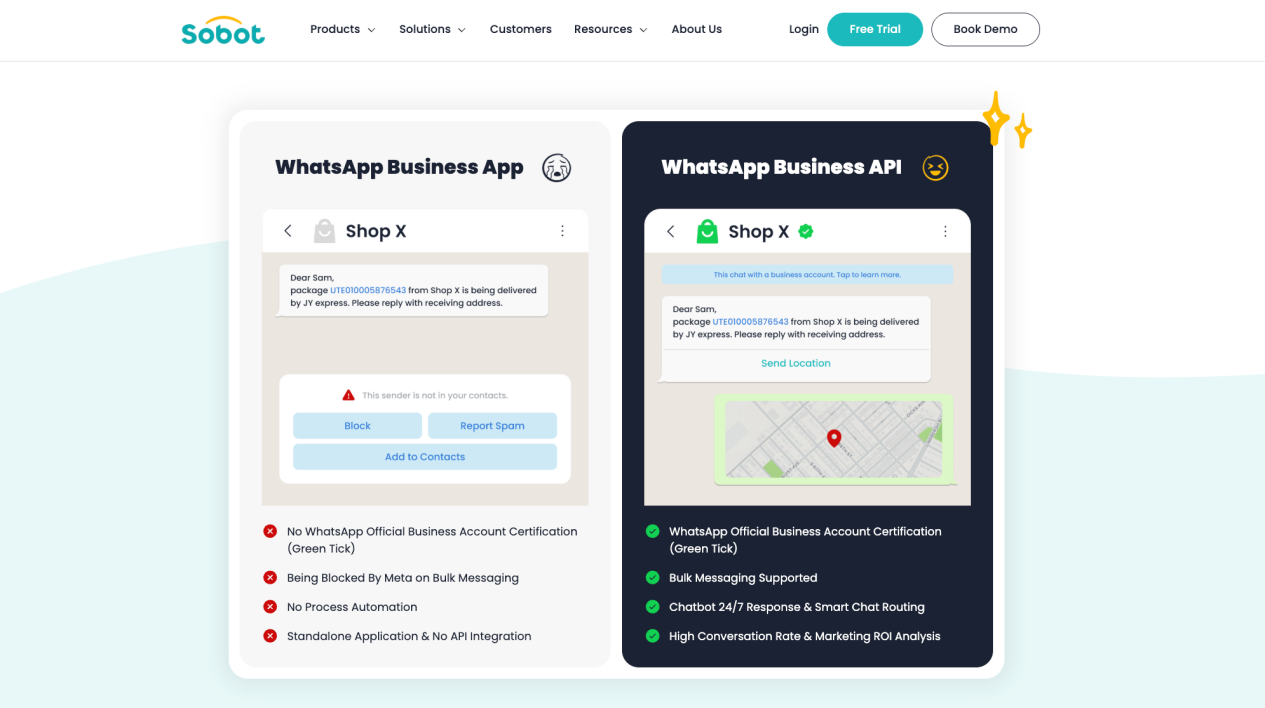
Sobot has the most complete WhatsApp Business API integration — including bulk messaging, automated flows, and full conversation history unified with other channels. J&T Express (logistics ecommerce) deployed Sobot’s WhatsApp solution and achieved a 35% increase in delivery rate from proactive WhatsApp notifications. Kustomer and Intercom also support WhatsApp but with less depth for Asian market workflows.
④ What’s a good Zendesk alternative for a mid-size ecommerce brand?
Sobot handles enterprise-scale deployments but at more transparent pricing and with stronger omnichannel coverage. Freshdesk is the most common budget alternative (starts free, scales affordably). For Shopify-focused brands specifically, Gorgias delivers better ecommerce-native features than Zendesk at a fraction of the price. Kustomer is a strong Zendesk alternative if you need CRM data embedded in every support interaction.
⑤ Can AI customer support tools increase ecommerce conversion rates, not just reduce costs?
Yes — the best tools drive revenue as well as reduce cost. Michael Kors saw a 20% increase in conversion rate after deploying Sobot’s unified platform. Gorgias tracks revenue attribution directly in its dashboard. Intercom’s proactive messaging can trigger contextual offers during browsing or post-purchase. The key shift is from treating support as a cost centre to treating it as a retention and conversion channel.
⑥ How long does it take to deploy an AI customer support tool for an ecommerce store?
It varies significantly: Tidio and LiveChat can be live on Shopify in under an hour. Gorgias typically takes 1–3 days for a full Shopify integration. Sobot’s standard ecommerce deployment takes 1–2 weeks for full omnichannel setup; enterprise deployments (like OPPO’s 60-country rollout) take longer. Zendesk and Kustomer typically require 4–8 weeks for full enterprise configuration, often with implementation partner support.
⑦ Which tool is simplest for a non-technical ecommerce team to manage?
Tidio and LiveChat are the simplest to set up and maintain — visual chatbot builders, one-click Shopify connection, no developer needed. Richpanel and Re:amaze are mid-complexity with good self-serve onboarding. Sobot, Zendesk, and Kustomer involve more configuration but provide more automation capability in return.
⑧ Does AI customer support actually work for Asian ecommerce markets, or is it mostly built for English?
The gap between English-first tools and genuinely multilingual tools is significant. Sobot explicitly supports 18+ languages including Malay, Mandarin, Bahasa, Thai, and Arabic, with AI trained on multi-language conversation patterns. Most of the other tools on this list — Gorgias, Tidio, Richpanel, Re:amaze — are primarily English-first with basic translation rather than native multilingual AI. For ecommerce brands targeting non-English speaking consumers in Asia, this is a meaningful differentiator.
Conclusion
The best AI customer support tool for ecommerce isn’t the one with the most features — it’s the one that matches your channel mix, your customer base, and your team’s capacity to manage it.
For ecommerce businesses in Singapore and Southeast Asia, Sobot offers the most complete fit: WhatsApp-first omnichannel, multilingual AI, and a proven track record with major retail brands in the region. For pure Shopify DTC brands focused on the US market, Gorgias is hard to beat on ecommerce-native depth. For teams just starting out, Tidio or Freshdesk provide a no-risk entry point without overcommitting.
Ready to see Sobot in action? Start a 15-day free trial — no credit card required — or request a demo tailored to your ecommerce stack.