Zendesk vs Intercom: Customer Support Comparison for 2026
Zendesk and Intercom can both be credible customer-support choices, but neither is universally better. Zendesk deserves close testing when a team is governed by ticket queues, service policies, administrator ownership, and a disciplined exception process. Intercom deserves close testing when a digital customer-conversation workflow and knowledge-led service experience are the working hypotheses. Sobot belongs in the pilot when the decision depends on keeping shared customer context usable as a case moves among AI, chat, WhatsApp, voice, and ticket work.
The real decision is made at the moment a smooth conversation becomes an operational exception. Can the next owner identify the customer, understand the order or account issue, see why the case changed hands, and take a permitted next action without restarting discovery? For a 2026 buying decision, that test is more revealing than an AI feature list, a polished demo, or an unscoped price comparison.
Choose by the Work Your Team Must Own
The useful Zendesk versus Intercom comparison is a conditional one. Start with the support workflow that creates the greatest customer-trust or commercial risk, then make each candidate demonstrate how the case is routed, owned, corrected, and reviewed.
- Put Zendesk first when ticketing governance, configurable queues, and an established administrator are the constraints that matter most.
- Put Intercom first when the team needs to test a digital customer-conversation workflow and knowledge-led service experience against its actual support questions.
- Add Sobot when chat, messaging, voice, tickets, AI, and human escalation must operate as one connected service path.
- Keep the decision conditional when the buyer has both a meaningful ticketing operation and a growing cross-channel support burden.
- Use a scoped pilot before treating channel availability, data mapping, AI behavior, implementation effort, or commercial terms as settled facts.
What an AI Customer Support Platform Must Actually Do
An AI customer support platform is more than a chatbot. In an operating context, it brings together conversation handling, knowledge, routing, customer context, and human-service controls so the team can decide what automation may do and what requires a person. Omnichannel means the service work stays connected across channels instead of becoming isolated queues. A response can sound helpful and still fail the customer if the next agent has to reconstruct the order, account, policy exception, and prior messages from scratch.
That definition keeps this comparison honest. It does not assume that a platform offers every channel or workflow in every configuration. It asks a buyer to demonstrate the connected path required by its own team, including permissions, source data, exception policy, and the person who maintains the workflow after launch.
Zendesk vs Intercom: Quick Comparison Table
This table is a shortlist hypothesis, not a universal score. The same representative journeys should be demonstrated by both vendors before a team assigns a winner.
| Platform | Best-fit condition to test | AI and handoff question | Channels and workflow to test | Cost signal | Main boundary |
|---|---|---|---|---|---|
| Zendesk | A ticketing-led service model, configurable queues, and administrator ownership govern daily support work. | Can the team configure, monitor, and maintain the routing and exception rules it relies on? | Run the queues, fields, routing rules, and high-risk exceptions that shape actual daily work. | Request current details for roles, usage, administration, rollout, and optional scope. | Configuration depth is useful only when the organization has clear ownership for it. |
| Intercom | A digital customer-conversation workflow and knowledge-led service experience are the primary buying hypotheses. | Can automation, human follow-up, and exception ownership preserve the customer context the agent needs? | Run the messages, knowledge sources, escalation rules, and ecommerce exception paths the team actually operates. | Request current details for users, AI scope, channels, implementation work, and support scope. | A strong conversation experience still needs proof against every channel and exception path that matters. |
| Sobot | Cross-channel continuity among AI, chat, WhatsApp, voice, tickets, and human escalation is the governing requirement. | Can the next owner receive identity, context, reason, and next action without a restart? | Run one issue from automation to a person and, where relevant, between messaging, voice, and ticket work. | Request a scoped proposal tied to the journeys, roles, channels, and responsibilities required. | Buyer-specific configuration, permissions, data mapping, and commercial scope must be demonstrated. |
How We Evaluated Zendesk and Intercom
The comparison evaluates operating-model fit, handoff control, channel continuity, ticketing administration, and commercial verification instead of assigning an overall product score. Ecommerce is a useful pressure test, but not the only relevant industry, because a post-purchase case can combine customer identity, order details, policy, and a channel change. Meta provides WhatsApp Cloud API overview documentation; it is a reminder that a messaging service workflow has an implementation layer that a buyer must validate in its own configuration.
Build the evaluation around the exceptions that change a customer commitment: a cancellation, return, address correction, delivery delay, account-access request, or product-use question that needs a human decision. The NIST AI Risk Management Framework is useful context for assessing AI with the operating controls around it. It does not validate either vendor’s configuration. It simply reinforces why governance, review, and accountable ownership should accompany automation.
Sobot publishes this comparison. Zendesk, Intercom, and Sobot are evaluated against the same service-journey questions; final fit should be confirmed by the buyer’s operating team.
AI Is Useful Only When the Handoff Preserves Context
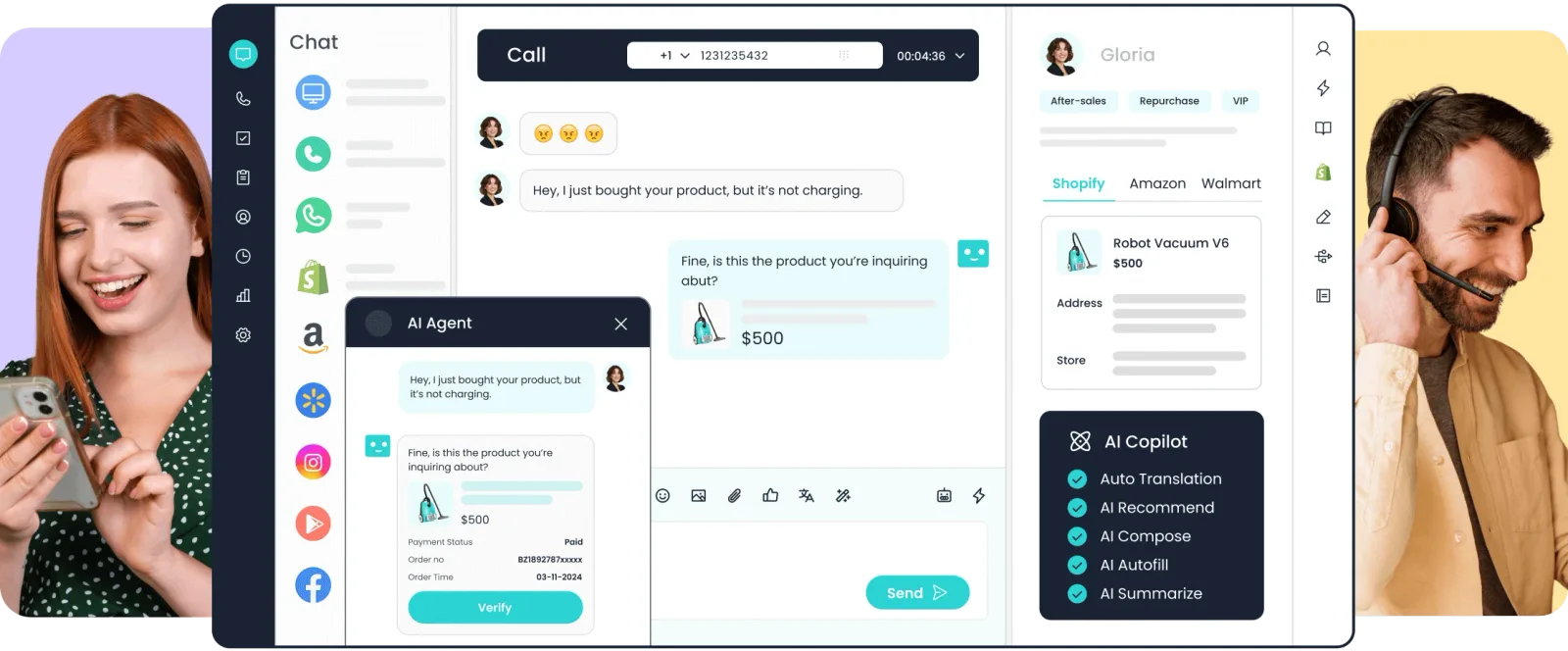
An AI-to-human handoff is usable only when the next owner can see the customer identity, relevant context, reason for escalation, and next action without asking the customer to repeat the core problem. NIST makes AI Risk Management Framework resources available. Those resources provide governance context, not a claim of platform parity or superiority. The operational standard remains simple: a human must be able to continue the work safely and accountably.
Test Whether the Next Agent Receives the Customer Story
Place the actual acceptance criteria in the pilot before anyone sees a product tour. The receiving agent should be able to identify the customer, see the relevant conversation, recognize the order or account context, understand why the case escalated, and see a permitted next action. Use an ordinary scenario: a customer starts in web chat with a delayed-delivery question, supplies an order number, and needs a person because the courier exception requires judgment. The first human should not have to search several systems or request facts the customer already gave.
Test Who Owns the Case After the Conversation Changes
Context is not enough if no person or queue owns the exception. In the pilot, every escalation should carry a named receiving queue, a reason code, a time-bound next action, and a fallback when the preferred queue is unavailable. This matters for returns, refunds, address corrections, fraud-sensitive questions, and delivery disputes because each can require policy-aware judgment rather than another generic answer. Supervisors should also be able to inspect who accepted the work and why. When the queue changes, record whether the new owner received the same authority and information needed to resolve it.
Test Zendesk and Intercom on Their Everyday Workflows
Zendesk deserves priority when a team can show that ticketing governance, configurable queues, and administrator capacity are its central operating requirements. The test is not whether the interface looks familiar. It is whether the team can make its own queues, fields, routing rules, service policies, and exception paths visible and maintainable. Invite the people who own customer data, service quality, escalation policy, and daily administration rather than relying only on an executive sponsor or a demo attendee.
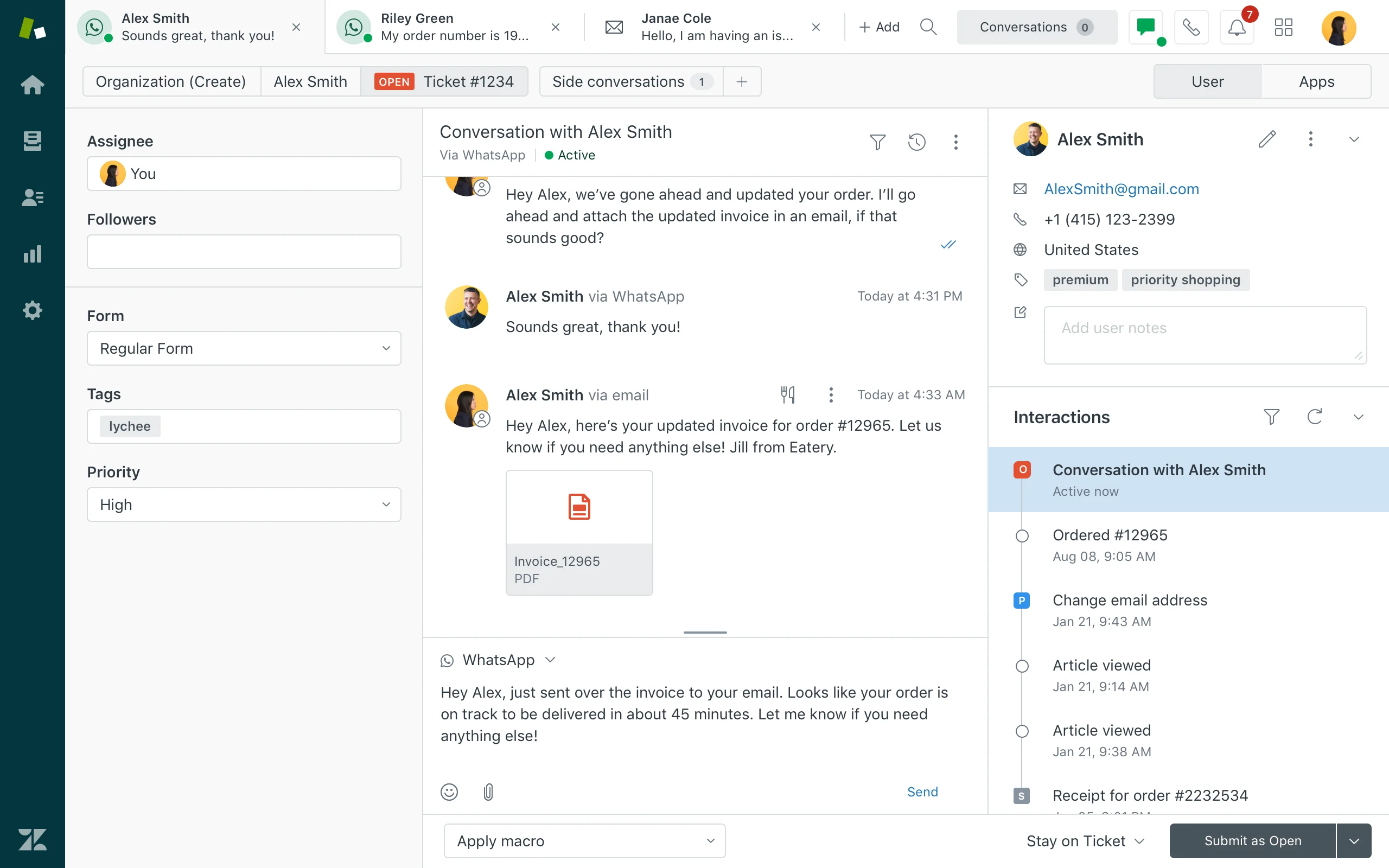
Intercom deserves priority when a team needs to validate a digital customer-conversation workflow and knowledge-led service experience against the questions it expects to receive. Ask the buyer’s own agents to test real customer language, knowledge boundaries, human escalation, and after-sales exceptions. A conversation that starts as a product-use question may become a billing, cancellation, or delivery case; the useful demonstration is the one that shows whether the customer and agent can move through that change without losing ownership or context.
Treat Ecommerce as a Branch, Not the Whole Decision.
Ecommerce support adds order and after-sales complexity, but the buying decision should not assume that every service team has the same order data, fulfillment process, or refund authority. Test the journeys that your own customer promise makes risky. For a retailer, that may be a damaged item, a partial shipment, a loyalty-account issue, or an address change after a label is created. To examine the retail service context behind that evaluation, explore Sobot’s retail customer service solution.
Cross-Channel Continuity Is the Stress Test
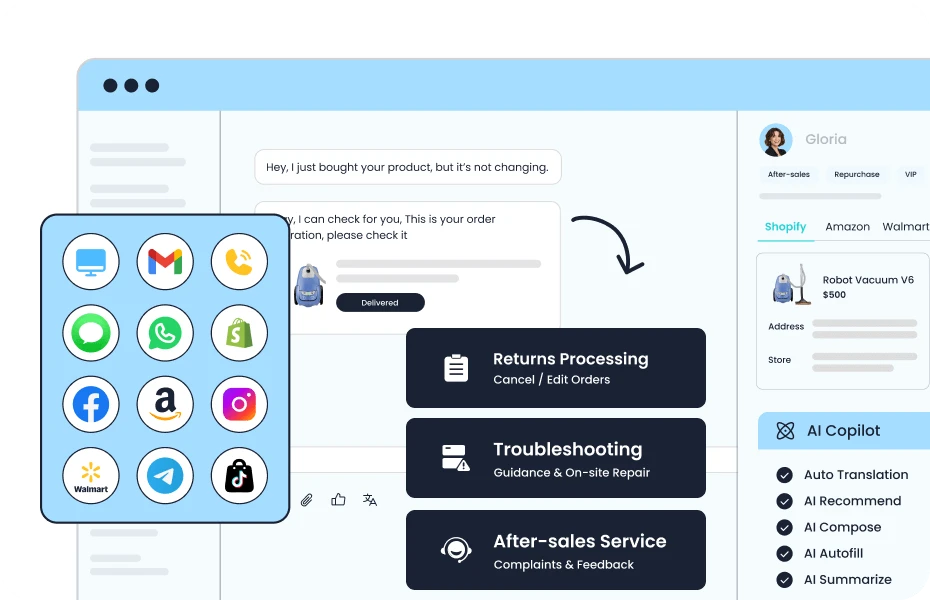
A channel change is continuous only when the receiving owner can act on the same customer story, not merely locate a previous transcript. A buyer should run the same issue through messaging, live chat, ticketing, and voice where those channels matter, then inspect the identity, conversation summary, relevant order or account context, escalation reason, and new owner at each transfer. A list of channel logos cannot answer that question.
WhatsApp Changes the Test Because Policy Defines the Window
WhatsApp business service has policy-defined messaging conditions. The WhatsApp Business Policy describes a 24-hour period following a customer’s last message and identifies in-chat human-agent transfer as an escalation option. Meta also provides guidance for sending WhatsApp Cloud API messages. These are policy and implementation references, not claims about a vendor deployment.
During the pilot, begin with a message that automation may safely handle and introduce a condition that needs a person. Observe the timing, routing, summary received by the agent, and action the agent may take. The purpose is not to prove that any platform is universally best at WhatsApp. It is to determine whether the buyer’s operational design can meet the channel’s constraints without creating a customer dead end.
Voice Shows Whether Context Is Usable, Not Just Stored
A voice escalation reveals whether context is usable because the agent must act while the customer waits. Ask an agent to take a call after a chat or WhatsApp exchange, then inspect whether that agent can recognize the customer, see the relevant issue, understand why automation transferred it, and explain the next step without a new discovery interview. Meta publishes WhatsApp Cloud API webhook guidance; it illustrates why message events and state changes need to be observable when service work moves elsewhere.
Availability, permissions, identity resolution, and displayed data are buyer-specific validation items. Do not infer them from a comparison page or a generic demo.
Use a 30-Day Pilot to Replace Assumption With Evidence
A pilot using four support journeys, three escalation classes, and two channel contexts creates 24 observable paths. This is an illustrative planning calculation, not a benchmark or a required deployment scope. Its purpose is to prevent either candidate from being judged only on its smoothest demonstration and to give the buyer a repeatable way to inspect failures.
Begin With the Journey That Can Actually Break the Promise
Consider an illustrative composite scenario: a 38-agent ecommerce support team handles 12,000 monthly contacts through web chat, email, WhatsApp, and an escalation phone line. This is not a Sobot customer case, a measured product result, or a recommendation for a specific team size. It simply creates a realistic planning context in which order fields and escalation ownership do not always travel consistently across channels.
A customer begins in WhatsApp with a delayed-order question and shares an order number. A courier exception requires human review, so the conversation becomes a ticket and a supervisor needs to know why automation escalated. The team runs the same path in both environments and records what the first human sees: identity, message history, order details, escalation reason, current owner, and permitted next action.
The central risk is not whether the initial automated response sounds plausible. It is whether the human can identify the order, understand the exception, and own the next step without making the customer repeat the story. Before launch, the team defines the fields that must travel with every escalation and routes delivery exceptions to a named queue with a documented fallback. It then uses the 24 paths to test both ordinary and exception work.
The decision gate is strict: a candidate passes only when the team can inspect every failed handoff, assign an owner, correct the workflow, and retest the same path during the 30 days. This illustrative scenario does not promise readiness or a performance outcome. It produces decision-grade evidence about the customer journeys the team expects to run.
Score the Broken Handoff Before the Polished One
Use a plain scorecard for each path: Was the customer identified? Was the relevant context present? Was the escalation reason visible? Did a named owner accept the case? Could that person take the next permitted action? Was a failure traceable and retestable? Record the person who verified each retest, so an apparent recovery can be distinguished from a missing record. Add the commercial review only after the buyer can connect quote scope to the roles, journeys, channels, and operating workload it actually needs. A recorded failure with a verified correction is more useful than a flawless scripted path.
Which Platform Fits Which Team?
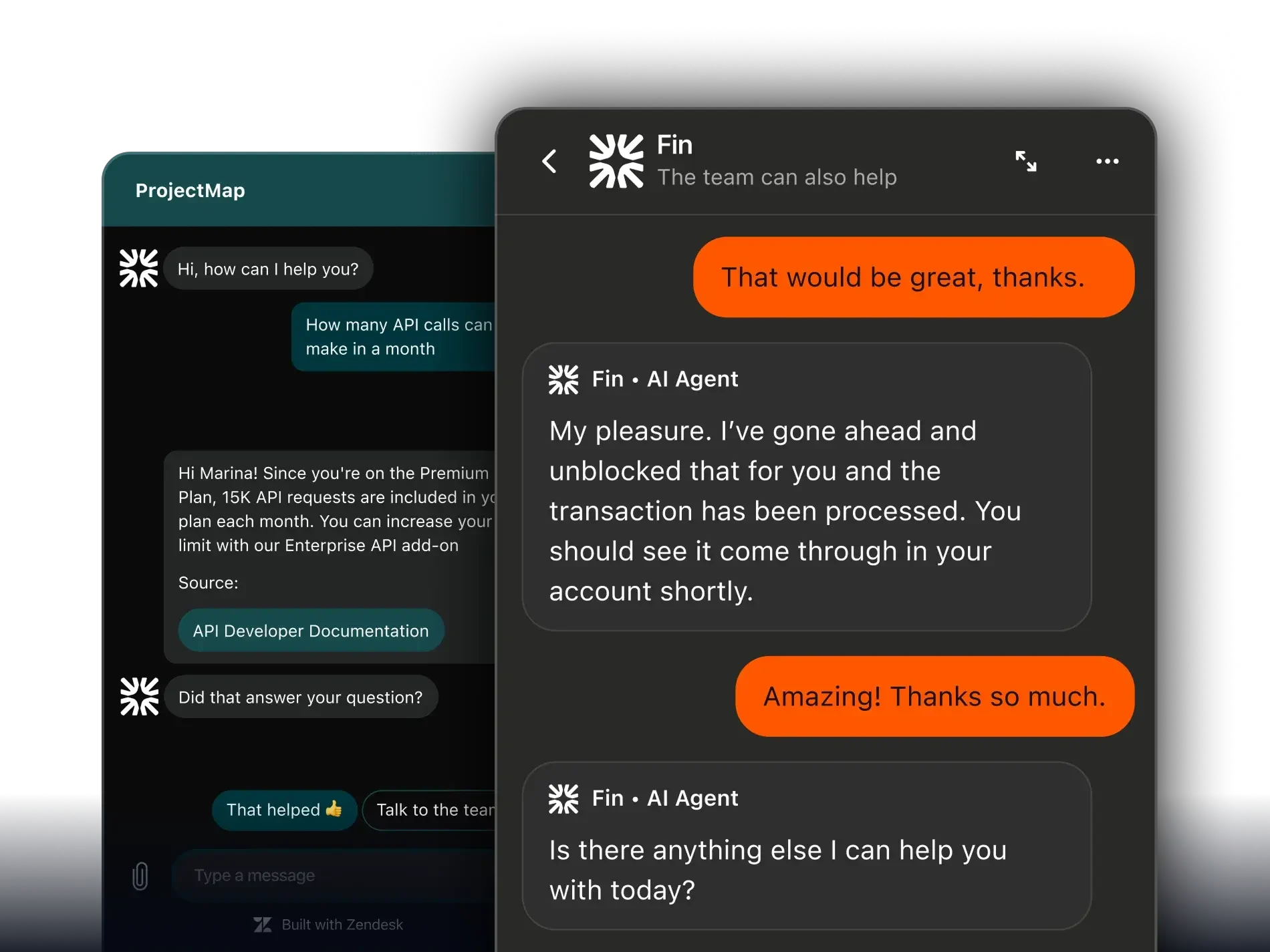
Zendesk deserves priority when a team can demonstrate that ticketing governance and administrator capacity are its core needs. Intercom deserves priority when the team can demonstrate that a digital customer-conversation workflow and knowledge-led service experience address the work it must handle. Sobot deserves priority when the team needs to validate connected messaging, chat, voice, ticketing, AI, and human-service continuity. None of these conditions creates a universal winner. A small team that needs a straightforward shared inbox may not need a broader operating scope at all.
Use public customer stories as context, not proof that your result will match someone else’s. Compare the platforms against your channel mix, data constraints, escalation policies, and administrator capacity. The honest selection rule is to choose the candidate that makes the highest-risk journey easier for your team to observe, own, correct, and repeat. For relevant operating situations, review Sobot customer stories.
What to Bring to a Sobot Evaluation
Sobot should be evaluated against the buyer’s actual chat, messaging, voice, ticketing, and escalation journeys when connected service context is the priority. Start by reviewing Sobot’s omnichannel service workflow, then bring five priority journeys, three escalation classes, the knowledge sources in use, the fields an agent must see, and the people who will own the workflow. Ask to see how the same exception moves from AI to a human and, where relevant, from messaging to voice or ticketing.
A useful commercial conversation follows that evidence. Request a scoped proposal that maps the required channels, roles, usage assumptions, implementation responsibilities, and support model. Ask each candidate to identify exclusions, optional components, and delivery responsibilities in writing. This turns pricing into a review of the actual operating model instead of a search for the lowest-looking number. If connected service continuity is one of your critical paths, book a Sobot demo around your five priority support journeys.
Frequently Asked Questions
Is Zendesk or Intercom better for customer support in 2026?
Zendesk can be the better fit when ticketing governance, configurable queues, and administrator ownership define the service model. Intercom can be the better fit when a digital customer-conversation workflow and knowledge-led service experience define the team’s need. Neither conclusion should be assumed from a generic feature list: make each platform demonstrate the same real support, escalation, and exception journeys before choosing.
Should ecommerce teams choose Zendesk or Intercom?
Ecommerce teams should compare Zendesk and Intercom against their own order, refund, delivery, and after-sales exceptions rather than treat ecommerce as one uniform workflow. The key test is whether the next owner can see the customer, order context, escalation reason, and permitted action when a conversation changes channel. If chat, WhatsApp, voice, and tickets must stay connected, include Sobot in the same pilot.
How should teams compare Zendesk and Intercom pricing?
Compare the commercial scope needed to support actual journeys, channels, AI use, administration, implementation work, and ongoing ownership rather than using an old seat-price snapshot. Request current, scoped commercial details from each vendor and document what changes when usage, channels, workflow complexity, or specialist escalation needs change. This comparison does not state or infer current platform prices.
How long should a Zendesk versus Intercom pilot run?
Thirty days is often enough to exercise representative support paths, involve the people who will operate the workflow, and inspect exceptions that a scripted demonstration may not reveal. It is not a rollout guarantee. Set a small number of shared journeys, record failed handoffs, correct them, and retest them before letting commercial preference outweigh the operating evidence.