Genesys and Avaya dominated the call center market for decades — but both were built in an era when “contact center” meant telephone. Their AI is bolted on, their digital channels are afterthoughts, and their implementations take months.
In 2026, a new generation of cloud-native and AI-native platforms offers faster deployment, true omnichannel coverage, and AI that works across voice and digital channels from day one. This guide compares the 10 best alternatives — including what Genesys Cloud CX still does well, and where it falls short.
At a Glance: Top Picks by Business Type
- Sobot — Best AI-first call center platform unifying voice, WhatsApp, chat, and social with inbound and outbound AI bots built from the ground up
- Talkdesk — Best cloud-native alternative for mid-size enterprises wanting AI without Genesys complexity
- Five9 — Best for outbound-heavy contact centres with high-volume predictive dialling needs
- RingCentral Contact Center — Best for businesses wanting UCaaS (unified communications) and contact centre bundled together
- NICE CXone — Best enterprise-grade alternative with deep workforce management AI
- 8×8 Contact Center — Best for organisations needing voice, video, and contact centre on one platform
- Aircall — Best lightweight cloud phone system for SMBs replacing legacy PBX without complex features
- Dialpad Contact Center — Best for teams wanting AI call transcription and coaching built into every conversation
- CloudTalk — Best budget-friendly cloud call center for SMBs in their first move away from legacy systems
- Nextiva — Best for SMBs wanting business phone and basic contact center bundled at low cost
Why Companies Are Leaving Genesys (and Avaya) in 2026
Genesys and Avaya built their reputations over decades selling on-premise call center infrastructure — hardware PBX systems, physical handsets, and on-site server rooms. In that era, “omnichannel” meant adding an email queue alongside the phone queue. “AI” meant pre-recorded IVR menus.
That era is over. Here is why businesses are actively seeking alternatives:
1. The digital channel gap.
Genesys and Avaya were architected around voice. Adding WhatsApp, Instagram DM, or live chat requires third-party connectors, separate vendor contracts, and data that never truly unifies. Agents still switch between systems. Customers still repeat themselves.
2. The AI retrofit problem.
Neither Genesys nor Avaya was built with AI at its core — AI was added later as a layer on top of voice infrastructure. The result: AI features that feel bolted on, limited to routing suggestions and basic IVR automation, rather than autonomous inbound bots that handle calls end-to-end or outbound AI agents that run campaigns without human intervention.
3. The cost structure.
Genesys Cloud CX starts at $75/agent/month and escalates sharply. Avaya enterprise licensing requires multi-year contracts with hardware maintenance. Total cost of ownership for a 100-seat Genesys deployment routinely exceeds six figures annually once implementation, training, and add-ons are factored in.
4. The implementation burden.
Genesys implementations commonly run 12–24 weeks. Avaya on-premise systems require dedicated IT staff and physical infrastructure. For businesses that need to move fast, this timeline is simply incompatible.
According to a Gartner analysis, 75% of enterprises are actively migrating contact centre infrastructure to cloud — and the primary drivers are cost reduction, digital channel coverage, and AI automation capability. The platforms below represent where that migration is heading.
How We Evaluated These Platforms
We assessed each platform across six dimensions:
- AI architecture — Is AI built into the platform’s core, or retrofitted on top of legacy voice infrastructure? Can AI handle full inbound and outbound calls autonomously?
- Channel unification — Are voice, WhatsApp, live chat, email, SMS, and social truly unified in one agent workspace, or connected via third-party middleware?
- Inbound and outbound AI bots — Can AI handle inbound call routing and resolution without a human? Can it run outbound campaigns autonomously?
- Pricing and deployment speed — What does a 50-seat deployment actually cost? How long to go live?
- Asia-Pacific suitability — WhatsApp coverage, multilingual AI, regional data centres, local support
- SMB vs. enterprise fit — Can smaller operations access meaningful AI features without enterprise-scale contracts?
The Full Picture: Traditional vs. Modern Call Center Platforms
Before the rankings, this framework shows where each platform sits in the market evolution:
| Generation | Platforms | Voice AI | Digital Channels | Outbound AI Bot | Deployment |
|---|---|---|---|---|---|
| Legacy | Genesys, Avaya | Basic IVR | Weak/connector-only | No | Months |
| Mid-generation cloud | NICE CXone, Five9, RingCentral, 8×8 | Improving | Partial/add-on | Limited | Weeks |
| New-generation AI-first | Sobot, Talkdesk, Dialpad | End-to-end AI | Native unified | Yes | Days |
| Lightweight SMB | Aircall, CloudTalk, Nextiva | Basic | Limited | No | Hours |
Quick Comparison Table
| Platform | Best For | AI Bot (Inbound) | AI Bot (Outbound) | Digital Channels Native | Starting Price | Setup Time |
|---|---|---|---|---|---|---|
| Sobot | AI-first omnichannel, Asia markets | ✅ End-to-end | ✅ Full outbound AI | ✅ WhatsApp, chat, social, SMS | Custom (free trial) | < 2 weeks |
| Talkdesk | Mid-enterprise cloud migration | ✅ Talkdesk AI Agent | Partial | Partial (add-on) | ~$75/agent/month | 2–4 weeks |
| Five9 | Outbound-heavy operations | ✅ Intelligent Virtual Agent | ✅ Predictive dialler + AI | Partial | Custom (~$149+) | 4–8 weeks |
| RingCentral | UCaaS + contact centre bundle | Partial | Partial | Partial (add-on) | $65–$169/agent/month | 3–6 weeks |
| NICE CXone | Enterprise workforce management | ✅ Enlighten AI | ✅ Outbound AI | Partial | Custom (~$100+) | 8–12 weeks |
| 8×8 | Voice + video + contact centre | Partial | Partial | Partial | $85–$140/agent/month | 3–5 weeks |
| Aircall | SMB cloud phone, simple setup | ❌ Basic IVR only | ❌ | ❌ | $30–$50/agent/month | < 2 weeks |
| Dialpad | AI transcription + coaching | ✅ AI recaps | ❌ | Partial | $80+/agent/month | < 2 weeks |
| CloudTalk | Budget SMB, first cloud migration | ❌ Basic | ❌ | ❌ | $25–$50/agent/month | 2–4 weeks |
| Nextiva | SMB UCaaS + basic call center | ❌ Basic IVR | ❌ | ❌ | $18.95–$52.95/user/month | < 2 weeks |
| Genesys Cloud CX (benchmark) | Complex enterprise routing | ✅ But retrofitted | Partial | Partial/connector | $75–$155+/agent/month | 12–24 weeks |
| Avaya (benchmark) | Legacy on-premise voice | ❌ IVR only | ❌ | ❌ Requires add-ons | Custom (hardware + licence) | 12–24 weeks |
The Benchmarks: Why People Are Leaving Genesys and Avaya
Genesys Cloud CX — The Legacy Leader With a Digital Channel Problem
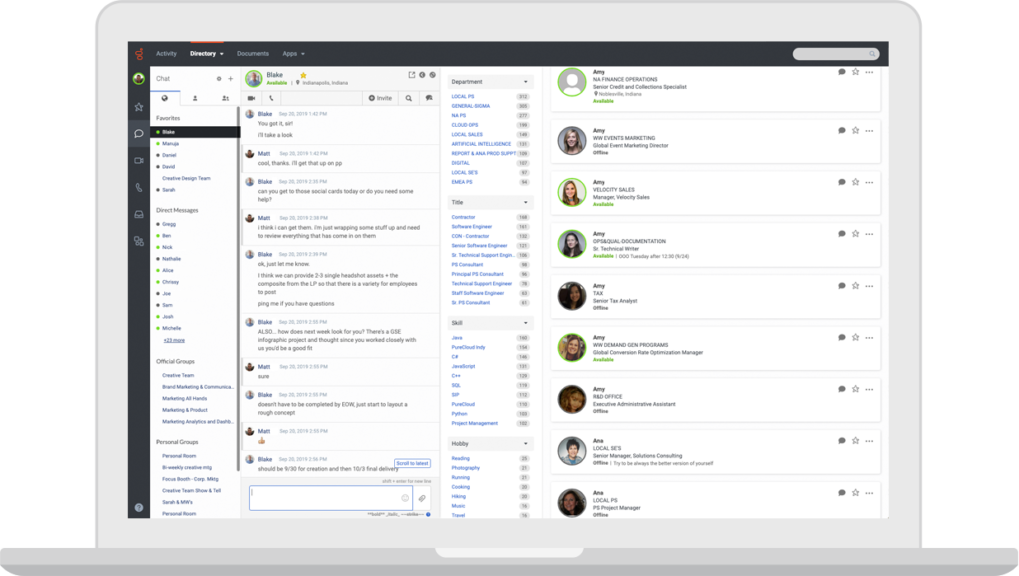
Genesys is the most widely deployed enterprise contact centre platform in the world, and its routing and workforce management capabilities are genuinely mature. The problem is architecture: Genesys was built around voice and has been adding digital channels as connectors for over a decade. The result is a platform where an agent handling a WhatsApp message and a phone call simultaneously is still switching between different interfaces or relying on middleware integrations.
Genesys’s AI (powered by its own models and Google CCAI integrations) can handle IVR routing and basic conversational bots, but full autonomous inbound call resolution and AI-driven outbound campaigns require significant customisation that most mid-market businesses cannot resource.
Why companies are leaving:
- Implementation takes 12–24 weeks minimum for full deployment
- Pricing starts at $75/agent/month but enterprise features push total cost significantly higher
- Digital channels (WhatsApp, social) require third-party connectors — no native integration
- AI features feel bolted onto voice infrastructure rather than native
- Contract structures (multi-year) limit flexibility for growing businesses
Still the right choice if: You’re a large enterprise with a dedicated Genesys admin team, complex multi-site routing requirements, and existing Genesys infrastructure worth preserving.
Avaya Experience Platform — On-Premise Legacy in a Cloud World
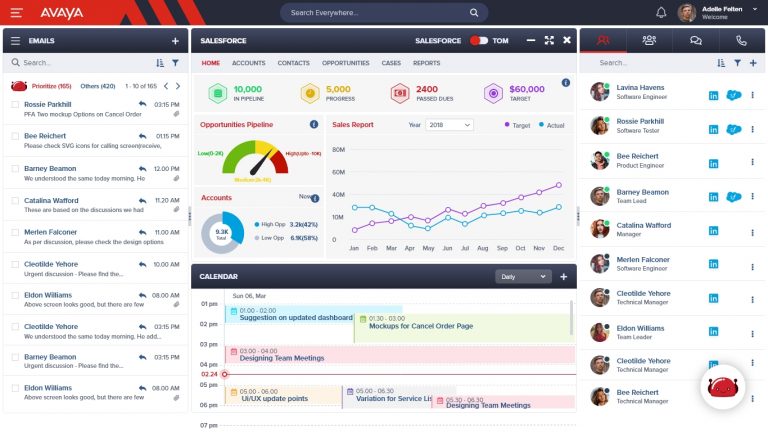
Avaya built its business on hardware — PBX systems, physical handsets, on-site infrastructure. Its cloud platform (Avaya Experience Platform) exists, but the product’s DNA is still on-premise. Companies that run Avaya typically have data centres, maintenance contracts, and IT teams dedicated to managing the hardware.
Why companies are leaving:
- On-premise infrastructure requires capital investment in hardware, maintenance, and dedicated IT
- No meaningful AI-native capability — IVR menus are the primary automation
- Digital channels (WhatsApp, live chat, social) require separate systems entirely
- Avaya’s financial instability (two Chapter 11 bankruptcy filings) creates vendor risk concerns
- Cloud migration from on-premise Avaya is a complex, multi-year project
Still the right choice if: You have existing Avaya hardware under active support contracts and no immediate budget to migrate.
The 10 Best Genesys Alternatives
1. Sobot – Best Genesys Alternative for AI-Native Omnichannel
Best for: Organisations that want voice, WhatsApp, live chat, social, and email unified in one platform, with AI bots handling both inbound calls and outbound campaigns natively — not through add-ons
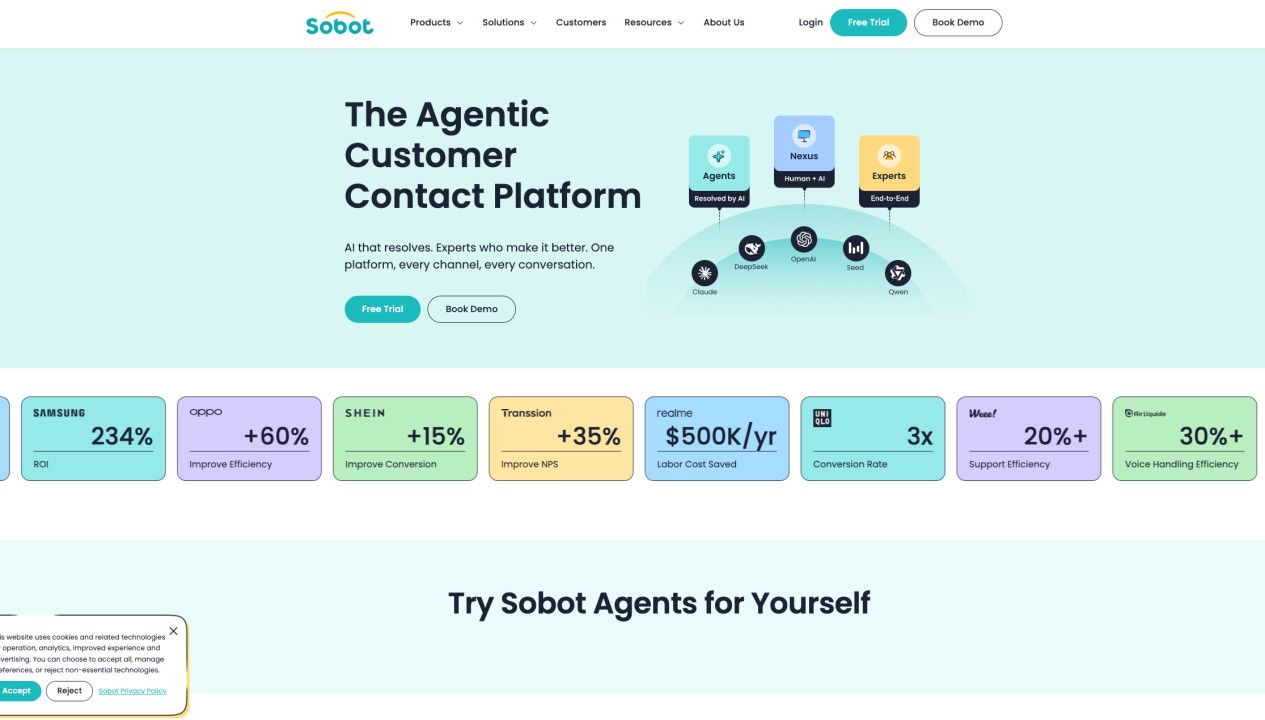
Sobot occupies a fundamentally different position from every other platform on this list. While Genesys, NICE, and Five9 started as voice platforms and added AI and digital channels over time, Sobot was designed AI-first — the platform’s architecture treats AI as the core processing layer, with voice, messaging, and digital channels as the delivery mechanisms on top.
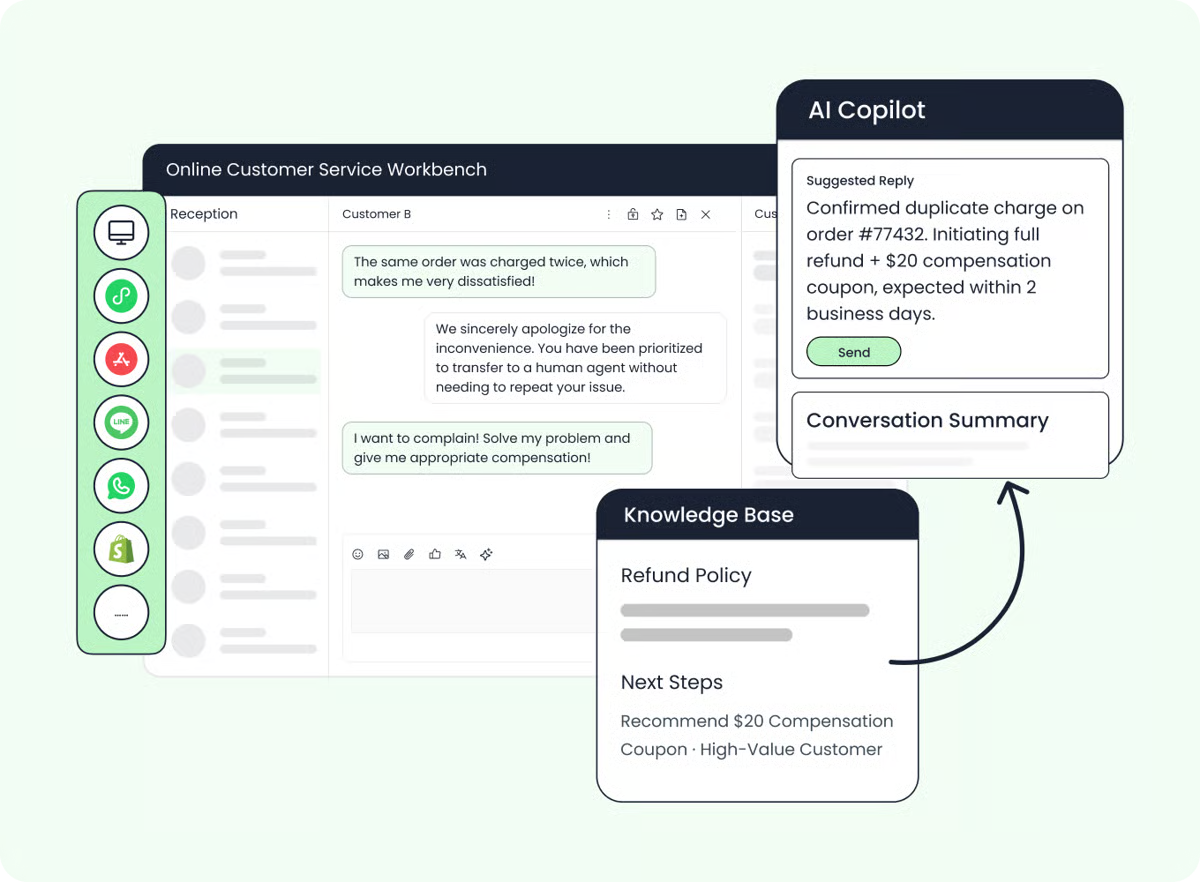
This distinction matters in practice. When a customer calls Sobot’s inbound AI voice bot, it’s not routing them through a menu tree — it’s the same LLM-powered AI engine that handles WhatsApp messages and live chat queries, with access to the same knowledge base and the same customer history. The AI understands context across channels and can continue a conversation that started on WhatsApp and moved to a phone call without starting from zero.
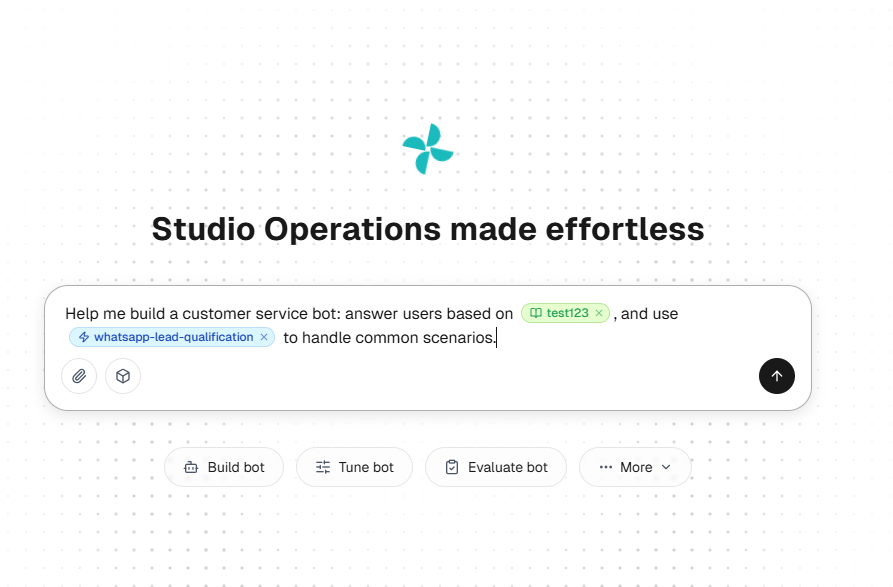
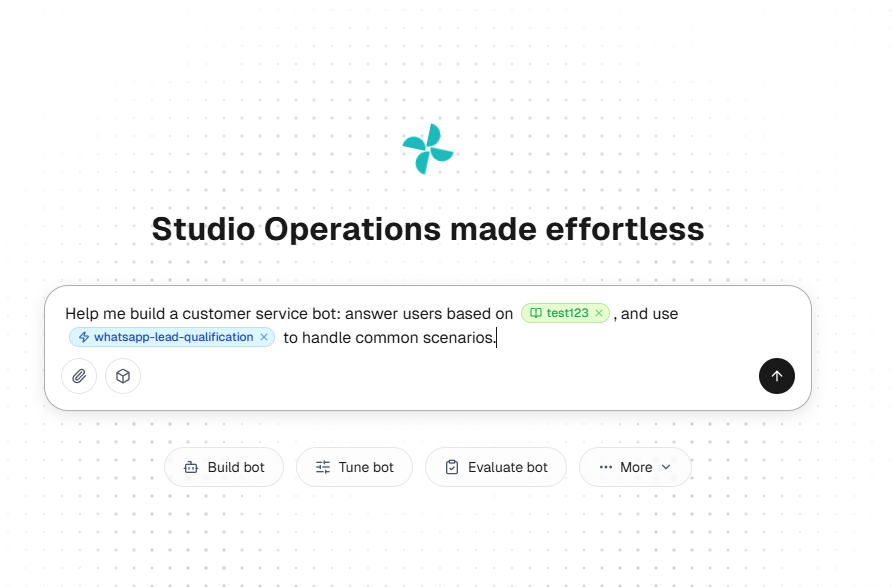
1. Inbound AI Voicebot
2. Outbound AI Voicebot
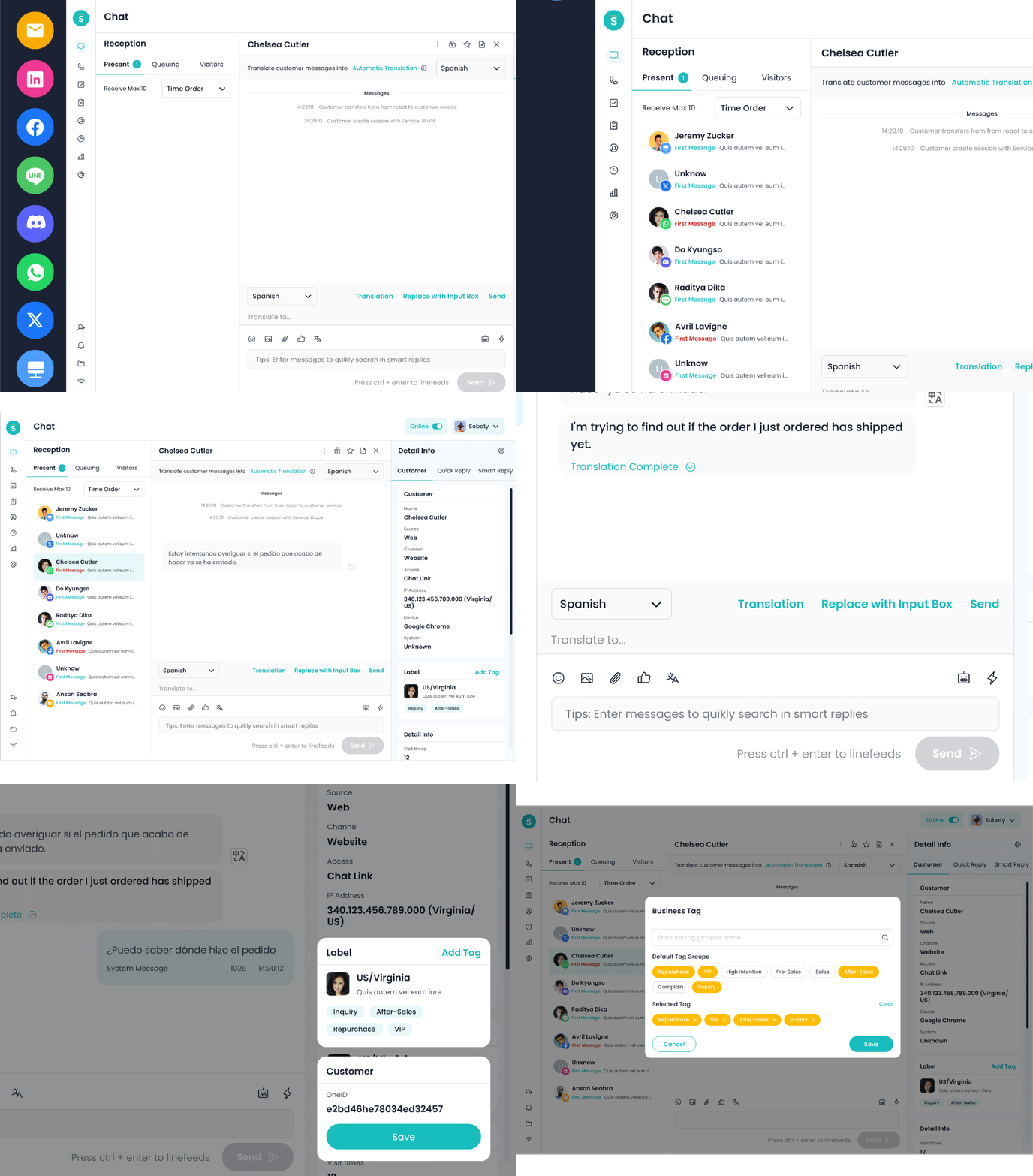
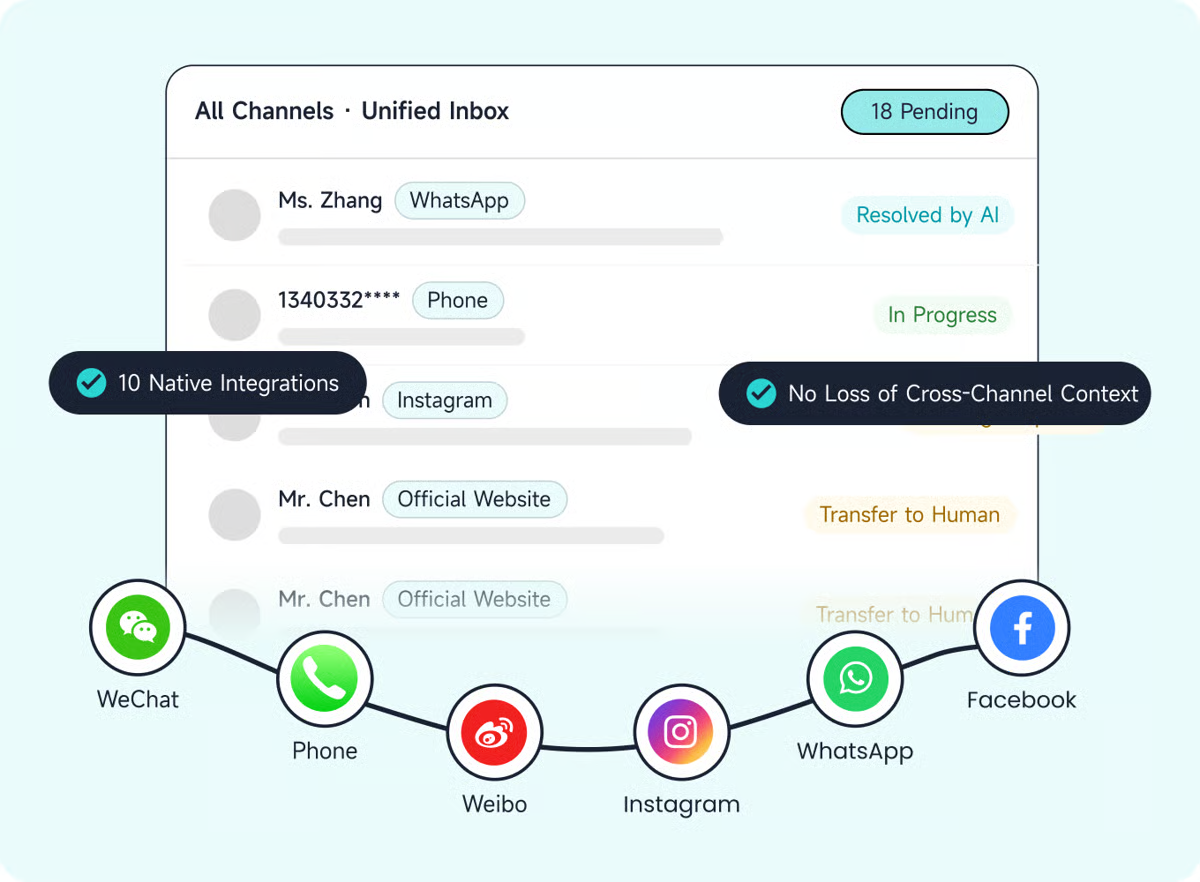
3. Channel unification
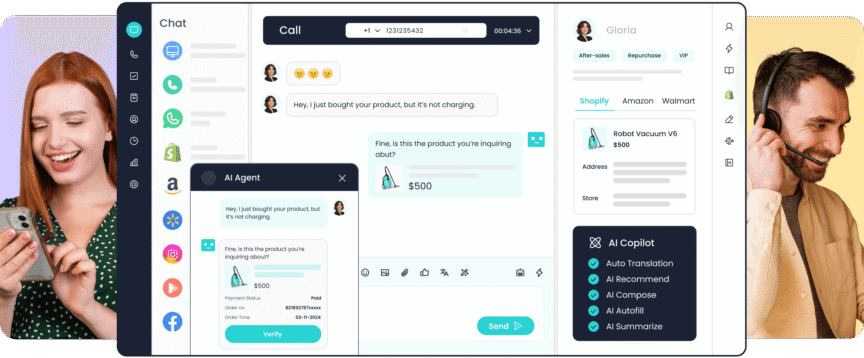
Why Sobot beats Genesys: Deploys in under 2 weeks vs. Genesys’s 12–24 weeks, includes native WhatsApp + AI voicebot with no add-ons, and achieves 83% autonomous inbound resolution—Genesys’s AI requires third-party customization to approach that figure.
Key Features:
- AI-first architecture: same AI model powers inbound voice bot, outbound voice bot, chat bot, and agent assist simultaneously
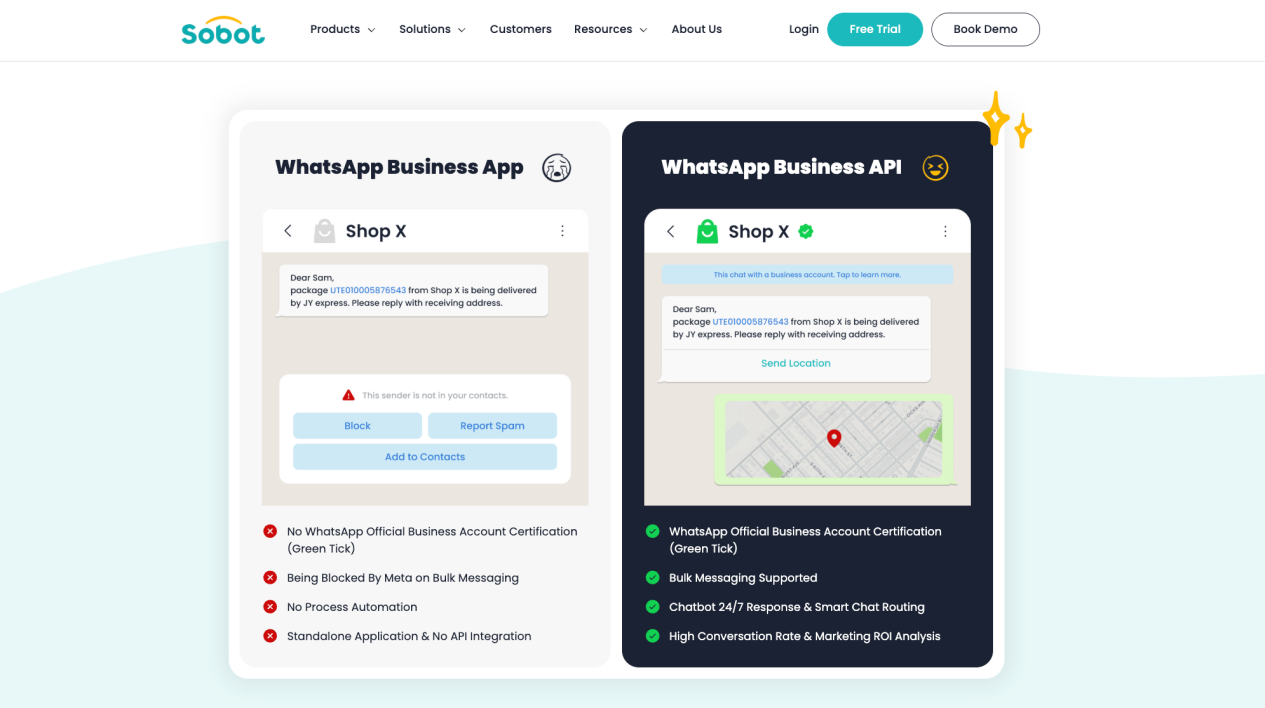
- Native WhatsApp Business API — Sobot is a Meta Business Solution Provider — enabling bulk messaging, automated flows, and full conversation history unified with voice records
- 100+ country calling coverage with local number provisioning
- Voice quality infrastructure: 99.99% uptime SLA, 3 million calls daily capacity
- Deployment speed: standard contact centre setup in under 12 hours for most configurations — compared to weeks for Genesys
- 18+ language support across voice and digital channels: AI trained on Malay, Mandarin, Bahasa, Arabic, Thai, and more
- Flexible per-agent pricing that scales down for SMBs — not just enterprise contracts
G2 Rating: 4.9/5
Real Customer Results:
- OPPO (electronics, 60+ countries): 83% of inbound queries resolved by AI without human agent; 94% positive feedback rate; 57% increase in customer repurchase rate
- Renogy (ecommerce): 45% increase in resolution rate; chatbot independently handles 80%+ of inbound contacts; CSAT reached 95%; escalation rate dropped from 50% to 30%
- Michael Kors (global retail): 83% reduction in average response time; 95% CSAT; 20% conversion rate increase
- Samsung: 97% CSAT sustained across high-volume operations
- Weee! (US ecommerce, 40,000 daily orders): Replaced a rigid legacy IVR with Sobot’s AI-enabled voice system. Result: 96% CSAT; 20% increase in agent efficiency; 50% reduction in resolution time. Sobot handled multilingual support across Chinese, Hispanic, Korean, and Vietnamese customers across multiple US time zones — from a single platform.
- J&T Express (13-country logistics, 400,000+ employees): Deployed Sobot’s WhatsApp Business solution alongside voice for delivery notifications and COD collection. Result: 50% reduction in operational costs; 35% increase in delivery rate; 40% increase in Cash-on-Delivery collection rate.
Pricing: Custom — contact sales for a quote tailored to your agent count and channel mix. 15-day free trial available with no credit card required.
| Pros | Cons |
|---|---|
| AI-first architecture — inbound bot, outbound bot, and agent assist share one AI brain, not three separate tools | Pricing requires a sales conversation — no self-serve plan calculator |
| Native WhatsApp + voice combination is rare and genuinely unified, not middleware-connected | Newer market entrant compared to Genesys or NICE — fewer Western enterprise reference customers publicly listed, though Asia-Pacific deployments (Samsung, OPPO, Michael Kors) are well-documented |
| 100+ country voice coverage with 99.99% uptime | Full enterprise configuration (multi-site, complex routing) typically takes 1–2 weeks |
| Deployment in under 12 hours for standard setups — weeks faster than Genesys | Less established partner ecosystem compared to Genesys or NICE |
| Strongest multilingual AI in this category — 18+ languages with native training | |
| Competitive pricing vs. Genesys/NICE/Five9 for equivalent capability |
TL;DR: Sobot is the strongest choice when you need voice and digital channels truly unified under one AI layer, when your market includes Asia or WhatsApp-dominant regions, and when Genesys’s pricing and implementation timeline are dealbreakers. The outbound AI bot capability in particular is a differentiator that most platforms on this list cannot match natively.
2. Talkdesk – Best Cloud Migration Path for Mid-Market Enterprises
Best for: Mid-size enterprises wanting modern cloud call center AI without Genesys complexity or pricing
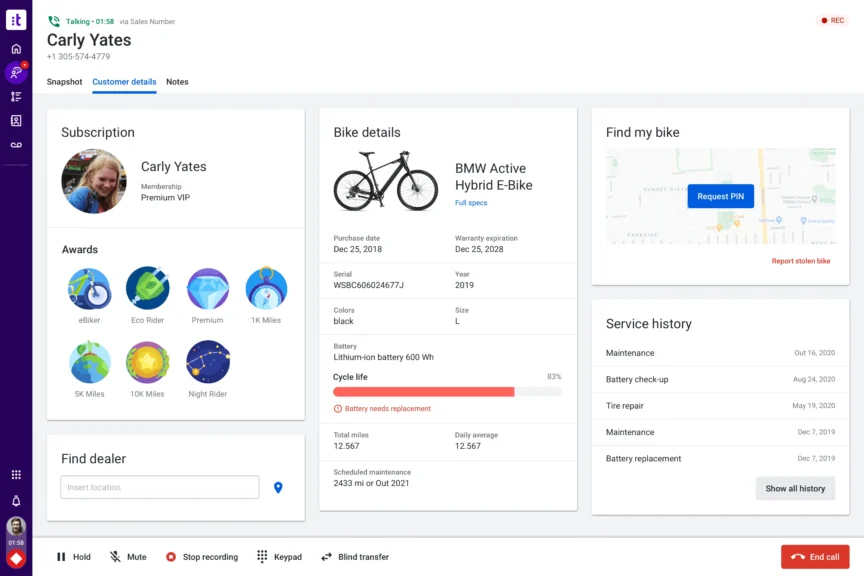
Talkdesk is a cloud-native contact centre platform that has invested heavily in AI over the past three years, resulting in a more genuinely capable AI layer than most legacy alternatives. Its AI Agent handles inbound query resolution, and its Copilot feature provides real-time guidance to human agents during live calls.
Why TalkDesk beats Genesys: Faster cloud deployment (2–4 weeks vs. 12–24), genuinely modern AI Copilot built into the platform rather than retrofitted, and no requirement for dedicated Genesys administrators to maintain.
Key Features:
- Talkdesk AI Agent: autonomous inbound resolution for common queries
- Copilot: real-time AI coaching and next-best-action suggestions for live agents
- Talkdesk CX Cloud: omnichannel across voice, chat, email, and SMS
- Industry-specific AI packages for retail, financial services, and healthcare
- 30+ pre-built integrations with major CRM and ecommerce platforms
G2 Rating: 4.4/5 from 2,200+ reviews
“Talkdesk’s AI has meaningfully reduced our handle times — the Copilot feature alone saves agents 20–30 seconds per call by surfacing the right knowledge article instantly.” — G2 reviewer, financial services company
Pricing: CX Cloud Essentials from ~$75/agent/month; Elite from ~$125/agent/month.
| Pros | Cons |
|---|---|
| Genuinely modern AI — not IVR menus with a new label | WhatsApp integration requires add-on configuration, not truly native |
| Fast cloud deployment compared to Genesys — typically 2–4 weeks | Outbound AI bot is less developed than Sobot or Five9 |
| Good industry-specific AI packages | Pricing still elevated compared to newer cloud-native alternatives |
| Real-time agent coaching via Copilot is practically useful | Digital channel coverage (social, WhatsApp) is partial |
| Strong analytics and reporting | Less proven at very large scale (1,000+ agents) vs. NICE or Genesys |
TL;DR: Talkdesk is the most practical mid-market step up from Genesys — genuinely better AI, faster deployment, similar enterprise positioning. The gap vs. Sobot is in WhatsApp depth and outbound AI.
3. Five9 — Best for High-Volume Outbound Campaigns with AI Dialing
Best for: Contact centres running high-volume outbound campaigns alongside inbound support
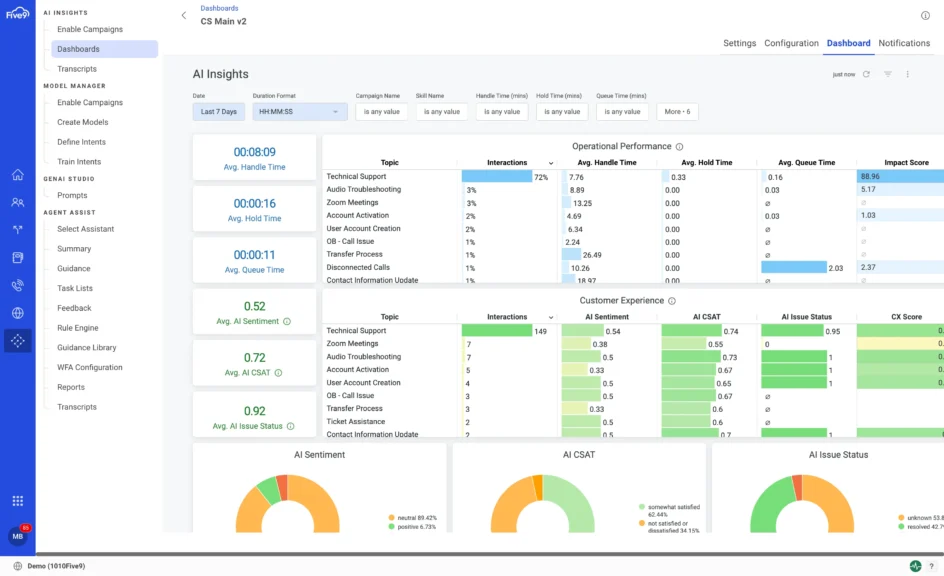
Five9‘s primary strength is outbound — its predictive dialler with AI-driven pacing is among the most capable available, and its Intelligent Virtual Agent (IVA) handles both inbound call resolution and outbound campaign automation. For organisations where outbound calling (collections, appointment reminders, proactive service) is a major workload, Five9’s architecture is purpose-built.
Why Five9 beats Genesys: Its outbound AI bot runs campaigns autonomously—Genesys requires manual agent involvement on outbound. Predictive dialer with AI pacing handles compliance (TCPA, GDPR) Genesys cannot match natively.
Key Features:
- Predictive dialler with compliance controls (TCPA, GDPR) and AI pacing
- Intelligent Virtual Agent: AI handles inbound calls and outbound campaign calls
- Five9 Genius AI: real-time agent guidance, automatic summarisation, sentiment analysis
- Blended inbound/outbound agent management
- Integrations with Salesforce, ServiceNow, Microsoft Dynamics, Zendesk
G2 Rating: 4.1/5 from 500+ reviews
Pricing: Custom — typically $149+/agent/month for enterprise deployments.
| Pros | Cons |
|---|---|
| Best predictive dialler with AI pacing in this category | Higher cost than most alternatives at similar scale |
| Outbound AI bot handles campaigns autonomously | Digital channels (WhatsApp, social) are less mature than voice |
| Blended inbound/outbound agent management is sophisticated | Limited multilingual AI capability |
| Good compliance controls for regulated outbound industries | Interface complexity requires dedicated admin resources |
| Strong Salesforce and enterprise CRM integrations | Less suited for digital-first or messaging-heavy operations |
TL;DR: Five9 leads for outbound-heavy operations. For organisations that need strong outbound AI AND native digital channel coverage, Sobot’s combination is more complete.
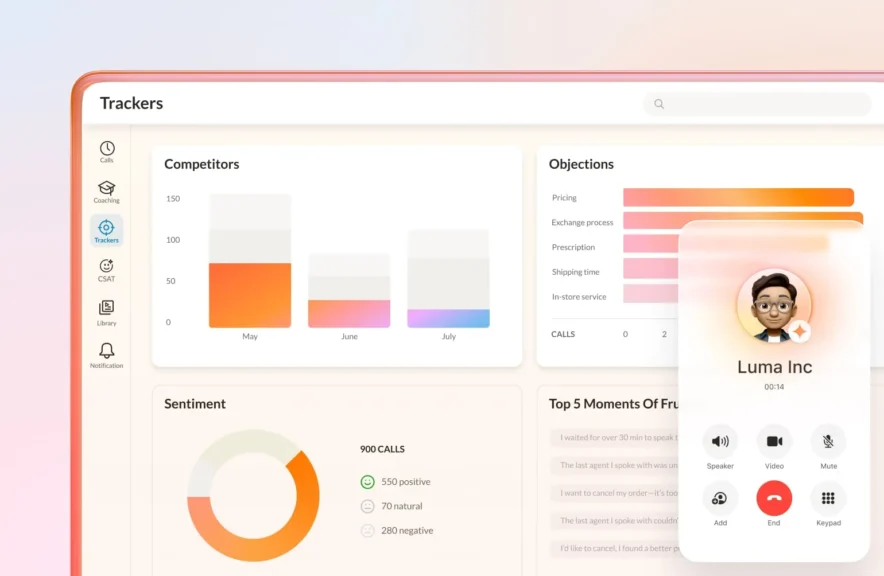
4. RingCentral Contact Center — Best for UCaaS + Contact Center on One Contract
Best for: Businesses wanting UCaaS (internal communications) and contact centre on one vendor contract
RingCentral‘s proposition is consolidation: replace your internal business phone system (UCaaS) and your customer-facing contact centre with one platform. For businesses currently running separate systems for internal comms and external support, this reduces vendor complexity. Contact centre AI capabilities (routing, IVR, analytics) are solid but not leading-edge.
Why RingCentral beats Genesys: Combines UCaaS and contact center on one contract at $65–169/agent vs. Genesys’s $75+ plus separate internal comms costs. No multi-year lock-in, faster deployment, and simpler administration.
Key Features:
- RingCX: AI-powered contact centre with omnichannel routing
- RingCentral MVP: UCaaS for internal communications unified with contact centre
- AI-powered IVR and intelligent routing
- CRM integrations with Salesforce, Zendesk, ServiceNow
- Analytics and workforce management built in
G2 Rating: 4.1/5 from 1,300+ reviews (Contact Center product)
Pricing: RingCX from $65/agent/month; higher tiers up to $169/agent/month.
| Pros | Cons |
|---|---|
| Best consolidation play if you also need to replace internal business phone | Contact centre AI is not leading-edge — routing and basic IVR, not autonomous resolution |
| Lower cost than Genesys or NICE for equivalent channel coverage | WhatsApp and social channels require add-on configuration |
| Decent omnichannel across voice, chat, SMS, and email | Outbound AI bot capability is limited |
| Good UCaaS + contact centre bundling for SMB/mid-market | Complex organisations often need separate best-of-breed tools anyway |
| Established vendor with strong uptime history | Less suited for Asia-Pacific markets — WhatsApp depth is weak |
TL;DR: Good if consolidating internal and external communications is the primary goal. Not the right choice if leading-edge AI automation or WhatsApp coverage in Asia are the priority.
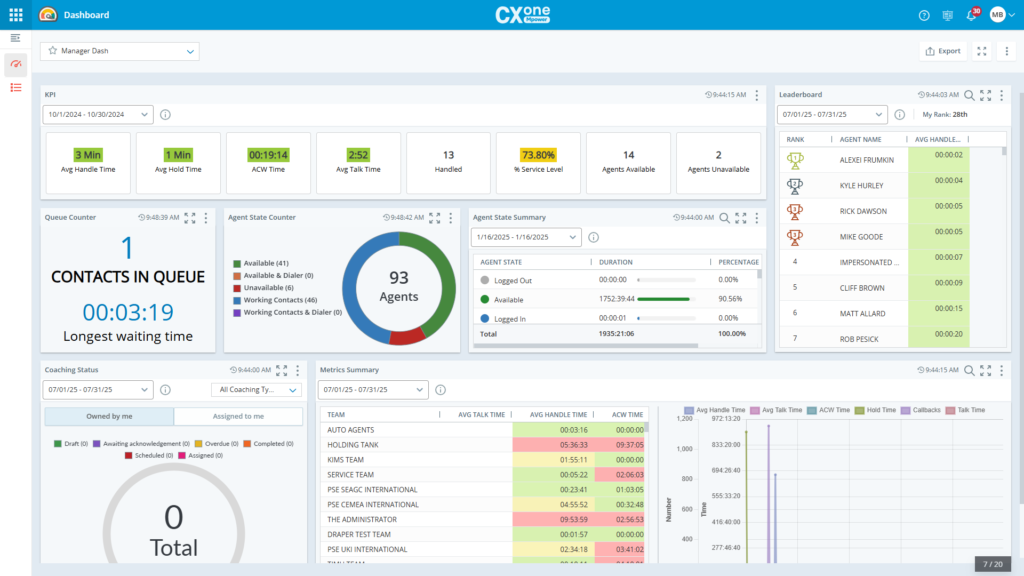
5. NICE CXone — Best for Large-Scale Workforce Management AI
Best for: Large enterprises needing AI-powered workforce optimisation, quality management, and analytics at contact-centre scale
NICE CXone‘s differentiator is workforce engagement management (WEM) — its AI for forecasting, scheduling, quality scoring, and agent coaching is among the most sophisticated available. For contact centres with 200+ agents where workforce planning is itself a major operational challenge, NICE’s WEM capabilities justify the investment.
Why Nice CXone beats Genesys: Enlighten AI workforce management—forecasting, scheduling, quality scoring—operates at a depth Genesys cannot match natively. For 200+ agent operations, NICE WEM justifies the switch even when voice capability is comparable.
Key Features:
- Enlighten AI: customer sentiment analysis, agent behaviour scoring, and predictive routing
- Workforce engagement management: AI-powered forecasting, scheduling, and quality automation
- CXone Studio: visual flow builder for IVR and bot design
- Omnichannel across voice, digital, and social (partial — voice remains primary)
- Open cloud APIs for custom integrations
G2 Rating: 4.3/5 from 1,700+ reviews
Pricing: Custom — typically $100+/agent/month for full WEM capabilities.
| Pros | Cons |
|---|---|
| Best-in-class workforce management AI — forecasting and scheduling are industry-leading | Enterprise pricing with no self-serve option |
| Enlighten AI quality scoring automates what previously required manual QA sampling | WhatsApp and social channels are partial — voice remains the primary channel |
| Strong regulatory compliance for financial services and healthcare | Complex implementation — typically requires NICE professional services |
| Proven at very large scale (1,000+ agent deployments) | Less suited for digital-first or messaging-first operations |
| Good speech analytics and real-time agent coaching | Outbound AI bot less capable than Five9 or Sobot |
TL;DR: The right choice when workforce management at scale is the primary pain point — forecasting, quality scoring, and scheduling optimisation. Not the right choice when AI bot autonomy or WhatsApp coverage are the priority.
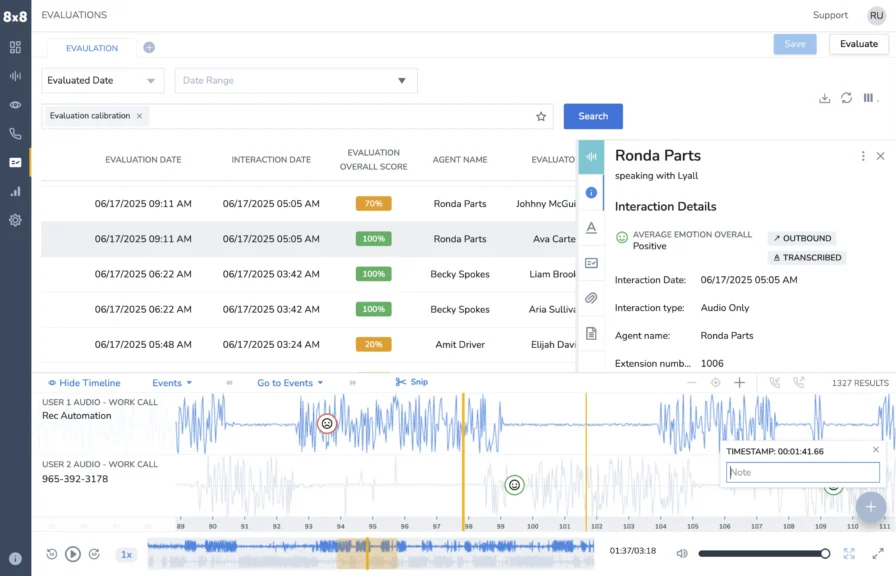
6. 8×8 Contact Center — Best for Voice + Video + Contact Center Consolidation
Best for: Mid-size organisations wanting voice, video, and contact centre unified without separate vendor contracts
8×8 offers a similar proposition to RingCentral — unifying internal communications (UCaaS) with customer-facing contact centre. Its AI capabilities are more limited than NICE or Talkdesk, but its pricing is competitive and deployment is faster than legacy enterprise platforms.
Why 8×8 beats Genesys: Delivers voice + video + contact center on one contract without Genesys’s hardware dependency or multi-month implementation. For mid-size teams not needing enterprise routing complexity, it’s faster and more affordable.
Key Features:
- Omnichannel contact centre: voice, chat, email, SMS, social
- 8×8 Intelligent Customer Assistant: IVR with some conversational AI capability
- Real-time supervisor analytics and agent coaching tools
- Built-in video (8×8 Meet) unified with contact centre
- 55+ country direct dial coverage
G2 Rating: 4.2/5 from 200+ reviews
Pricing: X6 from $85/agent/month; X8 from $140/agent/month.
| Pros | Cons |
|---|---|
| Good UCaaS + contact centre bundling — voice, video, and support on one contract | AI bot capability is limited — primarily IVR rather than autonomous resolution |
| Competitive pricing vs. Genesys for similar channel breadth | WhatsApp integration is partial — not natively unified |
| 55+ country calling coverage | Less suited for very large contact centres (200+ agents) |
| Faster implementation than legacy platforms | Outbound AI campaign capability is limited |
| Video integration is genuinely useful for escalation workflows | Limited multilingual AI support |
TL;DR: A practical mid-market alternative to Genesys when the UCaaS consolidation angle matters and AI automation depth is secondary.
7. Aircall — Best for SMBs Moving Off Hardware Phones for the First Time
Best for: SMBs replacing a legacy business phone system for the first time and wanting a simple, fast cloud setup
Aircall is not a contact centre platform in the enterprise sense — it’s a cloud phone system with basic queue management and some CRM integration. For small businesses that currently use hardware phones or a basic PBX and need to move to cloud without complexity, Aircall delivers on speed and simplicity.
Why Aircall beats Genesys: Live in hours, not months. For SMBs, Genesys’s implementation timeline and pricing ($75+/agent) is simply disproportionate. Aircall delivers cloud telephony at $30/agent with same-day setup—no Genesys overhead needed.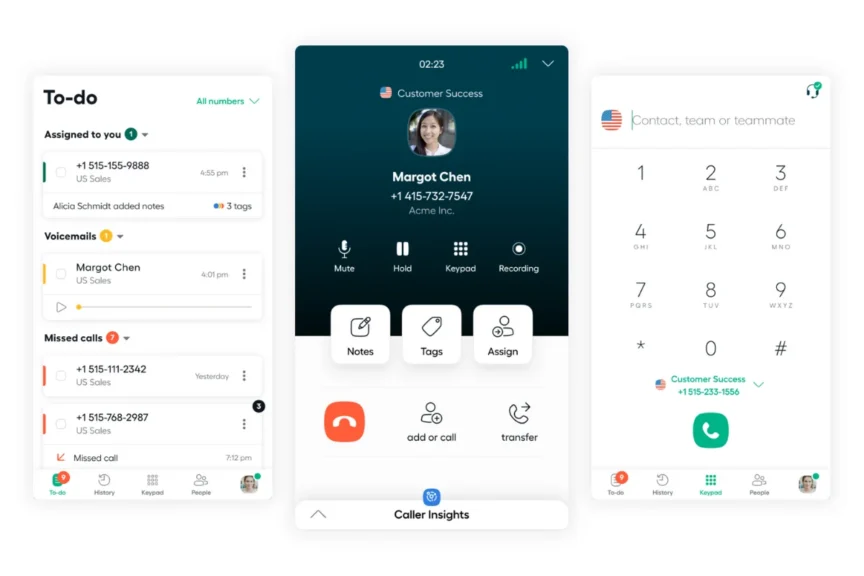
Key Features:
- Cloud phone system with call routing, queuing, and IVR
- Integrations with HubSpot, Salesforce, Intercom, and Shopify
- Call recording, transcription, and basic analytics
- Browser and mobile app — no hardware required
- Team performance dashboards
G2 Rating: 4.4/5 from 1,500+ reviews
“Aircall replaced our office PBX in 2 days and the team adopted it immediately — no training required.” — G2 reviewer, 50-person SMB
Pricing: Essentials from $30/user/month; Professional from $50/user/month.
| Pros | Cons |
|---|---|
| Fastest setup in this category — hours, not weeks | No AI bot capability — human agents handle all calls |
| Simple, intuitive interface — minimal training required | No WhatsApp or social media channels |
| Affordable entry price for small teams | Not suited for outbound campaigns — basic dialling only |
| Good CRM integrations for SMB tools | Outgrown quickly by contact centres above 30–50 agents |
| No hardware required — fully browser and app-based | Limited analytics compared to enterprise platforms |
TL;DR: Aircall is the right first step for small businesses moving off hardware phones. It’s not a contact centre replacement for Genesys — it’s a business phone system.
8. Dialpad Contact Center — Best for Real-Time AI Coaching and Call Summarization
Best for: Teams that want AI call transcription, real-time coaching, and automatic call summarisation built into every conversation
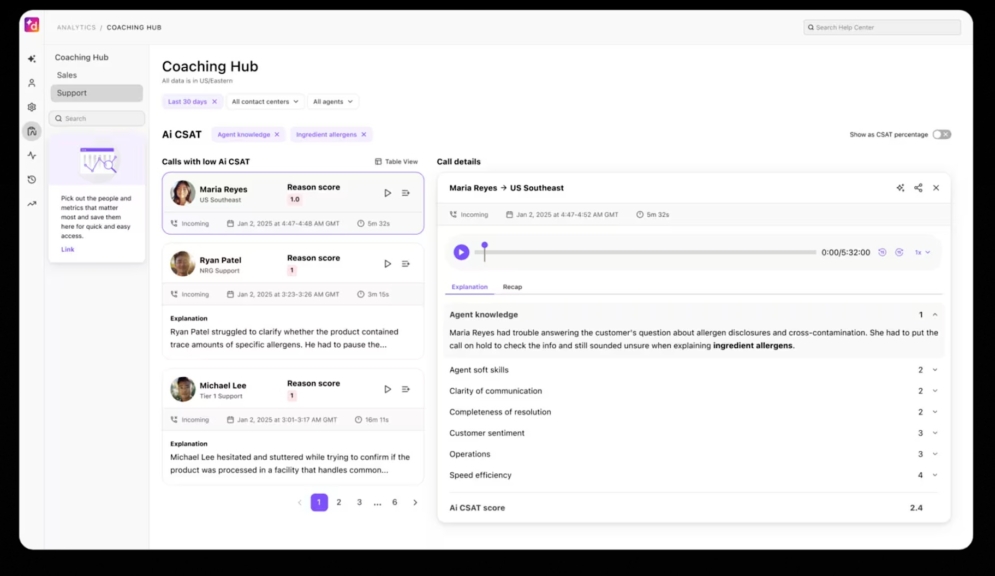
Dialpad‘s primary differentiator is its proprietary AI — DialpadGPT — which transcribes every call in real time, identifies action items, coaches agents based on talk patterns, and generates automatic post-call summaries that populate directly into CRM. For teams where call quality and agent coaching are high priorities, this is more practical than Genesys’s analytics dashboards.
Why Dialpad beats Genesys: Real-time AI transcription, live coaching, and automatic CRM-populated summaries are built into every call at $80/agent—Genesys charges enterprise rates to approach this analytics depth and still requires separate QA tooling.
Key Features:
- Real-time transcription and sentiment analysis on every call
- AI-generated post-call summaries with action items
- Live agent coaching: alerts when agents are speaking too fast, using filler words, or missing key topics
- Omnichannel: voice, chat, SMS, and some social
- Native integrations with Salesforce, HubSpot, Google Workspace
G2 Rating: 4.4/5 from 600+ reviews
Pricing: Contact Center from ~$80/agent/month; custom enterprise pricing.
| Pros | Cons |
|---|---|
| Best real-time AI coaching in this category — genuinely practical for new agent onboarding | Outbound AI bot capability is limited |
| Automatic call summarisation saves significant post-call admin time | WhatsApp integration is not native |
| Clean interface — lower learning curve than Genesys or NICE | Less suited for very high-volume contact centres |
| Good CRM integration with auto-logging of call summaries | AI autonomy for inbound resolution is less developed than Sobot or Talkdesk |
| Competitive pricing for the AI features provided | Limited multilingual support |
TL;DR: Dialpad wins on call quality, coaching, and post-call admin reduction. The gap vs. Sobot is in autonomous AI resolution and WhatsApp/digital channel coverage.
9. CloudTalk — Best Budget Option for SMBs Making Their First Cloud Migration
Best for: Budget-conscious SMBs making their first move from a legacy phone system to cloud, with minimal AI requirements
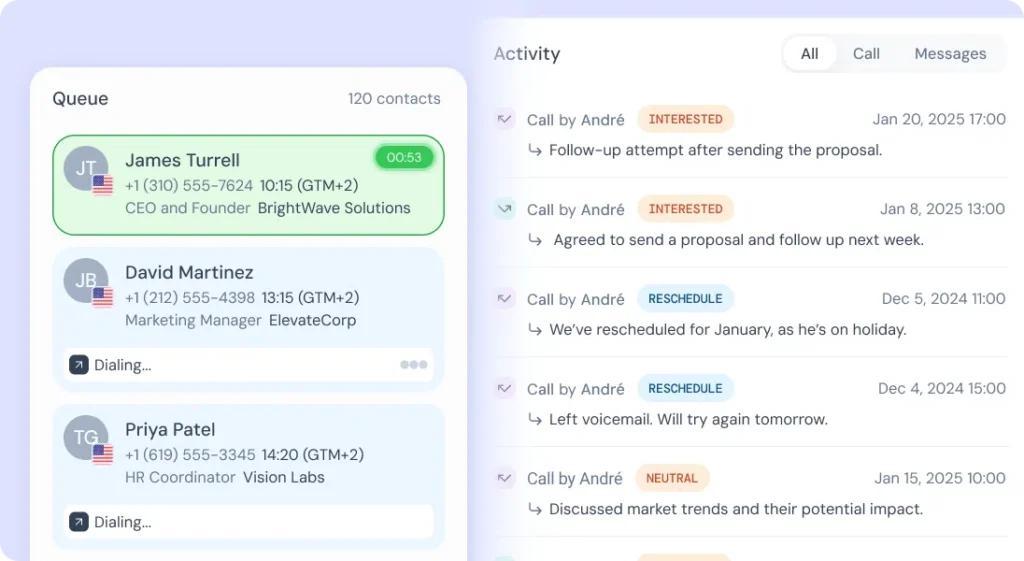
CloudTalk is a simple, affordable cloud call centre tool aimed at SMBs. It offers call routing, IVR, basic analytics, and integrations with popular CRM tools. AI capability is minimal — the value proposition is affordability and ease of use, not automation depth.
Why CloudTalk beats Genesys: At $25/agent with same-day setup, CloudTalk removes every barrier Genesys creates for small teams: no multi-month implementation, no hardware, no minimum seat commitment, no six-figure annual contracts.
Key Features:
- Cloud call centre with queue management and IVR
- 160+ international numbers available
- CRM integrations with HubSpot, Salesforce, Pipedrive
- Call recording and basic analytics
- Browser-based — no hardware required
G2 Rating: 4.4/5 from 1,700+ reviews
Pricing: Starter from $25/agent/month; Essential from $30/agent/month; Expert from $50/agent/month.
| Pros | Cons |
|---|---|
| Most affordable entry price on this list | No meaningful AI bot capability |
| Easy to set up — live in hours | No WhatsApp or digital channels |
| Good international number coverage for SMBs | Very limited analytics and reporting |
| Integrates with common SMB CRM tools | Not suitable for contact centres above 50 agents |
| Simple interface — low training requirement | Outbound dialling is basic — no predictive AI |
TL;DR: CloudTalk is a budget entry point, not a Genesys alternative in terms of capability. If you’re migrating from Genesys, you’ll likely outgrow CloudTalk within 12 months.
10. Nextiva — Best for Very Small Teams Wanting a Simple Business Phone + Basic Queue
Best for: Small businesses that need basic inbound call handling, business phone, and simple CRM in one affordable package
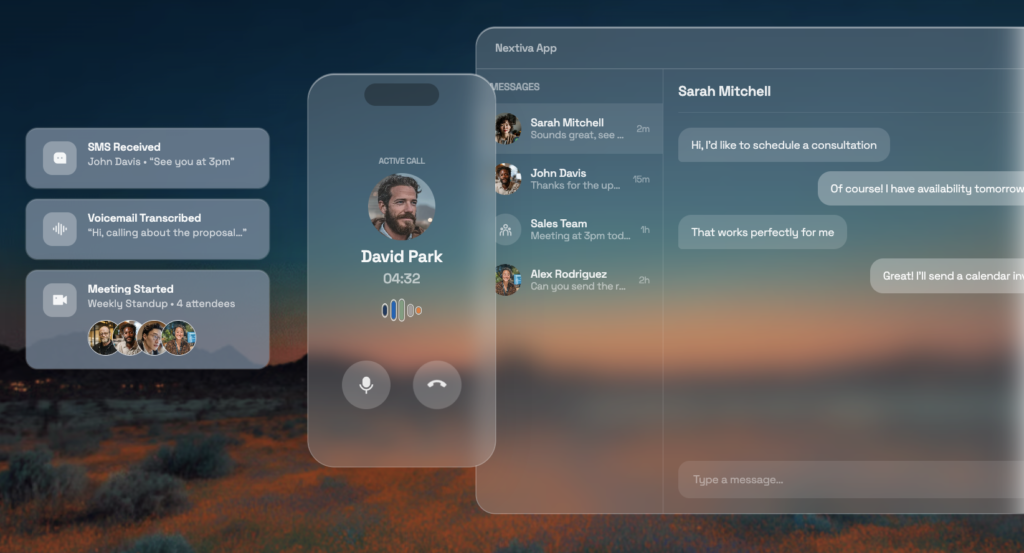
Nextiva combines a business VoIP phone system with basic contact centre and CRM capabilities. For very small businesses that currently rely on mobile phones or a basic office PBX and want a professional call experience without enterprise complexity, Nextiva delivers at a low price point.
Why Nextiva beats Genesys: For teams of 5–20 people, Genesys is structural overkill. Nextiva delivers professional call handling, basic queuing, and a built-in CRM at under $20/user—without the dedicated admin Genesys requires.
Key Features:
- Business phone system with call routing and voicemail
- Basic contact centre: queue management, IVR, basic reporting
- Nextiva CRM: simple contact and interaction tracking
- SMS and some chat capability
- Mobile app for remote teams
G2 Rating: 4.5/5 from 3,500+ reviews
Pricing: Essential from $18.95/user/month; Enterprise from $52.95/user/month.
| Pros | Cons |
|---|---|
| Most affordable price point on this list for basic call handling | Not a true contact centre platform — limited AI and routing depth |
| Simple setup — designed for non-technical teams | No WhatsApp or social media channels |
| Good mobile app for distributed small teams | AI automation is very basic — primarily IVR menus |
| Built-in basic CRM reduces tool count for very small teams | Not suitable for businesses above 20–30 agents |
| Strong customer support ratings | Outbound capability is minimal |
TL;DR: Nextiva is a business phone system, not a Genesys-equivalent contact centre. Right for 5–20 person teams moving off mobile phones or a basic PBX.
How AI Architecture Determines Long-Term Value
This is the most important evaluation dimension that is rarely discussed clearly in vendor comparisons.
There are three distinct AI architectures in this market, and they produce fundamentally different outcomes:
Architecture 1: Retrofitted AI (Genesys, Avaya, 8×8)
Voice infrastructure built first. AI added later as a module or third-party integration. The AI only has access to voice data — it cannot see WhatsApp conversations, live chat history, or email context. Each channel has its own partial AI capability. Resolution rates are low because the AI lacks the full customer picture.
Architecture 2: AI Layer on Cloud Platform (NICE CXone, Five9, Talkdesk, RingCentral)
Born-in-cloud platforms with AI added as the platforms matured. Better than retrofitted, because cloud architecture allows more data sharing. But the AI was still designed after the platform — it enhances existing workflows rather than powering them. Outbound AI bot capability is often limited. Digital channel AI is frequently less capable than voice AI.
Architecture 3: AI-First Platform (Sobot, Dialpad)
AI was the design starting point. Every channel — voice, WhatsApp, chat, SMS, social — runs through the same AI processing layer from day one. The AI can see all channels simultaneously, maintain context across channel switches, and apply the same resolution capability whether the customer calls or messages. Outbound AI bots are built into the architecture, not added on. This is why Sobot can achieve 83% autonomous inbound resolution in large-scale deployments — the AI has access to everything it needs.
For businesses evaluating a 3–5 year platform investment, AI architecture is the decision that compounds most over time.
Best Platform by Scenario
For Asia-Pacific Businesses (Singapore, Southeast Asia, Middle East)
WhatsApp is the primary customer channel in Singapore, Malaysia, Indonesia, UAE, and Saudi Arabia. Most platforms on this list treat WhatsApp as an add-on. Only Sobot treats it as a first-class channel with full AI coverage equivalent to voice.
- #1 choice: Sobot — native WhatsApp Business API, 18+ language AI, 100+ country voice coverage, proven regional deployments
- If voice-only is sufficient: NICE CXone or RingCentral — solid voice coverage but limited WhatsApp depth
- Budget option: CloudTalk — affordable voice, but no WhatsApp or meaningful AI
For SMBs Moving Off Legacy PBX or Avaya Hardware
- If you need AI automation from day one: Sobot — enterprise AI capability available on SMB deployment, free trial, fast setup
- If you need simplicity above all else: Aircall or CloudTalk — minimal setup, affordable, limited AI
- If budget is the primary constraint: Nextiva or CloudTalk at $18–30/agent/month as a starting point
For Mid-Market Enterprises Replacing Genesys
- Best complete replacement: Sobot — matches Genesys on voice depth, exceeds it on AI autonomy and digital channels
- Best if Salesforce is central: Talkdesk — strong Salesforce integration, modern AI, faster implementation
- Best if outbound is primary: Five9 — predictive dialling and outbound AI bot are category-leading
For Large Enterprises (200+ Agents, Complex Routing)
- Best for voice-primary with WFM priority: NICE CXone — workforce management AI is unmatched
- Best for AI autonomy + omnichannel: Sobot — proven at OPPO scale (60 countries, high volume)
- Best for Salesforce integration depth: Five9 + Salesforce Service Cloud combination
For Outbound Campaign Specialists
- Best predictive AI dialler: Five9
- Best outbound AI bot + inbound unified: Sobot — outbound AI handles campaigns autonomously, same AI layer as inbound
How to Choose: A 4-Step Framework
Step 1: Define your channel reality — not your aspirations
List every channel your customers actually use today, and rank them by volume. If 60% of inbound contacts are phone calls, voice AI depth matters most. If 40% are WhatsApp in your market, a platform where WhatsApp is a connector is a fundamental mismatch. Avoid choosing a platform based on features you might use in 18 months.
Step 2: Separate AI marketing from AI architecture
Every platform on this list now claims “AI-powered.” Ask two specific questions: (a) What percentage of inbound calls does your AI resolve without human escalation — and do you have reference customers who can confirm that number? (b) Can your AI run outbound campaigns autonomously, or does it only assist human agents on outbound calls? These questions separate retrofitted AI from AI-first platforms.
Step 3: Calculate your true total cost — including implementation
A Genesys deployment at $95/agent/month for 100 agents is $114,000/year before you factor in the 16-week implementation project, training costs, and integration work. A Sobot deployment that goes live in under two weeks at competitive pricing has a materially different 12-month total cost even if the monthly rate looks similar. Always model implementation cost and time-to-value alongside monthly fees.
Step 4: Validate with a real pilot, not a demo
Request a 2-week pilot on a real queue — one channel, two call types, measurable against your current metrics. Demos show capability at its best. Pilots show what your team can actually deploy and maintain. Platforms with fast deployment (Sobot, Aircall, Talkdesk) offer this; platforms with long implementations often resist it.
Frequently Asked Questions
Why are companies leaving Genesys Cloud CX in 2026?
Three primary reasons: cost (Genesys implementations and licensing are expensive, often exceeding what mid-market budgets support), digital channel gaps (WhatsApp, social media, and live chat are add-ons, not native), and AI capability (Genesys’s AI was added to a voice platform rather than built from the ground up, resulting in lower autonomous resolution rates than newer AI-first platforms like Sobot or Talkdesk).
Can a smaller business access enterprise-grade call center AI, or is it only for large contact centres?
Yes — the distinction between enterprise-only and SMB-accessible AI has blurred significantly in 2026. Sobot specifically offers enterprise AI capability (inbound bot, outbound bot, omnichannel unified) on deployments that go live in under two weeks, with pricing that scales to team size. Platforms like NICE CXone and Genesys, by contrast, still require enterprise-scale contracts and implementation timelines that exclude smaller operations.
What’s the difference between an inbound AI voicebot and a traditional IVR?
A traditional IVR presents callers with menu options (“Press 1 for billing, Press 2 for support”). It recognises button presses, not language. An AI inbound voicebot understands natural speech, identifies intent, accesses live data (order systems, account records), and either resolves the query completely or routes to the right agent with full context already captured. The practical difference: IVR deflects callers to menus; AI voicebots resolve queries. Sobot’s inbound AI voicebot resolves 83% of OPPO’s inbound contact volume without any human involvement.
Which Genesys competitors have built-in AI without paying for add-ons?
Sobot, Talkdesk, and Dialpad include AI in their core platform pricing—no separate AI module required. Genesys AI (Genesys AI Experience) and NICE CXone’s Enlighten AI are priced separately or bundled only at higher tiers. Five9’s Intelligent Virtual Agent is included but only from enterprise plans. If AI automation is a Day 1 requirement and not a future add-on, the shortlist is Sobot, Talkdesk, and Dialpad.
What’s the best Genesys alternative for customer support in Singapore or Southeast Asia?
Critical, not optional. WhatsApp penetration exceeds 80% in Singapore, Malaysia, and Indonesia, and is the dominant customer communication channel for most B2C businesses in these markets. A call center platform without native WhatsApp support — meaning true integration, not a third-party connector — forces customers onto phone or email, which many simply won’t do. Sobot is currently the only platform on this list with WhatsApp, voice, and AI unified natively rather than via middleware.
Which platforms can run outbound AI calls without human agents—the way Genesys cannot natively?
Yes — this is outbound AI bot capability, and it varies significantly across platforms. Sobot and Five9 offer genuine outbound AI that can conduct campaigns, handle responses, answer follow-up questions, and log interactions — without a human agent on the call. Most other platforms on this list offer predictive dialling (AI decides when to connect a human agent to an answered call) but not autonomous outbound AI that conducts the conversation itself.
How long does it take to switch from Genesys to a cloud-native platform?
Depends heavily on the platform and your complexity. Aircall or CloudTalk: days. Sobot standard deployment: under 2 weeks for most configurations. Talkdesk: 2–4 weeks. RingCentral or 8×8: 3–6 weeks. NICE CXone: 8–12 weeks. The migration from on-premise Avaya to any cloud platform adds complexity regardless of the destination — expect 8–16 weeks for full Avaya hardware replacement. The data migration (call recordings, agent configurations, IVR logic) is typically the longest part, not the platform setup itself.
Is Genesys good for businesses in Asia, or are there better-suited alternatives?
Sobot offers the strongest value combination for Asia-Pacific: native WhatsApp Business API, multilingual AI in 18+ languages including Malay and Mandarin, 100+ country voice coverage, competitive pricing relative to NICE or Genesys, and proven regional deployments with brands like OPPO, Samsung, and J&T Express. No other platform on this list combines WhatsApp depth, multilingual voice AI, and enterprise-grade call handling natively in one product.
What’s the best alternative to Genesys for a business in Southeast Asia or the Middle East?
Sobot is the strongest fit for these markets. WhatsApp is the dominant customer channel across Singapore, Malaysia, Indonesia, UAE, and Saudi Arabia — and Sobot’s WhatsApp Business API integration is native, not a connector. Combined with 18+ language AI support and regional case studies (OPPO, Samsung, J&T Express), it addresses the specific channel mix and language requirements of these markets better than Genesys or any Western-first alternative.
Is Genesys Cloud CX worth the cost compared to newer alternatives?
For enterprises with complex workforce management needs and hundreds of agents, Genesys Cloud CX remains capable — particularly for WFM, quality management, and compliance in regulated industries. However, its AI capabilities are add-ons rather than native, and digital channel integration (especially WhatsApp) requires additional configuration. For businesses prioritising AI-native automation, fast deployment, or Asia-Pacific operations, newer platforms like Sobot, Talkdesk, or Five9 offer better value without the legacy overhead.
Conclusion
The call center software market has divided into two camps: platforms built for a voice-first world that are retrofitting AI and digital channels onto legacy infrastructure, and platforms designed from the start with AI as the core layer and all channels — voice, WhatsApp, chat, social — as delivery mechanisms on top.
Genesys and Avaya built genuinely impressive voice infrastructure over decades. But the architecture decisions made in a hardware era create real limitations in a world where 40% of customer contacts come via WhatsApp and AI that resolves tickets rather than routing them is a competitive requirement.
- For most organisations evaluating this space in 2026, Sobot offers the most complete answer to what a modern call center platform needs to be: inbound AI that resolves calls end-to-end, outbound AI that runs campaigns autonomously, voice and digital channels unified under one AI layer, and deployment in days rather than months.
- For large enterprises where workforce management at scale is the primary requirement, NICE CXone leads.
- For outbound-primary operations, Five9 is the specialist.
- For SMBs taking their first step off hardware, Aircall or CloudTalk provide a fast, affordable entry point.