Choose with your channel mix, operating complexity and data requirements in mind. A platform that looks strongest in a generic comparison may be the wrong one if it cannot preserve customer context across the channels your customers actually use.
Key takeaways
- Start with the customer journey: voice-heavy, digital-first and cross-border e-commerce operations need different foundations.
- Separate AI capabilities into customer self-service, agent assistance, quality and analytics. “AI-powered” alone does not describe how work will change.
- Use pricing architecture—not headline price—to compare options. Seat, usage, AI-resolution, telephony and implementation charges can lead to very different total costs.
- Run a pilot on real contact types, with a defined escalation path and measurable accuracy, containment and quality criteria.
What Is an AI Contact Center?
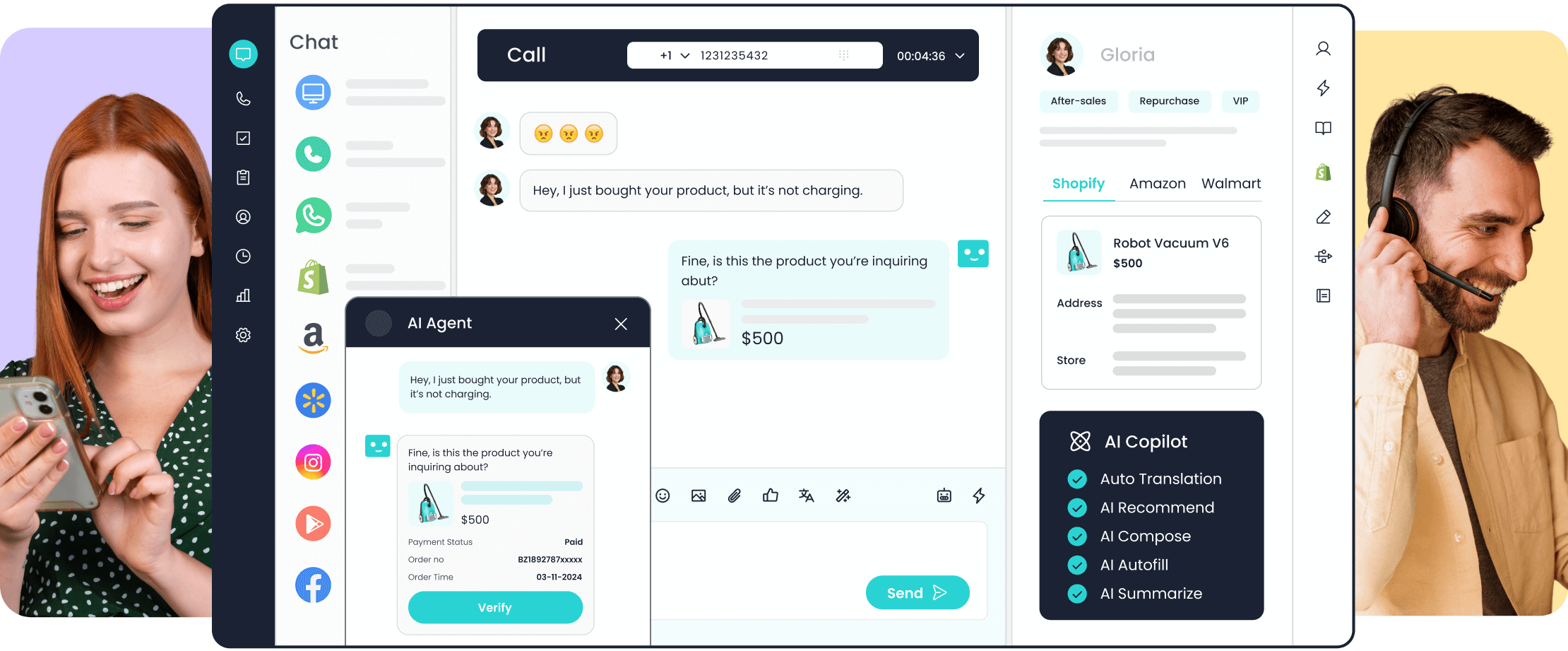
An AI contact center is a cloud platform for managing customer conversations across voice and digital channels. It combines routing, agent workspaces, automation and analytics with AI that can answer routine questions, guide agents and surface operational patterns.
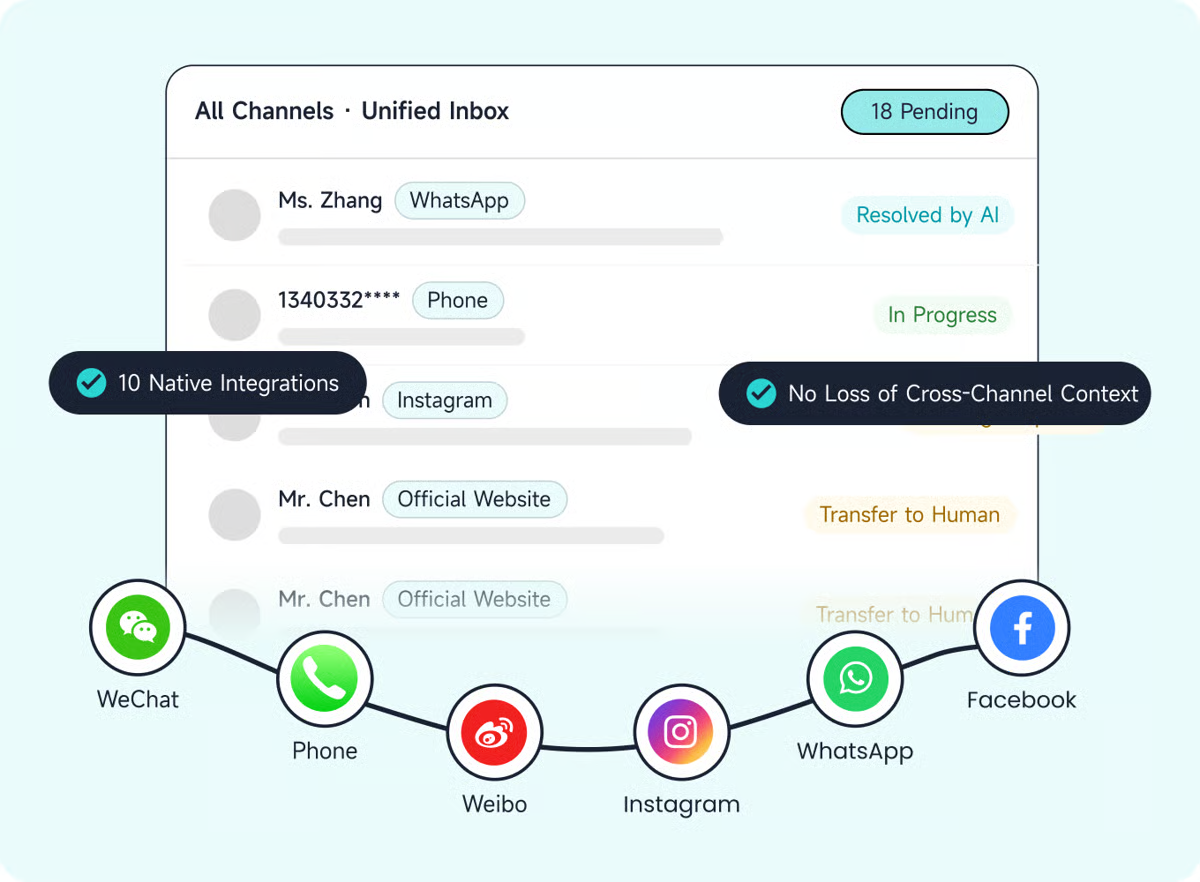
The important distinction is not whether a vendor has an AI feature. It is whether the platform keeps the customer’s context intact when a conversation moves between a bot, a human, voice, email, chat or messaging. For a buyer, that means testing the full service flow—not only a chatbot demo.
At a Glance: 8 AI Contact Center Platforms
| Platform | Best fit | Why it belongs on the shortlist | Validate before buying |
|---|---|---|---|
| Sobot | Unified voice, digital and e-commerce service | One operating workspace for conversations, tickets and AI-assisted service. | Regional telephony, marketplace connectors and the workflow for your exact channels. |
| Genesys Cloud CX | Large or complex enterprise operations | Broad contact-center, orchestration and workforce capabilities. | Edition, AI token/usage model, implementation scope and partner plan. |
| NiCE CXone | Enterprise CX with workforce and governance needs | AI, customer engagement and workforce operations on a connected CX platform. | Module scope, data requirements, professional services and rollout design. |
| Talkdesk CX Cloud | AI-powered omnichannel service with industry focus | Cloud contact-center suite spanning self-service, engagement, workforce and analytics. | Which AI, industry and security capabilities are included in the proposed edition. |
| Five9 Intelligent CX Platform | Cloud contact-center teams scaling AI across operations | AI, automation and analytics across customer self-service and agent workflows. | Digital-channel scope, voice AI design and the implementation path for your stack. |
| RingCX | Teams aligning business communications and CCaaS | AI-first contact-center option with voice, digital channels and workforce tools. | Geographic availability, integration scope and how it fits the existing communications estate. |
| Zendesk | Ticketing- and knowledge-centered service teams | Customer-service platform with AI, ticketing, voice, messaging and quality capabilities. | Voice design, AI/usage costs and where specialist CCaaS functionality is still needed. |
| Intercom | Digital, in-product and messaging-led support | AI-assisted customer support with a strong digital engagement orientation. | Voice requirements, high-volume AI economics and integration with the wider service stack. |
Pricing, packaging and regional availability change frequently. Confirm all commercial terms in a written proposal and model them against your own interaction volume.
How We Compared These Platforms
This shortlist is designed to help buyers make a first evaluation, not to assign a permanent winner. We reviewed the public product positioning and considered six buying questions:
- Channel continuity: Can voice and digital conversations retain useful customer context as they move through the service journey?
- AI operating model: Does the product support customer self-service, agent assistance, quality management and analytics—and how are those capabilities governed?
- Routing and workforce operations: Are skills, queues, quality, scheduling and reporting adequate for the complexity of the contact center?
- Integration and data fit: Can the platform connect to the CRM, commerce, order, knowledge and communications systems that agents use every day?
- Commercial predictability: Are the relevant licenses, usage charges, telephony, AI consumption and services visible before the purchase decision?
- Implementation realism: Can the team pilot, migrate, train and govern the solution at the pace its service operation requires?
The 8 AI Contact Center Platforms to Evaluate
1. Sobot — Best for Unified Voice, Digital and E-commerce Service
Best fit: service organizations that need to run voice, messaging, live chat and ticket workflows in one place, particularly across e-commerce and cross-border operations.
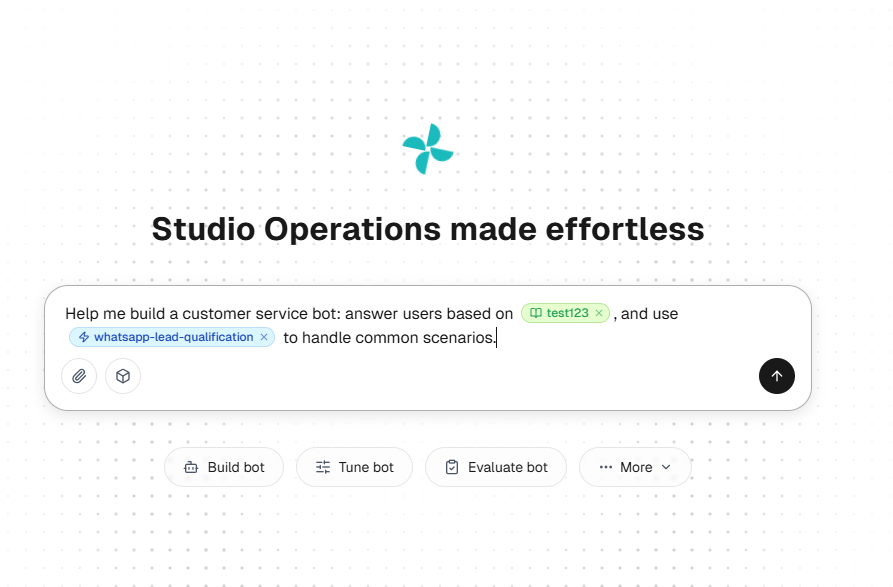
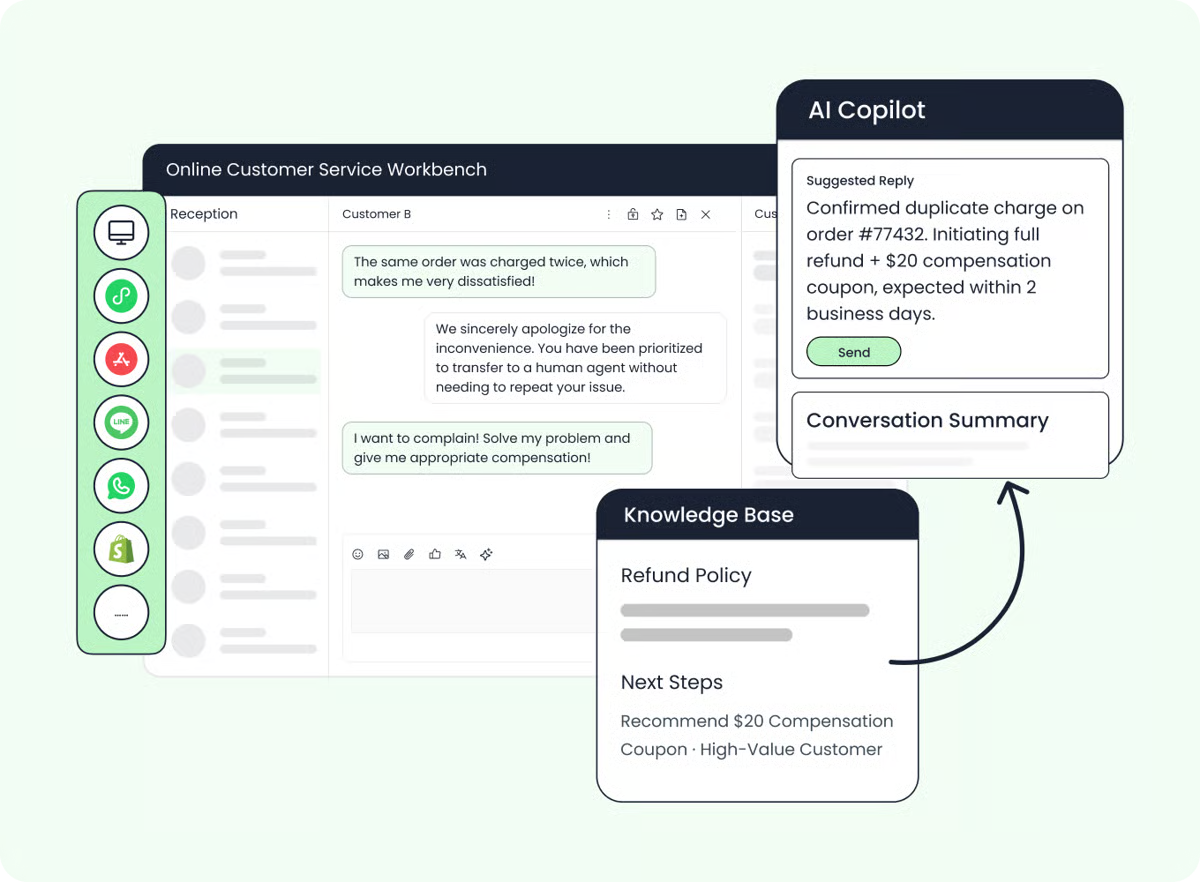
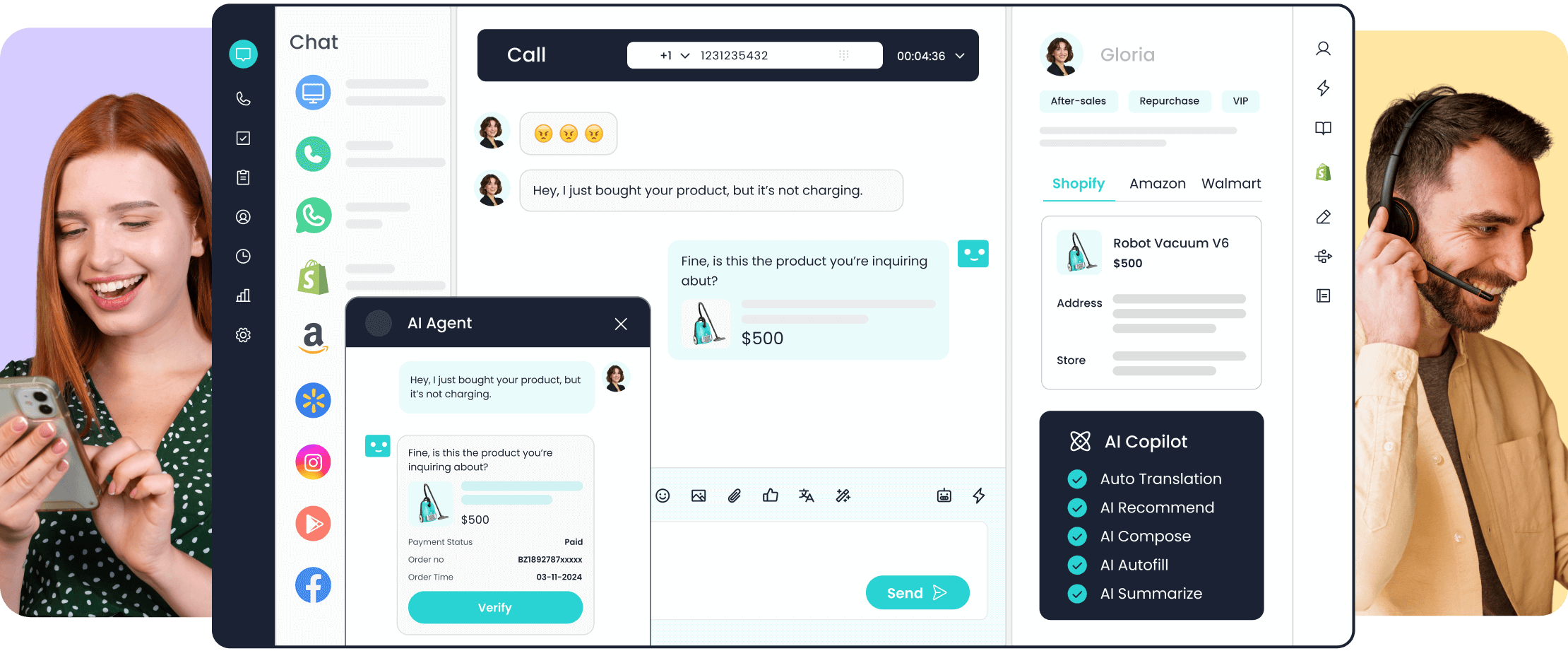
Sobot is built around an omnichannel customer-service workspace with AI assistance, automation and operational insight alongside customer conversations. It is most compelling when an organization wants to avoid splitting voice, digital service and commerce context among several tools.
For e-commerce teams, the practical question is whether agents can see the order, customer history and channel context when they need to resolve an issue. For cross-border teams, it is whether the required channels, languages and local telephony are available in the markets they serve.
Validate: the channel and marketplace integrations for your operating countries; data and handoff flow from order systems; and the implementation plan for your support workflow.
2. Genesys Cloud CX — Best for Complex Enterprise Routing and Workforce Operations
Best fit: enterprises that need configurable voice and digital engagement, sophisticated routing and a broad workforce-engagement roadmap.
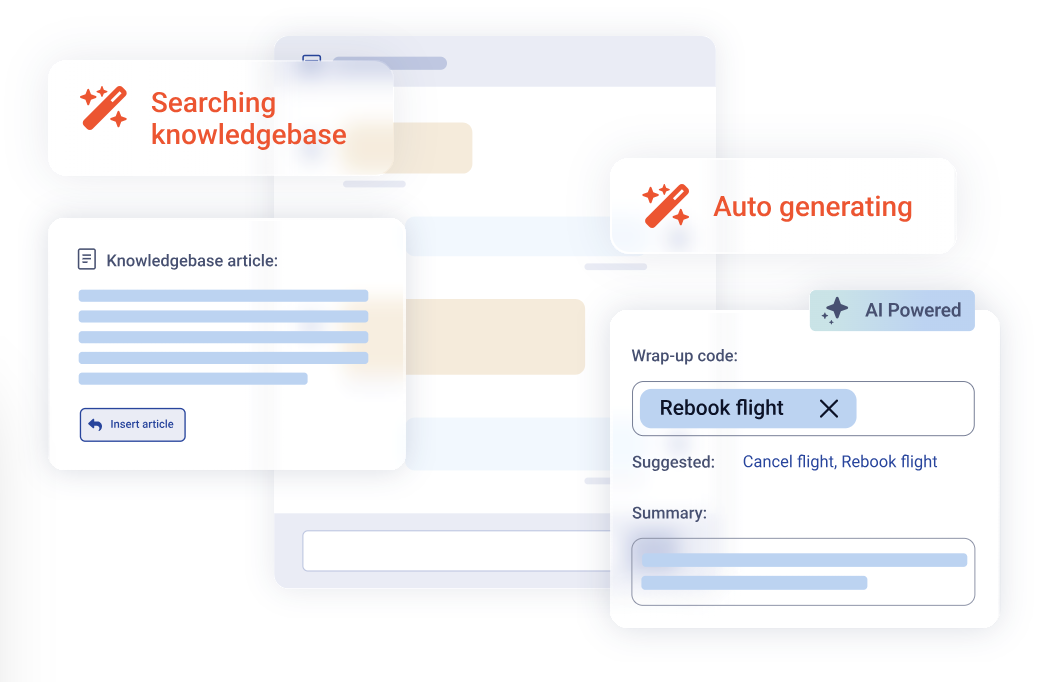
Genesys Cloud CX brings contact-center, digital, AI, journey and workforce capabilities into one cloud platform. It deserves a place on enterprise shortlists when service requirements include many queues, complex skills, high voice volume, regulated workflows or a mature workforce-management program.
The trade-off is evaluation and rollout complexity. The right edition, AI consumption model, telephony approach and partner plan must be agreed before a total-cost comparison is meaningful.
Validate: the precise edition and included capabilities, the volume assumptions behind AI and telephony costs, and a migration plan for routing, reporting and agent adoption.
3. NiCE CXone — Best for Enterprise CX, Workforce Engagement and Governance
Best fit: large service organizations that need to connect customer engagement, workforce performance, AI assistance and governance.
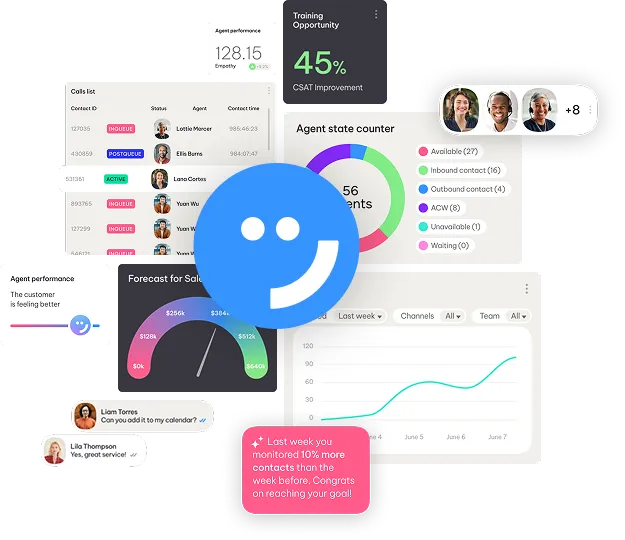
NiCE positions CXone as an AI customer-experience platform that connects human and AI agents, customer interactions, workflows and workforce operations. That makes it relevant when quality management, forecasting, scheduling, supervision and compliance requirements are as important as the customer-facing channels.
Its modular enterprise scope can be an advantage for complex programs, but it also means buyers need to specify the exact operational outcomes they want from each module.
Validate: the quality and workforce workflows you can configure, integration requirements, data residency needs and the services required to reach production.
4. Talkdesk CX Cloud — Best for AI-Powered Omnichannel Service with Industry Focus
Best fit: enterprises seeking cloud contact-center software that spans self-service, omnichannel engagement, workforce operations and interaction analytics.
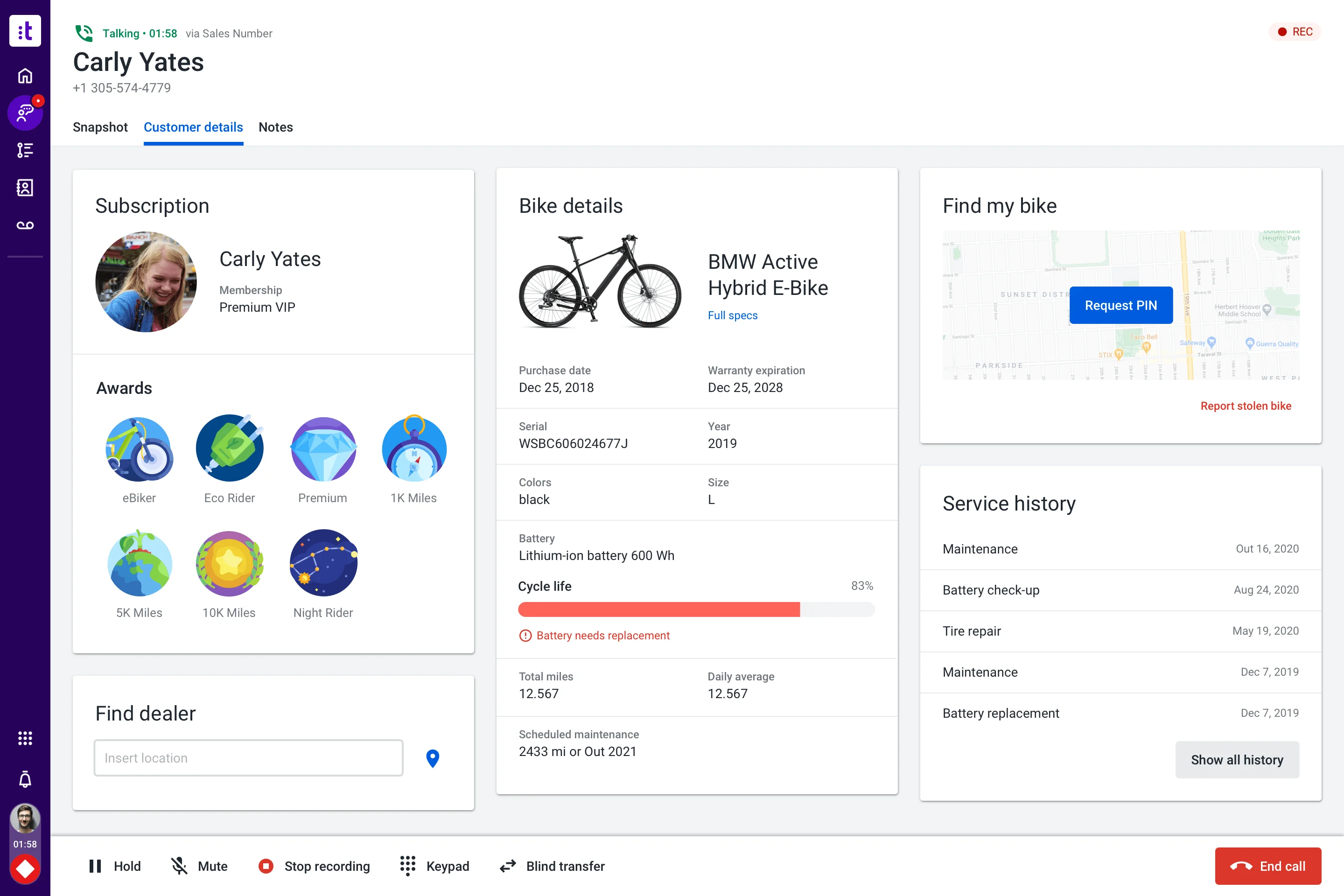
Talkdesk CX Cloud brings these operating areas into a cloud contact-center suite and offers industry-oriented solution packages. It is a reasonable fit when the team wants automation and analytics alongside a clear plan for its vertical workflows.
Rather than accepting a generic “AI-first” description, teams should test the customer journey that matters most: a self-service request, an escalation to an agent, and the after-contact quality process.
Validate: which AI capabilities are included in the commercial proposal, the deployment model for your geography and the out-of-the-box versus configurable components for your industry.
5. Five9 Intelligent CX Platform — Best for Cloud Contact Center Modernization
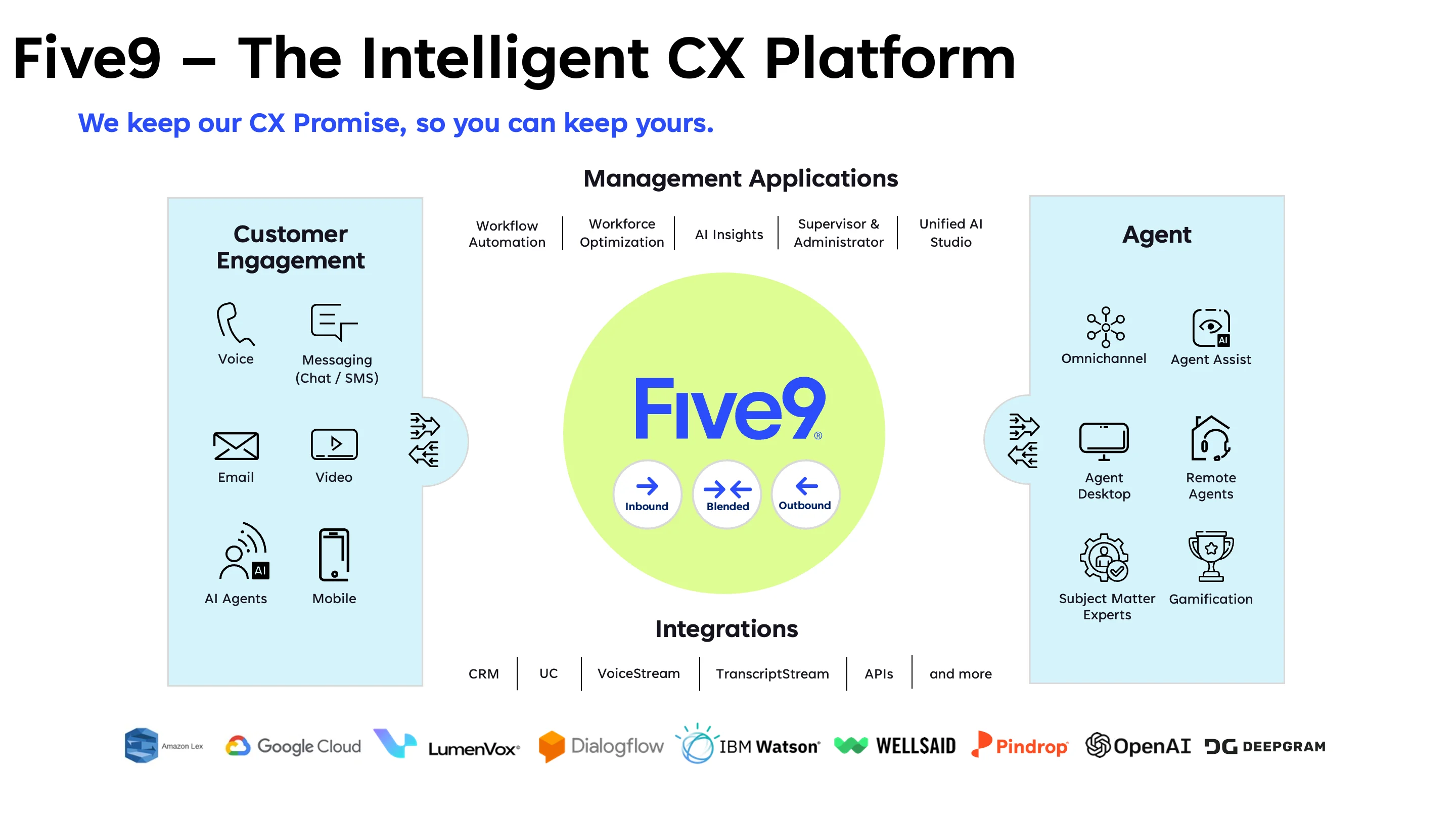
Best fit: contact-center teams modernizing cloud operations and looking to connect automation, agent support, management insight and customer engagement.
Five9 positions its Intelligent CX Platform around a cloud contact-center foundation with AI, automation and analytics. It is worth considering for teams that need to evolve customer self-service and agent workflows without treating AI as a disconnected point solution.
The strongest evaluation questions are operational: how voice and digital work together, how knowledge is governed, and what managers can use to coach quality and performance.
Validate: the full channel scope, the proposed voice-AI and human-handoff design, current integration coverage and the cost of the production configuration—not a limited demonstration tenant.
6. RingCX — Best for AI-First Contact Center and Communications Alignment
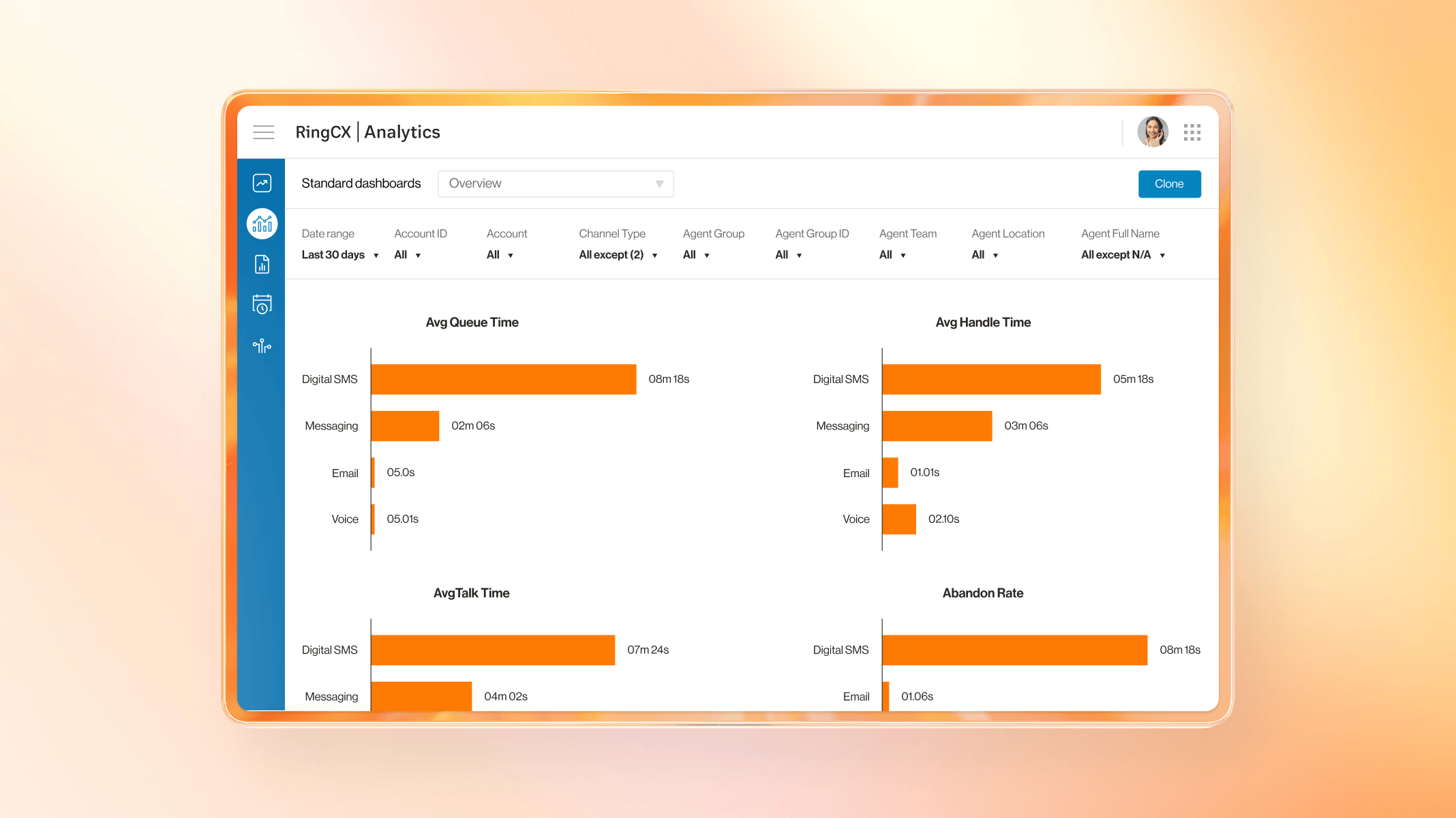
Best fit: teams that want a contact-center option aligned closely with their wider business-communications environment.
RingCX is positioned as an AI-first contact-center product with voice, digital channels, AI assistance and workforce tools. It is particularly relevant when a buyer wants to examine the contact center and internal communications architecture together rather than as separate procurement programs.
That can simplify administration and adoption for some organizations. For others, the deciding factor will be whether the platform covers the routing, compliance and integration depth their service model requires.
Validate: availability in your markets, the fit with the current communications estate, contact-center integrations and the capabilities included in the selected plan.
7. Zendesk — Best for Ticketing- and Knowledge-Centered Customer Service
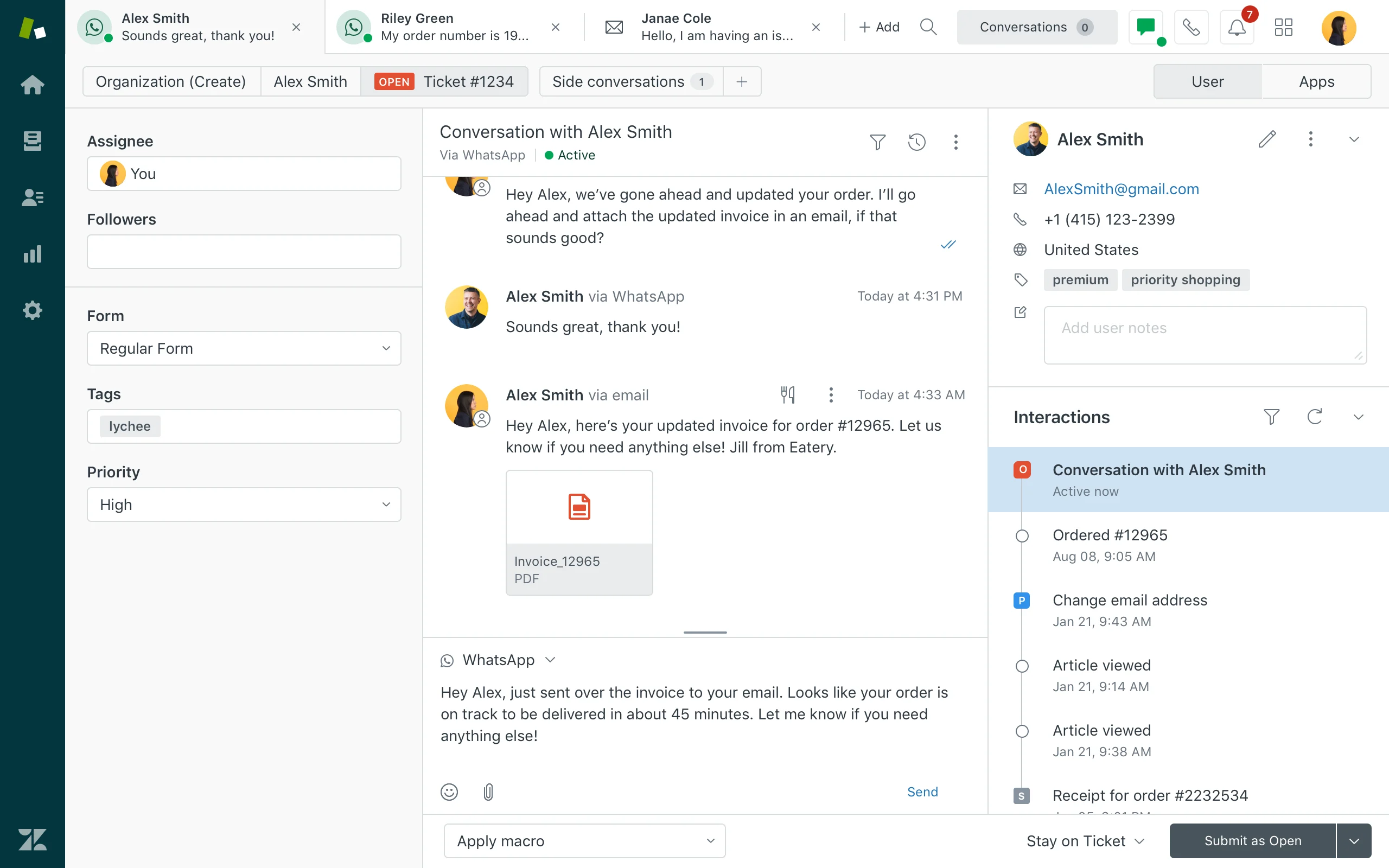
Best fit: digital-first service teams whose operating model is rooted in tickets, knowledge, messaging and support workflows.
Zendesk’s service platform brings AI agents, automation, knowledge, ticketing, voice, quality, analytics and messaging into a customer-service environment. It can be a strong candidate where support process maturity and integrations are more important than a traditional voice-contact-center architecture.
It is not automatically the right answer for every high-volume voice operation. Buyers should separate “can provide voice” from “meets our contact-center operating model,” especially when routing, workforce management or telephony design is complex.
Validate: the voice configuration and vendor ecosystem required, AI and usage costs at your volume, and whether the ticketing model fits the service journey end to end.
8. Intercom — Best for Digital and In-Product Support with AI Assistance
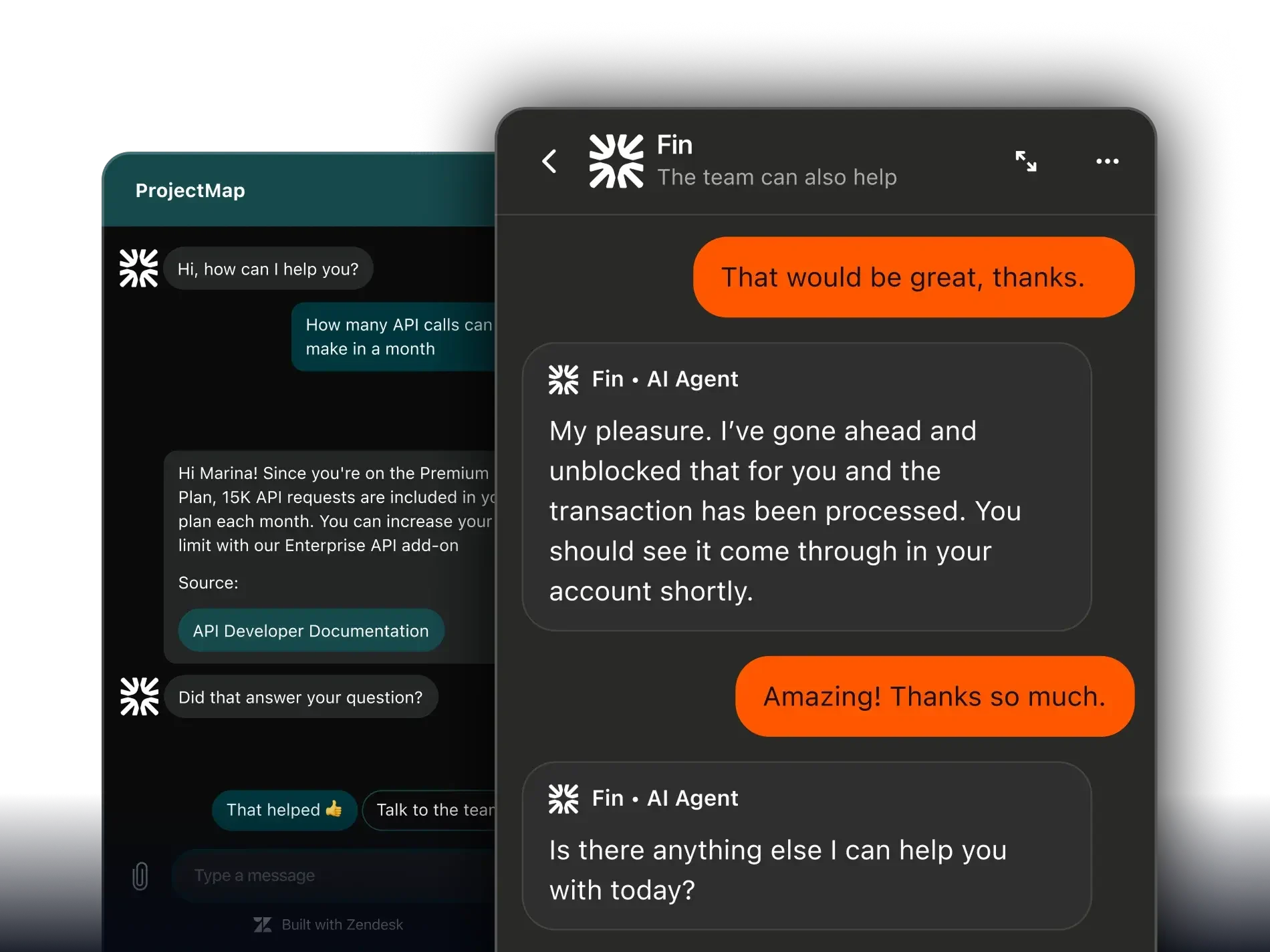
Best fit: SaaS and digital businesses whose customer conversations are mainly in-product, web and messaging-based.
Intercom is a digital customer-service platform known for messaging and AI-assisted service. It belongs on a shortlist when product context, proactive in-app engagement and digital self-service are central to the support model.
It becomes less direct a fit when voice is the dominant channel or when the organization needs a broad CCaaS operating layer. In those cases, the decision is often whether Intercom should be the main service platform or one component in a wider contact-center stack.
Validate: the AI pricing model at your expected resolution volume, required voice capabilities and how customer, product and support data will remain connected.
Choose the Platform by Operating Model
| If this is your situation | Start the shortlist with | Why |
|---|---|---|
| Voice, messaging, tickets and commerce context must work in one agent workflow. | Sobot | Prioritize unified context and the channels or marketplace systems your agents need. |
| Routing complexity, workforce operations and enterprise-scale governance shape the purchase. | Genesys Cloud CX, NiCE CXone | Evaluate the required edition, workforce scope, data controls and implementation plan. |
| Cloud contact-center modernization and AI automation are the main business case. | Talkdesk, Five9, RingCX | Compare how each platform connects self-service, agents, analytics and communications. |
| Service is digital-first and built around tickets, knowledge or in-product conversations. | Zendesk, Intercom | Test whether the platform’s digital strengths match the voice and operations you still need. |
An AI Contact Center Evaluation Checklist
Use this checklist to turn a vendor demo into a decision process:
- Bring three real contact types. Include one simple, one exception-heavy and one escalation-prone request.
- Map the handoff. Ask how the customer, conversation, order or account context moves from AI to a human and between channels.
- Set AI quality controls. Define knowledge sources, approval workflow, guardrails, sampling method and who can change automation.
- Test manager visibility. Confirm how quality, queue health, containment, transfers, repeat contacts and agent coaching are measured.
- Model the full bill. Include licenses, AI consumption, telephony, messages, storage, implementation, training and integration work.
- Agree a pilot exit criterion. Decide in advance what accuracy, service, adoption and cost results are required before a broader rollout.
Build a Shortlist That Can Survive Procurement
A strong shortlist is usually shorter than buyers expect. Start with two or three platforms that match the operating model, then include one credible alternative that challenges the default assumption. A voice-heavy enterprise may compare Genesys Cloud CX, NiCE CXone and one cloud-modernization option; a digital commerce team may compare Sobot, a ticketing-centered platform and a specialist digital-support option. Adding every well-known name to the evaluation makes it harder to compare meaningful differences.
Ask each shortlisted vendor to respond to the same scenario pack. The pack should include the customer’s starting channel, the data the AI may use, the action the system must take, the rule for escalating to a human and the reporting view a supervisor needs afterward. This makes it much easier to see whether a capability is native, configurable through an integration or dependent on a separate product.
Also separate the software decision from the rollout decision. A sound proposal identifies the systems that must connect, the teams that will own knowledge and automation, the training needed for agents and supervisors, and the controls that protect customer data. The strongest vendor demonstration is not the one with the most polished generic workflow; it is the one that handles your hardest common contact safely and leaves the team with a manageable operating model.
Finally, make the commercial comparison explicit. Use the same forecast of agents, interactions, minutes, messages and AI workload for each option, then include services and integration work. This turns “AI included” or “AI powered” into a cost and governance discussion that finance, IT and customer-service leaders can evaluate together.
Frequently Asked Questions
What is the best AI contact center software?
The best platform depends on the service model. Sobot is a strong fit for teams seeking one workspace for voice, digital channels, tickets and e-commerce service. Genesys Cloud CX and NiCE CXone are common enterprise considerations for complex routing and workforce operations. Talkdesk, Five9 and RingCX suit different cloud contact-center modernization needs, while Zendesk and Intercom are often stronger for digital-first support.
What should an AI contact center do beyond chatbot automation?
It should connect customer self-service, human-agent assistance, interaction quality, routing and analytics. The practical test is whether the system retains useful context and gives leaders a governed way to improve service—not whether it can produce a conversational reply in isolation.
How do I compare AI pricing fairly?
Model the same workload for every vendor: agents, interactions, voice minutes, messages, AI resolutions or tokens, storage and services. A lower seat price can be outweighed by usage charges or implementation costs, while a quote-based offer should be assessed against the exact scope included.
Is an AI contact center different from a help desk?
There is overlap, but a contact center usually emphasizes real-time voice and digital routing, operational management and performance visibility across the conversation lifecycle. A help desk is often organized primarily around tickets, knowledge and asynchronous support. Some modern platforms span both; buyers should evaluate their own channel mix rather than rely on the category label.
How long should an AI contact center pilot last?
Long enough to cover representative demand, peak patterns and human handoffs. The better question is whether the pilot has a defined audience, approved knowledge sources, baseline metrics and a clear go/no-go review. A short demonstration is not a substitute for operational evidence.
See How Sobot Fits Your Service Model
Map your voice, digital, e-commerce and AI-service requirements in one workflow, then evaluate the rollout path with a real support scenario.