Introduction: The Moment That Makes or Breaks a Sale
A shopper lands on your website, browses a few products, and pauses. Maybe they’re wondering whether the shoes run true to size, whether a laptop is compatible with their software, or whether a skincare product is suitable for sensitive skin. In that moment, the quality and speed of your response can determine whether they click Buy Now or close the tab and move on to a competitor.
This is why we’re opening our new series on real customer service scenarios in retail and ecommerce with pre-sales inquiries and context-aware recommendations. It’s one of the most common, high-impact situations customer service teams handle every day, yet it’s often underestimated. Pre-sales support isn’t just about answering questions it’s about guiding customers toward confident purchasing decisions.
The core idea is simple: pre-sales support isn’t a cost center, it’s a conversion lever. When businesses respond quickly, accurately, and personally, they reduce friction, build trust, and increase the likelihood of a sale.
What This Scenario Actually Looks Like on the Ground
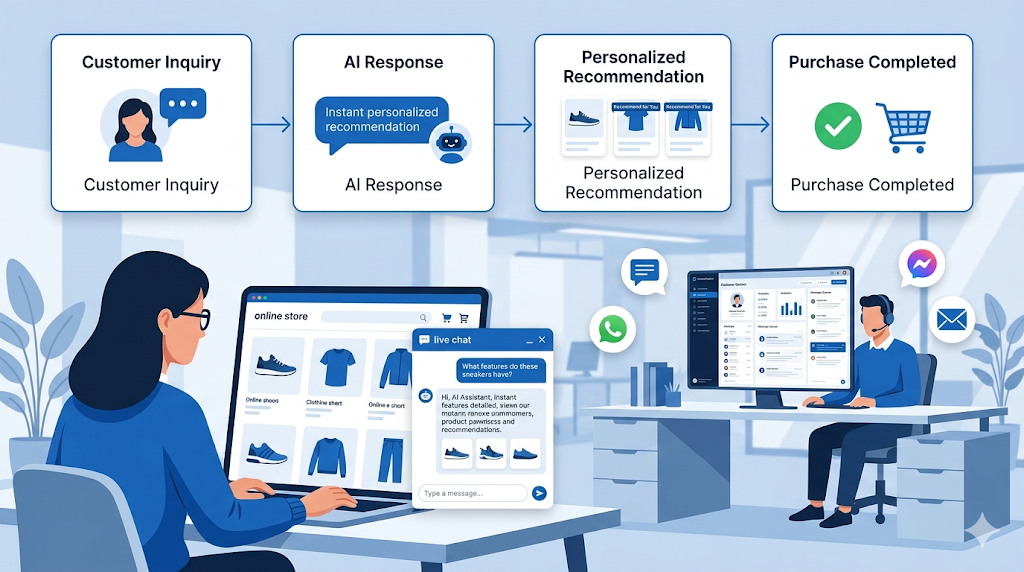
In retail and ecommerce, pre-sales conversations happen constantly and across every channel. Customers reach out with questions such as:
- “Which model is better for beginners?”
- “What’s the difference between these two products?”
- “Will this fit my device?”
- “Do you have this in stock?”
- “Can it arrive before Friday?”
- “Is there a promotion or discount available?”
These aren’t complaints. They’re signals of buying intent. Customers are actively considering a purchase and need reassurance before committing.
There’s also what many retailers experience as the recommendation gap. Shoppers don’t always want a factual answer — they want guidance. Someone comparing two cameras may need help choosing based on experience level. A customer buying furniture may want styling recommendations or complementary items. Without thoughtful guidance, customers can feel overwhelmed and delay or abandon the purchase.
The challenge becomes even more complex because these conversations happen everywhere:
- Live chat on the website
- Instagram and Facebook DMs
- Marketplace messaging platforms
- Mobile apps
During product launches, flash sales, or seasonal campaigns, inquiry volume can surge dramatically. A single promotion can generate thousands of simultaneous questions, and customers expect near-instant responses regardless of channel.
The Challenges Customer Service Teams Face
High-Volume Queries and Peak Traffic Pressure
Customer service teams often spend hours answering the same handful of questions: stock availability, shipping timelines, return policies, product comparisons, and compatibility checks. During campaigns or holiday spikes, the volume multiplies quickly.
This creates two major problems:
Agents become overwhelmed and burned out.
Response quality and speed start to decline.
When teams are handling hundreds of similar inquiries manually, even well-trained agents can make mistakes or struggle to keep up with demand.
Inconsistent Experience Across Channels and Agents
Customers expect consistent information no matter where they contact a brand. But without unified systems, different agents may provide different answers.
For example, one agent might recommend Product A as the best option for beginners, while another suggests Product B for the same customer need. Or one channel may mention a promotion that another channel doesn’t reference.
These inconsistencies erode trust and create confusion, especially when customers are comparing products before buying.
Lack of Customer Context
A major limitation in many support setups is the lack of visibility into the customer’s history and behavior. Agents often don’t know:
- Whether the shopper is a first-time visitor or a loyal customer
- What products they previously purchased
- What pages they recently viewed
- Whether they recently returned a similar item
- What conversations they’ve already had with support
Without context, recommendations become generic and transactional instead of personalized and helpful.
Missed Upsell and Cross-Sell Opportunities
Pre-sales conversations are ideal moments to recommend complementary products or better-fit alternatives. But when agents are focused on simply resolving the immediate question, these opportunities are often missed.
A customer buying a laptop may also need accessories. Someone purchasing skincare may benefit from a complete routine. Without the right tools and data, agents rarely have time to make relevant recommendations naturally.
Slow Responses Lead to Lost Sales
Pre-sales shoppers have a short decision window. They’re comparing options, checking reviews, and evaluating alternatives in real time. If a response takes too long, they may move on to another retailer that answers faster.
In ecommerce, speed is directly tied to conversion.
How Sobot Helps: A Step-by-Step Look
Now let’s look at what happens when Sobot is part of the pre-sales support workflow.
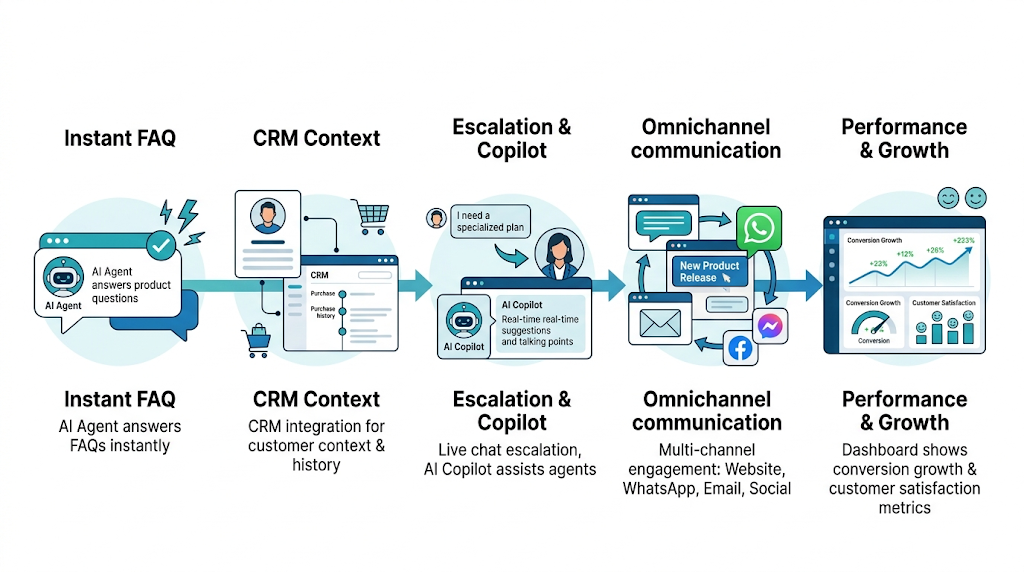
Step 1: Instant First Response with Sobot AI Agent
The first expectation customers have is simple: don’t make me wait.
Sobot’s AI Agent handles common pre-sales inquiries instantly, 24/7, across channels like live chat, WhatsApp, social messaging, and email. It can answer questions about:
- Product availability
- Pricing
- Shipping timelines
- Return policies
- Product specifications
- Promotions and discounts
Because it’s powered by large language models, the AI Agent understands natural, conversational phrasing rather than relying only on rigid keyword matching. Customers can ask questions in different ways and still receive accurate answers.
For cross-border retailers, multilingual support is especially valuable. Customers can interact in their preferred language, reducing friction and improving accessibility.
The result is immediate:
- First response times can drop to under one minute.
- Common FAQs are resolved automatically.
- Human agents are freed from repetitive tasks.
Step 2: Context-Aware Recommendations via CRM Integration
Answering questions is only part of the equation. The bigger opportunity is helping customers choose the right product confidently.
Sobot integrates with CRM and ecommerce platforms such as Shopify, Amazon, and Salesforce. This allows the AI Agent and human agents to access valuable customer context, including:
- Purchase history
- Browsing behavior
- Past support interactions
- Loyalty status
- Product preferences
With this context, recommendations become far more personalized. Instead of a generic response like:
“This model is popular.”
The system can support responses such as:
“Based on the headphones you purchased last year, this newer model would offer better battery life and noise cancellation for your needs.”
That shift matters. Customers are more likely to trust recommendations that feel relevant and informed rather than scripted.
Step 3: Seamless Escalation to Live Chat When It Counts
Not every inquiry should stay with automation. Some customers need detailed explanations, nuanced advice, or reassurance before making a high-value purchase.
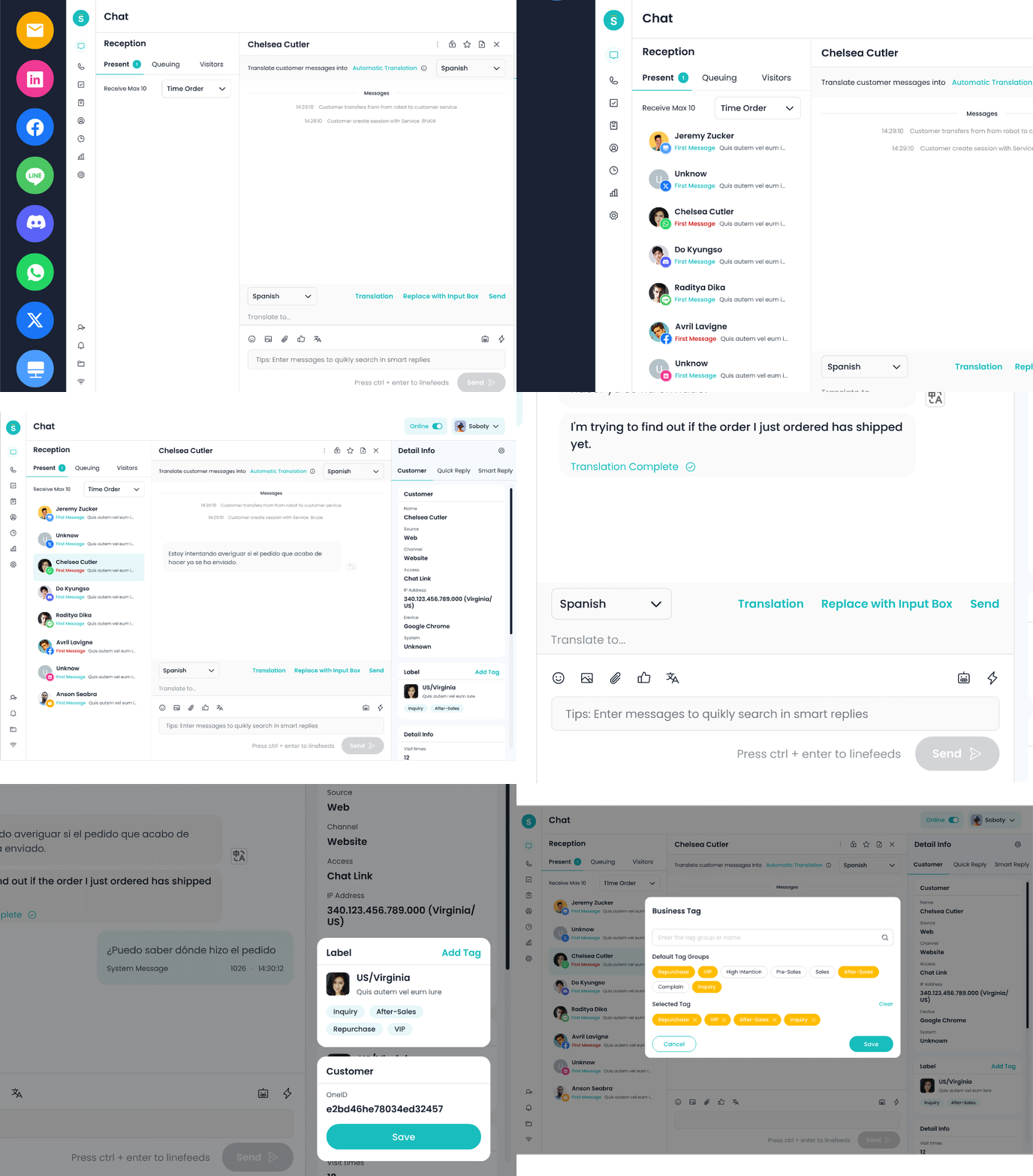
Sobot automatically routes complex or high-intent conversations to the right human agents. Importantly, the agent receives the full conversation history and customer profile, so the customer doesn’t have to repeat themselves.
Sobot’s AI Copilot also assists agents in real time by suggesting responses, surfacing relevant product information, and helping maintain accuracy and consistency.
This creates a smoother handoff between AI and human support:
- Customers get fast initial assistance.
- High-consideration shoppers receive personalized human guidance.
- Agents respond faster and with better context.
Step 4: Omnichannel Consistency
Customers move fluidly between channels. They may start with a website chat, continue on WhatsApp, and later send a social media message. They expect the brand to remember the conversation.
Sobot unifies these interactions in a single workspace, allowing agents to manage conversations across channels without switching between multiple tools.
This ensures:
- Consistent information and recommendations
- A unified customer history
- Smoother collaboration between teams
- Less operational complexity for agents
Whether a shopper contacts the brand through live chat, Instagram, email, or WhatsApp, the experience remains connected and coherent.
Step 5: Continuous Improvement via AI Insight
One of the most powerful aspects of AI-powered support is that it improves over time.
Sobot tracks:
- Which questions customers ask most often
- Where conversations drop off
- Which recommendation flows lead to conversions
- Common pain points in the buying journey
Customer service leaders can update the AI Agent’s knowledge base without engineering support, making it easier to adapt to new products, promotions, or customer behaviors.
Over time, the system becomes smarter and more effective with every interaction.
The Measurable Outcomes
When retailers implement AI-powered pre-sales support effectively, the impact is measurable across both customer experience and business performance.
Faster Response Times
Customers receive answers almost immediately, with first-response targets often under one minute. Faster responses reduce friction and keep shoppers engaged during the decision-making process.
Higher Resolution Without Human Involvement
A large percentage of routine pre-sales inquiries can be resolved automatically by the AI Agent. This reduces the burden on support teams and allows agents to focus on more valuable conversations.
Increased Conversion Rates
More inquiries answered quickly and accurately means more purchases completed. Sobot customers have seen significant conversion improvements, including reported conversion lifts of up to 3x in some use cases.
Improved Agent Efficiency
By automating repetitive tasks, support teams can reduce manual workload substantially. In many scenarios, businesses see up to a 60% reduction in repetitive inquiry handling, freeing agents for complex and relationship-building interactions.
Consistent Customer Satisfaction
Personalized, accurate, and timely responses improve customer confidence and satisfaction. Benchmarks from Sobot customer implementations, such as OPPO’s reported 93% CSAT, show the potential impact of consistent, AI-assisted support experiences.
What This Means for CX Leaders
For customer service leaders, AI-powered pre-sales support changes daily operations in meaningful ways.
Teams spend less time firefighting repetitive questions and more time handling high-value interactions. Escalations decrease because customers get answers faster and more consistently. Agent morale improves when work becomes less repetitive and more strategic.
When evaluating your current pre-sales support setup, it’s worth asking:
- How fast are customers receiving first responses?
- Are answers consistent across channels and agents?
- Do agents have access to customer history and context?
- How much time is spent on repetitive FAQs?
- Are upsell and cross-sell opportunities being captured?
- Can your support system scale during campaigns and peak traffic?
If the answer to several of these questions is “not consistently,” there’s likely significant room for improvement.
Conclusion
Pre-sales support is often the first real interaction a customer has with a brand. It’s the moment where uncertainty is either resolved or amplified.
Sobot helps retailers and ecommerce businesses turn that moment into a competitive advantage by combining:
- Instant AI-powered responses
- Context-aware recommendations
- Seamless live chat escalation
- CRM integration
- Omnichannel consistency
- Continuous AI-driven optimization
The result is a faster, more personalized, and more scalable buying experience — one that not only reduces operational pressure on customer service teams but also drives measurable conversion growth.
In today’s retail environment, the brands that win are the ones that make buying feel easy, informed, and frictionless. AI-powered pre-sales support is becoming a key part of making that happen.