What Are Telemarketing Calls and Why They Matter

Telemarketing calls are outbound phone interactions initiated by businesses to engage prospects or existing customers for purposes such as lead generation, sales promotion, surveys, or follow-ups. While traditionally tied to cold calling, modern telemarketing has expanded into data-driven, personalized outreach that integrates with broader customer communication strategies. This evolution reflects how businesses are reshaping voice outreach into a strategic customer engagement channel rather than a one-dimensional sales tactic.
In today’s contact center environment, telemarketing calls sit alongside live chat, email, and messaging platforms as part of a unified customer experience strategy.
Evolution from traditional cold calling to AI-powered outreach
Telemarketing has shifted dramatically over the past decade. Where agents once manually dialed lists and read static scripts, now AI technologies like predictive dialers, voicebots, and intelligent routing optimize call timing, personalize messaging, and enhance agent productivity. These advances have reduced manual workload while improving customer engagement outcomes.
Role in customer contact centers and business growth
For modern contact centers, telemarketing calls are far more than outreach tools—they are key drivers of customer acquisition, retention, and revenue. By enabling real-time, conversational engagement, telemarketing helps businesses:
- Proactively nurture leads and accelerate sales cycles
- Deepen customer relationships through personalized dialogue
- Gather immediate feedback for product and service improvements
When integrated with platforms like Sobot’s omnichannel contact center, telemarketing becomes part of a holistic communication ecosystem that elevates the quality and consistency of customer interactions.
Key Benefits of Telemarketing Calls for Businesses
Direct customer engagement and personalization
Telemarketing calls allow brands to communicate directly with customers in a way that digital channels cannot replicate. Live voice interactions make it easier to convey nuances, clarify doubts, and tailor messaging based on real-time responses. According to industry data, many executives still prefer phone conversations for sales engagement, underscoring the continued relevance of voice outreach.
This real-time engagement also enables agents to personalize conversations using CRM insights, increasing relevance and conversion potential.
Lead generation and conversion improvements
Telemarketing calls excel at qualifying leads and driving conversions. Unlike passive channels like email, outbound calls generate immediate responses and rich conversational data. With the right contact center infrastructure, this data feeds back into your CRM and analytics pipelines, enabling segmentation, follow-ups, and tailored engagement strategies.
Metrics such as call connect rate, contact rate, and conversion rate are commonly tracked to optimize campaign performance. These KPIs help businesses diagnose issues, refine approaches, and improve outcomes over time.
Real-time feedback collection and insight
Each telemarketing call is an opportunity to collect direct customer feedback—from preferences and objections to satisfaction markers. This real-time qualitative insight is invaluable for shaping product messaging, improving service delivery, and refining scripts on the fly.
How Telemarketing Calls Work in a Modern Contact Center
Core components: dialing systems, agents, and workflows
Modern telemarketing infrastructure encompasses:
- Auto dialers that connect agents to customers efficiently
- Agent dashboards that display caller data and suggested responses
- Call scripts and workflows designed for consistent, compliant conversations
These components streamline operations and ensure scalable engagement.
Integration with CRM, ticketing, and omnichannel platforms
Telemarketing calls are most effective when integrated with other systems:
- CRM integration provides agents with customer history and context
- Ticketing systems track issues and follow-ups from calls
- Omnichannel platforms unify voice with chat, email, and messaging
Sobot’s omnichannel contact center ties all these threads together, ensuring telemarketing calls contribute to a seamless customer journey and rich data continuity across channels.
Automation with AI voicebots and intelligent routing
AI is rapidly transforming how telemarketing calls are initiated and handled. Platforms like Sobot Voice for Sales enable businesses to automate repetitive tasks and qualify leads before routing qualified prospects to human agents. These capabilities help balance operational efficiency with personalized service.
This hybrid model maximizes capacity while preserving the human element where it matters most.

Best Practices for Effective Telemarketing Calls
Compliance with regulations and ethical outreach
Telemarketing calls must respect legal and ethical guidelines to maintain trust and avoid penalties. In jurisdictions like the United States, national Do Not Call (DNC) registries impose restrictions on calling hours and consent requirements, with substantial fines for non-compliance.
Compliance extends from honoring opt-outs to adhering to local data privacy laws such as GDPR.
Script optimization and personalization strategies
Effective telemarketing scripts strike a balance between structure and natural conversation. Best practices include:
- Using customer data to tailor opening remarks
- Avoiding overly aggressive sales language
- Allowing for adaptive dialogue based on responses
AI can support these strategies by suggesting next-best actions or flagged opportunities during live calls.
Performance tracking and continuous improvement
Key performance indicators (KPIs) to monitor include:
- Call connect rates
- Conversion and follow-up rates
- Average handling time
Platforms like Sobot provide real-time dashboards that help teams monitor performance and identify areas for optimization.
How Sobot Enhances Telemarketing Calls with AI
Omnichannel contact center and outbound calling
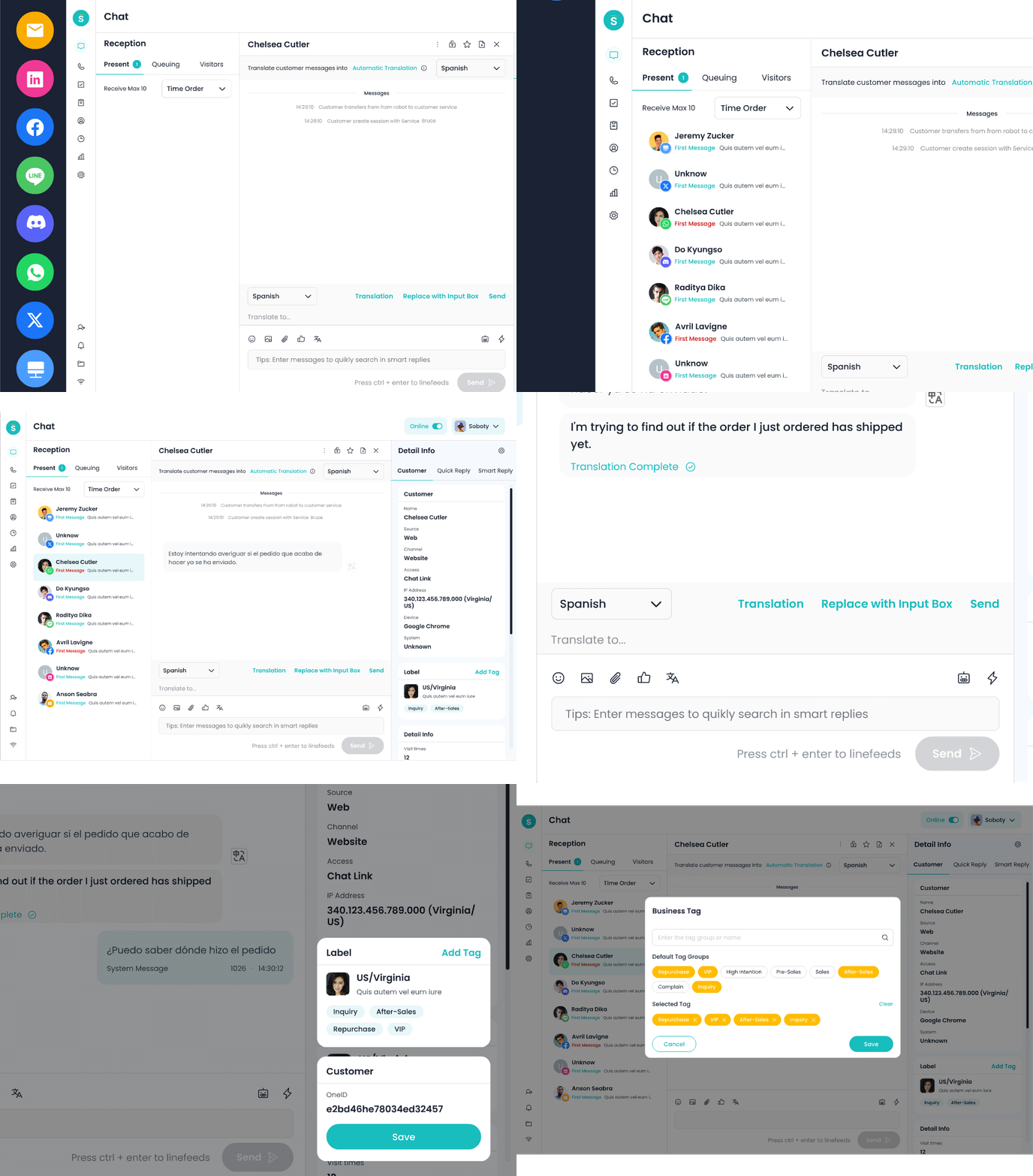
Sobot’s omnichannel contact center unifies voice with chat, email, social media, and ticketing to create a seamless engagement experience. This ensures that telemarketing calls are part of a broader communication strategy rather than isolated touchpoints—boosting consistency and visibility throughout the customer lifecycle.
Integrated AI Automation for Scalable Telemarketing Operations
Building on its omnichannel contact center foundation, Sobot integrates AI-driven automation directly into telemarketing workflows to improve scalability and efficiency. Rather than functioning as separate tools, AI Agents and voicebots operate within a unified system that supports the entire outbound calling process.
At the initial stage, voice automation can handle high-volume outreach, engaging contacts with structured dialogues and collecting key information. This ensures consistent communication while reducing the manual workload on human agents.
As interactions progress, AI capabilities continue to support decision-making by qualifying leads, identifying intent, and prioritizing follow-ups based on predefined criteria. Prospects with higher conversion potential are then seamlessly transitioned to human agents for more complex or personalized conversations.
By embedding these AI functions within a single platform, businesses can maintain a coherent workflow from first contact to final conversion. This approach not only increases operational efficiency but also ensures that customer interactions remain consistent, data-driven, and aligned with broader communication strategies.
Real-world use cases and measurable outcomes
Organizations across industries leverage telemarketing calls powered by Sobot to:
- Confirm orders and schedule follow-ups
- Conduct surveys and gather feedback
- Nurture leads and accelerate sales pipelines
For example, Sobot’s Voice for Sales solution helps teams improve connection rates and accelerate revenue growth with scalable, AI-driven outreach.
Conclusion
Telemarketing calls remain a vital component of any robust customer communication strategy—especially when powered by modern AI and integrated within a full contact center ecosystem. By combining voice outreach with CRM data, omnichannel continuity, and intelligent automation, businesses can transform traditional calling into a strategic asset that enhances engagement, drives conversions, and strengthens customer relationships.
Platforms like Sobot make this transformation possible by infusing AI, voice automation, and real-time analytics into telemarketing workflows. When executed ethically and efficiently, telemarketing calls don’t just generate leads—they cultivate lasting customer trust and drive sustainable growth.
FAQ
What are telemarketing calls in a modern business context?
Telemarketing calls are outbound phone interactions used by businesses to promote products, generate leads, conduct surveys, or follow up with customers. In modern contact centers, they are integrated with CRM systems, AI tools, and omnichannel platforms to deliver more personalized and data-driven customer communication.
Are telemarketing calls still effective in 2026?
Yes, telemarketing calls remain highly effective—especially for high-value or complex sales. Studies show that voice communication still builds stronger trust and enables real-time objection handling compared to purely digital channels. When enhanced with AI and data analytics, telemarketing calls can significantly improve conversion rates and customer satisfaction.
How do AI technologies improve telemarketing calls?
AI enhances telemarketing calls in several ways:
- Voicebots handle initial outreach and qualification
- AI Agents assist human agents with real-time suggestions
- Predictive dialing improves call efficiency
- Data analysis optimizes scripts and targeting
Platforms like Sobot integrate these capabilities to help businesses scale outbound communication while maintaining personalization.