The AI customer service agent market reached $15.12 billion in 2026, growing at a 25.8% compound annual rate. Behind that headline number is a more demanding reality: 91% of customer service leaders report pressure from executive teams to deploy AI this year, yet fewer than 25% have fully integrated AI into daily operations. The gap between pilot and production is where vendor selection matters most. This guide compares the leading AI customer service agent platforms on the metrics that determine real-world performance—autonomous resolution rate, channel coverage, integration depth, and total cost of ownership.
Key Takeaways
- Resolution rate, not deflection rate, is the correct metric: a bot that closes a conversation is not the same as one that solves a problem.
- Channel coverage varies significantly: some platforms are chat-native with voice bolted on; others are built omnichannel from the ground up.
- Pricing models are shifting: per-resolution billing is replacing per-seat licensing across the enterprise segment.
- Integration depth determines capability ceiling: platforms that connect to CRMs, OMS, and payment systems enable genuine resolution; those that do not deliver only information.
- Gartner projects agentic AI will handle 80% of common service issues autonomously by 2029, making platform selection a multi-year strategic commitment.
What Is an AI Customer Service Agent? A Clear Definition
An AI customer service agent is autonomous software that handles customer conversations end-to-end using natural language processing, large language models, and integration with backend systems. Unlike rule-based chatbots that retrieve pre-written responses, AI customer service agents reason through the customer’s goal, retrieve live data from connected systems, execute actions such as refunds or status updates, and maintain context across channels and sessions. The category spans text, voice, email, and social messaging, and platforms range from lightweight FAQ deflectors to full-resolution enterprise systems capable of completing complex multi-step workflows without human involvement.
Quick Comparison Table
| Platform | Channels | AI Included | Starting Price | Best For |
|---|---|---|---|---|
| Sobot | Chat, Voice, WhatsApp, Ticketing, Social | ✓ AI Agent + Voicebot | Free Trial / Custom | Global omnichannel contact centers |
| Intercom Fin | Chat, Email, Voice, SMS, Social | ✓ Fin AI Agent | ~$0.99/resolution | SaaS, mid-market |
| Five9 | Voice, Chat, Email, Social | ✓ Intelligent Virtual Agent | Custom enterprise | Enterprise contact centers |
| SleekFlow | WhatsApp, Instagram, Messenger, Chat | ✓ AI Agent Builder | From $79/month | Social commerce, APAC markets |
| Freshdesk Freddy AI | Chat, Email, Phone, Social | ✓ Freddy AI Agent | From $29/agent/month | SMBs, helpdesk-centric teams |
| Kore.ai | Voice, Chat, Email, Social | ✓ Enterprise AI Agents | Custom enterprise | Enterprise with governance needs |
Platform Deep Dives
Sobot: All-in-One AI Contact Center for Global Teams
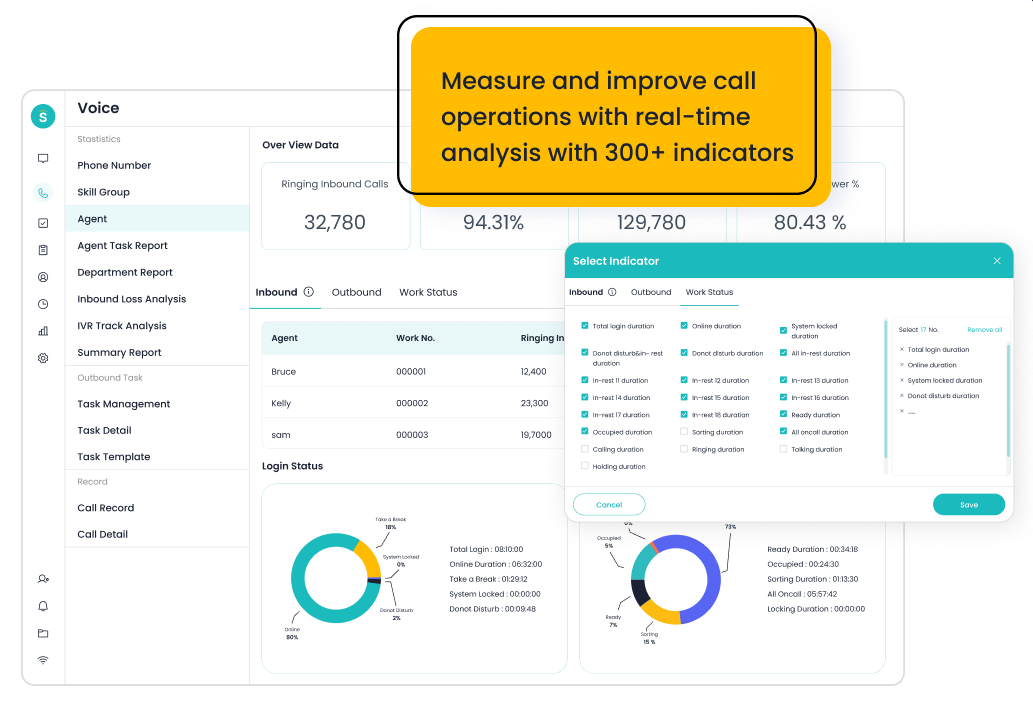
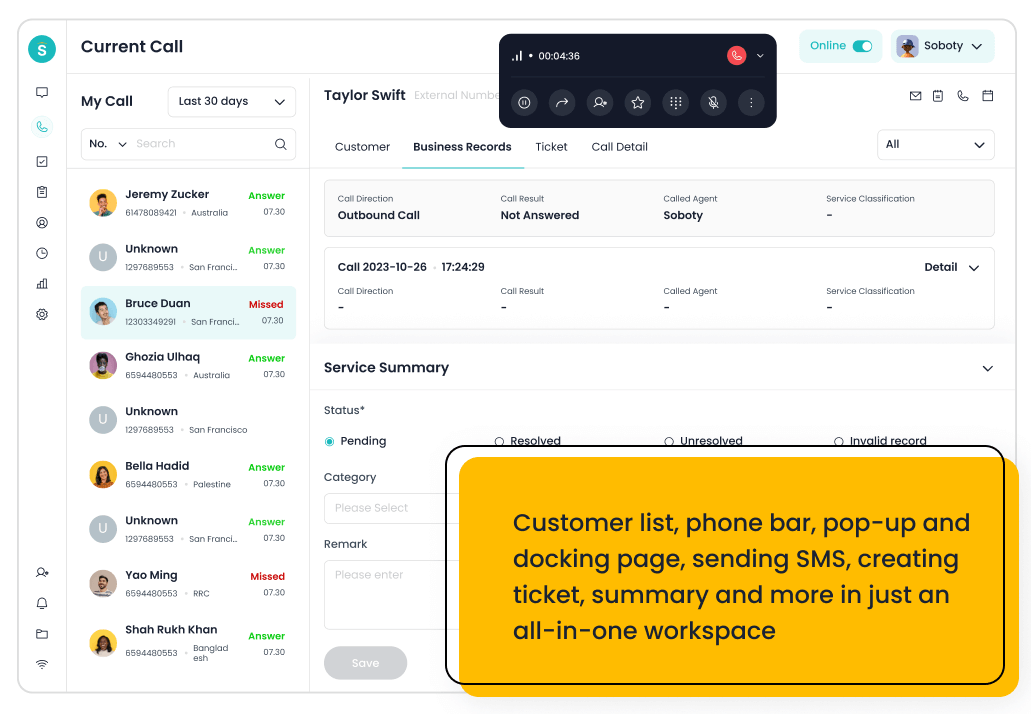
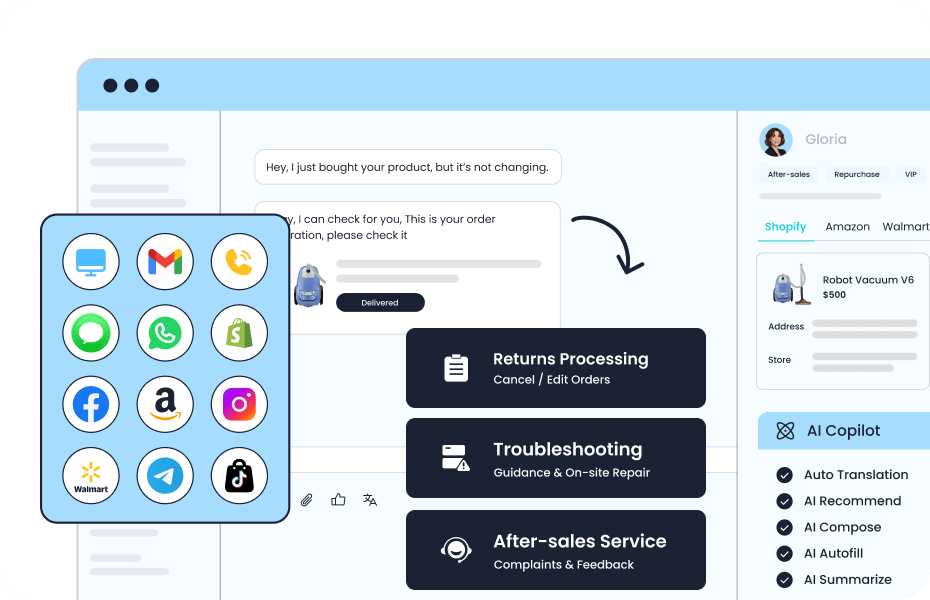
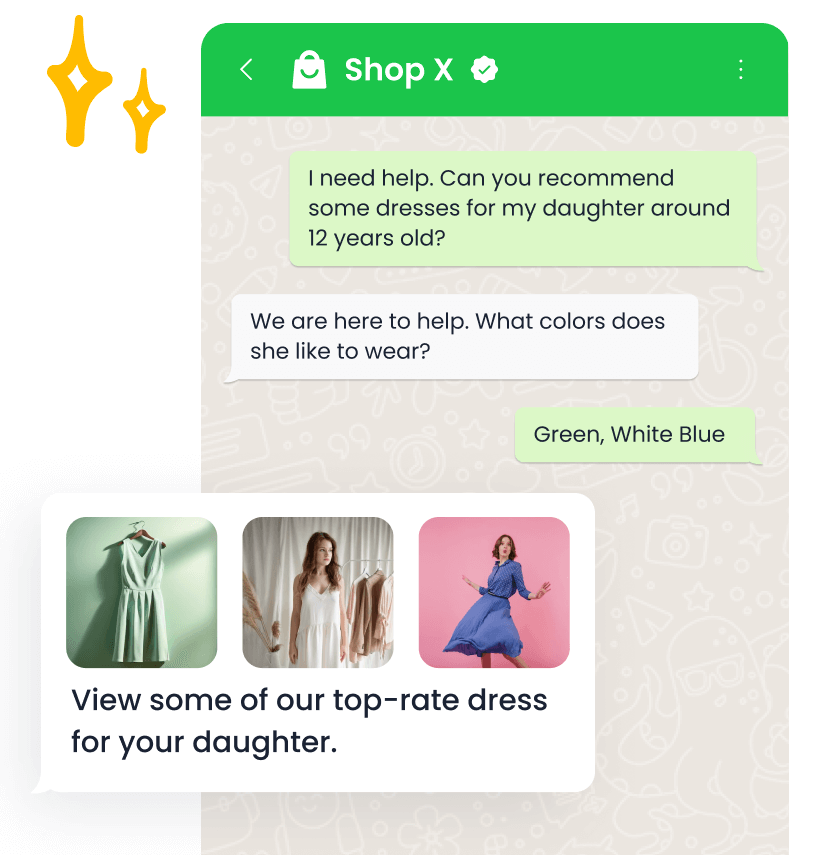
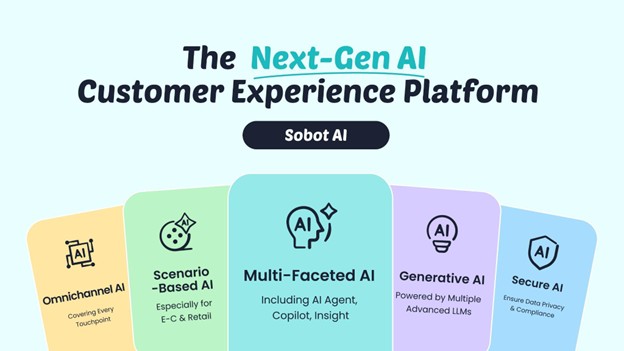
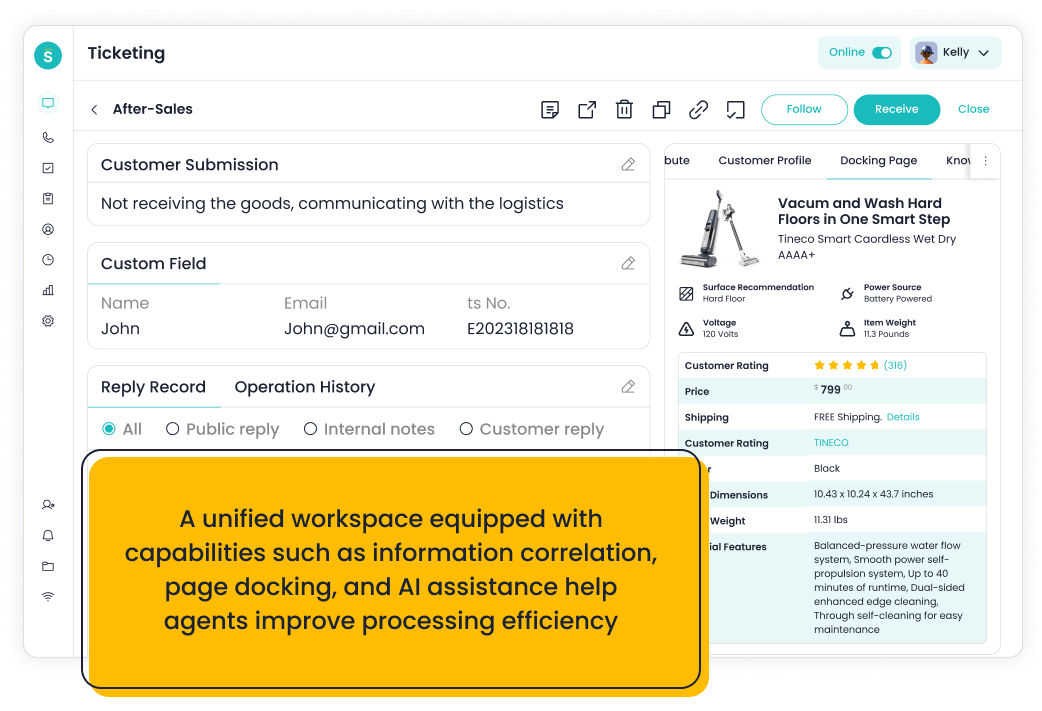
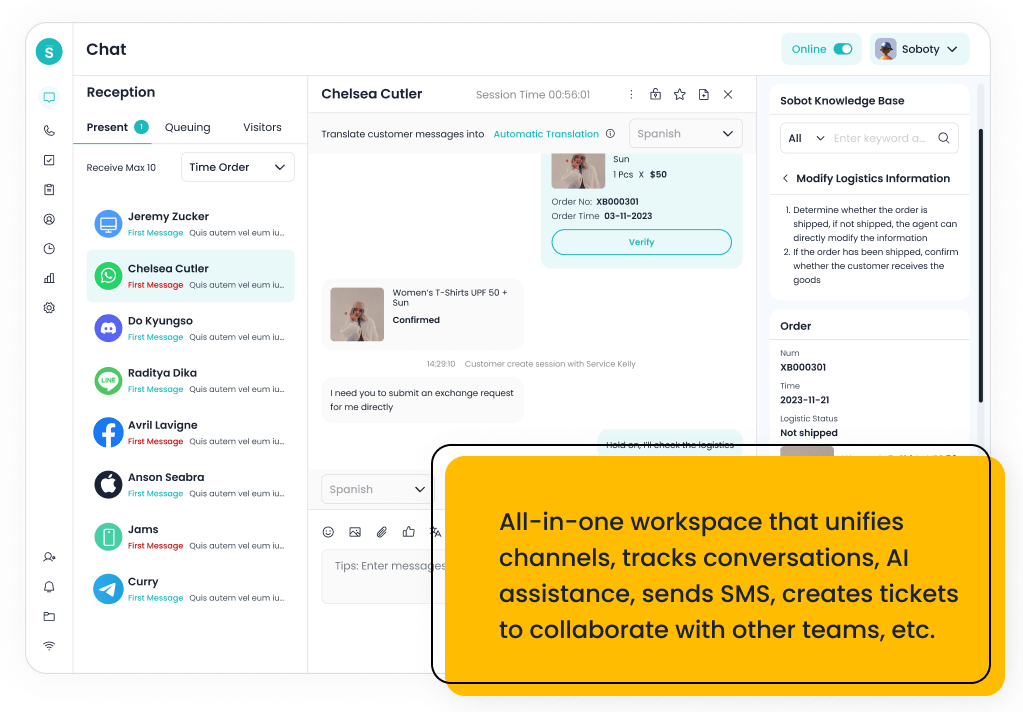
Sobot is built as a unified platform rather than a point solution, spanning live chat, AI voicebot, WhatsApp API, ticketing, and omnichannel routing within a single workspace. Its AI agent layer handles intent classification, autonomous response generation, and backend integrations—enabling contact centers to resolve inquiries without human intervention on high-volume, structured workflows. The platform’s multilingual capability and global phone number coverage make it particularly well-suited for enterprises operating across multiple markets from a single operations team. Sobot’s voicebot and human-bot collaboration features allow a seamless handoff when the AI reaches the boundary of its configured scope, preserving context across the channel transition. Teams managing 550,000+ users report achieving resolution rates above 70% on first-contact queries.
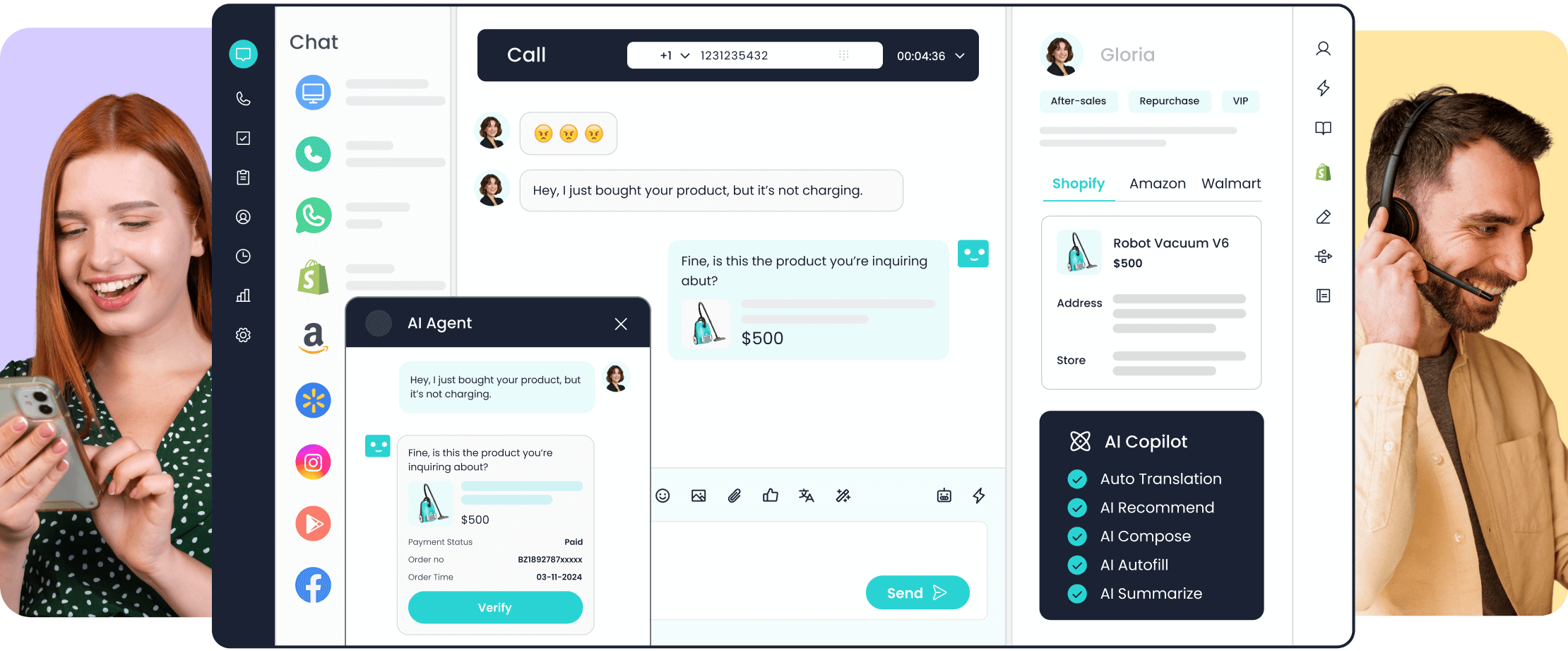
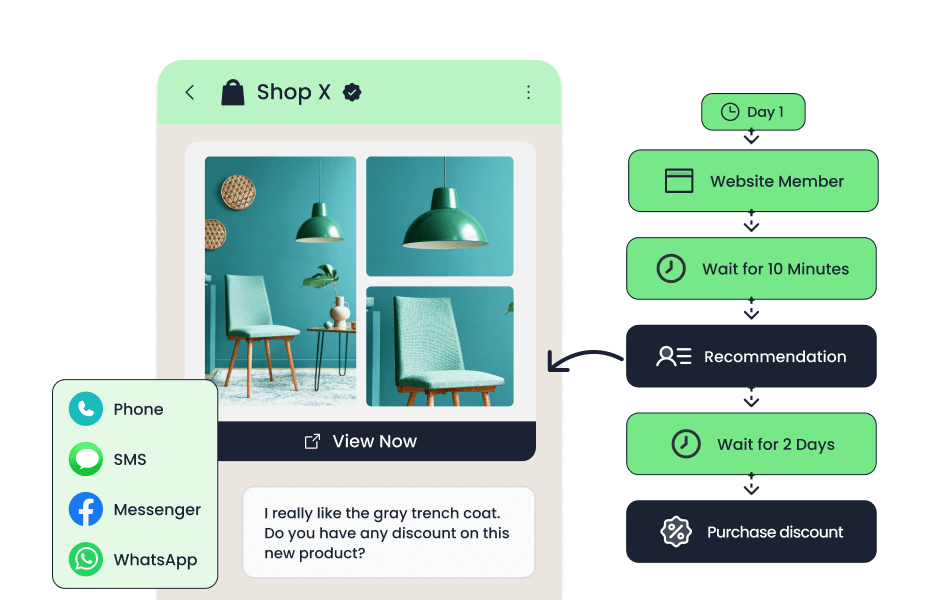
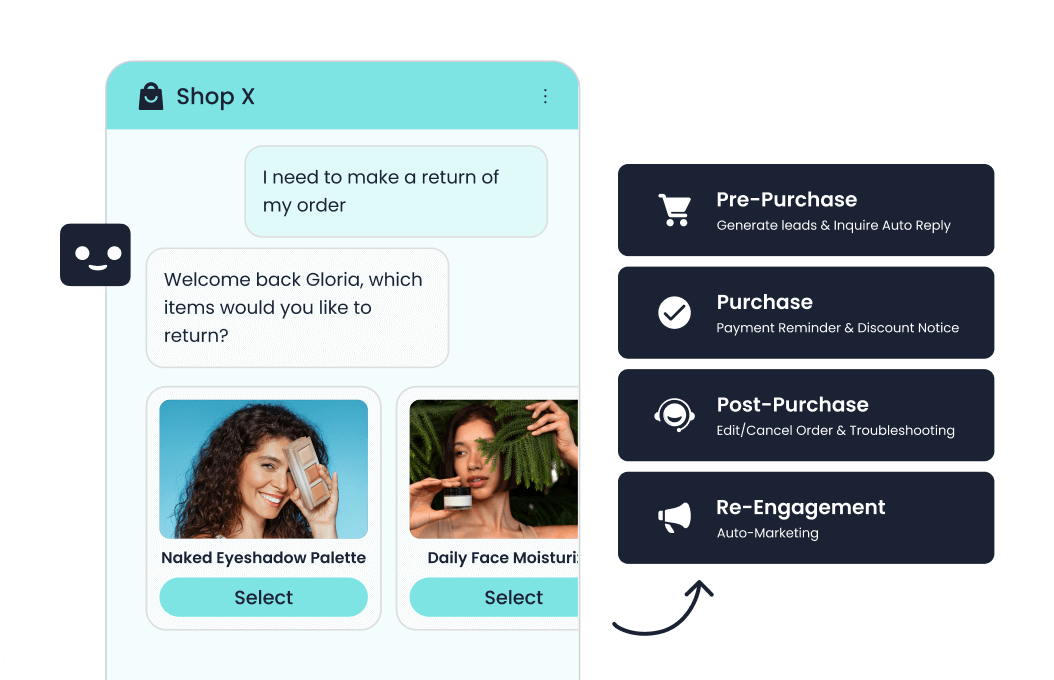
The platform’s intelligent assignment engine distributes conversations based on agent skill, load, and customer segment—reducing manual routing overhead while ensuring premium accounts receive appropriate priority. Proactive marketing capabilities allow teams to use the same AI layer for outbound engagement, not just inbound support, creating a unified customer engagement model rather than separate sales and service silos. Explore Sobot’s full AI solution overview or review customer deployments from enterprise brands across retail, financial services, and telecommunications.
Intercom Fin: Conversational AI Agent for SaaS and Digital-First Teams
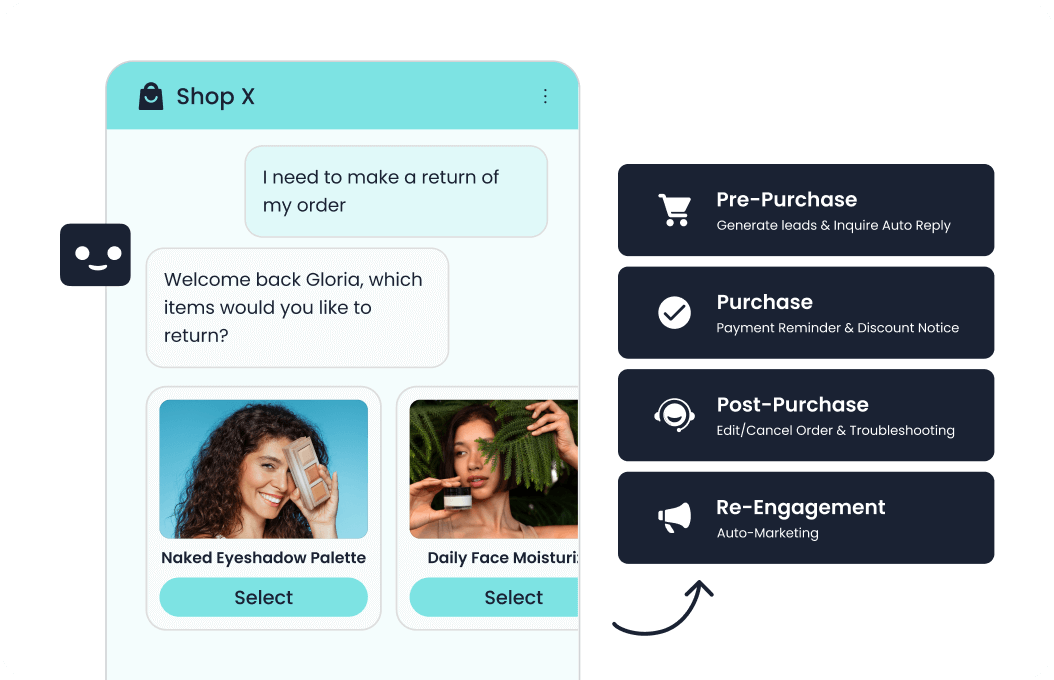
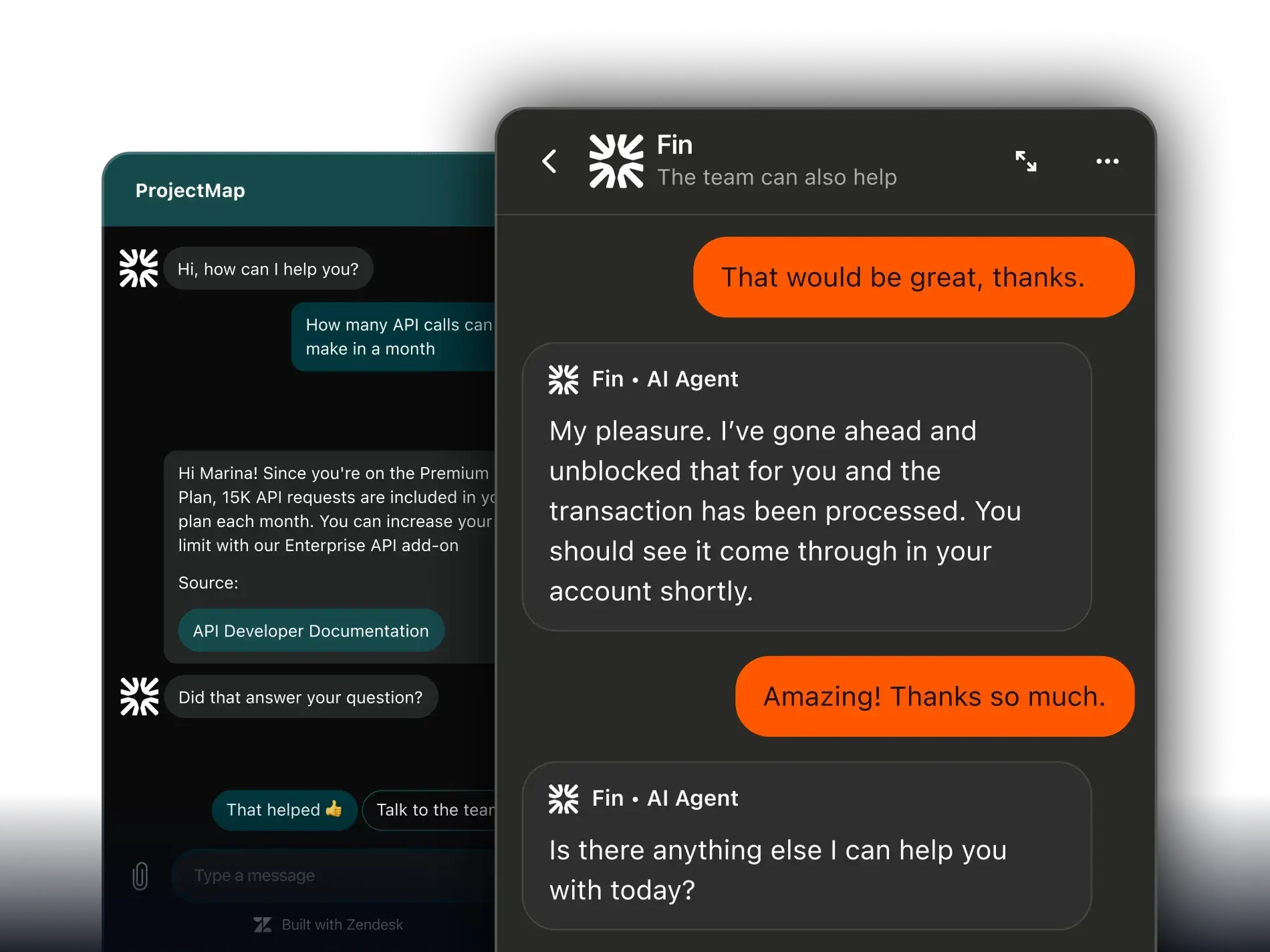
Intercom’s Fin AI Agent is among the most discussed AI customer service tools in the mid-market segment, built on Intercom’s proprietary Fin Custom Model and integrated across chat, email, voice, SMS, and social channels. Fin grounds its responses in the company’s knowledge base and can execute multi-step workflows through Intercom’s native action system. Its per-resolution pricing model—approximately $0.99 per resolved conversation—aligns platform cost with outcomes rather than team size, which is attractive for high-volume support operations with strong automation rates. Fin’s primary limitation is that its deepest capabilities remain within the Intercom ecosystem; organizations with complex external system integrations may find the agent’s action scope more constrained than fully open-API platforms.
Five9: Enterprise Voice and CX Intelligence Platform
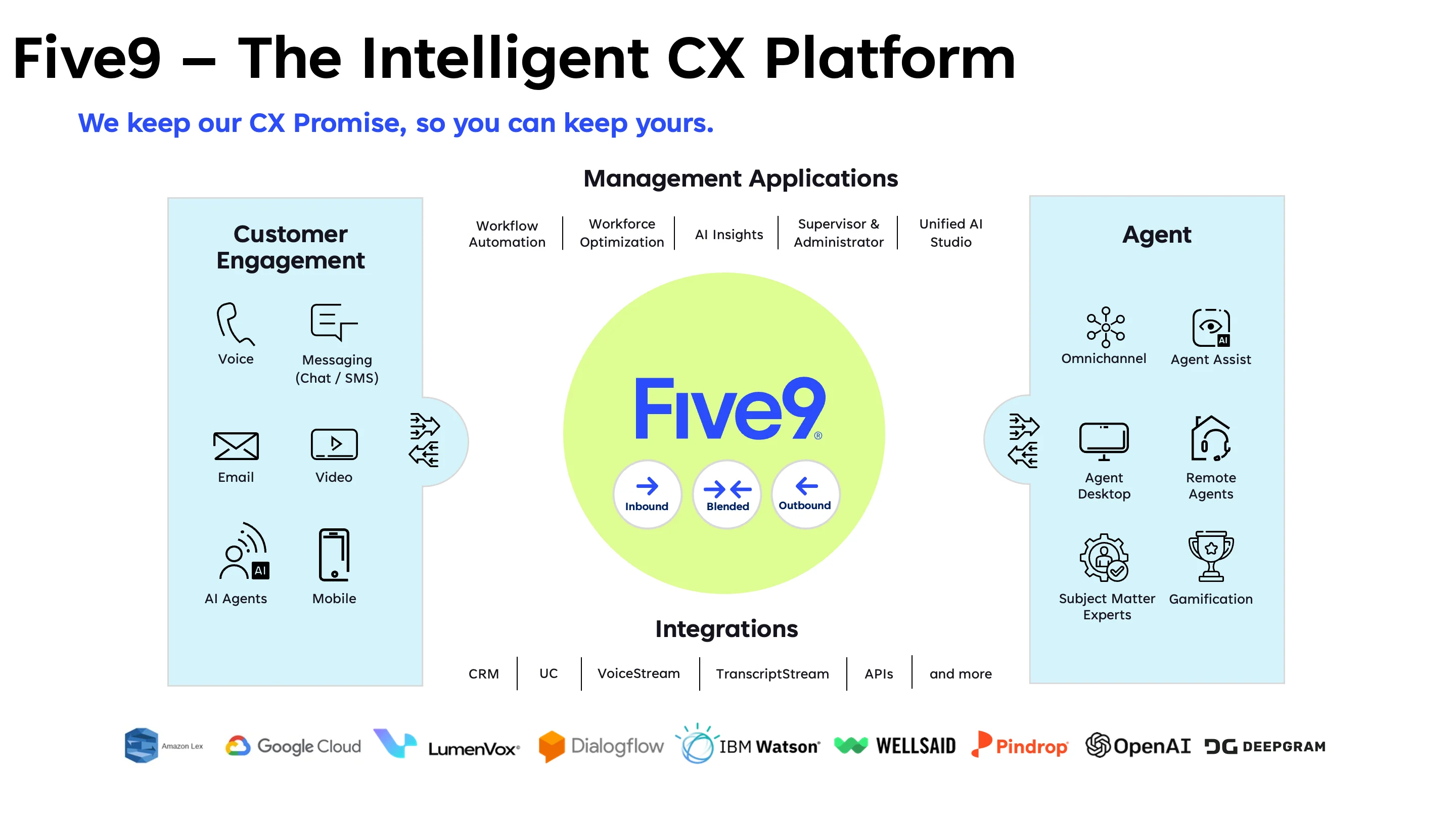
Five9 targets large enterprise contact centers with complex voice automation requirements, offering an Intelligent Virtual Agent that handles inbound and outbound voice interactions alongside a full suite of workforce optimization and analytics tools. Its AI Insights Dashboard surfaces real-time sentiment, call categorization, and coaching opportunities for live agents, making it as valuable for human performance management as for autonomous automation. Five9’s strength is enterprise telephony integration: it connects natively with Salesforce, ServiceNow, and major CRM platforms, enabling AI agents to access full customer context during voice interactions. Pricing is custom enterprise only, with contract structures typically sized around seat count and call volume.
SleekFlow: Messaging-First AI Agent for Social Commerce
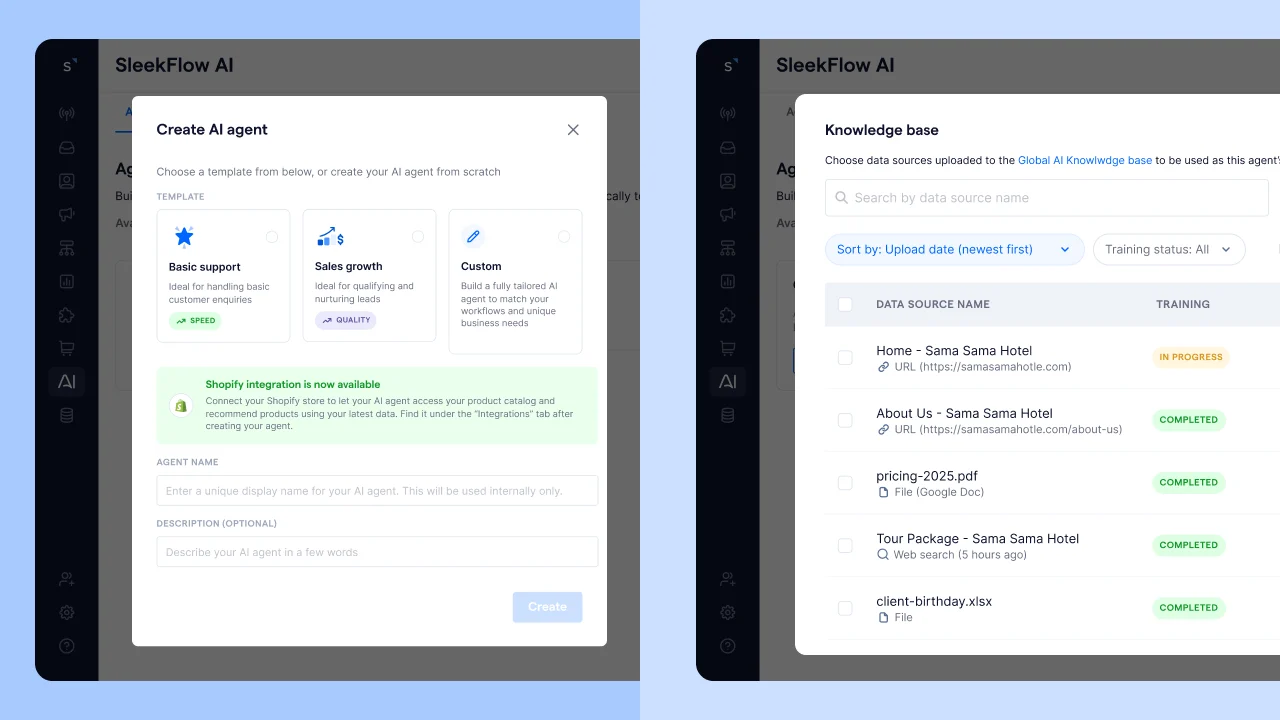
SleekFlow approaches the AI agent space from a messaging-channel perspective, with deep native integration across WhatsApp Business, Instagram, Facebook Messenger, LINE, and WeChat. Its AI Agent Builder enables non-technical teams to create, configure, and deploy AI agents using a visual no-code interface, with prompts defining agent behavior without requiring machine learning expertise. SleekFlow’s omnichannel inbox consolidates all messaging channels into a single view, while its flow automation engine handles routing, escalation, and campaign triggers. The platform is particularly well adopted across APAC markets where WhatsApp and LINE are primary customer communication channels.
Freshdesk Freddy AI: Helpdesk-Integrated AI Agent for SMBs
Freshdesk’s Freddy AI agent operates as a native extension of the Freshdesk ticketing platform, making it accessible for SMBs that are already standardized on the Freshworks ecosystem. Freddy handles incoming inquiries across chat, email, and phone, routes tickets using AI-powered intent detection, and provides agent assist suggestions in real time. The $29/agent/month starting price is among the most competitive in the market, though AI features scale with plan tier. Organizations outside the Freshworks ecosystem will find native integration deeper than third-party connector paths.
How to Select the Right Platform for Your Team
Start by mapping your support volume distribution across channels. If 60% of contacts arrive via voice, a chat-native platform with a voice add-on will underserve your primary channel. Next, identify the five highest-volume query types and test whether each platform can resolve them without human escalation—not just respond to them. Pay particular attention to integration requirements: a platform that cannot write back to your order management system cannot complete returns, only acknowledge them. Finally, evaluate pricing at realistic scale. A $0.99/resolution model that achieves 60% automation on 100,000 monthly tickets costs $59,400 per month—compare that against your current human agent cost per contact before signing.
For teams that need omnichannel coverage across voice, chat, WhatsApp, and ticketing under one operational roof, Sobot’s platform demo provides a practical starting point to evaluate fit against your actual infrastructure and volumes.
Frequently Asked Questions
What resolution rate should I expect from an AI customer service agent?
Industry benchmarks for 2026 show autonomous AI resolution rates ranging from 44% at the market average to 70–85% for ecommerce-specific workflows with well-configured integrations. Voice AI achieves 40–50% call containment rates on current deployments. Resolution rate is highly sensitive to integration depth and knowledge base quality—platforms with clean, current knowledge sources and full CRM access consistently outperform those relying on static FAQ content.
Is per-resolution pricing better than per-seat pricing for AI agents?
Per-resolution pricing aligns cost directly with value delivered and provides a natural ROI calculation: cost per AI resolution versus cost per human-handled interaction. Per-seat pricing can be more predictable for budgeting purposes but does not scale down when automation rates increase. Most enterprise buyers in 2026 are negotiating hybrid models—a base platform fee covering infrastructure with per-resolution charges above an included volume threshold.
How do I measure the ROI of an AI customer service agent?
The primary ROI metrics are: cost per contact before and after AI deployment, first-contact resolution rate, customer satisfaction score (CSAT) trend, and agent-handling time for escalated interactions. Secondary metrics include knowledge base coverage rate—what percentage of inbound query types the AI can answer—and escalation rate trend over time. Organizations that track all five consistently report clear ROI within 90 days of production deployment.
Can AI customer service agents handle voice interactions?
Yes, and voice AI is one of the fastest-growing segments within AI customer service. Platforms including Sobot Voicebot, Five9 IVA, and Kore.ai offer production-grade voice AI agents that handle inbound calls, provide real-time speech-to-text conversion, and complete workflows during the call. Current voice AI achieves 40–50% call containment on average, with higher rates on well-defined query categories such as order status, appointment scheduling, and account balance inquiries. Start your evaluation with a 15-day free trial of Sobot to test voice and chat AI together in your environment.