Do All Chatbots Have Operator Systems in Them is a practical question for teams that want faster, more consistent customer service without making the agent experience harder. This guide explains the concept in plain language, shows what to compare, and gives you a simple framework for deciding what your team actually needs.
Quick Answer
Yes, do All Chatbots Have Operator Systems in Them can be answered clearly once you separate the concept from the implementation. The practical question is how the workflow affects customers, agents, data, and measurable service outcomes.
What Do All Chatbots Have Operator Systems in Them Means
Do All Chatbots Have Operator Systems in Them refers to the tools, workflows, and operating practices that help a business respond to customers with speed and consistency. In practice, the right setup should connect customer context, automation, and human support instead of forcing agents to switch between disconnected systems.
For service leaders, the goal is not only to add another channel. The goal is to make every customer interaction easier to understand, route, resolve, and measure.
Why Do All Chatbots Have Operator Systems in Them Matters for Customer Service
Customers expect quick answers, but speed alone is not enough. They also expect accurate responses, smooth handoffs, and agents who understand the full history of the issue. A strong AI chatbot helps teams create that experience across channels.
For managers, the value is visibility. When conversations, tickets, automation, and reporting live in one workflow, it becomes easier to spot bottlenecks, coach agents, and prioritize improvements.
Key Capabilities to Look For
When evaluating do All Chatbots Have Operator Systems in Them, start with the capabilities that affect daily work. For most teams, the essentials include intent recognition, knowledge base answers, human handoff, conversation analytics, and multichannel deployment. You can compare these needs against Sobot Chatbot and Sobot AI when mapping your service stack.
- Intent Recognition: make sure it is simple enough for agents to use every day and flexible enough for real customer scenarios.
- Knowledge Base Answers: make sure it is simple enough for agents to use every day and flexible enough for real customer scenarios.
- Human Handoff: make sure it is simple enough for agents to use every day and flexible enough for real customer scenarios.
- Conversation Analytics: make sure it is simple enough for agents to use every day and flexible enough for real customer scenarios.
- Multichannel Deployment: make sure it is simple enough for agents to use every day and flexible enough for real customer scenarios.
Evaluation Checklist
| Area | What to Check | Why It Matters |
|---|---|---|
| Customer journey | Where do All Chatbots Have Operator Systems in Them appears before, during, and after a customer request | It keeps the article focused on real support outcomes |
| Automation fit | Which parts of AI chatbot should be automated and which need agents | It prevents over-automation and poor handoffs |
| Data and context | Whether agents can see history, intent, channel, and ticket status | It improves accuracy and reduces repeated questions |
| Measurement | Which KPIs prove do All Chatbots Have Operator Systems in Them is working | It connects content strategy to operational performance |
How to Put It Into Practice
A good rollout starts with a narrow use case. Choose one high-volume journey, define the expected customer outcome, and document how the request should move from self-service to agent support when needed.
- Audit your current customer questions, channels, and escalation paths.
- Group repetitive issues that can be answered or routed automatically.
- Define handoff rules so customers do not need to repeat themselves.
- Connect reporting to a small set of service KPIs.
- Review conversations regularly and update workflows based on real cases.
Where Sobot Fits
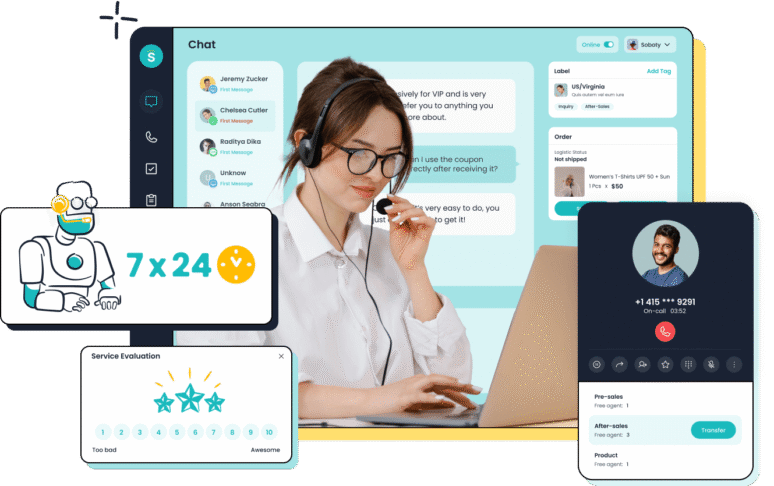
Sobot Chatbot helps service teams connect automation, agents, and customer context in one workflow. Teams can use it to support answering repetitive questions, routing complex requests, supporting WhatsApp or website conversations, and collecting lead details, while keeping conversations measurable and easier to manage.
If your team is comparing tools, review Sobot Chatbot and related Sobot customer engagement solutions to see how AI, live chat, ticketing, voice, and messaging can work together.
Related Resources
- best AI chatbots and AI agents for customer support
- AI customer service agents comparison
- book a Sobot demo
Common Mistakes to Avoid
- Choosing software only by feature count instead of workflow fit.
- Launching automation without a clear human handoff path.
- Ignoring reporting until after the team already needs proof of ROI.
- Treating each channel separately when customers expect continuity.
FAQs About Do All Chatbots Have Operator Systems in Them
What is the most important factor when evaluating do All Chatbots Have Operator Systems in Them?
Workflow fit is usually the most important factor. The tool should match your customer journey, agent process, data needs, and reporting expectations.
How do you measure whether do All Chatbots Have Operator Systems in Them is working?
Track a focused set of metrics such as containment rate, handoff quality, first response time, and CSAT. These metrics show whether customers are getting faster and better answers.
When should a team consider Sobot?
Consider Sobot when your team needs to connect multiple channels, use AI responsibly, improve agent productivity, and manage customer conversations with clearer visibility.
Final Takeaway
Do All Chatbots Have Operator Systems in Them should make customer service easier for both customers and agents. Start with the journey, compare the capabilities that matter, and choose a platform that can scale with your service goals.