The line between “chatbot” and “AI agent” has shifted meaningfully in 2026. Traditional chatbots deflected volume with scripted replies. Modern AI agents resolve issues end-to-end — accessing backend systems, taking real actions like refunds and account updates, and handing off to human agents with full context when needed. According to Verified Market Research, the customer service software market is projected to reach $68.19 billion by 2032 at a 20.94% CAGR, and AI agent adoption is one of the primary drivers.
This guide compares ten of the strongest AI chatbot and AI agent platforms for customer support in 2026. Each platform earns its place based on autonomous resolution capability, integration depth, and fit for a specific type of team.
What Is an AI Agent for Customer Support?
An AI agent for customer support is software that uses large language models, natural language processing, and governed integrations with business systems to autonomously resolve customer inquiries — not just answer questions, but take real actions like issuing refunds, updating accounts, and rescheduling orders. Unlike traditional chatbots that follow scripted decision trees, AI agents reason through context, access backend data, and escalate to human agents with full conversation summaries when they reach the limits of their authority. According to G2’s chatbot and AI agent category, top-rated platforms in 2026 include Intercom (Fin), Tidio (Lyro), Salesforce (Agentforce), and Ada. The broader shift from chatbots to AI agents reflects what Zendesk’s CX Trends report identifies as the most significant structural change in customer service technology: autonomous resolution replacing ticket deflection as the primary KPI.
Key Takeaways
- The chatbot era is over — in 2026, the meaningful distinction is between scripted bots (flow-based replies) and AI agents (autonomous resolution with backend action-taking).
- Sobot, Intercom Fin, and Ada lead on autonomous resolution across omnichannel support.
- Gorgias, SleekFlow, and Tidio Lyro stand out for e-commerce and messaging-first support teams.
- HubSpot, Help Scout, and Yellow.ai suit teams with different constraints — CRM consolidation, small-team simplicity, or enterprise multichannel complexity respectively.
- Pricing models vary widely — per-resolution, per-conversation, per-seat, or bundled — and can dramatically change total cost depending on ticket mix. The broader CCaaS market is expected to hit $30.15 billion by 2034, with AI agent adoption driving much of the growth.
Chatbot vs. AI Agent: What Changed in 2026
A traditional chatbot follows a decision tree: it matches keywords, pulls canned responses from a knowledge base, and hands off when it hits a dead end. It’s a deflection tool. An AI agent is different:
- It resolves, not just answers. When a customer asks “where’s my order,” an AI agent queries the order system, returns specific tracking data, and offers to reroute the shipment if needed. A chatbot only links to the shipping FAQ.
- It takes real actions. Issue refunds, update addresses, reschedule appointments, cancel subscriptions — all through governed integrations with policy guardrails.
- It escalates gracefully. When handoff is required, the human agent inherits a conversation summary, detected intent, and suggested next action — not just a raw transcript.
- It learns from outcomes. Resolution rates and CSAT signals feed back into the agent’s decision-making, so performance improves with volume rather than drifting.
Most of the platforms in this guide support both paradigms — they can run as simple chatbots for pilot deployments, then mature into full AI agents as integrations deepen.
Quick Comparison: AI Chatbots and AI Agents at a Glance
| Platform | Best For | AI Agent Capability | Pricing Model | G2 Rating |
|---|---|---|---|---|
| Sobot AI Agent | Omnichannel contact center | Full autonomous + agent assist | Bundled per-seat | 4.7 |
| Intercom Fin | SaaS & digital-first | Full autonomous resolution | $0.99/resolution | 4.5 |
| Ada | Mid-market, no-code | Full autonomous (83% reported) | Enterprise (custom) | 4.6 |
| Gorgias AI Agent | Shopify e-commerce | Retail-trained autonomous | From $10/mo | 4.6 |
| SleekFlow | WhatsApp & messaging-first | Flow-based + AI agent | Custom | 4.6 |
| Tidio Lyro | SMB e-commerce | FAQ-trained deflection | $32.50/mo (50 convos) | 4.7 |
| Yellow.ai | Enterprise 35+ channels | Agentic RAG architecture | Enterprise (custom) | 4.5 |
| HubSpot Breeze | HubSpot CRM users | CRM-integrated AI agent | Free / $90/seat/mo (Pro) | 4.4 |
| Wati | WhatsApp-only SMB | No-code chatbot builder | $39/mo | 4.6 |
| Help Scout AI | Small teams, simple AI | AI-assisted (not autonomous) | $25/user/mo | 4.4 |
G2 ratings as of Spring 2026. Pricing reflects published entry tiers. Source: G2 Chatbot & AI Agent category and vendor websites.
The 10 Best AI Chatbots and AI Agents in 2026
1. Sobot AI Agent — Best All-in-One AI Agent for Omnichannel Support

Best for: Mid-market and cross-border teams that want AI agents integrated with live chat, voice, ticketing, and CRM in a single platform.
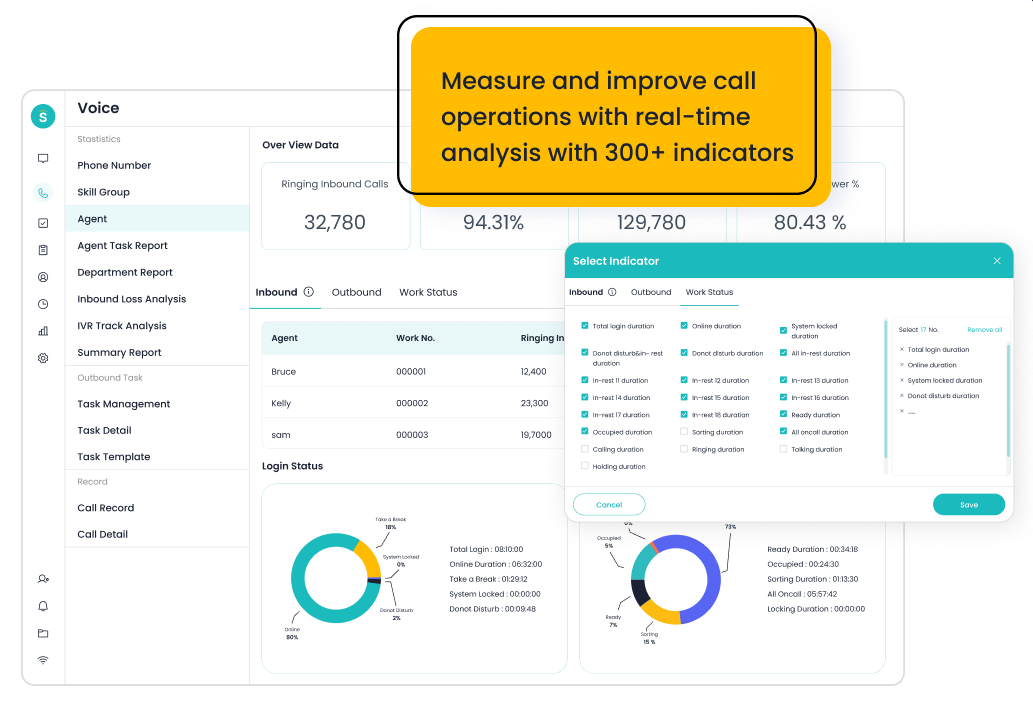
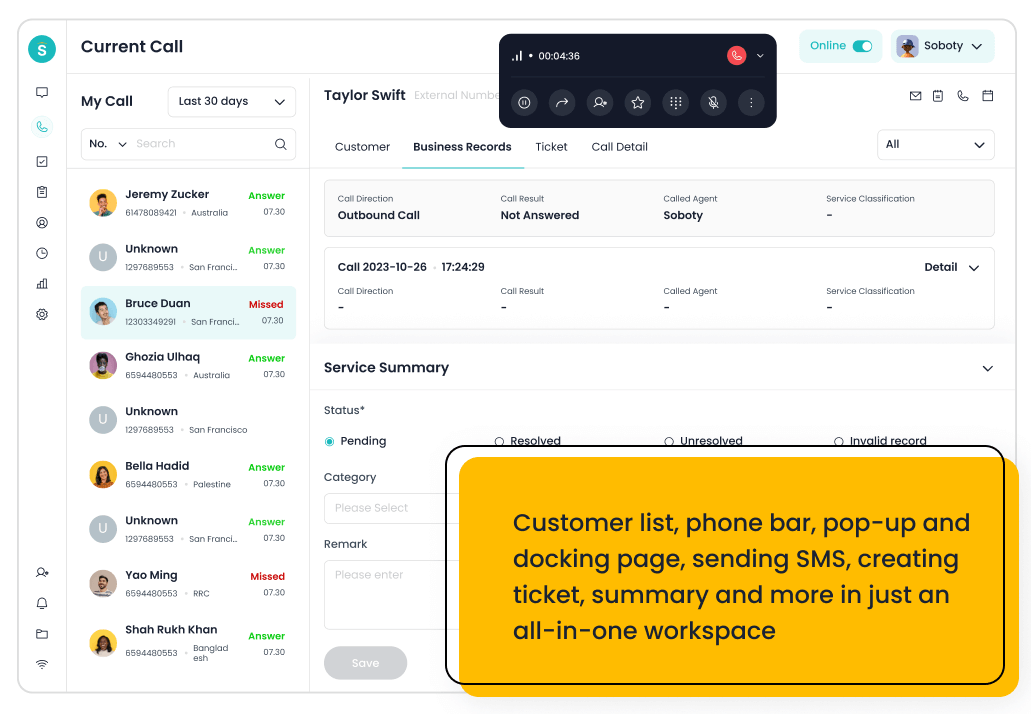
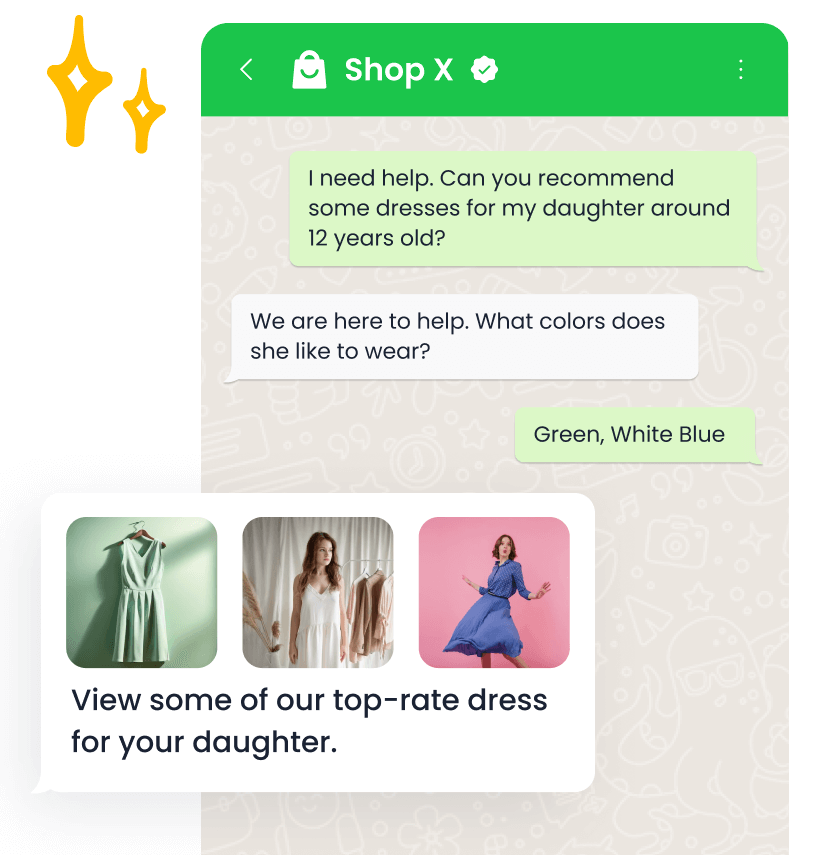
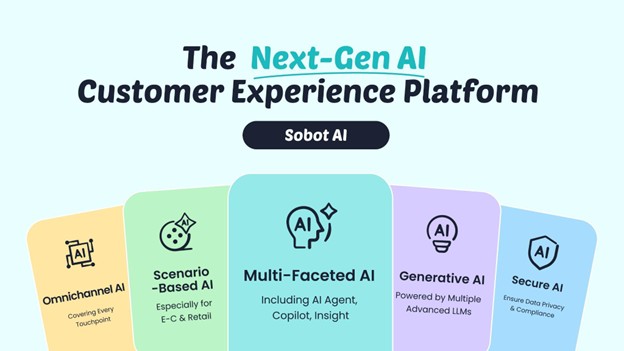
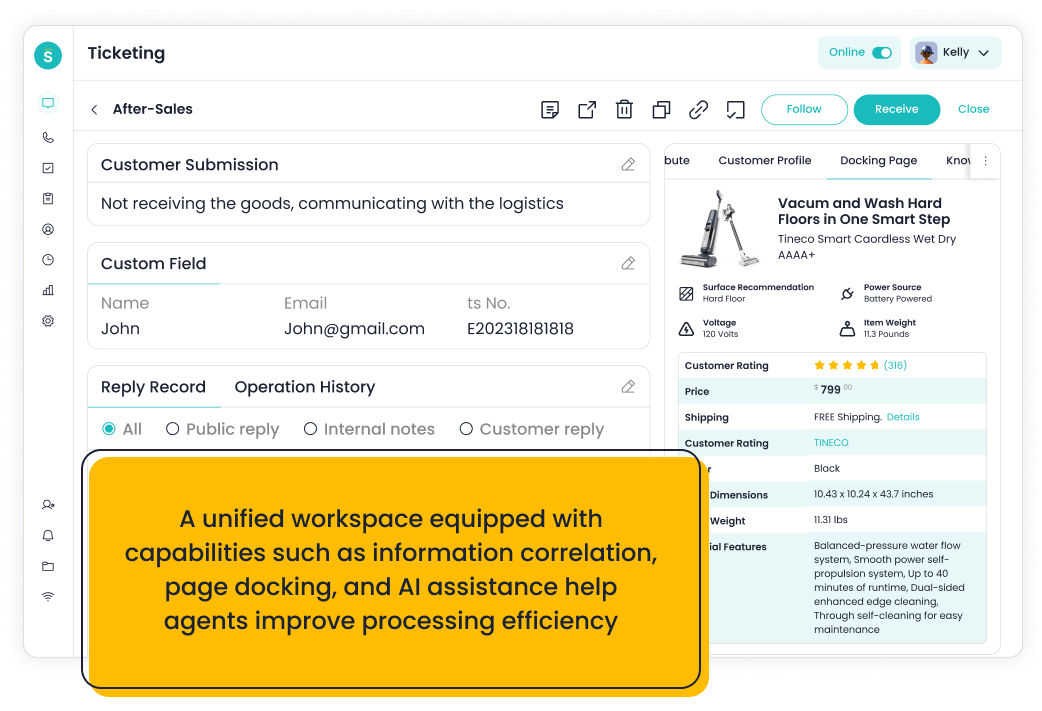
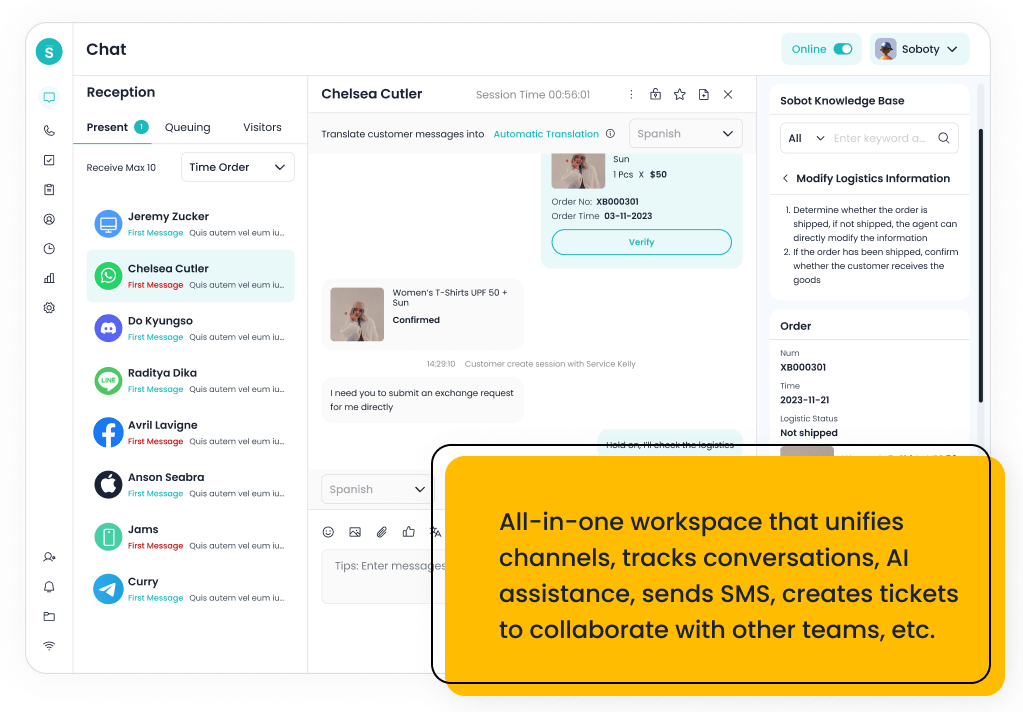
Sobot’s AI Agent is built into its full contact center platform. That matters architecturally — the agent shares the same customer records, knowledge base, and integration layer as human agents. When a conversation escalates, the human picks up with full context rather than starting over. Sobot’s platform covers live chat, WhatsApp, email, voice, and social channels, with AI automation running consistently across every channel. Teams evaluating the product can review Sobot’s AI solution in detail to see how it handles deflection, agent assist, and proactive engagement.

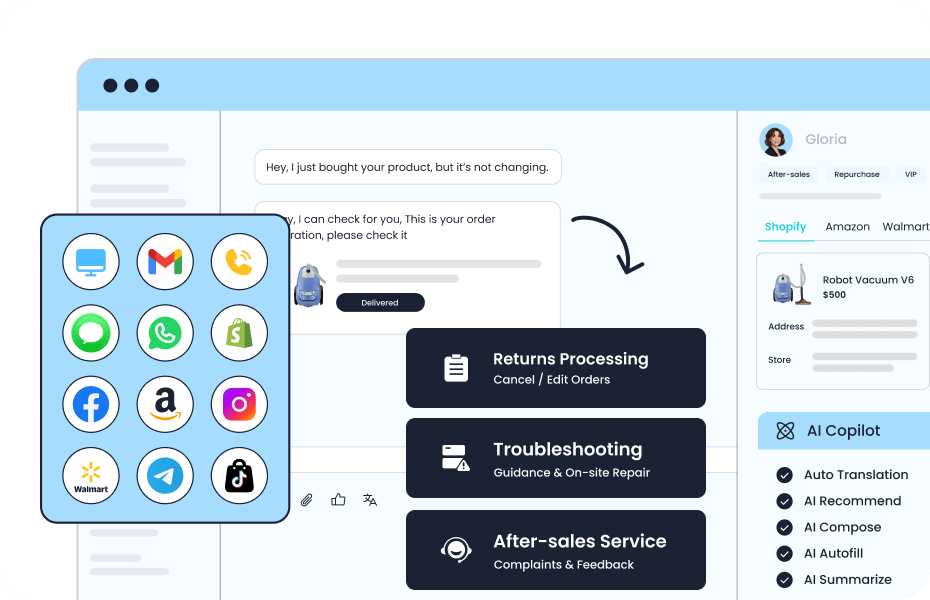
Sobot AI Agent runs 24/7 across web, messaging, and voice channels.
Strengths: Native integration with Sobot’s contact center stack, strong autonomous resolution rates, multilingual support for international teams, proactive engagement via marketing automation, transparent bundled pricing.
Weaknesses: Full value comes from using the whole Sobot platform — standalone AI agent deployments don’t unlock the architectural advantage.

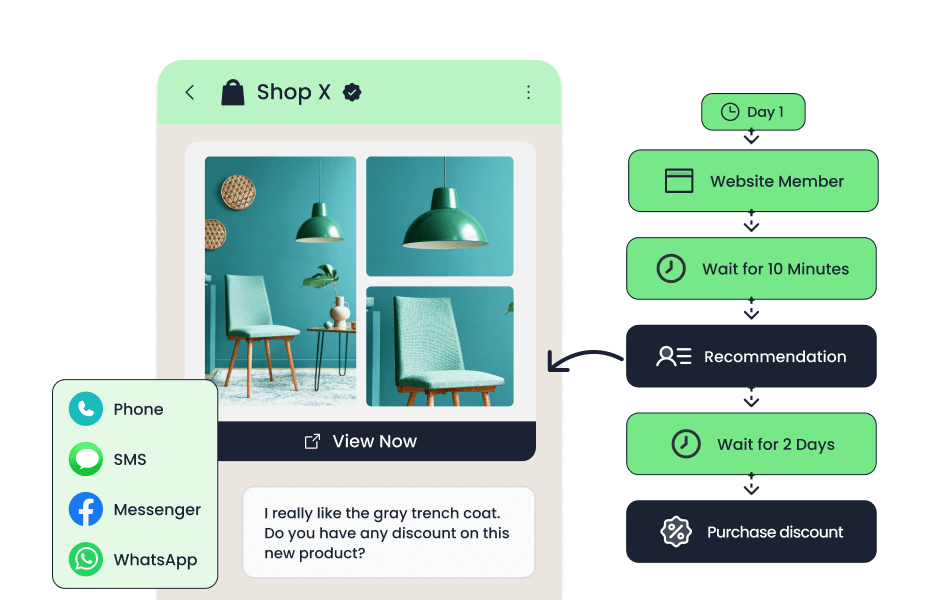
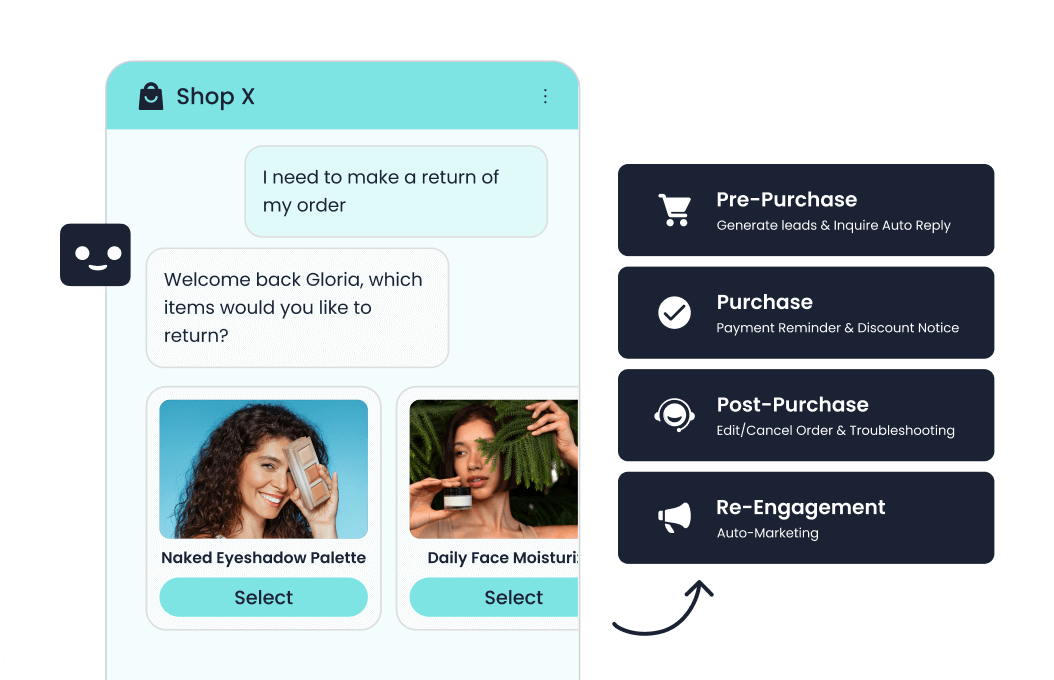
Sobot’s AI powers proactive marketing engagement alongside reactive support.
2. Intercom Fin — Best AI Agent for SaaS and Digital-First Support

Best for: SaaS companies and digital-first businesses that want AI resolution as the centerpiece of support.
Intercom pivoted its entire product around Fin, and the investment shows. Fin runs on Intercom’s proprietary custom model and integrates with external systems to execute multi-step tasks across chat, email, voice, SMS, and social. Pricing is per-resolved-conversation — typically around $0.99 per resolution with a 50-resolution minimum — which aligns platform cost with outcome rather than seat count. Fin’s autonomous resolution rates are among the highest publicly reported.
Strengths: Industry-leading autonomous resolution, strong AI agent analytics, native omnichannel support, pricing tied to outcomes.
Weaknesses: Per-resolution fees add up at high volume, SaaS-centric design shows in enterprise contact center edge cases.
3. Ada — Best No-Code AI Agent for Mid-Market Brands

Best for: Mid-market brands that want high autonomous resolution without heavy engineering investment.
Ada focuses on deploying, orchestrating, and continuously improving AI agents that resolve conversations across channels and languages. The platform emphasizes no-code control — support leaders can tune the AI without writing code — which accelerates time to value. Ada reports autonomous resolution rates reaching 83% in target industries, and the analytics dashboard surfaces containment, CSAT, and escalation patterns in one view.
Strengths: High autonomous resolution rates, no-code agent configuration, strong multilingual support (50+ languages), robust analytics.
Weaknesses: Enterprise pricing starts in the six figures annually, less suited for teams under 20 agents.
4. Gorgias AI Agent — Best for Shopify and E-commerce Automation

Best for: E-commerce brands on Shopify, BigCommerce, or Magento that need AI trained on commerce-specific workflows.
Gorgias built its AI Agent on top of its e-commerce helpdesk roots. The agent handles refunds, exchanges, order tracking, and shipping updates with direct integration to store data — which means it doesn’t just answer “where’s my order,” it checks the order status and takes action. For merchants on Shopify, Gorgias often delivers the fastest time-to-value among AI agents, and the pricing model ties cost to platform usage rather than seat count.
Strengths: Deep Shopify and e-commerce integrations, AI Agent trained on retail workflows, strong macro and automation library, predictable e-commerce pricing.
Weaknesses: Limited fit outside e-commerce, ticket-based pricing can become unpredictable at very high volumes.
5. SleekFlow — Best AI Agent for WhatsApp and Messaging-First Teams
Best for: Teams in Asia-Pacific and cross-border markets where WhatsApp and messaging apps are the primary support channel.
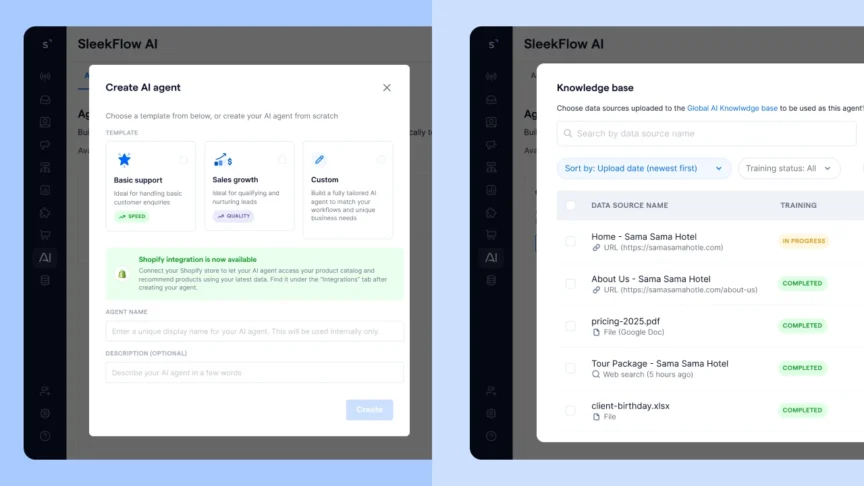
SleekFlow is built around WhatsApp Business, Instagram, Messenger, and regional messaging apps, with an AI agent layer that automates flows across channels. The flow builder is visual and accessible to non-technical users, and the platform supports both sales and support use cases in the same workspace. For brands whose customers primarily contact them on messaging rather than email or web chat, SleekFlow addresses a use case that traditional helpdesks underserve.
Strengths: Deep WhatsApp and regional messaging coverage, visual flow builder, combined marketing/sales/support use cases, strong AI growth widget.
Weaknesses: Voice support lighter than dedicated CCaaS platforms, less mature for teams outside messaging-first markets.
6. Tidio Lyro — Best AI Agent for Small and Mid-Sized E-commerce

Best for: Small and mid-sized e-commerce stores that want affordable AI automation with live chat included.
Tidio’s Lyro AI agent is trained on FAQs and help-center content, paired with a full live chat product and multichannel inbox. Pricing starts low (around $32.50/month including 50 Lyro conversations), which makes the platform accessible to small teams. Lyro doesn’t match the autonomous resolution depth of Intercom Fin or Ada for complex cases, but for FAQ-heavy e-commerce support it often delivers 50–70% deflection at a fraction of the cost.
Strengths: Low entry price, easy deployment, strong e-commerce templates, combined live chat + AI agent in one product.
Weaknesses: Lower autonomous resolution ceiling than enterprise AI agents, limited fit for complex multi-step workflows.
7. Yellow.ai — Best Enterprise AI Agent for Multichannel Operations

Best for: Enterprise brands that need AI agents across 35+ channels including chat, voice, email, and regional messaging.
Yellow.ai positions itself as an enterprise conversational AI platform with a “super agent” architecture that manages workflows across channels. The agentic RAG architecture lets the AI autonomously retrieve data, reason, and act — which fits complex enterprise scenarios where customers might start on WhatsApp, continue on email, and finish on voice. Yellow.ai is particularly strong in banking, telecom, and retail in Asian and European markets.
Strengths: 35+ channel coverage, agentic architecture with autonomous reasoning, strong enterprise security, broad language support.
Weaknesses: Enterprise pricing and implementation timeline, can feel overbuilt for mid-market teams.
8. HubSpot Breeze AI — Best AI Agent for Teams Already on HubSpot

Best for: Companies using HubSpot CRM who want AI agents that share context with marketing and sales data.
HubSpot’s Breeze Customer Agent plugs into the broader HubSpot ecosystem, giving the AI agent access to the same contact records that sales and marketing use. That shared customer view can unlock personalization that standalone AI agents struggle to match — the agent knows what the customer bought, which marketing emails they opened, and what open deals they have. HubSpot case studies report AI agents handling significant portions of ticket volume while simultaneously improving conversion metrics.
Strengths: Deep CRM integration, unified customer view across marketing/sales/service, strong analytics inside the HubSpot ecosystem.
Weaknesses: Real value depends on being a HubSpot customer; less useful for teams not already in the ecosystem.
9. Wati — Best WhatsApp-First AI Chatbot for SMBs
Best for: Small and growing businesses in emerging markets that primarily serve customers via WhatsApp Business.
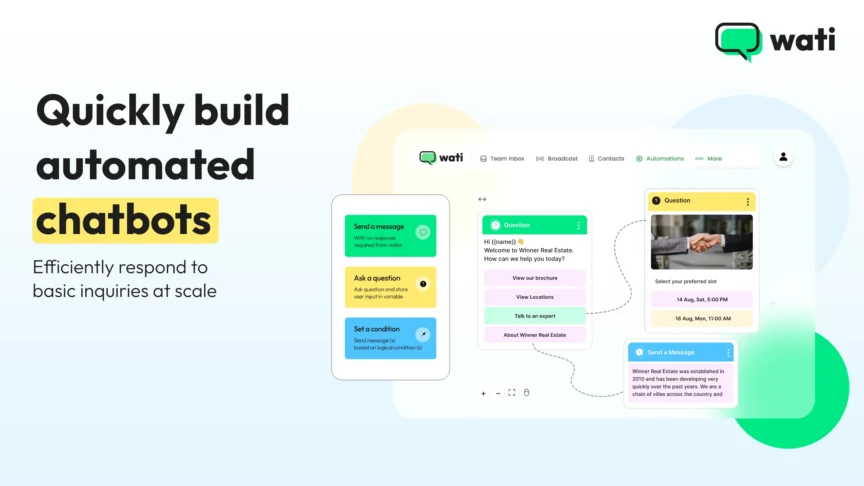
Wati is a WhatsApp Business Solution Provider with a no-code chatbot builder and shared team inbox. The platform is more tactical than Sobot or SleekFlow — it’s purpose-built for WhatsApp rather than multichannel — and the pricing model suits smaller teams. For a business in India, Southeast Asia, or Latin America where WhatsApp is effectively the support channel, Wati delivers the 20% of features that handle 80% of the use cases.
Strengths: Purpose-built for WhatsApp, no-code chatbot setup, affordable for small teams, strong in emerging markets.
Weaknesses: WhatsApp-only focus limits multichannel scaling, AI depth lags behind full AI agent platforms.
10. Help Scout AI — Best AI Chatbot for Small Teams and Simple Use Cases

Best for: Small support teams that want AI features layered into a straightforward helpdesk, not a standalone AI agent product.
Help Scout approaches AI as a set of thoughtful features inside its helpdesk — response rewriting, conversation summarization, knowledge base auto-suggestions — rather than an autonomous agent. For small teams under 30 agents who value human communication style and don’t want the complexity of training a full AI agent, Help Scout hits the sweet spot. The AI doesn’t try to resolve tickets autonomously, but it makes human agents materially faster and more consistent.
Strengths: Clean AI features inside a simple helpdesk, fastest onboarding in this list, transparent per-user pricing.
Weaknesses: Not a full AI agent — autonomous resolution capabilities are limited compared with Fin, Ada, or Sobot.
How to Choose the Right AI Agent for Your Team
A quick decision heuristic:
- If you need AI agents across every channel — Sobot’s AI chatbot, Intercom Fin, or Ada for most use cases.
- If you run e-commerce — Gorgias or Tidio Lyro for Shopify-focused teams, with Sobot as a strong omnichannel alternative.
- If messaging is your primary channel — SleekFlow, Wati, or Sobot’s WhatsApp solution.
- If you’re already on HubSpot — Breeze AI leverages existing CRM data.
- If you want simple AI features without agent complexity — Help Scout or Tidio.
Pilot two shortlisted platforms with real traffic for 30–60 days. Benchmark containment rate, escalation quality (does the human agent have full context?), and CSAT before and after the bot responds. Book a Sobot demo to see an AI agent working inside a full contact center.
Frequently Asked Questions (FQAs)
What’s the difference between a chatbot and an AI agent?
A chatbot follows scripted flows and pulls canned responses from a knowledge base — it deflects volume. An AI agent uses large language models and integrations with backend systems to autonomously resolve issues — it takes actions (refunds, account updates, rescheduling) and escalates to humans with full context when needed. In 2026, most buyers should evaluate AI agents rather than traditional chatbots.
What autonomous resolution rate should I expect?
Well-deployed AI agents typically achieve 50–85% autonomous resolution depending on use case complexity. Tier-1 issues (order status, simple account changes, FAQ responses) often reach 80–90%. Complex issues requiring policy judgment or multi-step troubleshooting drop into the 30–60% range. According to industry reports compiled by CX Today, the strongest deployments consistently clear 70% on blended ticket mixes.
How much does an AI agent cost?
Pricing varies widely across models. Per-resolution pricing (like Intercom Fin) runs around $0.99 per resolved conversation. Per-seat bundles (like Tidio and Help Scout) start under $50 per agent per month. Enterprise platforms (Ada, Yellow.ai, Sierra) use custom pricing often starting at six figures annually. The broader customer service market is growing at pace — reaching $55.76 billion in 2026 per industry research — and competitive pressure is compressing pricing across the board.
Can AI agents really take real actions, or do they just answer questions?
Modern AI agents can take real actions through governed integrations — refunds, address changes, cancellation processing, account updates — with policy guardrails. The gap between platforms is often in action breadth (how many systems the agent can touch) and governance (whether admins can define what actions are allowed under which conditions). Before committing, confirm a platform’s ability to execute the top 10 actions your team takes most often. Forbes Advisor’s help desk comparison offers another useful lens for evaluating feature depth across platforms.
How long does it take to deploy an AI agent?
Simple deployments (FAQ deflection on a chat widget) can launch in days with platforms like Tidio or Chatbase. Mid-complexity deployments (omnichannel AI agent with CRM integration) typically take 2–6 weeks. Enterprise deployments with deep system integration, multilingual flows, and governance rules often run 2–4 months. Fortune Business Insights notes that the broader self-service software market is growing at double-digit rates, with faster time-to-value being a primary differentiator between platforms.
Ready to evaluate an AI agent? Start a 15-day free trial of Sobot to see AI agents working inside a full omnichannel contact center — live chat, WhatsApp, voice, ticketing, and CRM in one workspace.