Introduction
AI-powered communication is rapidly transforming how businesses interact with customers. From chatbots to voice assistants, companies are increasingly relying on automation to improve efficiency, reduce costs, and deliver faster support.
One area seeing particularly fast growth is voice AI, where platforms enable businesses to automate phone conversations using advanced language models and natural-sounding speech.
Among the emerging players in this space is Retell AI, a platform designed to help businesses build highly customizable AI voice agents. But while Retell AI focuses deeply on voice automation, other platforms like Sobot take a broader approach to customer service.
What Is Retell AI?
Retell AI is a developer-focused platform that enables businesses to build and deploy AI-powered voice agents. Unlike traditional customer service tools that come with ready-made interfaces, Retell AI provides a flexible infrastructure for creating highly customized voice interactions.
At its core, Retell AI is built around an API-first architecture, meaning most of its functionality is accessed and controlled through code. This allows developers to design unique conversational experiences tailored to specific business needs.
The platform is primarily used for:
- Automating inbound and outbound calls
- Handling appointment scheduling
- Qualifying leads
- Providing voice-based customer support
Because of its technical nature, Retell AI is best suited for:
- Engineering teams
- Tech-driven startups
- Businesses looking to build proprietary voice solutions
Core Capabilities of Retell AI
Voice AI Infrastructure
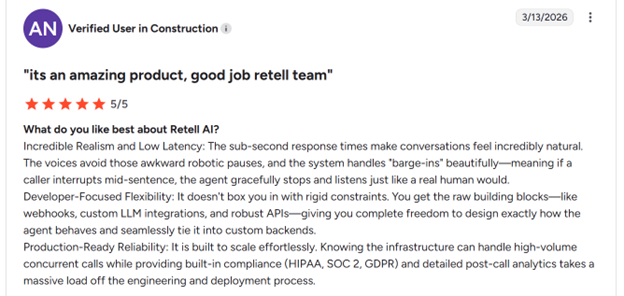
Retell AI is designed to support real-time voice conversations with minimal latency. This is critical for maintaining natural interactions, as delays can disrupt the flow of conversation and negatively impact user experience.
The platform focuses heavily on:
- Fast response times
- Smooth conversational transitions
- Human-like voice delivery
This makes it suitable for use cases where call quality and responsiveness are essential.
LLM and Voice Model Flexibility
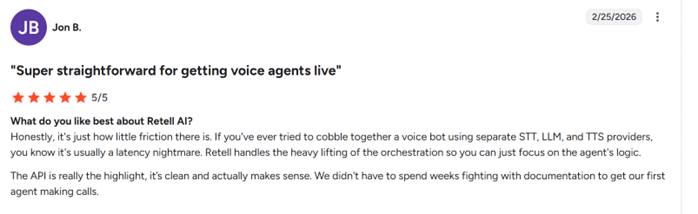
One of Retell AI’s strongest features is its flexibility. Instead of locking users into a single AI model or voice provider, it allows integration with:
- Multiple large language models (LLMs)
- Various voice synthesis engines
This gives businesses complete control over how their AI behaves, sounds, and responds—an advantage for teams that want to fine-tune every aspect of the experience.
Telephony Integration
Retell AI integrates with telephony systems to enable real-world call handling. Businesses can:
- Route incoming calls
- Automate outbound campaigns
- Scale call operations
The platform is built to support high call volumes, making it suitable for large-scale deployments such as call centers or service-heavy industries.

API-First Architecture
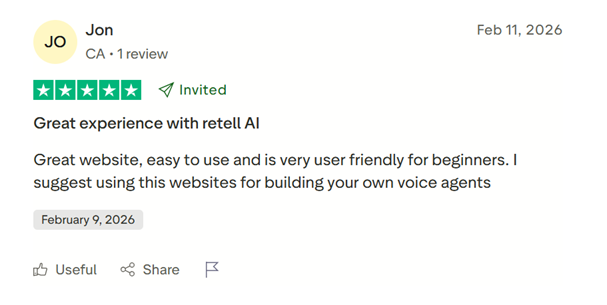
The defining feature of Retell AI is its API-first approach. Instead of offering pre-built workflows or visual builders, it provides the building blocks for developers to create custom solutions.
This allows for:
- Fully tailored workflows
- Custom integrations with internal systems
- Unique conversational logic
However, this flexibility comes with added complexity, especially for non-technical users.
Advantages of Retell AI
High Performance Voice AI
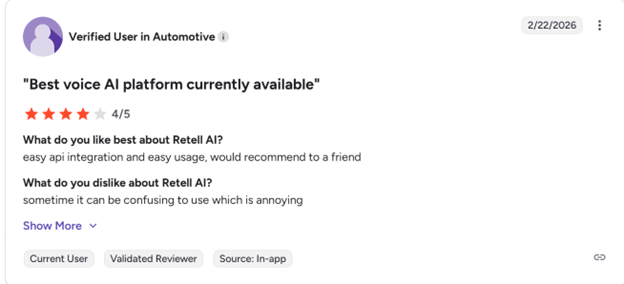
Retell AI delivers low-latency interactions, which results in smoother and more natural conversations. This is especially important for voice-based applications where delays can feel unnatural.
Scalability for Large Operations
The platform is built to handle high volumes of calls, making it a strong choice for enterprises or businesses with large customer bases.
For organizations managing thousands of daily interactions, this scalability is a major advantage.
Full Customization and Flexibility
Because Retell AI supports multiple LLMs and voice providers, businesses can:
- Customize conversation flows
- Control tone and behavior
- Integrate with internal systems
This level of control is ideal for companies that need highly specific solutions.
Strong Fit for Engineering Teams
Retell AI is designed with developers in mind. For teams with technical expertise, it offers:
- Deep customization
- Advanced configuration options
- Freedom to build from scratch
This makes it a powerful tool for creating proprietary AI systems.
Limitations of Retell AI
Developer Dependency and Challenges for Non-Technical Teams
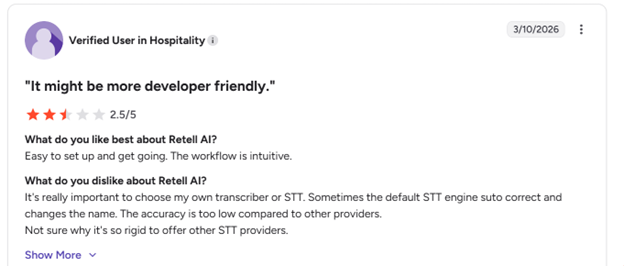
One of the key limitations of Retell AI is its reliance on technical expertise. While some users find the initial setup relatively approachable, the platform generally lacks a true drag-and-drop, business-friendly interface.
In practice, this means:
- Setup and implementation can be complex without technical support
- Ongoing maintenance and optimization often depend on developers
As a result, businesses without dedicated technical resources may face a steep learning curve. For non-technical teams, Retell AI can feel more like a development toolkit rather than a ready-to-use solution, which may slow down operations and increase overall costs.
High Cost and Expensive API Usage
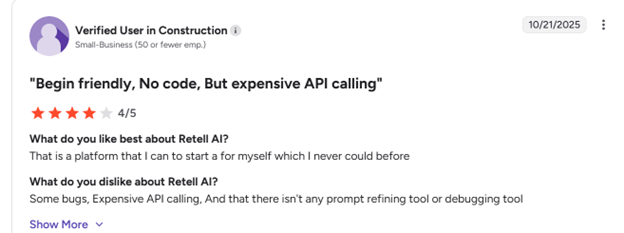
A key limitation of Retell AI is its high and often unpredictable cost structure. Users frequently report that API calls can become expensive, especially as usage scales. Since the platform relies on multiple components—such as LLMs, voice engines, and telephony providers—costs are layered and can quickly add up. This makes it difficult for businesses to accurately forecast monthly expenses or calculate ROI. Additionally, the lack of built-in prompt refinement or debugging tools can lead to inefficient API usage, further increasing costs. For smaller teams, this can make Retell AI less cost-effective over time.
Lack of Native Business Integrations
Unlike many customer service platforms, Retell AI does not offer built-in integrations with popular CRMs or business tools.
Instead, integrations must be handled through:
- APIs
- Middleware tools like Zapier or Make
- Custom development
This adds complexity and requires additional setup.
Technical Support Model
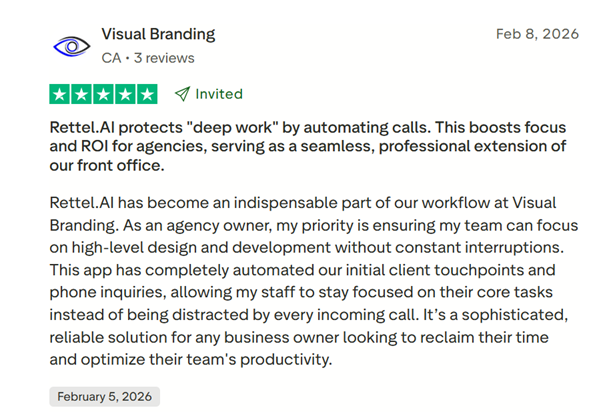
Support for Retell AI is primarily geared toward developers and is often provided through technical channels like Slack or Discord.
While this works for engineering teams, it may not meet the needs of business users who require quick, operational support.
Ideal Use Cases for Retell AI
Retell AI is best suited for:
- Companies building custom voice AI solutions: Businesses that want full control over conversation flows, integrations, and user experience can leverage Retell AI’s API-first architecture to create highly tailored voice applications.
- Enterprises with in-house development teams: Organizations with dedicated engineering resources can take full advantage of its flexibility, enabling them to design, deploy, and continuously optimize complex voice automation systems.
- Startups focused on AI innovation: Tech-driven startups experimenting with new AI use cases can use Retell AI to rapidly prototype and scale unique voice-based products.
- High-volume call centers needing scalable infrastructure: Businesses handling large call volumes can benefit from its low latency and ability to scale efficiently without compromising performance.
In these scenarios, Retell AI’s flexibility and performance can deliver significant operational value.
When Retell AI May Not Be the Best Fit
Retell AI may not be ideal for:
- Small and medium-sized businesses (SMBs)
- Teams without technical expertise
- Companies looking for quick deployment
Businesses that need:
- Ready-to-use tools
- Built-in CRM integrations
- Simple user interfaces
may find it challenging to adopt.
Introducing Sobot
A Different Approach to AI Customer Service
While Retell AI focuses primarily on voice automation, Sobot takes a broader and more integrated approach to customer engagement.
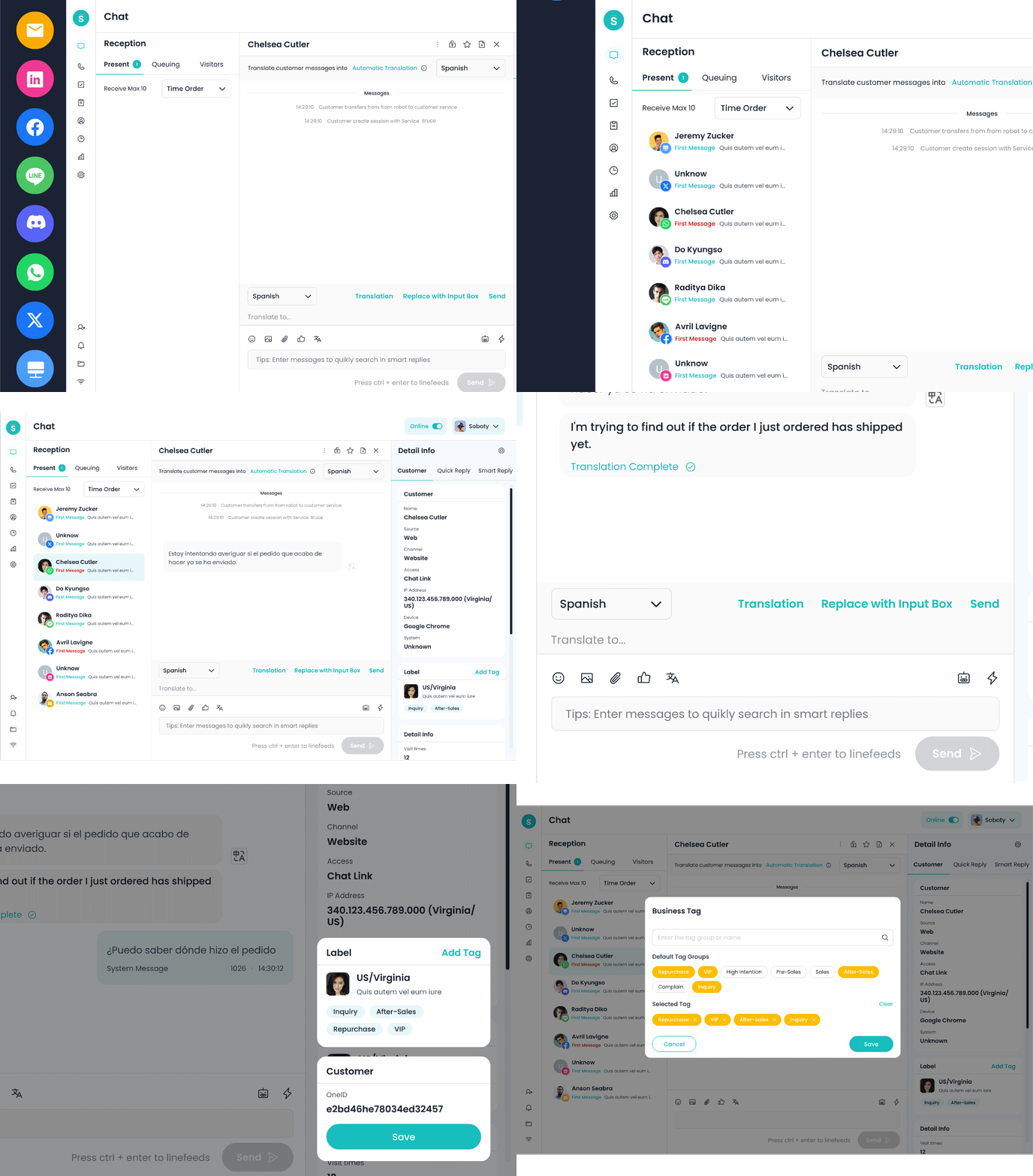
Sobot is a unified customer service platform that combines:
- Chatbot / AI Agent
- Live chat
- Ticketing system
- Voice support
- WhatsApp Business API
Instead of requiring businesses to build systems from scratch, Sobot offers ready-to-use features within a single platform. This allows teams to manage multiple customer communication channels efficiently while reducing setup time and technical complexity.
Key Differences in Approach
The core difference between the two platforms lies in their philosophy:
- Retell AI is:
- Developer-first
- Voice-focused
- Highly customizable
- Sobot is:
- Business-first
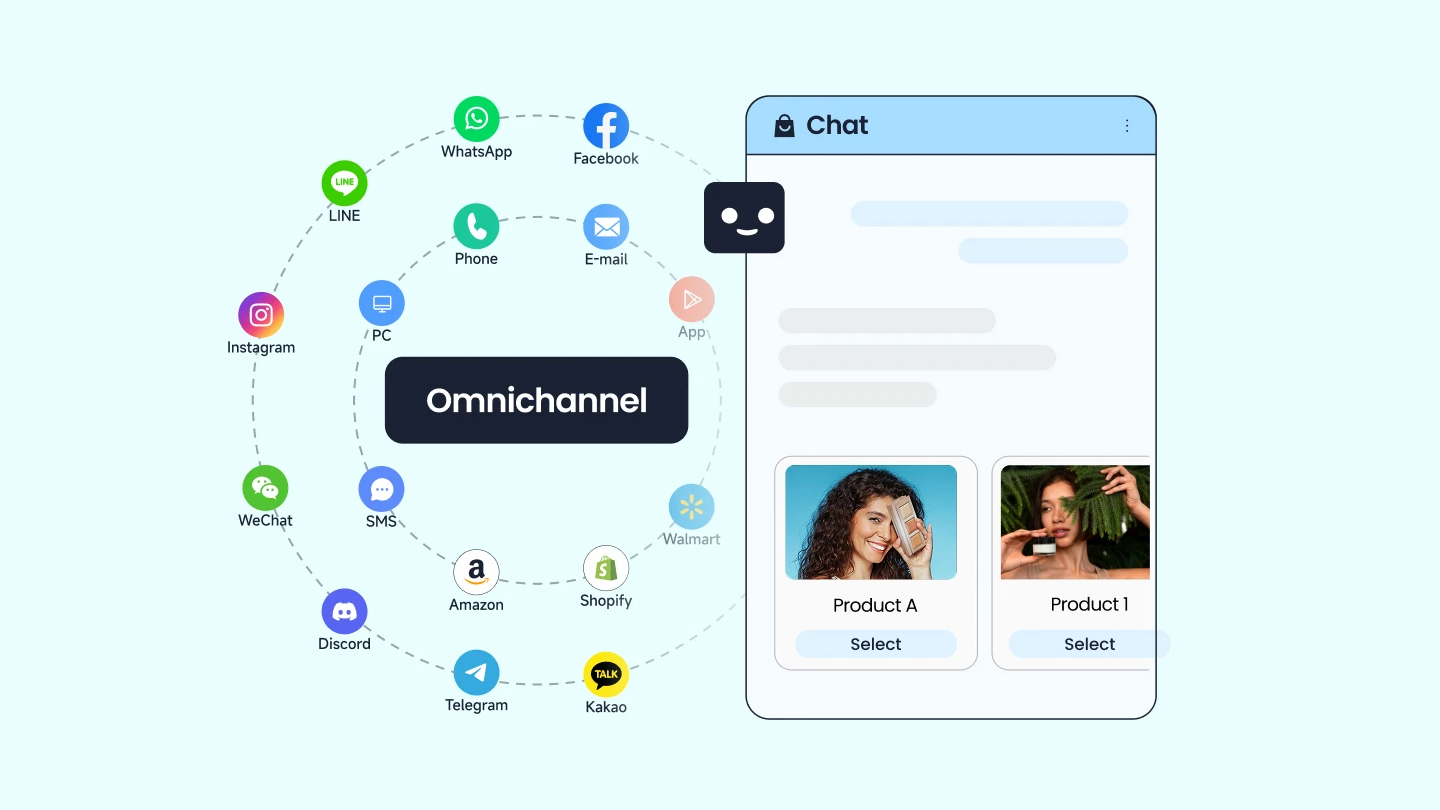
- Omnichannel
- Designed for ease of use
This makes Retell AI more suitable for building custom, voice-based solutions, particularly for teams with technical expertise. In contrast, Sobot is better suited for businesses looking for an omnichannel platform with a complete suite of customer support tools, covering everything from AI agents and live chat to ticketing, voice, and messaging channels in one unified system.
Key Differences at a Glance
| Category | Retell AI | Sobot |
| Core Focus | Voice AI infrastructure | Full customer service platform |
| Usability | Developer-centric | Business-user friendly |
| Integrations | API-based | Native integrations |
| Setup | Custom build required | Ready-to-use + configurable |
| Pricing | Multi-layered | More predictable |
| Channels | Primarily voice | Omnichannel |
Conclusion
Retell AI is a powerful and flexible platform for building AI voice agents. Its strengths lie in customization, scalability, and performance, making it an excellent choice for technically advanced teams.
However, its developer-first design, complex pricing, and lack of out-of-the-box features can make it challenging for non-technical businesses.
On the other hand, Sobot offers a more accessible, all-in-one solution for managing customer interactions across multiple channels.
Ultimately, the right choice depends on your priorities:
- If you need deep customization and have engineering resources, Retell AI is a strong option
- If you want ease of use, faster deployment, and a complete customer service system, Sobot may be the better fit