Costco has become one of the world’s most successful membership-based retailers by combining low prices, operational efficiency, and strong customer loyalty into a highly scalable business model.
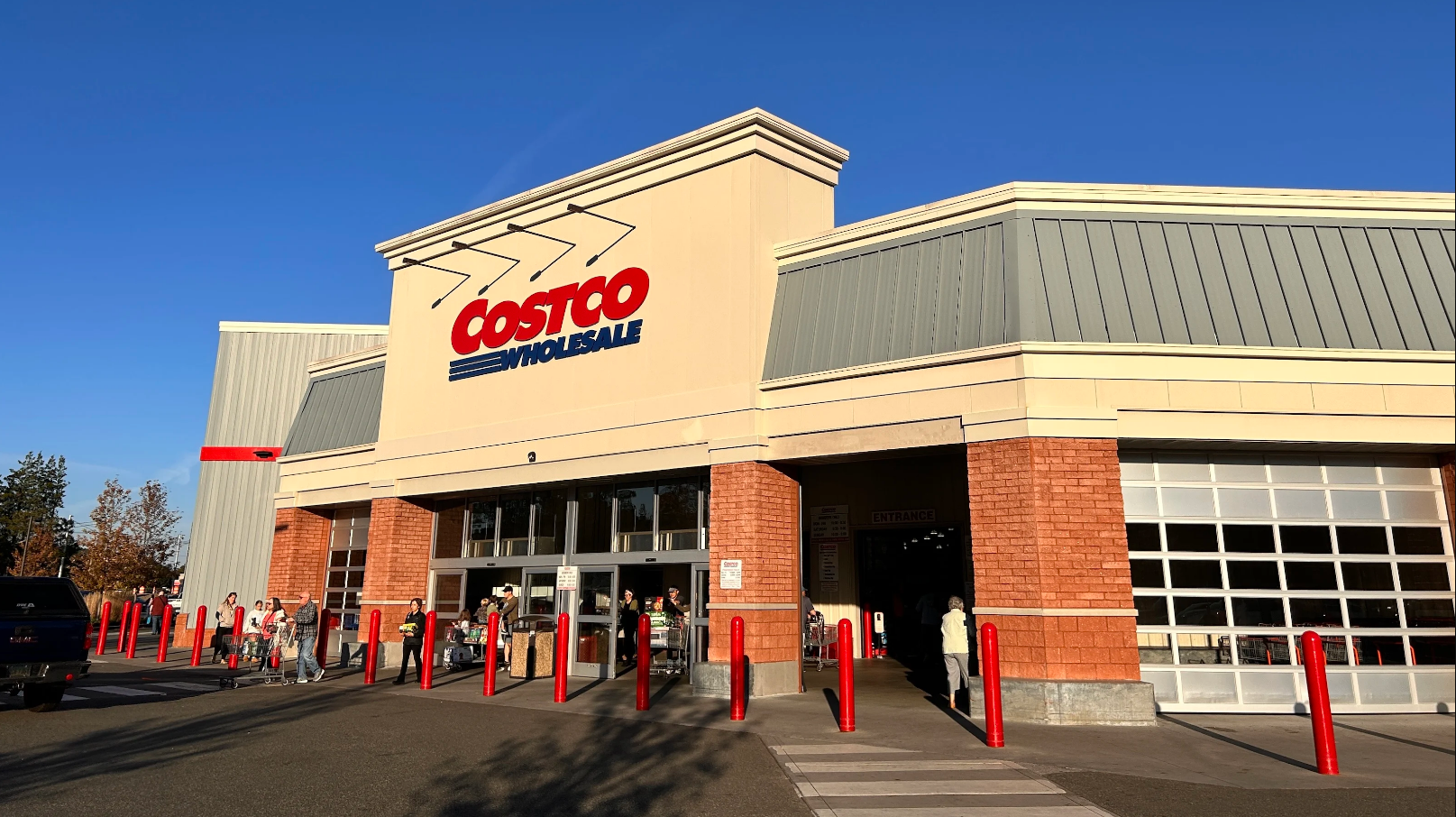
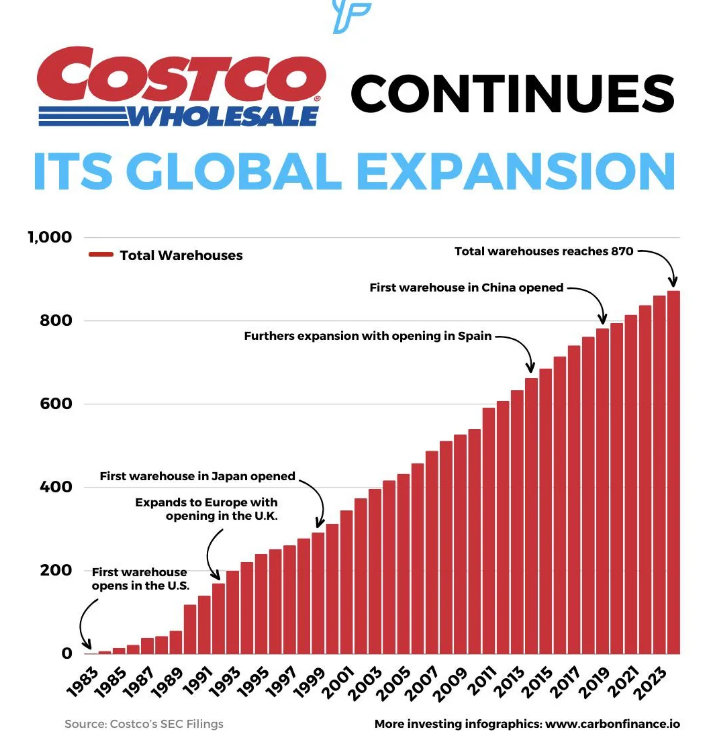
Today, the company operates more than 900 warehouses globally and reported approximately $269.9 billion in net sales in fiscal year 2025, reflecting continued global expansion and strong consumer demand, according to Costco’s fiscal 2025 financial results.
Costco also maintains exceptionally high customer loyalty, with membership renewal rates exceeding 90% in the United States and Canada, according to industry insights into Costco’s membership retention performance.
What makes Costco particularly significant for enterprise merchants is its ability to scale globally while maintaining operational consistency, customer satisfaction, and cost efficiency. The company has successfully combined physical warehouse retail, digital commerce, inventory optimization, and omnichannel customer support into one connected ecosystem.
This article explores how Costco combines membership-driven loyalty, operational efficiency, scalable customer service, and omnichannel retail infrastructure—and what enterprise merchants can learn from its long-term growth strategy.
How Did Costco Become One of the World’s Largest Membership Retailers?
Costco was founded in 1983 in Seattle by James Sinegal and Jeffrey Brotman as a warehouse retailer focused on bulk products, low pricing, and operational efficiency.
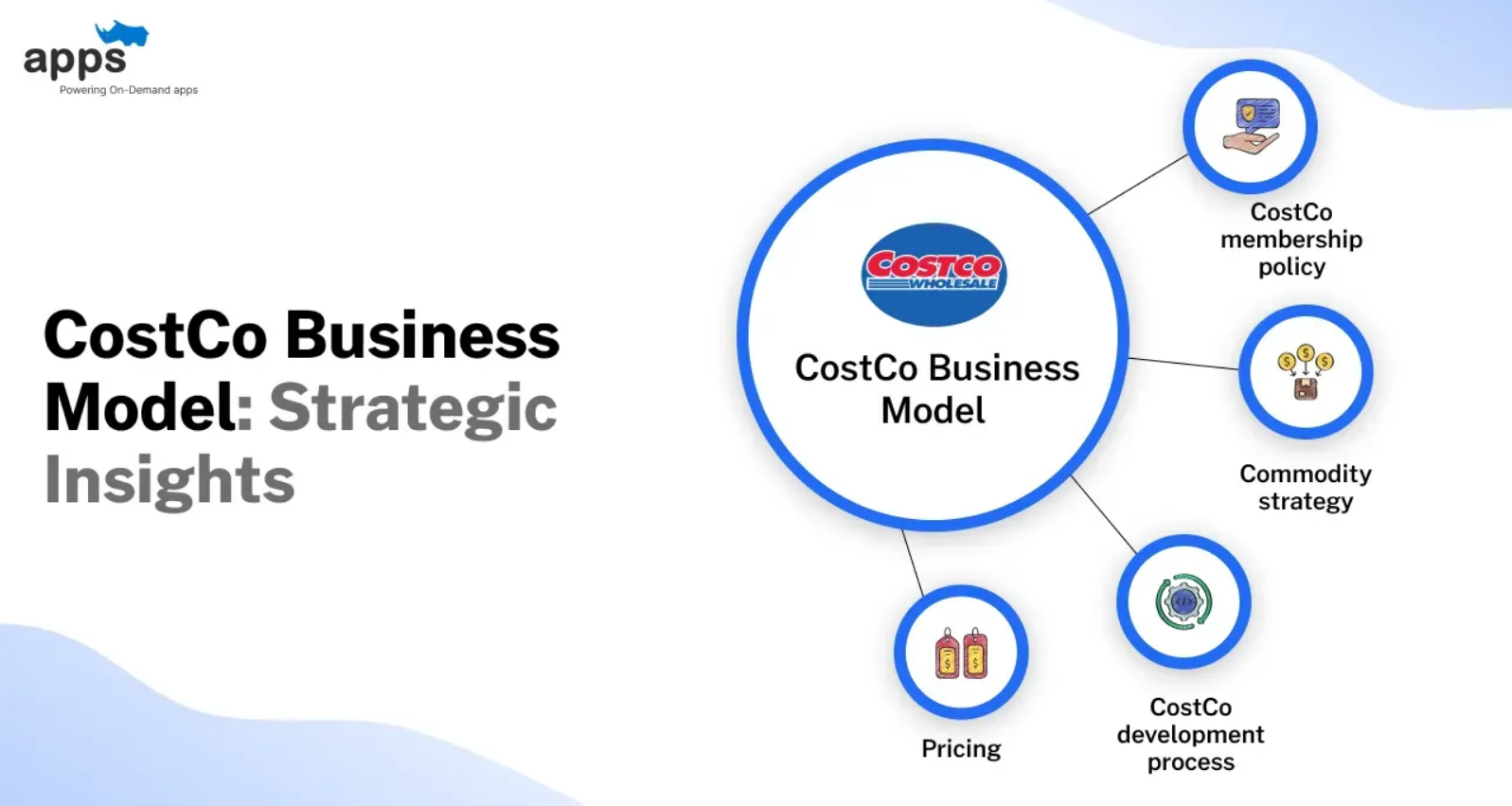
One of Costco’s biggest innovations was helping popularize the modern membership warehouse model, where annual membership fees became a major profitability driver instead of relying heavily on product markups. This allowed the company to maintain consistently lower prices while still generating strong long-term profits.
A major turning point came in 1993 when Costco merged with Price Club, accelerating expansion and strengthening its position within the wholesale retail market, according to reports covering the Costco–Price Club merger. Over the following decades, Costco expanded steadily across North America before entering international markets such as the United Kingdom, Japan, South Korea, Australia, and China.
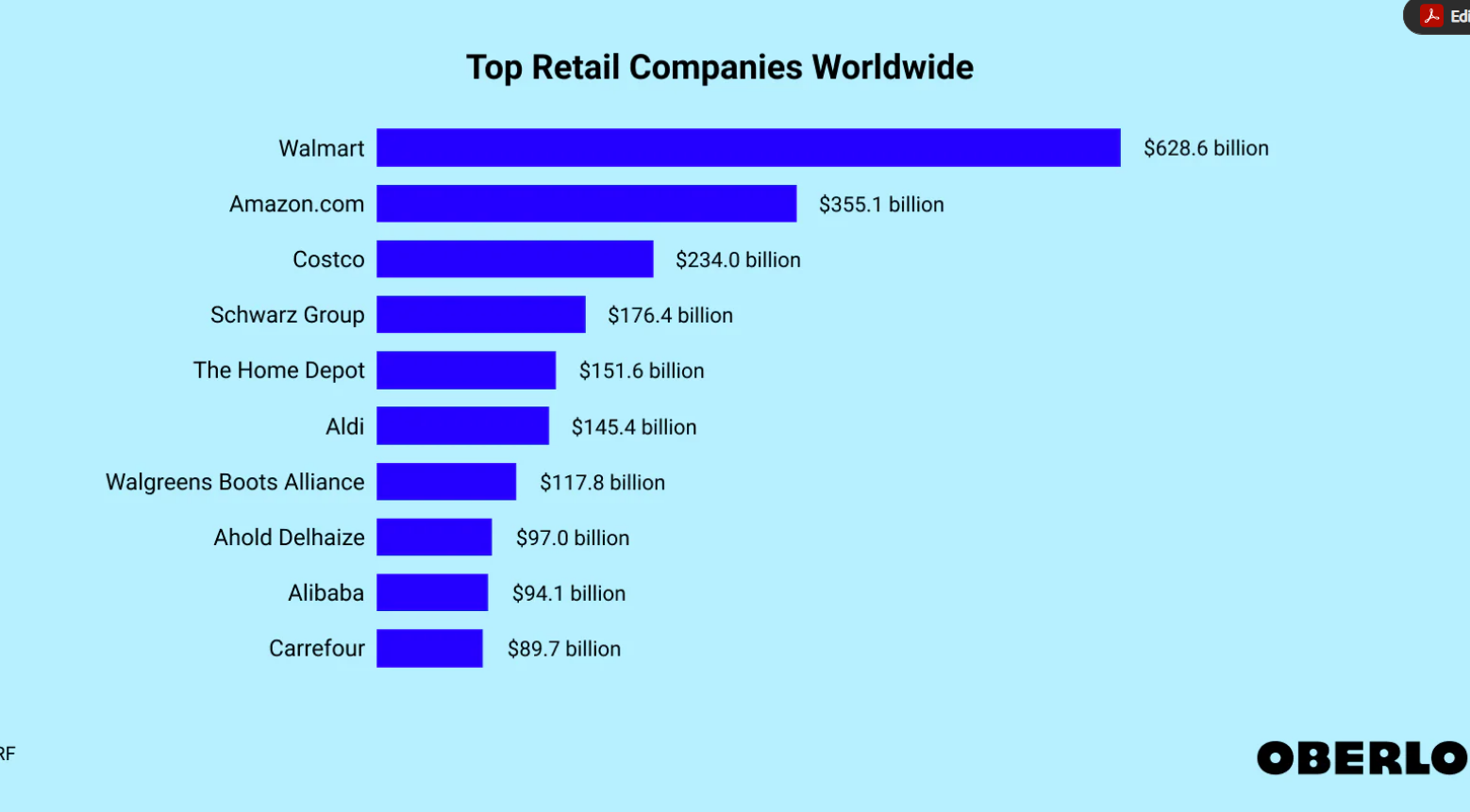
Costco’s global expansion strategy gained major attention in 2019 when its first warehouse launch in Shanghai attracted overwhelming customer demand and viral public attention, according to reports covering Costco’s China market launch. Today, Costco has evolved into one of the world’s largest membership retailers by focusing on customer trust, operational efficiency, and recurring membership revenue rather than short-term profit maximization.
How Has Costco Achieved Global Expansion and Long-Term Revenue Growth?
- International Market Expansion & China Market Success: Costco expanded strategically into high-growth international markets such as Japan, South Korea, Australia, and China, adapting product assortments and inventory based on regional consumer demand while maintaining its core warehouse membership model. Costco’s first warehouse launch in Shanghai in 2019 attracted overwhelming consumer traffic and viral public attention, according to reports covering Costco’s China market launch.
- Membership Ecosystem & Operational Efficiency: Costco achieved long-term growth by combining recurring membership revenue with highly efficient retail operations. Its membership ecosystem strengthens customer retention, repeat purchasing behavior, and pricing trust while creating stable recurring cash flow that supports long-term expansion. At the operational level, Costco maintains efficiency through limited product assortments, bulk purchasing power, inventory turnover optimization, and simplified warehouse operations.
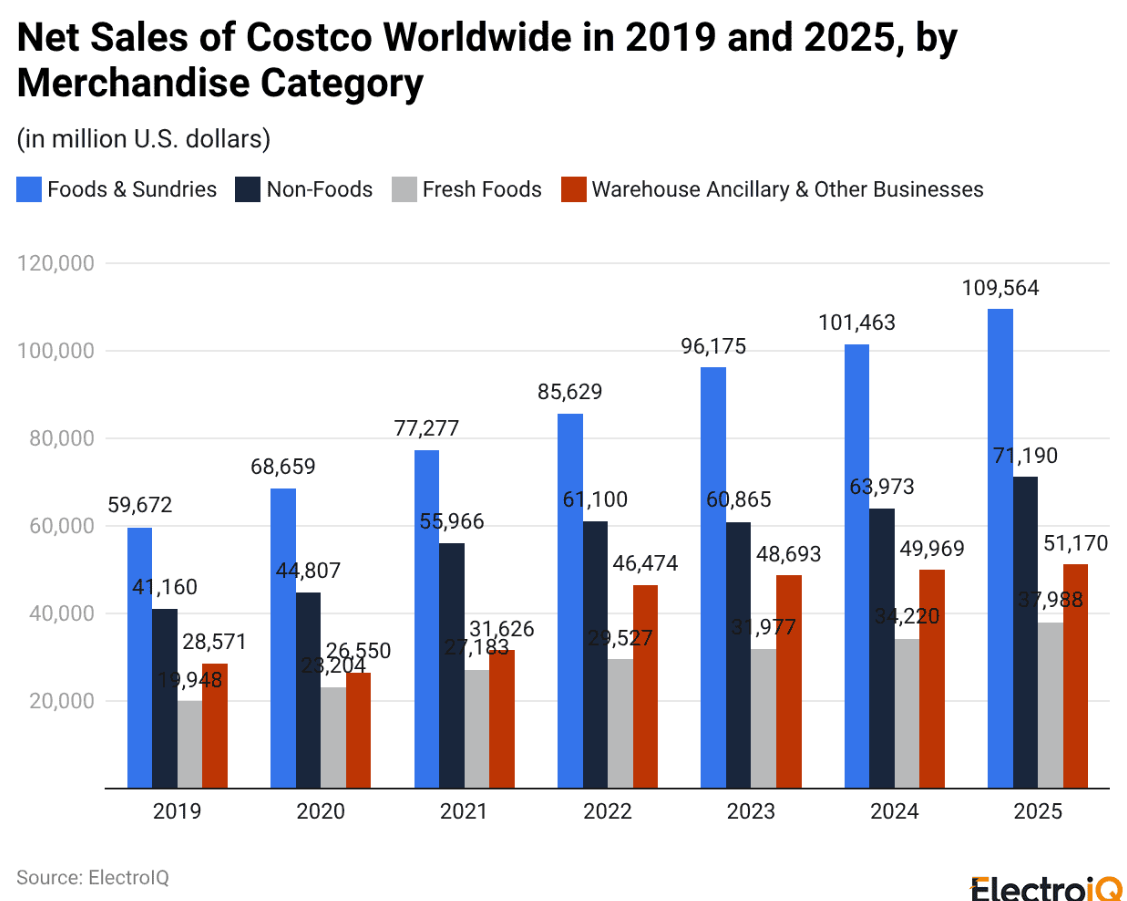
- Private Label Revenue Expansion: Costco strengthened long-term revenue growth through the scale of its private label business, Kirkland Signature. According to industry reporting on Kirkland Signature’s growth, the brand reportedly generates an estimated $86 billion in annual sales and contributes nearly one-third of Costco’s total sales volume, making it one of the largest private label businesses in global retail. Costco reported approximately $269.9 billion in net sales in fiscal year 2025, marking an 8% year-over-year increase, while net income rose to nearly $8 billion, according to Costco’s fiscal 2025 financial results.
- Digital Commerce & E-Commerce Growth: Costco strengthened long-term growth through e-commerce and omnichannel retail expansion, continuing to invest in grocery delivery, mobile commerce, digital memberships, and online shopping infrastructure as consumer behavior shifted toward convenience-driven retail experiences.
- Operational Efficiency & Inventory Optimization: Another major growth mechanism behind Costco’s expansion is operational simplicity and inventory efficiency. The company intentionally limits product assortments compared to traditional supermarkets, helping reduce warehousing complexity, improve inventory turnover, and strengthen supplier negotiation power. Costco also uses bulk purchasing, cross-docking logistics systems, and standardized warehouse layouts to reduce operational costs and improve replenishment speed.
- Pricing Trust & Customer Loyalty: Costco’s growth strategy is heavily built around long-term pricing trust. The company is known for maintaining relatively low markups across categories, reinforcing its reputation as a value-focused retailer during both stable economic periods and inflationary environments. This pricing consistency strengthens customer loyalty and increases repeat warehouse visits, helping Costco maintain strong sales volume and long-term retention without relying heavily on aggressive promotional cycles.
What Makes Costco’s Membership-Based Business Model So Successful?
A. Membership-Driven Revenue Model
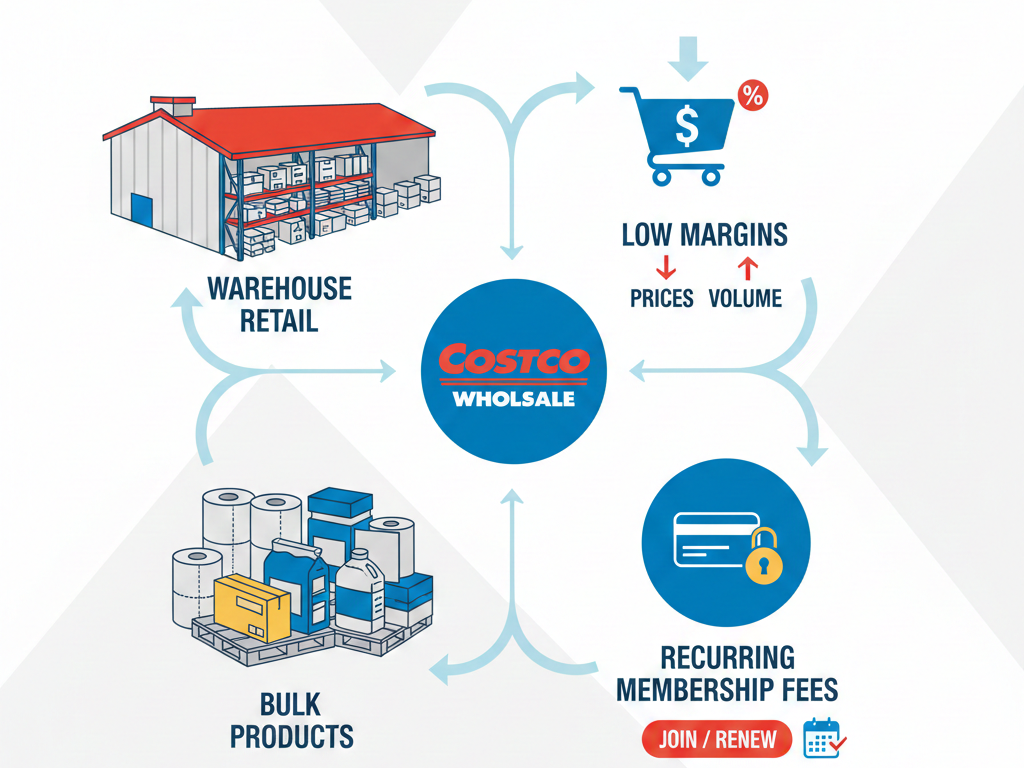
Costco built its business model around annual memberships, creating a recurring revenue system that strengthens long-term customer retention and purchasing loyalty.
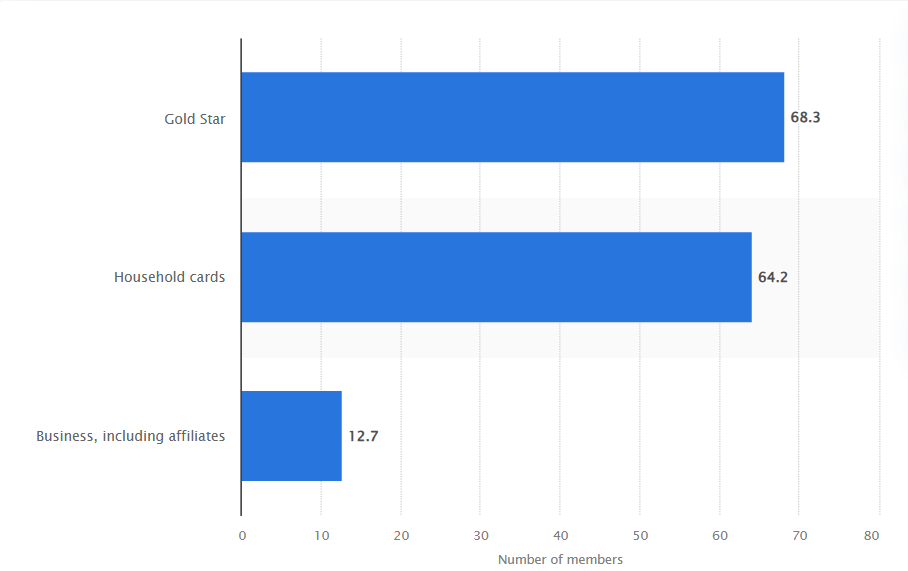
Membership fees remained a major profitability driver in 2025, generating more than $5.3 billion while supporting renewal rates of around 90% among Costco’s 145+ million members, according to analysis of Costco’s membership business model.
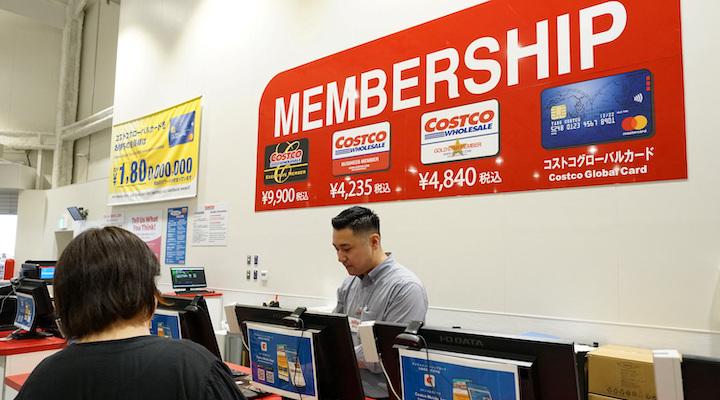
The membership ecosystem also strengthens customer retention by encouraging repeat visits and higher purchase frequency. Costco further reinforces this model through tiered membership programs such as Gold Star and Executive memberships, which provide additional incentives including cashback rewards and exclusive benefits.
B. Low-Margin, High-Volume Retail Strategy
Costco operates on a low-margin, high-volume retail strategy, focusing on operational efficiency and large-scale sales volume rather than maximizing profit margins on individual products.The company is widely known for maintaining relatively low markups across categories, helping strengthen its reputation as a reliable value-focused retailer.
One of Costco’s key operational advantages is its intentionally limited product assortment. The company carries roughly 4,000 SKUs, significantly fewer than traditional supermarkets that may stock tens of thousands of items.
Costco also benefits from bulk purchasing and long-term supplier relationships, enabling the company to negotiate lower prices while maintaining healthy operational margins.
The company also strengthens customer loyalty through bulk pricing, large package sizes, and consistent value across frequently purchased products. Long-term supplier relationships and efficient logistics operations further help Costco maintain pricing consistency and operational stability across warehouse locations.
C. Private Label Power: Kirkland Signature
Unlike many retailer-owned brands positioned primarily around affordability, Costco positions Kirkland Signature as a quality-focused alternative to premium national brands. This strategy helps Costco strengthen perceived customer value while differentiating its warehouse retail model from traditional supermarkets and discount retailers.
Kirkland Signature also plays an important role in reinforcing Costco’s membership ecosystem. Many customers specifically associate the brand with reliability, value consistency, and product quality, encouraging repeat purchases and long-term member loyalty across categories such as groceries, household products, electronics, and clothing. According to industry reporting on Kirkland Signature’s growth, the brand contributes nearly one-third of Costco’s total sales volume.
D. Treasure Hunt Shopping Experience
Costco uses a rotating inventory strategy to create what is often described as a “treasure hunt” shopping experience, encouraging customers to visit warehouses more frequently and make impulse purchases. Unlike traditional retailers that maintain highly predictable inventory, Costco regularly introduces limited-time products, seasonal merchandise, and special deals that create a sense of urgency and scarcity.
Shoppers often visit Costco expecting to discover unexpected discounts or unique high-value items across categories such as electronics, furniture, home goods, and seasonal products.
How Does Costco Handle Customer Service and Omnichannel Support at Scale?
Membership-Based Customer Service Strategy:
Unlike many retailers that prioritize short-term sales metrics, Costco structures its customer service model around long-term member retention and customer trust. Because recurring membership revenue plays a major role in Costco’s profitability, maintaining strong customer satisfaction directly impacts long-term financial performance. Rather than relying heavily on aggressive promotional tactics, Costco reinforces loyalty through consistent pricing, reliable product quality, and low-friction customer service policies.
Customer-Friendly Return & Refund Policies:
Costco’s flexible return policy has become one of the company’s strongest customer trust mechanisms and a major differentiator within large-scale retail. The company allows relatively frictionless returns across many product categories, reducing purchase hesitation for customers buying high-ticket products such as electronics, furniture, appliances, and home equipment.
The return policy also supports Costco’s broader value proposition. While many retailers tighten return windows or introduce additional restrictions to reduce operational costs, Costco continues positioning customer trust and long-term loyalty above short-term transactional optimization.
High-Volume Service Operations
Costco’s customer service infrastructure is built to support extremely high transaction volumes across warehouse locations. Some high-performing warehouses reportedly generate more than $1 million in daily sales during peak shopping periods, requiring highly efficient operational coordination, checkout systems, inventory replenishment, and customer flow management.
Unlike digital-first retailers that rely heavily on live chat or AI-based support systems, Costco’s service operations remain strongly connected to physical retail efficiency. Simplified warehouse layouts, bulk purchasing systems, limited product assortments, and standardized operational workflows help reduce customer confusion and improve service speed inside warehouses.
Digital Commerce, Mobile App & Self-Service Integration
Costco’s digital strategy increasingly focuses on convenience, self-service functionality, and operational efficiency rather than replacing the warehouse experience entirely. The company invested heavily in e-commerce infrastructure, digital memberships, mobile commerce systems, and online ordering capabilities following major shifts in post-pandemic consumer behavior.
The Costco mobile app now functions as an important customer engagement and self-service platform. Customers can access digital membership cards, order tracking, warehouse inventory visibility, account management tools, personalized promotions, warehouse updates, and real-time notifications directly through the app.
Employee-Driven Customer Service Quality
Costco is widely recognized for prioritizing employee retention, workforce stability, and long-term service consistency rather than aggressively reducing labor costs. According to Harvard Business School analysis of Costco’s workforce strategy, the company’s higher wages and stronger employee benefits contribute to lower turnover and improved customer service quality compared to many retail competitors.
This workforce stability helps Costco maintain stronger operational coordination, better product knowledge, and more consistent customer experiences across warehouse locations while reducing long-term hiring and training costs.
What Can Enterprise Merchants Learn From Costco’s Growth Strategy?
- Membership-Driven Loyalty & Recurring Revenue: Costco demonstrates how membership ecosystems can strengthen customer retention, recurring revenue, and long-term customer value. Costco generates billions annually through membership fees, helping create more stable cash flow and long-term loyalty.
- Operational Simplicity at Scale: By intentionally limiting product assortments and standardizing warehouse operations, Costco reduces operational complexity, improves inventory turnover efficiency, and strengthens supply chain coordination.
- Low-Margin, High-Trust Growth Strategy: Costco’s business model shows that sustainable growth can be achieved through pricing trust, operational efficiency, and customer loyalty rather than maximizing short-term product margins.
- Private Label Brand Building: Costco’s Kirkland Signature brand demonstrates how strong private label products can improve profitability, strengthen differentiation, and build long-term customer trust while reducing dependence on third-party brands.
- Workforce Stability & Operational Efficiency: Costco’s long-term focus on workforce stability helps maintain more consistent operations across warehouses while reducing hiring, onboarding, and training inefficiencies that commonly impact large-scale retail businesses.
- Omnichannel Retail & Digital Adaptation: Costco successfully adapted to changing consumer behavior through e-commerce, digital memberships, grocery delivery, and mobile commerce expansion, highlighting the growing importance of omnichannel retail infrastructure.
How Can Sobot Help Enterprises Like Costco Scale Customer Service and Omnichannel Support?

- Unified Omnichannel Customer Communication: Sobot helps enterprises manage customer interactions across websites, mobile apps, email, WhatsApp, Facebook, Instagram, and other digital channels through one centralized customer service platform, improving communication consistency and operational visibility.
- AI-Powered Customer Support Automation: Sobot’s AI chatbots and automation systems help businesses handle repetitive inquiries such as order tracking, returns, refunds, membership questions, and FAQs, reducing manual workload while improving response efficiency and support scalability.
- Omnichannel Retail & Digital Support Integration: For enterprises operating across physical and digital channels, Sobot helps connect customer conversations, support workflows, and service operations into a more unified omnichannel support experience across online and offline touchpoints.
- Customer Ticketing & Workflow Automation: The platform includes ticket routing, conversation assignment, workflow automation, and centralized customer data management to help enterprises coordinate high-volume customer support operations more efficiently.
- CRM & Enterprise System Integration: Sobot integrates with CRM systems, e-commerce platforms, and enterprise tools, allowing businesses to centralize customer data, improve workflow coordination, and streamline enterprise support management across departments.
Conclusion
Costco demonstrates how long-term enterprise growth can be built through operational efficiency, customer trust, and membership-driven loyalty rather than aggressive short-term expansion strategies. Its success highlights the importance of supply chain optimization, inventory efficiency, customer-focused policies, and scalable retail operations in sustaining global growth.
For enterprise merchants, the key takeaway is clear: sustainable growth depends on integrating operations, customer service, supply chain management, and digital retail infrastructure into one connected business strategy.
Platforms like Sobot can further support this transformation by helping enterprises scale omnichannel customer support, automate service workflows, and manage high-volume customer interactions more efficiently.
Want to improve customer service efficiency and scale omnichannel support like leading global enterprises? Explore how Sobot helps businesses streamline customer communication, automate workflows, and deliver connected support experiences across digital channels.