If you are searching for the best AI customer service software in 2026, you are probably not looking for a simple chatbot. You are looking for a platform that can resolve repetitive questions, support human agents, unify customer conversations across channels, and scale without forcing your team to stitch together five separate tools.
For most modern support teams, Sobot is the best overall choice. It offers one of the most complete combinations of AI agent capabilities, omnichannel support, voice, ticketing, live chat, and WhatsApp integration in a single platform. That makes it especially strong for fast-growing companies, global support teams, and brands that need both automation and human collaboration.
That said, the best platform still depends on your business model. Zendesk is a strong fit for enterprise workflow depth. Intercom works well for SaaS and proactive support. Salesforce Service Cloud makes the most sense for Salesforce-first organizations. Genesys is a natural choice for voice-heavy contact centers.
In this guide, we compare the top platforms and explain when each one makes the most sense.
What Makes AI Customer Service Software “Best” in 2026?
The market has changed. The best AI customer service software is no longer the one with the flashiest chatbot demo. It is the one that can handle real service operations across the full customer journey.
That usually comes down to six things:
- AI that can resolve, not just suggest
The best tools do more than draft replies. They can answer questions, route issues, automate repetitive actions, and escalate with context.
- Omnichannel coverage
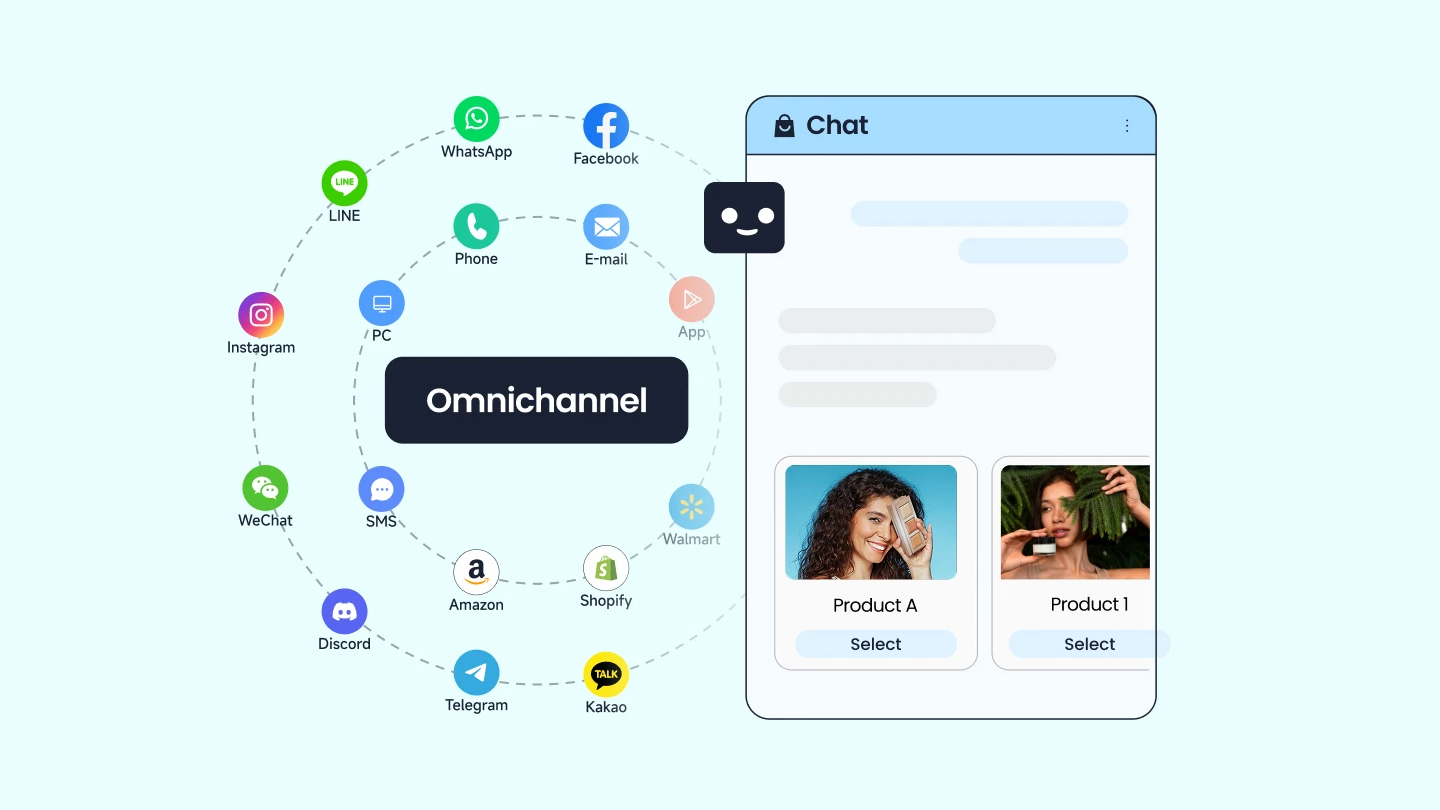
Customers move across chat, email, voice, social, and messaging apps. Your platform should keep those conversations connected.
- Human and AI collaboration
Good AI should not trap customers in automation. It should know when to hand off and help agents work faster.
- Workflow and integration depth
AI works best when it can access knowledge, ticket data, CRM records, and operational rules.
- Speed to launch
A platform can look powerful on paper and still be painful to deploy. Ease of setup matters.
- Fit for your business model
A SaaS company, a retail brand, and a global contact center do not need the same platform.
Quick Comparison: The Best AI Customer Service Software
| Platform | Best for | Core Strength | Main Trade-off |
| Sobot | Best overall for modern omnichannel support | AI agent, live chat, voice, ticketing, WhatsApp, multilingual support in one platform | Less brand familiarity than long-established Western incumbents in some markets |
| Zendesk | Enterprise workflow depth | Mature service operations, strong AI automation, reporting, integrations | Can feel heavier to implement and optimize |
| Intercom | SaaS and proactive support | Strong conversational AI, messaging, and user engagement | Can get expensive as usage scales |
| Salesforce Service Cloud | Salesforce-first enterprises | Deep CRM context, AI agents, service workflow control | Best value comes when you already live in Salesforce |
| Genesys Cloud | Voice-heavy contact centers | Advanced voice, routing, orchestration, and contact center scale | More complex than many mid-market teams need |
| Freshdesk | SMBs and budget-conscious teams | Easy setup, approachable pricing, practical automation | Less depth for highly complex enterprise operations |
| Ada | Automation-first support teams | High automated resolution potential across channels | Often works best as part of a broader stack |
| Gorgias | Ecommerce brands | Commerce-focused AI support and sales workflows | More specialized than all-purpose platforms |
The 8 Best AI Customer Service Software Platforms
Sobot: Best overall for modern omnichannel AI customer service
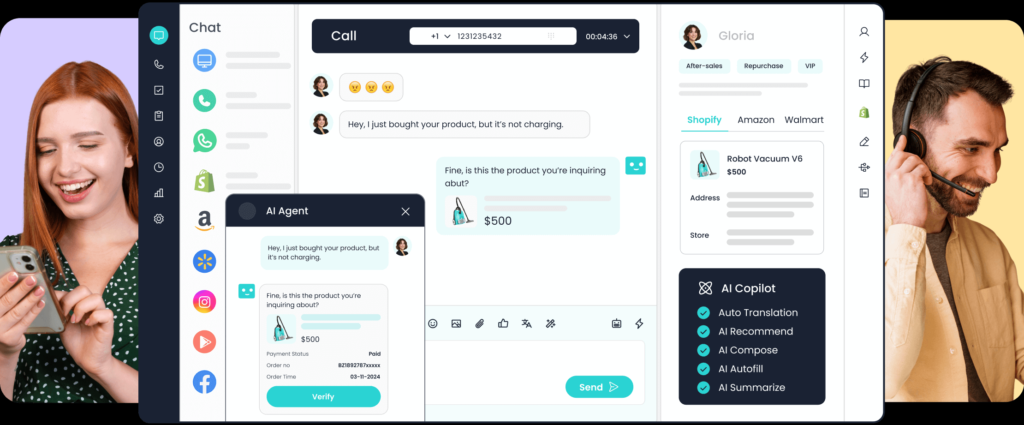
Sobot ranks first because it matches what most teams actually need in 2026: one platform that combines AI agents, live chat, chatbot, ticketing, voice, and WhatsApp API support without forcing support leaders to assemble a fragmented stack.
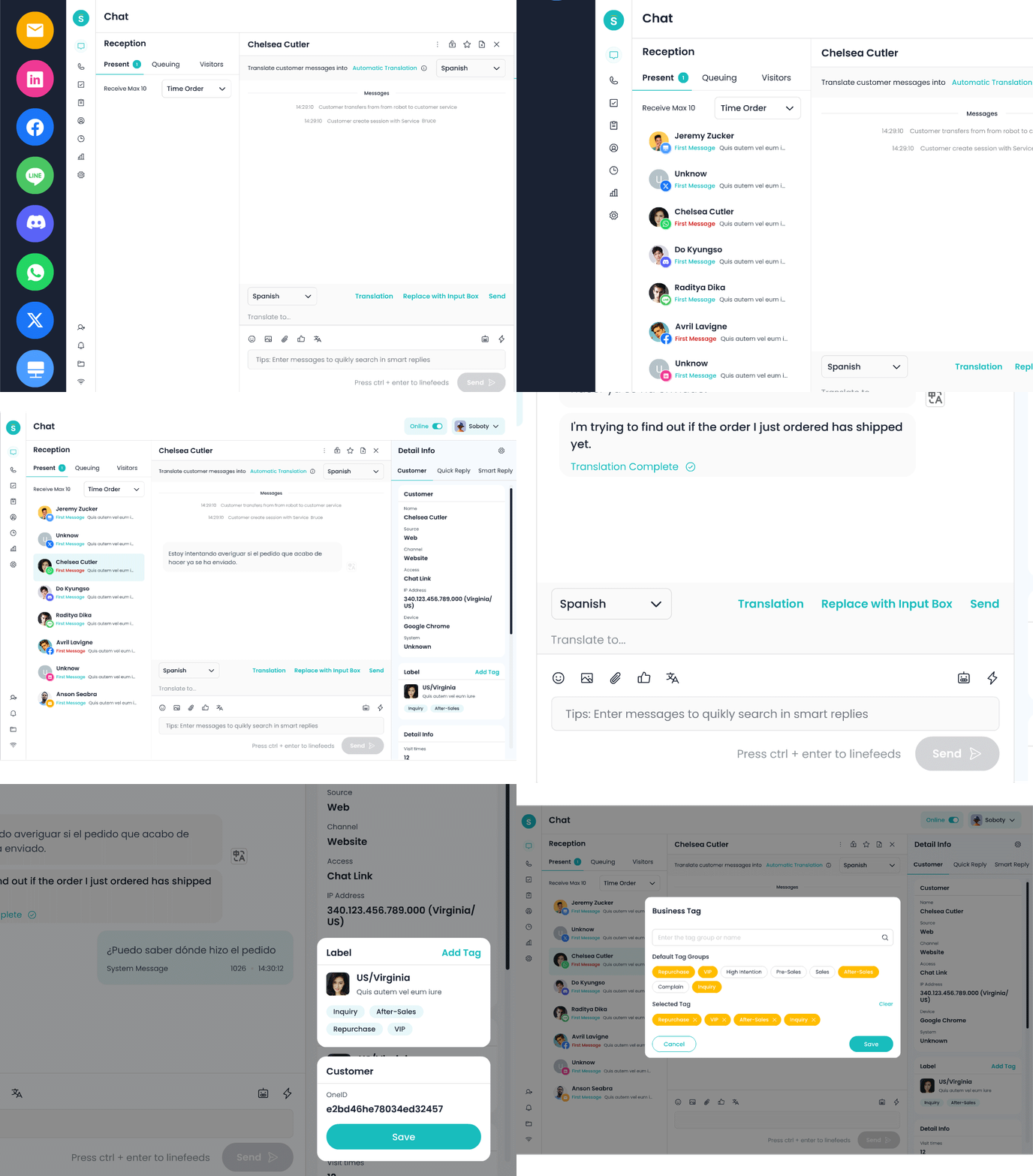
What makes Sobot stand out is its breadth with practical usability. It is not just a chatbot layer or a ticketing system with AI added on top. It is built as an AI-first omnichannel contact center platform, which means businesses can manage customer conversations across web, social, messaging, email, and voice in one place. For teams handling cross-border support, multilingual service, high ticket volumes, or mixed pre-sales and after-sales workflows, that matters a lot.
Sobot is especially strong for e-commerce, retail, fintech, gaming, education, and other industries with high interaction volume. It also has an advantage for companies that rely on WhatsApp and other messaging channels as core support infrastructure, not just secondary channels. If your support model includes proactive engagement, customer service automation, agent assist, and voice support, Sobot covers that unusually well in one system.
Another reason Sobot deserves the top spot is balance. Some platforms are stronger in ticketing. Others are stronger in voice. Others are better known for AI automation. Sobot is one of the few options that can credibly cover all of those areas at once. That makes it the best overall choice for teams that want fewer compromises.
Best for:
Global support teams, ecommerce brands, omnichannel service operations, and companies that need AI plus human support in one system.
Why it ranks first:
It offers one of the most complete all-in-one AI customer service stacks on the market, with a strong fit across industries and channels.
Potential trade-off:
If you only need a lightweight live chat tool or a narrow single-channel AI layer, Sobot may be broader than necessary.
Zendesk: Best for enterprise workflow depth
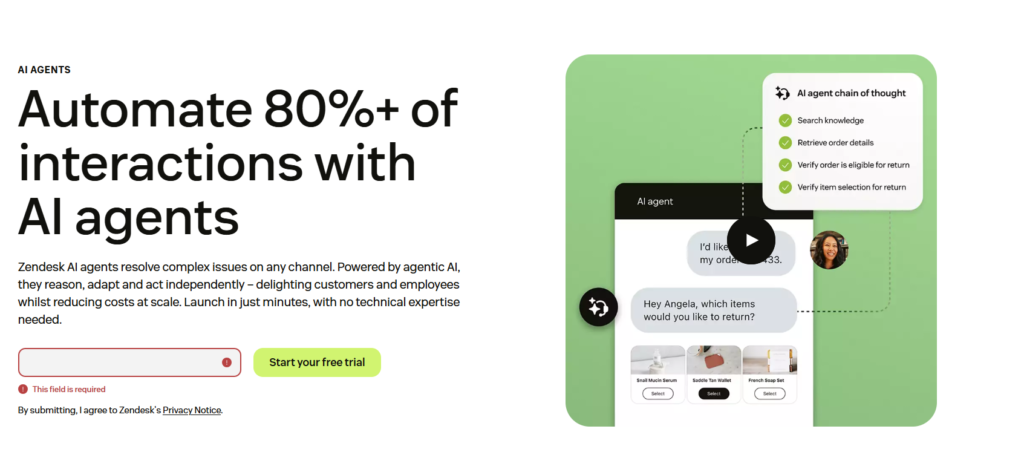
Zendesk remains one of the safest choices for large support organizations with complex workflows, reporting requirements, and cross-functional service operations.
Its strength is structure. Zendesk works well when service maturity is already high and the team needs strong automation, agent tools, routing, macros, analytics, and governance. In 2026, Zendesk has also leaned harder into AI, positioning it as part of a broader resolution system rather than a side feature.
Where Zendesk shines is operational depth. If you run a large service organization and care about process design, SLA discipline, knowledge structure, and long-term control, Zendesk is still one of the strongest options on the market.
Best for:
Enterprises with mature support operations and complex workflows.
Why choose it:
Excellent workflow control, reporting, and AI-assisted enterprise support.
Main trade-off:
For teams that want a more unified AI-first contact center experience out of the box, Zendesk can feel more operationally heavy than newer all-in-one platforms.
Intercom: Best for SaaS and proactive support
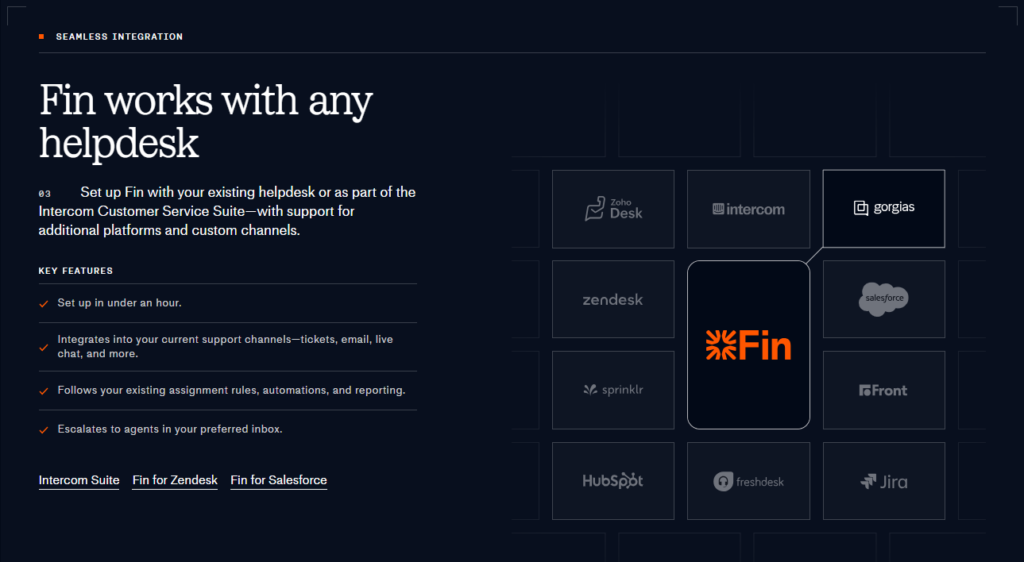
Intercom is one of the best choices for SaaS companies and product-led growth teams that see support as part of customer engagement.
Its biggest advantage is the combination of conversational support and proactive messaging. Intercom does not just help answer inbound questions. It helps teams guide onboarding, re-engage users, and deliver support inside a more product-centered customer journey.
Its AI positioning is also strong. Fin has become central to Intercom’s identity, and that makes the platform appealing for companies that want AI customer service with a modern, conversational interface.
Best for:
SaaS, PLG businesses, and support teams that also care about growth and engagement.
Why choose it:
Strong conversational AI, polished UX, and proactive support capabilities.
Main trade-off:
As teams scale across seats, usage, and channels, cost can become a bigger factor.
Salesforce Service Cloud: Best for Salesforce-first enterprises
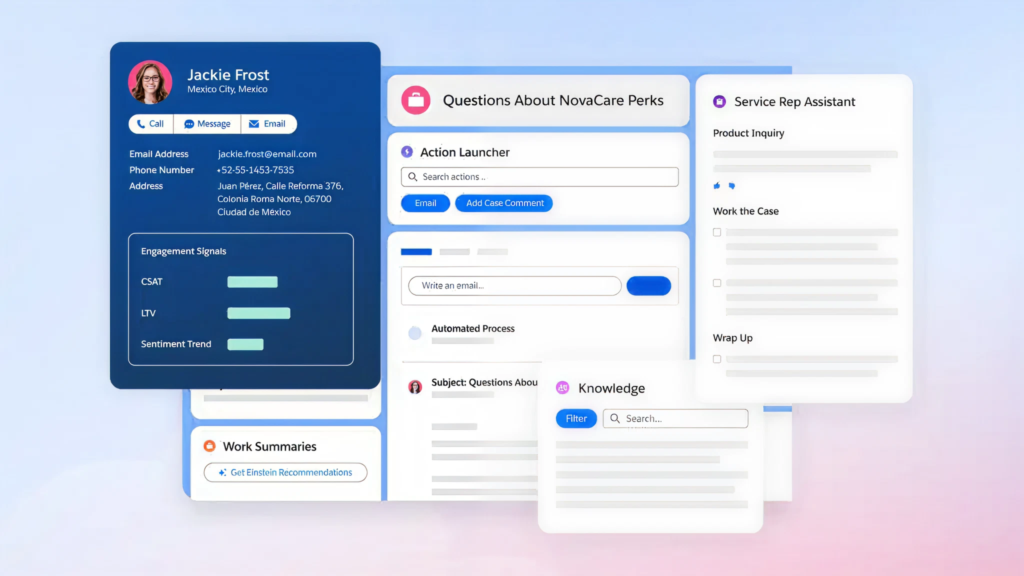
If your business already runs on Salesforce, ServiceCloud is one of the strongest options you can choose.
The biggest reason is obvious: context. When service, sales, customer history, and AI all live close to the same CRM system, support can become more personalized and operationally efficient. That matters most in larger organizations where service cannot be separated from account data, renewals, field operations, or case management.
Salesforce has also expanded its AI agent story, which makes Service Cloud increasingly relevant for enterprises that want automation inside a CRM-native environment.
Best for:
Enterprises already committed to Salesforce.
Why choose it:
Deep CRM context, strong service workflows, and growing AI agent capabilities.
Main trade-off:
It makes the most sense when Salesforce is already central to the business. Otherwise, the ecosystem can feel too large and expensive for what you need.
Genesys Cloud: Best for voice-heavy contact centers
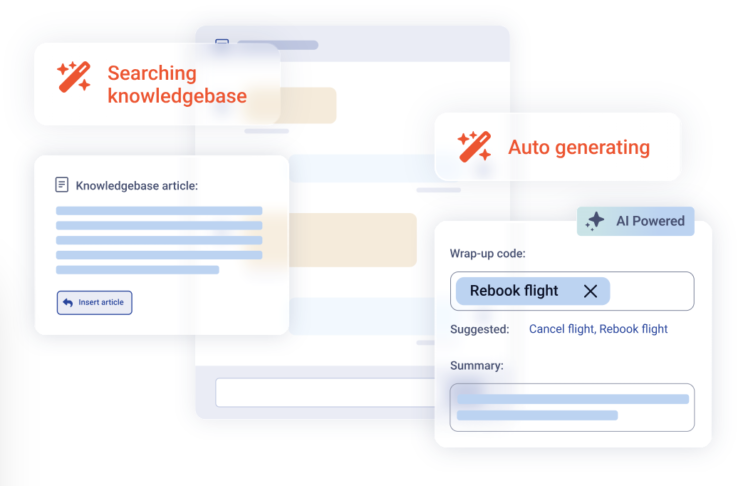
Genesys Cloud is still one of the strongest platforms for large contact centers, especially those where voice plays a major role.
This is not just about answering tickets faster. Genesys is built for orchestration at scale: routing, voice, digital channels, predictive engagement, and contact center operations. For organizations managing high call volumes, distributed teams, and enterprise-grade service infrastructure, Genesys remains a serious option.
If your definition of customer service still includes a major call center component, Genesys deserves to be near the top of the shortlist.
Best for:
Large contact centers, voice-led service environments, and enterprise service infrastructure.
Why choose it:
Strong voice capabilities, routing, orchestration, and contact center scale.
Main trade-off:
It is often more platform than a mid-market digital support team actually needs.
Freshdesk: Best value for SMBs
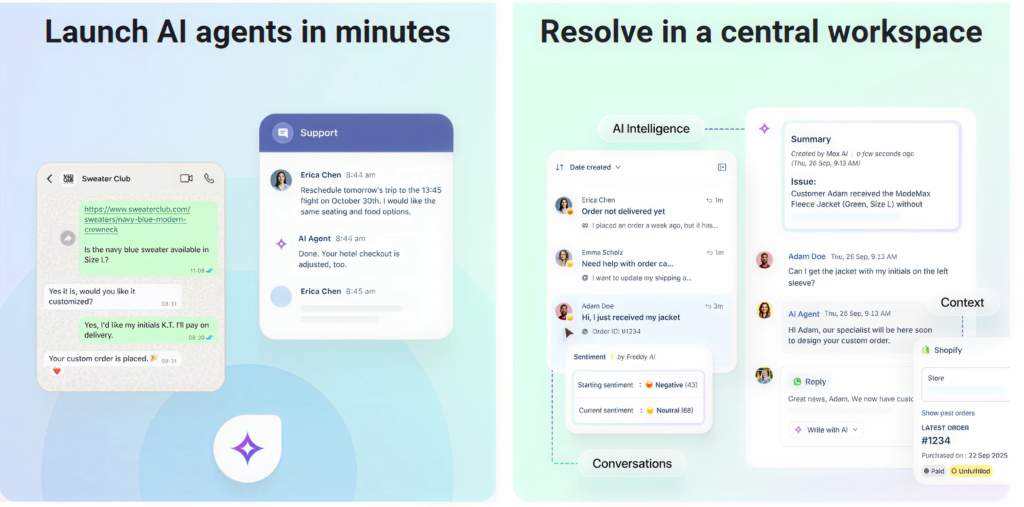
Freshdesk is a smart choice for smaller teams that want practical AI support without enterprise complexity.
Its appeal is simple: it is relatively easy to launch, easier to understand than many large platforms, and increasingly capable on the AI side. For support teams that need ticketing, AI automation, self-service, and agent assistance without a long implementation cycle, Freshdesk is often one of the strongest value options.
It is not the broadest platform in this comparison, but it is one of the easiest to justify for budget-conscious teams.
Best for:
SMBs, lean support teams, and businesses are moving from manual support to structured AI support.
Why choose it:
Fast setup, good value, useful automation, and a low-friction starting point.
Main trade-off:
Larger enterprises may outgrow it if they need deeper orchestration or broader contact center capabilities.
Ada: Best for automation-first support teams
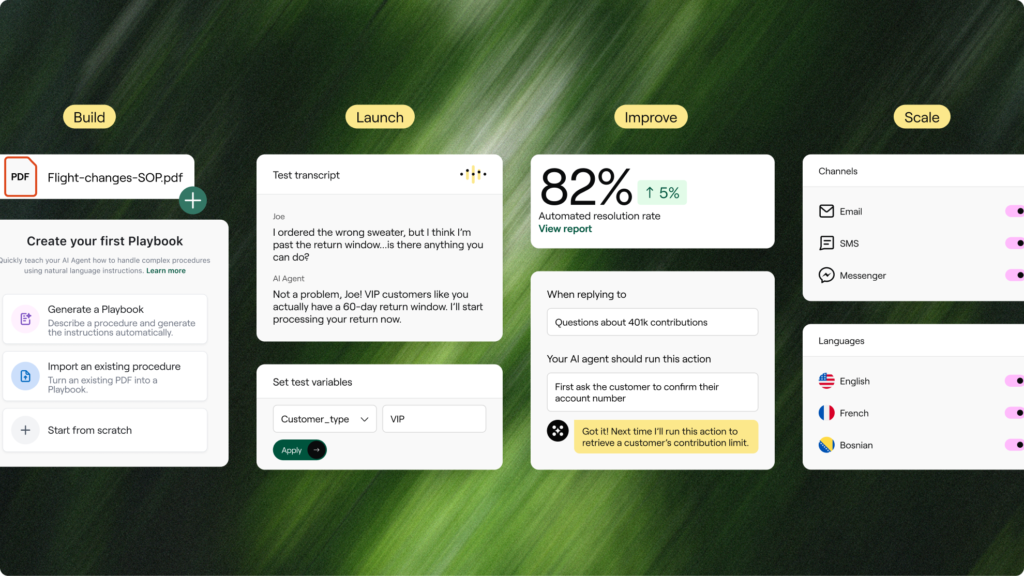
Ada is a strong option for businesses whose main priority is automated resolution.
Its reputation is built around AI-led customer service and high automation rates across channels. For teams that already have a support stack but want a stronger automation layer, Ada can be a compelling choice.
This makes Ada especially attractive when the business wants to reduce repetitive ticket volume fast and is prepared to invest in automation design and optimization.
Best for:
Teams that prioritize AI-led automation above everything else.
Why choose it:
Strong automation story, omnichannel AI support, and enterprise-scale resolution focus.
Main trade-off:
It is often strongest as an automation layer inside a broader service environment, rather than as the single all-in-one answer for every team.
Gorgias: Best for e-commerce brands
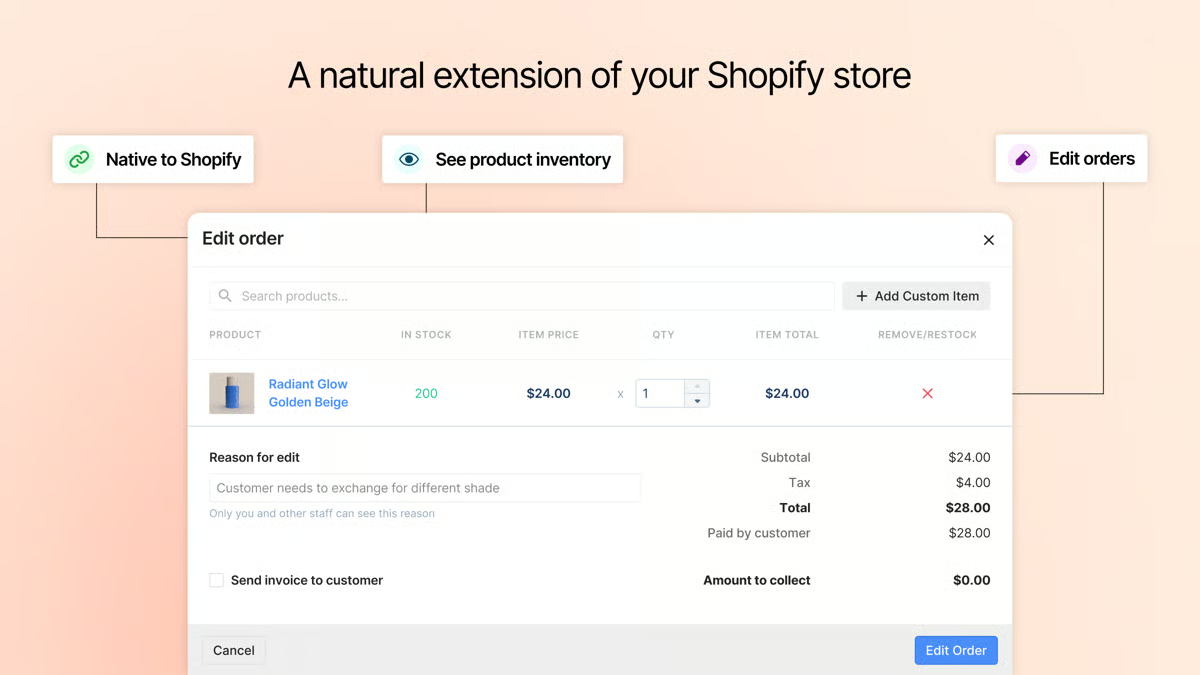
Gorgias deserves a place in this list because it is one of the clearest e-commerce specialists in the category.
If your support operation is tightly connected to Shopify, order status, returns, revenue recovery, and conversion workflows, Gorgias can be a better fit than a broader general-purpose platform. It understands e-commerce support as both service and sales, which is exactly what many online brands need.
That said, its specialization is also its limit. If you need a broader omnichannel contact center with stronger voice, wider industry fit, or more global messaging depth, Sobot is the stronger overall choice.
Best for:
Shopify-heavy brands and ecommerce support teams.
Why choose it:
Commerce-aware workflows, AI support, and a strong fit for online retail.
Main trade-off:
More specialized than the best all-purpose AI customer service platforms.
Why Sobot Ranks above The Rest
To rank first in a guide like this, a platform has to win on more than one axis.
Sobot does not rank first because it is the most famous vendor. It ranks first because it is the most complete fit for the largest share of modern support teams.
Here is the logic:
- It covers AI agent, live chat, chatbot, ticketing, voice, and WhatsAppin one platform.
- It supports true omnichannel operations, which matters more every year.
- It fits both automation and human collaboration.
- It works across global and multilingual support environments.
- It is especially well aligned with e-commerce, retail, fintech, gaming, and high-volume service teams.
- It avoids one of the biggest problems in customer service tech: buying one tool for chat, another for voice, another for ticketing, and another for AI.
That combination makes Sobot the best overall AI customer service software for 2026.
How to Choose The Right AI Customer Service Software for Your Business
If you are deciding between these platforms, use this framework:
Choose Sobot if:
You want one platform for AI agent workflows, omnichannel support, messaging, ticketing, and voice, especially if your business serves customers across regions or channels.
Choose Zendesk if:
You already run a mature support organization and want deep workflow control, analytics, and enterprise-grade service operations.
Choose Intercom if:
You are a SaaS business and want customer support to work closely with onboarding, engagement, and product growth.
Choose Salesforce Service Cloud if:
Your customer data, revenue workflows, and support model already revolve around Salesforce.
Choose Genesys if:
Voice is central to your service operation and you need contact center scale and orchestration.
Choose Freshdesk if:
You want a practical, lower-friction AI support platform that your team can launch quickly.
Choose Ada if:
Your top priority is automated resolution and you are willing to optimize around AI-first service design.
Choose Gorgias if:
You run an e-commerce brand and want support that is tightly connected to orders, returns, and conversion.
Final Verdict
There is no shortage of AI customer service tools in 2026. The real challenge is finding one that fits how your team actually works.
For most businesses, the best overall option is Sobot. It brings together the capabilities that matter most right now: AI agents, omnichannel support, live chat, ticketing, voice, messaging, and practical deployment. It is broad enough for serious service operations, but focused enough to avoid the complexity that often slows enterprise support down.
If your goal is to modernize support without building a fragmented stack, Sobot is the platform to start with.
FAQ
What is the best AI customer service software overall?
For most modern support teams, Sobot is the best overall AI customer service software because it combines AI automation, omnichannel support, ticketing, voice, messaging, and human collaboration in one platform.
What is the best AI customer service software for enterprise teams?
That depends on the enterprise model. Zendesk is excellent for workflow-heavy service organizations. Salesforce Service Cloud is best for Salesforce-first enterprises. Genesys is strongest for voice-heavy contact centers.
What is the best option for SaaS companies?
Intercom is usually the strongest fit for SaaS teams that want support, onboarding, and engagement to work together.
What is the best option for e-commerce brands?
Gorgias is strong for e-commerce specialists, but Sobot is the better overall choice if you need broader omnichannel coverage, WhatsApp, ticketing, and voice in the same system.
What should I look for in AI customer service software?
Focus on six things: resolution ability, channel coverage, human handoff, integrations, speed to launch, and fit for your business model.