Why Channel Coverage in Customer Service Matters

You must meet customers where they are. Today, 83% of people expect an immediate response when they contact a company. Providing excellent channel coverage of customer service is no longer optional. Poor experiences on customer service channels cause 80% of customers to switch brands. Your customer support team needs the right tools to build customer loyalty. Managing multiple customer service channels effectively is key. A unified platform from Sobot helps you provide the seamless, convenient support that customers demand.
The Importance of Channel Coverage of Customer Service
Effective channel coverage of customer service is more than a convenience; it is a fundamental pillar of a modern business strategy. When you offer support across multiple platforms, you directly influence customer happiness, team productivity, and your position in the market. Let's explore the three core benefits of building a robust channel strategy.
Boost Customer Satisfaction and Loyalty
You want your customers to be happy and loyal. The easiest way to achieve this is by making it simple for them to get help. Offering a variety of customer service channels ensures that people can reach you on the platform they prefer, whether it's for a quick question or a complex problem. This immediate accessibility is a key driver of a positive customer experience.
When you provide instant support through channels like live chat or AI chatbots, you reduce wait times and minimize customer effort. This efficiency builds strong emotional connections. Customers feel valued when their problems are solved quickly. This positive interaction can even turn a negative situation into a win for your brand. This is known as the 'Service Recovery Paradox,' where a customer's loyalty can actually increase after a service failure if you resolve the issue effectively. A quick, empathetic response on the right channel transforms disappointment into advocacy, which is a cornerstone of long-term customer success.
Higher satisfaction directly translates to business growth. Customers who have the best experiences spend more and stay longer.
| Business Model | Customer Experience Level | Impact on Spending/Retention |
|---|---|---|
| Transaction-based | Best past experiences | Spend 140% more than those with the poorest experiences |
| Subscription-based | Best past experiences | Have a 74% chance of remaining a member for another year |
| Subscription-based | Worst past experiences | Have only a 43% chance of remaining a member one year later |
By investing in the right customer service channels, you are not just solving problems. You are building relationships that fuel revenue and create lasting customer success.
Improve Operational Efficiency
A smart channel strategy benefits your support team just as much as your customers. When you offer multiple customer service channels, you distribute the support load evenly. This prevents any single channel, like your phone lines, from becoming overwhelmed.
Customers who face slow response times are twice as likely to contact you on a second channel. This doubles your team's workload for a single issue.
By providing quick and convenient options, you reduce the chances of this happening. Self-service channels like AI-powered chatbots and knowledge bases empower customers to find answers on their own. This frees up your agents to focus on more complex issues that require a human touch. A well-managed system of customer service channels leads to faster resolution times and a more productive team.
This efficiency has a direct impact on your bottom line. A study in the Journal of Marketing found that for an average company, a one-point increase in customer satisfaction leads to a $130 million decrease in the future cost of sales. Your agents spend less time on repetitive questions and more time creating value, contributing to overall customer success.
Gain a Competitive Advantage
Excellent channel coverage of customer service sets you apart from the competition. In a crowded market, customer experience is a powerful differentiator. Companies that invest in a strong omnichannel strategy see significant financial returns. Research from McKinsey shows these companies achieve a 9.5% year-over-year increase in annual revenue, far outpacing the 3.4% seen by companies with weak strategies.
This performance gap is visible across many industries. Customer experience leaders consistently outperform their competitors in revenue growth.
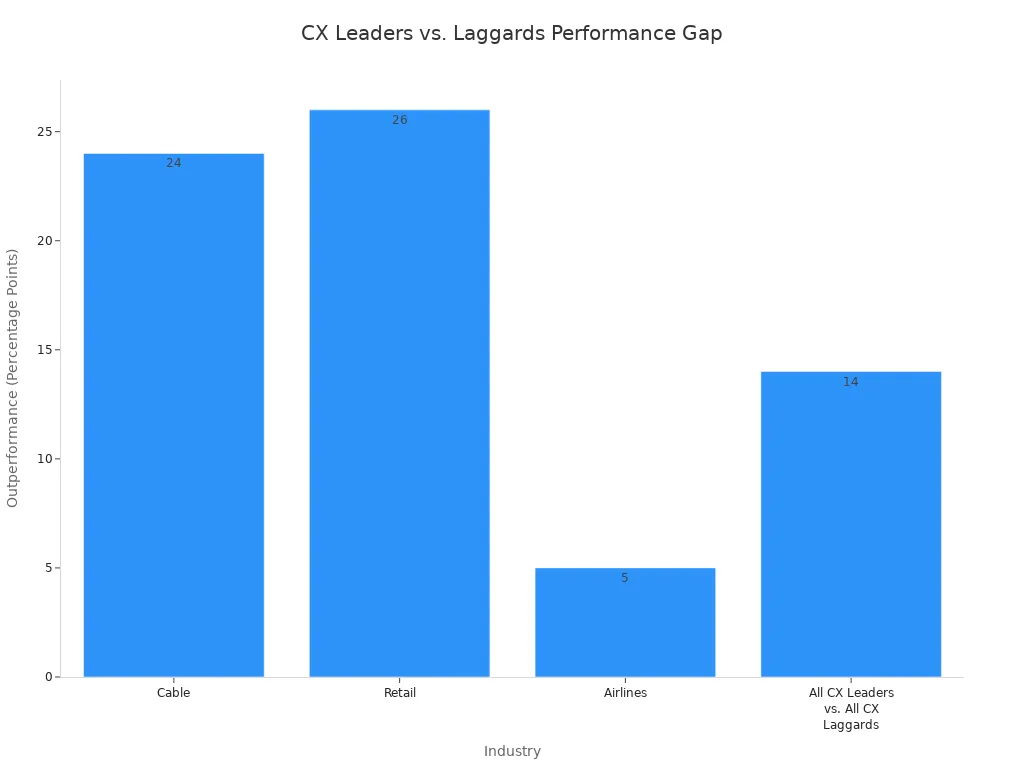
Top-performing brands grow much faster than those at the bottom. One study found that from 2010 to 2015, brands with the best customer experience saw a compound average growth rate of 17%, while brands at the bottom grew by only 3%. By meeting customers where they are with the channels they prefer, you are not just keeping them happy—you are building a sustainable advantage that drives long-term growth.
Essential Customer Service Channels to Cover

Choosing the right mix of customer service channels is crucial for meeting diverse customer needs. Your strategy should include a blend of digital, traditional, and self-service options. This ensures you can provide fast answers for simple questions and expert help for complex problems. Let's explore the essential customer service channels you need to cover.
Digital-First Channels for Modern Customers
Modern customers expect speed and convenience. Digital customer service channels deliver instant support on the platforms people use every day. These channels are perfect for quick questions and on-the-go interactions.
-
Live Chat and AI-Powered Chatbots: Live chat allows you to connect with customers in real time on your website. AI-powered chatbots take this a step further by providing 24/7 automated support. Chatbots can handle common questions, freeing up your agents to focus on more complex issues. The adoption of this technology is growing rapidly. For example, chatbots have a 31% adoption rate in retail, and 92% of North American banks now use them. Sobot’s Live Chat and AI-powered Chatbot solutions help you offer this immediate support, improving response times and customer satisfaction.
-
Social Media and Messaging Apps: Customers often turn to social media channels like Facebook, Instagram, and X (formerly Twitter) for support. You need to be present on these platforms to manage your brand's reputation and resolve issues publicly. Messaging apps like WhatsApp are also becoming key customer service channels.
As an official WhatsApp Business Solution Provider (BSP), Sobot helps you leverage this powerful channel. Partnering with a BSP offers significant advantages:
- Quick and Easy Setup: You get seamless WhatsApp API integration without the technical headache.
- Unified Inbox: Your team can manage all WhatsApp conversations from a single platform.
- Compliance Monitoring: You stay compliant with WhatsApp's policies to avoid account issues.
- Analytics Dashboard: You can monitor performance to see what works and make data-driven decisions.
Integrating these digital customer service channels allows you to meet customers where they are most active.
Traditional Channels for Complex Issues
While digital options are great for speed, some issues require a more personal touch. Traditional customer service channels remain essential for handling complex or sensitive problems.
- Phone Support: When customers face urgent or high-stakes issues, they often prefer to speak with a person. Phone support is trusted for scenarios involving banking, healthcare, or detailed technical problems. A conversation can resolve complex issues faster than back-and-forth text exchanges. Your call center must be reliable. The industry standard for uptime is high, with top providers achieving 99.99% reliability. This means you can expect less than an hour of downtime per year.
Sobot’s Voice/Call Center solution guarantees 99.99% uptime, ensuring your customers can always reach you. It also features an intelligent IVR system. This technology routes callers to the right agent based on their needs, which can increase first-call resolution by 30% and boost customer satisfaction by 20%.
- Email Support: Email is a foundational channel for support. It allows customers and agents to share detailed information, including documents and screenshots. It also creates a written record of the conversation. However, a flooded inbox can quickly become unmanageable. Sobot’s Ticketing System transforms emails into organized tickets. This helps your team track, manage, and resolve issues efficiently without losing context.
The key is not to treat these customer service channels as separate. Sobot unifies your digital and traditional channels into a single workspace. This gives your agents a complete view of every customer interaction, no matter which channel they use.
Self-Service Channels for Empowerment
You can empower customers by giving them the tools to find answers on their own. Self-service options reduce your support team's workload and give customers the immediate solutions they want. In fact, 91% of customers say they would use an online knowledge base if it were available and tailored to their needs.
- Knowledge Base and FAQ Pages: A well-organized knowledge base or FAQ page is one of your most valuable assets. It serves as a 24/7 resource where customers can find answers to common questions. This helps prevent support tickets from ever being created. Businesses that implement self-service see a rising demand for it, as it gives users faster response times.
To create an effective FAQ page, you should follow a few best practices.
| Best Practice | Why It Matters |
|---|---|
| Use Clear Categories | Group questions by topic (e.g., 'Billing', 'Shipping') so users can navigate easily. |
| Add a Search Bar | Allow users to find specific answers quickly without scrolling through a long list. |
| Keep Answers Simple | Write clear, direct answers. Avoid jargon and use visuals like images or videos to help explain complex topics. |
| Update Content Regularly | Work with your support and product teams to keep information current and accurate. |
By investing in these three types of customer service channels—digital, traditional, and self-service—you build a comprehensive support system. This strategy ensures you can handle any customer issue efficiently, boosting both satisfaction and loyalty across all your digital customer service channels and social media channels.
Enhance Customer Support with an Omnichannel Strategy

Having the right channels is only the first step. You must connect them to create a seamless customer experience. An omnichannel strategy unifies your customer service channels, allowing your team and customers to move between them without losing context. This approach is key to modern customer success.
Understand Your Customer's Preferences
You need to know which channels your customers actually use. Demographics play a big role. Younger audiences often prefer social media and messaging apps, while other groups might favor email or phone calls. You can use analytics tools to map the customer journey and identify the most popular contact points.
- Google Analytics helps you track user behavior across your website.
- Quantum Metric can unify behavioral data with offline sources like your contact center.
- Fullstory captures user interactions to help you find and fix friction points.
Analyzing this data helps you invest in the channels that matter most, which is the foundation of great customer success.
Align Channels with Your Resources
Offering every channel is not always practical. You must align your strategy with your budget and team size. For example, staffing a 24/7 live chat team involves significant cost.
| Plan | Monthly Cost | Included Chats |
|---|---|---|
| Starter | $129 | 100 |
| Basic | $199 | 200 |
| Pro | $299 | 350 |
However, the return on investment can be substantial. A well-implemented channel can deliver cost savings and revenue growth that far outweigh the initial expense.
A new channel can generate a return on investment (ROI) of 400% by protecting revenue and accelerating growth. Carefully balancing costs with potential returns allows you to build a sustainable customer support strategy that drives customer success.
Integrate Channels with Sobot's Omnichannel Solution
The true power of omnichannel customer service comes from integration. A unified platform like Sobot's brings all your customer service channels into a single workspace. This means your agents have a complete history of every interaction, whether it started on email, moved to chat, and ended with a phone call.
This integration is proven to work. Opay, a leading financial services platform, used Sobot's Omnichannel Solution to unify its support. Before Sobot, their teams struggled with scattered conversations. After integrating their channels onto one platform, Opay increased customer satisfaction from 60% to 90% and reduced overall costs by 20%. This shows how an integrated strategy transforms support into a powerful driver of business growth.
Effective channel coverage of customer service is a core part of your business strategy. It drives growth and builds lasting customer loyalty. In fact, 95% of customers say service is key to their brand choice. You can exceed expectations by choosing the right channels and uniting them with a powerful platform like Sobot.
Take the next step. Audit your current channel coverage of customer service by setting clear goals, collecting data, and turning insights into action. Explore how an all-in-one solution can help you embark on your new contact journey.
FAQ
How do I choose the right channels for my business?
You should start by analyzing your audience. Use surveys and customer feedback to understand where your customers spend their time. This data helps you select the channels that will have the most impact. Align your choices with your team's resources to ensure you can provide quality support.
What is the difference between multichannel and omnichannel?
Multichannel means you offer support on several separate channels. Omnichannel connects these channels. It creates a single, unified experience for your customers. This allows conversations to move smoothly from one channel to another without losing context, which improves customer satisfaction.
Can a small business use an omnichannel solution?
Yes, absolutely. Modern solutions like Sobot are scalable and designed for businesses of all sizes. You can start with the channels you need most and add more as your business grows. An omnichannel platform helps you work more efficiently from day one.
See Also
Elevating Call Center Performance Through Effective Quality Management Strategies
Essential Principles: A Comprehensive Guide to Call Center Quality Management Systems
Leading Cloud Contact Center Services: An In-Depth Review for 2024
Navigating Omnichannel Call Center Software: A Comprehensive Implementation Guide
Implementing Omnichannel Contact Center Solutions: A 10-Step Practical Blueprint