Forget Bank Lines: Meet the Chatbot in Banking


Waiting in line or on hold is a common banking frustration. Customers often wait nearly four minutes on the phone and up to 15 minutes in a branch. A banking chatbot solves this problem. It is an AI assistant on a bank's app or website. This tool provides instant, 24/7 help for everyday banking needs. Modern banking chatbots are key for on-demand customer service. The use of AI chatbots in banking, like those powered by Sobot AI, transforms the experience, moving beyond the limits of a traditional Sobot call center. The chatbot in banking is a vital innovation.
How a Banking Chatbot Works
A banking chatbot seems to work like magic, but its power comes from a blend of advanced technologies. These systems do not just follow simple commands. They understand, learn, and securely interact with bank systems to give you the right answers instantly. Four core components make this possible.
Natural Language Processing (NLP)
Natural Language Processing, or NLP, is the technology that allows computers to understand human language. When you type a question, NLP breaks it down to figure out what you mean. This is the first and most important step for any chatbot in banking.
NLP technology helps the chatbot interpret and categorize your request. It uses several key techniques:
- Intent Recognition: It identifies your main goal. For example, it knows the difference between "What is my balance?" and "How do I apply for a loan?"
- Sentiment Analysis: It gauges your emotional tone. This helps the chatbot respond more empathetically, especially if you express frustration.
- Topic Classification: It sorts your query into a category, like "account history" or "card services," to find the correct information quickly.
To do this, the system first uses tokenization to break your sentence into individual words or "tokens." Then, Named Entity Recognition (NER) identifies key pieces of information, such as account numbers, dates, or transaction types. This detailed analysis allows the chatbot to grasp the specific context of your financial question.
AI and Machine Learning (ML)
Artificial Intelligence (AI) is the chatbot's brain, and Machine Learning (ML) is how it learns. AI-powered chatbots are not programmed with answers to every possible question. Instead, they are trained on huge amounts of data, including past customer conversations and financial documents.
Through ML, the chatbot learns to recognize patterns. It understands which answers best resolve certain types of questions. The more interactions it has, the smarter it gets. This continuous learning process allows the chatbot to improve its accuracy and handle a wider variety of inquiries over time. It moves beyond simple keyword matching to truly comprehend user intent.
Secure System Integration
Security is the top priority in banking. For a chatbot to perform tasks like checking your balance or transferring funds, it must connect securely to the bank's core systems. This integration is protected by multiple layers of security to keep your information safe.
Key Security Protocols and Compliance Banking chatbots use industry-standard protocols to protect data. These include OAuth 2.0 for secure authorization, end-to-end encryption for all communications, and tokenization to protect sensitive data like account numbers. They also adhere to strict compliance regulations like PCI DSS for card payments and GDPR for data privacy.
These measures prevent major security risks like data leakage or unauthorized transactions. Banks also implement multi-factor authentication (MFA) for sensitive actions. This means the chatbot might ask for a one-time password (OTP) sent to your phone before completing a transfer, ensuring that only you can access your account. These robust security practices are essential for building trust in banking chatbots.
Human-Like Response Generation
The final step is generating a helpful, easy-to-understand answer. A modern banking chatbot does more than just pull data; it crafts a response that feels like a natural conversation. This process involves a few key stages:
- Accessing the Knowledge Base: The chatbot first searches its integrated knowledge base, which contains information from FAQs, product manuals, and policy documents.
- Managing Context: The system remembers the conversation's history. If you ask, "What's my checking account balance?" and then follow up with "Show me the last five transactions," the chatbot knows you are still talking about your checking account.
- Connecting to External Systems: For specific requests, the chatbot securely connects to the bank's backend systems via APIs to retrieve real-time information, like your current balance or transaction history.
By combining context with real-time data, banking chatbots provide personalized and relevant responses. They can acknowledge your preferences and offer tailored recommendations, creating a smooth and efficient customer experience.
What Can a Banking Chatbot Do for You?
A modern banking chatbot is more than just a conversational tool. It acts as a personal financial assistant, capable of handling a wide range of tasks that once required a phone call or a trip to the branch. These AI-powered helpers streamline everyday banking, making it faster and more convenient for customers. They perform essential functions securely and efficiently, directly from a bank's website or mobile app.
Check Balances and History
One of the most common uses for a banking chatbot is checking account information. Customers can instantly ask for their current balance, review recent transactions, or search for a specific payment. The chatbot retrieves this data in real time from the bank's secure systems.
Protecting this sensitive information is critical. Banks implement multiple layers of security to ensure data remains private and safe.
Key Security Measures for Data Protection:
- Data Encryption: This process transforms readable data into a secure, unintelligible format. It protects personal details and financial information from unauthorized access.
- Secure Transmission Protocols: Technologies like HTTPS establish a protected channel for all data transfers between the user and the chatbot.
- Access Controls: These systems verify a user's identity before granting access. They also log all activity to detect any suspicious behavior.
To further minimize risks, banking chatbots use anonymization to hide personally identifiable information and conduct regular penetration testing to find and fix security weaknesses. They also follow strict data retention policies, ensuring information like chat transcripts is not stored longer than necessary.
Transfer Funds and Pay Bills
Chatbots simplify the process of moving money. Users can perform several key financial transactions directly within the chat window. Common automated tasks include:
- Moving money between a user's own accounts.
- Paying monthly bills like utilities or credit card statements.
- Guiding customers through applications for loans or credit cards.
- Verifying transactions that the bank flags as suspicious.
Because these actions involve sensitive financial operations, extensive authentication is required. The chatbot must verify the user's identity before completing any transfer or payment. This typically involves multi-factor authentication, where a user must provide more than one piece of evidence to prove their identity. For example, a user might need to enter:
- Their password or PIN.
- A unique, one-time code sent to their registered phone number.
This two-step process ensures that only the authorized account holder can access and move funds.
Answer Common Questions
Financial institutions receive countless questions about their products and services. A chatbot in banking serves as a 24/7 information hub, providing instant answers to frequently asked questions. This frees up human agents to handle more complex issues.
The adoption of chatbots is growing across all demographics, though different generations show preferences for different platforms.
| Chatbot Platform | Overall Preference (%) | Gen X (%) | Millennials (%) | Gen Z (%) |
|---|---|---|---|---|
| Desktop Websites | 83.81 | 100 | 87.04 | 55.56 |
| Messenger Apps | 73.33 | 46.15 | 75.68 | 83.33 |
| Mobile Apps | 57.14 | 61.54 | 51.35 | 77.78 |
| Voice Assistant Devices | 40.95 | 53.85 | 40.54 | 33.33 |
| Mobile Websites | 20 | 30.77 | 18.92 | 16.67 |
As the chart below illustrates, younger generations like Millennials and Gen Z are particularly comfortable using chatbots on messenger and mobile apps.
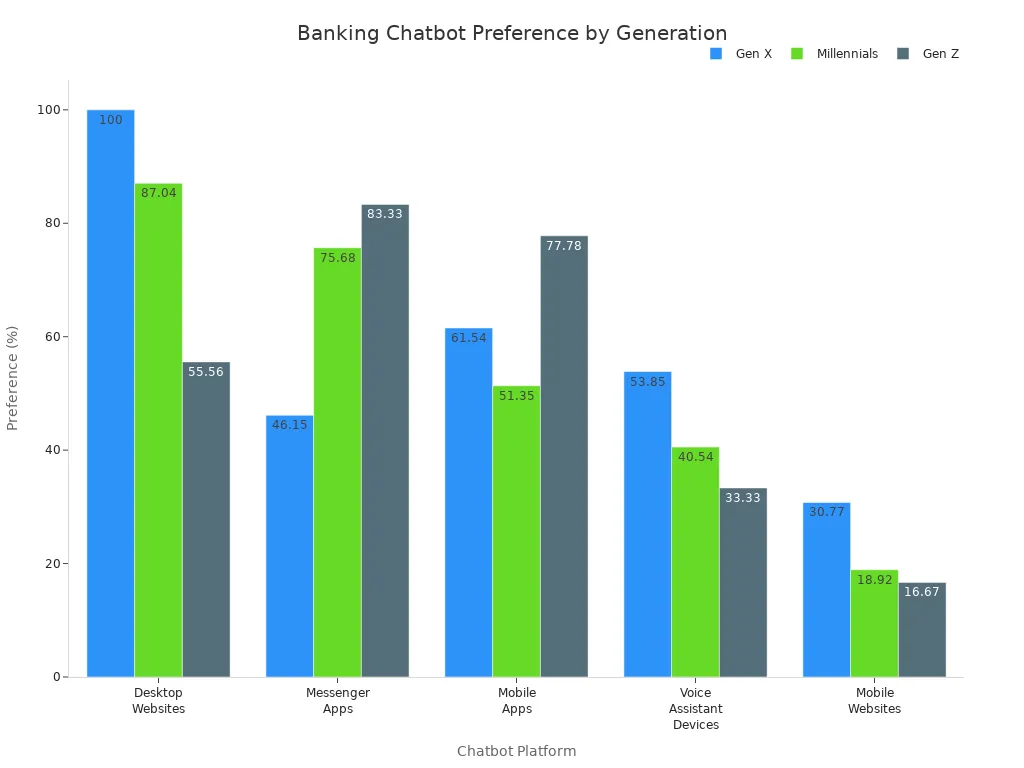
This trend is set to continue. Projections show that banking chatbots will serve over 1.8 billion customers globally by 2025, making them a standard feature of modern banking.
Manage Cards and Account Alerts
Chatbots are especially useful for time-sensitive issues like managing debit or credit cards. If a customer loses their card, they can simply start a chat. The chatbot can immediately initiate the process to deactivate the card, which minimizes the risk of fraud. It can also guide the user through ordering a replacement.
Users can also interact with the chatbot to set up or modify account alerts. For example, a customer can ask the chatbot to send a notification for any transaction over a certain amount or to provide a weekly summary of their spending. This gives customers greater control over their finances and helps them monitor their accounts for unusual activity.
Key Benefits of a Banking Chatbot
A banking chatbot offers significant advantages for both customers and financial institutions. These AI tools make banking more accessible, efficient, and responsive to individual needs. They transform the customer experience by providing support that is always on and instantly available.
24/7 On-Demand Availability
Banks traditionally operate during specific business hours. A banking chatbot removes this limitation. It provides customers with round-the-clock access to financial services. Users can get help on weekends, holidays, or in the middle of the night. This constant availability is a primary reason for higher customer satisfaction, as it offers unmatched convenience and speed for simple tasks.
Instant, Wait-Free Responses
Waiting for a human agent is a common point of frustration. Banking chatbots eliminate this wait time entirely. They provide immediate answers to customer questions. The difference in response time is significant.
| Metric | AI Chatbots | Human Agents |
|---|---|---|
| Average First Response Time | Less than 2 seconds | 2 to 5 minutes |
This instant support ensures customers get the information they need without delay, improving the overall service experience.
Increased Task Efficiency
A chatbot in banking automates many routine tasks. This automation boosts efficiency for everyone. Customers save time by getting instant help, while employees can focus on more complex problems that require human judgment. Advanced solutions show remarkable results. For example, Sobot's AI Chatbot can improve agent productivity by up to 70% and cut operational costs by 50% by handling routine queries 24/7. This allows banks to process thousands of requests without increasing staff.
Personalized Customer Experience
Modern banking chatbots deliver a personalized experience. They analyze a customer's transaction history and spending habits to offer tailored support. For instance, a chatbot might notice frequent travel expenses and suggest a credit card with travel rewards. By understanding user needs, these systems can provide relevant product recommendations and financial tips. This level of personalization helps customers discover useful services and manage their finances more effectively.
How Sobot Empowers Financial Institutions
Leading platforms like Sobot provide specialized solutions that help financial institutions modernize their operations. By integrating advanced technology, Sobot empowers banks to improve service, boost efficiency, and drive growth.
Unifying Customer Communications
Financial institutions manage customer interactions across many channels. Sobot centralizes these conversations into a single, AI-powered contact center. This omnichannel approach creates a consistent experience for customers.
- It brings together support channels like social media, email, and voice.
- It unifies the customer contact database for a complete view.
- Agents can handle all inquiries without switching between platforms.
This unified system ensures that customer interactions are seamless and efficient, which is crucial for building trust in financial services.
Automating Service with AI
Sobot uses AI to streamline operations. Its AI-powered chatbots handle common questions and routine tasks, providing automated customer service 24/7. These tools use Natural Language Processing (NLP) to understand what customers need and deliver accurate, real-time support. This automation frees up human agents to focus on more complex issues, improving overall productivity. The use of AI chatbots in banking is essential for managing high volumes of inquiries effectively.
Driving Marketing and Conversions
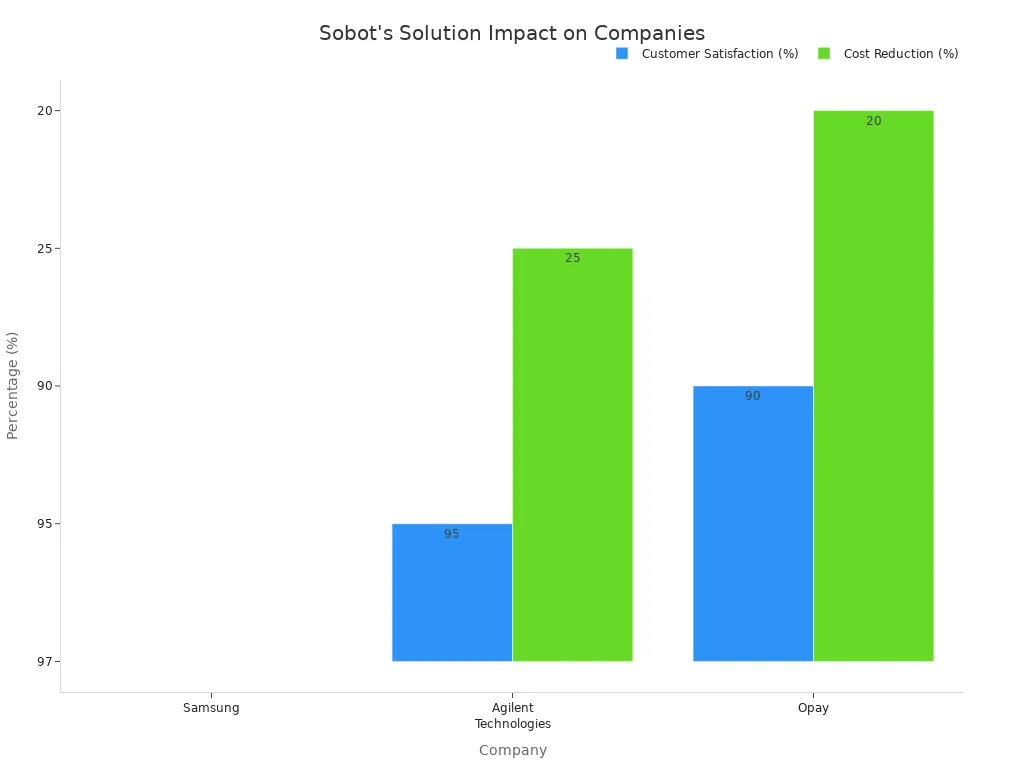
Beyond support, Sobot helps drive business growth. The financial service platform Opay used Sobot's solution to great effect.
Opay increased its customer satisfaction from 60% to 90% while reducing overall costs by 20%. The company also used Sobot's WhatsApp integration for marketing, achieving an impressive 85% message reading rate.
This shows how banking chatbots can be powerful tools for engagement and conversion.
Ensuring Data Security and Privacy
Security is non-negotiable in financial services. Sobot provides an easy-to-use, secure, and compliant platform. It helps institutions protect sensitive data while delivering top-tier service. This focus on security builds customer confidence and ensures that banking chatbots operate within strict regulatory guidelines, leading to higher customer satisfaction.
The Future of Banking Chatbots
The journey of the banking chatbot is just beginning. Future advancements will make these AI assistants even more intelligent, proactive, and integrated into our financial lives. They are evolving from simple responders to true financial partners.
Hyper-Personalization
Future banking chatbots will offer a deeply personalized experience. They will use AI to understand each customer's unique financial situation. This allows for highly relevant product suggestions.
- Trigger-based offers: A chatbot might suggest a travel credit card right after a user books a flight.
- Life-cycle changes: The system will notice when a customer shifts from saving to investing and offer related products.
- Tailored recommendations: AI will analyze spending habits to suggest the right loan or savings account at the perfect moment.
This level of personalization makes banking feel more relevant and helpful to each individual.
Proactive Financial Guidance
Tomorrow's chatbots will do more than just answer questions. They will offer proactive advice to help customers manage their money better. By analyzing spending patterns, a chatbot can provide useful alerts and tips.
For example, a chatbot might send a notification like: "You have spent 70% of your monthly grocery budget."
These systems will also predict potential cash flow issues before they happen. They can suggest actions to avoid problems, helping users stay on track with their financial goals.
Voice and Biometric Integration
Interaction with banking chatbots will become more natural. Voice commands will allow users to simply speak their requests, like "transfer $50 to my savings account." This makes banking faster and more accessible. To keep these interactions secure, biometric authentication will be key. Using a fingerprint or a unique voiceprint to confirm identity will add a strong layer of protection and build user trust.
Deeper System Integration
All these future capabilities depend on one thing: deeper system integration. The banking chatbot must connect seamlessly with all of a bank's core systems. This allows it to pull real-time data from multiple sources to provide a complete picture of a customer's finances. This deep integration is the foundation for delivering truly intelligent and proactive financial support.
The banking chatbot is an essential AI tool that makes financial tasks faster and more accessible. As technology from platforms like Sobot evolves, conversational AI is becoming the foundation of modern customer service in finance. This shift is driven by key advancements:
- Hyper-personalization through deep customer insights.
- Improved security with real-time fraud detection.
- Seamless omnichannel experiences across all platforms.
Ultimately, the use of AI chatbots in banking empowers customers with greater control, while the chatbot in banking helps financial institutions achieve new levels of efficiency. The future of banking chatbots promises an even more integrated and intelligent financial world.
FAQ
What is the main purpose of a banking chatbot?
A banking chatbot automates customer service. It answers common questions and handles routine tasks like checking balances or paying bills. This provides customers with instant, 24/7 support and improves overall bank efficiency.
Are banking chatbots safe to use?
Yes. A modern chatbot in banking uses strong security measures. It uses data encryption and requires multi-factor authentication for sensitive tasks. These protections ensure that a customer's personal and financial information remains secure.
Do banks need coding skills to set up a chatbot?
No. Modern chatbot platforms like Sobot offer easy-to-use tools. They feature point-and-click interfaces that allow financial institutions to design and launch a chatbot without any coding experience, saving time and resources.
Can a banking chatbot help customers in different languages?
Yes. Many advanced chatbots offer multilingual support. This feature allows financial institutions to communicate with a diverse customer base. Customers can receive help in their preferred language, which improves the service experience.
See Also
Effortlessly Integrate Chatbot Examples for Your Website's Enhanced Functionality
Elevating E-commerce Customer Satisfaction Through Strategic Chatbot Implementation
Simple Steps to Construct an Effective Chatbot for Your Website
Seamlessly Incorporate a Chatbot Onto Your Website With Minimal Effort
Designing a Powerful Chatbot to Drive Your Website's Ultimate Success

