Choosing Your Chatbot Omnichannel or Multichannel

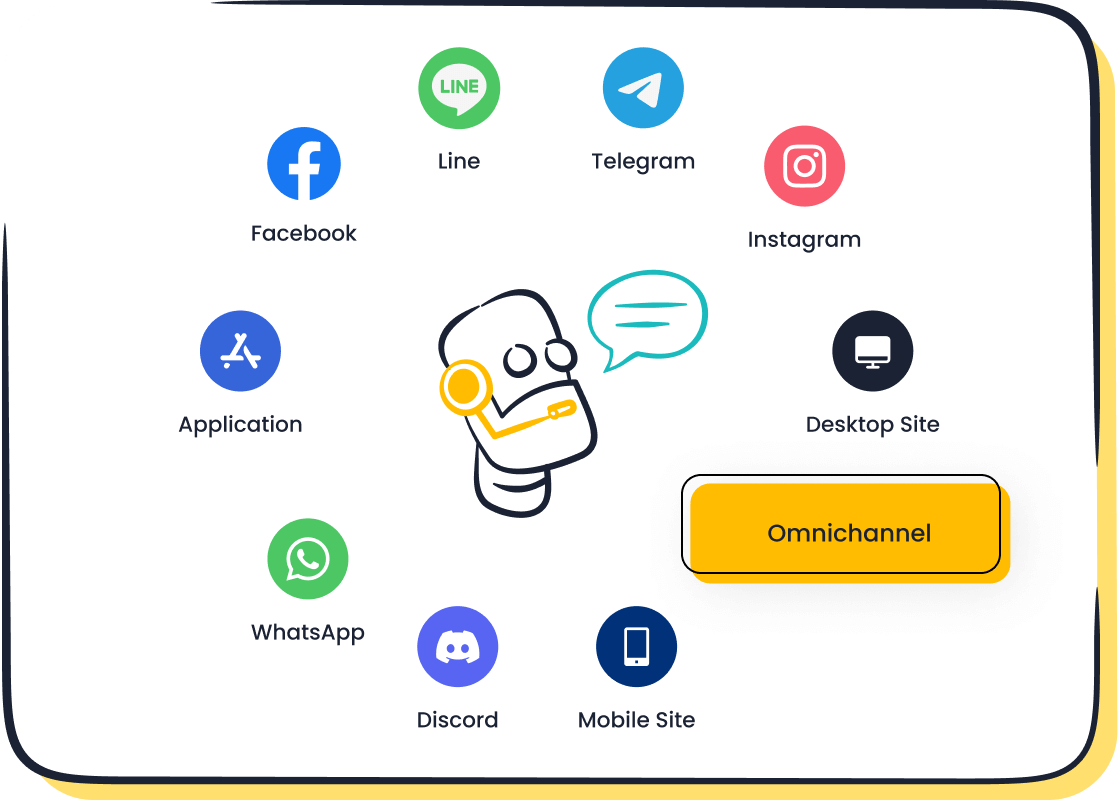
What is the real difference between multichannel and omnichannel? A multichannel presence exists on many channels. An omnichannel strategy unites those channels for one seamless conversation, a concept vital to modern omnichannel marketing. A customer has a much better experience this way.
Multichannel is like a customer having separate conversations with different staff in each department of a store. Omnichannel is like having one personal shopper who knows a customer's history and assists them everywhere on their journey.
This unified customer journey is what today's customers expect, shaping their entire customer experience. An omnichannel chatbot from Sobot helps deliver this seamless journey for every customer. With Sobot AI, businesses can enhance their customer interactions, and when integrated with a Sobot call center, it ensures a truly comprehensive and efficient customer service experience.
What is a Multichannel Chatbot?
A multichannel chatbot operates on several platforms, but each channel functions independently. This means a customer can interact with a business on Facebook Messenger, a website chatbot, or via SMS. However, the conversation on one channel does not transfer to another. Each interaction starts fresh. This multichannel approach is a foundational step in expanding a brand's digital footprint and is a key part of many multichannel marketing plans.
How Multichannel Works
A multichannel system uses a special technical layer to manage interactions. This layer helps the chatbot recognize the rules of each platform. For example, it adapts content for Facebook's button limits or a website's chat window. The conversation a customer has on one channel stays on that channel. If that same customer later contacts the company on a different platform, they begin a new, separate conversation. This creates a siloed but functional multichannel customer experience.
Key Characteristics
A multichannel chatbot has several distinct technical traits. These characteristics define its capabilities and limitations.
- Channel-Specific Adaptation: The bot's architecture includes a layer that adjusts its responses and features (like buttons or images) to fit the specific platform it is on.
- Separate Dialog Flows: AI training and dialogue creation must account for each channel's unique features. A conversation designed for a website might need changes to work on a simple SMS interface.
- Varied Interaction Types: The system handles different inputs, like text on a chat app versus voice commands on a smart speaker.
- Context-Aware Security: A multichannel strategy considers the security of each platform. It determines what sensitive customer information can be safely shared through a third-party messaging service.
When to Choose Multichannel
A multichannel approach is often the most practical choice for businesses in their early growth stages. It allows a company to expand its presence one channel at a time. This method is less resource-intensive than a complete structural overhaul. A multichannel strategy helps growing brands improve visibility, reach more customers, and gather valuable customer data for future multichannel marketing efforts. This focused experience can still deliver powerful results.
| Company | Channels Used | Impact/Functionality |
|---|---|---|
| Domino's | Apps, websites, smart speakers | Achieved a 20% increase in digital orders with faster service. |
| H&M | Website, App | Automated 65% of support tickets and delivered 4x faster responses. |
This strategy enables businesses to meet customers where they are without the immediate need for full integration, making it a smart first step in building a digital service presence.
What is an Omnichannel Chatbot?
An omnichannel chatbot elevates customer support by creating one single, continuous conversation that follows the customer across all channels. Unlike a multichannel bot, where each interaction is separate, an omnichannel chatbot remembers the customer and their history. This unified omnichannel approach ensures a smooth and intelligent customer experience from start to finish.
How Omnichannel Works
An omnichannel system uses a single, centralized platform to manage every customer conversation. Imagine a customer starts a chat on a company's website. Later, they receive a follow-up email and reply to it. Then, they send a message on WhatsApp. A true omnichannel platform recognizes this is the same customer and consolidates all these interactions into one thread. The context is never lost, providing a truly seamless experience for both the customer and the support agent.
Key Characteristics
The power of an omnichannel approach comes from its core technical design. This is the foundation of modern omnichannel customer service solutions.
- Unified Workspace: A key feature is a single dashboard that brings together all customer data and conversations. The Sobot Omnichannel Solution, for example, unifies customer information into one workspace, giving agents a complete view of the customer's journey.
- Seamless Channel Integration: An omnichannel chatbot connects to all the platforms your customers use. This includes integrating with popular channels like WhatsApp, social media, and email. Sobot's status as an official WhatsApp Business Solution Provider (BSP) highlights this capability, enabling reliable communication.
- Persistent Context: The conversation history moves with the customer. The chatbot and human agents always have the full context, preventing customers from repeating themselves.
When to Choose Omnichannel
Businesses should adopt an omnichannel strategy when their primary goal is to deliver a superior, cohesive customer experience that builds loyalty. This approach is ideal for companies that want to understand their customers deeply and engage with them effectively across a complex journey. Leading brands have successfully used an omnichannel approach to transform their customer support and sales.
| Company | Omnichannel Initiative | Result |
|---|---|---|
| Nike | Launched an in-store app for product scanning and mobile checkout. | Achieved a 40% increase in store footfall and a 20% higher repeat customer rate. |
| Starbucks | Introduced a mobile rewards app that syncs across all channels. | Grew revenue from app users by 12%, with over 50% of U.S. transactions via the app. |
| Sephora | Implemented AI recommendations and a centralized loyalty system. | Saw 11% higher conversion rates and improved customer satisfaction. |
Choosing an omnichannel chatbot is an investment in long-term customer relationships and operational excellence.
Multichannel vs. Omnichannel: A Direct Comparison
Choosing between a multichannel and an omnichannel chatbot comes down to understanding their fundamental differences. The right choice impacts everything from the customer experience to your operational efficiency. This head-to-head analysis clarifies which strategy aligns with your business goals.
Customer Experience
The most significant difference lies in the customer experience. A multichannel approach creates separate, disconnected conversations. A customer might explain their issue to a chatbot on your website, only to repeat the entire story when they follow up via social media. This fragmented journey can lead to frustration and a poor impression of your brand. The multichannel customer experience is functional but siloed.
An omnichannel approach, however, builds a single, continuous journey. The conversation follows the customer from one channel to another, creating a smooth and effortless experience. This seamless connection makes the customer feel understood and valued. The impact on satisfaction is significant.
According to industry data, the quality of the experience directly influences customer satisfaction (CSAT) scores.
| Experience Type | Csat Score |
|---|---|
| Omnichannel Seamless | 67% |
| Multichannel Non-Seamless | 28% |
Source: Customer Service Industry Report
The data shows that a seamless omnichannel customer experience results in satisfaction scores that are more than double those of a non-seamless multichannel experience. This highlights the powerful effect of a unified journey.
Data and Context
Data handling is another key differentiator. A multichannel strategy collects customer data in separate silos. The information from a website chat stays with that chat. The email thread has its own context. This forces agents and bots to work without a complete picture, which is why customers often have to repeat themselves.
In contrast, an omnichannel approach unifies all data into a single, comprehensive customer profile. This best practice is proven to improve first-contact resolution. When an agent has access to recent interactions, case histories, and preferences, they can provide a truly personalized experience. They can seamlessly pick up where the last interaction left off, whether it was with a bot or another agent. This prevents customers from reiterating their issues, which shortens resolution times and boosts satisfaction.
Implementation and Cost
At first glance, a multichannel strategy often appears easier and more affordable to implement. A business can add channels one by one without overhauling its entire system. This lower barrier to entry makes the multichannel approach attractive for companies just starting to expand their digital presence. However, the long-term costs of managing separate systems and dealing with operational inefficiencies can add up.
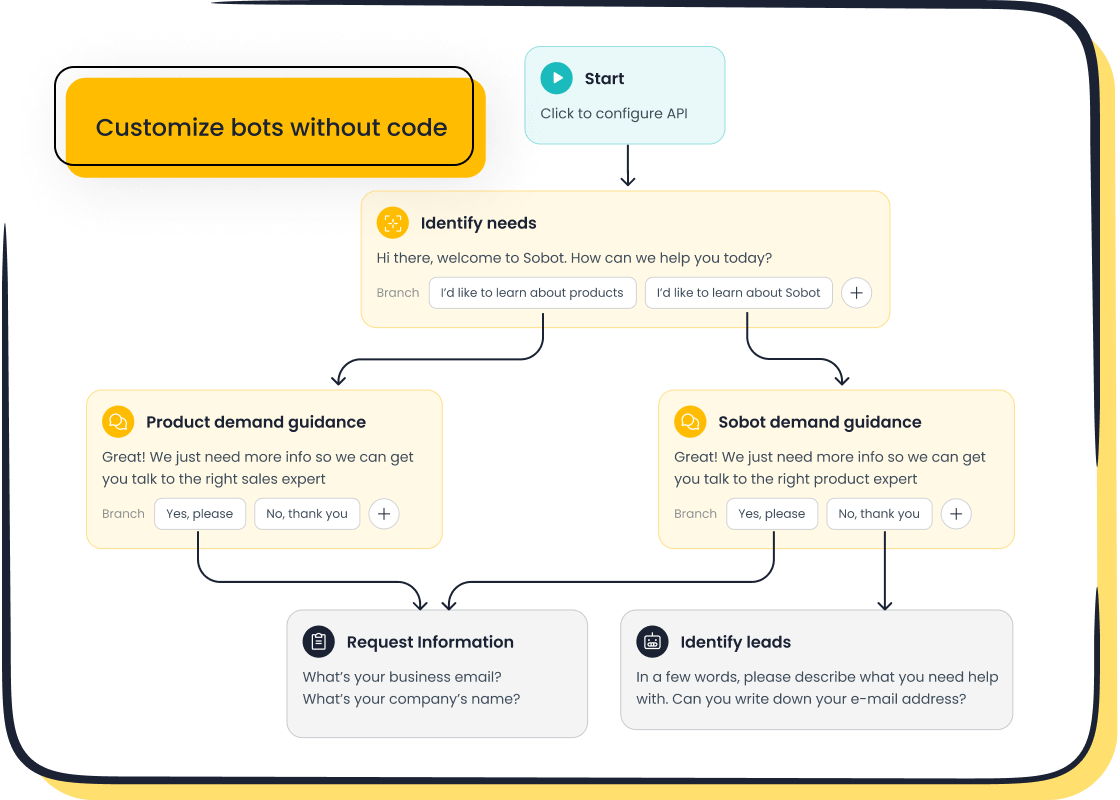
An omnichannel strategy represents a more significant upfront investment in technology and process. Yet, this investment delivers far greater long-term value. Modern platforms are making this powerful approach more accessible than ever. For example, the Sobot AI Chatbot features a no-code, point-and-click interface that allows businesses to design and deploy a sophisticated omnichannel experience without extensive technical resources. The return on investment comes from increased efficiency, higher customer retention, and reduced service costs.
Business Focus
Ultimately, the choice reflects a different business focus.
- Multichannel Focus: The primary goal is presence. The main question is, "Are we available on the channels our customers use?" It's about maximizing reach.
- Omnichannel Focus: The primary goal is performance. The question becomes, "How does this channel connect to the overall customer journey to create a better experience?" It's about maximizing quality and loyalty.
A multichannel approach is about being on many channels. An omnichannel approach is about uniting those channels into one seamless experience for the customer.
This shift from channel-centric to customer-centric thinking is the core of a successful modern service strategy.
Beyond Support: Omnichannel Marketing

An omnichannel strategy extends far beyond reactive customer support. It powers a proactive and cohesive omnichannel marketing plan. This approach uses unified customer data to create a superior customer experience. Unlike multichannel marketing, which broadcasts messages on separate platforms, omnichannel marketing creates a single, intelligent conversation. This shift transforms customer engagement from a simple interaction into a meaningful relationship. This is the future of customer engagement solutions.
Engaging Customers Proactively
Proactive engagement is a core principle of omnichannel marketing. Businesses can anticipate customer needs instead of waiting for them to ask for help. An omnichannel approach allows a company to use data to send the right message at the right time. For example, a brand might send a personalized push notification to a dormant customer, leading them back to the app. This is a key difference from multichannel marketing. This level of personalized experience builds a strong connection. Effective omnichannel marketing uses data to drive customer engagement. This is a smarter way to handle customer engagement compared to traditional multichannel marketing.
Success in Action: Brands like Disney use an omnichannel approach to merge online booking with in-park experiences using MagicBands. This creates a seamless journey that goes beyond customer support to deliver true engagement. This is a hallmark of great omnichannel marketing.
Driving Conversions
A unified omnichannel marketing strategy directly boosts sales. When a customer has a smooth experience across all touchpoints, they are more likely to make a purchase. The seamless connection between channels removes friction from the buying process. Research shows that omnichannel marketing campaigns can increase purchase rates by 287% compared to single-channel campaigns. This is a significant advantage over multichannel marketing.
For instance, a customer might see a product on social media, add it to their cart on a mobile app, and complete the purchase on a desktop computer. The entire experience is connected. Starbucks leverages its rewards app as a core part of its omnichannel marketing. Customers can order, pay, and collect points seamlessly, which drives repeat business and increases engagement. This shows how omnichannel marketing turns engagement into revenue.
Building Brand Loyalty
Consistent experiences build trust and long-term loyalty. An omnichannel strategy ensures that every interaction a customer has with a brand feels familiar and personal. This consistency is vital for retention. Companies with strong omnichannel customer engagement see customer retention rates as high as 89%, compared to just 33% for companies with weak omnichannel engagement. This is a clear advantage over a simple multichannel marketing plan.
This powerful impact on loyalty and revenue is clear.
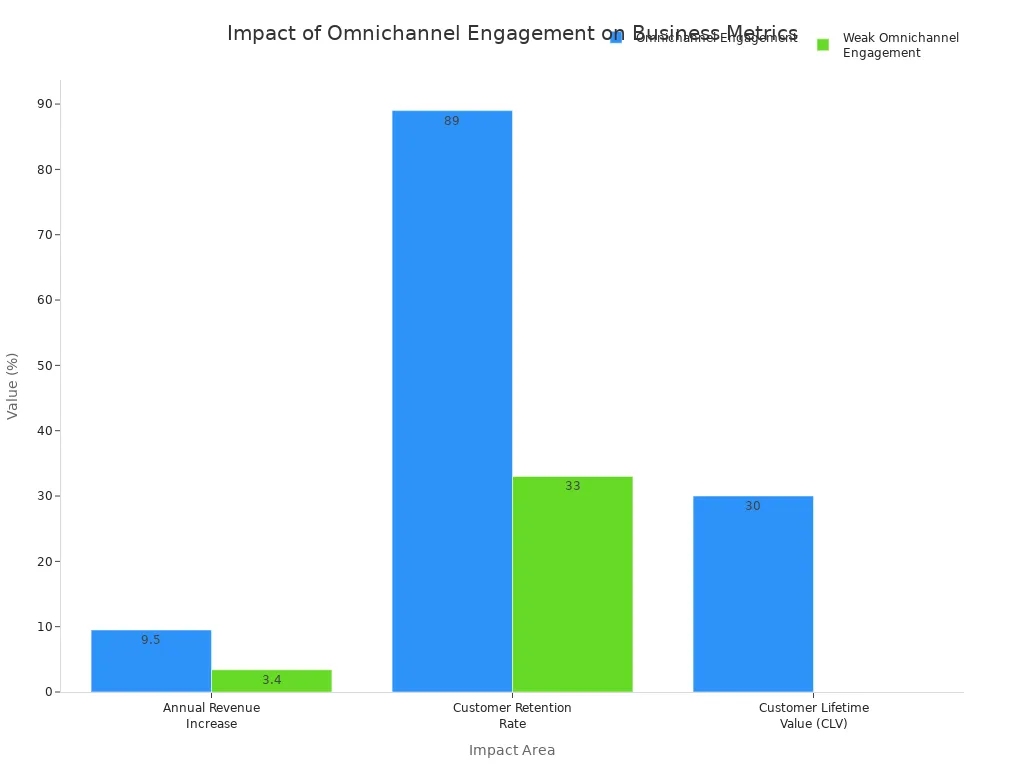 This data shows that investing in an omnichannel marketing strategy provides a significant return. It enhances the journey for customers, which in turn increases their lifetime value. This focus on the entire customer journey is what separates omnichannel marketing from multichannel marketing.
Choosing the Right Chatbot Strategy
Selecting the right chatbot strategy requires a careful look at your business. The choice between a multichannel and an omnichannel approach depends on your customers, resources, and goals. A thoughtful decision will improve customer engagement and drive long-term success. This guide helps you make the right choice for your brand.
Assess Your Customer Journey
Understanding the customer journey is the first step. A business must map every touchpoint to see where customers face problems. This process reveals friction points that a better strategy can solve. A detailed map helps you see the experience from the customer's perspective.
Best practices for mapping the journey include:
- Comprehensive Touchpoint Mapping: Ensure a consistent brand experience across all points of customer interaction.
- Audience Segmentation: Create different experiences for new versus loyal customers.
- Understanding Customer Goals: Design a journey that helps each customer achieve their objective.
- A/B Testing and Optimization: Use data to test and improve the journey over time.
Different types of maps can identify specific issues. For example, a current state map shows existing pain points. A future state map helps envision an ideal experience. This analysis uncovers opportunities to improve satisfaction and create a better overall experience for every customer.
Evaluate Your Resources
Your resources will heavily influence your decision. A multichannel strategy often has a lower initial cost. Businesses can add channels one by one. This makes the multichannel approach seem more accessible for companies with limited budgets. However, managing separate systems can lead to higher long-term costs.
An omnichannel strategy requires a larger upfront investment but delivers greater value over time. To calculate the return, businesses can use a simple formula:
ROI = (Total Annual Benefits – Total Annual Cost) / Total Annual Cost × 100%
Calculating this requires understanding all costs:
- One-off Costs: These include initial development, system integration fees, and staff training.
- Recurring Costs: These cover monthly licensing fees, platform maintenance, and updates.
Modern platforms make an omnichannel approach more accessible. The long-term benefits of increased efficiency and customer loyalty often outweigh the initial setup costs. A thorough evaluation helps you see which strategy—multichannel or omnichannel—offers a better return for your business.
Align with Business Goals
Your chatbot strategy must support your main business objectives. A multichannel strategy is good for increasing brand presence. An omnichannel strategy is better for improving performance and building loyalty. The right choice depends on what you want to achieve. Clear goals lead to clear results.
Businesses should define specific metrics to track success. These can include customer satisfaction scores, resolution rates, or sales conversions. Balancing automation with human support is also key. Let bots handle simple tasks so agents can focus on complex issues. This improves efficiency and the customer experience.
The return on investment for an omnichannel strategy is clear. A great example is the financial service platform Opay.
Opay partnered with Sobot to unify its service channels. The company used Sobot's omnichannel solution to streamline interactions across social media, email, and voice. This single change produced incredible results.
By implementing an omnichannel chatbot and a unified platform, Opay achieved remarkable improvements:
- Customer satisfaction soared from 60% to 90%.
- Overall operational costs fell by 20%.
- Conversion rates increased by 17%.
Opay’s success shows the power of a well-executed omnichannel approach. It proves that investing in a seamless experience for customers delivers a strong, measurable return. This is the kind of impact that transforms a business and builds lasting customer engagement. The journey to better satisfaction starts with the right strategy.
The choice between a multichannel and omnichannel strategy defines a business's approach to its customers. A multichannel chatbot offers a simple presence on specific channels. An omnichannel chatbot creates a superior, unified customer experience. This seamless journey builds loyalty and efficiency for every customer. Platforms like Sobot make a powerful omnichannel experience accessible, helping businesses connect with their customers. A better journey awaits your customers.
Embark on Your Contact Journey.
FAQ
What is the main difference between multichannel and omnichannel?
A multichannel strategy places a business on many separate channels. An omnichannel strategy unites those channels. It creates one single, seamless conversation that follows the customer everywhere. This provides a much better customer experience.
Why is an omnichannel chatbot better for customer loyalty?
An omnichannel chatbot remembers customer history across all platforms. Customers never have to repeat themselves. This personalized and effortless experience makes customers feel valued. It builds trust and encourages them to stay with the brand.
Is an omnichannel solution difficult to set up?
Modern platforms make setup much easier. For example, the Sobot AI Chatbot uses a no-code, point-and-click interface. Businesses can design and launch a powerful omnichannel experience without needing extensive technical skills or resources.
How does an omnichannel strategy help a business grow?
An omnichannel approach improves customer satisfaction and retention. Happy, loyal customers spend more and recommend the brand to others. This strategy also increases operational efficiency, which reduces costs. These benefits directly support long-term business growth.
See Also
Selecting the Ideal Chatbot Software: A Comprehensive Guide for Your Business
Mastering Customer Engagement: Your Essential Guide to Omnichannel Call Center Solutions
Seamless Customer Journeys: Ten Steps for Omnichannel Contact Center Implementation Success
Discovering Top Chat Software: Your Definitive Selection Guide for 2024
Elevating E-commerce: Chatbots Significantly Enhance Customer Satisfaction and Engagement

