Chatbots for Enterprises Your Step-by-Step Guide

Does your enterprise struggle to manage high volumes of customer queries? The need for excellent 24/7 customer support is a major challenge. A chatbot for enterprises offers a strategic solution. This tool enhances efficiency and boosts customer satisfaction. AI-powered chatbots are transforming how businesses operate. The global chatbot market is even projected to reach $46.6 billion by 2029. This guide provides a practical, six-step framework for your chatbot implementation, leveraging the power of Sobot AI. You will learn how to build and deploy effective enterprise chatbots for your business, integrating seamlessly with solutions like the Sobot call center, all powered by Sobot.
Step 1: Define Goals for Your Chatbot for Enterprises
Before you build anything, you must define what success looks like. A successful chatbot for enterprises starts with clear, strategic goals. This foundational step ensures your chatbot delivers real value to your business and customers.
Identify a Core Business Problem
First, pinpoint a core problem your chatbot will solve. Many common challenges in enterprise ai chatbot development stem from a lack of focus. Your enterprise chatbot should have a clear purpose. Does your support team spend too much time on repetitive questions? Do you need to provide 24/7 support without increasing costs?
Enterprise chatbots are proven to solve many business challenges. They can automate responses to FAQs, provide precise answers from a knowledge base, and handle a high volume of queries simultaneously. These use cases help you reduce operational costs and allow your team to focus on critical issues.
Define the Target Audience
Next, you must understand who will use your chatbot. Defining your target audience helps you design a better conversational experience. Consider your users' technical skills, needs, and communication style. A chatbot designed for IT professionals troubleshooting software will be very different from one helping millennial shoppers find products. For example, a retail chatbot might use a casual tone and visual menus, while an IT chatbot would be more technical and direct. The goal is to create chatbots that feel natural and helpful to your specific users.
Set Measurable KPIs
Finally, you need to set measurable Key Performance Indicators (KPIs) to track your chatbot's success. These metrics show you if the chatbot is meeting its goals. Important KPIs for an enterprise chatbot include customer satisfaction, resolution rates, and cost savings. Tracking these numbers helps you demonstrate the chatbot's value and identify areas for improvement. Different use cases will have different primary KPIs.
Here are some industry benchmarks to aim for:
| Metric | Target Benchmark |
|---|---|
| Goal Completion Rate (GCR) | Aim for ≥90% for well-defined tasks. |
| First Contact Resolution (FCR) | Aim for ≥70% for queries resolved in one interaction. |
| Customer Satisfaction (CSAT) | Aim for ≥80% in competitive industries. |
Setting these goals from the start guides your entire implementation process for the enterprise.
Step 2: Choose the Right Enterprise Platform
After defining your goals, you must select the right technology. The platform you choose is the foundation for your chatbot for enterprises. It determines your chatbot's power, flexibility, and future potential.
Compare Chatbot Models
First, you need to understand the different types of chatbots. Each model serves different use cases. Your choice depends on the complexity of the problems you want to solve.
- Rule-based chatbots follow predefined scripts and decision trees. They are great for simple, repetitive questions.
- AI-driven chatbots use artificial intelligence (AI) and machine learning. These AI chatbots understand user intent and provide dynamic, natural responses.
- Hybrid chatbots combine both approaches. They use rules for basic queries and AI for more complex conversations.
Select a Development Approach
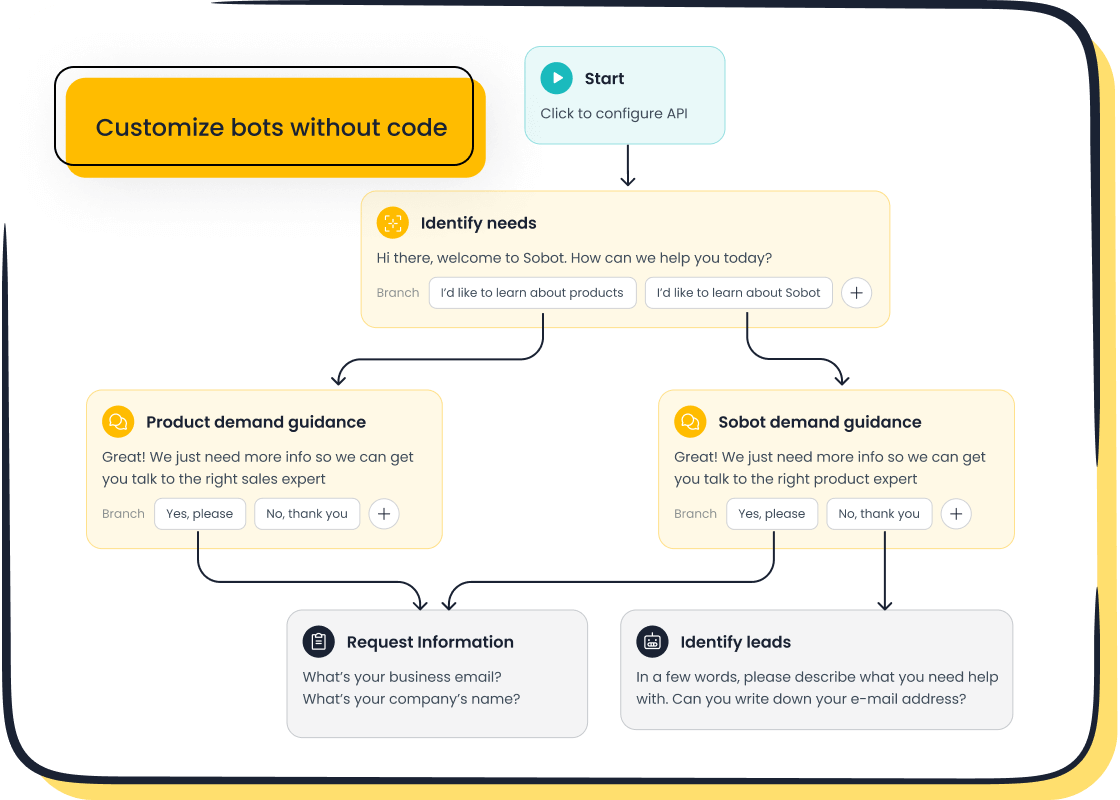
Next, you must decide how you will build your chatbot. Modern ai chatbot development does not always require coding skills. Many platforms offer user-friendly tools for building an ai chatbot.
Tip: No-code platforms offer one of the key benefits of enterprise chatbot development. For example, Sobot features a point-and-click interface. This makes building an ai chatbot easy for non-technical teams, speeding up deployment.
This approach empowers your business users to create and manage the chatbot directly. It reduces reliance on IT departments for every small change.
Evaluating Enterprise Chatbots Platforms
Finally, you must evaluate platforms to find the best fit for your enterprise. A powerful platform provides the tools you need to scale and succeed. When you review enterprise chatbots, look for essential features that support your business goals.
Your ideal platform should offer:
- Omnichannel Support: Your chatbot must connect with customers on their preferred channels, like WhatsApp, SMS, and social media.
- Multilingual Capabilities: A global enterprise needs a chatbot that can communicate in multiple languages to serve a diverse audience.
- Scalability: The platform must handle growing conversation volumes without a drop in performance.
- Integration Capabilities: Seamless connection to your core business systems, like CRM and helpdesk software, is critical for a unified customer view.
Choosing a robust platform with these features ensures your AI chatbot investment delivers long-term value.
Step 3: Design an Effective Conversation Flow
A well-designed conversation flow is the heart of a successful enterprise chatbot. It guides users to their goals efficiently and creates a positive experience. This step involves mapping the user's path, giving your chatbot a personality, and planning for situations where a human needs to step in.
Map the Complete User Journey
First, you need to map the entire user journey. Think of this as creating a blueprint for your chatbot. You must understand what your customers want to achieve and the steps they take. To do this effectively, you should interview customers and involve your internal teams. This helps you see the full picture of their needs and pain points.
A good journey map for your chatbot should:
- Visualize the path: Create diagrams that show each stage of the user's interaction.
- Identify key steps: Pinpoint the actions users take, their emotions, and potential problems.
- Find opportunities: Use the map to discover where the chatbot can improve the experience and boost user engagement.
This process ensures your conversational ai design is based on real user needs, leading to better engagement.
Script the Bot's Dialogue and Personality
Next, you will write the chatbot's script and define its personality. Your chatbot should reflect your brand's voice. Is your brand helpful and professional, or fun and casual? Defining a clear persona ensures every interaction is consistent. Create a guide that outlines the chatbot's tone, vocabulary, and style. This helps maintain a unified voice. A consistent personality builds trust and improves user engagement. This is a key part of building a great enterprise chatbot.
Plan for Seamless Human Handoff
No chatbot can answer every question. You must plan for a smooth handoff to a human agent. This is critical for complex or sensitive customer queries. A seamless transition prevents user frustration. The chatbot should transfer the full conversation history to the agent. This way, the customer does not have to repeat themselves.
Common reasons for a handoff include:
- The user directly asks to speak with a person.
- The chatbot detects frustration in the user's language.
- The issue is complex, like a billing error or a high-value transaction.
A well-planned handoff process is a core feature of a strong conversational ai strategy. It combines the efficiency of a chatbot with the empathy of a human, providing the best of both worlds for your enterprise and boosting engagement. This approach ensures real-time personalization and effective problem resolution.
Step 4: Build and Train Your Enterprise AI Chatbot
You have your plan. Now it is time for the ai chatbot development process. This step turns your design into a functional enterprise ai chatbot. Building an ai chatbot involves using a platform, training it with good data, and connecting it to your business tools.
Build the Bot with Sobot
Building an ai chatbot does not require you to be a coder. You can use a no-code platform like Sobot to create powerful chatbots. The process is straightforward and empowers your team.
You can follow these key steps for building an ai chatbot:
- Define Purpose: First, you outline your chatbot's main goal and functions.
- Choose AI Model: Next, you select an AI model like ChatGPT that fits your needs.
- Add Knowledge: You upload your company data to ensure the chatbot gives accurate answers. Modern platforms like Sobot let you build a knowledge base from existing articles, PDFs, and text snippets.
- Design Interface: Then, you customize the look of your chatbot to match your brand.
- Deploy and Monitor: Finally, you launch the chatbot and use analytics to track its performance.
Train the AI with Quality Data
The intelligence of your enterprise ai chatbot depends on the data you use for training. Quality data helps the AI understand user questions and provide correct answers. Your enterprise has many valuable data sources for this.
Tip: Use a mix of data for the best results. Your chatbot learns from real-world use cases. This makes your conversational ai more effective.
Effective data sources for training chatbots include:
- Customer service logs and emails
- Transcriptions from phone calls
- Your company's unique brand documents
- FAQs and product details from your website
Integrate with Core Business Systems
A standalone chatbot has limited power. You must connect your chatbot to your core business systems. This ai chatbot integration creates a seamless experience for both customers and your team. The right integration capabilities allow your chatbot to perform actions, not just answer questions. This is a key part of successful ai chatbot development for any enterprise.
For example, integration allows your chatbot for enterprises to:
- Create a support ticket in your helpdesk software (ticketing system).
- Update customer information in your CRM.
- Check order status on your e-commerce platform.
This level of integration turns your chatbot into a truly valuable asset.
Step 5: Test the Chatbot Implementation
After building your chatbot, you must test it thoroughly before launch. A rigorous testing phase ensures your chatbot works correctly and provides a great user experience. This step is crucial for a successful implementation and helps you find and fix problems early.
Key Steps for Successful Implementation
You should follow a structured testing plan. This plan covers different types of tests to check every part of your chatbot. Following the best practices for implementing ai chatbots ensures you cover all your bases.
Your testing process should include:
- General Testing: You check basic functions like greetings and simple answers. This prevents users from having a bad first impression.
- Domain-Specific Testing: You test how the chatbot understands questions about your products or services.
- Limit Testing: You see how the chatbot handles strange or irrelevant questions. It should respond gracefully without breaking.
- Manual Testing: You have real people test the chatbot to find issues that automated tests might miss.
Conduct User Acceptance Testing
User Acceptance Testing (UAT) is where you let actual users interact with your chatbot. This is a critical step for a successful ai chatbot integration. It confirms that the chatbot meets the needs of your target audience in real-world scenarios.
UAT helps you evaluate the conversational flow, user interface, and overall ease of use. The goal is to ensure a seamless and enjoyable experience for every user.
During UAT, you should focus on key areas like functional performance, user experience, and the chatbot's integration with other systems. This feedback helps you refine the chatbot before its official release.
Verify Security and Data Compliance
For any enterprise, security is not optional. Your chatbot will handle user data, so you must protect it. Verifying security and data compliance builds trust with your customers. Your platform's integration capabilities must support secure data handling. This is a vital part of the chatbot implementation for your enterprise.
You must comply with data protection laws like GDPR and CCPA.
| Aspect | GDPR (EU) | CCPA (California) |
|---|---|---|
| Scope | Applies to data of EU residents | Applies to data of California residents |
| User Rights | Right to access, correct, and delete data | Right to know, delete, and opt-out of data sale |
| Consent | Requires clear, opt-in consent | Requires opt-out consent for data sales |
To ensure compliance, you should:
- Be transparent about what data you collect.
- Get clear user consent before collecting data.
- Collect only the data you absolutely need.
- Store all user data securely with strong encryption.
Step 6: Deploy, Monitor, and Iterate
Your chatbot is built and tested. Now you begin the final and most important phase of your ai chatbot development. Launching your chatbot is not the end of the project. It is the beginning of a continuous cycle of improvement that drives long-term value for your enterprise.
Execute a Phased Rollout
You should not launch your chatbot to all users at once. A phased rollout, or a "crawl-walk-run" approach, is a much safer and more effective strategy. This method minimizes risk and allows you to make adjustments based on real-world feedback.
A successful implementation involves these steps:
- Start by addressing a single, clear business challenge.
- Launch the chatbot to a small, internal group or a specific customer segment.
- Gather feedback and demonstrate a return on investment before expanding its capabilities.
This gradual approach ensures your chatbot is ready for a full-scale launch.
Monitor Key Performance Metrics
Once your chatbot is live, you must track its performance against the KPIs you set in Step 1. Monitoring key metrics helps you understand what is working and where you need to improve user engagement. This data proves the value of your investment in ai chatbots.
Key metrics that demonstrate the value of your enterprise chatbots include:
- Resolution Rate: The percentage of queries your chatbot resolves without human help.
- User Satisfaction: How happy users are with their chatbot interaction, often measured with a quick survey.
- Cost Savings: The reduction in operational costs. For example, Sobot's AI chatbots can save an enterprise up to 50% on agent costs by handling routine queries 24/7.
Use Analytics for Continuous Improvement
The data you collect is essential for making your conversational ai smarter over time. Use analytics to identify common user questions, points of friction, and areas where the chatbot fails. This information guides your efforts for continuous improvement and boosts user engagement. A great chatbot evolves with your customers' needs.
For example, leading smart device innovator OPPO used Sobot to optimize its human-machine cooperation. By monitoring performance and using analytics to refine their conversational ai, they achieved incredible results:
- An 83% chatbot resolution rate
- A 57% increase in repurchase rate
This shows how a commitment to iteration transforms a good chatbot into a powerful tool for business growth. This ongoing process of ai chatbot development and integration ensures your ai solution delivers maximum impact.
You now have the six essential steps for a successful chatbot for enterprises implementation. This guide helps your enterprise build effective enterprise chatbots. Remember, a great chatbot is not a one-time project. It is a dynamic asset for your customer support. The future of enterprise chatbots depends on continuous improvement based on user feedback. This ongoing ai process boosts user engagement. Your enterprise ai chatbot evolves to meet customer needs, driving better engagement. These chatbots improve through constant ai analysis, which enhances engagement.
Ready to transform your business? Embark on Your Contact Journey. Explore a powerful, all-in-one solution like Sobot to elevate your customer service and drive growth.
FAQ
What is the main purpose of an enterprise AI chatbot?
An enterprise AI chatbot automates your customer interactions. It solves common questions on its own. The chatbot also assists your agents. This improves your team's productivity and overall efficiency.
How does a chatbot help you cut expenses?
A chatbot operates 24/7. It handles many customer queries without needing more agents. This continuous support can save your enterprise up to 50% on agent costs.
Do you need coding skills to set up a chatbot?
No, you do not need coding experience. Modern platforms like Sobot offer a point-and-click interface. You can design and launch your chatbot using simple, straightforward building blocks.
Can a chatbot for enterprises speak multiple languages?
Yes, it can. A powerful chatbot for enterprises is multilingual. It interacts with your global customers in their preferred language. This feature helps you provide a better user experience worldwide.
See Also
Selecting the Optimal Chatbot Software: A Comprehensive Guide for Your Business
Effortlessly Integrate Website Chatbot Examples for Enhanced User Engagement
Simple Steps to Seamlessly Integrate a Chatbot Onto Your Website
Effortless Creation: Build a Powerful Chatbot for Your Website Today
Crafting a Chatbot: Your Blueprint for Unlocking Website Success