How to Set Up Proactive Messages in Your CRM

Your customers face frustrating customer service. In fact, 80% of customers regularly encounter poor service. You can change this narrative. Proactive communication helps you anticipate needs. This improves the customer experience before problems start. Modern customer expectations demand this shift.
More than 83% of customers want companies to contact them proactively for support.
This guide provides a practical path to proactive customer service. You will learn to set up automated responses and proactive messages. Using a platform like the Sobot call center with Sobot AI makes this process simple. Let's begin your journey toward better proactive communication with your customers.
Identify Scenarios for Proactive Messages
Effective proactive customer service starts with identifying the right moments to connect with your customers. You can anticipate needs and guide users by sending the right message at the right time. This proactive communication meets modern customer expectations and builds stronger relationships. Here are four key scenarios where proactive messages make a big impact.
Welcome and Onboarding Sequences
Your first interaction sets the tone for the entire customer journey. Welcome emails have high open rates, giving you a great chance to make a good impression. You can use a sequence of proactive messages to guide new customers.
- Email 1: The Welcome. Send an email immediately after signup. Share login details and first steps.
- Email 2: The First Action. If a user hasn't taken a key action within two days, send a gentle nudge.
- Email 3: The Social Proof. Share case studies to show how other customers find success with your service.
Feature Adoption and Usage Nudges
Your customers may not discover all your product's valuable features on their own. You can use proactive messages to highlight new or underused tools. In-app pop-ups or short product tours can guide users through new functionality. This helps customers get more value from your service and boosts their engagement.
Potential Problem and Payment Alerts
Payment failures are a common reason for losing customers. Instead of waiting for a subscription to lapse, you can send a proactive alert.
Offer a short grace period after a failed payment. This gives customers time to fix the issue without losing access to their service. Send a friendly reminder with a direct link to update their payment information.
This simple step in proactive customer service can significantly reduce churn.
Post-Interaction Feedback Requests
How do you know if your customer service is effective? You ask. Sending automated feedback requests after a support interaction gives you valuable insights. A study by the Aberdeen Group found that businesses using real-time customer feedback are 33% more likely to retain customers. This customer feedback helps you quickly identify problems, improve your processes, and increase engagement.
Choose the Right Tools for Proactive Customer Service
Identifying the right moments for proactive communication is the first step. Now, you need the right tools to automate and deliver these messages effectively. The right technology empowers your team to provide excellent proactive customer service without manual effort.
The Role of AI Chatbots
AI chatbots are your front line for proactive engagement. They can start conversations with customers browsing your website, offer help, and guide them toward a purchase. A great chatbot does more than just answer questions. It actively creates a better experience for your customers.
The Sobot AI Chatbot is a powerful tool built for this purpose. It uses proactive push messaging to send timely offers and helpful tips. This feature helps you engage customers, boost conversions, and provide instant support.

You can use a chatbot to:
- Promote new products or discounts based on a user's activity.
- Personalize interactions by using customer data and past behavior.
- Offer assistance before a customer even has to ask.
Unifying Channels with an Omnichannel Platform
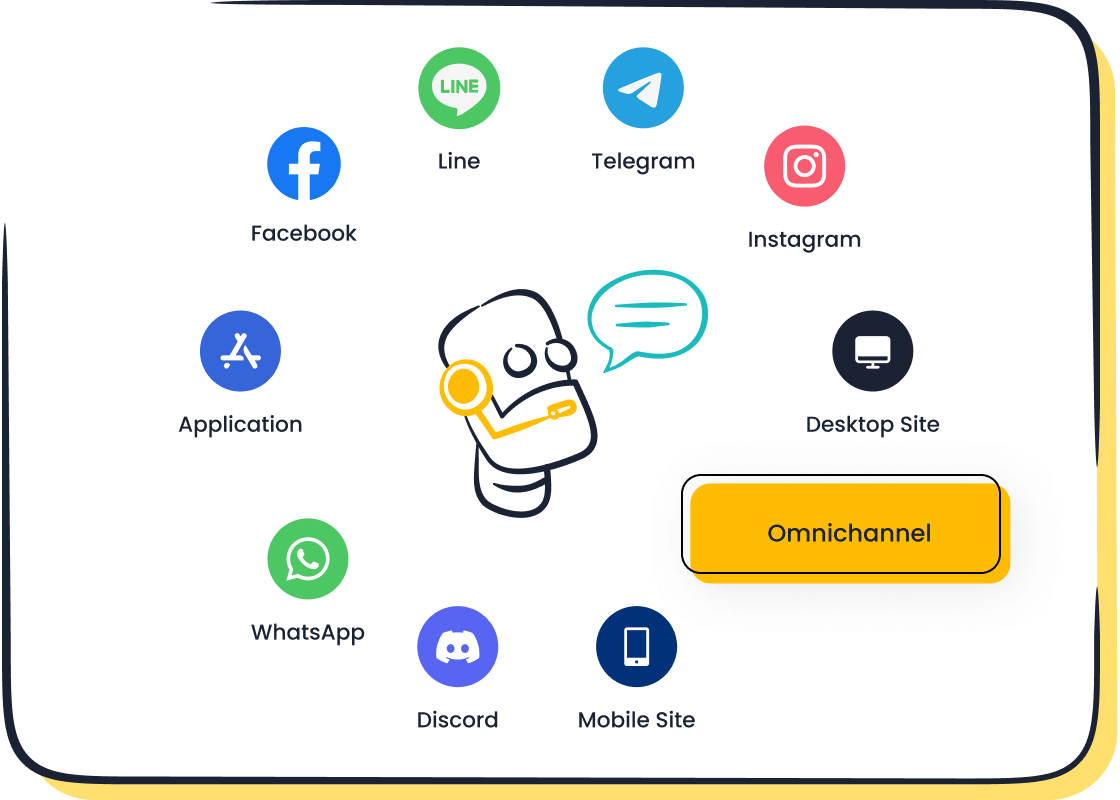
Your customers connect with you on many platforms, from WhatsApp and SMS to email. A scattered approach makes proactive communication difficult. An omnichannel platform unifies all your customer service channels into a single view. This ensures your proactive messages reach customers on their preferred channel.
Sobot's Omnichannel Solution brings all conversations together. This gives your team full context on every customer. You can deliver a consistent and personal service, no matter how a customer contacts you. This unified view is essential for effective proactive customer service.
Leveraging a No-Code Workflow Builder
You do not need to be a developer to build powerful automations. Modern platforms include no-code workflow builders. These tools use simple drag-and-drop interfaces. This empowers your team to design and launch proactive messages quickly.
With a point-and-click interface like Sobot's, you can easily set up automated workflows. You can create triggers for payment reminders or onboarding emails without writing a single line of code. This democratizes technology, allowing the people who know your customers best to build the solutions.
Define Data Triggers and Build Message Templates
Once you have the right tools, you can define what triggers your proactive messages. You will use customer data to send the right message at the right time. This process turns your customer service strategy into an automated, helpful action.
Using Contact Properties and Behavioral Events
Your CRM contains valuable information about your customers. You can use this data to start proactive communication. Behavioral events show you what customers are doing. Contact properties tell you who they are. You can set up triggers based on these actions.
- Track when a user spends a long time on your pricing page.
- Identify when a new user completes an onboarding step.
- Notice when customers have not used your service in 30 days.
These events signal an opportunity to reach out and offer help.
Leveraging Subscription and Purchase Data
Your customers' transaction history is a goldmine for proactive customer service. This data helps you send relevant offers and reminders. You can use subscription data to send a friendly email a week before a renewal date. This gives customers time to update their payment information. You can also analyze purchase history to provide personalized recommendations. If a customer buys a camera, you can suggest a compatible lens or camera bag. This adds value and improves the customer experience.
Crafting Personalized, Action-Oriented Copy
The content of your message matters. Your copy should be clear, personal, and guide the customer toward an action. Good personalization makes customers feel understood. Focus on how your product or service helps them.
Shift your focus from features to benefits. Instead of saying "Our battery lasts 24 hours," try "Enjoy uninterrupted use all day long."
This benefit-driven approach shows customers the value you offer. It helps them see why they should take the next step.
Using Personalization Tokens for Relevance
True personalization goes beyond using a customer's first name. Modern platforms allow you to use many data points to make your proactive messages highly relevant. These details show your customers you are paying attention to their individual journey. You can use tokens for:
- Company Name
- Job Title
- Last Purchase Date
- Subscription Plan Level
Using these details makes your proactive communication feel like a one-to-one conversation, which builds trust and meets modern customer expectations.
Configure Automation Workflows in Your Platform
You have your scenarios, tools, and message templates ready. Now it is time to bring your proactive communication strategy to life. You will build automated workflows inside your platform. This process connects your triggers, data, and messages into a seamless system that runs on its own. Let's walk through the steps to configure these powerful automations.
Selecting Triggers and Enrollment Criteria
The first step in building a workflow is choosing what starts it. This is your trigger. A trigger is a specific event that enrolls a customer into your automated sequence. Your CRM or contact center platform monitors for these events in real time.
Common triggers for proactive customer service include:
- A new lead enters your CRM system.
- A customer leaves an item in their shopping cart.
- A user visits your website or downloads content.
- A customer's purchase data signals an upsell opportunity.
- A support ticket is closed, creating a chance for a feedback request.
After you select a trigger, you define the enrollment criteria. This step ensures you only send messages to the right customers. You can create specific audience segments using the data you have. For example, you might want to target customers based on their subscription plan or purchase history. This dynamic targeting makes your proactive communication highly relevant. You can align these segments with the customer journey. A new subscriber needs a welcome message, while a loyal customer might appreciate an exclusive offer.
Setting Logic with If/Then Branches
Your customers are not all the same. Your workflows should not treat them that way. If/then branches add logic to your automation. This logic creates different paths for customers based on their properties or actions. It allows you to tailor the experience for each person.
Imagine a new user signs up. Your workflow can check a contact property, like their job title.
- If the user is a "Manager," you can send them a case study about team efficiency.
- Then, if the user is a "Developer," you can send them technical documentation instead.
This branching logic can become very sophisticated. You can use AND/OR conditions to create precise paths. For example, you can send a special offer to customers who live in a specific city AND have purchased from you more than three times. You can also use AI-powered engines to analyze conversations and predict customer needs. This helps you create a truly dynamic and responsive service experience.
Adding Time Delays for Optimal Timing
Timing is everything in proactive communication. Sending too many messages too quickly can annoy your customers. Sending them too slowly can cause them to lose interest. Time delays help you control the pace of your communication. You can set waits between messages to give customers time to read and act.
For a welcome sequence, sending one email per day is a good rule. This keeps the momentum going without overwhelming the new user. For other workflows, you might add a delay to wait for a specific action. For example, you can wait three days after sending a feature announcement. If the customer has not used the feature by then, you can send a follow-up tip.
“A great welcome series is an elongated tease. It tells you what it’ll do to you, for you, and how it’ll make you feel at the end. Then it drops reminders of what’s coming... every email delivers value—but it holds back on giving all the good stuff at once.” — Justin Blackman, copywriter
Well-timed delays prevent message fatigue. They ensure your messages arrive at the right moment, increasing engagement and building a better relationship with your customers.
Testing and Activating Your Workflow
Before you activate your workflow for all customers, you must test it thoroughly. Testing helps you find and fix any problems. A broken link or incorrect message can create a poor experience. A careful testing process ensures your automation works exactly as you planned.
You can follow a simple, five-step process for testing:
- Plan: Define what you want to test. Choose a small, internal group to receive the test messages.
- Design: Create test contacts with different properties. This helps you check each if/then branch in your workflow.
- Execute: Run your test contacts through the workflow manually. Check each email, message, and time delay.
- Analyze: Review the results. Did the workflow perform as expected? Did the messages look correct? Log any issues you find.
- Optimize: Fix any problems you discovered. Refine your message copy or adjust your time delays based on your findings.
Once you are confident that your workflow is flawless, you can activate it. Your proactive customer service engine is now running, helping you build stronger relationships and provide an excellent service.
Measure Impact to Boost Retention and Customer Loyalty
Launching your proactive communication workflows is a great start. You must now measure their impact. Data shows you what works and what does not. This information helps you refine your strategy, prove the value of proactive customer service, and improve customer retention.
Tracking Open and Click-Through Rates
You should first track basic engagement metrics. Open rates and click-through rates are your initial indicators of success. A high open rate means your subject lines are compelling. A strong click-through rate shows your message content is relevant and encourages action. These numbers give you quick customer feedback on your copy and timing.
Monitoring Ticket Deflection and Self-Service Rates
A key goal of proactive customer service is empowering customers. You want them to find answers without contacting your support team. You can measure this with the ticket deflection rate. This metric tracks how many customers solve issues on their own. A lower number of support tickets shows your proactive efforts are working. An increase in your self-service resolution rate is another great sign. It proves that your automated support helps customers succeed independently.
Using A/B Testing to Optimize Messages
You can always improve your results. A/B testing helps you find the best approach for your customers. You can test different parts of your messages to see what performs better.
- Call-to-Action (CTA): Test different phrases like "Buy Now" versus "Add to Cart."
- Tone of Voice: Compare a formal tone against a casual one.
- Personalization: See if adding a customer's name improves engagement.
- Emoji Usage: Test if messages with emojis get more clicks.
This process provides valuable customer feedback and helps you optimize for better performance.
Linking Proactive Service to Customer Retention
Ultimately, your goal is to build lasting relationships. Strong proactive communication leads to enhanced customer retention and increased customer loyalty. For example, the financial service platform Opay used Sobot’s omnichannel solution to transform its customer service. By proactively engaging its customers, Opay increased its customer satisfaction rate from 60% to 90%. This focus on a better service experience also boosted conversion rates by 17%, proving that proactive care directly supports business growth and customer loyalty. This success demonstrates a clear link between proactive communication and long-term retention.
You have learned the key steps to improve your customer service. You can identify scenarios, choose tools like Sobot, build workflows, and measure results. This process transforms your service from reactive to preventative. It builds stronger customer loyalty and makes your team more efficient. Proactive care shows your customers you value them, which boosts customer loyalty. Start your journey today. See how Sobot's AI Chatbot can help you connect with your customers before they even have to ask.
FAQ
Why is proactive service important?
Proactive service shows customers you value their time. It builds trust and increases loyalty. This better service helps you solve problems before they happen. It creates a positive experience for your customers.
What tools do I need for proactive service?
You need tools like an AI chatbot and an omnichannel platform. These tools help you automate your customer service. They ensure you reach customers on their preferred channels, improving your overall service.
How can I personalize messages for my customers?
You can use data from your CRM to personalize messages. This data tells you about your customers' behavior and purchase history. This information helps you create a relevant and helpful service experience.
When should I send proactive messages to customers?
You should send messages at key moments in the customer journey. These include welcoming new customers, sharing feature tips, or sending payment alerts. This timely service helps guide customers effectively.
See Also
A Comprehensive Guide to Implementing Omnichannel Contact Center Solutions Effectively
Unlock Superior Customer Support: Mastering the Art of Live Chat
Achieve Depop Live Chat Success: Essential Quick Tips and Strategies
Setting Up Batch Messaging on WhatsApp Business: A Step-by-Step Guide
Effectively Managing Live Chat Agents: A Comprehensive Guide for Success