Your Guide to Answering Complaint Email Sample Professionally


You answer a complaint email professionally by showing empathy, using clear language, and responding promptly. Begin with a personalized greeting and acknowledge the concern. Studies show that the structure of your complaint email matters. Address customers by name, avoid jargon, and reply within 24 hours for best results. The table below highlights key elements:
| Key Element | Description |
|---|---|
| Personalization | Use the person's name to build trust. |
| Clarity | Write simply and politely. |
| Timeliness | Respond quickly—customers expect replies within hours. |
Using empathy in every response increases satisfaction. Sobot and Sobot AI help you manage these tasks efficiently. If you wonder how to answer complaint email sample cases, Sobot call center tools support you every step.
Complaint Email Basics

What Is a Complaint Email?
A complaint email is a message you send when you want to share a problem or dissatisfaction with a product, service, or experience. You use a complaint email to let a company know what went wrong and what you expect them to do. Every complaint email follows a clear structure. You start by addressing the recipient. You outline the basic information, such as your order number or account details. You summarize your experience and describe what you want as a result. You may include attachments, like receipts or screenshots. You sign off professionally and check your tone to make sure it is respectful. You edit and proofread your complaint email before sending it.
When you write a complaint email, you want the company to understand your issue. You want them to respond quickly and solve your problem. Different industries handle complaint email messages in their own ways. Some companies monitor feedback loops to track complaints. Others make it easy for you to unsubscribe or clean up their email lists. Many businesses analyze why complaint email messages happen and adjust their strategies. They follow rules like CAN-SPAM and GDPR. Responsive customer service teams address complaint email messages promptly. Companies also segment and personalize complaint email responses to fit your needs. They educate subscribers about what to expect from their complaint email process.
Tip: Always keep your complaint email clear and polite. This helps the company understand your issue and respond faster.
Why Responding Matters
When you receive a complaint email, your response can shape how customers feel about your business. Timely replies to complaint email messages show that you care about your customers. Fast responses to complaint email messages increase customer retention rates. Quick replies to complaint email messages strengthen customer loyalty. Delays in answering complaint email messages can hurt your brand and reduce revenue. Fast response times to complaint email messages encourage repeat purchases.
| Evidence Description | Impact on Customer Retention |
|---|---|
| Timely responses foster positive customer experiences | Increases customer retention rates |
| Quick responses demonstrate commitment to customer needs | Strengthens customer loyalty |
| Delays can hurt brand perception and revenue | Negatively affects retention |
| Fast response times improve customer retention | Encourages repeat purchases |
You need to treat every complaint email as important. Timely support for complaint email messages is crucial for keeping customers. Slow response times to complaint email messages can lead to customer churn. Fast responses to complaint email messages enhance loyalty and help you gain new customers. The price of customer retention is timely support for complaint email messages. Slow response times to complaint email messages leave a bad impression. Fast response times to complaint email messages can improve customer retention.
Complaint Response Elements
Acknowledge and Empathize
When you start a complaint response, you need to show acknowledgment and empathy. You let the customer know you received their message and understand their feelings. This step builds trust and helps you create a positive relationship. Customers want to feel heard. Empathy in your complaint response can prevent frustration and reduce customer churn. You can use phrases like, "Thank you for reaching out. I understand how this situation made you feel."
| Benefit of Empathy in Customer Service | Description |
|---|---|
| Builds Trust | Empathy helps create a positive relationship with customers, making them feel heard and understood, which increases satisfaction. |
| Diffuses Difficult Situations | Acknowledging emotions can prevent escalation of complaints and create a more positive interaction. |
| Increases Customer Satisfaction | Customers feel listened to, leading to positive word-of-mouth and loyalty. |
| Reduces Customer Churn | Personalized solutions address concerns effectively, preventing frustration and loss of customers. |
Empathy creates emotional connections that influence loyalty and repeat purchases. Customers often forgive mistakes if you address their concerns with genuine acknowledgment.
Address the Issue
You need to address the issue clearly in your complaint response. Start by restating the problem so the customer knows you understand. Use a clear subject line and attach any relevant documents or images. State your desired outcome. Keep your tone polite. This approach makes your complaint handling more effective and helps you move toward complaint resolution.
- Use a clear subject line with key details.
- Attach proof, such as documents or images.
- State your desired outcome.
- Maintain a polite tone.
A strong complaint response shows you listened and understood the customer's issue. This step is vital for effective complaint response and successful complaint handling.
Offer Solutions
You must offer solutions in your complaint response. Customers want to know how you plan to fix the problem. You can suggest a refund, replacement, or another action that resolves the issue. Offering solutions quickly shows you value the customer's time and helps with complaint resolution.
| Strategy | Description |
|---|---|
| Prompt Acknowledgment | Respond to complaints as quickly as possible to show customers their concerns are valued. |
| Active Listening | Listen carefully to understand the customer's issue fully. |
| Empathy | Acknowledge the customer's feelings and validate their experience. |
| Sincere Apology | Apologize for the inconvenience to rebuild trust and show responsibility. |
| Clear Communication | Ensure that the response is straightforward and addresses the customer's concerns directly. |
A quick and clear complaint response with solutions increases satisfaction. You improve your complaint handling and build trust.
Apologize and Close
End your complaint response with a sincere apology. You show responsibility and integrity. A formal apology helps you rebuild trust and maintain long-term relationships. Personalizing your apology can increase customer loyalty. Companies report that personalization increases loyalty by 98%. Customers spend more when they feel valued.
| Key Aspect | Explanation |
|---|---|
| Transparency and Integrity | Taking responsibility for errors shows customers that their concerns are heard and taken seriously, which helps build trust. |
| Instilling Confidence | Acknowledging the mistake’s impact and assuring customers that steps are being taken to prevent similar occurrences helps maintain long-term relationships. |
| Mitigating Reputation Damage | Addressing issues through a well-crafted apology email demonstrates dedication to customer satisfaction and can prevent negative publicity. |
Finish your complaint response by thanking the customer for their feedback. Let them know you appreciate their patience. This approach leads to effective complaint response and successful complaint resolution.
How to Answer Complaint Email Sample
Step-by-Step Process
Learning how to answer complaint email sample cases helps you build trust and loyalty with your customers. You need a clear step-by-step guide to respond professionally and efficiently. When you receive a complaint, you must act quickly and thoughtfully. Here is a step-by-step guide you can follow every time you send a complaint email:
-
Read the Message Carefully
You start by reading the complaint email from the customer. Pay attention to details like order numbers, dates, and specific issues. Look for emotional clues in the message. Customers often express frustration or disappointment. You need to understand their feelings before you reply. -
Acknowledge the Concern
You reply to the customer and thank them for reaching out. You let them know you received their complaint. Use their name to personalize your response. For example, you can write, "Dear Alex, thank you for bringing this issue to our attention." Studies show that responses missing this acknowledgment are less effective at rebuilding trust. -
Apologize Sincerely
You say sorry for the inconvenience. A sincere apology shows you care about the customer’s experience. You can write, "We sincerely apologize for the trouble this has caused you." Customers want to feel heard and respected. -
Provide an Explanation
You explain what happened. You share details about the issue and why it occurred. Keep your explanation simple and honest. Avoid technical jargon. For example, "We found that your order was delayed due to a system error." -
Detail the Solution
You describe how you plan to fix the problem. Offer a solution such as a refund, replacement, or discount. You can say, "We will send you a replacement product at no extra cost." Quick solutions show you value the customer’s time. -
Outline Follow-Up Steps
You tell the customer what will happen next. You explain when they can expect a resolution. You offer to follow up if needed. For example, "We will update you within 24 hours once your replacement ships." This step helps you maintain transparency.
Tip: Always use empathy and clear language when you send a complaint email. Customers appreciate honest and caring responses.
Here is a summary of the five key elements you need in every complaint response:
| Element | Why It Matters |
|---|---|
| Acknowledge the concern | Shows you received and understood the complaint |
| Apologize sincerely | Builds trust and shows responsibility |
| Provide an explanation | Helps customers understand the issue |
| Detail the solution | Offers a clear path to resolution |
| Outline follow-up steps | Keeps customers informed and reassured |
If you miss any of these elements, your response may not rebuild customer trust. When you send a complaint email, always include each step.
Example: Step-by-Step Guide in Action
Imagine you work for a retail company. A customer sends a complaint email about a damaged product. You follow the step-by-step guide:
- You read the complaint email and note the order number.
- You reply, "Dear Jamie, thank you for contacting us about your damaged item."
- You apologize, "We are sorry for the inconvenience."
- You explain, "The damage occurred during shipping."
- You offer a solution, "We will send a replacement right away."
- You outline follow-up steps, "You will receive a tracking number within 24 hours."
This approach helps you resolve the issue quickly and professionally.
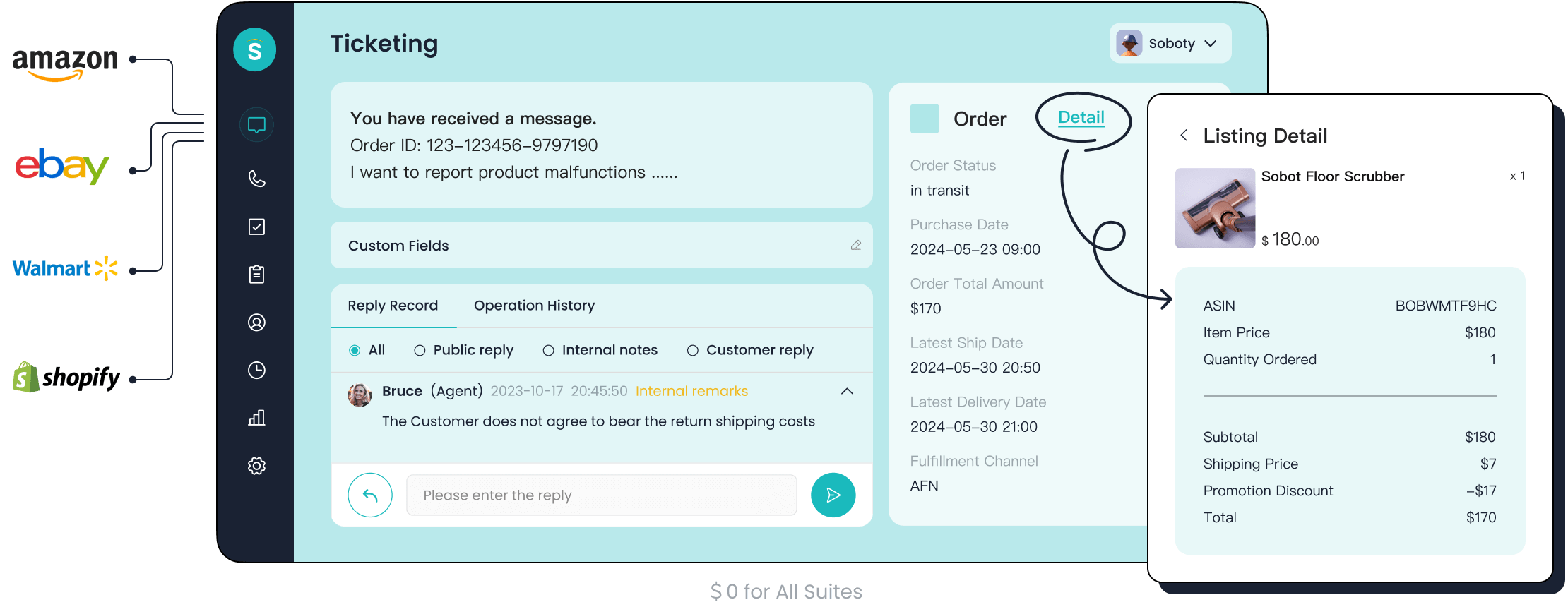
Using Sobot Ticketing System
You can make your complaint response process even more efficient by using the Sobot Ticketing System. Sobot provides an all-in-one platform that helps you manage, track, and resolve customer complaints across multiple channels. When you learn how to answer complaint email sample cases, Sobot’s tools give you a clear advantage.
How Sobot Streamlines Your Complaint Response
Sobot automates many steps in the complaint response process. You save time and improve accuracy. Here is how Sobot helps you:
-
Automation Rules
Sobot uses automation rules to assign tickets to the right agent. You do not need to sort emails manually. This feature saves time and ensures every complaint gets a quick response. -
Centralized Communication
Sobot brings all customer interactions into one workspace. You can track emails, chats, and calls in real time. You see all the details you need to answer complaints efficiently. -
Canned Responses
Sobot offers pre-written replies for common issues. You can use these templates to send a complaint email quickly. You customize the message to fit each customer’s situation. -
SLA Management
Sobot lets you set response and resolution times for each ticket. You make sure you reply within the promised time. This feature helps you meet customer expectations and avoid delays. -
Reporting Dashboards
Sobot provides dashboards to track trends and measure productivity. You see how many complaints you resolved and how fast you responded. You use this data to improve your process.
| Feature | Impact on Complaint Response Process |
|---|---|
| Centralized Communication | Enables tracking and management of customer interactions. |
| Automated Workflows | Reduces manual assignment and prioritization of tickets. |
| Integration Capabilities | Enhances connectivity with CRM and other management systems. |
You can also use Sobot’s AI-powered chatbots to handle simple complaints. Chatbots answer questions and resolve issues instantly. Human agents focus on complex cases. This hybrid approach increases efficiency.
Studies show that automated systems like Sobot provide quicker response times. You can handle a larger volume of inquiries at once. AI-powered chatbots lead to a 52% faster ticket resolution rate compared to manual processes. Faster resolution times contribute to higher customer satisfaction rates.
Sobot’s ticketing system helps you achieve:
- 48% increase in reception efficiency.
- 41% reduction in average handle time.
- 54% improvement in first-contact resolution rate.
You can integrate Sobot with your CRM, e-commerce platforms, and other business systems. This integration gives you a complete view of each customer’s history. You answer complaints with more context and accuracy.
Sobot in Action: Complaint Email Response Example
Suppose you work for a gaming company. A player sends a complaint email about a technical issue. You use Sobot to manage the process:
- Sobot automatically creates a ticket from the complaint email.
- The system assigns the ticket to the right support agent.
- You use a canned response to acknowledge the issue.
- You investigate the problem using customer data in Sobot.
- You reply with a solution and outline follow-up steps.
- Sobot tracks the ticket until you resolve it.
This process helps you answer complaint email sample cases quickly and professionally.
Sample Complaint Response Email
Here is a sample email you can use when you send a complaint email reply. You can customize it for your business.
Subject: We Have Received Your Complaint – [Order/Case Number]

Dear [Customer Name],

Thank you for bringing this issue to our attention. We understand how frustrating this situation must be for you, and we sincerely apologize for the inconvenience.

After reviewing your complaint, we found that [brief explanation of the issue]. To resolve this, we will [describe the solution, such as sending a replacement, offering a refund, or providing a discount].

We will update you within [time frame] once your issue is resolved. If you have any further questions, please reply to this email or contact us through our support channels.

Thank you for your patience and understanding.

Best regards,
[Your Name]
[Your Company]
| Key Feature | Example |
|---|---|
| Acknowledging the Issue | Dear [Customer Name], Thank you for bringing this issue to our attention. We understand how frustrated you must feel... |
| Apologizing for the Inconvenience | Dear [Customer Name], We sincerely apologize for the inconvenience this situation has caused you... |
| Requesting Additional Information | Dear [Customer Name], Thank you for contacting us regarding [issue]. To better understand the situation... |
| Providing a Solution | Dear [Customer Name], After carefully reviewing your concern, we have identified a solution... |
| Offering Compensation or Discount | Dear [Customer Name], We understand that the experience you had with our [product/service] did not meet your expectations... |
| Escalating to a Supervisor | Dear [Customer Name], Thank you for your patience and understanding as we work to resolve your concern... |
| Explaining Policies or Terms | Dear [Customer Name], Thank you for your email regarding [issue]. We understand your frustration... |
| Requesting Patience and Understanding | Dear [Customer Name], Thank you for your email and for bringing this issue to our attention... |
| Offering a Refund or Exchange | Dear [Customer Name], We are truly sorry to hear that our [product/service] did not meet your expectations... |
| Suggesting an Alternative Solution | Dear [Customer Name], Thank you for sharing your concerns with us. While we understand your frustration... |
| Acknowledging and Addressing Multiple Issues | Dear [Customer Name], Thank you for taking the time to outline your concerns in detail... |
| Expressing Gratitude for Feedback | Dear [Customer Name], Thank you for taking the time to provide us with your valuable feedback... |
You can use this template to answer complaint email sample cases in any industry. Personalize each response to fit the customer’s situation.
Customizable Complaint Response Template
You can copy and adjust this template for your own use:
Subject: [Your Subject Here]

Dear [Customer Name],

Thank you for contacting us about [issue]. We apologize for any inconvenience this may have caused.

After reviewing your complaint, we found that [brief explanation]. To resolve this, we will [solution].

We will follow up with you by [date/time]. If you need more help, please reply to this email.

Thank you for your feedback.

Best regards,
[Your Name]
[Your Company]
Note: Always personalize your complaint response. Use the customer’s name and details from their complaint email. This approach helps you build trust and improve satisfaction.
Why Sobot Is Your Best Guide
When you want to know how to answer complaint email sample cases, Sobot gives you the tools and support you need. Sobot’s ticketing system, chatbot, live chat, and voice solutions work together to help you manage complaints across all channels. You can automate routine tasks, track every interaction, and provide fast, accurate responses. Sobot’s WhatsApp Business API lets you communicate with customers on their favorite messaging app. You improve your complaint handling and boost customer satisfaction.
Sobot’s platform supports over 10,000 brands in industries like retail, finance, gaming, and education. Companies like OPPO, Samsung, and Luckin Coffee trust Sobot to manage millions of customer interactions every day. Sobot’s system stability reaches 99.99%, so you can rely on it for your business needs.
If you want a reliable guide for complaint management, Sobot is your answer. You can learn how to answer complaint email sample cases with confidence. You follow the step-by-step guide, use Sobot’s tools, and send a complaint email that builds loyalty.
Alert: Always review your complaint responses before sending. Make sure you include all five key elements. Use Sobot’s templates and automation features to save time and improve quality.
Best Practices for Complaint Response
Tone and Language
You set the stage for successful complaint management by choosing the right tone and language. Most customers want a polite and respectful tone in every response. Studies show that 78% of people feel dissatisfied when you use an overly casual tone to deny a claim. At the same time, 65% dislike an overly formal tone when you grant a claim. You need to adapt your approach based on the customer's emotional state.
- Use a polite and respectful tone in all customer complaints.
- Adjust your language to match the seriousness of the issue.
- Avoid jargon and keep your words simple.
- Always explain the issue clearly and directly.
You build trust when you take responsibility and show empathy. This approach helps you resolve customer complaints and maintain strong relationships.
Common Mistakes
Many businesses make mistakes in complaint management. You can avoid these errors by following a few simple steps:
- Be proactive with customer complaints before they grow.
- Always take responsibility, even if the problem is not your fault.
- Focus on restoring confidence by resolving issues quickly.
- Approach customer complaints as valuable feedback, not criticism.
- Use a structured response to explain the issue and identify your desired outcome.
- Offer actionable solutions and keep your message clear.
When you handle customer complaints with care, you turn negative experiences into loyalty. You must identify your desired outcome and communicate it clearly. Always take responsibility and use a polite and respectful tone to show you value the customer.
Sobot in Responding to Complaints
Sobot's omnichannel and ticketing solutions help you deliver high-quality complaint management. You can manage customer complaints from email, chat, or phone in one place. Sobot keeps the context of every conversation, so you never lose track of details.
| Feature | Benefit |
|---|---|
| Omnichannel AI | Seamless experience across all channels |
| Integration of multiple platforms | Unified customer experience, context maintained |
| AI voicebot | Handles calls, improves response speed |
- Sobot lets you take responsibility for every customer complaint.
- You can explain the issue and track progress in real time.
- The system helps you identify your desired outcome and follow up efficiently.
You improve complaint management by using Sobot’s tools. You deliver a consistent, polite and respectful tone in every response. This approach ensures you resolve customer complaints quickly and professionally.
Customer Complaints in Action

OPPO Case Study
You can learn a lot from OPPO’s approach to customer satisfaction. OPPO, a global smart device brand, faced challenges with high volumes of customer inquiries and complaints. The company wanted to improve how it handled complaints and boost customer satisfaction. OPPO chose Sobot’s AI-powered solutions to help.
After OPPO started using Sobot’s AI chatbots, you could see big changes.
- OPPO saw a 20% increase in customer engagement.
- The chatbot resolution rate reached 83%. This means most complaints were solved quickly by the chatbot.
- OPPO’s churn rate dropped by 15%. More customers stayed loyal to the brand.
- The customer success team worked with the AI chatbots. This teamwork gave customers more personal support.
- OPPO’s positive feedback rate climbed to 94%. Customers felt happier with the service.
You can see that Sobot’s tools helped OPPO answer complaints faster. The system made it easier for agents to find information and respond with empathy. OPPO’s customers noticed the difference. They got answers quickly and felt valued. This led to higher customer satisfaction and better business results.
Lessons Learned
You can apply OPPO’s lessons to your own business. The table below shows common problems in customer service and what you can do to improve customer satisfaction:
| Frequent Customer Service Dispute Type | Description and Supporting Data |
|---|---|
| Long wait times to reach support agent | 52% of consumers say long waits are a major problem. Fast replies improve customer satisfaction. |
| Lack of agent knowledge or context | 50% of customers dislike repeating issues. Agents need the right tools to help quickly. |
| Difficulties navigating automated systems | 36% of customers prefer waiting for a human over confusing menus. Simple systems help customer satisfaction. |
| Unfriendly or impolite agents | Poor attitude lowers customer satisfaction. Training and support for agents matter. |
OPPO’s experience shows that accurate and fast handling of complaints leads to better customer satisfaction. When you use smart tools, you can answer questions faster and make customers feel heard. You should focus on giving agents the right information and making your systems easy to use. When you do this, you will see higher customer satisfaction and stronger loyalty.
Tip: Always listen to your customers and use technology to help your team. This will help you reach high levels of customer satisfaction like OPPO.
You improve customer experience by following these steps when answering complaint emails:
- Acknowledge the concern.
- Apologize for any inconvenience.
- Outline steps to resolve the issue.
- Use templates for consistency.
- Focus on satisfaction and clear communication.
Sobot's Ticketing System helps you organize templates, automate email routing, and track satisfaction. You boost customer experience with shared inboxes and analytics tools. OPPO increased satisfaction by using Sobot's chatbot templates, achieving an 83% resolution rate.
"Once organized, this complaint data drives a cycle of continuous improvement. Like scientists refining their methods based on results, businesses can use complaint patterns to find and fix root causes of customer frustration."
Explore Sobot's solutions to enhance customer experience and satisfaction. Contact Sobot for more information.
FAQ
What is the best way to handle customer complaints by email?
You should read each complaint carefully. Respond quickly and use a polite tone. Address the complaint directly. Offer a clear solution. Many companies use templates to answer complaints. This helps you keep responses consistent. Always thank the customer for sharing their complaint. Fast replies improve satisfaction with complaints.
How can I make my complaint response more effective?
Start by acknowledging the complaint. Show empathy for the customer's feelings. Explain the issue in simple words. Offer a solution that fits the complaint. Follow up to make sure the complaint is resolved. Using a ticketing system helps you track complaints and find the best solution for each complaint.
Why is it important to track complaints and their solutions?
Tracking complaints helps you spot patterns. You can see which complaints happen most often. This lets you improve your service. When you track each complaint and its solution, you can fix problems faster. Data shows that businesses who track complaints see higher customer satisfaction.
How does a ticketing system help with complaint management?
A ticketing system organizes complaints in one place. You can assign each complaint to the right person. The system reminds you about open complaints. It helps you follow up on each complaint and check if the solution worked. This makes handling complaints easier and more efficient.
What should I include in every complaint response?
Every complaint response should have these parts:
- Acknowledge the complaint.
- Apologize for the problem.
- Explain what happened.
- Offer a solution.
- Tell the customer what happens next.
This structure helps you resolve complaints and build trust. Customers feel heard when you answer their complaint this way.
See Also
Enhancing Customer Satisfaction Through Live Chat Strategies
Essential Principles of Quality Management Systems in Call Centers
Navigating Quality Assurance Software for Call Centers
Best Practices for Effective Quality Management in Call Centers
Selecting the Right Software for Social Media Customer Support

