Your 2026 Guide to Global Service Strategy

Unified global customer service strategies are the bedrock of brand trust. Your brand must deliver absolute consistency in its messaging.
Inconsistent messaging confuses your customers. This lack of consistency actively erodes your brand value and damages brand consistency.
You must build a cohesive brand experience. This strategy ensures every customer has a seamless experience with your branding. Sobot helps your brand achieve these strategies. This strengthens the customer experience, builds trust for your customers, and reinforces your brand promise and overall brand consistency. It is your brand on the line.
The High Cost of Inconsistency
Failing to deliver a uniform experience carries a steep price. Inconsistency in your service and messaging directly undermines your brand. It creates confusion and damages the very foundation of your global branding efforts. You must understand these costs to appreciate the value of brand consistency.
Erosion of Brand Trust
Your brand's value deteriorates when you offer inconsistent experiences. This inconsistency erodes the trust your customers place in your brand. When customers are unsure what level of service they will receive, they feel insecure. This uncertainty creates a "trust deficit," making them hesitate on future purchases. Your brand suffers when one regional office provides excellent service while another delivers a poor experience. This lack of consistency in your messaging shatters faith in your entire brand, even if one interaction was positive. True brand consistency means every touchpoint reinforces your promise.
Operational Inefficiencies
A fragmented global strategy creates significant internal problems. Your teams suffer when each market operates as a separate island. This approach leads to unsustainable overhead and poor brand consistency.
Treating each market as a separate operational challenge leads to regional fragmentation. This results in each market operating separate customer service systems, creating unsustainable operational overhead and inconsistent customer experiences.
You face major inefficiencies, including:
- Duplicate Costs: Separate knowledge bases and training programs for each region drain your resources.
- Knowledge Gaps: Different troubleshooting procedures and messaging across markets confuse your teams and customers.
- Wasted Time: Your regional teams spend countless hours translating and adapting content instead of focusing on the customer.
Lost Customer Loyalty
Inconsistent service actively drives your customers away. The link between a poor customer experience and lost loyalty is undeniable. Research shows that after just one bad experience, 32% of customers will abandon a brand they love. This number jumps dramatically after two or three negative interactions. When your brand lacks consistency, you risk losing nearly half of your loyal customers who encounter a negative interaction. This loss of loyalty directly impacts your bottom line, proving that brand consistency is not a luxury but a necessity for survival.
Pillars of Effective Global Customer Service Strategies

Building a resilient global brand requires more than just avoiding inconsistency. You must actively construct a framework that guarantees a uniform customer experience. This framework rests on three core pillars: centralized standards, unified technology, and global training. Mastering these strategies will empower your brand to deliver the consistency that customers demand.
Centralized Standards, Localized Execution
Your brand needs a single source of truth. Centralized brand guidelines are the foundation for global consistency. These guidelines define your brand's core messaging, tone of voice, and service principles. Every team member, regardless of location, must operate from the same playbook. This ensures your brand promise remains intact across every digital interaction and customer touchpoint.
However, a rigid, one-size-fits-all approach will fail. You must balance global consistency with local relevance. This is where localized execution comes in. Your central brand guidelines should empower regional teams, not restrict them.
A successful strategy allows regional teams to adapt messaging for cultural context. They can adjust examples and tone to reflect local expectations while upholding the core brand guidelines. This creates a customer-centric approach that feels both global in quality and local in understanding.
To achieve this balance, your knowledge management system must be flexible. It should support:
- Multi-language Content: Your platform must manage content across different languages. When you update a source article, it should automatically flag translations for review.
- Regional Variations: Central content should serve as a base. Regional teams can then layer on local information, like market-specific compliance rules or product availability.
- Cultural Adaptation: Beyond direct translation, your teams need the ability to adapt the messaging and tone to fit cultural norms, ensuring your brand resonates authentically with local customers.
These clear guidelines ensure every piece of communication reinforces your brand identity.
Unified Technology with Sobot
Fragmented technology makes consistency impossible. When your teams juggle multiple systems for calls, chats, and emails, you create data silos and disjointed customer journeys. You need a single, unified platform to power your global customer service strategies. This is where Sobot's Omnichannel Solution transforms your operations.
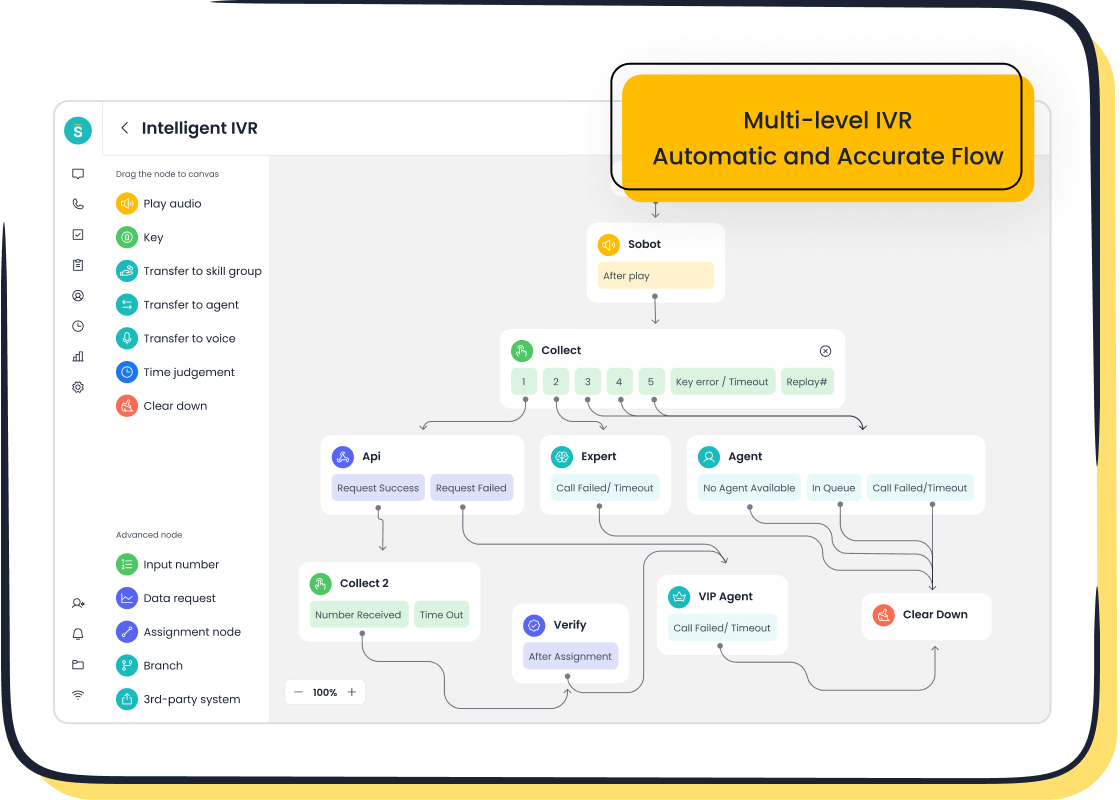
Sobot provides an all-in-one contact center that consolidates every digital channel into one AI-powered workspace. Your agents no longer need to switch between dashboards. This unified platform integrates all communication methods, giving you a true 360-degree view of the customer.
Key features that drive this unification include:
- A Unified Workspace: Sobot centralizes all customer interactions. It integrates your voice, live chat, and ticketing systems into a single interface. An agent can see a customer's entire history—from a WhatsApp message to a previous phone call—all in one place.
- Seamless Channel Integration: Sobot automatically converts interactions into tickets. A voicemail can become a ticket. A chat conversation can become a ticket. This ensures no customer request is lost and allows for intelligent routing to the right agent or department.
- AI-Powered Efficiency: Sobot's platform uses AI to streamline workflows. The AI-powered Chatbot and Voicebot can handle repetitive queries 24/7, freeing your agents to focus on complex issues. The AI Assistant provides agents with real-time suggestions, ensuring accurate and consistent messaging.

This digital unification is supported by Sobot's robust Voice/Call Center product. It offers Global Number Availability and Time Zone Support, which are critical for global branding. Your customers in different regions can contact local numbers but receive the same high-quality, consistent brand experience. This seamless experience reinforces trust in your brand.
Global Training and Knowledge
Technology alone is not enough. Your people are the voice of your brand. A global training program is essential for ensuring your messaging and service quality remain consistent worldwide. Your training must go beyond product knowledge. It needs to instill your core brand guidelines and values in every agent.
Your program should focus on developing key skills through practical, ongoing methods.
Tip: Move beyond lectures. Use interactive methods like role-playing, group discussions, and simulations. This helps employees practice handling difficult situations with empathy and calmness, turning brand guidelines into real-world actions.
A successful training strategy includes several key components:
- Define Clear Objectives: Start by identifying your business goals. Your training should directly support objectives like improving customer satisfaction or reducing resolution times.
- Emphasize Emotional Intelligence: Train your teams on active listening and understanding customer emotions. This is crucial for building a strong connection with customers.
- Provide Ongoing Feedback: Implement a system for continuous coaching. Managers should observe interactions and provide constructive feedback. Peer-to-peer feedback also promotes shared learning and reinforces your brand guidelines.
- Measure Your Outcomes: You must track the effectiveness of your training. Use metrics like Customer Satisfaction Score (CSAT), Net Promoter Score (NPS), and resolution times. Use customer feedback to refine your training and ensure it delivers real results.
By investing in global training, you equip your teams to be true brand ambassadors. They will deliver the consistent, high-quality communication that builds lasting customer loyalty and strengthens your branding. This commitment to training and development is one of the most powerful strategies you can deploy.
The Impact of Unification on Your Brand

Unifying your global service strategy does more than fix operational issues. It actively builds your brand's value and transforms the customer experience. When you create consistency across every digital touchpoint, you deliver a predictable and trustworthy brand promise that resonates worldwide. This consistency is the engine for sustainable growth and brand strength.
Achieving Predictable Brand Consistency
Predictable brand consistency is the ultimate outcome of a unified strategy. Your brand must deliver the same quality of service everywhere. Global technology leader Samsung achieved this by implementing Sobot's all-in-one solution. The brand unified all its diverse digital consultation channels—from its official website to phone calls and social media—into a single platform. This move eliminated data silos and streamlined agent workflows, creating powerful brand consistency. The result was a staggering 97% customer satisfaction rate. This proves that a unified digital strategy reinforces your brand promise at every turn. This level of consistency in your messaging builds deep customer trust and strengthens your brand's equity.
Strengthening the Global Customer Experience
A unified strategy creates a cohesive brand experience for your customers. It breaks down the walls between your departments, ensuring your messaging and service quality remain constant. This consistency strengthens the entire customer journey, from their first digital interaction to post-sale support.
A unified platform gives your teams a shared view of the customer. This allows you to deliver a seamless experience that builds trust and loyalty. Every digital interaction reinforces your brand's reliability.
This approach ensures your brand is easier to recognize. It also makes your messaging clearer and more effective. When you deliver this level of brand consistency, you create a powerful connection with your customer. This improved customer experience is what turns a one-time buyer into a lifelong advocate for your brand.
Your global customer service strategies define your brand. A unified strategy is not an option; it is a requirement for building a modern, trustworthy brand. Your brand must deliver absolute consistency. This brand consistency in your messaging builds deep customer trust. Unification is the only way to guarantee loyalty and brand equity. Your brand will gain a competitive advantage.
Your journey to brand consistency starts now. You must architect your unified service framework today. These strategies will secure your brand's success and ensure increased trust and loyalty in 2026 and beyond. This is how your brand wins.
FAQ
How do I start building a unified global strategy?
You begin by defining your core brand standards. Create a single playbook for all teams. This ensures every digital interaction reflects your brand promise. Unifying your digital channels is a critical next step for consistency.
Why is a unified digital platform so important?
A unified platform connects all your digital channels. It gives your team a complete customer view. This eliminates confusion. It empowers agents to deliver a seamless, high-quality digital experience every time.
Can my brand be consistent without losing local appeal?
Yes. You should use centralized standards with localized execution. Your global guidelines provide the core message. Regional teams can then adapt the tone for local culture. This creates an authentic digital connection with customers.
See Also
Discovering the Foremost Cloud-Based Contact Center Platforms for the Year 2025
Comprehensive Reviews of Leading Cloud Contact Center Services in 2024
Examining the Premier Contact Center Solutions and Offerings for 2024
An Essential Guide to Quality Management Systems for Call Center Principles
Your Comprehensive Guide to Omnichannel Call Center Software Solutions