A Guide to Multilingual Conversational AI in 2026


Multilingual conversational AI is an intelligent system. It communicates fluently in many languages. This AI also understands cultural context. Your business can use this AI to unlock global markets. It drives efficiency and provides superior, 24/7 multilingual customer support. The global market for this technology reached $3,500 million in 2024, showing its rapid growth.
A recent survey shows 75% of customers are more likely to buy again if you offer multilingual customer support in their native language.
This guide is your essential strategy for building a future-proof customer service operation. You can achieve this with powerful AI solutions. A Sobot AI or Sobot call center can deliver excellent multilingual customer support. This AI support helps you meet your customer's needs for multilingual support.
The Business Case for Multilingual AI Customer Support

Adopting multilingual AI customer support is a strategic move for business growth. This technology directly impacts your revenue, operational costs, and customer loyalty. You can build a stronger, more profitable global brand.
Unlock Global Revenue and Market Share
You can enter new markets faster with multilingual support. Speaking a customer's language builds immediate trust. Research shows that customers strongly prefer native-language interactions. This preference directly influences their buying decisions.
- 76% of consumers prefer buying products with information in their native language.
- 68% of consumers would switch to a brand that offers support in their language.
- You might miss 40% of your potential customer base without local language support.
Offering multilingual customer support removes a major barrier to purchase. It shows your commitment to a global customer base. This commitment drives international growth and expands your market share.
Achieve Significant Operational Cost Reduction
Hiring a human team for 24/7 multilingual support is expensive. You face costs for recruitment, salaries, and training. An AI-powered system offers a more efficient solution. The AI can handle most repetitive customer queries. This automation frees your human agents to solve complex problems.
An AI agent provides instant multilingual support across all time zones. You do not need to hire new staff for each region. This AI scales instantly during peak seasons, managing high volumes without extra cost. Automating your multilingual customer support with AI significantly reduces operational expenses. This allows you to scale your support operations for global growth without expanding your team.
Boost Loyalty with 24/7 Multilingual Customer Support
Excellent service builds lasting customer relationships. Providing 24/7 multilingual support shows every customer they are valued. This level of care leads to improved customer satisfaction and stronger loyalty. When a customer receives quick, helpful support in their own language, they are more likely to return.
This improved satisfaction directly impacts your bottom line. Loyal customers lead to higher customer retention and profits.
| Metric | Impact |
|---|---|
| 5% increase in customer retention | Boosts profits by 25% to 95% |
| 70% of consumers | Would switch brands for native language support |
A great multilingual AI customer support experience turns a one-time buyer into a lifelong advocate for your brand.
Core Capabilities of Multilingual Conversational AI

Modern multilingual conversational AI offers powerful features. These capabilities transform your global customer support. You can provide seamless, intelligent, and consistent multilingual customer support. This helps you build a strong connection with every customer.
Real-Time Language Detection and Translation
A top-tier multilingual AI can instantly understand your customer's language. This technology removes language barriers from the first interaction. The AI uses automatic language detection to identify the language a customer is using. This allows your support system to respond correctly without any delay. This process powers effective real-time support.
Key technologies that enable this include:
- Automatic Language Detection: The AI automatically identifies the customer's language. This triggers the correct AI-powered translation technology for instant support.
- Real-Time Translation: The system uses advanced neural machine translation. This provides smooth real-time translation, making multilingual conversations feel natural.
Cultural Intelligence and Style Adaptation
Effective multilingual customer support goes beyond simple translation. Your AI must understand cultural nuances. Human language is complex and includes cultural references and regional styles. Advanced AI can handle this diversity. The AI learns from vast amounts of data to understand different communication styles. This allows your chatbots to have more natural and respectful conversations. This capability is crucial for providing excellent multilingual customer support.
Brand Voice and Technical Terminology Consistency
Your brand has a unique voice. A multilingual conversational AI ensures this voice stays consistent across all languages. The AI learns your brand's tone and style from your existing content, like website copy and marketing materials. It then applies this voice to all customer interactions. This ensures your multilingual support always sounds like your brand. The AI also manages a glossary of technical terms. This guarantees that your industry-specific jargon is translated accurately in every language, providing clear and professional support.
Omnichannel Support for Voice, Text, and Social
Your customers connect with you on many channels. A strong multilingual AI customer support platform unifies these interactions. You can deploy AI-powered chatbots on your website, in mobile apps, on social media, and through voice channels. This omnichannel approach provides a consistent support experience wherever your customer is. A customer can start a conversation on one channel and continue it on another without losing context. This creates a seamless support journey for every customer.
Your Complete Implementation Guide for Multilingual AI
Implementing a multilingual AI system is a transformative project. This complete implementation guide breaks down the process into six manageable steps. Following this roadmap helps you build a powerful multilingual AI customer support operation. It ensures a smooth transition and maximizes your return on investment.
Step 1: Assess Your Language Requirements
Your first step is to identify which languages you need to support. A data-driven approach ensures you invest resources where they will have the greatest impact. You can start by analyzing your existing customer data.
Use these methods to understand your language needs:
- Understand demographics: Use your website analytics and sales data to see where your customers are located. This information pinpoints their primary language preferences.
- Analyze contact volume: Examine your customer support tickets and chat logs. This analysis reveals the languages your customers already use when they contact you.
- Consider specific regulatory requirements: Some regions have language mandates. For example, Quebec's Bill 96 requires French language support. You must account for these rules in your strategy.
After gathering this data, you can prioritize languages. A tiered approach works well. Tier 1 could include languages that cover 80% of your current customer base. Tier 2 might focus on languages for near-term market expansion. This strategic planning ensures your implementation meets both current and future needs.
Step 2: Select the Right AI Platform
Choosing the right AI platform is critical for your success. Your evaluation should focus on technical capabilities, ease of use, and scalability. A platform that excels in these areas will provide a strong foundation for your multilingual customer support.
Key criteria for your evaluation include:
- Latency Target: The AI should respond almost instantly. Aim for a latency below 100 milliseconds to make conversations feel natural and not robotic.
- Supported Languages and Accents: The platform must effectively handle the languages and regional dialects of your customer base.
- Deployment Model: Decide if you need a public cloud, private cloud, or on-premise setup based on your security and infrastructure requirements.
Note: For retail and e-commerce businesses, strong multilingual capabilities are essential for serving diverse customer bases and driving global sales.
Modern AI solutions offer features that simplify implementation and management. Look for a platform with a no-code interface. This allows your team to build and modify AI workflows without needing programming skills. Robust omnichannel capabilities are also vital. Your AI should work seamlessly across your website, mobile app, social media, and voice channels.
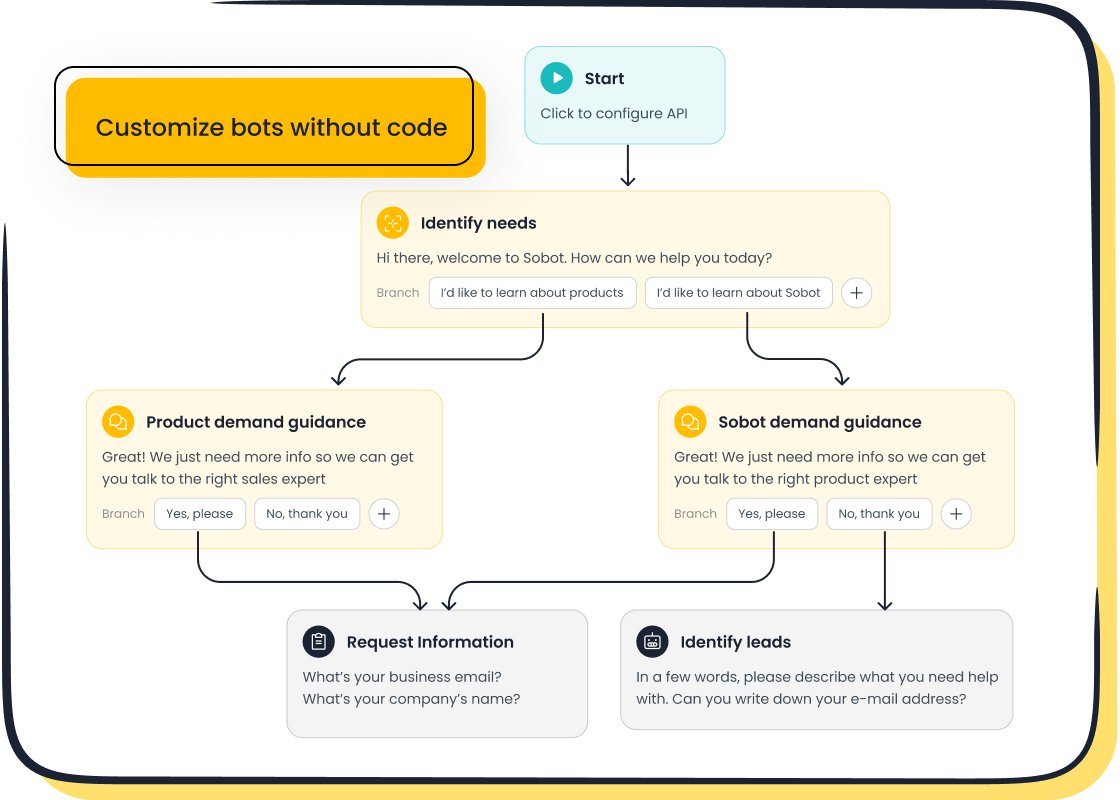
For example, a comprehensive platform like Sobot provides an all-in-one AI contact center solution. It offers an AI Chatbot with a point-and-click interface, making it easy to design automated workflows. Sobot's omnichannel services centralize conversations from every channel, including robust support for the WhatsApp Business API, as it is an official WhatsApp BSP. This allows you to manage all multilingual customer interactions from one unified workspace, boosting efficiency and creating a consistent customer experience. Such integrated solutions provide the chatbot, AI agent, voice, and ticketing systems you need for a complete support ecosystem.
Step 3: Build a Multilingual Knowledge Base
Your AI is only as smart as the information you give it. A well-structured multilingual knowledge base is the brain of your conversational AI. It provides the AI with accurate answers to customer questions. You must organize this content for both the AI and your customers.
Follow these best practices to build an effective multilingual knowledge base:
- Structure for easy navigation: Organize content with a clear, intuitive structure. Use a prominent search bar and logical categories so users can find information quickly.
- Simplify complex knowledge: Write articles with clear, concise language. Use keywords in titles that match how customers search, like "How do I track my order?"
- Update content continuously: Your business and products evolve. Regularly update your knowledge base to ensure the information your AI provides is always accurate and relevant.
To create a truly multilingual resource, you need a solid translation strategy.
- Choose your languages: Start with your default language and then add the priority languages you identified in Step 1.
- Use a translation management system (TMS): A TMS helps you automate and manage translation workflows efficiently.
- Localize all content: Go beyond direct translation. Adapt your content to fit the cultural context of each language. This includes adjusting formats for dates, currency, and measurements.
Step 4: Develop a Multilingual AI Implementation Strategy
A successful implementation involves more than just technology. You need a comprehensive multilingual AI implementation strategy that aligns your people, processes, and platform. This strategy ensures a seamless customer experience from the first interaction to the final resolution.
Your strategy should define clear goals for the project. What do you want to achieve with your multilingual AI? Are you aiming to reduce costs, improve customer satisfaction, or enter new markets? Defining these objectives helps you measure success later.
The implementation plan should also map out the customer journey. Consider how the AI will interact with customers at each touchpoint. Plan for a smooth handoff from the AI to a human agent when a problem becomes too complex. This process alignment is key to preventing customer frustration and delivering high-quality support. This is one of the most important strategies for your business.
Step 5: Train Agents for AI-to-Human Handoffs
Even the most advanced AI cannot solve every problem. There will be times when a customer needs to speak with a human. Your implementation must prepare your agents for these situations. Effective training ensures a smooth and helpful transition from AI to human support.
Position the AI as a helpful assistant, not a replacement.
- Train agents to see the AI as a tool that handles repetitive questions. This frees them up to focus on complex issues where their expertise is most valuable.
- Establish clear protocols for when and how the AI should escalate a conversation. The AI must provide the human agent with the full context of the conversation to avoid forcing the customer to repeat themselves.
- Create a feedback loop. Encourage your agents to provide insights on AI performance. This human-in-the-loop approach helps you continuously improve the AI's accuracy and helpfulness.
This collaborative culture between your agents and the AI leads to faster resolutions and better customer outcomes.
Step 6: Launch, Monitor, and Optimize Performance
Your work is not finished after the launch. You must continuously monitor and optimize your multilingual AI's performance to ensure it meets your goals. Tracking the right metrics gives you the insights needed to make data-driven improvements.
Key metrics to monitor include:
- Content Accuracy: Use metrics like METEOR to evaluate how well the AI's answers align with correct information across different languages.
- Language Naturalness: Track perplexity scores to see how fluent and conversational the AI sounds to users. Lower scores are better.
- Human Feedback: Collect user ratings (e.g., thumbs up/down) and human preference scores. This direct feedback is invaluable for understanding the real-world user experience.
- Operational Efficiency: Monitor response time (latency), error rates, and system uptime to ensure the AI is running smoothly and efficiently.
Analyzing these metrics by language helps you identify knowledge gaps, refine conversation flows, and improve the overall quality of your multilingual support. This cycle of launching, monitoring, and optimizing is the key to long-term success.
Overcoming Common Implementation Challenges
Your multilingual AI implementation journey may have some obstacles. You can overcome these common challenges with the right strategies. This ensures your project delivers a superior customer experience and a strong return on investment.
Ensuring High-Quality, Culturally-Aware Translations
A successful multilingual AI does more than just translate words. It must understand cultural context. Languages are dynamic and full of unique slang, humor, and nuances. A literal translation can sound robotic or even offensive to a customer.
Effective multilingual AI requires localization, not just translation. A tone that is polite in one culture might seem cold in another. Your AI must adapt to these differences to avoid alienating users.
To ensure high-quality multilingual support, you should:
- Combine AI translation with human review from native speakers.
- Use focus groups to test the AI's conversational style.
- Build a feedback loop for continuous improvement of your AI.
This approach helps your AI provide culturally aware multilingual customer support that builds trust.
Managing Industry-Specific Jargon
Every industry has its own language of acronyms and technical terms. Your AI must understand this jargon to provide accurate support. A standard AI model may not recognize your specific vocabulary. This can lead to incorrect answers and a frustrated customer.
You can train your AI to become an expert in your field. Feed the AI high-quality data from your business. This includes real customer conversations, technical manuals, and product names. This process teaches the AI to understand context and use industry terms correctly. A well-trained AI provides expert-level support for every customer. This is a key part of a successful implementation.
Integrating AI with Existing CX Platforms
Your new multilingual AI must work with your existing systems. A disconnected implementation creates data silos and inefficient workflows for your support team. The goal is seamless integration that unifies your customer data.
Modern AI platforms are built for easy connection. They offer APIs and pre-built integrations for popular CRM and CX platforms. This allows you to connect your new AI without disrupting your current operations. For example, Sobot's AI solutions are designed for rapid integration. This ensures your team has a complete view of every customer interaction. This unified approach is essential for providing excellent multilingual customer support.
Measuring the ROI of Your Multilingual AI
You need to measure the return on investment (ROI) of your multilingual AI. This helps you understand its value. Tracking the right data shows you how the AI improves your business. It proves the project's success and guides future improvements.
Key Performance Indicators (KPIs) to Track
You should track key performance indicators (KPIs) to measure success. These metrics give you a clear picture of your AI's performance. They show how your multilingual customer support is improving.
Key KPIs for your multilingual AI include:
- Resolution Rate: The percentage of customer issues the AI solves alone. A high rate means your AI is effective.
- Escalation Rate: How often the AI passes a customer to a human agent. A low rate shows the AI handles most questions well.
- Customer Satisfaction (CSAT) Score: This shows how happy customers are with the AI support. High satisfaction scores indicate a positive customer experience.
Monitoring these metrics helps you optimize your multilingual support for better results and greater customer satisfaction.
Calculating Cost Savings vs. Revenue Growth
You can calculate your ROI with a simple formula. This helps you see the financial benefits of your multilingual AI. The formula is:
Your "Net Gain" includes cost savings from fewer agent hours and new revenue from global growth. Your "Investment Cost" is the price of the AI platform and setup. A positive ROI shows your multilingual AI solutions are profitable. This calculation proves the value of your investment in AI support.
Real-World Case Study: Weee! and Sobot
Here is a real-world multilingual AI success story. Weee!, America's largest online Asian supermarket, needed better multilingual customer support. The company faced challenges with language barriers. Weee! implemented Sobot's multilingual voice product to improve its customer support.
The results were impressive.
| Metric | Improvement |
|---|---|
| Resolution Time | Reduced by 50% |
| Agent Efficiency | Increased by 20% |
| Customer Satisfaction | Reached 96% |
This case shows how the right AI partner helps you achieve amazing results. Weee! improved customer satisfaction and efficiency with powerful multilingual AI support.
The Future of Multilingual AI: Beyond 2026
The world of multilingual conversational ai is evolving quickly. Looking beyond 2026, you can expect even more powerful tools. These advancements will change how you connect with your global customer base. They will make your support more personal, instant, and insightful.
Hyper-Personalization and Predictive Language
Future AI will do more than just translate. It will predict what your customer wants. Your AI will use advanced language processing to understand cultural preferences. This allows you to personalize every part of the customer journey. The AI can instantly adapt product descriptions or marketing campaigns for different regions. This creates a unique and relevant experience for every user. This level of multilingual personalization builds stronger connections. It also improves engagement and boosts conversion rates. Your AI will provide tailored support that feels truly local.
Real-Time Voice and Visual Translation
The future of multilingual support is instant and seamless. Imagine a customer calling for support in their native language. Your agent will hear the conversation with near-zero latency real-time translation. This makes conversations feel natural and removes all language barriers. This technology relies on powerful automatic language detection to work instantly.
The next generation of translation will also be visual. Your field technicians or customers can point a device's camera at a product manual. The AI will overlay a translation directly onto the screen.
This creates an augmented reality experience. It makes complex instructions easy to understand for any customer. This advanced AI support simplifies problem-solving.
Deeper Cross-Cultural Sentiment Analysis
Understanding a customer's true feelings is key to great service. Future AI will offer a deeper look into emotions across cultures. It will analyze more than just words. The AI will detect sentiment from text, voice tone, and even visual cues. This provides a complete picture of the customer's emotional state.
| Analysis Method | What the AI Detects | Application |
|---|---|---|
| Text Analysis | Words that show emotion (e.g., "happy," "frustrated") | Social media, reviews, chats |
| Voice Analysis | Tonal cues (e.g., excitement, frustration in pitch) | Support calls, voice messages |
| Visual Analysis | Facial expressions (e.g., a smile or a frown) | Video support calls |
This multimodal approach uses automatic language detection to understand context. It helps your multilingual AI provide more empathetic and effective support.
Implementing multilingual conversational ai is a core strategy for global growth. You can boost customer satisfaction and customer retention. The success of Weee! with Sobot proves how the right multilingual AI customer support solutions deliver results for every customer. Your journey to better multilingual customer support starts here:
- Assess your top language needs for customer support.
- Demo leading AI platforms like Sobot for your multilingual customer support.
- Build a multilingual knowledge base to power your AI support for every customer.
FAQ
What is the main purpose of multilingual AI?
You use it to automate customer support in many languages. This technology helps you solve common questions 24/7. It improves your efficiency and boosts customer satisfaction around the world.
Do I need coding skills to set up an AI chatbot?
No, you do not need coding skills. Modern platforms like Sobot offer a no-code, point-and-click interface. You can easily design and launch your AI workflows without any programming experience.
How does the AI handle different languages?
The AI uses automatic language detection to understand the customer's language instantly. It then provides real-time translation. This creates a smooth and natural conversation for every user.
Can the AI work on channels like WhatsApp?
Yes, a strong Multilingual Conversational AI platform supports many channels. You can deploy it on your website, social media, and messaging apps like WhatsApp for a unified customer experience.
See Also
Essential Guide: AI Software Solutions for Modern Call Center Operations
Discovering the Top 10 AI Tools for Enterprise Contact Centers
Leading Websites Leveraging Chatbot Technology: A 2024 Overview
The 10 Best Chatbots for Enhancing Your Website in 2024
A Comprehensive Guide to Selecting the Optimal Chatbot Software
