The Future of Chatbot Automation

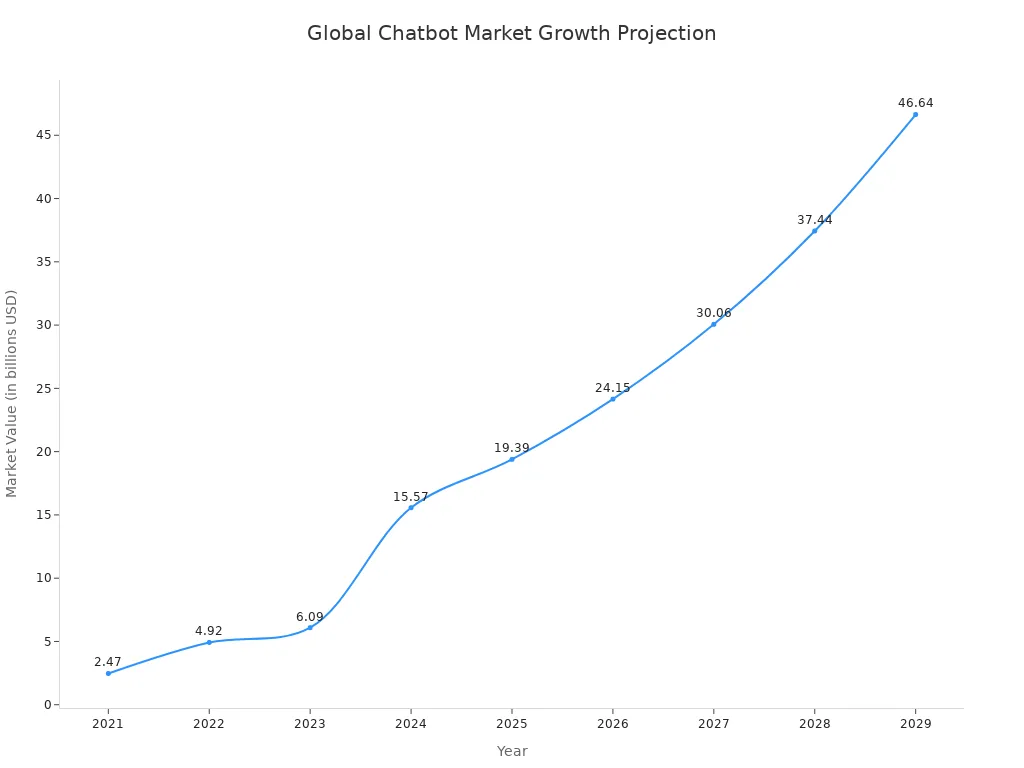
The future of chatbot automation is creating autonomous, integrated, and hyper-personalized AI assistants that redefine customer interactions. This conversational automation is reshaping business operations. Key conversational AI trends are driving this transformation, with the global AI chatbot market showing explosive growth.
By 2026, the AI chatbot market is projected to reach a valuation of over $24 billion, reflecting a massive shift in how businesses engage with their audience.
Emerging trends like autonomous chatbots, multimodal AI, and predictive personalization are the pillars of this change. Advanced platforms from Sobot, including the Sobot AI chatbot and Sobot call center, lead this evolution in conversational AI and automation.
Key Conversational AI Trends for 2026
The landscape of customer interaction is changing rapidly. Several key conversational AI trends are shaping this evolution, pushing businesses toward more intelligent and responsive systems. Understanding these emerging trends is crucial for any organization looking to enhance its customer experience and operational efficiency. The future of conversational automation lies in creating systems that are not just reactive but proactive, personalized, and secure.
The Rise of Autonomous Chatbots
The first major trend is the shift from simple, scripted chatbots to fully autonomous AI agents. Traditional chatbots follow predefined conversation paths. They struggle when a customer asks something unexpected. This limitation often disrupts the user experience. Autonomous AI, however, represents a significant leap in intelligent assistant technology. These advanced systems use contextual reasoning to understand user intent and make decisions independently.
This evolution is a core part of modern AI chatbot development. Instead of relying on rigid scripts, autonomous agents connect to knowledge bases, product documentation, and past interactions to provide accurate, dynamic answers. This allows them to resolve a high percentage of issues without human help.
A comparison highlights the difference in capabilities:
| Capability | Traditional Chatbot | AI Agent |
|---|---|---|
| Response Method | Pre-scripted answers from decision trees | Dynamic responses using reasoning and context |
| Setup Requirements | 10-500+ example phrases per intent, manual flow building | Upload docs or connect knowledge base, ready in minutes |
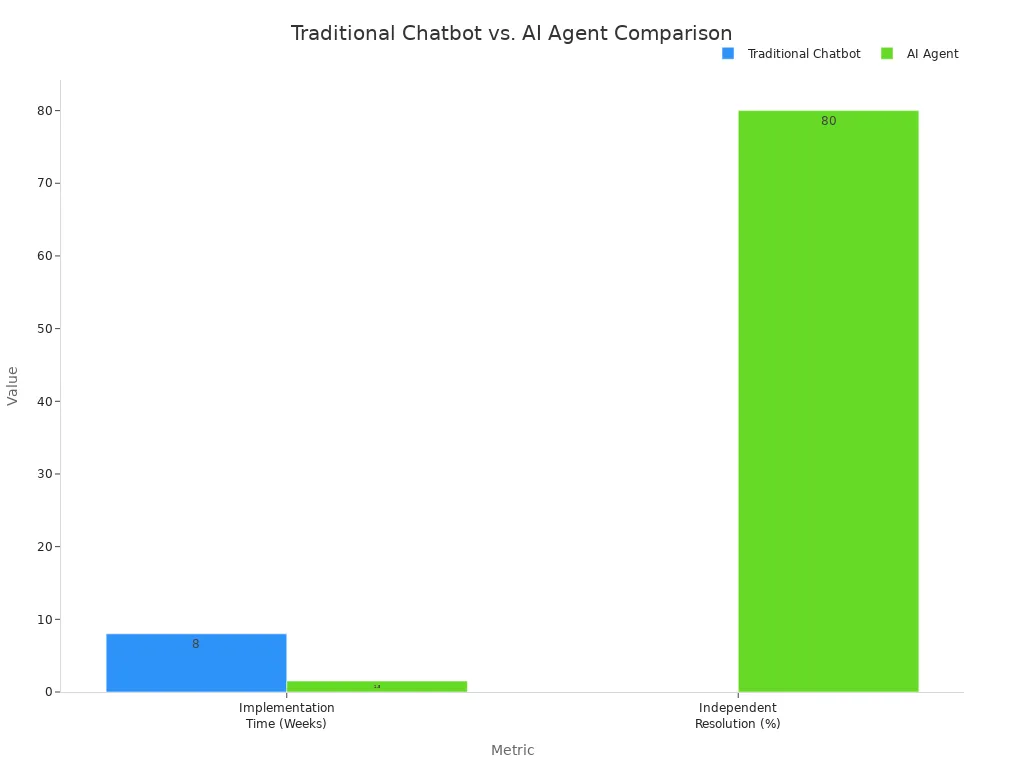
| Handling Complex Issues | Escalates to human agents for anything unscripted | Resolves 80% independently through reasoning |
| Maintenance Overhead | Manual updates for every product change | Auto-updates from connected knowledge bases |
| Learning Capability | Static unless manually reprogrammed | Improves autonomously from interactions |
| Implementation Time | 4-12 weeks for initial flows | 1-2 weeks to full production |

The adoption of this technology is growing across industries. For example, the customer service sector uses AI to provide 24/7 support, and the transportation industry uses it to optimize logistics. Platforms like Sobot empower this transition. The Sobot Chatbot is designed to autonomously solve regular queries, boosting agent productivity by up to 70%. This level of automation frees human teams to focus on more complex problems, directly improving service quality.
Multimodal AI: Fusing Text, Voice, and Vision
Another of the key customer support trends is the move toward multimodal conversational interfaces. Customers no longer want to be limited to just text. They expect to communicate using voice notes, images, and videos. Multimodal AI integrates these different forms of communication into a single, seamless conversation. This technology allows an AI to process text, hear a voice command, and see a product issue in a photo, all within the same interaction.
This fusion of inputs creates a more natural and intuitive experience. Research shows that 67% of consumers value seamless communication across channels above all else. Multimodal AI directly meets this need.
By processing multiple input types, AI can understand customer needs faster. This can lead to a 90% reduction in response times and lower support costs by 30–50%.
For example, a customer can send a picture of a damaged product. The AI uses computer vision to analyze the image and text analytics to understand the customer's message. This combination provides crucial context that text alone cannot, increasing first-contact resolution rates by up to 20%. Sobot’s platform exemplifies this with its omnichannel support. It allows businesses to engage with users across their preferred channels, including WhatsApp and SMS, ensuring a consistent and context-aware experience.
Hyper-Personalization with Predictive Analytics
Generic, one-size-fits-all interactions are becoming obsolete. The future of chatbot automation is hyper-personalization. This involves using predictive analytics to anticipate customer needs and tailor conversations in real time. By analyzing past behaviors, purchase history, and browsing data, AI can deliver proactive support and relevant recommendations.
This level of personalization builds stronger customer relationships. It makes users feel understood and valued. For retailers, AI-powered chatbots that offer personalized assistance can increase customer retention by 30%. The goal is to move from reactive support to a predictive model where the AI anticipates a user's next question or need. This proactive engagement strengthens loyalty and increases customer lifetime value. The use of analytics is fundamental to achieving this deep level of personalization.
Responsible AI and Enhanced Security
As AI systems become more integrated into business operations, the importance of responsible AI and data security grows. Customers need to trust that their personal information is safe. Businesses must ensure their AI solutions comply with data privacy regulations. These include the GDPR in Europe, the CCPA in California, and the LGPD in Brazil.
Best practices for AI chatbot development include:
- Strong Encryption: Protecting data both in transit and at rest.
- Clear Consent: Informing users how their data will be used and obtaining their permission.
- User Control: Giving users the ability to access and manage their data.
- Secure Cloud Practices: Adhering to best practices for data storage and access control in cloud environments.
Building trust is paramount. Companies must be transparent about their data policies and the decision-making processes of their AI assistants. Sobot demonstrates a strong commitment to this principle. The platform is GDPR compliant and uses robust data encryption and continuous encrypted backups. This focus on security ensures that businesses can leverage powerful automation and AI tools without compromising customer data privacy.
The Impact of Chatbot Automation on Customer Service

Chatbot automation is fundamentally changing the customer service landscape. It moves support from a cost center to a value driver. This shift improves the customer experience and boosts operational efficiency. The adoption of conversational AI is one of the most impactful trends for modern businesses.
Revolutionizing the Support Experience
Advanced chatbot technology revolutionizes the support experience by providing instant, accurate answers. This automation handles a high volume of routine inquiries. It frees human agents to focus on more complex problems. This human-machine cooperation creates a more efficient customer support system.
A prime example is the smart device innovator OPPO. By implementing Sobot's chatbot and ticketing system, OPPO achieved remarkable results.
- The chatbot resolution rate reached 83%.
- The positive feedback rate from customers climbed to 94%.
This level of automation directly improves key metrics. For instance, businesses using this technology see a significant reduction in response times and an increase in first-contact resolution. This enhances the overall customer experience.
Proactive Support: From Reactive to Predictive
The next evolution in customer support is the move from reactive to proactive engagement. Predictive AI analyzes data from multiple sources. This data includes purchase history, website behavior, and past support interactions. The AI uses this information to anticipate customer needs before they even ask for help.
For example, a chatbot can offer assistance if a customer lingers on a checkout page, helping to reduce cart abandonment. This proactive approach makes the customer feel understood. It also builds stronger loyalty. Companies like Verizon use predictive AI to anticipate call reasons, which helps them prevent customer churn. This shows the power of predictive conversational automation.
Empowering Human Agents with AI Co-Pilots
AI is not just for customers; it is also a powerful customer service tool for agents. AI co-pilots work alongside human agents in real time. They provide instant access to knowledge bases, suggest responses, and even summarize conversations. This support helps agents resolve issues faster and more accurately.
AI co-pilots can increase agent productivity by an average of 14%. Agents feel more confident and engaged, which reduces stress and improves job satisfaction.
This empowerment allows agents to deliver a higher quality of service. The AI handles the repetitive work. The human agent provides the empathy and complex problem-solving skills that build true customer relationships.
Achieving True 24/7 Omnichannel Service with Sobot
Today's customer expects a seamless experience across all channels, from SMS to social media. However, many businesses struggle to provide this. Statistics show that 56% of customers have to repeat themselves when switching channels.
True omnichannel service, powered by an integrated platform like Sobot, solves this problem. It unifies all communication channels into a single view. A chatbot can start a conversation on a website, and a human agent can seamlessly continue it on WhatsApp without losing context. This 24/7 availability ensures that customers receive consistent and effective support whenever they need it, boosting customer engagement and satisfaction.
The Future of Contact Center Automation
The future of contact center automation extends far beyond customer service. It is transforming sales and marketing operations into intelligent, data-driven engines. This evolution in the AI chatbot market allows businesses to engage prospects more effectively, streamline sales processes, and build lasting customer loyalty. Modern contact center automation uses AI to create a seamless journey from initial interest to post-purchase support.
Intelligent Lead Qualification and Scoring
Effective contact center automation begins with identifying the best leads. AI systems excel at this task. They provide immediate, 24/7 engagement to capture visitor interest. An AI chatbot can ask strategic questions to gather key information. This data helps qualify leads in real time.
AI uses specific criteria for lead scoring, including:
- Behavioral patterns like website visits and email opens.
- Demographic information such as job title or company size.
- Engagement history with marketing content.
This process ensures that sales teams focus only on high-potential prospects. Research shows that this approach can boost lead capture by about 60% in certain industries. Platforms like Sobot use AI agents to filter leads, allowing sales teams to connect with prepared buyers. This intelligent contact center automation boosts efficiency and conversion rates.
Automating Personalized Customer Outreach
Contact center automation also enables businesses to deliver personalized interactions at scale. AI analyzes customer data to trigger tailored outreach campaigns. For example, an AI voice bot can make thousands of intelligent calls, initiating natural conversations and adjusting its flow based on responses. This level of automation ensures the right message reaches the right person. This targeted engagement makes prospects feel understood. It also significantly increases the chances of booking a meeting or making a sale.
Driving Conversions with AI-Powered Sales Funnels
AI-powered sales funnels guide customers through the purchasing journey with precision. A chatbot can answer questions and provide information 24/7, keeping the sales funnel active even outside business hours. This constant availability enhances the customer experience. Predictive analytics from the AI also help sales teams understand customer behavior. This allows them to offer personalized content and product recommendations. This automation frees up sales teams from routine tasks, letting them focus on closing deals.
Driving Loyalty with Post-Sale Support
The role of contact center automation does not end after a sale. Post-sale support is crucial for building brand loyalty.
AI-powered chatbots offer 24/7 support for common issues, which can significantly reduce customer wait times and improve satisfaction.
This immediate assistance for things like warranty questions or product usage tips creates a positive experience. This automation also gathers valuable feedback, helping businesses improve their products and services. Excellent post-sale contact center automation turns a one-time buyer into a loyal advocate for the brand.
Overcoming Challenges for Successful Implementation
Adopting advanced AI brings significant rewards, but it also presents challenges. Businesses must navigate integration complexity, build user trust, and ensure system reliability. A strategic approach helps overcome these hurdles for successful implementation.
Managing Integration Complexity with No-Code Platforms
Integrating new technology can be complex and expensive. Traditional AI chatbot development often requires specialized coding skills and long development cycles. No-code platforms solve this problem. They offer visual, user-friendly interfaces that empower businesses to build and deploy powerful automation without writing a single line of code. The adoption of these tools is growing rapidly, with small and medium enterprises accounting for 57% of the low-code market.
No-code solutions dramatically reduce implementation barriers.
- They can cut development time from over 400 hours to less than one hour.
- Upfront design costs may decrease by as much as 80%.
- They eliminate the need to hire expensive engineering teams.
Platforms like the Sobot Chatbot feature a point-and-click interface. This approach democratizes automation, allowing teams to design and launch a chatbot quickly and efficiently.
Building User Trust and Ensuring Data Privacy
Customer trust is essential for AI adoption, yet many users remain skeptical. Surveys show that a majority of consumers worry about how companies use their data. This concern directly impacts their willingness to interact with a chatbot.
| Survey Finding | Percentage of Concerned Users |
|---|---|
| Believe AI makes it harder to keep information private | 53% |
| Concerned generative AI will expose personal data | 63% |
| Think AI will use their data in unintended ways | 81% |
To build trust, businesses must prioritize data security and transparency. This means choosing platforms with robust security measures. Sobot demonstrates this commitment with strong data protection protocols, including GDPR compliance and continuous data encryption for its cloud services. This focus on security helps assure every customer that their information is safe.
Mitigating AI Hallucinations for Reliability
A significant challenge in AI chatbot development is managing "hallucinations," where an AI generates confident but incorrect information. These errors happen for several reasons, including:
- Training on unverified or biased data.
- Misinterpreting vague user prompts.
- Combining details from multiple sources incorrectly.
Developers use advanced techniques to ensure AI reliability. One key strategy is Retrieval-Augmented Generation (RAG). This method grounds the AI by forcing it to retrieve information from a trusted knowledge base before answering. This approach significantly reduces factual errors and makes the AI a more dependable tool.
Upskilling Teams for AI Management
Implementing AI is not just a technical change; it is also a human one. Automation requires new skills. Teams must learn to manage, monitor, and optimize AI systems. This includes training employees to use performance analytics to track the chatbot's effectiveness and identify areas for improvement. Proper training ensures that the team can work alongside the AI to enhance customer engagement and drive better business outcomes.
The future of chatbot automation is clear. Key emerging trends show a move toward autonomous, multimodal, and hyper-personalized conversational ai. These advancements in automation are essential for modern business. Solutions like the Sobot chatbot exemplify how this technology improves customer service and operational efficiency. Businesses must adopt a strategic approach to AI to gain a competitive edge.
A focus on responsible implementation and user-friendly platforms will define success in this new era of automation.
FAQ
What is the main purpose of an AI chatbot?
An AI chatbot automates customer interactions. It autonomously solves regular queries and assists agents. This automation improves productivity and overall operational efficiency for businesses.
How does chatbot automation help save money?
A chatbot operates 24/7 without needing extra staff. It handles many customer questions at once. This constant availability can save businesses up to 50% on additional agent costs.
Is coding needed to build a chatbot?
No, coding is not required for modern platforms. The Sobot Chatbot, for example, uses a point-and-click interface. This feature allows businesses to design and launch workflow automations easily.
How do chatbots improve sales?
AI chatbots engage customers proactively. They use smart self-service and real-time assistance to guide users. This support can boost conversion rates by 20% and help businesses capture more leads.
See Also
Expert Guide: Selecting Optimal Chatbot Software for Your Business Needs
Effortlessly Implement Website Chatbots: Practical Examples for Quick Setup
Crafting a Powerful Chatbot: Strategies for Unlocking Website Success
Discover the Top 10 Websites Leveraging Chatbots Effectively in 2024
Unveiling the Top 10 Superior Chatbot Solutions for Websites This Year

