Step-by-Step Guide to Deep Learning vs Machine Learning in 2025

You might wonder if you should start with deep learning or machine learning in 2025. If you work in customer service, support, or ecommerce, your choice matters. The demand for AI skills keeps rising in these fields. You see deep learning vs machine learning shaping tools like Sobot AI and Sobot call center. These skills power chatbots, predictive support, and voice assistants. Personalization in ecommerce now boosts sales and creates better experiences. Sobot helps you stay ahead in this fast-changing world.
Deep Learning vs Machine Learning Overview
Key Differences
You might wonder what sets deep learning vs machine learning apart. Let’s break it down in a way that’s easy to understand. Think of machine learning as a big family of smart computer programs. Deep learning is like a special member of that family with extra skills.
Here’s a simple table to help you see the main differences:
| Aspect | Machine Learning | Deep Learning |
|---|---|---|
| Definition | A broader category of algorithms | A subset of machine learning |
| Learning Process | Needs you to pick out important features | Learns features by itself |
| Data Usage | Works with smaller datasets | Loves big data, especially unstructured stuff |
Machine learning asks you to find and create the right features from your data. You have to tell the computer what to look for. Deep learning, on the other hand, uses neural networks that work a bit like your brain. It figures out what’s important all by itself. This means deep learning can handle lots of messy data, like pictures or long chats, without much help from you.
- Traditional machine learning needs you to do more work up front.
- Deep learning automates the hard parts, so you can focus on results.
- Deep learning models are more complex and can solve tougher problems.
Why It Matters for Customer Service
You see these differences play out every day in customer service. Machine learning helps you personalize messages and predict what customers want. It can spot patterns in how people talk to your business. This means you can answer questions faster and make customers happier.
Here’s a quick look at how these technologies help:
| Impact/Benefit | Description |
|---|---|
| Personalized Interactions | Tailors support based on each customer’s history and preferences |
| Increased Efficiency | Automates routine tasks for quicker responses |
| Enhanced Satisfaction | Gives real-time help and uses predictions to keep customers happy |
| Predictive Analytics | Looks at past data to guess what customers might do next |
| Sentiment Analysis | Checks how customers feel, so you can improve your service |
With machine learning, you can automate simple tasks and free up your team for bigger challenges. Deep learning takes things further. It can understand complex questions, handle chats in many languages, and even spot emotions in messages. This makes your support smarter and more helpful.
When you use both, you get the best of both worlds. You can solve regular problems quickly and handle tricky cases with ease. That’s why so many companies in retail and ecommerce rely on these tools to keep customers coming back.
Machine Learning Basics
How It Works
You might wonder what makes machine learning tick. At its core, machine learning lets computers learn from data and make decisions without you having to program every step. You give the system examples, and it figures out patterns on its own. This is one of the most important basics you’ll need to know.
Here’s a quick look at the main types of machine learning and some common algorithms:
| Type of Learning | Description |
|---|---|
| Supervised Learning | Learns from labeled data, predicting outcomes for new data. |
| Unsupervised Learning | Finds patterns or groups on its own, useful for customer segmentation. |
| Reinforcement Learning | Learns by trial and error, receiving rewards for good decisions. |
| Linear Models | Simple and effective for prediction and classification tasks. |
| Tree-Based Models | Handles non-linear data with high interpretability. |
| Support Vector Machines | Provides a robust framework for classification and regression tasks. |
| Neural Networks | Mimics complex patterns through architecture and learning mechanisms. |
You’ll see these basics everywhere in customer service and ecommerce. For example, supervised learning helps with spam detection or predicting if a customer will buy something. Unsupervised learning can group customers by shopping habits. Reinforcement learning teaches systems to improve by trying different actions and learning from feedback.
Tip: If you want to master machine learning fundamentals, start by understanding these types and how they work in real life.
Sobot Chatbot Applications
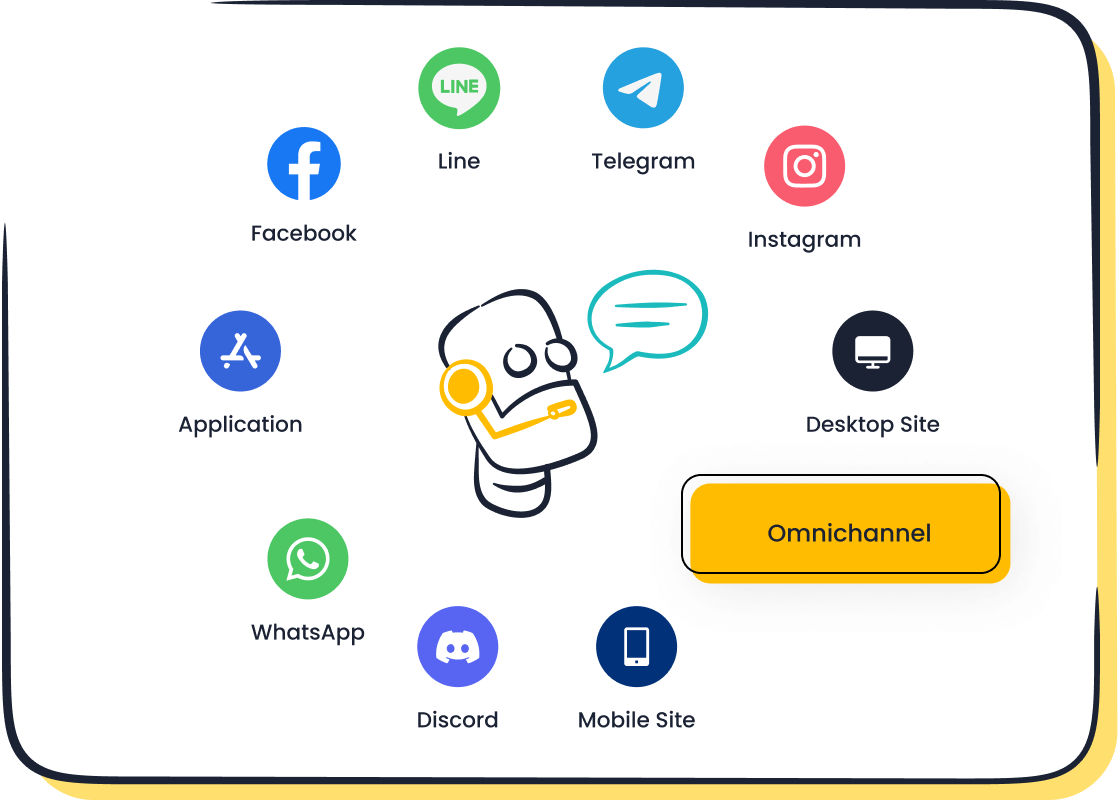
Sobot’s chatbot brings machine learning basics to life in your daily work. The chatbot uses continuous learning to get smarter with every customer chat. It studies patterns in questions, so it can quickly find the right answers and make your support faster.
Here’s how Sobot chatbots use machine learning fundamentals:
- They learn from every conversation, so answers keep getting better.
- The chatbot pulls from a huge knowledge base and past chats to give accurate replies in real time.
- It uses natural language processing to understand what customers mean, even if they ask in different ways.
- The system can detect customer sentiment and predict needs, making support feel more personal.
Sobot’s machine learning models help you automate regular tasks, cut costs, and boost customer satisfaction. You don’t need to code to set up the chatbot. The point-and-click interface makes it easy for anyone to use. Sobot’s chatbot supports multiple languages and works across channels like WhatsApp and SMS. You can learn more about these features on the official Sobot Chatbot page.
Deep Learning Essentials
How Deep Learning Works
You might wonder how deep learning actually works. Imagine you have a smart system that learns from lots of data, like pictures, text, or even voice. Deep learning uses artificial neural networks, which are inspired by how your brain works. These networks have many layers that help them learn complex things.
Here’s a simple table to show you the core parts and popular architectures of deep learning in 2025:
| Component/Architecture | Description |
|---|---|
| Input Layer | Takes in raw data and turns it into numbers the system can use. |
| Hidden Layers | Do the heavy lifting, finding patterns using activation functions. |
| Output Layer | Gives you the final answer or prediction. |
| Activation Functions | Help the network learn tricky patterns (like ReLU or Sigmoid). |
| Loss Function | Checks how close the answer is to the real one. |
| Optimizer | Tweaks the network to get better answers (like SGD or Adam). |
| Backpropagation | Adjusts the network based on mistakes. |
| Feedforward Neural Networks | Good for simple tasks like sorting or classifying. |
| Convolutional Neural Networks | Great for images and object spotting. |
| Recurrent Neural Networks | Remember what happened before, perfect for text or speech. |
| Autoencoders | Shrink data down and find hidden patterns. |
| Generative Adversarial Networks | Make new data, like fake images or text. |
| Transformer Architecture | Super smart for language and chatbots. |
| Graph Neural Networks | Handle data with lots of connections, like social networks. |
Deep learning models stand out because they can learn features from raw data without you telling them what to look for. You don’t need to spend hours picking out the right features. The system figures it out for you. This is a big difference from traditional machine learning.
- Traditional machine learning needs you to set rules and pick features.
- Deep neural networks learn from huge amounts of data and adjust their connections to spot patterns.
- Artificial neural networks can handle images, audio, and text, even when the data is messy or complex.
- Deep learning reduces the need for manual work and speeds up training processes.
You get to focus on results, not the nitty-gritty details. That’s why deep learning use cases keep growing, especially in areas where data is big and complicated.
Note: Deep learning has pros and cons. It can solve tough problems and handle lots of data, but it needs more computing power and data to work well.
Sobot AI in Retail and Ecommerce
You see deep learning vs machine learning in action every day in retail and ecommerce. Sobot AI uses deep learning to make your customer service smarter and faster. With artificial neural networks, Sobot’s AI Agent and voicebot can understand customer questions, even if they come in different languages or styles.
“SLMs are designed for solving specific problems in various industries. Take retail and ecommerce industry as an example, our SLMs support businesses with common scenarios like order tracking, product recommendations, returns, refunds and more.” said Yi Xu, CEO of Sobot.
Sobot’s deep learning models power features like:
- Real-time product recommendations that boost sales.
- Automated order tracking and instant updates for customers.
- Voicebots that understand and respond to spoken questions.
- AI Agents that handle returns and refunds without human help.
You can connect with customers across chat, email, voice, and social media. Sobot’s AI platform uses advanced training processes to keep learning from every interaction. This means your support gets better over time. The system also protects customer data and follows privacy rules, so you can trust it with sensitive information. Learn more about Sobot’s AI solutions for retail and ecommerce at Sobot AI.
Tip: Deep learning models can help you reduce cart abandonment, improve marketing, and give customers a seamless experience. You get the benefits of automation and personalization, but remember to weigh the pros and cons of deep learning for your business needs.
Deep Learning vs Machine Learning: Comparison
Data and Complexity
When you look at deep learning vs machine learning, the first thing you notice is how much data each approach needs. Deep learning models love big data. You need thousands or even millions of examples for model training. These models use deep neural networks with many layers, so they can learn complex patterns from images, text, or voice. Model training for deep learning takes a lot of time and power because the networks have so many parameters.
On the other hand, machine learning models work well with smaller datasets. You can use traditional machine learning use cases like customer segmentation or product recommendations without needing huge amounts of data. Model training is faster and less demanding. You can get good results with simpler algorithms and fewer resources. This makes machine learning a great choice when you want quick answers or have limited data.
Tip: If you have a small dataset or need fast results, traditional machine learning use cases are often the best fit.
Interpretability
You might wonder how easy it is to understand what your model is doing. With machine learning, you often use simple models like linear regression or decision trees. These models are easy to explain. You can see how each feature affects the outcome. This is one of the pros and cons of traditional machine learning—while you get clear answers, you might miss out on complex patterns.
Deep learning models are different. They act like black boxes. You get high accuracy, but it’s hard to see how the model makes decisions. Here are some points to consider:
- Simpler models are more interpretable but may not capture complex patterns.
- Deep learning models achieve higher accuracy but are less interpretable.
- The choice between accuracy and interpretability depends on your needs.
In some fields, like finance or healthcare, you need to explain your results. In those cases, the pros and cons of traditional machine learning become very important.
Hardware Needs
Model training for deep learning requires powerful hardware. You need high-end GPUs, lots of RAM, and fast storage. Here’s a quick table to show you the difference:
| Component | Machine Learning Requirements | Deep Learning Requirements |
|---|---|---|
| CPU | High-end CPU (6-8 cores) | More cores for parallel processing |
| GPU | Not critical, but helpful | High-performance GPU (10-24 GB VRAM) |
| RAM | 16 GB (32 GB for large datasets) | 32 GB or more |
| Storage | SSD, at least 512 GB | SSD, 1-2 TB for big datasets |
| Network | 100 Mbps download speed | Higher bandwidth for cloud workloads |
| Motherboard | Compatible with components | May need more PCIe slots for multiple GPUs |
You can train most machine learning models on a regular laptop. Deep learning model training often needs cloud servers or special hardware. If you want to use deep learning, plan for bigger hardware investments.
Note: Always match your hardware to your project. For many traditional machine learning use cases, you don’t need fancy equipment.
Choosing Between Deep Learning and Traditional Machine Learning
Decision Criteria
You might feel unsure about choosing between deep learning and traditional machine learning for your first project. Let’s break down the main things you should think about. This way, you can pick the best path for your goals in customer service or ecommerce.
-
Your Background
- If you have limited coding or math experience, start with machine learning. The algorithms are easier to understand, and you’ll find lots of beginner-friendly resources.
- If you already know programming and math, you can try deep learning. This path works well if you want to dive into advanced AI or work with complex data.
-
Data Size and Quality
- Deep learning needs lots of data. If you have thousands or millions of examples, deep learning can spot patterns that simple models miss.
- Machine learning works well with smaller datasets. If your data is limited, you’ll get better results with these models.
-
Project Type
- Think about what you want to build. If your project involves images, voice, or lots of unstructured data, deep learning is a strong choice.
- For tasks like customer segmentation, churn prediction, or basic analytics, machine learning is usually enough.
-
Resources and Tools
- Deep learning often needs powerful computers or cloud servers. If you have a tight budget or limited hardware, machine learning is more practical.
- Many platforms, like Sobot, offer no-code tools and pre-trained models. You can get results fast, even if you don’t have a technical background.
-
Speed and Results
- If you need quick results, use machine learning or pre-built deep learning APIs. You can always learn the details later.
Tip: Start simple. You can always move to deep learning as your skills and data grow.
Here’s a quick table to help you decide:
| Criteria | Machine Learning | Deep Learning |
|---|---|---|
| Coding/Math Skills | Beginner-friendly | Advanced |
| Data Size | Small to medium | Large, complex |
| Project Type | Structured data, analytics | Images, text, voice, unstructured data |
| Hardware Needs | Basic laptop | High-end GPU or cloud |
| Speed to Results | Fast | Slower (unless using pre-trained APIs) |
You don’t have to pick just one. Many companies use both, depending on the problem.
Sobot Use Cases
Let’s see how these decision criteria play out in real life with Sobot’s solutions. Sobot helps businesses in retail, ecommerce, and beyond solve customer service challenges using both deep learning and machine learning.
-
Routine Customer Support
Sobot’s Chatbot uses machine learning to handle regular questions. It learns from past chats and improves over time. You don’t need to code. The chatbot works across WhatsApp, SMS, and other channels. It can answer in multiple languages and is always online. For example, OPPO used Sobot’s Chatbot to resolve 83% of customer queries automatically, earning a 94% positive feedback rate (source). -
Complex Issue Resolution
When customers ask tough questions or need help with returns, Sobot’s AI Agent steps in. This tool uses deep learning to understand context, emotions, and even the intent behind messages. It can recommend solutions for tricky problems and automate tasks like refunds or order tracking. This frees up your human agents for the most important cases. -
Knowledge Automation
Sobot’s AI platform uses large language models (LLMs) to pull answers from unstructured documents. You don’t have to write scripts for every question. The AI learns from articles, PDFs, and chat logs. This makes your knowledge base smarter and more useful over time. -
AI Copilot for Agents
Sometimes, your team faces questions that need a human touch. Sobot’s AI Copilot helps by suggesting answers and summarizing conversations in real time. This tool uses both machine learning and deep learning to guide agents, making support faster and more accurate.
Here’s a table showing which Sobot solution fits each project type:
| Project Type | Sobot Solution | Technology Used | Example Benefit |
|---|---|---|---|
| Routine Inquiries | Sobot Chatbot | Machine Learning | Resolves 70% of queries, 24/7 multilingual support |
| Complex Issue Resolution | Sobot AI Agent | Deep Learning | Handles returns, refunds, and tough questions |
| Knowledge Management | Sobot AI Platform (LLMs) | Deep Learning | Automates knowledge base updates |
| Agent Assistance | Sobot AI Copilot | ML + Deep Learning | Real-time guidance for agents |
| Sentiment Analysis | Sobot Chatbot/AI Platform | Machine Learning | Detects customer mood, improves satisfaction |
Note: Sobot’s no-code tools let you start with machine learning and move to deep learning as your needs grow. You don’t need to worry about hardware or coding skills.
Sobot’s solutions help you make the most of your resources. If you have a small team or limited budget, the chatbot and AI Copilot optimize your support. If you want to boost sales or handle complex customer needs, the AI Agent and platform give you advanced deep learning power.
When you look at deep learning vs machine learning, remember that the best choice depends on your data, goals, and resources. Sobot makes it easy to get started, no matter which path you choose.
Getting Started with Machine Learning or Deep Learning
First Steps for Beginners
Ready to jump into AI? You don’t need to be a tech expert to get started. You can build a strong foundation by focusing on the basics. Here are some steps you can follow:
- Start with the basics of AI and machine learning. Learn what algorithms do and how they solve problems.
- Try building real projects. You learn more by doing than by just watching a tutorial.
- Don’t rush into advanced topics. Master the basics first so you understand how everything fits together.
- Practice deploying your models. Knowing how to put your work into action is just as important as learning the theory.
- Explore more than one algorithm. This helps you become job-ready and gives you a wider skill set.
Sobot’s no-code Chatbot makes it easy for you to apply these basics. You can create your own chatbot without writing code. The platform lets you automate customer service and see results fast. You get to work with real data and see how machine learning improves support.
Tip: Focus on the basics and build simple projects. You’ll gain confidence and see how AI works in real life.
Tools and Resources
You have lots of learning resources to choose from. Sobot’s AI solutions stand out because you can use them right away, even if you’re new to machine learning. The no-code Chatbot lets you design workflows and connect to a knowledge base for quick, accurate replies. Automation boosts your productivity and reduces the need for human help.
Here’s a table showing how Sobot’s tools help beginners:
| Benefit | Description |
|---|---|
| Cost Reduction | Chatbot interactions cost less than human support (source). |
| Improved Efficiency | Chatbots answer up to 80% of routine questions. |
| 24/7 Availability | AI agents provide round-the-clock support. |
| Faster Response Times | AI responds in seconds, not minutes. |
| Enhanced Customer Experience | 63% of consumers like chatbot-only interactions for simple queries (source). |
You can also try open-source tools to learn the basics:
- Anaconda helps you set up your environment and manage packages.
- Python is easy to learn and has many libraries for machine learning.
- Scikit-learn offers a simple interface for basic tasks.
- RapidMiner lets you work on complex projects without much coding.
- Teachable Machine makes building models quick and simple.
If you want to go deeper, check out these online courses and learning resources:
| Course Name | Duration | Key Features | Rating |
|---|---|---|---|
| Artificial Intelligence & Machine Learning Bootcamp (Caltech CTME) | 6-7 months | Hands-on projects, covers basics and advanced topics | 4.6/5 |
| Professional Certificate Course in Generative AI and Machine Learning (IIT Kanpur) | 6-7 months | Focus on generative AI, NLP, and computer vision | 4.8/5 |
| IBM AI Engineering Professional Certificate (Coursera) | 3 months | Practical applications using Python | 4.7/5 |
Note: You can start with free tutorials and learning resources, then move to paid online courses when you’re ready for more advanced basics.
You have two strong paths—machine learning and deep learning. Both help you boost customer service and ecommerce. Here’s what you should remember:
- Machine learning is easy to start and works well for chatbots, recommendations, and analytics.
- Deep learning handles complex tasks like language translation and image recognition.
- No-code tools like Sobot’s Chatbot let you try both, even if you’re new.
| Benefit | What You Get |
|---|---|
| 24/7 AI Support | Help customers anytime, anywhere |
| Automation | Save time by handling routine questions |
| Customer Insights | Learn from real data and improve your service |
Ready to see AI in action? Try Sobot’s Chatbot and AI solutions to level up your customer experience.
FAQ
What is the main difference between machine learning and deep learning?
You train machine learning models with less data and simpler rules. Deep learning uses neural networks to learn from huge datasets. Deep learning works better for images, voice, and text.
Can I use Sobot’s Chatbot without coding skills?
Yes! You design and launch your own chatbot with a point-and-click interface. You don’t need to write code. The platform guides you through each step.
How do I choose between machine learning and deep learning for my project?
Look at your data size and problem complexity. If you have lots of data and tough tasks, deep learning works best. For smaller projects, machine learning is easier and faster.
Does Sobot’s AI support multiple languages?
You get multilingual support with Sobot’s AI Chatbot. It handles customer questions in many languages. This helps you serve global customers with ease.
What hardware do I need to start with AI?
You start with a regular laptop for machine learning. Deep learning needs more power, like a GPU or cloud server. Sobot’s platform lets you use AI without worrying about hardware.
See Also
Essential Tips for Selecting Call Center AI Solutions
How to Select the Most Effective Chatbot Software
Best 10 Websites Implementing Chatbots This Year