Customer Success AI Agents vs CSMs Key Differences

You face a key decision in customer service today. The global AI market is projected to grow fivefold by 2030, and up to 80% of companies already use AI for customer interactions. This shift introduces powerful customer success AI agents.
AI agents master scalable, data-driven tasks. Human CSMs are experts in strategic, high-touch relationship-building.
You need a clear framework to decide on the right mix for your strategy. This guide helps you understand how AI agents from Sobot, including the Sobot AI and Sobot call center, can create the perfect balance.
Scalability and Cost: The Economic Differences

You must weigh the economic impact of your customer success choices. AI agents and human CSMs have very different cost structures and scaling capabilities. Understanding these differences helps you build a financially sound strategy.
AI-Powered Scale: 24/7 Availability at Lower Cost
AI agents offer incredible scalability at a fraction of the cost. An AI system provides 4.6 times more annual availability than a full-time human employee. This means you get 24/7 coverage without paying premium rates for nights or weekends. The primary benefit of AI is significant cost reduction. For example, AI voice assistants can lower call center costs by 40% through powerful automation.
The financial advantages of AI become clear when you compare direct costs.
| Criteria | AI Agents | Human Agents |
|---|---|---|
| Cost per Interaction | $0.50–$5 | $5–$25 |
| Setup Costs | $5,000–$20,000 upfront | $10,000–$20,000 turnover per agent |
| ROI Timeline | 3–9 months | 12–24 months |
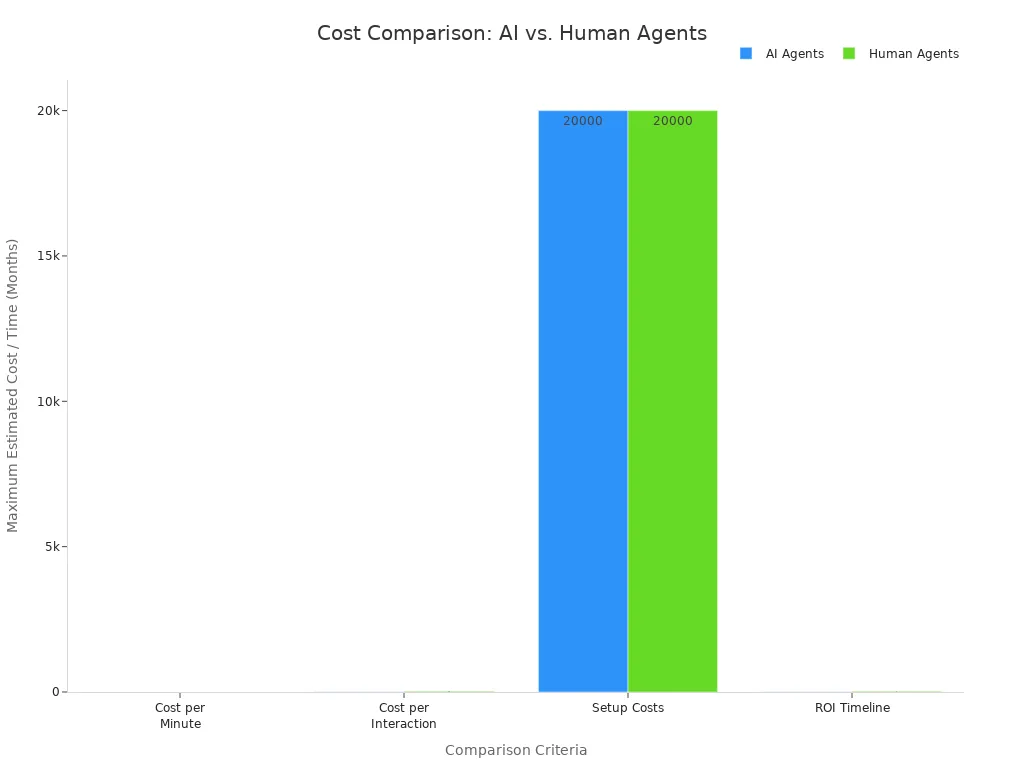
This level of automation allows your business to handle a high volume of queries efficiently. The right AI platform delivers a return on investment in months, not years.
Human-Powered Strategy: A High-Value Investment
Hiring a skilled Customer Success Manager (CSM) is a strategic investment in your most valuable accounts. Unlike the fixed cost of an AI, a human salary represents a significant and ongoing expense.
An experienced CSM with 5-9 years in the field can command a salary of $100,000. In top-tier tech cities like San Francisco, that figure can rise to the $120,000–$130,000 range.
You pay this premium for strategic thinking, empathy, and complex problem-solving—skills that AI cannot replicate. While customer success AI agents manage scale, human experts drive growth through deep relationships. This investment protects and expands your revenue from key customers, making it a crucial part of a balanced strategy. The cost of AI is predictable, while human salaries grow over time. You must budget for both to create a complete customer success team.
The Power of Customer Success AI Agents
You now understand the economic case for AI. The next step is to see where customer success AI agents and human CSMs deliver their unique power. AI provides the engine for efficiency, while humans provide the strategic direction and empathy that drive true partnership.
Where AI Agents Excel: Automation and Data
AI agents are masters of speed, scale, and data processing. You can deploy them to handle the high-volume, repetitive tasks that consume valuable time. This frees your human team for more strategic work. The right automation tools transform your customer support workflow.
AI excels at tasks that follow clear rules and patterns. You can use AI for:
- Automating onboarding emails and follow-ups
- Generating meeting recaps instantly
- Efficiently addressing repetitive inquiries
- Autonomously handling returns, refunds, and order changes
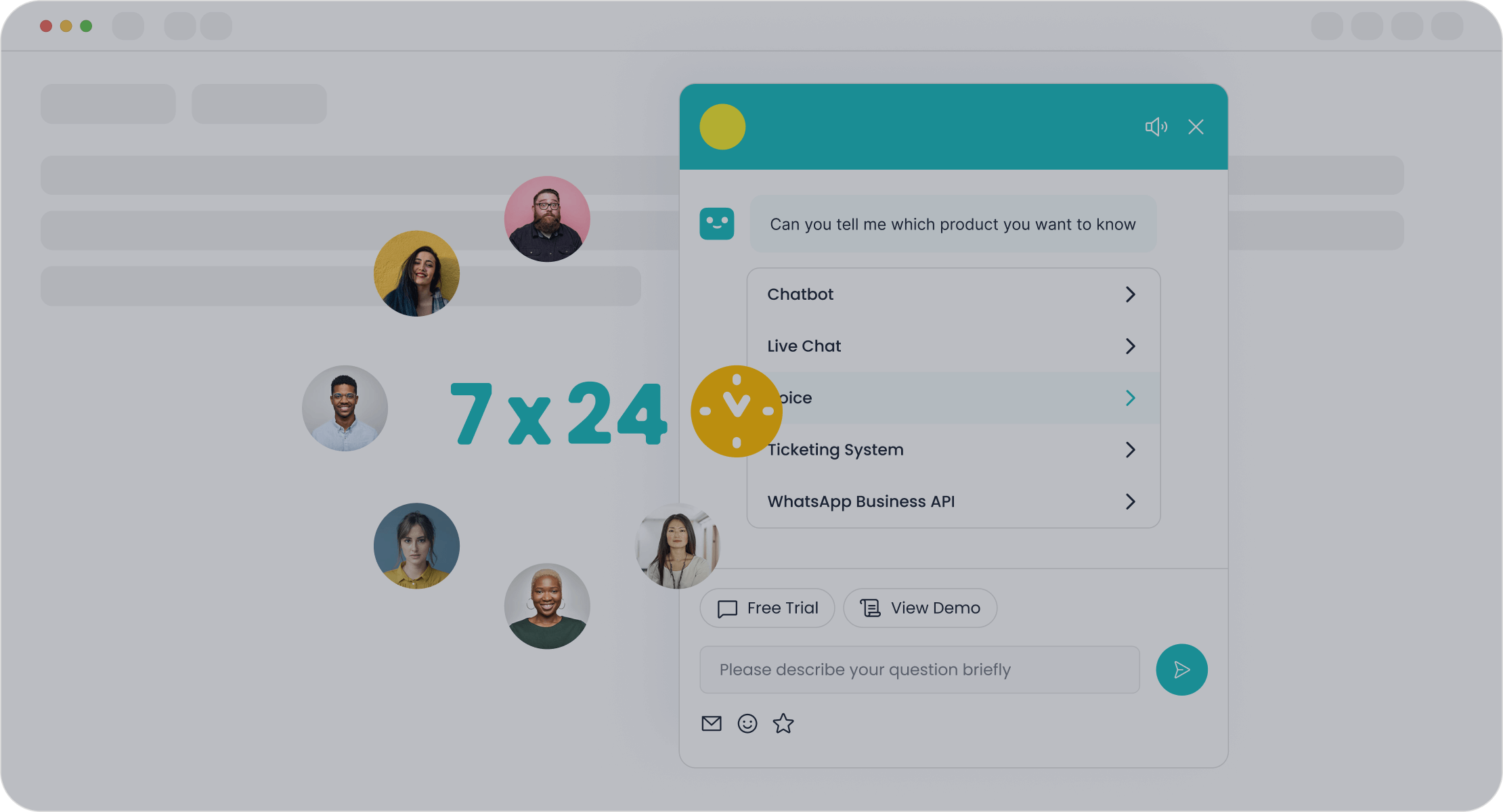
This is where a solution like Sobot's Chatbot becomes a game-changer. You can use this AI to improve team productivity by 70% and cut expenses by 50%. The AI achieves this through 24/7 query triage, which handles customer questions around the clock without human oversight. This level of automation ensures no customer has to wait for an answer to a common question. The AI agent works tirelessly, resolving routine issues and escalating only the complex cases to your human experts.
Real-World Impact: How OPPO Mastered Efficiency with AI
Leading smart device innovator OPPO faced huge spikes in customer inquiries. By implementing Sobot's AI, the company built a powerful human-machine team. The AI chatbot now resolves 83% of customer issues on its own. This powerful automation also reduced the effort needed to maintain their product knowledge base by an incredible 90%.
OPPO's success shows how AI agents handle the heavy lifting of customer support. The AI manages the data and the routine questions. This allows your human team to focus on what they do best.
Where Human CSMs Excel: Nuance and Strategy
While AI agents manage predictable tasks, human CSMs navigate the unpredictable world of human emotion and complex business strategy. You cannot automate empathy, strategic negotiation, or creative problem-solving. These are the areas where your human team provides irreplaceable value.
When a high-value customer is frustrated, an AI can provide information, but a human can provide understanding. Your CSMs use emotional intelligence to de-escalate tense situations and repair relationships. They do this by:
- Prioritizing Relationship Repair: They first focus on rebuilding trust. They let customers express their frustration and acknowledge the business impact of the issue. You fix the relationship before you fix the technical problem.
- Matching Communication to Needs: A great CSM adapts to the customer's emotional state. Some clients need constant updates for reassurance. Others prefer to hear from you only when there is real progress. Your CSM understands this and tailors their communication.
- Understanding the 'Why': Your CSM acts as a translator. They listen for the underlying goal behind a customer's request, not just the request itself. This deeper understanding often leads to better, more creative solutions that an AI could not discover.
Imagine you are the CSM on a call with an angry client. Instead of starting with a technical fix, you slow down. You listen. You let the client explain their frustration. You show empathy by saying, "I understand what you're going through." This simple act of human connection makes the customer feel heard. It turns an adversary into a partner who is now ready to discuss solutions. This is the unique power of human nuance in customer success.
Relationship Building: The Human Touch in an AI World

You know that AI handles scale and data. Now, you must consider the most human part of your business: relationships. True customer loyalty is built on trust and connection. This is where the differences between AI and human CSMs become most clear.
AI Agents: Consistent but Impersonal Interactions
You can program AI agents to deliver a perfectly consistent brand voice. This is a major strength. An AI ensures every interaction aligns with your company's personality, whether it's friendly, professional, or sophisticated. You can use AI to:
- Maintain Brand Integrity: The AI acts as a guardrail. It ensures all automated messages match your brand's values and tone.
- Adapt in Real-Time: The AI can detect a customer's emotional tone and adjust its responses. It uses a lighter tone for promotions and precise language for account updates.
- Personalize at Scale: AI agents use customer data to personalize messages. They can provide simple guidance for new users and detailed information for experts.
This consistency creates a predictable experience. However, this is also where the limitations of AI appear. More than two-thirds of customers report having a bad chatbot experience. The interaction, while consistent, often feels impersonal and frustrating.
💡 Customer Frustration with AI Your customers get frustrated when an AI cannot understand their real needs. They feel stuck when the AI asks too many repetitive questions or provides irrelevant answers. In fact, 46% of customers are frustrated by the lack of an easy way to reach a human.
The most common pain points with AI-driven chats include:
- The AI fails to understand the customer's actual needs.
- The AI cannot answer the specific question asked.
- The AI forces customers to repeat complex information, making the experience 82% worse.
- The AI gets stuck in a loop, asking the same questions over and over.
While AI agents are excellent for maintaining a consistent voice, they cannot replicate genuine understanding. This creates a gap that only a human can fill, especially when a customer is upset or has a complex problem. The AI provides a script, but it cannot truly connect.
Human CSMs: Empathetic and Adaptive Partnerships
When a customer has a complex or sensitive issue, they want to talk to a person. Data shows that 99% of customers feel more comfortable when a human helps them resolve an issue. Your human CSMs provide the empathy and adaptive thinking that AI lacks. They don't just solve a problem; they repair the relationship.
Your CSMs build trust through specific communication techniques. They use active listening to understand the customer's perspective. They ask open-ended questions that invite deeper conversation. This transforms a simple transaction into a strategic partnership.
The best way to build trust is by asking questions. When you ask questions that make executives pause and rethink their priorities, you move from just another vendor to a trusted advisor.
Your CSMs create these strong partnerships by following a clear process:
- Get to Know the Customer: They meet with your customers to learn about their needs firsthand.
- Build a Success Plan: They send a plan, ask for feedback, and get the customer's agreement.
- Follow Up Consistently: They schedule meetings after key events to make sure everything is on track.
- Communicate with Transparency: They are open about feature requests and roadmap decisions, explaining the reasons behind them.
This human-led approach turns customers into advocates. As customer success specialist Cristy Rahman notes, this rapport allows you to "help guide that conversation better for both parties." This deep partnership, driven by your customer success AI agents' human counterparts, leads directly to higher customer lifetime value and lower churn. Your CSMs become trusted advisors who customers turn to for help instead of leaving for a competitor. The AI can handle the query, but the human builds the loyalty.
The Hybrid Model: How Sobot Empowers Your CSMs
You do not have to choose between AI and humans. The most effective strategy combines the strengths of both. A hybrid model uses automation to handle scale and empowers your CSMs to focus on high-value, strategic work. This approach creates a powerful, efficient, and customer-centric operation.
Augmenting Humans to Focus on High-Impact Work
You can free your CSMs from repetitive tasks with the right automation tools. The goal of customer success automation is to let your team focus on building relationships, not on manual data entry. AI-enhanced workflows handle the routine work. This allows your team to invest time in strategic activities like Quarterly Business Reviews (QBRs).
You can cut QBR preparation time from five hours to just 30 minutes. An AI pulls usage data and support insights into a clean deck. This lets your CSMs focus on crafting a strategic story, not on compiling data.
This is where a platform like Sobot’s Omnichannel Solution empowers your team. It creates a unified workspace where AI and human agents collaborate.
- The AI chatbot handles up to 80% of routine queries.
- It centralizes all customer support channels into one AI-powered platform.
- Your human agents use the extra time for complex problem-solving.
This powerful automation lets your team deliver exceptional customer support. The AI manages the volume, and your people manage the value.
Creating a Tiered Customer Success Strategy
A hybrid model allows you to create a tiered customer success strategy. You can segment your customers and provide the right level of support for each group. This ensures you use your resources effectively. You can use AI agents for low-touch segments and human CSMs for high-touch accounts.
You can segment your accounts based on:
- Annual Recurring Revenue (ARR)
- Company size or industry
- Product usage or strategic value
High-value accounts receive a dedicated CSM for personalized onboarding and strategic guidance. For smaller accounts, you can use AI agents to deliver automated onboarding, webinars, and self-service support. This tech-touch model uses AI to provide a consistent experience at scale. The AI handles common questions, while your CSMs build deep partnerships with your most important customers. This balance of AI and human touch is key.
The success of OPPO proves this model works. By combining AI agents with human experts, they achieved incredible results. The company saw a 94% positive feedback rate and a 57% increase in repurchase rate. This shows that when customer success AI agents and humans work together, you boost both satisfaction and revenue.
The debate is not about AI versus humans. You need both AI and humans for success. Your strategy should use AI for scale and efficiency. Your human team provides the irreplaceable strategic partnerships. The future of customer success is a powerful combination of AI and human expertise. This AI-driven approach enhances your team's capabilities.
Challenge yourself to audit your current workflows. Identify repetitive tasks for automation. You can empower your CSMs to deliver greater strategic value with the right AI automation. A solution like Sobot's Chatbot provides the AI power you need.
FAQ
How does AI improve customer support?
You can use AI to automate repetitive tasks. This AI integration frees your human team for complex issues. The AI handles high-volume queries 24/7. This use of AI ensures your customer support is always available. The AI provides instant answers, which improves response times and overall efficiency.
Can AI completely replace my human CSMs?
No, AI cannot replace human CSMs. The best strategy combines AI with human expertise. You use AI for scalable tasks and data analysis. Your human team focuses on building strategic relationships and solving complex problems. This AI and human partnership creates the strongest results.
What is the first step to implementing AI?
You should first audit your current workflows. Identify the repetitive, high-volume tasks that consume your team's time. These are perfect for AI automation. A simple AI chatbot can handle common questions, giving your team more time for high-value work. This is a great starting point for AI.
How does AI handle different customer emotions?
Modern AI can detect customer emotions like frustration or happiness from text. The AI then adjusts its tone. For example, the AI can use more formal language for a serious issue. However, a human agent is still better for handling truly complex emotional situations.
See Also
AI Customer Service Agents: Revolutionizing Support and Elevating Customer Experience
Comprehensive Review of Top AI Solutions for Enterprise Call Centers
Unlocking Peak Efficiency: AI Customer Service Software's Impact on Operations
Elevate SaaS Customer Support: Strategic Live Chat Implementation for Growth
Mastering Live Chat: An Essential Guide for Effective Agent Management

