Customer service duty trends and examples today


You play a key role in shaping business success when you handle customer service duty. This duty means helping customers, answering their questions, and solving their problems. Today, digital transformation lets you use data and technology for personalized service. Companies like Sobot lead this change with smart tools and omnichannel solutions. See how important customer service is in the table below:
| Statistic | Insight |
|---|---|
| 97% of customers | Say customer service is crucial in their choice of and loyalty to a brand. |
| 67% of customers | Leave due to poor service, showing direct impact on retention. |
| $3.7 trillion | Poor customer experiences risk this amount in sales. |
Customer Service Duty Defined
What Is a Customer Service Duty
You handle customer service duty when you support customers before, during, and after their experience with a product or service. This duty means you help customers solve problems, answer questions, and make their experience easy and enjoyable. You play a strategic role in business by providing proactive and personalized support. Today, customer service duty goes beyond simple problem-solving. You offer immediate help across many channels, such as phone, email, and chat.
Here are the most widely accepted parts of customer service duty:
- Support customers at every stage of their journey.
- Resolve issues and answer questions quickly.
- Ensure customers feel valued and understood.
- Provide proactive help, not just reactive solutions.
You see customer service duty as more than just a task. It shapes how customers view your brand and builds trust.
Why Customer Service Duties Matter
Customer service duty matters because it affects how customers feel about your company. When you perform these duties well, you help customers stay loyal and satisfied. You also make your business more efficient and successful.
The main responsibilities included in customer service duty are shown in the table below:
| Responsibility | Description |
|---|---|
| Customer Interaction | Talk with customers by phone or in person to give information, take orders, or handle complaints. |
| Record-Keeping | Keep records of customer interactions, inquiries, complaints, and actions taken. |
| Problem Resolution | Make sure you fix customer problems and follow up on changes. |
| Inquiry Response | Respond to customer questions and update them about claims or adjustments. |
| Billing Management | Handle charges, collect payments, and arrange billing. |
| Complaint Resolution | Solve service or billing complaints by exchanging products, refunding money, or adjusting bills. |
You see that effective customer service duty leads to higher customer retention. Retaining customers costs less than finding new ones. Over 80% of customers say service is a key factor in their buying decisions. When you increase customer satisfaction by just 1%, retention rates can rise by 5%. Your actions in customer service duty help your company grow and succeed.
Core Customer Service Duties Today
You shape the customer experience every time you perform a customer service duty. Today, you see four main duties in customer service: responding to inquiries, resolving complaints, processing orders, and providing product information. These duties form the foundation of customer service interactions and help you deliver excellent customer support.
Responding to Inquiries
You respond to customer inquiries when you answer questions or address concerns. This duty is essential in customer service because it builds trust and helps customers feel valued. You listen to customers, provide clear answers, and guide them to the next steps. You use phone, email, chat, and social media to connect with customers and deliver fast responses.
Tip: Responding quickly to customer inquiries improves customer satisfaction and increases loyalty.
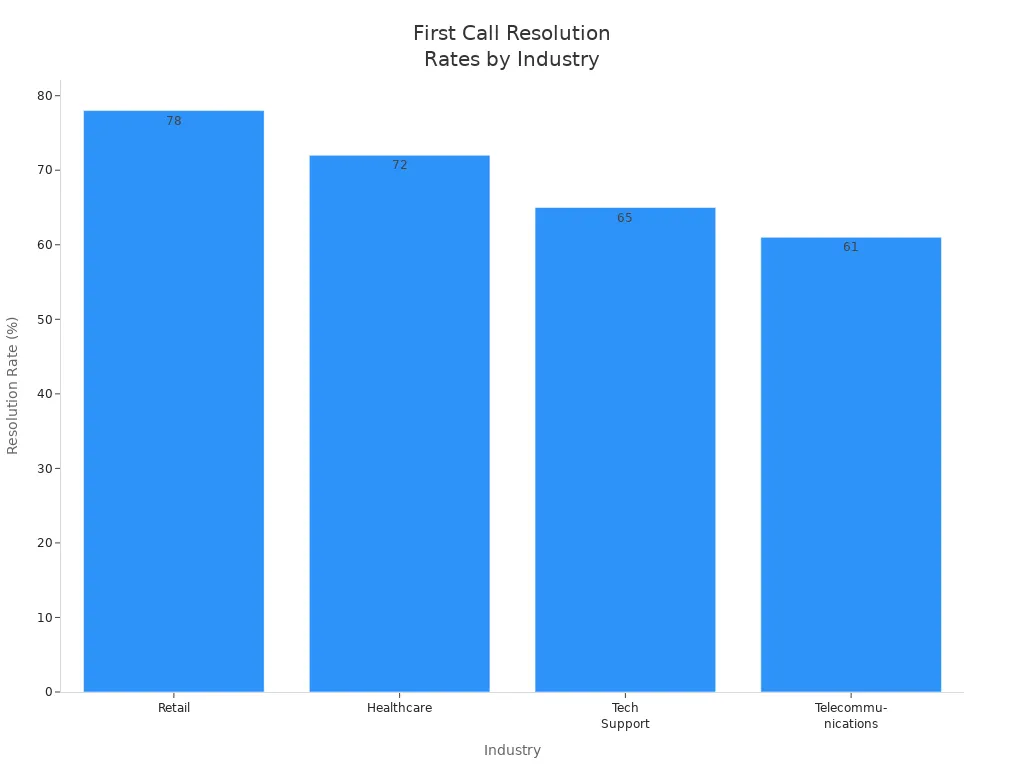
You see that leading organizations resolve most customer inquiries on the first contact. This approach boosts the customer service experience and reduces frustration. The table below shows first call resolution rates in different industries:
| Industry | First Call Resolution Rate |
|---|---|
| Retail | 78% |
| Healthcare | 72% |
| Tech Support | 65% |
| Telecommunications | 61% |
You improve customer service by following best practices for responding to inquiries. These include timeliness, clarity, providing value, and ending on a positive note. The table below shows these best practices:
| Best Practice | Description |
|---|---|
| Timeliness | Respond within 24 hours to maintain credibility and avoid losing opportunities. |
| Clarity | Use clear and concise language, avoiding jargon and ambiguity. |
| Providing Value | Offer helpful information or resources that guide the customer to next steps. |
| Positive Ending | Conclude with appreciation and a courteous closing to leave a good impression. |

You perform customer service duty by listening to customers, answering questions, and referring them to supervisors if needed. You record details of customer contacts and actions taken. You use tools like Sobot’s omnichannel platform to unify customer service interactions and streamline responses (Sobot Omnichannel Solution). This technology helps you deliver consistent customer support across all channels.
Resolving Complaints
You resolve complaints when you address customer issues and restore satisfaction. This customer service duty requires empathy, quick action, and follow-up. You apologize for inconvenience, solve the problem, and mend the relationship. You focus on finding solutions rather than assigning blame.
Note: Empathy and apology show customers their concerns are valid. Quick resolution retains trust.
You see that top-performing companies resolve complaints within 24 hours on average. In hotels, complaints are often resolved in a couple of hours. For electronic products, resolution may take days or weeks. You calculate the average resolution time by dividing total resolution times by the number of tickets solved.
You follow effective strategies for resolving complaints:
- Apologize and show empathy.
- Solve the problem quickly.
- Mend the relationship by offering something of value.
- Follow up to ensure satisfaction.
- Empower employees to make decisions.
- Analyze complaint data to improve services.
You transform complaints into opportunities by acting quickly and maintaining transparency. You build long-term loyalty through positive customer service experiences. You can see examples like the Ritz-Carlton hotel, which went above and beyond to resolve a child’s lost stuffed animal, turning a complaint into a memorable customer experience (Ritz-Carlton Story).
You use Sobot’s ticketing system to automate workflows and manage complaints efficiently (Sobot Ticketing System). This system helps you track issues, follow up, and ensure timely resolution.
Processing Orders
You process orders when you handle customer purchases and ensure smooth transactions. This customer service duty includes receiving orders, verifying information, allocating stock, picking and packing products, shipping orders, invoicing, and notifying customers. You analyze feedback and update inventory after shipping.
Tip: Accurate order processing leads to satisfied customers and business growth.
You minimize human error by automating manual processes and using inventory management software. You ensure customer satisfaction by integrating order processing with other systems. You optimize inventory management, strengthen communication among teams, and review fulfillment procedures regularly.
You follow standard procedures for processing orders in e-commerce:
- Receive the order.
- Verify and validate customer information.
- Allocate stock for shipping.
- Pick and pack products.
- Ship orders with a carrier.
- Invoice and notify customers.
- Post-order processing and feedback analysis.
You ensure accuracy by developing comprehensive onboarding programs, conducting ongoing training, and establishing quality control measures. The table below shows strategies for accuracy:
| Strategy | Description |
|---|---|
| Comprehensive Onboarding | Train new hires on all aspects of order processing. |
| Ongoing Training Sessions | Update staff on new procedures and best practices. |
| Quality Control Measures | Catch errors before they reach the customer. |
You use Sobot’s unified workspace to manage orders, customer data, and communications in one place (Sobot Unified Workspace). This integration streamlines operations and improves customer service.
Providing Product Information
You provide product information when you help customers understand features, benefits, and usage. This customer service duty empowers customers to make informed decisions and increases satisfaction. You use software platforms, knowledge bases, and customer data to deliver quick and reliable answers.
Note: Comprehensive product information aligns customer expectations with the product and enhances satisfaction.
You communicate clearly and empathetically, using simple language and avoiding jargon. You follow up with customers after providing information and ask for feedback to improve service. You see that reliable product information on packaging influences buying behavior and satisfaction.
You use Sobot’s AI-powered chatbot and knowledge base to provide accurate and timely product information (Sobot Chatbot). This technology supports 24/7 customer support and self-service options, improving customer service experiences.
You see that providing product information is a key part of customer service duty. You help customers make choices, understand products, and feel confident in their purchases. You build trust and loyalty through excellent customer service interactions.
Core Duties Checklist
You perform these core customer service duties every day:
- Respond to inquiries across channels.
- Resolve complaints with empathy and speed.
- Process orders accurately and efficiently.
- Provide product information that empowers customers.
You use technology like Sobot’s omnichannel platform, ticketing system, and chatbot to enhance customer service and deliver outstanding customer support. You shape the customer experience and drive business success through your actions.
Reminder: Every customer service duty you perform impacts customer satisfaction and loyalty.
You see that customer service duties are evolving with technology. You adapt to new tools and best practices to deliver superior customer service experiences. You build lasting relationships and help your company grow by focusing on these core duties.
For more details on how Sobot supports these duties, visit Sobot’s official website.
Trends in Customer Service Duty

Omnichannel Support with Sobot
You see a big shift in customer service duty as companies move toward omnichannel support. This means you can help customers across phone, email, chat, and social media, all in one place. Sobot’s omnichannel platform lets you manage every customer interaction from a unified workspace. You improve customer service by responding faster and keeping conversations consistent. Businesses using multichannel platforms report a 94% increase in agent productivity. Customer issue resolution speeds improve by 92%. Companies that use Sobot often see a 30-40% boost in agent efficiency and a 70% drop in routine inquiries through AI automation. You notice that strong omnichannel strategies help businesses retain 89% of their customers, compared to only 33% for weak strategies (source).
- An e-commerce brand saw a 40% reduction in support tickets after using Sobot.
- A global fashion brand had a 32% drop in support tickets and a 19% rise in average order value.
AI and Automation in Customer Service
AI and automation are changing customer service duty. Sobot’s chatbot and AI-powered voicebot give customers 24/7 support. You use these tools to answer questions, solve problems, and provide information quickly. AI systems help you analyze customer data and understand sentiment. Nearly 39% of companies use AI analytics, and 38% use AI to gauge customer feelings. Organizations using AI-powered customer service report 17% higher satisfaction rates.
| Metric | Percentage |
|---|---|
| Organizations using AI-powered customer service | 17% higher customer satisfaction |
AI-driven chatbots improve response time and accuracy. You help customers get answers fast, which leads to higher satisfaction and trust. Sobot’s solutions let you automate routine tasks, freeing you to focus on complex issues.
Personalization and Proactive Outreach
Personalized customer service is a top trend. You use AI and automation to gather and analyze customer data. You offer custom solutions and humanize your language. Sobot’s platform helps you provide support that feels personal. You use customers’ names, create VIP programs, and ask for feedback. Proactive outreach means you contact customers before they ask for help. Leading companies now focus on proactive customer service duty, which increases loyalty and repeat business. Nearly 70% of companies expect to shift to mostly proactive support by 2027.
Tip: Proactive outreach creates value for new customers and builds lasting relationships.
| Trend Description |
|---|
| Real-time feedback tied to stakeholder action |
| Fast problem-solving through crowdsourcing |
| Improve agent engagement and optimize service quality |
| Automated insights from every conversation |
| Frontline-specific coaching |
| QM and assurance optimization |
| Virtual hold and scheduling technology |
You see that customer service duty now includes real-time feedback, fast problem-solving, and coaching for agents. Sobot’s technology helps you stay ahead in delivering excellent customer experience.
Customer Service Duty Examples

Sobot and OPPO Case Study
You can see how customer service duty transforms business results when you look at OPPO’s partnership with Sobot. OPPO faced high volumes of customer inquiries during shopping festivals. Sobot’s AI chatbot managed repetitive questions, so human agents could focus on complex customer service issues. You benefit from this approach because it improves efficiency and lets you deliver a better customer experience.
- Sobot’s AI chatbot reached an 83% resolution rate for customer service inquiries.
- The chatbot received a 94% positive feedback score from customers.
- Human agents handled fewer repetitive tasks and focused on more challenging customer service needs.
You notice that OPPO improved its customer service metrics after using Sobot’s technology. The table below shows key outcomes:
| Outcome | Value |
|---|---|
| Resolution Rate | 83% |
| Increase in Repurchase Rate | 57% |
You see that customer service duty, supported by technology, leads to higher satisfaction and repeat purchases. OPPO’s story shows how you can use smart tools to enhance customer service and create a positive experience for every customer.
Real-World Scenarios Across Industries
You perform customer service duty in many industries. Each industry shapes its customer service approach based on unique needs. The table below highlights how companies implement customer service duty:
| Company | Industry | Customer Service Implementation |
|---|---|---|
| Ritz-Carlton | Hospitality | Sets a high standard for customer loyalty and luxury service. |
| ServiceTitan | Software | Offers contractors a SaaS solution to improve business operations and customer service. |
| Amazon | E-commerce | Aligns customer service with business strategy for retention and satisfaction. |
| Ace Hardware | Retail | Uses omnichannel customer service for engagement online and in-store. |
| Farfetch | Fashion | Connects creators and consumers in luxury fashion with strong customer service. |
| Zappos | Retail | Known for extreme dedication to customer service and experience. |
| Chewy | E-commerce | Goes above and beyond to build strong customer relationships. |
| Trader Joe’s | Grocery | Employees create a positive customer experience with their attitude. |
| Patagonia | Outdoor Retail | Designs gear with customer needs and environmental responsibility in mind. |
You see that customer service duty varies by industry:
- In retail, you interact directly with customers to ensure satisfaction and smooth transactions.
- In finance, you provide tailored advice and build long-term customer relationships.
- In healthcare, you focus on empathy and understanding each customer’s health needs.
You learn that customer service duty adapts to each industry, but the goal stays the same: deliver a great customer experience and build loyalty. You can find more examples and details on Sobot’s official website (Sobot Customer Stories).
Skills for Customer Service Excellence
Communication and Empathy
You build strong customer relationships when you master communication and empathy. These skills help you deliver outstanding customer service duty and create positive customer experiences. You listen actively and use empathetic language to show you care. You understand customer perspectives and respect different communication preferences. You collect feedback and act on it to improve service. You optimize for human support and watch your tone of voice. You put yourself in the customer’s shoes and analyze the complete picture. You follow up with customers and craft thoughtful responses.
Tip: Effective communication reduces misinformation and increases trust. A national insurance provider improved customer satisfaction by 75% after fixing internal communication issues. According to PwC, 86% of buyers pay more for a great customer experience.
Problem-Solving and Adaptability
You solve problems quickly and adapt to new challenges in customer service duty. You learn from failures and build a diverse skill set. You use emotional intelligence to collaborate and find solutions. You practice with puzzles and brain teasers to sharpen your mind. You seek out challenging projects and reframe problems as opportunities for innovation. You conduct post-mortem analyses on failed attempts and gain exposure to different departments. You develop emotional intelligence through targeted exercises.
Note: Adaptability helps you handle unexpected customer issues and deliver consistent service.
| Problem-Solving Techniques | How You Apply Them |
|---|---|
| Learning from Failures | Analyze setbacks for insights |
| Building a Diverse Skill Set | Gain cross-functional knowledge |
| Emotional Intelligence | Use empathy in collaboration |
Tech Skills for Modern Customer Experience
You need strong tech skills to excel in customer service duty today. You show technical proficiency and data literacy. You understand AI and automation tools that enhance customer engagement. You track revenue-related metrics and understand sales processes. You work in teams or independently and pivot to new channels and initiatives. You show willingness to learn new skills and gain experience with emerging technologies. You adapt to changing technology and meet customer preferences. You learn and implement new skills to improve service and customer experience.
Callout: Tech skills help you deliver fast, personalized service and boost customer engagement.
You see customer service duty change over time. You adapt to new tools and trends to improve satisfaction. The table below shows how customer service duty evolved:
| Time Period | Key Developments |
|---|---|
| Early Commerce | Personal relationships drove satisfaction. |
| Industrial Age | Transactional interactions affected satisfaction. |
| Present Day | Technology and personalization boost customer satisfaction. |
You use Sobot’s solutions to deliver satisfaction and meet customer satisfaction goals. You focus on satisfaction by learning from history and using AI for personalized experiences. You drive business success and build loyalty through customer service duty and satisfaction.
FAQ
What is customer service duty and why does it matter?
You perform customer service duty when you help customers solve problems and answer questions. This duty matters because you meet customer needs and build trust. You improve customer engagement and help your company grow by focusing on customer needs.
How do Sobot’s customer service solutions address customer needs?
You use Sobot’s customer service solutions to unify channels and automate tasks. These tools help you respond to customers quickly and accurately. You meet customer needs by providing consistent support and improving satisfaction.
How can you identify customer needs in customer service duty?
You listen to customers and ask questions. You use data from Sobot’s platform to track feedback and spot trends. You analyze customer needs to improve service and adapt your approach. You focus on customer needs to deliver better experiences.
What skills help you excel in customer service duty?
You develop strong communication and empathy. You learn to solve problems and adapt to new challenges. You use technology to understand customer needs and deliver fast support. You build relationships with customers and improve customer engagement.
How does technology improve customer service duty for customers?
You use Sobot’s omnichannel platform and AI tools to meet customer needs. Technology helps you answer questions faster and resolve issues. You provide customer service solutions that make customers feel valued and understood.
See Also
Top Strategies for Effective Call Center Quality Management
Transforming Customer Support with AI-Powered Service Agents
Exploring the Responsibilities of IT Call Center Agents

