Decoding AI Chatbot Costs for Auto Dealers

In 2025, the cost for an auto dealership chatbot can range from $200 to over $2,500 per month. This wide cost spectrum in the automotive industry reflects different budgetary considerations. The final cost of a chatbot depends on several factors. Key variables include the specific ai-powered customer communication tools pricing models auto service you choose, the complexity of the chatbot AI, and the depth of integration with your systems. Understanding these costs is vital. This guide helps you navigate chatbot pricing and make a sound decision for your business. Evaluating advanced ai chatbots, their integration capabilities, and overall costs will improve your customer experience. A quality chatbot from Sobot, powered by Sobot AI, can be a great asset, unlike a basic chatbot. Many chatbots, including the Sobot call center chatbot, have a high cost, but their value justifies these costs. The chatbot model has a cost.
AI-Powered Customer Communication Tools Pricing Models for Auto Service
An AI-powered chatbot is a significant investment for your dealership. Understanding the various pricing structures is the first step toward making a smart financial decision. The cost of a chatbot isn't a single number; it's a reflection of the features, support, and value it delivers. You need to explore the common ai-powered customer communication tools pricing models auto service to find the best fit for your operational needs and budget.
This section breaks down the four primary pricing models you will encounter. We will examine how each model works, who it's best for, and what the associated costs typically look like. This knowledge will empower you to evaluate providers effectively and choose a plan that aligns with your dealership's goals.
The Flat-Rate Chatbot Subscription
The flat-rate subscription is the most straightforward pricing model. You pay a fixed monthly fee for access to the chatbot service. This model offers predictability, making it easy to budget for your chatbot costs. The single cost typically covers a defined set of features, a certain number of user interactions, and standard customer support. This subscription-based model is often ideal for small to mid-sized dealerships with consistent website traffic and predictable customer inquiry volumes.
However, "flat-rate" does not mean "one-size-fits-all." The monthly cost can vary significantly based on the provider and the included features.
- Some providers offer plans from $199 to $799 per month, with the cost depending on your dealership's size and the complexity of the features you need, such as lead qualification and CRM integration.
- Other vendors structure their flat-rate subscription with more defined packages. For example, a basic chatbot plan might cost $599 per month for website, social media, and SMS capabilities. A more comprehensive plan with automated lead nurturing could be $1,499 per month, while an all-in-one package with Voice AI might reach $2,299 per month.
The key benefit is cost certainty. You know exactly what your chatbot expenses will be each month, with no surprises. This makes financial planning simple and transparent.
The Tiered Pricing Package
The tiered pricing package is one of the most common ai-powered customer communication tools pricing models auto service. This model offers several subscription levels, or "tiers," each with a different price point and feature set. As you move up the tiers, you unlock more advanced capabilities, higher interaction limits, and greater customization options. This structure allows you to scale your chatbot investment as your dealership grows. You can start with a basic plan and upgrade when you need more power.
Most Chatbot-as-a-Service (CaaS) providers use tiered subscription plans. These plans often differentiate based on the number of monthly conversations, data storage capacity, and access to specific functionalities. The typical monthly cost for these services ranges from $300 to $1,200, depending on the complexity and included services.
Here is how different vendors might structure their tiers:
| Vendor | Plan Name | Monthly Cost | Key Features/Notes |
|---|---|---|---|
| AgentiveAIQ | Base | $39 | Scalable for single dealerships |
| Pro | $129 | Unlocks advanced features progressively | |
| Agency | $449 | Suitable for nationwide franchises | |
| Spyne.ai | Entry-level | $199 | For dealer store builder |
| Higher tiers | N/A | Additional AI content creation, advanced analytics | |
| ManyChat | Free | $0 | Limited features |
| Pro | $10 (annually) | Up to 500 contacts | |
| Premium | $30 | Larger contact lists, advanced automation |
This model provides flexibility. You only pay for the features you currently need, avoiding the high initial cost of an enterprise-level solution. When your lead volume increases or you decide to implement more advanced automation, you can simply move to a higher subscription tier. This makes tiered pricing an excellent choice for growing dealerships that want a scalable chatbot solution.
The Pay-Per-Use Model
The pay-per-use model, also known as a pay-as-you-go model, links your costs directly to usage. Instead of a fixed monthly subscription, you pay based on the number of interactions or resolutions your chatbot handles. An "interaction" is usually a single message exchange, while a "resolution" means the chatbot successfully completed a user's request. This model is highly attractive for dealerships with fluctuating or unpredictable website traffic.
The cost per interaction can range widely, from as low as $0.006 to as high as $6. Other estimates place the average chatbot cost-per-interaction between $0.50 and $0.70. The significant variance depends on the complexity of the query and the AI's capabilities.
Note: This model offers maximum cost efficiency if your inquiry volume is low or seasonal. You only pay for what you use, which can lead to lower overall costs during slower months.
However, this model comes with a trade-off: budget unpredictability. A sudden spike in customer inquiries, perhaps from a successful marketing campaign, could lead to unexpectedly high chatbot costs. You must carefully monitor usage to avoid budget overruns. This model is best for dealerships that have a clear understanding of their customer interaction patterns and can absorb potential fluctuations in monthly expenses.
The Custom Hybrid Model
The custom hybrid model combines elements from the other pricing structures to create a tailored solution. This approach is typically reserved for large dealership groups or franchises with unique and complex requirements. A custom plan often starts with a base subscription fee and adds usage-based costs for specific high-value services. This model offers the ultimate flexibility, allowing you to build a chatbot solution that perfectly matches your operational workflow.
For large dealerships, a custom package often bundles several critical services. These chatbots are designed to be more than just a simple Q&A tool; they become a central part of the sales and service process.
Key features often included in a custom hybrid package are:
- Smarter Lead Handling: The chatbot qualifies inquiries, captures essential data for personalized follow-ups, and routes hot leads directly to your sales team.
- Seamless Live Chat Escalation: The chatbot handles routine questions and instantly transfers complex conversations to human agents, providing them with the full chat history for context.
- CRM Integration and Personalization: Deep integration with your CRM allows the chatbot to access customer history, enabling personalized vehicle suggestions, financing options, and service reminders.
- Multichannel Support: The chatbot extends its reach across your website, SMS, and social media platforms like WhatsApp, creating a unified customer experience.
Building a custom solution involves a higher initial investment and a more involved setup process. However, for a large-scale operation, the long-term ROI from a perfectly tailored chatbot can far outweigh the initial costs. This model ensures you are not paying for unnecessary features while having the power to automate your most important customer interactions. It represents the pinnacle of ai-powered customer communication tools pricing models auto service, offering unparalleled control and performance.
Key Factors Driving Your Chatbot Cost
Understanding the pricing models is only the first step. The final price you pay is determined by a combination of technology, services, and support. You must look beyond the monthly subscription fee to see the full picture of your investment. Several key factors directly influence your total chatbot cost. Analyzing these elements helps you choose a solution that provides real value instead of just being another line item on your budget. The development of a powerful chatbot involves significant costs.
AI Complexity and Capabilities
The single biggest driver of your chatbot cost is the sophistication of its artificial intelligence. A simple, rule-based chatbot that only answers basic, pre-programmed questions has a much lower cost than an advanced conversational AI. The key difference is the use of Natural Language Processing (NLP). NLP allows a chatbot to understand, interpret, and respond to human language in a natural way. A chatbot with strong NLP can handle complex customer questions. The development of this NLP technology is a major cost factor.
A basic chatbot relies on keyword matching. If a customer types "oil change," the chatbot finds the keyword and gives a standard reply. This has a low development cost. In contrast, a chatbot using advanced NLP can understand intent. A customer might ask, "How much for my 50k service?" or "My car is due for maintenance, what do I do?" An NLP-powered chatbot understands both questions mean the customer needs to schedule service. This level of NLP capability dramatically increases the chatbot's value and its associated cost. The development of robust NLP is complex.
The development of Natural Language Processing (NLP) features alone can represent a significant investment, sometimes ranging from $20,000 to $50,000 for a custom solution. This advanced NLP is what separates a simple bot from a true digital assistant. A chatbot without good NLP will frustrate users. Your chatbot cost will reflect its NLP power.
The implementation cost for different types of chatbots highlights this difference. A more advanced chatbot will always have a higher cost.
| Chatbot Type | Implementation Cost | Monthly Fees |
|---|---|---|
| Task-Specific Bots | $3,000 - $10,000 | $100 - $1,000 |
| Conversational AI Agents (with advanced NLP) | 3-5x more than basic chatbots | N/A |
Ultimately, you are paying for the chatbot's brain. A smarter brain with superior NLP capabilities carries a higher cost but delivers a much better customer experience and higher ROI. The development of this brain is where most of the cost lies.
DMS and CRM Integration Needs
For an auto dealership, a standalone chatbot has limited value. Its true power is unlocked through integration with your core systems, like your Dealer Management System (DMS) and Customer Relationship Management (CRM) software. This integration allows the chatbot to perform high-value actions automatically. The API integration is key.
Consider these scenarios enabled by deep integration:
- Service Appointments: A chatbot can access your DMS to show real-time service availability and book appointments directly in the chat window.
- Vehicle Inventory Checks: Customers can ask about specific models, and the chatbot can check your live inventory and provide details.
- Lead Nurturing: The chatbot can capture a lead's information and push it directly into your CRM, triggering automated follow-up sequences.
- Personalized Offers: By accessing a customer's profile in the CRM, the chatbot can offer personalized service reminders or trade-in valuations.
Each integration point adds to the overall cost. Some chatbot providers include standard API integrations for major CRMs in their higher-tier plans. However, if you use a custom DMS or require a unique API connection, you will likely face additional development costs. This custom development requires specialized work to build and maintain the API connection, which increases the total cost of ownership. A seamless API integration is worth the investment.
Customization and Branding
Your chatbot is an extension of your dealership's brand. It should look and feel like part of your website, not a generic, third-party widget. The level of customization you require will directly impact the cost.
Basic customization is often included in standard plans. This usually involves:
- Changing the chatbot window's colors to match your brand palette.
- Uploading your dealership's logo.
- Setting a basic welcome message.
However, deeper customization comes with a higher price tag. This can include creating a fully custom chatbot interface that matches your website's design perfectly. It might also involve extensive development work to create custom conversational flows that align with your unique sales process. A custom chatbot that guides users through a specific qualification funnel is more complex and costly to build than one that uses standard templates. This custom development ensures the chatbot functions exactly as you need it to. These custom features add to the final cost.
One-Time Setup and Training Fees
Many chatbot providers charge a one-time fee for setup and implementation. This cost can range from a few hundred to several thousand dollars. While it might be tempting to look for a provider with no setup fee, this initial investment is often crucial for success. These initial costs cover important development and configuration tasks.
This fee typically covers:
- Technical Implementation: The provider's team ensures the chatbot is correctly installed on your website and configured to work properly.
- Knowledge Base Creation: They help you build the initial knowledge base, loading it with information about your inventory, services, and FAQs.
- Integration Setup: The team handles the initial API development and configuration to connect the chatbot to your DMS and CRM.
- Team Training: They train your staff on how to use the chatbot dashboard, manage conversations, and take over from the chatbot when needed.
Think of this fee as an investment in a smooth launch. Proper setup and training prevent technical glitches and ensure your team is ready to leverage the new tool from day one, maximizing your return. These upfront costs are a necessary part of the process.
Ongoing Support and Maintenance
A chatbot is not a "set-it-and-forget-it" technology. It requires continuous attention to perform at its best. Your subscription fee or a separate maintenance plan will cover these ongoing costs. The ongoing costs for maintenance ensure your chatbot remains effective.
Ongoing support and maintenance costs typically include:
- Technical Support: Access to a support team to help you resolve any issues that arise.
- Software Updates: Regular updates to the chatbot platform that provide new features and security patches.
- Performance Monitoring: Analytics and reporting that help you understand how the chatbot is performing.
- Optimization: Help with refining the chatbot's knowledge base and conversation flows based on real user interactions.
The level of support you choose will affect your monthly cost. A basic plan might only offer email support, while premium plans provide dedicated account managers and 24/7 phone support. The ongoing costs for maintenance are a critical part of your budget. The price for these support packages varies widely across the industry.
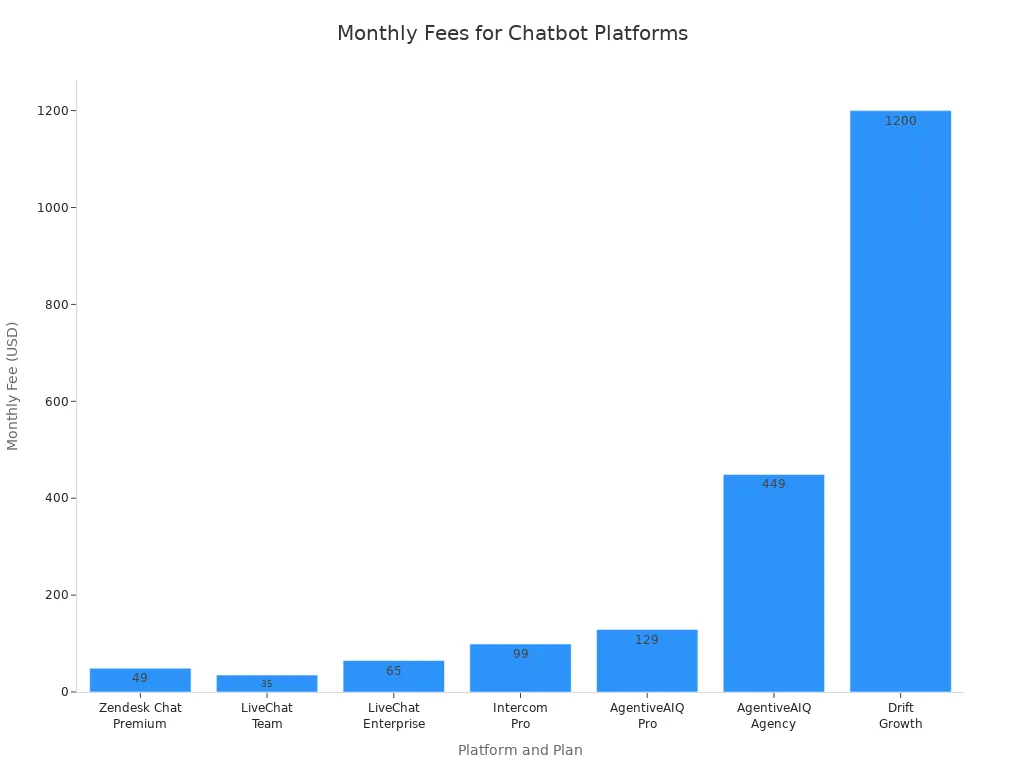
| Platform | Plan | Monthly Fee |
|---|---|---|
| A Chat Provider | Team | $35/month per seat |
| Another Platform | Pro | $99/month |
| AgentiveAIQ | Pro | $129/month |
| A Premium Service | Growth | $1,200/month |
Choosing the right support plan is essential. It ensures you have the help you need to keep your chatbot running smoothly and continuously improving its performance over time.
Evaluating a Solution: The Sobot Chatbot Example
Theory is helpful, but a real-world example clarifies the decision-making process. You can use a comprehensive solution like the Sobot Chatbot as a benchmark to evaluate potential providers. Assessing a platform against key criteria helps you understand how specific features translate into real value for your dealership and justify the chatbot cost. This evaluation ensures your investment in chatbot development delivers a strong return.
Assessing Omnichannel Capabilities
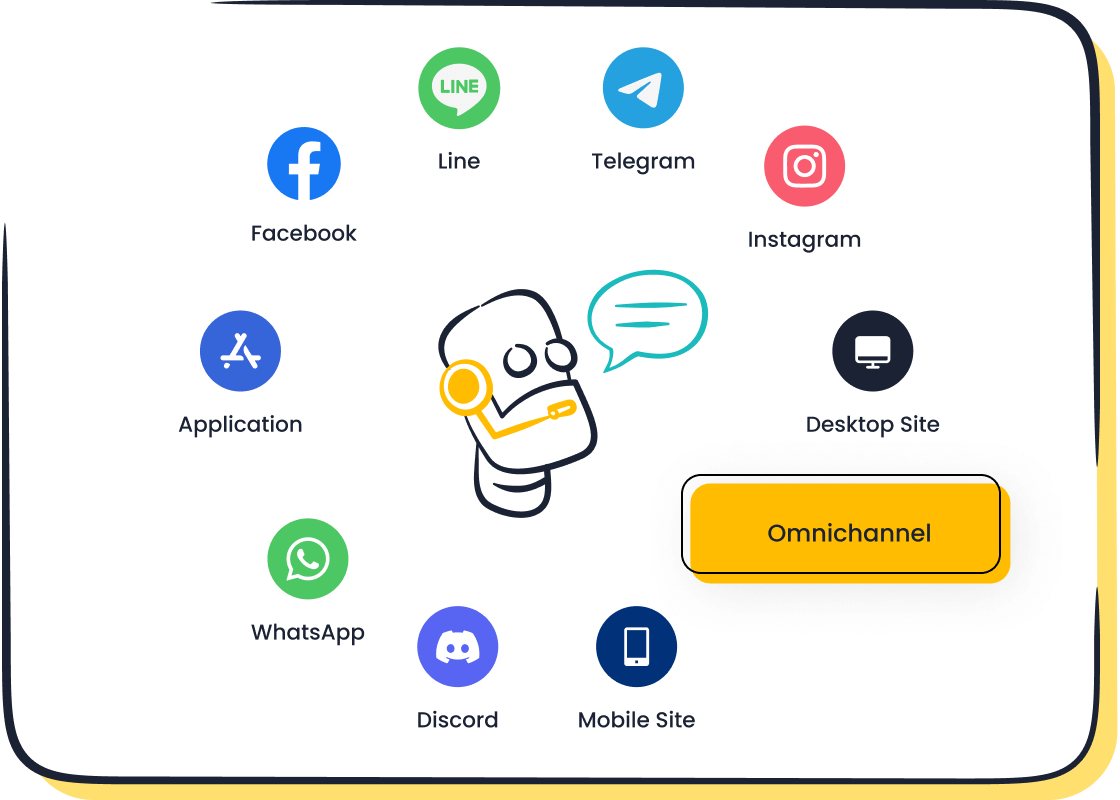
Your customers connect with you through multiple channels. They might visit your website, send an SMS, or message you on WhatsApp. A powerful chatbot meets them on their preferred platform. This is where omnichannel support becomes critical. It unifies all conversations into a single, seamless customer experience. The Sobot chatbot excels here, integrating web chat, SMS, and social messaging. This integration creates a consistent journey, whether a customer is scheduling service or inquiring about a vehicle. This development reduces friction and improves satisfaction. The total cost of a chatbot should reflect this powerful capability.
Valuing a No-Code Platform
Complex technology often comes with a high development cost. However, a no-code platform changes this equation. You should look for a chatbot with a point-and-click interface. This feature empowers your non-technical staff to design and deploy custom conversation flows without writing a single line of code. The Sobot chatbot offers this simplicity. It reduces your reliance on expensive developers for initial setup and ongoing updates. This accessibility lowers the overall chatbot cost and makes your team more agile. The custom development of your chatbot becomes a manageable internal task.
Ensuring Scalability and Support
Your dealership is not static. You need a chatbot that grows with you. A scalable platform supports you from a single location to a multi-franchise group. The Sobot chatbot is built for this growth. Its architecture provides key advantages for scaling your customer service operations.
- Omnichannel AI unifies all communication channels for consistent management.
- Multi-Faceted AI provides an AI Agent for customers, a Copilot to assist your human team, and Insights for administrators to optimize performance.
- Generative AI uses advanced models to handle a growing volume of inquiries with accurate, intelligent responses.
Furthermore, multilingual support allows your chatbot to serve a diverse customer base effectively. This custom capability is vital in the modern automotive industry. The development of these features into one platform justifies the cost.
Verifying Security and Compliance
In the automotive industry, you handle sensitive customer data every day. Your chatbot must protect this information. When evaluating chatbots, you must verify their security protocols. A provider's commitment to data privacy is non-negotiable. For example, Sobot AI ensures compliance with features like regional data centers and data encryption. This focus on security protects your dealership and your customers. A secure API integration is a critical part of this protection. A custom API development should always prioritize security. The cost of a data breach is far greater than the cost of a secure chatbot. This makes the development of a secure API a top priority.
Calculating Your Chatbot ROI
An advanced chatbot is more than an expense; it is an investment in efficiency and growth. You must calculate the return on investment (ROI) to understand the true value. This calculation goes beyond the initial chatbot cost. It measures the financial gains against the total cost of ownership. A proper ROI analysis will justify the development costs and guide your strategy.
Cost Savings From Automation
Automation is the most direct way your chatbot reduces costs. A chatbot can handle up to 45% of repetitive inquiries. This frees your staff to focus on closing deals and complex customer service issues. Automating appointment scheduling alone can increase service revenue by $180,000-$300,000 annually. This direct impact on your bottom line significantly lowers the effective cost of the chatbot. The development of these automated flows is a one-time effort with continuous returns, reducing your long-term operational costs and the total cost of ownership.
Lead Generation and Sales Growth
A chatbot is a powerful engine for lead generation. It engages website visitors 24/7, capturing information and qualifying prospects. Some dealerships see 40% of chatbot interactions lead to scheduled test drives. This consistent lead generation boosts your sales pipeline. In fact, many in the automotive industry report that over 30% of their sales are directly linked to chatbot conversations. This growth comes from the chatbot's ability to provide instant answers, which is crucial for lead generation. The development of a strong lead generation funnel is a key part of the chatbot's value.
A Simple ROI Formula for Your Dealership
You can use a simple formula to estimate your return. This helps you see the real impact beyond the initial development cost.
ROI = (Gain from Investment - Cost of Investment) / Cost of Investment
- Gain from Investment: This includes new revenue from chatbot lead generation and the money saved from automation.
- Cost of Investment: This is the total cost of ownership, including subscription fees, setup, and any custom development costs.
This formula clarifies the financial benefit of your chatbot.
Projecting Gains with Sobot's Metrics
To calculate ROI accurately, you need the right data. A comprehensive platform like the Sobot Chatbot provides the metrics you need to project gains. The development of its analytics dashboard gives you clear insights. You can track key performance indicators (KPIs) to measure success and justify the chatbot cost.
- Lead Conversion Metrics: See how many chatbot chats become qualified leads.
- Cost Per Qualified Lead (CPQL): Compare the chatbot's lead cost to other channels.
- Closed Deals: Attribute sales directly to your chatbot interactions.
- Sales Cycle Length: Measure if the chatbot shortens the time to close a deal.
Tracking these metrics shows the chatbot's direct impact on your business, improving the overall customer experience and proving the value of your investment.
Choosing from the ai-powered customer communication tools pricing models auto service requires care. A tiered subscription model suits growing dealerships, while a flat-rate subscription offers predictable costs. Your best choice depends on your custom needs, chatbot integration, and chatbot development. A solution like the Sobot chatbot offers a comprehensive feature set for custom chatbot development, making it one of the best advanced ai chatbots. This chatbot development ensures value. Audit your processes to manage chatbot costs. See how the Sobot chatbot, with its custom development and deep integration, can work for you. Explore the Sobot chatbot and its development today. These chatbots show great development. This chatbot development is key for all chatbots.
FAQ
How long does chatbot development and setup take?
The initial chatbot development and implementation can take from a few days to several weeks. A simple chatbot has a quick setup. A more complex chatbot with custom development and deep system integrations will require a longer timeline to ensure a successful launch.
Is a basic chatbot enough for my dealership?
A basic chatbot can answer simple questions. However, it lacks the advanced capabilities for lead generation and service scheduling. An advanced chatbot provides a better customer experience and a higher return on investment. The development of a smarter chatbot is a worthwhile investment.
Can I customize the chatbot's conversation flow?
Yes. A quality chatbot platform allows for custom development of conversation flows. You can tailor the chatbot's script to match your dealership's unique sales process and branding without needing extensive technical skills. This custom development ensures the chatbot meets your specific goals.
Why is ongoing chatbot development necessary?
Ongoing development ensures your chatbot remains effective. You can analyze user interactions to refine answers and improve performance. This continuous development cycle helps the chatbot adapt to new customer questions and marketing campaigns, maximizing its value over time for your business.
See Also
Demystifying the Expenses of Outsourced Live Chat Support Services
Your Comprehensive Handbook for Call Center AI Software Solutions
Elevating E-commerce Customer Happiness Through Intelligent Chatbot Implementation
Discovering the Leading AI Tools for Enterprise Contact Center Excellence
An In-Depth Look at AI-Powered Enterprise Call Center Platforms

