Introduction
Customer support is critical for ecommerce success, for it can directly impact conversion rates, brand loyalty, customer life time value (CLV) and repeat purchases. In fact, 82% of customers are more likely to make repeat purchases after a positive experience.
Today’s customer support is far more than just resolving issues. Customers are expecting businesses to deliver seamless omnichannel experience across every touchpoint, and react to their requests throughout the whole purchasing journey.
Therefore, a top priority of online ecommerce service teams is to select the right customer support platform, enabling them to provide efficient and personalized services to customers.
Among the leading providers, Zendesk and Intercom are widely used and recognized by ecommerce businesses worldwide. Both platforms provide robust tools like AI chatbots, live chat, ticketing system and advanced analytics, but they also differ from each other in various aspects like features, pricing, service and suitability for specific ecommerce needs. This comparison will help you understand which solution aligns best with your business goals and team structure.
Why Ecommerce Businesses Need the Right Customer Support Tool
As ecommerce continues to grow, customer expectations are also rising rapidly. Customer support has become a must for ecommerce businesses, and customers are requiring fast, consistent and high-quality assistance at every stage of customer journey.
But meeting all these expectations is not easy. Ecommerce teams often face several challenges at the same time:
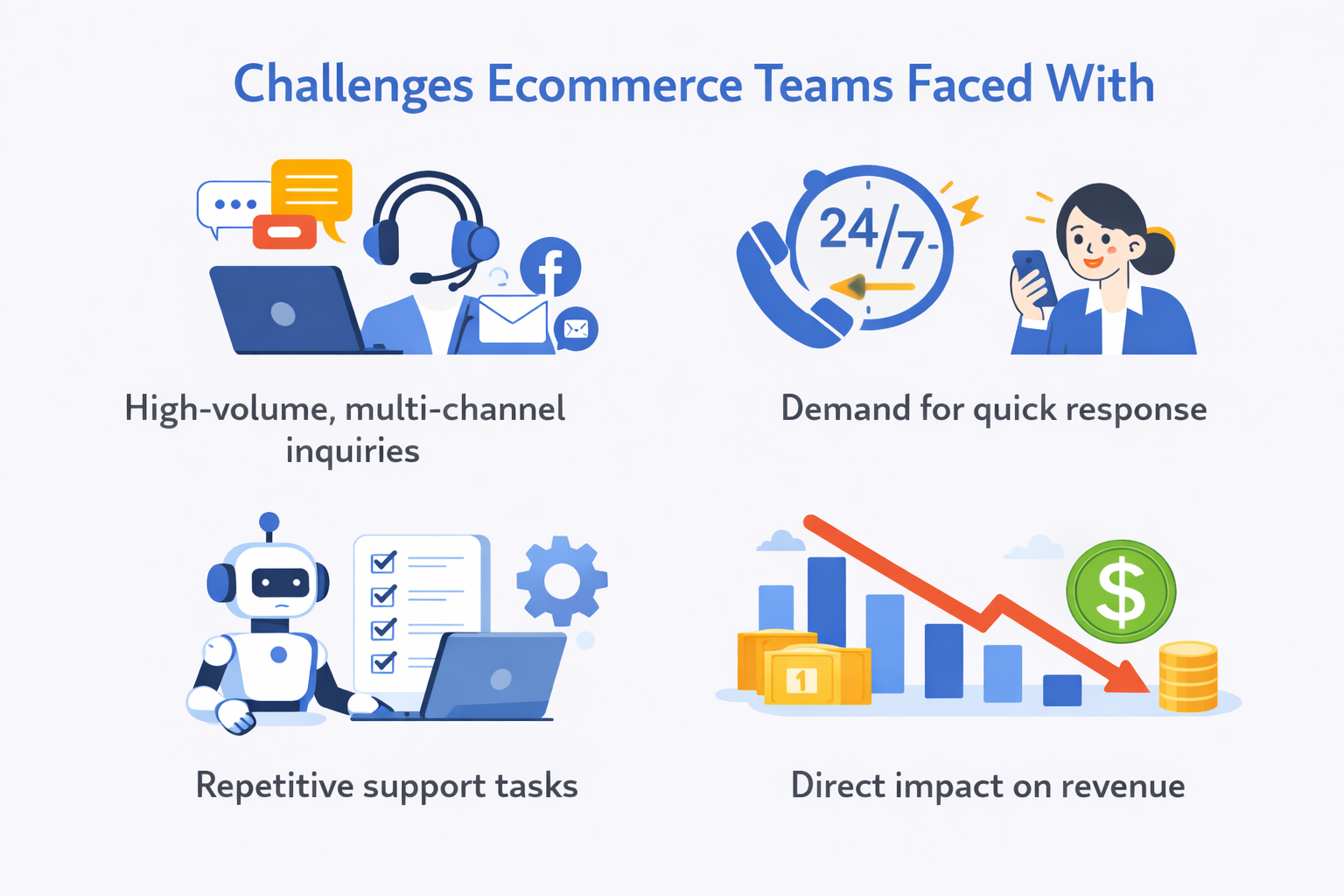
- High-volume, multi-channel inquiries: Customers are likely to reach out to businesses via live chat, email, social media, SMS, and even phone calls, and they often desire a seamless experience across all channels, especially during the peak hours.
- Demand for quick response: Customers frequently need immediate reaction and assistance when they turn to ecommerce service teams for help.
- Repetitive support tasks: Some common and frequently asked questions about order status, returns, delivery or product details are repetitive, but can significantly overwhelm support teams.
- Direct impact on revenue: In ecommerce, slow or inconsistent support doesn’t just affect satisfaction—it can lead to abandoned carts and lost sales, directly influencing business revenue and growth.
Not all customer service platforms can support ecommerce businesses to address all these issues above, for they’re not equally effective, and they have unique strengths respectively. A platform that works well for phone call support may not be able to receive customers through online chat. That’s why choosing the right customer support tool becomes essential.
The right solution can centralize messages, automate repetitive workflows, and help teams respond faster while ensuring service quality.
For example, when a customer asks about order status through live chat and then follows up via phone call, a poorly integrated system may recognize it as two different customers —forcing the customer to repeat information and slowing resolution. In contrast, a well-suited ecommerce support platform can unify these interactions into a single thread, giving agents full context and enabling faster, more accurate responses.
With this in mind, the differences between platforms like Zendesk and Intercom become especially important for ecommerce businesses looking to scale their support effectively.
Feature Comparison: Zendesk vs Intercom
AI & Automation
Zendesk provides AI-powered ticket routing, automated responses, and workflow automation that reduce manual work and improve agent efficiency. Its AI can detect customer intent, categorize tickets, and route them to the appropriate team, helping support teams resolve issues faster and at scale. According to Zendesk data, businesses can resolve tickets 21% faster with its AI features and handle significantly higher request volumes through automation and self-service.
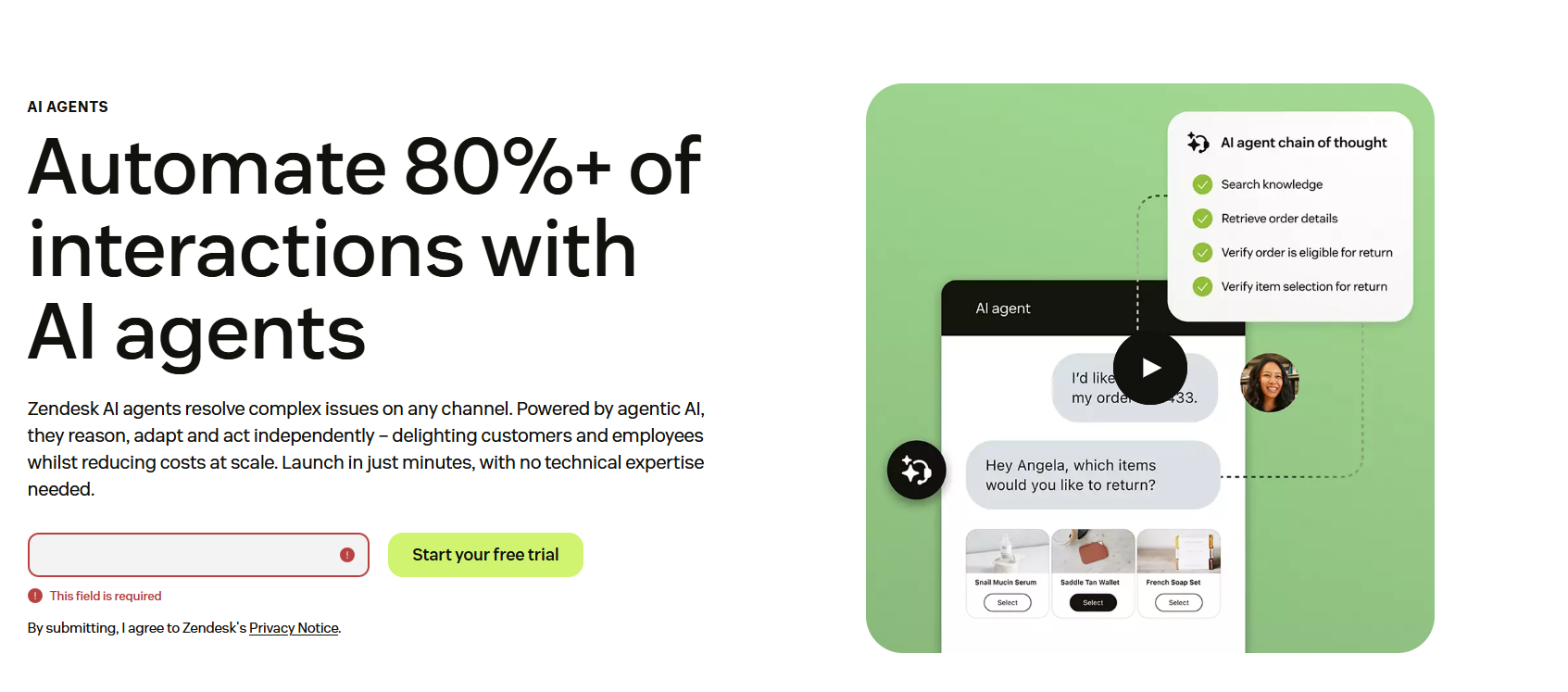
Intercom takes a messaging-first, AI-driven approach. Its AI chatbot can answer common customer questions, generate responses based on knowledge base, and escalate complex issues to human agents when needed. Intercom’s AI (Fin) has strong automation capabilities, with the average resolution rate of over 66%. In addition, Intercom supports proactive messaging triggered by user behavior, enabling businesses to engage customers in real time based on their actions within a website or app. In addition, Intercom applies AI to behavior-based automation, triggering messages and support actions based on user activity, promoting customer engagement without human intervention.
Ecommerce Industry Compatibility
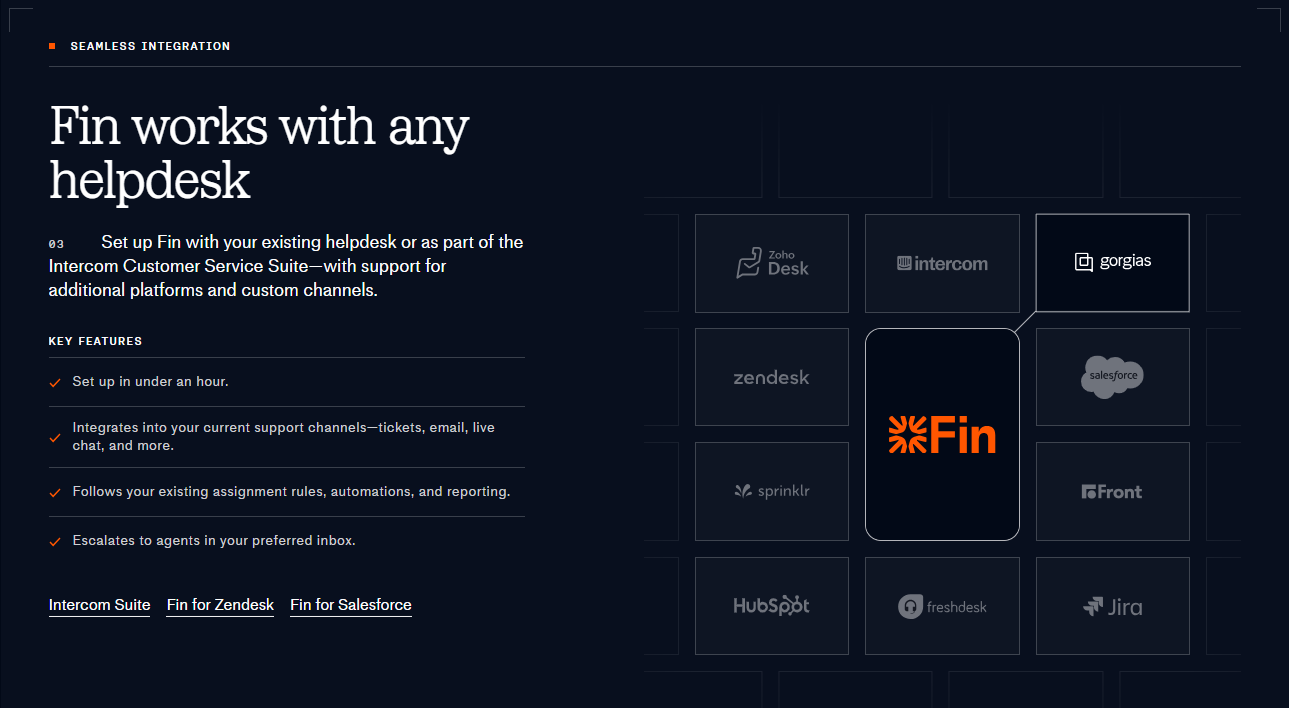
Zendesk integrates with major ecommerce platforms such as Shopify, Magento, and WooCommerce. This allows customer service agents to get consistent customer and order information within the support system, helping ecommerce businesses handle inquiries like order status, returns, and refunds more efficiently without switching platforms.
Intercom focuses more on ecommerce-oriented customer engagement workflows rather than deep operational integrations. It enables businesses to trigger messages based on user behaviors, such as engaging customers who stay on a product or checkout page without requiring the customer to initiate a conversation.
Customer Support Channels & Coverage
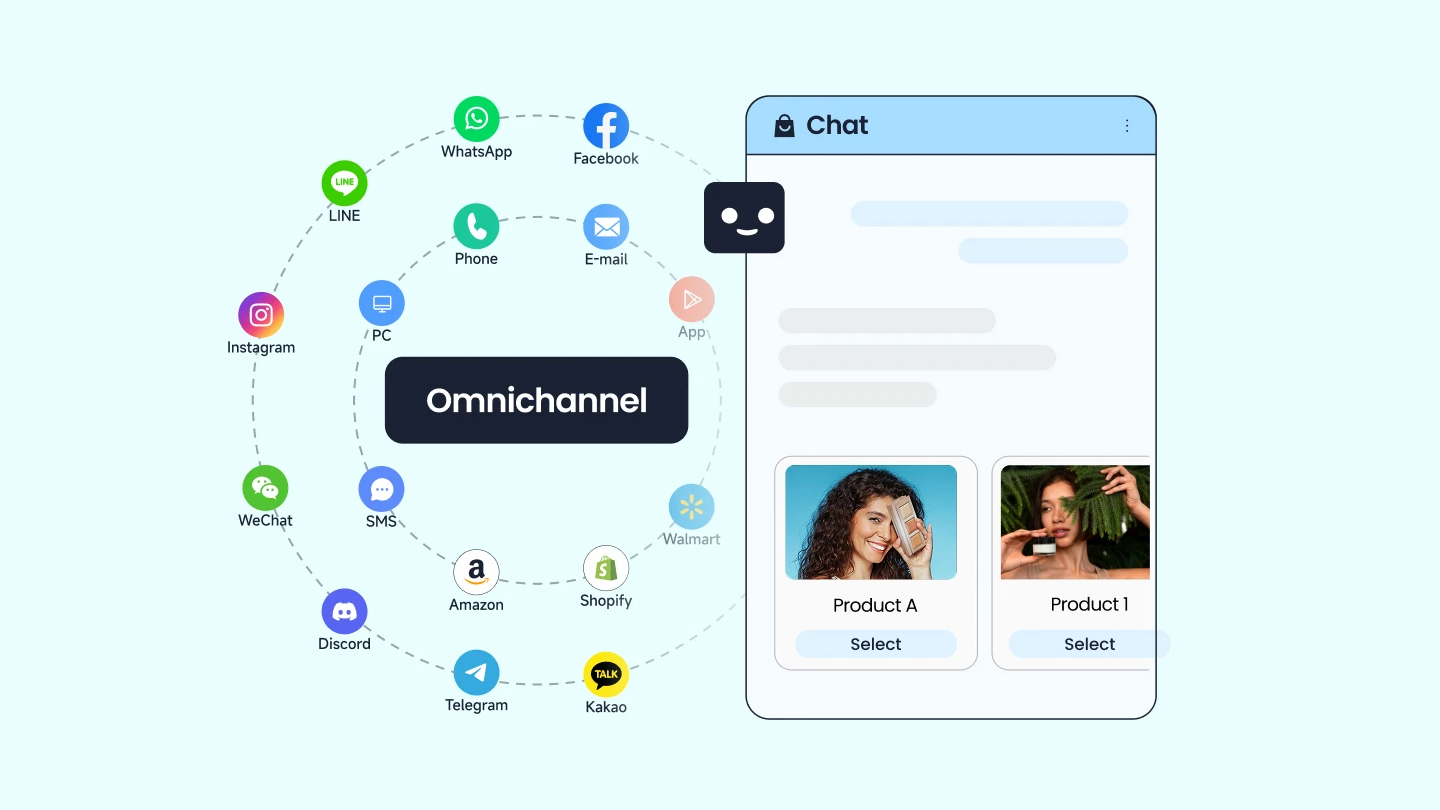
Zendesk provides omnichannel support on various channels, including email, live chat, social messaging (such as Facebook Messenger, WhatsApp, and Instagram), SMS, and voice. It unifies these channels into a single system, allowing agents to manage conversations from different touchpoints in one place. This makes it well-suited for ecommerce teams handling high volumes of inquiries across multiple channels.
Intercom supports live chat, email, and in-app messaging as its core channels, and also integrates with channels like WhatsApp and other social platforms. However, its strength lies in real-time, chat-based interactions and proactive messaging, rather than managing complex, multi-channel support workflows at scale. Voice support is more limited.
Third-Party Integrations & Ecosystem
Zendesk connects with CRMs, marketing tools, analytics platforms, and other third-party applications through its extensive APIs. It offers integrations with 1800+ apps and tools such as Salesforce, Shopify, Slack, and Jira, enabling businesses to centralize customer data and streamline workflows across teams.
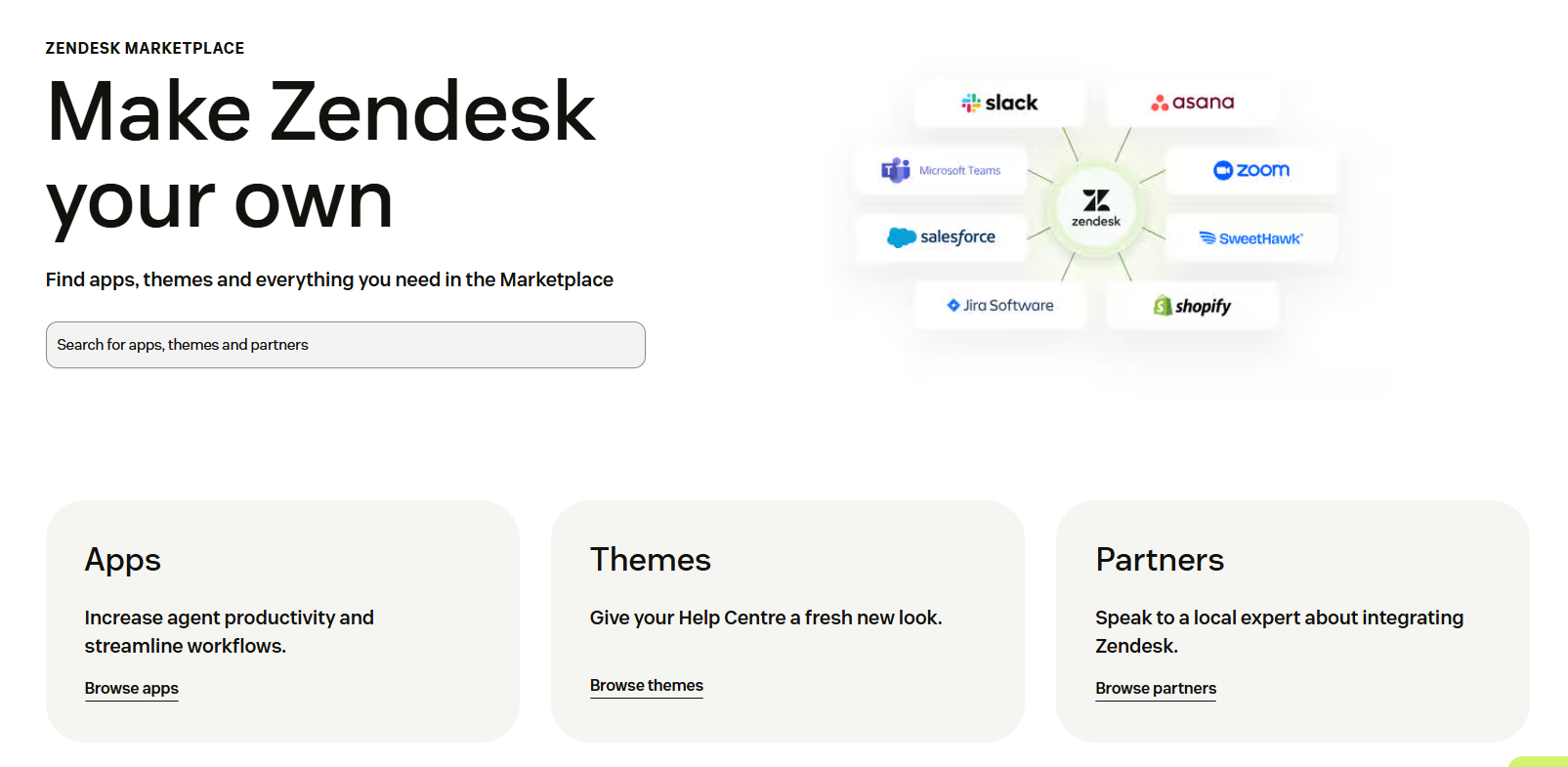
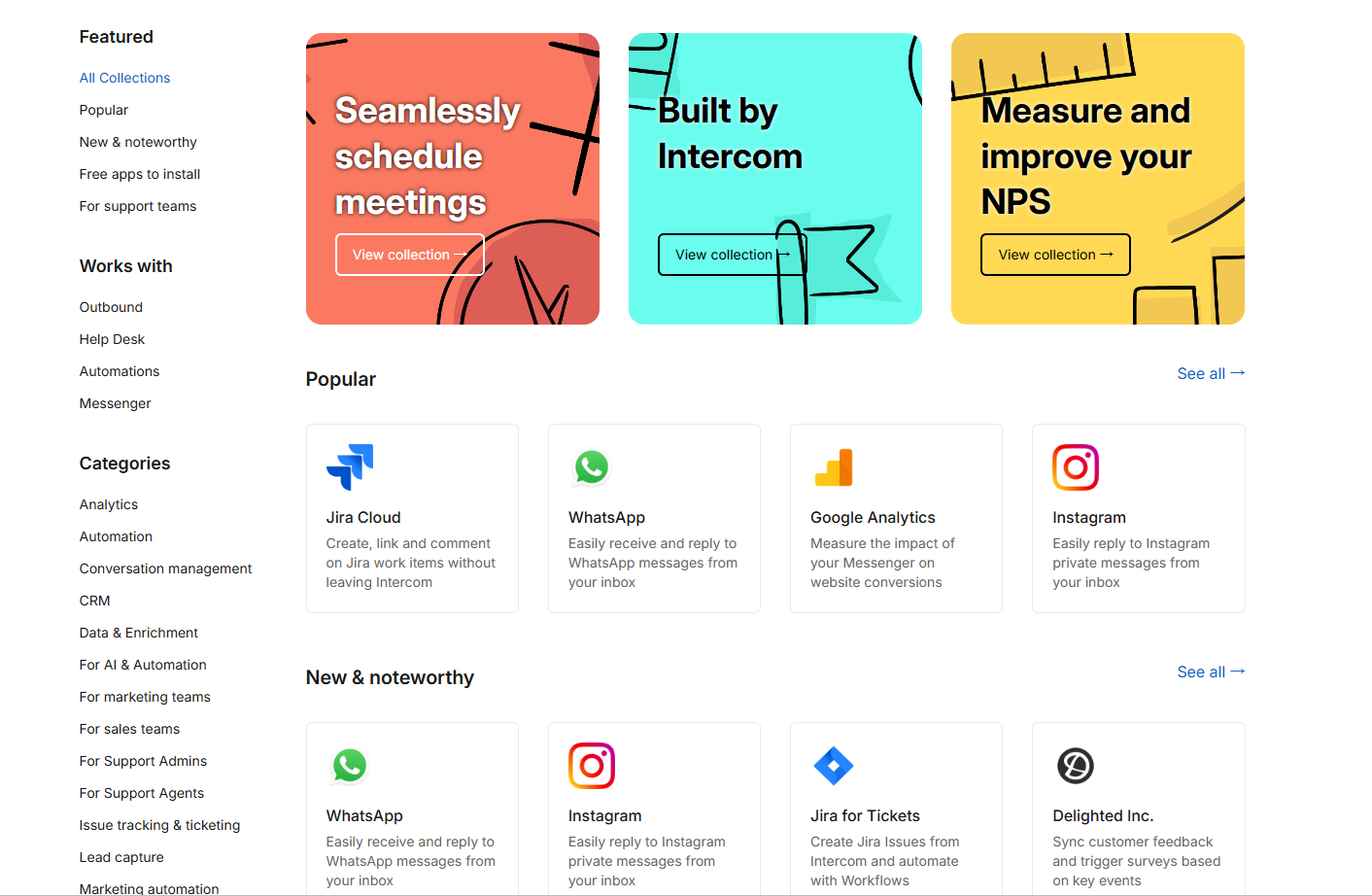
Intercom also integrates with CRMs, marketing platforms, and other business tools, supporting 400–450+ integrations including Salesforce and Slack. It focuses more on developer-friendly APIs and customization, allowing businesses to build tailored workflows, automate actions across tools, and adapt the platform to specific customer engagement needs.
Reporting & Analytics
Zendesk provides comprehensive reporting and analytics tools, including dashboards for tracking ticket volume, response time, resolution time, agent performance, and customer satisfaction (CSAT) and more indicators. These help administrators monitor service efficiency, identify trends in customer issues, and make adjustments in time.
Intercom focuses more on conversation and engagement analytics. It provides insights on metrics like conversation volume, response time, customer engagement, and user activity. Its reporting is particularly useful for understanding customer behavior and the effectiveness of messaging.
Pricing & Scalability
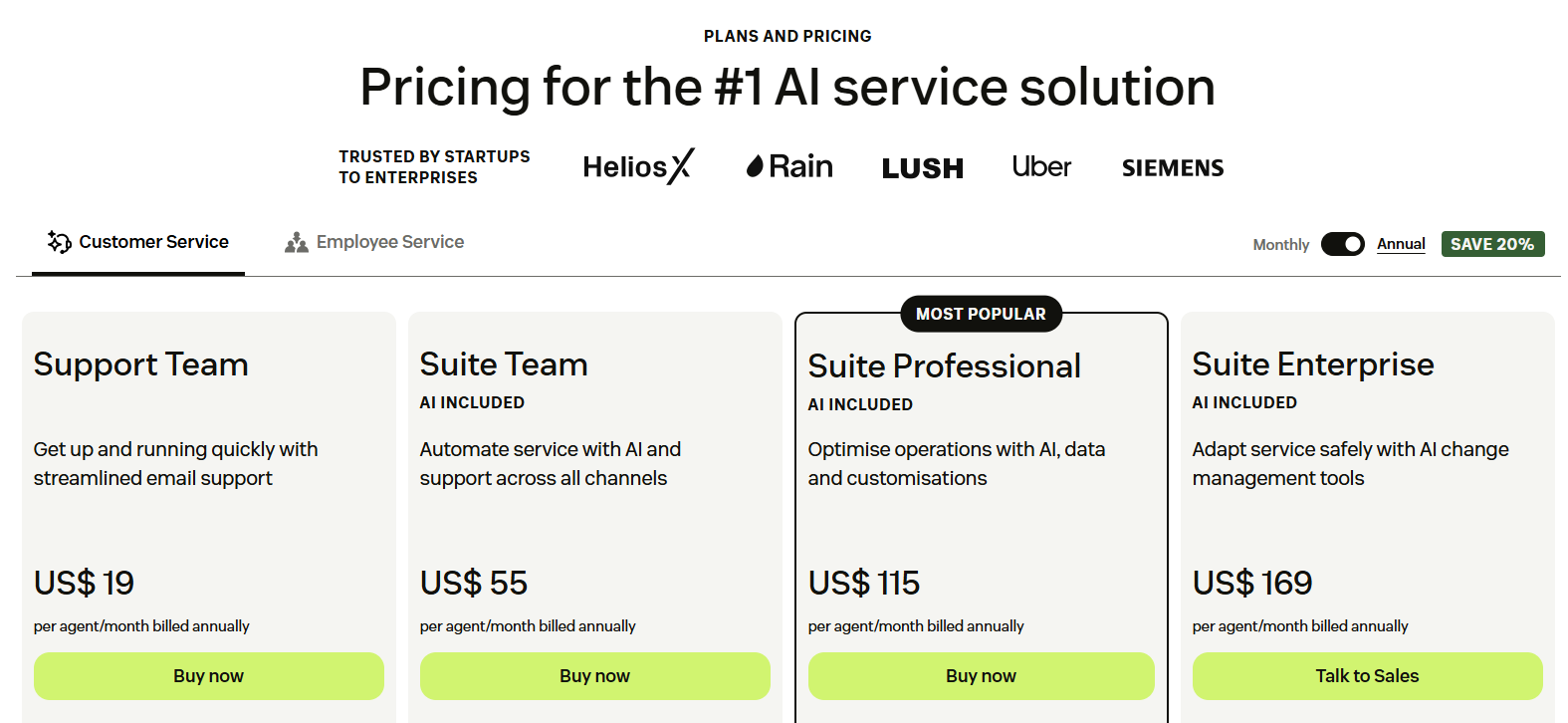
Zendesk offers tiered pricing based on different needs. Its plans start at $19 per agent/month, with only email support available. Its Suite plans with AI features typically start at $55 per agent/month (Suite Team), with higher tiers such as Suite Professional ($115 per agent/month) and Suite Enterprise ($169 per agent/month) adding advanced features like automation, help centers, customization and more.
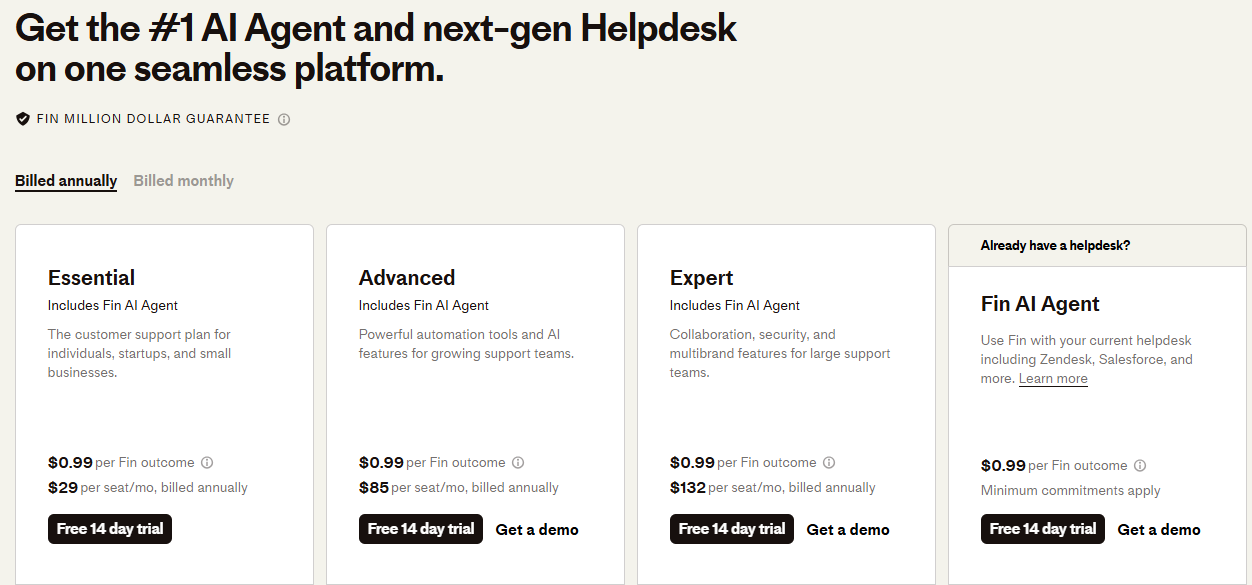
Intercom uses a seat-based pricing model combined with usage-based costs. Its core plans (billed annually) are:
- Essential: ~$29 per seat/month
- Advanced: ~$85 per seat/month
- Expert: ~$132 per seat/month
If it’s billed monthly, the pricing will be slightly higher. Besides, Intercom charges for certain features based on usage. For example, Fin AI Agent costs $0.99 per resolution.
How to Choose the Right Customer Support Tool for Ecommerce
A customer support tool for ecommerce in 2026 is far more than just managing tickets. It also requires automation, AI-assisted resolution, and seamless customer journey support. To choose the right platform, you need to evaluate your business needs carefully from the following aspects:
- Business size and support volume: Evaluate how many customer inquiries your team handles every month across all channels, and make sure the platform can support your current workload while scaling up as your ecommerce business grows.
- Pricing model: Compare pricing structures, including per-agent costs, usage-based fees, and add-ons. And choose the one that suits your business model best.
- AI and automation capabilities: Check if the tools have basic AI and automation capabilities like AI-powered chatbot, automatic workflow, intelligent routing and more. These features can reduce human agents’ workload and improve service efficiency.
- Channel coverage: Identify where your customers come from, for example, live chat, email, phone calls, WhatsApp and popular social media platforms like Facebook, Instagram and more. Choose the customer support tool that can cover all these channels.
- Integration: Ensure the customer support platform integrates with all existing systems, including your CRM, marketing system, and ecommerce systems like Shopify and Amazon.
- Reporting and analytics: Choose a platform that provides actionable insights into agent support performance, customer experience (CX), and conversation trends, helping you continuously optimize both customer service and business outcomes.
Zendesk vs Intercom: Comprehensive Comparison
| Category | Zendesk | Intercom |
| Core Positioning | Customer service platform built around ticketing systems, structured workflows, and scalable support operations | Messaging-first platform focused on conversational support, real-time engagement, and customer interaction |
| AI & Automation | Provides AI agents, intelligent routing, and agent copilot features. AI is embedded in ticketing workflows to automate classification, suggest replies, and resolve requests at scale across multiple channels. | Focuses on AI-driven conversational automation, including chatbots (e.g., Fin) that resolve customer queries in real time. Strong in handling FAQs, guiding users, and automating chat-based interactions. |
| Channels & Omnichannel Support | Supports email, live chat, voice, SMS, and social messaging (e.g., WhatsApp, Instagram) within a unified system, enabling agents to manage conversations across channels in one place. | Core channels include live chat, email, and in-app messaging, with additional channels (e.g., WhatsApp, SMS) available via integrations. More chat-centric and less focused on unified omnichannel service. |
| Ecommerce & Integrations | Offers 1,500–1,800+ integrations across ecommerce (Shopify, Adobe Commerce/Magento, WooCommerce), CRM, analytics, and collaboration tools. Enables access to order and customer data within support workflows; highly configurable via APIs. | Supports ~400–450 integrations, including CRM and marketing tools, with a strong focus on API-based customization. Better suited for building tailored messaging and engagement workflows rather than deep operational integrations. |
| Reporting & Analytics | Provides advanced operational reporting, including ticket volume, SLA tracking, response/resolution time, and CSAT. Suitable for monitoring team performance and support efficiency at scale. | Focuses on conversation and engagement analytics, such as response time, message performance, and user interaction data. Strong for understanding customer behavior and optimizing engagement. |
| Pricing & Scalability | Per-agent pricing model, starting around $55/agent/month (Suite Team), scaling with features and team size. Costs are relatively predictable as support teams grow. | Per-seat + usage-based pricing, starting around $29/seat/month (Essential plan), with additional costs for AI resolutions and messaging. Costs can increase with customer activity and interaction volume. |
Conclusion
As the comparison above shows, both Zendesk and Intercom provide robust capabilities for ecommerce customer support, but they differ in AI features, integrations, pricing model and more aspects. Choosing between them ultimately depends on how well each platform aligns with your business and customer engagement strategy.
- Zendesk is better suited for businesses that require structured, multi-channel support operations, along with advanced reporting and a broad integration ecosystem.
- Intercom is more aligned with teams that prioritize real-time, conversational support, leveraging AI and messaging to drive proactive customer engagement throughout the buying journey.
For ecommerce businesses evaluating alternatives, it is equally important to consider solutions that combine AI-driven automation, omnichannel support, and ecommerce-specific workflows within a unified platform.
Sobot is a more cost-effective choice besides Zendesk and Intercom. It offers a streamlined approach designed to help ecommerce teams improve support efficiency, reduce response times, and deliver more consistent customer experiences at scale. By integrating chatbot, live chat, voice, ticketing system, WhatsApp API and more features, Sobot supports ecommerce businesses to contact customers in multiple forms at any touchpoint. Several global leading companies like SHEIN, J&T Express, OPPO, Weee!, Opay, Samsung, Michael Kors, Luckin Coffee have benefited from Sobot’s all-in-one customer contact solution. To explore how this approach can support your ecommerce growth, consider reviewing a product demo or a free trial now based on your specific business needs.

FAQs
Are Zendesk and Intercom suitable for global ecommerce businesses?
Yes, both platforms support global operations, including multiple languages and international customer interactions. However, the level of localization, workflow customization, and channel support may vary depending on the platform and configuration.
What should ecommerce businesses consider before switching customer support platforms?
Key considerations include data migration, integration compatibility, team training, and potential downtime. It’s also important to evaluate how the new platform aligns with your long-term support strategy and customer experience goals.
Can Zendesk or Intercom support both customer service and marketing teams?
Yes, both platforms can be used beyond customer support. Intercom is often used by marketing and growth teams for onboarding, product messaging, and user engagement, while Zendesk is primarily focused on customer service but can support cross-team collaboration through integrations.
What makes Sobot different from other products, such as Zendesk, Intercom, Genesys, Gorgias, Tidio, Live Chat, Sleekflow, etc?
They are also great contact center solution providers, but they often just focus on a single core product.
For example, Zendesk’s ticketing is great, Intercom stands out for its intelligence, Genesys only has call center, Gorgias mainly serves Shopify enterprises, Tidio is suitable for small and medium-sized companies, Live Chat does not have call center and its intelligence level is average, Chat Daddy and Sleekflow mainly use WhatsApp API, and Helpdesk only has ticketing.
But Sobot provides an all-in-one customer contact solution, which integrates all customer channels and communication methods in the same service platform, so that managers do not need to purchase multiple systems to check data separately.
The second feature of Sobot is the strategically important AI. We have established the Five-AI system since the launch of our “AI-First” strategy in 2024. You can enter the Sobot AI solution page for details.
In addition, Sobot has still other 2 advantages:
Timely service: You can always find our sales and pre-sales reps, customer success managers, and even product managers anytime.
Lower price: Sobot’s price may only be half or even lower than others without any hidden charges.