Your Guide to Customer Experience KPIs


Customer experience KPIs are the key performance indicators you use to measure customer interactions. These metrics provide objective data for your customer experience management, helping you track performance and improve customer satisfaction. Mastering these customer experience metrics is crucial for growth. You can unlock higher customer loyalty and significantly reduce churn.
Did you know? Increasing customer retention by just 5% can boost profits by 25% to 95%. A unified platform like Sobot, with its powerful Sobot AI and Sobot call center, helps you turn these critical insights into action.
Why Customer Experience KPIs Matter
Tracking customer experience KPIs is more than just collecting numbers. You use these metrics to connect your customer-facing efforts directly to business success. They give you the power to make smarter decisions, keep customers loyal, and solve problems before they grow.
Link CX Efforts to Revenue Growth
A great customer experience directly boosts your revenue. When you improve your customer experience metrics, you create happier customers who spend more. In fact, customers with the best past experiences spend 140% more than those with the worst. This financial impact is clear across many industries.
| Industry | CX Leaders Outperformed Laggards By |
|---|---|
| Retail | 26 percentage points |
| Cable | 24 percentage points |
| Airlines | 5 percentage points |
This data shows that focusing on customer satisfaction pays off.
Make Data-Driven Decisions
Guesswork can be costly. Customer experience analytics give you hard data to guide your strategy. You can use customer feedback to make informed choices, just like major brands do. Companies like Disney and Starbucks use data to personalize interactions and continuously improve their services. This approach builds unmatched loyalty and drives growth.
Reduce Customer Churn
Keeping your current customers is much cheaper than finding new ones. Acquiring a new customer can cost 5 to 25 times more than retaining an existing one. A high customer churn rate hurts your bottom line. By monitoring your customer experience metrics, you can improve your customer retention rate. For example, making interactions easier for customers has a huge impact.
Tip: 94% of customers who report a low-effort experience say they will repurchase from the brand.
Proactively Resolve Pain Points
Do you know what frustrates your customers? Common pain points often include:
- An unresponsive support team
- Complicated products with a steep learning curve
- Redundant processes that waste time
These issues can drive customers away. By tracking the right metrics, you can spot these problems early and take action to fix them, ensuring a smoother journey for your users.
Key Customer Experience Metrics Explained
Now that you understand why tracking customer experience KPIs is important, let's explore the most essential ones. These five customer experience metrics will give you a complete picture of your customers' health and happiness.
Net Promoter Score (NPS)
The Net Promoter Score (NPS) measures long-term customer loyalty. It answers one simple question: "How likely are you to recommend our company to a friend or colleague?" This metric helps you understand your overall brand perception.
You calculate your net promoter score in a few steps:
- Ask customers to rate their likelihood of recommending you on a scale of 0-10.
- Group the responses into three categories:
- Promoters: Scores of 9-10. These are your loyal fans.
- Passives: Scores of 7-8. They are satisfied but not enthusiastic.
- Detractors: Scores of 0-6. These are unhappy customers.
- Calculate the percentage of Promoters and the percentage of Detractors.
- Subtract the percentage of Detractors from the percentage of Promoters.
NPS = % Promoters - % Detractors
The final score ranges from -100 to +100. A "good" score varies by industry. For example, the average NPS in telecommunications is around 31, while retail often sees higher scores.
| Industry | Average NPS Range |
|---|---|
| Retail | 40-70 |
| Technology & SaaS | 30-60 |
| Telecommunications | 0-30 |
Customer Satisfaction (CSAT)
The Customer Satisfaction (CSAT) score measures a customer's short-term happiness with a specific interaction, product, or service. You typically ask a question like, "How satisfied were you with your experience today?" This metric is perfect for getting immediate feedback after a support call or a purchase.
You can ask various questions to measure customer satisfaction:
- How would you rate the support you received?
- Did the product meet your expectations?
- How easy was it to use our product?
- How could we improve our service?
Your customer satisfaction score is the percentage of "satisfied" or "very satisfied" responses. While scores between 75% and 85% are generally considered good, benchmarks vary. An excellent score for a SaaS company is typically above 80%. This metric helps you pinpoint specific moments in the customer journey that need improvement.
Customer Effort Score (CES)
Customer Effort Score (CES) measures how much effort a customer has to put in to get an issue resolved, a request fulfilled, or a question answered. The core idea is simple: easier experiences create more loyal customers.
Research shows a powerful link between effort and loyalty. An incredible 94% of customers who have a low-effort experience say they will buy from the brand again. In contrast, 96% of customers with high-effort interactions report being disloyal.
You calculate CES by asking a question like, "How easy was it to handle your request?" on a scale (e.g., 1-7).
A simple way to calculate your score is:
CES = Sum of all scores ÷ Number of responses
A higher score means a lower effort for your customers, which is exactly what you want. Reducing customer effort is one of the fastest ways to boost loyalty.
Customer Churn Rate
The customer churn rate is the percentage of customers who stop using your service or product over a specific period. A high customer churn rate is a major red flag. It tells you that customers are leaving, which directly impacts your revenue.
You can calculate your customer churn rate with a straightforward formula:
Churn Rate = (Customers Lost ÷ Customers at Start of Period) x 100
Understanding why customers leave is the first step to fixing the problem. Common reasons for high churn include:
- Poor customer service (14% of churn)
- Weak relationship building (16% of churn)
- An ineffective onboarding process (23% of churn)
- Pricing that is no longer competitive
By tracking this metric, you can identify the root causes and take action to improve retention.
Customer Lifetime Value (CLV)
Customer Lifetime Value (CLV) is the total amount of money you expect to earn from a single customer over their entire relationship with your company. This is one of the most important customer experience metrics for long-term strategy. It helps you understand the value of keeping customers happy.
Why is CLV so important? The probability of selling to an existing customer is 60-70%, while the chance of selling to a new prospect is only 5-20%. Loyal customers simply spend more. Tracking CLV allows you to:
- Identify your most valuable customers.
- Make smarter decisions about marketing spend.
- Forecast future revenue more accurately.
There are different ways to calculate CLV, from simple historical models that look at past purchases to predictive models that use machine learning to forecast future behavior. No matter how you calculate it, focusing on CLV helps you build a more sustainable and profitable business.
How to Improve Your CX KPIs with Sobot
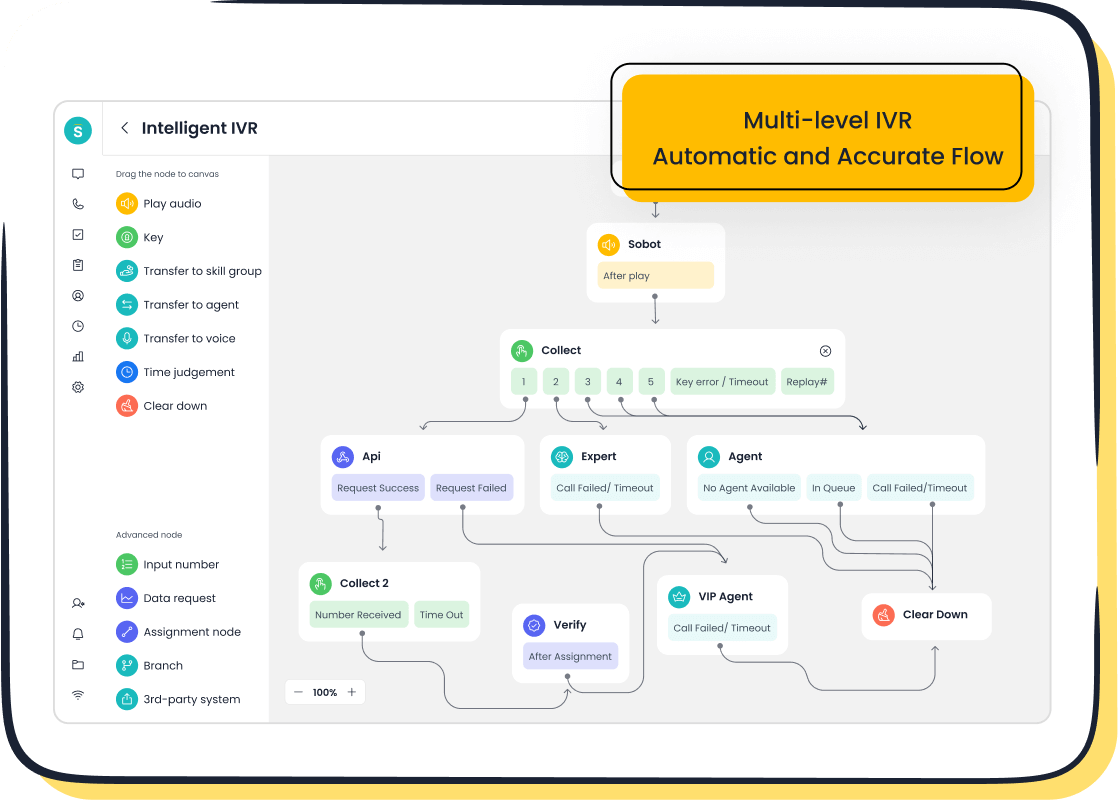
Tracking your customer experience KPIs is the first step. The next step is taking action to improve them. You need the right tools to turn insights into results. Sobot provides an all-in-one solution to help you enhance your customer experience management and boost your metrics.
Automate Support with AI Chatbots
You can significantly improve your CSAT and CES scores with automation. AI-powered tools can cut resolution times by up to 50%. Sobot’s AI Chatbot provides 24/7 support to handle common questions instantly. This frees up your human agents to focus on more complex issues.
Automating support can handle tasks like:
- Answering frequently asked questions (FAQs)
- Providing order status updates
- Routing tickets to the correct department
Success Story: Leading smart device brand OPPO used Sobot's chatbot and ticketing system to great effect. They achieved an 83% chatbot resolution rate and a 94% positive feedback rate, directly boosting their key customer experience metrics.
Streamline Agent Workflow

A happy agent leads to happy customers. You can reduce customer effort by making your agent's job easier. Sobot’s Voice/Call Center streamlines workflows with a unified workspace. This gives agents a complete view of customer information in one place, eliminating the need to switch between different apps. Features like Smart Call Routing also ensure customers connect to the right agent on the first try, improving first-contact resolution.
Unify Your Communication Channels
Customers expect a consistent experience everywhere. In fact, 73% of customers want seamless journeys across all channels. Sobot unifies your communications—from live chat and email to voice and WhatsApp—into a single platform. This creates a smooth journey for your users. They can start a conversation on one channel and continue it on another without repeating themselves, which improves customer satisfaction and reduces your customer churn rate.
Leverage Data and Analytics
Making smart decisions requires good data. Sobot’s powerful customer experience analytics help you understand customer feedback and behavior. You can analyze direct data like surveys and indirect data like average handle time. This helps you identify pain points, predict trends with sentiment analysis, and make informed choices to improve your overall customer service.
Choosing the Right KPIs for Your Business
Selecting the right customer experience KPIs is crucial for success. You need metrics that reflect your unique business goals and customer journey. A focused approach helps you gather meaningful data for your customer experience management.
Align KPIs with Business Goals
Your metrics should always connect to what your business wants to achieve. If your goal is to increase customer retention, you should track the Churn Rate. If you want to improve loyalty, you should focus on NPS and CLV.
Follow these steps to ensure your efforts are aligned:
- Identify Your Objectives: Start by defining your main business goals. Do you want more revenue, better efficiency, or higher retention?
- Select the Right Metrics: Choose customer experience metrics that directly measure progress toward those goals.
- Leverage Technology: Use analytics platforms to track your KPIs in real time.
- Review and Adjust: Check your metrics regularly to make sure they are still relevant as your business grows.
Map Metrics to the Customer Journey
Customers interact with your brand in stages. You can track different metrics at each point to get a complete picture. The typical customer journey includes Awareness, Consideration, Decision, and Retention.
Tip: Match your KPIs to each stage to find specific areas for improvement.
- Awareness: Track website traffic and social media reach to see how many people discover your brand.
- Consideration: Monitor lead conversion rates and time spent on your site to gauge interest.
- Post-Purchase: Measure customer satisfaction and NPS to understand their experience after a sale.
This mapping helps you see exactly where you are succeeding and where you need to focus your attention.
Start Small and Scale
You do not need to track dozens of metrics from day one. It is better to start with a few essential ones and build from there. A simple customer experience program can be very effective.
Begin with foundational metrics like Customer Satisfaction (CSAT), Net Promoter Score (NPS), or Customer Effort Score (CES). These give you a strong baseline. Once you are comfortable, you can add more metrics that align with your evolving goals. This approach prevents you from getting overwhelmed by data and allows you to scale your efforts thoughtfully.
Customer experience KPIs are essential tools. You use them to understand and strengthen customer relationships. Tracking these customer experience metrics is only half the battle. Acting on them with a powerful solution like Sobot allows you to make strategic decisions that boost loyalty and drive growth. You can turn your data into real results.
Ready to master your customer experience? Embark on Your Contact Journey with Sobot and start turning insights into action today.
FAQ
What are customer experience KPIs?
Customer experience KPIs are numbers you track to measure customer happiness. These metrics show you how well your business serves its customers. They help you find areas to improve and prove the value of your customer service efforts.
How do I start tracking customer experience metrics?
You can start small. First, pick one or two key metrics that match your business goals, like CSAT or NPS. Use simple surveys to collect feedback. Tools like Sobot can help you gather and analyze this data easily.
What is the difference between NPS and CSAT?
NPS measures long-term customer loyalty by asking if a customer would recommend you. CSAT measures short-term happiness with a specific interaction, like a support call. You use both to get a full view of the customer experience.
See Also
Boost Client Happiness: Ten Strategies for Superior Live Chat Support
Comparing Leading Voice of Customer Platforms for Enhanced Insights
Essential Quality Management System Principles for Call Center Excellence
Implementing Top Strategies for Call Center Quality Management Success
The Ten Leading Customer Service Software Solutions for 2024

