A Winning Complaint Response Plan for 2025

You can turn angry customers into your most loyal advocates. A great experience makes customers more likely to support your brand.
- 88% of customers will likely make another purchase after positive service.
- 77% of customers would recommend a brand following a good interaction.
This article gives you a winning complaint response plan. It helps your team with successful de-escalation for angry customers. This customer service de-escalation plan uses empathy and a structured process. It shows a true commitment to helping angry customers. This is the key to winning with your customers in 2025, supported by tools like the Sobot call center and Sobot AI.
A 3-Phase Complaint Response Framework
A structured framework gives your team a reliable roadmap to follow. It turns a chaotic situation into a controlled process. This three-phase plan helps you manage every complaint with confidence and consistency.
The Goal of De-escalation
The main goal of de-escalation is to stop customer meltdowns before they start. This approach makes your agent's job less stressful. It allows them to focus on the subject of the call, not the customer’s anger. When you handle difficult customers effectively, your team can focus on the problem, not the emotions.
Successful de-escalation is more than just a single interaction. It is a strategic way to build a competitive advantage. A well-managed complaint response can turn angry customers into loyal advocates.
- Strengthens Customer Loyalty: Customers appreciate the extra effort to resolve their issues. This turns them into long-term supporters of your brand.
- Improves Customer Satisfaction: Effective de-escalation makes customers feel heard and valued. This leads to higher overall satisfaction.
- Enhances Brand Reputation: Positive word-of-mouth from successfully handled issues can attract new customers.
Phase 1: Absorb and Acknowledge
The first step when you respond to angry customers is to listen. Your agent's goal is to understand, not to argue. This requires active listening, a key skill for de-escalation. You must let angry customers express their frustration without interruption. This simple act of listening makes customers feel heard and reduces tension. A survey showed that about half of all customers prefer interacting with agents who show empathy.
After listening, the next step is acknowledging the customer's feelings with a sincere apology. Showing empathy to unhappy customers validates their experience and opens the door to a real conversation. Your team can use specific phrases to empathize with the customer and show you care.
Tip: A sincere apology takes ownership and shows a commitment to fixing the problem. It is a critical part of your complaint response.
| If a customer feels... | Say This... |
|---|---|
| Frustrated | "I'm sorry, I can see how this must have been frustrating for you." |
| Ignored | "I am terribly sorry. I will try everything I can to get this fixed for you." |
| Disappointed | "I understand your disappointment, and I apologize for the inconvenience." |
Phase 2: Analyze and Align
Once the customer is calmer, your agent can shift from absorbing emotion to analyzing the problem. This is where you find the root cause of the issue. To do this effectively, your agents need a complete picture of the customer's journey. They should not have to ask customers to repeat their story.
This is where a unified platform like the Sobot Omnichannel Solution becomes essential. It gives your customer support team a single view of every interaction.
- Agents can see past conversations from live chat, email, and phone calls.
- They have access to case histories, preferences, and previous solutions.
- This unified visibility allows agents to continue the conversation from the last interaction.
With all the data in one place, your team can use simple techniques to find the real problem. One effective method is the "5 Whys." You start with the problem and ask "Why?" five times to dig deeper until you uncover the root cause. This helps you explore solutions that fix the actual issue, not just the symptom.
Phase 3: Act and Assure
Now it is time to offer solutions. After identifying the root cause, your agent must take ownership of the resolution. This means providing clear, actionable steps to fix the problem. While global benchmarks show average first reply times can be over 18 hours, your goal should be to provide solutions much faster.
When you offer solutions, be specific.
- Clearly explain what you are going to do.
- Provide a timeline for when the customer can expect a resolution.
- Set clear next steps for both the agent and the customer.
After you solve the problem, the final step is to rebuild trust. You need to assure the customer that you value their business and are committed to preventing the issue from happening again. This final assurance helps you build trust and retain your customers. Use phrases that show gratitude and commitment.
- "Thank you for giving us the chance to make this right for you."
- "I will do everything I can to make sure this doesn’t happen again."
- "We really appreciate your loyalty and are committed to keeping you satisfied."
Following these steps to set clear next steps and provide assurance leaves customers feeling confident in your brand.
Essential De-escalation Techniques for Angry Customers
Your three-phase framework provides the map, but your agents need the right tools to navigate it. Equipping your team with specific de-escalation techniques turns theory into practice. These methods help them manage difficult conversations, stay professional, and guide angry customers toward a positive outcome.
Mastering Emotional Control
Your agent's emotional state directly impacts the outcome of a complaint. When agents show genuine empathy, customers feel heard and understood. This builds trust and can transform an angry call into a resolved issue. Research shows that customer satisfaction is 35% higher when customers feel an agent is truly empathetic. To handle difficult customers effectively, your agents must first learn to manage their own stress. When you help your team stay calm and composed, they can focus on the solution, not the conflict.
You can teach your team simple, science-backed methods to manage stress during or after a tough interaction with angry customers.
- 4x4 Breathing: Inhale for four seconds, hold for four, and exhale for four. This slows the heart rate and reduces physical stress.
- Engage the Senses: Encourage agents to focus on what they can see, hear, or touch. This grounds them in the present moment and away from negative feelings.
- Use Cold Water: Splashing cold water on the face or wrists can quickly calm the body's stress response.
- Talk with Peers: Creating a space for agents to discuss difficult calls with colleagues provides support and new perspectives.
Positive Language and Phrases
The words you use can either escalate or de-escalate a situation. Using positive language is one of the most powerful de-escalation techniques. It reframes the conversation from what you can't do to what you can do. This simple shift shows customers you are an ally, not an obstacle. Positive language helps you build trust and work with customers toward a shared goal.
Train your team to replace negative phrases with positive, solution-focused alternatives. This small change makes a huge difference for angry customers.
Tip: Focus on collaborative words like "let's," "together," and "we can" to show you are on the customer's side.
| Instead of This... | Say This... |
|---|---|
| "I don’t know." | "That's a great question. Let me find that out for you." |
| "There's nothing I can do." | "Let's see what we can do to fix this together." |
| "You'll have to..." | "Here's how we can help you with that..." |
| "That item is out of stock for two weeks." | "That item is very popular! I can pre-order it for you now, and it will be with you in two weeks. Would you like me to do that?" |
Setting Professional Boundaries
Sometimes, a customer's frustration can turn into unreasonable demands or abusive language. Your team needs to know how to set firm, professional boundaries. This is a critical part of handling difficult customers. Setting boundaries protects your agents' well-being and keeps the interaction focused on resolving the actual problem. It is one of the most important de-escalation techniques for your team to master.
Provide your agents with clear scripts for these situations.
- For Abusive Language: "I understand you are upset, and my goal is to solve this for you. However, I cannot continue the conversation if you use that language. Can we work together respectfully to find a solution?"
- For Unreasonable Demands: When a customer asks for something you cannot provide, use a simple three-step method:
- Acknowledge: "I understand you're looking for a full replacement on an out-of-warranty item."
- Explain: "Our policy doesn't cover that, but I want to help you find another solution."
- Offer Alternatives: "What I can do is offer you a 25% discount on a new purchase or a credit for a future service. Which would you prefer?"
This approach validates the customer's request while politely declining it and maintaining control of the conversation.
A Clear Escalation Protocol
Not every issue can be solved by a frontline agent. When a problem requires a supervisor or another department, you need a clear escalation protocol. A confusing or slow escalation process is a major source of frustration for angry customers. In fact, data shows that 72% of customers will switch to a competitor after just one bad experience, making a smooth process essential. A well-defined protocol is one of the final de-escalation techniques in your toolkit, ensuring customers get to the right person quickly.
Your escalation protocol should define:
- Clear Triggers: What specific issues automatically require escalation?
- A Defined Path: Who is the next point of contact?
- Response Times: How quickly should the customer expect a response at each level?
- Communication Rules: How will agents keep customers updated?
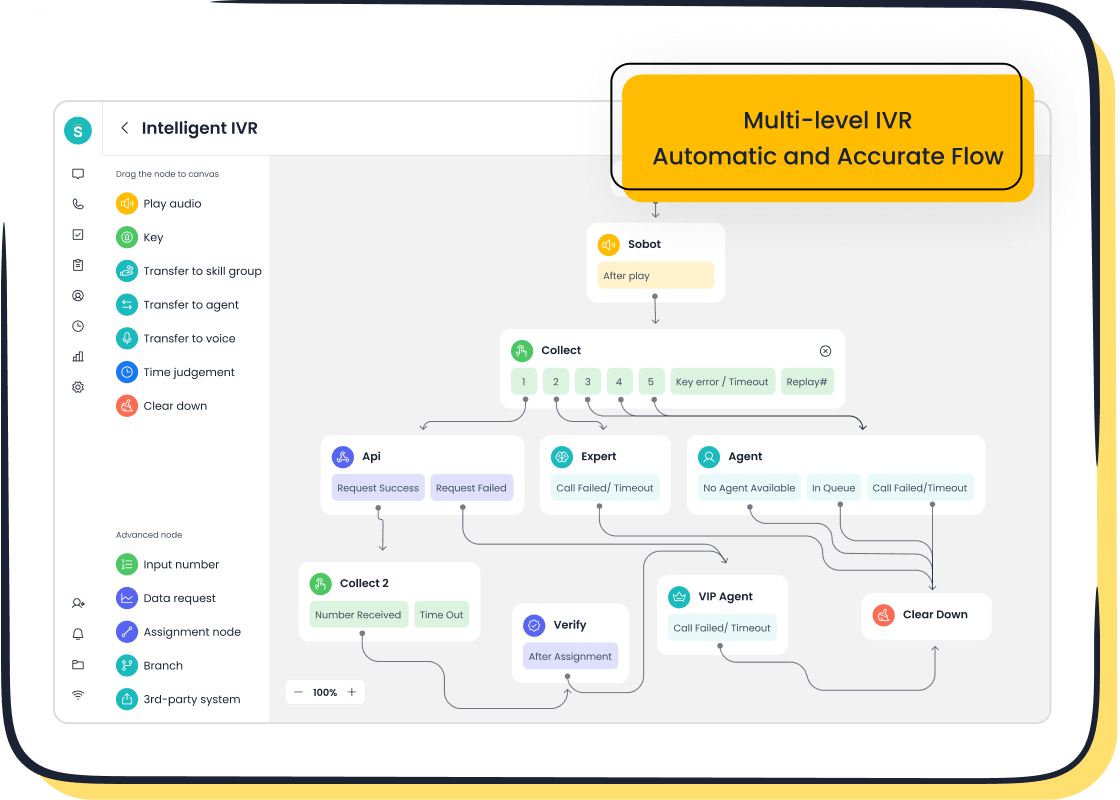
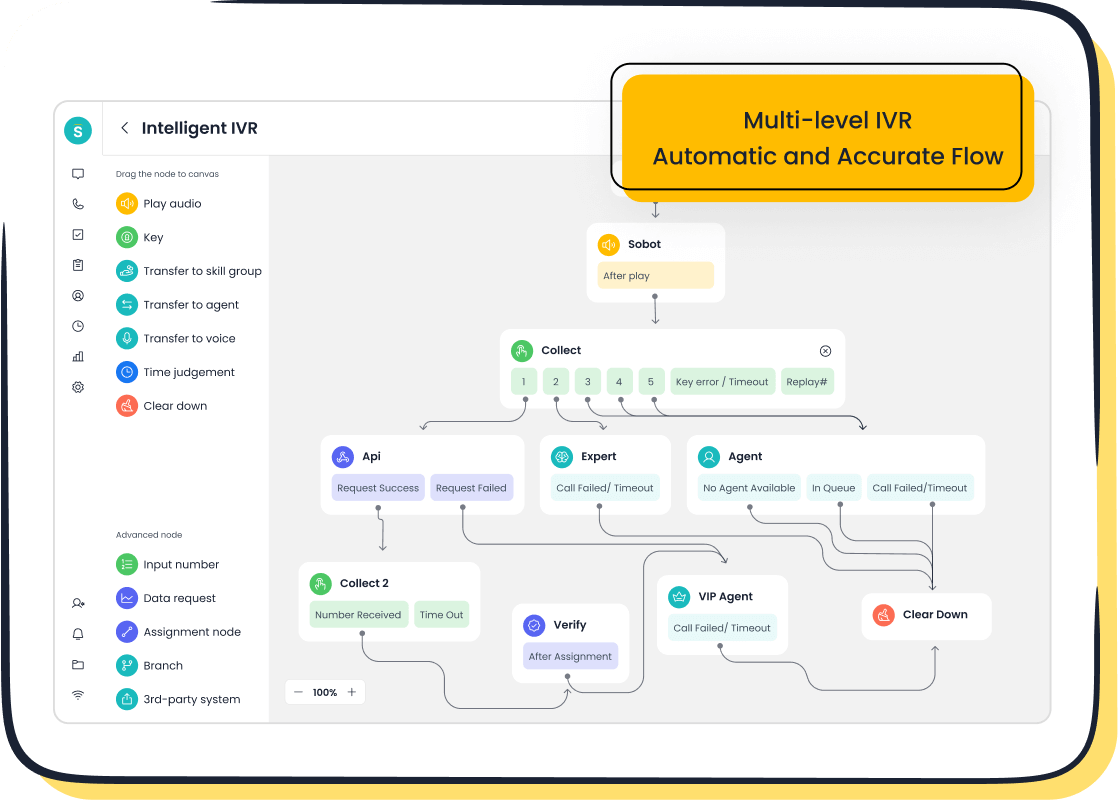
This is where technology can prevent further frustration. A clumsy transfer where customers have to repeat their issue is a recipe for disaster. The Sobot Voice/Call Center eliminates this problem with smart call routing. When an agent needs to escalate a call, the system can automatically route the customer to the correct supervisor or specialist. All the case history and notes from the first agent are transferred seamlessly, so the next person has the full context. The customer doesn't have to start over, which keeps tensions low and shows you respect their time. This smooth handoff is a key part of successful de-escalation and helps maintain the customer's trust in your brand.
Building a Resilient System with Sobot
A great plan and skilled agents are your foundation. A resilient system makes your de-escalation efforts proactive, not just reactive. You can build this system with consistent training and smart analytics. This turns your customer support from a cost center into a growth engine.
Proactive Customer Service De-escalation Training
Effective customer service de-escalation training prepares your team for real-world pressure. Role-playing is one of the best ways to practice handling angry customers. It allows agents to build confidence in a controlled environment. Investing in this training delivers clear returns.
| Company | Training Focus | Key Outcome 1 | Key Outcome 2 |
|---|---|---|---|
| GreenLeaves | Empathy & Communication | 40% increase in positive reviews | 25% reduction in churn |
| Retail Master | Revamped Training Program | 20% increase in satisfaction | 15% boost in sales revenue |
You can use the Sobot Voice/Call Center to create powerful training materials. Use its call recording and transcripting features to review real interactions with angry customers. This helps you build a library of best practices.
- Analyze transcripts to find phrases that successfully calm angry customers.
- Use real call examples to onboard new agents.
- Identify trigger words that lead to conflict and teach agents how to avoid them.
This approach provides your team with practical, real-world experience. It is far more effective than just reading scripts.
Using Sobot's Analytics to Prevent Complaints
The best way to handle complaints from angry customers is to prevent them. Your complaint data is a goldmine of insights. Companies like Domino's and Amazon use customer feedback to improve their products and services. You can do the same. Sobot's data analytics turn raw data into actionable solutions.
By analyzing trends, you can identify recurring issues before they escalate. For example, you can track key metrics like repeat contact rates. A high rate for a specific issue tells you the initial solutions are not working. This allows you to fix the root cause.
Sobot's platform helps you analyze customer sentiment across all channels. This gives you a real-time pulse on customer satisfaction. You can spot rising negative sentiment around a new feature or policy. This allows you to make changes quickly and prevent widespread frustration. By turning feedback into improvements, you provide better personalized customer service and reduce the number of angry customers your team has to face. You create a cycle of continuous improvement that benefits your customers and your business.
Your winning complaint response plan for 2025 follows three steps: Absorb, Analyze, and Act. This structured approach shows customers your commitment. Retaining customers is up to 25 times cheaper than finding new ones. A well-rehearsed complaint response plan built on empathy is essential for building trust with your customers. Stop reacting to unhappy customers. Start implementing a winning framework today to protect your brand and keep your customers loyal. It is time to Embark on Your Contact Journey.
FAQ
What is the most important part of a complaint response plan?
The first step is always to listen. You must let angry customers share their feelings without interruption. Acknowledging their frustration with empathy shows you care. This simple act builds trust and helps you begin the de-escalation process on a positive note.
How can technology help my team with angry customers?
Technology unifies customer information. A tool like the Sobot Omnichannel Solution gives your agents a full view of the customer's history. This prevents customers from repeating themselves. It helps your team find the root cause of the problem much faster.
Why is positive language so important for de-escalation?
Positive language changes the focus from problems to solutions. It shows angry customers that you are their partner in fixing the issue. Using collaborative words like "we can" and "let's" helps you guide the conversation toward a successful resolution.
What should an agent do if a customer becomes abusive?
Your agent should set a professional boundary. They can use a script to calmly state that they want to help but cannot continue with abusive language. This protects your agent and keeps the focus on solving the actual issue respectfully.
See Also
Discovering The Foremost Cloud-Based Contact Center Platforms For 2025
Evaluating The Leading Contact Center Solutions And Platforms Of 2024
Exploring The Premier Voice Of Customer Software Options For 2024
A Ten-Step Guide To Deploying Omnichannel Contact Center Solutions Effectively
Essential Best Practices For Optimizing Call Center Quality Management Strategies

