Why Net Promoter Score Matters More Than Other Metrics


Understanding why is net promoter score important begins with its unmatched ability to measure customer loyalty. Unlike traditional metrics, NPS focuses on long-term relationships rather than short-term satisfaction. Research shows that companies with a high NPS grow at twice the rate of their competitors. This correlation highlights its predictive power in driving sustainable business growth.
Additionally, NPS serves as a practical tool for enhancing customer advocacy. By identifying Promoters and Detractors, you can take actionable steps to improve customer experience. For example, Sobot's solutions, like its Voice/Call Center, help businesses gather insights through seamless NPS surveys. These insights empower you to build stronger connections with your customers, ensuring loyalty over time.
What Is Net Promoter Score and Why Is It Important?

Definition of Net Promoter Score
Net Promoter Score (NPS) is a widely recognized customer loyalty metric that measures how likely your customers are to recommend your product or service to others. It uses a simple question: "On a scale from 0 to 10, how likely are you to recommend us to a friend or colleague?" Customers who respond with a 9 or 10 are called Promoters, while those who score 6 or below are Detractors. The NPS is calculated by subtracting the percentage of Detractors from the percentage of Promoters.
Fred Reichheld, along with Bain & Company and Satmetrix Systems, introduced NPS in 2003. It has since become a cornerstone of customer experience management. Businesses like GE and American Express have adopted it to gain actionable customer insights. By regularly collecting feedback, you can create benchmarks and track improvements over time. This makes NPS a practical tool for understanding customer engagement and loyalty.
Why NPS Focuses on Loyalty Over Satisfaction
Unlike other customer experience metrics, NPS emphasizes loyalty rather than short-term satisfaction. While satisfaction metrics like CSAT measure how happy a customer feels after a single interaction, NPS evaluates their overall relationship with your brand. This focus on loyalty provides a clearer picture of long-term customer behavior.
Loyal customers are more likely to make repeat purchases, recommend your business, and contribute to sustainable growth. A study by the London School of Economics found that a 7% increase in NPS correlates with a 1% increase in revenue. Companies like Philips Lighting have also linked NPS improvements to significant revenue growth. For example, accounts with rising NPS scores experienced a 70% revenue increase, while those with declining scores saw a 24% drop.

By prioritizing loyalty, NPS helps you identify Promoters who can become brand advocates and Detractors who may harm your reputation. Tools like Sobot's Voice/Call Center can assist in gathering and analyzing NPS data, enabling you to take targeted actions that enhance customer interactions and foster loyalty.
Comparing NPS to CSAT and CES
NPS stands out among customer satisfaction metrics like CSAT (Customer Satisfaction Score) and CES (Customer Effort Score) due to its predictive power and simplicity. CSAT measures how satisfied customers are with a specific interaction, while CES evaluates the effort required to resolve an issue. Both are valuable but focus on short-term experiences.
In contrast, NPS provides a broader view of customer loyalty. Research by Bain & Company shows that NPS accounts for 20% to 60% of the variation in growth rates among competitors. Additionally, companies with high NPS scores often outperform the market, generating shareholder returns 2-3 times higher than average.
Two-thirds of Fortune 1000 companies now use NPS to measure customer experience. Its versatility makes it suitable for businesses of all sizes and industries. For example, Sobot's solutions integrate NPS with other metrics like CSAT and CES, offering a holistic approach to customer experience management. This integration allows you to address immediate concerns while building long-term loyalty.
How NPS Surveys Are Conducted
The NPS Formula: Promoters, Passives, and Detractors
The NPS formula is straightforward yet powerful. It categorizes customers into three groups based on their responses to the question, "How likely are you to recommend us to a friend or colleague?" Promoters score 9 or 10, indicating strong loyalty and advocacy. Passives score 7 or 8, showing satisfaction but not enthusiasm. Detractors score between 0 and 6, reflecting dissatisfaction or indifference. To calculate your NPS, subtract the percentage of Detractors from the percentage of Promoters.
Here’s a detailed breakdown of the formula:
| Category | Score Range | Percentage | Example Count |
|---|---|---|---|
| Promoters | 9-10 | 60% | 600 |
| Passives | 7-8 | N/A | 200 |
| Detractors | 0-6 | 20% | 200 |
This simple calculation provides a clear picture of customer loyalty. By focusing on Promoters and Detractors, you can identify areas for improvement and opportunities to strengthen relationships.
Simplicity and Actionability of NPS Surveys
NPS surveys are designed to be short and easy to complete. Their simplicity ensures high response rates, making them an effective tool for gathering customer feedback. A typical NPS survey includes just one primary question, followed by an optional open-ended question for additional insights. This approach minimizes the time required from your customers while maximizing the value of their responses.
The actionable nature of NPS surveys sets them apart. Feedback collected through these surveys allows you to address customer concerns quickly. For example, identifying Detractors enables you to resolve their issues and improve their experience. Promoters, on the other hand, can be encouraged to share positive reviews or participate in referral programs. Companies like Samsung have successfully used NPS surveys to enhance customer satisfaction and loyalty.
| Key Aspect | Description |
|---|---|
| Simplicity | NPS surveys are short and straightforward, ensuring high response rates. |
| Actionability | Feedback from NPS surveys is actionable, allowing companies to respond quickly to customer needs. |
| Best Practices | Following best practices enhances the effectiveness of NPS surveys, making them easier to implement. |
Best Practices for Survey Timing and Frequency
Timing and frequency play a crucial role in the success of NPS surveys. To get the most accurate feedback, plan your surveys well in advance. Schedule them at times when your customers are most likely to respond, such as after a purchase or service interaction. Avoid sending one-off surveys. Instead, aim for regular intervals to track changes in customer sentiment over time.
Here are some best practices to consider:
- Plan surveys in advance for the year to ensure a structured approach.
- Schedule surveys at times when the audience is most likely to respond, allowing them to participate at their convenience.
- Avoid sending one-off surveys; instead, aim for regular feedback to track changes in customer sentiment over time.
By following these practices, you can ensure that your NPS surveys provide meaningful insights. Regular feedback helps you monitor trends and make informed decisions to improve customer loyalty.
The Predictive Power of Net Promoter Score

How NPS Correlates with Business Growth
Understanding how net promoter score impacts business growth begins with its ability to predict customer behavior. NPS categorizes customers into three groups: Promoters, Passives, and Detractors. Promoters are loyal advocates who actively recommend your brand. Passives are satisfied but lack enthusiasm, making them vulnerable to competitors. Detractors are dissatisfied customers who may harm your reputation. This segmentation helps you identify opportunities to strengthen customer relationships and drive growth.
| NPS Score Range | Customer Type | Description |
|---|---|---|
| 9-10 | Promoters | Loyal enthusiasts |
| 7-8 | Passives | Satisfied but could switch |
| 0-6 | Detractors | Unhappy and may damage your brand |
Studies consistently show a strong correlation between NPS and key business metrics. For example, research by the Temkin Group found that every 7-point increase in NPS correlates with a 1% increase in revenue. Similarly, Morgan and Rego demonstrated a near-perfect statistical relationship (r = .973) between NPS and customer loyalty. These findings highlight why tracking NPS over time is essential for understanding customer feedback trends and their impact on your bottom line.

Sobot’s Voice/Call Center can play a pivotal role in this process. By integrating NPS surveys into your customer interactions, you can gather actionable insights and address concerns proactively. This approach not only improves customer experience but also enhances your ability to retain loyal customers and attract new ones.
Examples of Companies Using NPS Successfully
Many companies have leveraged NPS to transform their customer feedback metric into actionable strategies. For instance, Entelo faced challenges in identifying customer satisfaction issues. By implementing an in-app NPS tool, they gained immediate feedback and reduced churn. Similarly, Four Seasons consolidated siloed feedback into a single platform, improving their NPS by 7 points and strengthening post-stay customer relationships.
| Company | Challenge | Solution | Results |
|---|---|---|---|
| Entelo | Difficulty in getting survey responses and identifying customer satisfaction issues. | Implemented an in-app NPS tool for immediate feedback and response, allowing proactive measures against churn. | Enhanced accuracy in predicting churn and identifying profitable targets for cross-sells. |
| Four Seasons | Siloed data from various feedback platforms leading to lost detractors. | Hired Medallia to consolidate feedback into a single platform for real-time insights and actionability. | Improved NPS by +7 and enhanced customer connection post-stay. |
| Mannheim | Need for actionable insights from customer feedback. | Launched NPS program to gather insights and address negative experiences quickly. | Drove business improvement initiatives, reduced complaints, and increased customer loyalty. |
| Apple | Managing customer feedback effectively across retail operations. | Systematic analysis of NPS feedback to understand promoter enthusiasm and detractor dissatisfaction. | Maintained one of the highest NPS scores through careful listening and responsiveness. |
Samsung, a Sobot client, also achieved remarkable results by integrating NPS surveys into their customer service strategy. Using Sobot’s all-in-one contact center solution, Samsung unified communication channels and improved data connectivity. This led to a 30% increase in agent efficiency and a 97% customer satisfaction rate. These examples demonstrate how NPS can drive measurable improvements in customer relationships and business outcomes.
NPS as a Tool for Customer Retention
NPS serves as a powerful tool for customer retention by helping you identify at-risk customers and address their concerns promptly. High NPS scores often indicate strong customer loyalty, while low scores highlight areas needing improvement. By focusing on Detractors, you can reduce churn and improve customer satisfaction. Promoters, on the other hand, can become advocates who drive word-of-mouth marketing and attract new customers.
| Evidence Description | Impact on Customer Retention |
|---|---|
| NPS correlates with customer lifetime value (CLV) | Helps in calculating potential revenue from long-term customers. |
| NPS identifies at-risk customers | Enables businesses to address concerns promptly, reducing churn. |
| High NPS scores are linked to strong customer loyalty | Indicates effective relationship management and retention strategies. |
| NPS influences word-of-mouth marketing | Promoters are more likely to recommend products, enhancing customer acquisition. |
| Integrating CLV metrics with NPS allows for targeted growth strategies | Facilitates informed business strategies based on customer retention insights. |

Sobot’s Voice/Call Center offers features like intelligent IVR and AI-powered voicebots, which streamline customer interactions and improve satisfaction. These tools enable you to act on NPS feedback efficiently, ensuring that both Promoters and Detractors receive the attention they deserve. By integrating NPS with other customer feedback metrics, you can create a holistic strategy for improving customer relationships and driving retention.
Addressing the Limitations of NPS
Common Criticisms of NPS
While the net promoter score is widely used, it has faced criticism for its limitations. Some experts argue that relying solely on NPS can lead to incomplete insights. Below is a summary of common criticisms:
| Criticism | Source |
|---|---|
| Inconsistencies in Reichheld’s arguments over time | Zion & Zion |
| Insufficiency of a single metric (NPS) | Zion & Zion |
| Lack of explanatory power of consumer likelihood to recommend | Grisaffe 2007 |
| Cultural insensitivity | Evensen 2011 |
| Statistical inaccuracy of claims of NPS superiority over ACSI | Keiningham et al. 2007 |
Additionally, critics highlight the following issues:
- NPS can be manipulated by targeting specific respondents to achieve desired results.
- Companies often focus on improving the score rather than addressing customer concerns.
- The phrasing of the NPS question does not reflect natural customer behavior.
Understanding these criticisms helps you use NPS more effectively and avoid common pitfalls.
How to Complement NPS with Other Metrics
NPS provides valuable insights, but it works best when paired with other customer satisfaction metrics. Companies that rely solely on NPS may overlook critical aspects of customer experience. For example, combining NPS with CSAT surveys can provide a more comprehensive view of customer sentiment. Below is a comparison of how NPS and other metrics complement each other:
| Metric | Focus Area | Benefit of Combining with NPS |
|---|---|---|
| CSAT | Measures satisfaction with specific interactions | Offers insights into short-term customer experiences |
| CES | Evaluates effort required to resolve issues | Identifies friction points in the customer journey |
By integrating NPS with CSAT surveys and CES, you can address immediate concerns while building long-term loyalty. This holistic approach ensures you capture both the emotional and practical aspects of customer interactions.
Strategies to Improve NPS Accuracy and Reliability
To make the most of NPS, you need strategies that enhance its accuracy and reliability. Consider the following tips:
- Use third-party surveys to gather unbiased feedback.
- Implement cross-tab analysis to segment responses and identify trends.
- Leverage sentiment analysis tools to categorize qualitative data.
- Track NPS trends over time to monitor progress.
- Empower frontline employees to resolve customer issues effectively.
- Pair NPS data with metrics like churn rates and customer lifetime value for deeper insights.
These strategies help you improve customer loyalty and make informed decisions based on reliable data. Tools like Sobot’s Voice/Call Center can assist in gathering and analyzing NPS feedback, ensuring you act on insights promptly.
Tips for Implementing NPS Effectively with Sobot
Leveraging Sobot’s Voice/Call Center for NPS Surveys
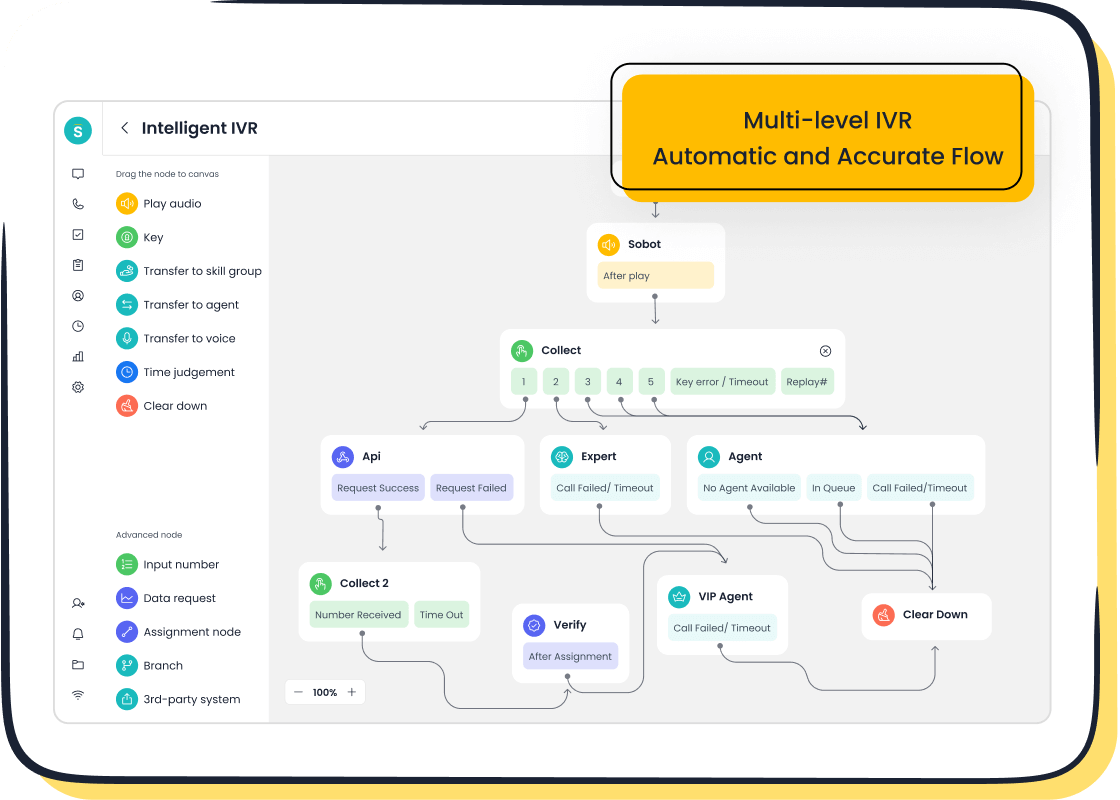
Sobot’s Voice/Call Center simplifies the process of conducting NPS surveys by integrating them seamlessly into your customer interactions. Its intelligent IVR system allows you to customize greetings and route calls efficiently, ensuring that customers feel valued from the start. With features like AI-powered voicebots and real-time call tracking, you can gather NPS data effortlessly while maintaining a smooth customer experience.
For example, you can use the platform to automate outbound calls that include NPS questions. This ensures you collect feedback consistently without burdening your team. The unified workspace consolidates customer data, enabling agents to address concerns raised by Detractors immediately. By leveraging these tools, you can transform raw NPS data into actionable insights that improve loyalty and retention.
Follow-Up Strategies to Act on NPS Feedback
Collecting NPS feedback is only the first step. Acting on it effectively is what drives real change. Sobot’s solutions empower you to follow up with customers based on their responses. For instance, you can use its AI-powered voicebots to reach out to Detractors and resolve their issues promptly. Promoters can be engaged through personalized thank-you messages or referral programs.
Consider these examples of successful follow-up strategies:
| Client | Pre-delivery NPS | Post-delivery NPS | Key Actions Taken |
|---|---|---|---|
| Client no. 1 (Marketplace) | 71 | 82 | Automated feedback response system, identified customer journey pain points. |
| Client no. 2 (Fashion Retailer) | 77 | 51 | Identified toxic products, improved offerings, real-time NPS feedback handling. |
These cases highlight the importance of addressing customer concerns quickly and improving your offerings based on feedback. Sobot’s tools make this process efficient, ensuring you turn insights into measurable improvements.
Integrating NPS with CSAT and CES for Holistic Insights
While NPS provides a clear picture of customer loyalty, combining it with CSAT and CES surveys offers a more comprehensive view of your customer experience. CSAT helps you measure satisfaction with specific interactions, while CES surveys reveal how much effort customers need to resolve issues. Together, these metrics complement NPS by addressing both short-term and long-term aspects of customer sentiment.
Sobot’s platform allows you to integrate these metrics seamlessly. For example, after resolving a customer’s issue, you can send a CES survey to gauge their effort level. Pairing this with NPS feedback helps you identify friction points and improve processes. By using all three metrics, you can create a balanced strategy that enhances satisfaction, reduces effort, and builds loyalty.
Net Promoter Score (NPS) stands out as a reliable metric for measuring long-term customer loyalty and advocacy. Its ability to predict sales growth and influence customer retention strategies makes it indispensable for businesses aiming to improve customer experience. However, interpreting NPS data requires caution, as its effectiveness can vary across service contexts.
| Key Insight | Description |
|---|---|
| NPS as Predictor | Predicts sales growth effectively under certain conditions. |
| Managerial Focus | Emphasizing improvement in NPS maximizes its utility. |
| Contextual Variability | Effectiveness varies across different service contexts. |
By leveraging tools like Sobot’s Voice/Call Center, you can seamlessly integrate NPS surveys into your operations. This approach ensures actionable insights that enhance customer loyalty and drive sustainable business growth.
FAQ
What makes NPS different from other customer feedback metrics?
NPS focuses on long-term loyalty rather than short-term satisfaction. Unlike CSAT or CES, it predicts customer behavior and business growth. This makes it a strategic tool for identifying Promoters who drive advocacy and Detractors who need attention.
How often should you conduct NPS surveys?
You should conduct NPS surveys quarterly or after key customer interactions, such as purchases or support calls. Regular intervals help you track trends and respond to changes in customer sentiment effectively.
Tip: Avoid over-surveying to prevent survey fatigue among your customers.
Can NPS be used across all industries?
Yes, NPS works across industries like retail, finance, and gaming. Its simplicity and universal question make it adaptable for any business aiming to measure customer loyalty and advocacy.
How does Sobot’s Voice/Call Center enhance NPS surveys?
Sobot’s Voice/Call Center automates NPS surveys through intelligent IVR and AI-powered voicebots. It collects feedback efficiently and provides actionable insights. This ensures you address customer concerns promptly and improve loyalty.
What should you do after collecting NPS feedback?
Act on the feedback immediately. Address Detractors’ concerns to reduce churn and engage Promoters with referral programs. Use tools like Sobot’s unified workspace to analyze responses and implement targeted improvements.
Note: Following up on feedback shows customers that their opinions matter, strengthening trust in your brand.
See Also
Comparing Leading Customer Feedback Software Solutions
Enhancing Call Center Efficiency Through Effective Monitoring
Best Customer Feedback Software Options for 2024

