Overcome Slow Service Bottlenecks


You know the feeling of waiting on hold or for an email reply. These long wait times create frustrating customer service experiences. In fact, 27% of customers identify slow support as their biggest issue. This post provides actionable solutions and strategies for overcoming challenges. These customer service challenges are more than just an inconvenience; they hurt your retention and revenue.
Did you know? A staggering 90% of buyers consider an "immediate response" crucial when they have a support question.
This guide will help you answer the question, "why is my customer service slow?" and explore solutions from Sobot.
Answering 'Why Is My Customer Service Slow?'

To fix a problem, you must first understand its source. Asking "why is my customer service slow?" is the essential first step. Slowdowns are often symptoms of deeper issues like inefficient workflows, outdated technology, or a simple lack of data. Pinpointing the exact cause requires a thorough investigation into your processes, performance, and people. This diagnosis is key to finding the right solution and finally answering the question, "why is my customer service slow?".
Auditing Your Current Workflows
Your first task is to map out every step of your customer service journey. Inconsistent service often stems from unclear processes. A workflow audit reveals these hidden bottlenecks and common customer service challenges.
Action Plan: How to Audit Your Workflow
- Map the current workflow: Create a flowchart for each process.
- Collect performance data: Gather metrics on how the process functions.
- Interview key stakeholders: Talk to your team to uncover delays.
- Analyze for bottlenecks: Identify inefficient steps and manual tasks.
- Recommend improvements: Document solutions like automation or standardization.
- Implement and monitor: Roll out changes and track progress.
Analyzing Key Performance Indicators (KPIs)
Numbers provide clear answers to the question, "why is my customer service slow?". Key Performance Indicators (KPIs) like Average Response Time (ART) directly measure your speed. ART tracks the average time it takes for your team to send a first response, a critical factor in shaping customer perception and reducing long wait times.
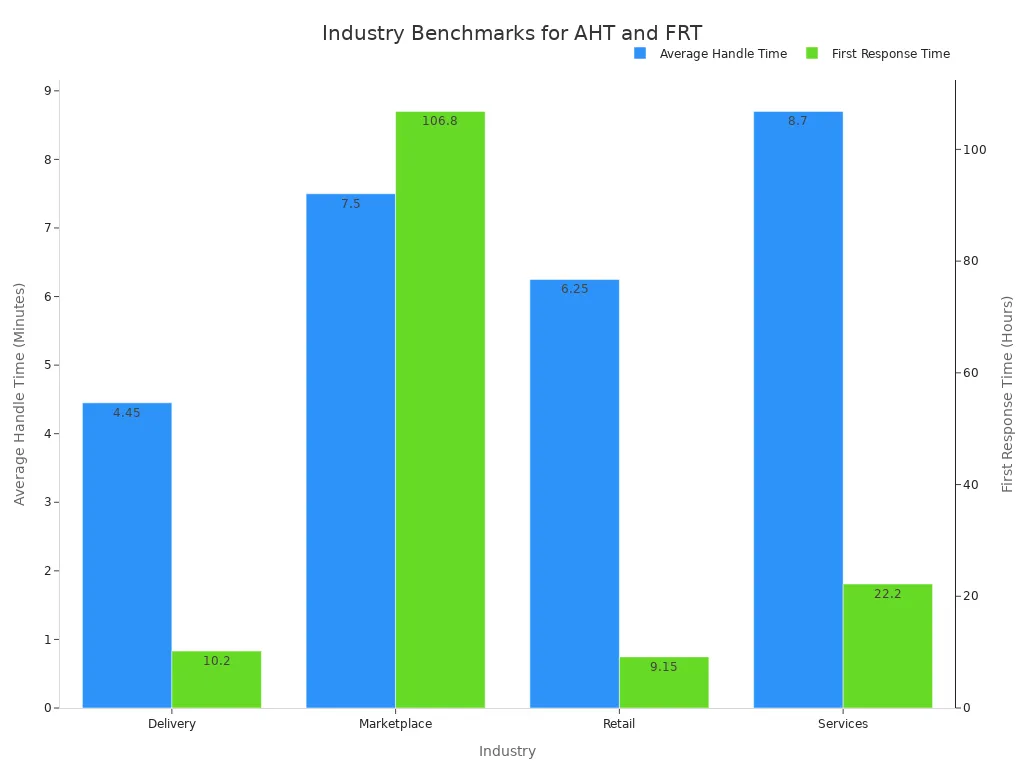
Compare your team’s performance against industry benchmarks to see where you stand. Are your response times a reason why is my customer service slow?
| Industry | Average Handle Time (AHT) | First Response Time (FRT) |
|---|---|---|
| Delivery | 4.45 minutes | 10.2 hours |
| Marketplace | 7.5 minutes | 106.8 hours |
| Retail | 6.25 minutes | 9.15 hours |
| Services | 8.7 minutes | 22.2 hours |
Gathering Agent and Customer Feedback
Data tells you what is happening, but your people can tell you why. Your agents are on the front lines and know where processes fail. Likewise, your customers experience the results of poor communication firsthand. Gathering their feedback is the final piece of the puzzle to understand why is my customer service slow.
Ask your agents about their daily frustrations and listen to their ideas for improvement. Then, survey your customers with direct questions about speed and satisfaction.
- How quickly was your issue resolved?
- Were you satisfied with the response time to your inquiry?
- On a scale of 1 to 5, how would you rate the responsiveness of our customer service team?
This direct communication helps you resolve issues and build a faster, more effective support system.
Successful Strategies for Automation and Self-Service
Your team cannot be everywhere at once, but automation can. Implementing successful strategies for automation and self-service directly tackles the root causes of slow service bottlenecks. With 81% of people wanting more self-service options, giving customers the power to find their own answers is no longer a bonus—it's an expectation. These strategies reduce your team's workload and empower your customers.
Deploying a Knowledge Base
A comprehensive knowledge base is your silent, 24/7 support agent. An incredible 91% of customers would use an online knowledge base if it were available and tailored to their needs. You can create a library of articles, FAQs, and tutorials that address common questions. This simple tool deflects a significant number of tickets, freeing your agents to focus on more complex issues that require a human touch.
Using the Sobot AI Chatbot for Instant Replies
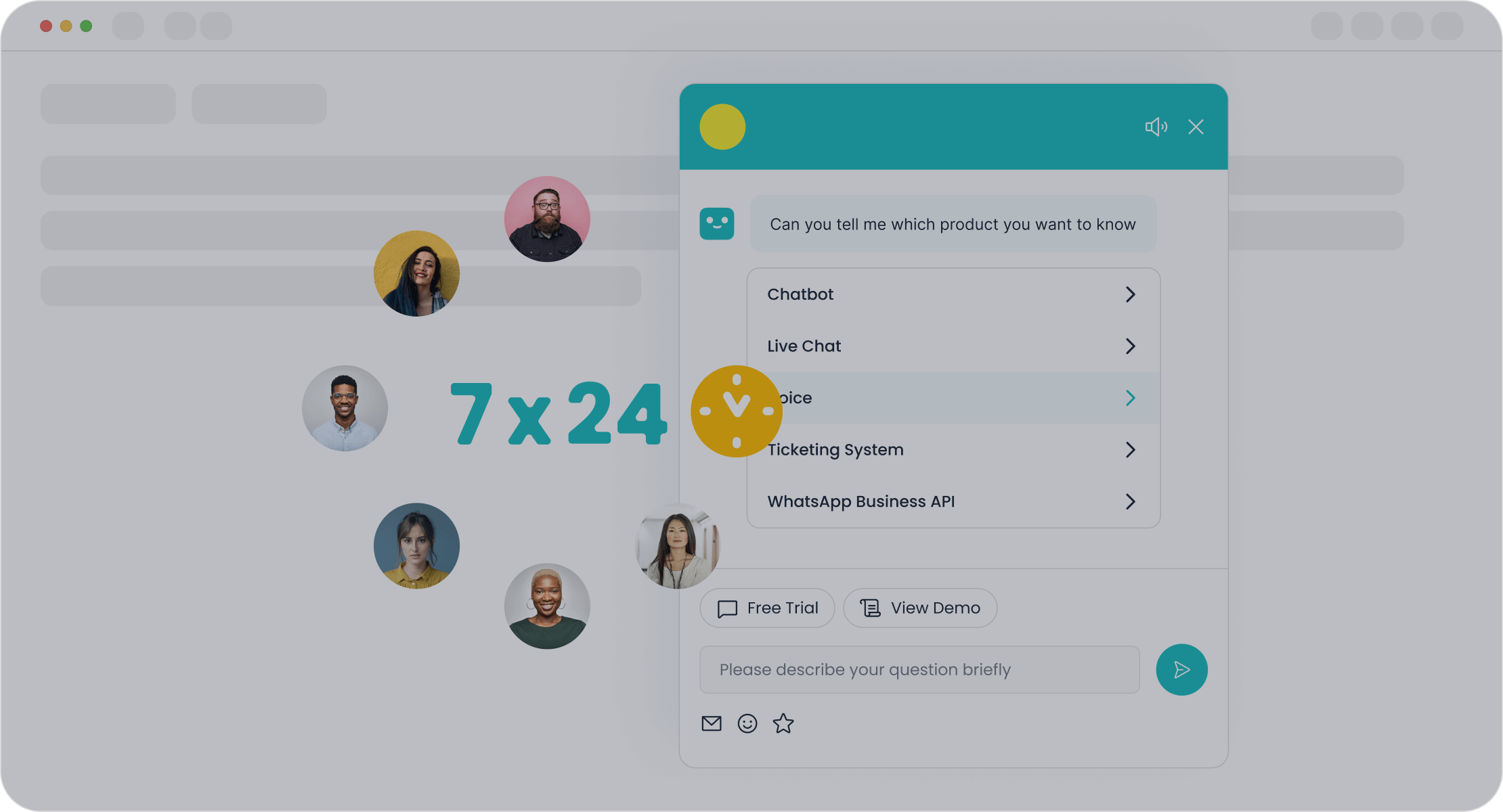
For immediate, interactive support, the Sobot AI Chatbot is one of the most effective successful strategies. It provides instant answers around the clock, eliminating wait times for routine questions. Key advantages include:
- 24/7 Availability: Your customer service is always online.
- Multilingual Support: Communicate with customers in their preferred language.
- No-Code Setup: You can design and launch your chatbot easily without any coding experience.
By handling repetitive queries, the Sobot AI Chatbot can improve team productivity by 70% and cut agent costs by up to 50%.
Setting Up Automated Email and Ticket Responses
When customers submit a ticket, silence creates anxiety. Automated responses confirm you have received the request and set clear expectations. This simple action builds trust and reduces follow-up inquiries.
Hello [Customer Name],
We've received your request ([Ticket ID]) and our team is on it. We will get back to you within [Number of Hours] hours. Thank you for your patience!
Building a Helpful Interactive Voice Response (IVR)
A poorly designed phone menu is a major source of frustration. You can build a helpful IVR by following a few key strategies. Place the most common options first and always provide a clear path to speak with a live agent. Offering a callback option is another great way to respect your customer's time and improve their experience.
Optimizing Your Customer Service Team

Automation is a powerful tool, but your human agents are the heart of your support operation. Optimizing your team is crucial for resolving complex issues and preventing slow service bottlenecks. Overwhelmed customer service teams often lead to burnout and inconsistent service. You can build a resilient, efficient, and motivated team with the right strategies.
Mastering Workforce Management (WFM)
Effective Workforce Management (WFM) is more than just software; it is a core business process. It helps you accurately predict customer demand and schedule agents accordingly. Proper forecasting is key to avoiding both understaffing and overstaffing.
Workforce forecasting helps prevent understaffing and overstaffing by allowing businesses to proactively identify staffing needs, prioritize scheduling, and allocate resources during peak demand times. This approach helps maintain satisfaction levels and reduces overtime.
By analyzing historical data, you can anticipate contact volumes and ensure you always have the right number of agents available. This prevents long queues for customers and reduces stress on your team.
Cross-Training Agents for Flexibility
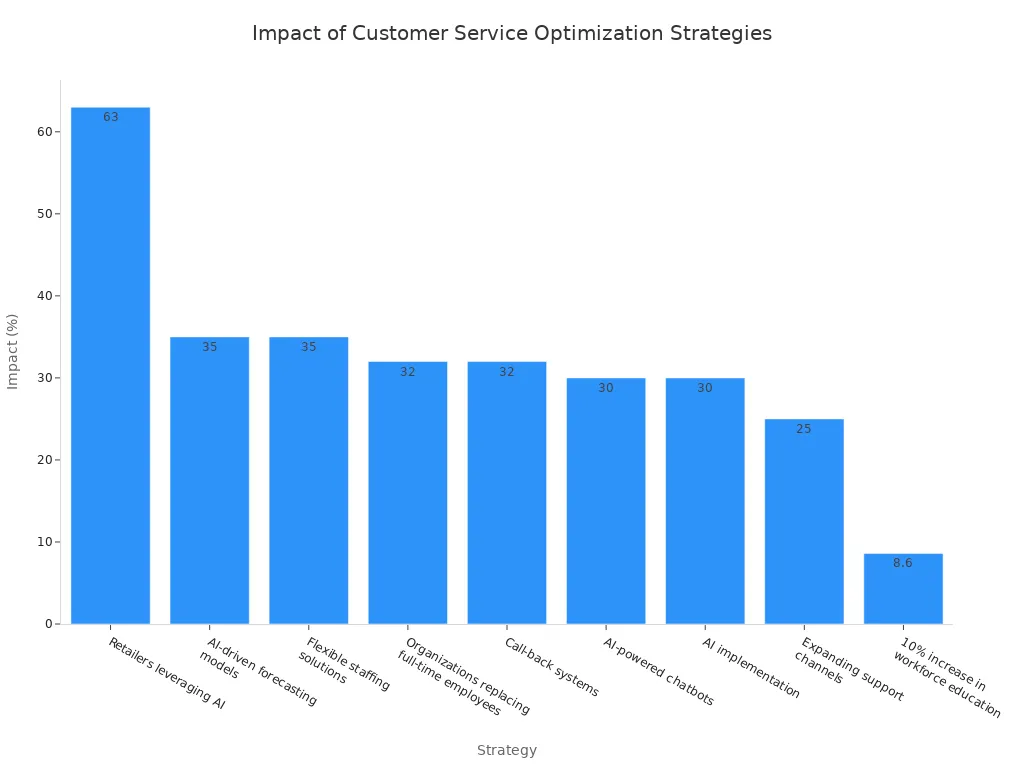
Your team becomes much more agile when agents can handle different types of inquiries or channels. Cross-training creates a versatile workforce that can adapt to fluctuating demand. This flexibility makes scheduling easier and improves collaboration within the team. It also boosts agent performance and confidence. Research shows that a 10% increase in workforce education can lead to an 8.6% gain in productivity.
Developing a Continuous Training Program
A one-time onboarding session is not enough. You should provide training on an ongoing basis to keep your team's skills sharp. A continuous training program ensures your agents are up-to-date on new products, policies, and service techniques. This investment in your team improves the quality of your customer service and helps agents grow professionally.
Empowering Agents with Autonomy
Empowering your agents to make decisions speeds up resolutions significantly. When agents can approve a refund or offer a discount without needing a manager's approval, they can solve problems on the spot. This autonomy, supported by AI-powered tools that provide instant information, helps agents resolve issues faster. As a result, your customer service becomes more efficient, and satisfaction rates climb.
Upgrading Technology for Process Improvement
Your team is optimized, but outdated tools can still hold them back. Upgrading your technology is the final step to creating a truly efficient operation. The right tech stack streamlines workflows, provides critical data, and empowers your agents to deliver the fast, effective service customers expect.
Adopting an Omnichannel Platform
You can break down communication silos by adopting a unified platform. The Sobot Omnichannel Solution brings all your channels—email, chat, voice, and social media—into a single workspace. This integration provides a seamless experience for your customers and a massive efficiency boost for your team. Agents no longer need to switch between multiple systems. They have the full conversation history in one place, eliminating the need for customers to repeat themselves and improving team collaboration. This is the foundation of modern customer service.
A Guide to Customer Service Process Improvement
A powerful platform is the engine for customer service process improvement. It gives you the tools to refine every step of the support journey. Key strategies include:
- Intelligent Routing: Get issues to the correct agent faster based on skill and issue type.
- Self-Service Optimization: Use analytics to see what customers are searching for and improve your knowledge base or chatbot.
- Analytics-Driven Training: Identify successful resolution patterns and use them to train your entire team.
Leveraging Your CRM for Faster Context
Agents need context to provide fast support. Integrating your CRM with your service platform gives them a complete 360-degree view of the customer. With a single click, your team can see past purchases, previous interactions, and other vital data. This empowers them to offer personalized and efficient support without asking repetitive questions.
Boosting Satisfaction with AI-Powered Tools
AI-powered tools are essential to boost customer satisfaction. They automate routine tasks and provide agents with real-time assistance.
Case Study: Weee! Boosts Efficiency with Sobot America's largest online Asian supermarket, Weee!, faced challenges with inflexible systems. By implementing Sobot's voice product and integrated workbench, they unified their communication. The results were remarkable: agent efficiency increased by 20%, and their customer satisfaction score reached 96%.
This shows how the right technology directly leads to better outcomes. By providing omnichannel support and smart tools, you equip your team to resolve issues faster and dramatically improve customer satisfaction.
You now have actionable solutions to fix service delays. These strategies—implementing automation, optimizing your team, and upgrading technology—directly improve your customer service. Resolving bottlenecks leads to faster responses, which is crucial for customer satisfaction. Since 83% of customers feel more loyal to brands that resolve issues quickly, boosting speed is essential for retention and building customer loyalty.
Ready to see immediate improvements? Embark on your contact journey with Sobot's all-in-one platform to enhance satisfaction and transform your support operations.
FAQ
What is the first step to fix slow service?
You should start by auditing your current workflows. Map out the customer journey to find where delays happen. This analysis reveals the specific slow service bottlenecks you need to address first.
How can automation help if my team is small?
Automation is perfect for small teams. A tool like the Sobot AI Chatbot handles common questions 24/7. This frees your team to focus on complex issues, breaking through slow service bottlenecks without hiring more staff.
Will an omnichannel platform be difficult to implement?
Modern omnichannel platforms like Sobot offer easy setup. They unify your channels into one workspace. This simplifies agent tasks and provides a seamless customer experience, quickly resolving a major cause of slow service.
How do I measure the success of these changes?
You can track Key Performance Indicators (KPIs). Monitor metrics like First Response Time (FRT) and customer satisfaction scores. Improvement in these numbers shows you are successfully overcoming your slow service bottlenecks.
See Also
Elevate Call Center Performance Through Effective Monitoring Strategies
Resolve Shopify Live Chat Problems Quickly and Efficiently
Enhance SaaS Customer Support Using Smart Live Chat Approaches
Optimize Your Round-the-Clock Live Chat Operations for Peak Efficiency
Unlocking Greater Efficiency with AI-Powered Customer Service Solutions

