Why You Need a Contact Center


Modern customers expect excellent service. In fact, 73% of customers want a seamless experience when they switch between support channels. A basic call center only handles phone calls. A modern contact center, like the all-in-one contact center solution from Sobot, unifies all customer support communications. This approach transforms customer service from a cost into a strategic asset. It boosts customer satisfaction and drives operational efficiency. Businesses that provide strong omnichannel support see higher customer retention.
Strong omnichannel companies retain 89% of their customers, a significant increase compared to companies with weaker support systems. This shows the clear value of a unified customer experience.
Knowing when do companies need a contact center is key to growth. Investing in the right contact center software improves the entire customer journey and service satisfaction.
When Do Companies Need a Contact Center?
Understanding when do companies need a contact center is crucial for scaling a business. Several clear signs indicate that a simple call center is no longer enough. These challenges directly impact customer satisfaction, agent productivity, and overall growth. Recognizing these signals helps businesses know when do companies need a contact center to unify their service operations.
Your Customers Expect Omnichannel Support
Today’s customers move freely between communication channels. In fact, about one-third of consumers use three or more channels to research and buy products. They expect a consistent experience whether they use email, social media, or phone support. A traditional call center cannot track a customer who sends an email and then calls for a follow-up. This disjointed approach frustrates customers and weakens their loyalty. A modern contact center provides seamless omnichannel support, meeting customers wherever they are.
Your Agents Are Overwhelmed by Repetitive Tasks
Agent burnout is a serious issue when teams are overworked. A key sign that you need a better system is when agents spend most of their day on simple, repetitive tasks. Agents often dedicate up to 80% of their time to answering basic questions. This leaves little time for complex customer issues. Common repetitive tasks include:
- Summarizing calls and writing follow-up emails
- Updating the CRM with customer notes
- Triaging inbound support tickets
This inefficiency shows when do companies need a contact center with automation to handle routine service inquiries.
Your Customer Data is Siloed and Incomplete
Many businesses store customer data in separate systems. This creates data silos. Marketing may have one set of information, while the customer service team has another. This separation leads to an incomplete picture of the customer. Agents lack the context to provide effective service. They may ask customers for information the company should already have. This poor experience damages trust and reduces agent productivity. A unified contact center breaks down these silos for better service.
You Lack a Unified View of the Customer Experience
Without a single view of all interactions, it is impossible to understand the full customer journey. Businesses cannot identify points of frustration or delight. This lack of insight leads to an inconsistent customer experience across different touchpoints. Outdated technology often prevents the gathering of data from multiple sources. This makes it difficult to deliver the personalized service that customers expect. An integrated contact center provides a complete view, turning every interaction into a positive experience.
Meet Your Customers with Omnichannel Support

Providing excellent customer service means meeting customers on their preferred channels. A modern contact center makes this possible through omnichannel support. This approach unifies all customer interactions into a single, seamless experience. It moves beyond the limits of a traditional call center.
The Problem with Siloed, Voice-Only Service
A voice-only call center creates a frustrating customer experience. Customers often have to repeat their issues every time they switch channels. This happens because the data is not shared between email, chat, and phone support teams. This disjointed service leads to several problems:
- Customers feel unheard and undervalued.
- Agents waste time gathering information the company already has.
- Inconsistent answers across different channels damage brand trust.
This fragmented approach lowers customer satisfaction and can cause customers to leave. A siloed call center cannot provide the smooth service modern customers expect.
How a Unified Platform Creates a Seamless Journey
A unified platform like Sobot's Omnichannel Solution solves these problems. It brings all communication channels—including voice, email, social media, and chat—into one workspace. This creates a single conversation thread for each customer. When a customer moves from an email to a phone call, the agent has the full history of their interactions. This context allows for a more personal and efficient service.
Sobot is also an official WhatsApp Business Solution Provider (BSP). This allows businesses to manage customer engagement on popular messaging apps. This level of integration is impossible with a basic call center. An omnichannel contact center ensures a consistent and high-quality service experience.
Examples of Omnichannel Support in Action
Successful companies use omnichannel support to boost customer loyalty. For example, Walgreens allows customers to refill prescriptions through its mobile app. This service sends alerts and reduces in-store wait times. This seamless connection between their digital and physical service channels improved the customer experience and increased digital sales. This strategy shows how a well-integrated support system improves both customer satisfaction and business efficiency. An omnichannel contact center empowers a business to deliver this level of connected service.
Boost Efficiency with Intelligent Automation
A modern contact center uses intelligent automation to boost efficiency and improve the customer experience. Automation handles simple tasks, which allows human agents to focus on complex problems. This shift is transforming the customer service industry. The global call center AI market is projected to grow from $1.95 billion in 2024 to over $10 billion by 2032, showing a clear trend toward smarter support solutions.
Using AI to Automate Repetitive Inquiries
Many customer questions are simple and repetitive. An advanced contact center uses AI to manage these common inquiries. Sobot’s AI-powered Chatbots and Voicebots provide 24/7 support for customers. These tools can answer frequently asked questions, check order statuses, and process basic requests. This frees up valuable agent time. Studies show that AI chatbots can successfully manage up to 80% of routine customer tasks. This allows agents to dedicate their skills to issues that require a human touch, improving both agent job satisfaction and the quality of customer service.
Implementing Smart Call Routing for Faster Resolution
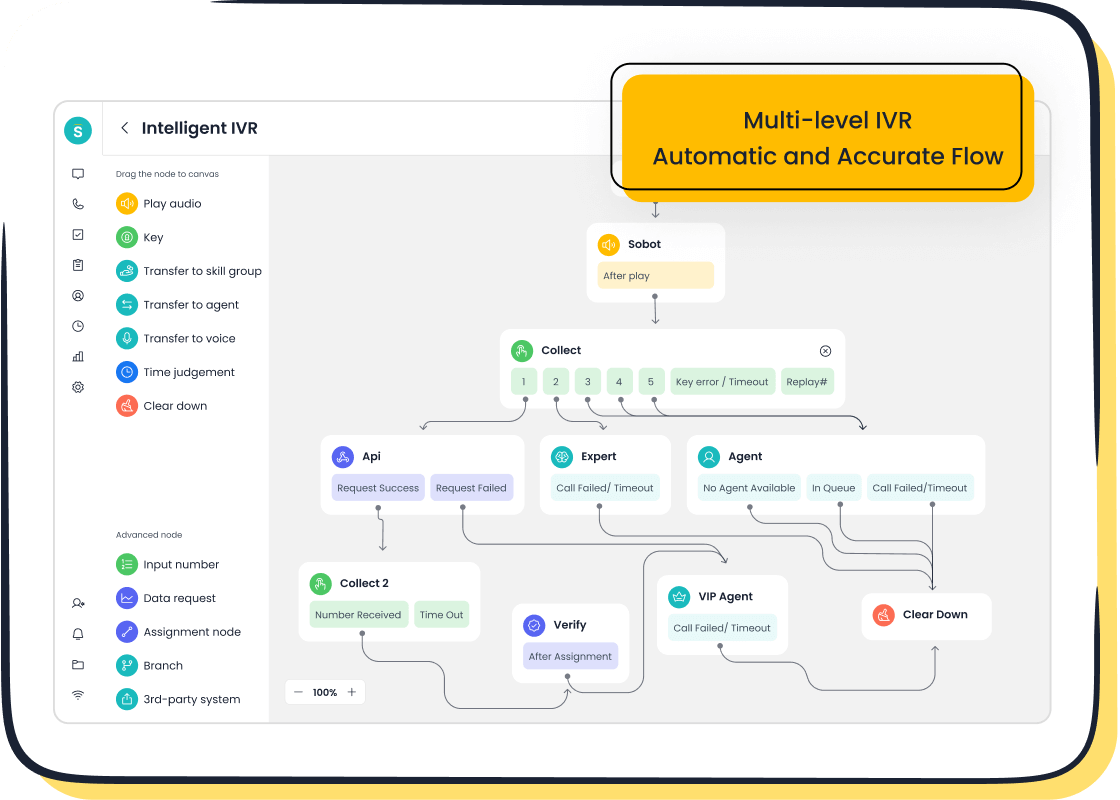
Getting customers to the right agent quickly is essential for good service. A traditional call center often creates long wait times and frustrating transfers. Sobot’s Voice/Call Center includes a drag-and-drop IVR (Interactive Voice Response) builder. This feature allows businesses to easily create smart call flows.
Pro Tip: Use skill-based routing to match customers with agents who have the right expertise. This strategy ensures that the customer connects with the correct person on the first try, leading to a faster resolution. This intelligent routing minimizes wait times and directs customers to the most qualified support agent for their specific problem.
Reducing Costs and Average Handle Time
Automation directly impacts a company's bottom line. By handling routine inquiries, AI reduces the number of calls and chats that human agents must manage. This lowers operational costs. Smart routing also reduces the average time an agent spends on each call. A faster resolution means agents can help more customers in less time. For example, after implementing Sobot’s all-in-one contact center solution, Samsung saw a 30% increase in agent efficiency. This improvement demonstrates how a powerful contact center platform enhances service delivery and provides a strong return on investment.
Enhance the Customer Experience with Unified Data
A modern contact center turns raw data into a powerful tool for delivering exceptional service. By unifying information from every customer touchpoint, businesses can create a more personalized and efficient customer experience. This data-driven approach is key to building lasting customer relationships.
Integrating Your Contact Center with a CRM
Integrating a contact center with a Customer Relationship Management (CRM) system is a critical first step. This connection breaks down data silos between sales, marketing, and support teams. When contact center software works with a CRM, agents gain a single source of truth for all customer information. Key benefits of CRM integration include:
- Higher Agent Productivity: Agents access all customer data in one place, reducing the time spent switching between applications.
- Accurate Customer Records: Automatic data syncing between the contact center and the CRM ensures all information is current and consistent.
- Stronger Team Collaboration: All departments work from the same CRM data, improving coordination for a better customer journey.
Equipping Agents with a 360-Degree Customer View
A CRM integration equips agents with a 360-degree view of the customer. This complete picture includes past purchases, previous support interactions, and contact preferences. Agents no longer need to ask customers to repeat their issues. This comprehensive view is crucial for effective problem resolution. Without it, agents lack the context to solve problems on the first call, leading to transfers and frustrated customers. A full customer history empowers agents to provide fast and accurate support.
How Context-Aware Service Boosts Satisfaction
When agents have full context, they can deliver personalized customer service. They can greet customers by name and reference past interactions, making the experience feel more human. This context-aware service directly boosts customer satisfaction. Unified data allows a contact center to provide personalized customer service that meets individual needs. This approach moves beyond generic scripts and creates genuinely helpful conversations, which is essential for a positive customer experience. This level of personalized customer service turns a standard support call into a memorable interaction.
Turning Service Interactions into Revenue Opportunities
Excellent customer service can also drive revenue. With a complete customer profile from the CRM, agents can spot opportunities to offer additional value. For example, an agent helping a customer with a product can suggest a relevant accessory or upgrade. This is not a hard sell; it is a natural part of providing helpful, personalized customer service. By understanding the customer's history and needs, a support team can turn a simple service interaction into a chance to increase customer loyalty and sales. This transforms the call center from a cost center into a profit center.
Empower Agents and Reduce Turnover

A positive agent experience directly creates a better customer experience. Happy, empowered agents provide superior service, which boosts customer loyalty. A modern contact center provides the tools and support necessary to reduce agent burnout and lower costly turnover.
The High Cost of Agent Burnout
High turnover in a call center is expensive. Agents often face a stressful work environment and repetitive tasks, leading to burnout. The cost of replacing a single agent includes recruiting, hiring, and training. These expenses add up quickly. For a mid-sized call center, the financial impact is significant.
| Metric | Annual Cost |
|---|---|
| Cost per Departing Agent | $10,000 - $20,000 |
| Annual Turnover Cost (100-Agent Center) | Over $700,000 |
These figures show that investing in agent retention is a smart business strategy. Reducing turnover saves money and improves the quality of customer service.
Providing a Unified Agent Workspace
A primary cause of agent frustration is poor technology. In fact, over 51% of agents report struggling with their software. Sobot’s contact center software solves this problem with a unified agent workspace. It brings all communication channels and customer data into a single screen. Agents no longer need to switch between multiple systems to help customers. This streamlined approach reduces stress and allows agents to focus on providing excellent support. A unified workspace empowers agents to handle customer inquiries efficiently, improving their job satisfaction.
Improving Agent Performance with Better Tools
Better tools lead to better performance and happier agents. When agents have access to a complete customer history, they can solve complex problems effectively on the first try. This capability boosts their confidence and sense of accomplishment. A modern contact center also provides tools for managers to support their teams, such as real-time call monitoring and whisper coaching. This support helps agents develop their skills and feel valued.
Research shows a clear link between employee and customer satisfaction. For every 1% increase in employee sentiment, customer satisfaction scores rise by 1.3%.
Ultimately, a supportive environment with the right tools reduces agent turnover. This creates a more experienced and effective support team, which delivers a consistently high level of service to all customers.
A modern contact center is essential for business growth. It helps companies meet the expectations of today's customers. Moving beyond a basic call center provides a better customer experience and improves customer retention. A unified contact center solution offers superior customer service and support. This service transformation answers the question of when do companies need a contact center. Businesses that upgrade their support systems see clear benefits. A powerful contact center empowers agents and delivers excellent service for all customers.
Ready to improve your customer support and boost retention? Embark on Your Contact Journey by exploring Sobot's all-in-one contact center solutions.
FAQ
❓ What is a contact center?
A contact center is a central hub for managing all customer communications. It unifies channels like phone, email, chat, and social media. This system provides a complete view of the customer journey for better service.
❓ How is a contact center different from a call center?
A call center primarily handles voice calls. A modern contact center manages interactions across multiple channels. It integrates these channels to create a seamless customer experience, which a traditional call center cannot do.
❓ What role does AI play in a contact center?
AI automates repetitive tasks in a contact center. Chatbots and voicebots handle common questions 24/7. This frees human agents to focus on complex issues, improving efficiency and customer satisfaction.
❓ Can a contact center work with existing business tools?
Yes, a modern contact center integrates with other systems like CRMs. This connection provides agents with a complete customer history. It helps them deliver faster, more personalized support without switching applications.
See Also
A 10-Step Guide to Deploying Effective Omnichannel Contact Center Solutions
The Best Contact Center Solutions: An In-Depth Review for 2024
Evaluating the Leading Cloud Contact Center Services: A 2024 Review
Essential Features of Leading CRM Call Center Software Explained
Your Comprehensive Guide to Understanding Omnichannel Call Center Software

