What Is Quality Call Center Monitoring?

Quality call center monitoring is the systematic process you use to evaluate customer service interactions. This call center monitoring identifies opportunities to improve agent performance and the overall customer experience. Since a single bad experience can drive away 32% of customers, effective call center quality monitoring is vital for your business. The ultimate goal of this monitoring is to boost customer satisfaction and operational efficiency. Using a quality monitoring process with tools like the Sobot call center, which leverages Sobot AI, enhances call quality and agent performance, ensuring customer satisfaction with every experience.
The Business Case for Call Center Quality Monitoring
Implementing a quality monitoring program is a direct investment in your business's success. It moves you from guessing about service quality to knowing exactly what works and what does not. This knowledge empowers you to make data-driven decisions that strengthen your team, delight your customers, and protect your bottom line. A consistent call center monitoring process creates a clear path to excellence.
Improve Agent Performance
Effective call center monitoring gives your agents the specific, constructive feedback they need to grow. Instead of offering general advice, you can pinpoint exact moments in a call where an agent excelled or could improve. This targeted coaching helps agents master key skills, build confidence, and understand what great service looks like. A strong quality monitoring strategy is the foundation for improving performance.
This focus on development delivers measurable results. Organizations that implement a structured call center quality monitoring program often see significant gains in a short time.
Typical Performance Improvements Within 6 Months:
- Customer Satisfaction (CSAT): 15-25% increase
- First Contact Resolution (FCR): 20-30% reduction in repeat calls
- Agent Productivity: 25-35% improvement in output
This data shows that consistent monitoring and coaching directly boost agent performance, creating a more skilled and effective team.
Enhance Customer Satisfaction
Happy agents lead to happy customers. When your agents are well-trained and confident, they deliver a superior customer experience. Call center monitoring allows you to understand your customer's journey from their perspective. You can hear their frustrations and identify their needs directly from call recordings.
This direct customer feedback helps you refine your processes and scripts. You can ensure that every interaction is helpful, empathetic, and efficient. By focusing on call quality, you turn every call into an opportunity to build loyalty. The result is higher customer satisfaction and a stronger brand reputation. A positive experience encourages customers to return.
Ensure Compliance and Reduce Risk
Every call center must follow strict industry regulations. Failing to comply can lead to massive fines and legal trouble. Quality call center monitoring is your first line of defense. It helps you ensure that agents follow required scripts, handle sensitive data correctly, and adhere to legal standards.
Key regulations that impact call centers include:
- PCI DSS (Payment Card Industry Data Security Standard): Protects credit card information during transactions.
- HIPAA (Health Insurance Portability and Accountability Act): Secures private patient health information.
- GDPR (General Data Protection Regulation): Governs the data rights of EU citizens.
The financial penalties for non-compliance are severe. As you can see below, regulatory bodies do not hesitate to issue multimillion-dollar fines.
| Year | Entity | Fine/Settlement Amount | Violation Type |
|---|---|---|---|
| 2021 | Two Texas-based telemarketers | $225 million | Making approximately one billion robocalls (FCC) |
| 2020 | Financial institution | $250 million | Violations related to consumer protection (Dodd-Frank Act) |
| 2019 | Financial institution | $85 million | Failing to safeguard customer data (GLBA regulations) |
| 2018 | Anthem Inc. | $16 million | Data breach affecting 79 million individuals |
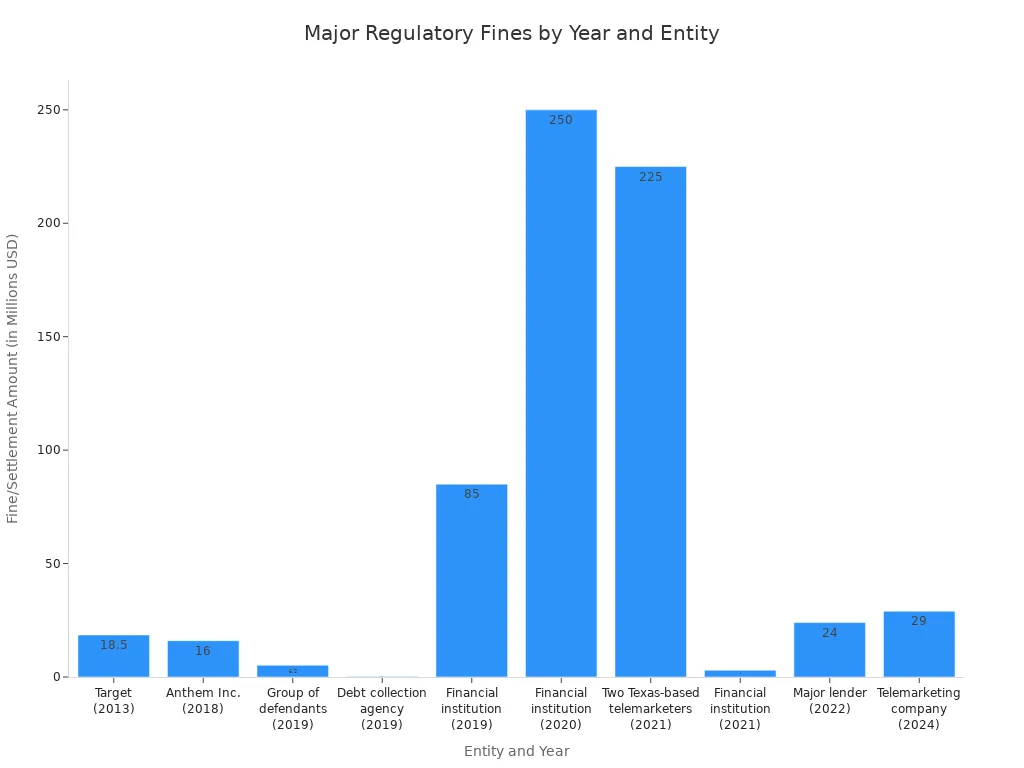
Regular monitoring and quality assurance checks are essential to avoid these risks and protect your business.
Increase Operational Efficiency
Inefficient processes waste time and money. Call center quality monitoring helps you identify and eliminate these bottlenecks. By analyzing calls, you can discover why customers are calling multiple times or why certain calls take so long. This insight allows you to fix the root cause of problems.
For example, monitoring might reveal that customers are confused by a step in your billing process. You can then create a better knowledge base article or use a chatbot to answer that question, freeing up agents for more complex issues. Key metrics are impacted by these improvements.
| Metric | How Monitoring Helps |
|---|---|
| Average Handle Time (AHT) | Identifies long calls and training gaps. Automated summaries alone can reduce AHT by up to 33%. |
| First Contact Resolution (FCR) | Reduces repeat calls by solving the customer's problem the first time. |
| Cost Per Call | Lowers costs by improving FCR and reducing AHT. |
| Call Abandonment Rate | Pinpoints issues causing long wait times, which frustrate customers. |
By improving call quality and agent performance, you directly reduce operational costs. Your team resolves more issues faster, your customer satisfaction grows, and your entire operation runs more smoothly. This makes monitoring a powerful tool for driving business growth.
How Quality Monitoring Is Conducted

Effective quality call center monitoring is a structured process, not a random check-in. You need a clear framework to gather data, evaluate interactions, and provide feedback. This framework relies on tracking the right metrics, choosing the right methods, and using standardized tools like scorecards. A consistent approach ensures your quality assurance efforts are fair, objective, and aligned with your business goals.
Key Metrics to Monitor
You cannot improve what you do not measure. Performance metrics are the backbone of any call center quality monitoring program. They give you concrete data to assess agent performance and the overall customer experience. While there are many metrics you can track, focusing on a few key indicators will provide the most valuable insights.
Here are some of the most critical performance metrics for evaluating call quality:
- First Contact Resolution (FCR): This measures your ability to solve a customer's issue in a single interaction. A high FCR is a strong indicator of efficiency and agent expertise. The industry benchmark average for FCR is around 70%, with world-class performance considered 80% or higher.
- Customer Satisfaction (CSAT): This metric directly measures how a customer feels about an interaction, usually through a post-call survey. High CSAT scores are clear proof that your quality assurance program is working.
- Average Handle Time (AHT): This is the total time an agent spends on a customer interaction, including talk time, hold time, and after-call work. The industry standard is about 426 seconds (7.1 minutes) for service calls. You should balance a low AHT with a high FCR to ensure speed does not hurt quality.
- Internal Quality Score (IQS): Your managers or quality assurance specialists generate this score. They listen to calls and evaluate them against a checklist covering politeness, accuracy, and process adherence. IQS provides a structured internal measure of agent performance.
- Customer Effort Score (CES): This assesses how easy it was for the customer to get their issue resolved. A low score means you are providing a smooth and convenient experience.
Tracking these metrics helps you create a complete picture of your contact center's performance.
Methods for Call Centre Monitoring
You have several methods for conducting call center monitoring. Each has its own strengths and weaknesses. Historically, most organizations relied on manual monitoring, where a manager listens to a small sample of calls. However, technology has introduced powerful automated solutions.
Did You Know? Manual call reviews traditionally cover only 1-2% of total interactions. A common practice is to review just 4-6 calls per agent each month. This small sample size can make it difficult to get a truly accurate picture of overall performance.
Choosing the right method depends on your call volume, goals, and resources. Many modern call centers use a hybrid approach, combining the nuance of manual reviews with the scale of automation.
| Feature | Manual Call Monitoring | Automated Call Monitoring |
|---|---|---|
| Pros | • Provides high accuracy for specific calls reviewed. • Captures nuance and context that software might miss. | • Evaluates 100% of customer service interactions. • Identifies trends and gauges performance at scale. • Frees up managers for high-value coaching. |
| Cons | • Extremely time-consuming and difficult to scale. • Prone to human bias and inconsistency. • Reviews a very small percentage of total calls. | • Requires investment in analytics software. • Can miss the context of complex conversations if not using advanced AI. |
| Use Cases | • Low call volume environments. • Deep-diving into specific, complex customer issues. | • High call volume environments. • Ensuring compliance and script adherence across all calls. • Analyzing overall customer sentiment and agent performance trends. |
Ultimately, automated monitoring allows you to analyze every interaction, giving you a complete and unbiased view of your call quality.
The Role of Scorecards
Scorecards are the foundation of a fair and consistent call quality monitoring program. A scorecard is a simple form that lists the key criteria for a successful interaction. Evaluators use it to assign a score to each call, ensuring every agent is measured against the same standards. This removes guesswork and makes the monitoring process objective.
To create an effective scorecard, you should:
- Define Clear Criteria: Involve agents and other stakeholders to decide what defines a quality interaction. Align these criteria with your business goals.
- Use Weighted Scoring: Assign more points to the most critical behaviors. This ensures your scores reflect what truly matters to the customer and your business. For example, "Problem Resolution" might be worth more than "Greeting."
- Incorporate Customer Feedback: Use insights from CSAT surveys and other customer feedback to refine your scorecard. This ensures your evaluations are aligned with what customers actually want.
- Keep It Simple: A complicated scorecard is hard to use. Focus on 10-15 key items to keep the evaluation process efficient and focused.
Common categories you might include in your scorecard are:
- Communication Skills (e.g., clarity, tone)
- Problem Resolution
- Process Adherence
- Product Knowledge
- Customer Empathy
By using well-designed scorecards, you create a transparent and effective system for monitoring performance and driving continuous improvement.
Leveraging Technology for Quality Call Center Monitoring

Manual call centre monitoring is no longer enough. Reviewing a small fraction of calls leaves you with an incomplete picture of agent performance and the customer experience. Modern platforms like Sobot's Voice/Call Center are essential for effective quality call center monitoring. They use technology to analyze every interaction, giving you the data you need to drive real improvement.

Automating Analysis with AI
Artificial intelligence (AI) transforms your call center quality monitoring process. Instead of listening to a few calls, you can automatically analyze 100% of them. AI-powered quality monitoring software uses speech analytics to understand both what was said and how it was said. It scans call transcripts for keywords while also analyzing audio for tone, pitch, and volume. This dual analysis helps you objectively measure customer satisfaction and agent empathy. This technology gives you a complete view of call quality without the bias of manual reviews.
Gaining Deeper Insights with Sobot
You can gain deeper quality monitoring insights with specialized tools. Sobot’s quality monitoring software uses advanced AI to improve your quality assurance. The platform offers powerful features that help you understand every customer interaction.
- AI-powered Voicebot: This tool uses natural language processing (NLP) to have human-like conversations. It can handle over 50% of customer interactions instantly, freeing up your agents for complex issues.
- Monitoring and Analysis: Sobot provides AI-driven reports and analytics. These tools help you optimize operations and identify gaps in your knowledge base, turning raw data into actionable insights for better decision-making.
This level of analysis helps you move beyond basic metrics and truly understand the customer journey.
Scaling Your Monitoring Efforts
As your business grows, manual call center monitoring becomes impossible to scale. It is time-consuming, expensive, and often leads to inconsistent scoring. This makes it difficult to provide timely customer feedback or ensure compliance across all calls. Technology solves these challenges. Sobot’s Unified Workspace provides a single platform for agents and managers. It brings all customer data and performance metrics into one place. This makes real-time coaching and performance tracking simple. You can easily monitor your team's progress and align their efforts with your business goals. This approach makes your quality assurance program efficient and scalable, ensuring a great customer experience no matter how large your team gets.
Best Practices for an Effective Program
An effective quality monitoring program is more than just software; it is a strategy. By following call center best practices, you can build a culture of excellence that improves both agent performance and the customer experience. This approach turns quality call center monitoring from a task into a powerful driver of business growth.
Define Clear Evaluation Criteria
Your first step is to define what a "quality" interaction looks like. Vague standards lead to inconsistent evaluations and confused agents. You must establish objective, customer-focused criteria.
- Focus on the Customer: Align your evaluation criteria with the customer journey and direct customer feedback.
- Define Successful Outcomes: Shift focus from just following a script to achieving results like first-call resolution.
- Ensure Consistency: Use regular calibration sessions where evaluators review calls together to ensure everyone applies standards the same way.
Clear criteria ensure your call quality monitoring is fair and directly tied to business goals like improving customer satisfaction.
Focus on Coaching, Not Just Scoring
A program focused only on scores can create anxiety and resentment. Instead, you should use monitoring data to power a supportive agent coaching program. The goal is development, not punishment. A coaching-focused approach makes agents feel valued and boosts morale.
Coaching Tip: Use a simple, effective model like Situation-Behavior-Impact (SBI). This helps you provide clear, specific feedback by describing the situation, the agent's behavior, and the impact it had on the customer.
This transforms monitoring from a critique into a collaborative conversation about growth.
Aligning with Call Centre Quality Assurance
It is important to understand how call center monitoring fits into your overall call center quality assurance strategy. Quality assurance is the proactive process of designing systems to prevent errors. Call quality monitoring is a key component of QA, providing the data to see if those systems are working. Your quality assurance process sets the standards, and monitoring measures performance against them. This synergy ensures consistent service quality and informs your continuous improvement efforts.
Involve Agents in the Process
You can increase agent engagement by over 40% when you involve them in creating the evaluation process. When agents help build the scorecards, they gain ownership and trust in the system. Create continuous feedback loops where agents can review their own performance and provide input. This collaborative approach builds a stronger, more effective quality monitoring strategy.
For example, Samsung implemented Sobot's all-in-one solution to unify its customer service. By adopting these best practices, they empowered their team and achieved a 97% customer satisfaction rate and a 30% increase in agent efficiency. This shows how a well-designed program, built on collaboration and clear standards, delivers outstanding results.
Quality monitoring is a core strategic process for any modern contact center, not just a supervisory task. You can directly improve agent skills, boost customer loyalty, and drive better business outcomes with a well-implemented program. When you power your monitoring with an advanced solution like Sobot, you gain a true competitive advantage. This transforms how you support every customer. It is time to elevate your customer service. Embark on Your Contact Journey.
FAQ
What is the main goal of quality call center monitoring?
The primary goal is to improve agent performance and enhance the customer experience. You use quality call center monitoring to gather data, identify areas for growth, and ensure every customer interaction meets your high standards. This process drives customer satisfaction and operational efficiency.
How often should you review calls?
Your review frequency depends on your call volume and goals. A common practice is reviewing 4-6 calls per agent each month. However, using AI-powered tools like Sobot allows you to analyze 100% of interactions, providing much deeper and more consistent insights.
Can AI completely replace human evaluators?
AI automates the analysis of all calls, which is impossible for humans. It provides objective data and identifies trends at scale. However, you still need managers for nuanced coaching and strategic oversight. The best approach combines AI's power with human expertise.
How do you start a quality monitoring program?
You can start by defining clear evaluation criteria with a scorecard. Next, choose your monitoring method, whether manual, automated, or a hybrid approach. Finally, focus on using the data for constructive coaching to help your agents improve their skills.
See Also
Optimizing Call Center Excellence: Proven Strategies for Quality Management
Essential Guide: Selecting and Implementing Call Center Quality Assurance Software
Elevating Call Center Performance: The Power of Effective Monitoring Strategies
Understanding QMS Principles: A Comprehensive Guide for Call Centers
Unveiling Call Center Voice Analytics: Understanding This Powerful Technology

