What is an Inbound & Outbound Call? A 2026 Guide

Understanding what is inbound call and outbound call is fundamental for any effective customer service strategy. An inbound call is initiated by a customer reaching out to your business, while an outbound call is when your business contacts a customer. As the global contact center market continues its rapid expansion, the demand for exceptional customer support is more critical than ever. To thrive in this environment, businesses need the right customer service software. The Sobot call center, powered by Sobot AI, is designed to meet these evolving needs, ensuring your operations are prepared for growth. With Sobot, you can confidently Embark on Your Contact Journey.
What is an Inbound Call and Outbound Call?

To truly grasp what is inbound call and outbound call, it helps to use a simple analogy. Think of your business as a physical store.
An inbound call is like a customer walking into your store. They initiate the interaction because they have a question, a problem, or a need. An outbound call is like your store employee calling a customer to inform them about an exclusive promotion or a new product arrival. You initiate the contact to drive a specific action.
This fundamental difference shapes the purpose, technology, and skills required for each type of communication.
The Inbound Call: A Reactive Approach
An inbound call is a reactive form of communication. Your team responds to a customer who has chosen to contact your business. These callers have an existing need, and your agent's primary role is to meet that need efficiently and effectively. Inbound calls are the cornerstone of excellent customer support and service.
Common reasons customers initiate inbound calls include:
- Technical Support: Customers of SaaS companies or those with new tech products often call for help with technical problems or to learn how to use their purchase.
- Product Inquiries: Callers may want to check if a product is in stock or ask for detailed information before making a purchase.
- Billing Questions: You will receive calls about account statements, specific charges, or payment issues.
- Device Upgrades: Customers may call to explore options for upgrading physical products, like smartphones or home appliances.
- Data Privacy Concerns: People contact businesses to understand how you handle and protect their personal data.
The Outbound Call: A Proactive Approach
An outbound call is a proactive communication strategy. Your business initiates the contact to achieve a specific goal, such as generating sales, conducting surveys, or following up on a previous interaction. Unlike inbound calls where the customer has a predefined need, outbound calls often aim to create interest or prompt action.
A primary example of this is cold calling. This strategy involves your sales team contacting potential clients to introduce your products or services. While it requires skill and a methodical approach, it remains a powerful outbound tactic. Sales teams often use structured scripts to:
- Tease solutions to a prospect's potential problems.
- Build interest in your offerings.
- Schedule a product demonstration to move the prospect further down the sales funnel.
Core Purpose and Agent Focus
The distinction between what is inbound call and outbound call is most apparent in the core goals and agent focus.
An inbound agent's main objective is customer satisfaction and retention. They focus on resolving issues, providing accurate information, and building strong relationships. Their success is measured by how well they solve problems and enhance the customer experience, turning a simple query into an opportunity to foster loyalty.
An outbound agent's goal is geared toward business growth and expansion. These agents are sales-oriented, concentrating on lead generation, customer acquisition, and revenue. Their focus is to engage potential buyers, effectively communicate value, and persuade prospects to take the next step, whether it's a purchase, a subscription, or a scheduled meeting. The right customer service software equips both agent types with the tools they need to excel.
A Quick Comparison Table
Understanding what is inbound call and outbound call becomes even clearer with a side-by-side comparison. The right customer service software will have distinct features to support the unique demands of each.
| Feature | Inbound Call | Outbound Call |
|---|---|---|
| Initiator | Customer or Prospect | Business or Agent |
| Goal | Resolve issues, provide support, increase customer satisfaction and retention. | Generate sales, set appointments, conduct surveys, proactive customer outreach. |
| Technology | Interactive Voice Response (IVR), Automatic Call Distribution (ACD), Ticketing Systems. | Predictive Dialers, Power Dialers, CRM Integration, Lead Management Systems. |
| Agent Skills | Empathy, active listening, problem-solving, product knowledge, patience. | Persuasion, resilience, sales acumen, confidence, goal-orientation. |
Inbound Calls: The Foundation of Customer Support
Inbound calls are the backbone of your customer support. When a customer contacts you, it is a critical moment to build trust and loyalty. A well-managed inbound strategy transforms your call center from a cost center into a powerful asset for customer retention. The right customer service software makes this possible.
Strategic Goals of Inbound Calling
Your primary goal for inbound calls should be to deliver an outstanding customer experience. This goes beyond simply answering questions. You can create loyal customers by providing personalized and attentive service. A great customer service software helps you achieve this. When you focus on the customer, you can even generate new revenue.
To ensure success, you should also define and track Key Performance Indicators (KPIs). These metrics help you measure what matters most, from agent performance to customer happiness. A good help desk software provides the data you need.
Key Customer Service Software Features
Modern customer service software equips your team with powerful tools. These features help agents deliver fast and effective support. Look for a platform that offers:
- CRM Integration: Your agents can see a customer's full history. This allows for personalized conversations without asking repetitive questions. Good crm software integration is essential.
- Call Recording and Transcription: You can review calls for quality and training. This helps your team improve. Many platforms also offer live chat transcription.
- Post-Call Surveys: You can gather direct feedback from customers. This helps you understand their satisfaction levels.
- Multichannel Support: Customers can reach you through their preferred channel, including phone, email, or live chat. A unified help desk software brings all communications into one place for easy ticket management. This is where live chat software and ticketing software become vital for efficient ticket management.
Technologies like IVR and ACD
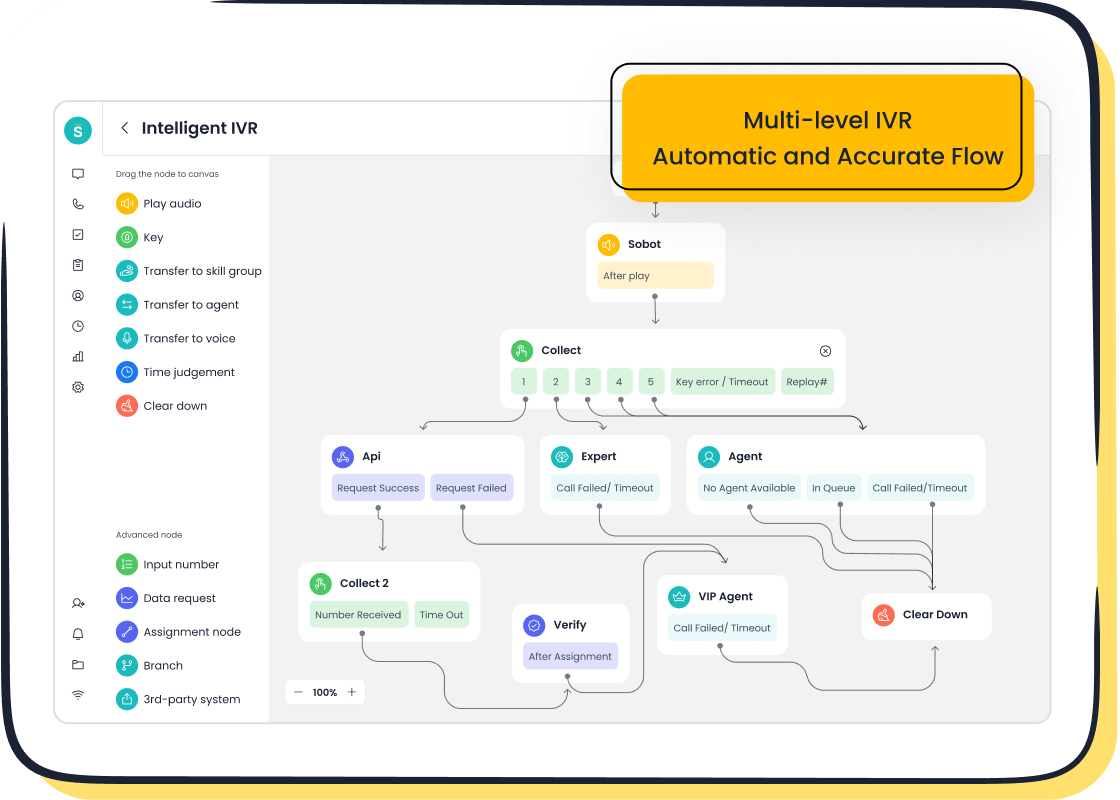
Two key technologies power efficient inbound call centers: Interactive Voice Response (IVR) and Automatic Call Distributor (ACD).
IVR acts like a digital receptionist. It greets callers and uses a simple menu to understand why they are calling. This allows customers to find answers quickly or be directed to the right department without waiting for an agent.
ACD takes over after the IVR. It intelligently routes the call to the best available agent. The system can distribute calls based on agent skills, language, or who has been idle the longest. This ensures the customer speaks to the right person on the first try.
Measuring Inbound Success with KPIs
You cannot improve what you do not measure. Tracking the right KPIs is essential for optimizing your customer support. The best call center software makes this easy. Key metrics include:
| KPI | What It Measures | Why It Matters |
|---|---|---|
| First Call Resolution (FCR) | The percentage of issues solved on the first contact. | High FCR means happy customers and efficient agents. |
| Average Handle Time (AHT) | The average duration of a single customer interaction. | Helps you balance speed with service quality for a better customer experience. |
| Customer Satisfaction (CSAT) | A direct measure of a customer's happiness with a specific interaction. | Tells you how well your team is meeting customer expectations. |
Monitoring these metrics helps you identify areas for improvement and ensure your team consistently delivers excellent service. Your customer service software should provide dashboards to track these in real time, including data from your live chat interactions.
Outbound Calls: Driving Proactive Engagement
While inbound calls build your support foundation, outbound calls drive proactive growth. You initiate contact to achieve specific business goals, turning potential interest into tangible results. A well-executed outbound strategy helps you expand your market reach and increase revenue.
The Purpose of Outbound Campaigns
The primary purpose of an outbound campaign is to convert prospects into customers. Converting leads is essential for generating revenue and building customer loyalty. Your campaign objectives might include:
- Improving brand awareness.
- Booking sales discovery meetings.
- Securing payment for a service.
- Generating more attendees for an event.
Each call works toward a clear goal, moving a prospect one step closer to becoming a valued customer.
Essential Outbound Dialer Technology
To run efficient campaigns, your team needs the right tools. Modern call center software includes powerful outbound dialers and automation features. These systems help your agents make more calls in less time. They can automatically dial numbers from a list, freeing your agents to focus on the conversation. This technology is vital for maximizing productivity in any sales or outreach team.
Best Practices for Successful Outreach
A successful outbound call requires more than just dialing. You need a thoughtful approach.
- Use a Flexible Script: Create an outline rather than a word-for-word script. This allows your agents to adapt to the conversation naturally.
- Ask Qualifying Questions: Include questions that confirm if the prospect is a good fit. This makes the call interactive and shows you care about their needs.
- Highlight Pain Points: Share common problems your other customers face. Ask the prospect if they can relate. This helps you uncover their specific challenges.
Important Tip: Always comply with telemarketing regulations like the TCPA. You must get proper consent before calling, respect Do Not Call lists, and provide clear opt-out options. This protects your business and builds trust.
Key Metrics for Outbound Performance
Tracking the right metrics helps you measure the success of your campaigns. This data shows you what is working and where you can improve.
| KPI | What It Measures | Why It Matters |
|---|---|---|
| Conversion Rate | The percentage of calls that result in a desired outcome (e.g., a sale or appointment). | This is the ultimate measure of your campaign's success. |
| Calls Per Agent | The number of calls an agent makes in a set time. | Shows you how efficient and productive your team is. |
| Cost Per Acquisition (CPA) | The total cost to gain one new customer through your campaign. | Helps you understand the return on investment (ROI) of your efforts. |
Choosing the Right Call Center Software for 2026
Selecting the right platform is the most important decision you will make for your contact center. The best customer service software not only supports your current needs but also grows with your business. It empowers your agents, streamlines operations, and directly improves the customer experience.

Key Features to Look For
As you evaluate options for 2026, you should look for a platform with a robust set of modern features. Your ideal customer service software should provide the tools necessary for both efficiency and quality service.
Here are the essential features to prioritize:
- Omnichannel Communication: Your customers want to connect on their terms. A unified platform integrates voice, email, live chat, and social media. This gives you a single view of all interactions.
- Intelligent Call Routing: Technologies like Automatic Call Distribution (ACD) and Interactive Voice Response (IVR) are crucial. They automatically direct callers to the right agent or self-service option, reducing wait times.
- Advanced Dialer Technology: For outbound teams, you need multiple dialing modes. Predictive and progressive dialers boost agent productivity and increase contact rates for sales and outreach campaigns.
- CRM Integration: Your customer service software must connect seamlessly with your crm software. This gives agents a complete customer history for personalized and context-aware conversations.
- AI-Powered Tools: Look for features like AI voice-based bots and post-conversation analytics. AI can handle common questions 24/7 and provide deep insights into customer sentiment and agent performance.
- Quality Assurance Features: Call recording, transcription, and live call monitoring are non-negotiable. These tools are vital for agent training, compliance, and ensuring high service standards.
- Real-Time Analytics: You need live dashboards to track key metrics. This allows you to make data-driven decisions to optimize performance on the fly.
Scalability and Integration Capabilities
Your business is not static, and your help desk software should not be either. Scalability is the ability to handle growth without a drop in performance. A scalable solution allows you to add agents, manage higher call volumes, and expand into new markets seamlessly. It ensures your customer service remains responsive and efficient during seasonal peaks or periods of rapid expansion.
Equally important is integration. Your call center software should act as the central hub of your customer operations.
A deep integration with your crm software provides a 360-degree customer view. This empowers agents to resolve issues faster and deliver highly personalized service, which boosts sales and customer loyalty.
Beyond CRM, your platform should connect with other business tools. Integrations with help desk software, workflow automation platforms like ServiceNow, or business intelligence tools like Power BI break down data silos. This creates a unified ecosystem that enhances collaboration across sales, marketing, and support teams.
Why Sobot's Voice Call Center Excels
Sobot provides an all-in-one contact center solution designed for the demands of 2026. It moves beyond basic calling features to offer a complete platform that unifies your entire customer journey. This includes powerful customer service software, live chat software, and a robust ticketing software for complete ticket management.
Our success is proven by leading global brands.
Samsung, for example, partnered with Sobot to unify its communication channels. By implementing our solution, they achieved a 97% customer satisfaction rate and saw a 30% increase in agent efficiency.
Sobot excels because it delivers a truly comprehensive package:
- Seamless CRM Integration: We ensure your agents have all customer data at their fingertips, enabling personalized and efficient live chat and voice conversations.
- Economic SaaS Model: You avoid massive upfront hardware costs. Our subscription-based model is affordable and includes maintenance and upgrades, saving you time and money.
- A True One-Stop Solution: Sobot provides everything you need to operate globally. This includes the core software, global phone numbers, and even official WhatsApp Business API integration for reaching customers on their favorite messaging app.
Global Reach and System Stability
In a 24/7 global market, you cannot afford downtime. System stability is paramount. Achieving a high uptime guarantee requires a sophisticated infrastructure with redundancy, robust security, and Quality of Service (QoS) mechanisms that prioritize voice traffic.
Sobot's Voice Call Center is built on this foundation, delivering an industry-leading 99.99% uptime SLA. This translates to less than an hour of potential downtime per year, giving you peace of mind and ensuring your customers can always reach you. Our global network, with points of presence in over 50 countries, guarantees clear, reliable call quality no matter where your customers or agents are located. With Sobot, you get a powerful and stable customer service software built for global scale.
The Future is AI: Enhancing Call Center Operations


Artificial intelligence is no longer a futuristic concept; it is a present-day reality transforming contact centers. AI-powered solutions are reshaping how you manage calls, support agents, and deliver a superior customer experience. Integrating AI into your customer service software is essential for staying competitive in 2026.
AI's Role in Inbound Call Management
AI revolutionizes how you handle inbound calls by making interactions smarter and faster. Instead of relying on rigid phone menus, you can use AI to understand exactly what a customer wants.
For example, when a customer says, "I need to reset my company account password," the AI recognizes the intent as "account support" and routes the call to the correct team instantly.
Sobot's AI-powered Voicebot excels at this, using intelligent interaction and intent recognition to manage common inquiries 24/7. This technology can handle tasks like:
- Scheduling appointments and sending reminders.
- Answering balance inquiries or order status questions.
- Verifying customer identity securely.
This frees up your human agents to focus on more complex issues, improving the overall customer experience.
AI-Powered Outbound Task Automation
AI also brings powerful automation features to your outbound campaigns. It helps your team work smarter, not just harder. Machine learning algorithms can analyze your data to identify prospects who are most likely to convert. This allows you to prioritize your efforts effectively.
You can use AI to automate lead assignment based on predefined rules. For instance, Sobot's "Bulk Outbound Task" feature uses this logic to assign high-value leads to your top sales agents first. This ensures your best opportunities receive immediate attention, increasing your conversion rates.
Improving the Agent and Customer Journey
AI enhances the journey for both your agents and your customers. Your customer service software can use AI to analyze call recordings and provide real-time feedback to agents. This automated coaching helps new team members learn faster and experienced agents refine their skills. It also ensures compliance by monitoring for required language. Better-trained, more confident agents provide a higher level of service. This directly leads to a better customer experience and increased satisfaction.
Preparing for the AI Revolution
Adopting AI does not have to be overwhelming. You can prepare your call center for this transition with a clear, step-by-step approach.
- Assess Your Needs: Identify your biggest operational challenges, like high call volumes or repetitive inquiries.
- Choose the Right Tools: Select a flexible customer service software with multichannel support and the right automation features for your goals.
- Train Your Team: Prepare your agents to work alongside AI tools, focusing on how the technology will support them.
- Monitor and Optimize: Continuously track performance to refine your AI models and workflows for the best results.
Understanding what is inbound call and outbound call—reactive versus proactive communication—is your first step. Your success, however, depends on pairing the right strategy with a comprehensive platform like Sobot. Looking toward 2026 and beyond, AI will create even more personalized strategies. You can expect future systems to deliver:
- Hyper-adaptive personalization based on customer mood.
- Intelligent conversation understanding beyond just words.
- Fully autonomous and ethical customer experiences.
Prepare for this future and elevate your strategy by exploring Sobot's solutions on our website.
FAQ
Can I use one platform for both calls and live chat?
Yes. Modern platforms unify your communication channels. You can manage phone calls, emails, and live chat from a single workspace. This approach streamlines your workflow and improves the customer experience. A good system also supports robust ticket management for every live chat interaction.
How does call center software connect with my customer data?
Your call center platform should integrate directly with your crm software. This connection gives your agents a full view of the customer's history. They can see past purchases and previous live chat conversations, allowing for a more personalized and efficient live chat support experience.
What is the difference between live chat and a chatbot?
A live chat involves a human agent talking to a customer in real time. A chatbot is an AI program that automates answers to common questions. Many businesses use both. A chatbot can handle simple queries, while agents manage complex issues via live chat.
Do I need separate live chat software?
Not necessarily. An all-in-one solution like Sobot includes powerful live chat software built into the platform. This provides a seamless experience for both your agents and customers. You can manage every live chat and call without switching between different applications.
See Also
Your Essential Guide to Seamless Omnichannel Call Center Software Solutions
Evaluating the Best Contact Center Solutions: A 2024 Review
Leading Cloud Contact Center Services: Comprehensive Reviews for 2024
Understanding Quality Management Systems: A Call Center Principles Guide
Setting Up Interactive Voice Response (IVR) Software: A Comprehensive Guide