Improve Your Call Center With First Call Resolution


You know the frustration of repeat calls. Long hold times are a top customer concern. This leads to abandoned calls and a poor customer experience. What is first call resolution? It is the key to fixing this issue. Improving your first call resolution rate directly boosts satisfaction and cuts costs.
A high first-call resolution rate is the ultimate goal. The Sobot call center, powered by Sobot AI, provides the tools you need. This article explores strategies to enhance your team's performance.
What is First Call Resolution (FCR)?

Understanding what is first call resolution is the first step toward improving your contact center performance. It is a core contact center metric that measures your team's ability to resolve a customer's issue completely during their first interaction. No follow-up calls, transfers, or reopened tickets are needed. A successful first-call resolution leaves the customer satisfied and confident in your support.
Defining the Core Metric
At its heart, what is first call resolution seems simple. However, the modern customer journey adds complexity. You should distinguish between two key terms:
| Term | Definition |
|---|---|
| First Call Resolution (FCR) | Resolving a customer's issue during their initial phone call, without the need for follow-up calls or transfers. |
| First Contact Resolution (FCR) | A broader metric that measures the resolution of a customer's issue during their first interaction, regardless of the communication channel (e.g., phone, email, chat, social media). |
Accurately measuring this customer service metric also presents challenges. You must consider:
- Defining 'Resolved': Your organization needs a clear, consistent definition of what a resolved issue looks like.
- Agent Pressure: Agents might close tickets too early to meet goals, hurting the customer experience.
- Tracking Reopens: A high first-call resolution rate means little if customers constantly reopen tickets.
Why FCR Matters More Than Ever
In today's digital world, customers often try self-service options first. When they finally call you, the issue is likely complex, and their patience is thin. This makes a successful first-call resolution more critical than ever for a positive customer experience. The data shows a clear trend: the number of service professionals tracking this metric jumped from 51% to 80% in recent years.
Customers have high expectations for that first human touchpoint.
Salesforce reports that 83 percent of customers expect to solve complex problems by speaking to one person.
Achieving a high first-contact resolution rate directly improves customer satisfaction. When you solve problems quickly, you build loyalty and reduce operational costs. Focusing on what is first call resolution is no longer just an option; it is essential for success. Improving your first-contact resolution is a powerful strategy.
The Business Impact of High FCR Rates
Focusing on a higher FCR rate is not just about improving a single metric; it is a strategic move that delivers powerful business results. When you resolve issues on the first attempt, you create a ripple effect that strengthens your entire operation, from customer loyalty to your bottom line. This focus on quality and efficiency transforms your contact center performance from a cost center into a value driver.
Directly Boosts Customer Satisfaction
A positive customer experience often hinges on speed and efficiency. When customers have their problems solved on the first try, their confidence in your brand grows. This leads to improved customer satisfaction and loyalty. In fact, every time a customer has to contact you again for the same issue, satisfaction can drop by as much as 15%.
A mere 1% improvement in first-call resolution can increase customer retention. This simple change builds an improved brand reputation and shows you value your customers' time.
Achieving first-contact resolution demonstrates that you are competent and reliable, which is crucial for building long-term relationships.
Significantly Reduces Operational Costs
Repeat calls are expensive. They consume agent time, increase call volume, and inflate operational budgets. Improving your first call resolution rate directly cuts these costs. A 1% increase in first-call resolution can reduce your call center's operating costs by 1%. This boosts efficiency and frees up resources.
Consider the financial impact:
| Impact Area | Benefit of 1% FCR Improvement |
|---|---|
| Operating Costs | Reduces overall operating costs by 1% |
| Employee Satisfaction | Increases agent satisfaction by 1-5% |
| Repeat Calls | Reduces a major expense, as they consume 23% of the average budget |
Solving issues correctly the first time means your team handles fewer calls, leading to significant savings and better contact center performance.
Enhances Agent Morale and Retention
Constantly dealing with frustrated customers who are calling back about unresolved issues is draining for agents. A high first-call resolution rate empowers your team. When agents have the tools and authority to solve problems effectively, they feel a greater sense of accomplishment. This leads to better agents morale and higher job satisfaction. Improving FCR by just 1% can boost employee satisfaction by up to 5%. A positive work environment reduces agent burnout and lowers turnover, creating a more stable and experienced team.
How to Improve Your First Call Resolution Rate
Improving your first-call resolution rate requires a strategic approach. You need to equip your team, streamline your processes, and understand your data. These practical steps will help you transform your call center's performance, leading to happier customers and a more efficient operation.
Empower Agents with Knowledge and Authority
Your agents are the key to achieving fast resolutions. Empowering them starts with comprehensive training that goes beyond their first day. You should provide continuous education on products, policies, and best practices. This ensures agents have the skills to solve issues independently.
Effective training programs often include:
- Core Skill Development: Focus on active listening, problem-solving, and clear communication. These skills help agents quickly identify the root cause of a customer's problem.
- Realistic Scenarios: Use role-playing to let agents practice handling different situations. This builds their confidence for managing everything from technical questions to emotional customer interactions.
Knowledge alone is not enough. You must also grant agents the authority to make decisions. Review your internal approval processes. Long delays for simple approvals frustrate customers and prevent a successful first-call resolution. Empower your frontline staff with reasonable decision-making power. For example, allow agents to issue refunds up to a certain amount or approve account changes without needing a manager. This autonomy helps them resolve issues faster and boosts better agents morale.
Implement a Centralized Knowledge Base
Agents cannot resolve issues quickly if they cannot find the right information. A disorganized system forces them to hunt for answers while the customer waits. You can solve this by implementing a centralized knowledge base. This single source of truth gives your team instant access to accurate, up-to-date information.
A powerful knowledge base includes tools designed for speed and clarity.
Interactive decision trees are a great example. They guide agents with step-by-step instructions. These guides can include screenshots, videos, and tables to resolve customer queries effectively. This technology significantly reduces search time and increases efficiency.
An intelligent knowledge base ensures every agent provides consistent and correct answers. This consistency is fundamental to improving your first call resolution rate and delivering a high-quality customer experience.
Set Clear Goals for First Call Resolution
You cannot improve what you do not measure. Setting clear goals is essential for boosting your first-contact resolution rate. However, goals must be realistic. A "world-class" rate in one industry might be average in another. You should benchmark your performance against industry standards to set achievable targets.
| Industry | Average FCR Rate | Top Performer Rate |
|---|---|---|
| Retail | 78% | 85% |
| Insurance | 76% | 82% |
| Technology | 65% | 75% |
| Telecom | 61% | 70% |
| Healthcare | 72% | 80% |
| Financial Services | 70% | 78% |
When you set goals, consider factors unique to your business, such as product complexity and customer demographics. Focus on gradual improvements that create a positive impact. For example, aim for a 5% FCR increase for a specific issue type this quarter.
Communicating and tracking these goals is just as important.
- Define Your Metric: Ensure everyone understands what is first call resolution and how you will measure FCR.
- Automate Tracking: Use your customer service software to track resolved calls automatically. This gives agents access to customer history and provides context for every call.
- Maintain Transparency: Share progress with your team. Help them see how their individual efforts contribute to the team's success. This empowers them to take ownership.
- Motivate Your Team: Recognize strong performance and use team goals to build camaraderie. Simply telling your team you are tracking FCR can motivate them to improve.
Analyze Call Data for Root Causes
To fix repeat calls, you must first understand why they happen. Analyzing your call data helps you uncover the root causes of low first-call resolution rates. Organizational issues, not agent errors, are often the biggest source of problems.
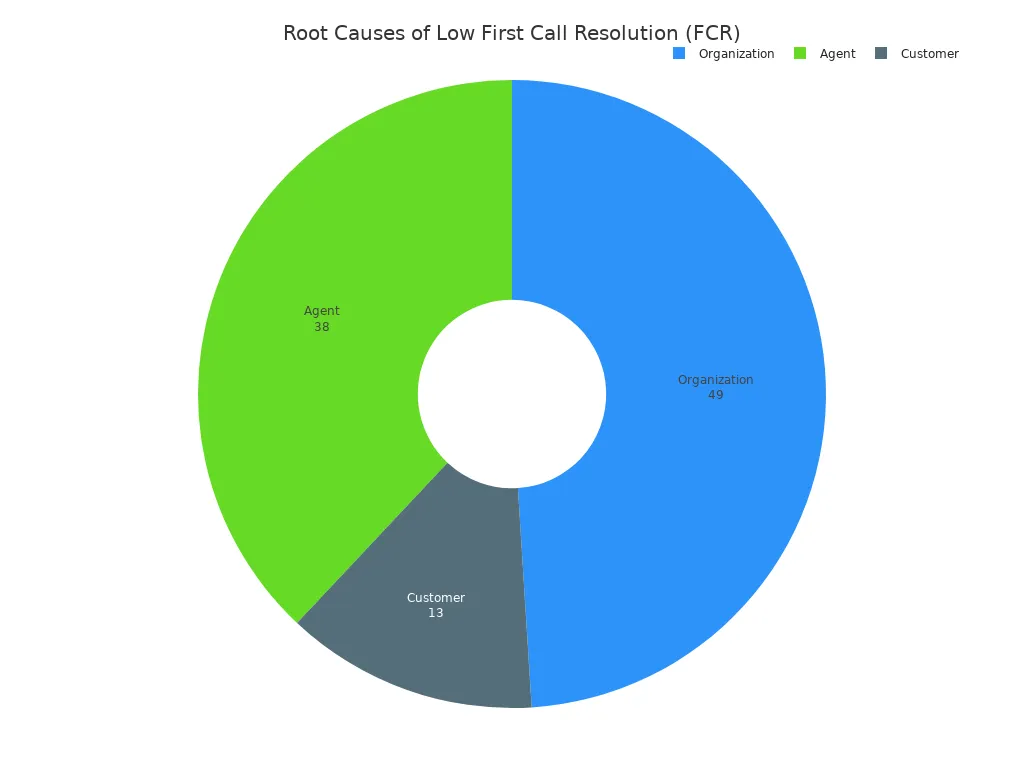
Modern tools like speech analytics can transform this process. AI-powered systems scan call transcripts for keywords that signal an unresolved issue, such as "last time I called" or "still not working." This technology helps you answer two critical questions:
- What was said? Text analysis identifies topics and customer intent.
- How was it said? Audio analysis detects emotional cues like tone and pitch.
This deep analysis reveals problems you might otherwise miss, like a confusing IVR menu or a broken internal process. By identifying these core issues, you can make data-driven decisions to fix them permanently. This proactive approach reduces future call volume and drives a higher first call resolution rate.
Using Sobot to Elevate Your FCR
Implementing the right strategies is easier with the right tools. The Sobot Voice/Call Center provides a powerful platform to put these principles into practice. You can directly address the root causes of repeat calls and elevate your contact center performance.
Unify Agent Workflows

A scattered workflow is a major barrier to a quick resolution. You can fix this with Sobot’s Unified Workspace. It gives your agents a complete 360-degree view of the customer on a single screen. This view consolidates crucial data points like account status, previous issues, and engagement history. Agents no longer need to ask customers to repeat information. They have the full context for every call, which boosts efficiency and helps deliver an excellent customer experience. This immediate access to information is key to achieving a high first-call resolution rate.
Leverage Smart Call Routing
Connecting customers to the right agent on the first try is critical. Sobot’s platform helps you achieve this with an Intelligent IVR and Smart Call Routing. You can use a simple drag-n-drop interface to build custom call flows. The system uses skills-based routing to match callers with agents who have the specific expertise needed to solve their problem. This advanced AI-powered approach goes beyond traditional systems, ensuring calls are not just answered quickly but resolved effectively.
Monitor Performance with Real-Time Analytics
You need clear data to guide your team toward success. Sobot provides real-time analytics and monitoring dashboards. These tools allow you to measure FCR accurately and track agent performance as it happens. Managers can see live call queues, identify agents who need support, and intervene with whisper coaching to secure a resolution. This proactive oversight helps you maintain high standards and leads to improved customer satisfaction.
Success in Action: America's largest online Asian supermarket, Weee!, used Sobot to transform its support operations. By implementing these tools, Weee! reduced its resolution time by 50% and achieved an incredible 96% customer satisfaction score.
Focusing on first call resolution is a win-win strategy. You put customers first, which drives significant financial benefits and boosts contact center performance. This focus leads to an improved brand reputation. Tools like the Sobot Voice/Call Center are designed to make achieving a high first-call resolution rate simple and effective. You can deliver an excellent customer experience and improve customer satisfaction.
Ready to see the difference? Embark on Your Contact Journey by scheduling a demo today. Discover how Sobot can help you achieve your goals.
FAQ
What is a good First Call Resolution rate?
A good rate varies by industry. You should aim for the 70-79% range. Top performers often exceed 80%. You can benchmark your performance against industry standards to set realistic goals for your team and improve your contact center performance.
How do you accurately measure FCR?
You can measure FCR by dividing the number of issues resolved on the first call by the total number of calls received. Your organization must have a clear, consistent definition of "resolved" to ensure your data is accurate.
Why is First Call Resolution so important?
A high first call resolution rate directly improves customer satisfaction and reduces your operational costs. It shows customers you value their time. This builds brand loyalty and creates a more efficient support operation, which is key to a positive customer experience.
Can technology help improve FCR?
Yes. Tools like a unified agent workspace and smart call routing are essential. They give agents the context and support needed to solve problems quickly. This technology helps you achieve a higher first call resolution rate and deliver excellent service.
See Also
Achieving Excellence: Essential Strategies for Call Center Quality Management
Elevating Performance: Monitoring Strategies for Superior Call Center Outcomes
Unlocking Potential: Key Features of Effective CRM Call Center Software
Streamlining Operations: Understanding Efficient Call Center Automation Mechanisms
Seamless Connections: A 10-Step Guide to Omnichannel Contact Center Implementation

