Ecommerce Chatbots Explained Simply

Think of an ecommerce chatbot as your 24/7 digital sales associate. Its primary purpose is to provide instant answers, improving the overall customer experience. Many customers prefer this speed, with 74% of users choosing an e-commerce chatbot for simple questions. An ai chatbot for ecommerce helps your business connect with customers instantly. This makes an e-commerce chatbot from a provider like Sobot an essential tool. Modern chatbots ecommerce relies on a great e-commerce chatbot to succeed.
What is an Ecommerce Chatbot?
An ecommerce chatbot is a powerful tool for your online store. It acts as an automated conversational partner. This bot helps you engage with shoppers, answer their questions, and guide them toward a purchase. It uses advanced technology to understand and respond to customer needs instantly.
How Chatbots Understand and Respond
You might wonder how an e-commerce chatbot understands what customers are typing. It uses a technology called Natural Language Processing (NLP). NLP helps the bot interpret human language. It breaks down a customer's sentence to identify their main goal, or "intent." It also spots key details, or "entities," like product names or order numbers. This process allows the e-commerce chatbot to grasp the context of a query. It can then provide a relevant and helpful answer instead of just matching keywords.
The Role of AI and Automation
Artificial Intelligence (AI) is the brain behind a modern e-commerce chatbot. AI allows the bot to learn from every conversation. This continuous learning makes the chatbot smarter over time. It improves its ability to handle complex questions and provide personalized responses. This is a key difference between a basic rule-based bot and an advanced AI chatbot for ecommerce.
| Feature | Rule-Based Chatbot | AI-Powered Chatbot |
|---|---|---|
| Operation | Follows predefined rules | Understands context and intent |
| Learning | Does not learn or improve | Learns from every interaction |
| Query Handling | Handles simple, common questions | Manages complex and new queries |
| User Experience | Can be rigid and limited | Offers a dynamic, personal feel |
Automation is another key part of how chatbots ecommerce works. An e-commerce chatbot automates repetitive tasks. Studies show that up to 80% of routine customer questions can be handled by bots. This frees up your human support team to focus on more complex issues.
24/7 Availability and Instant Support
One of the biggest benefits of an e-commerce chatbot is its constant availability. Your store never closes, and neither does your bot. It provides instant support to shoppers around the clock, no matter their time zone. This immediate assistance is something customers value highly.
Over 60% of consumers prefer using chatbots for instant responses. This speed directly improves the overall customer experience and builds trust in your brand.
By offering 24/7 help, customer support chatbots ensure you never miss a chance to assist a customer or make a sale. This constant presence helps turn website visitors into loyal buyers.
Key Features of an AI Chatbot for Ecommerce
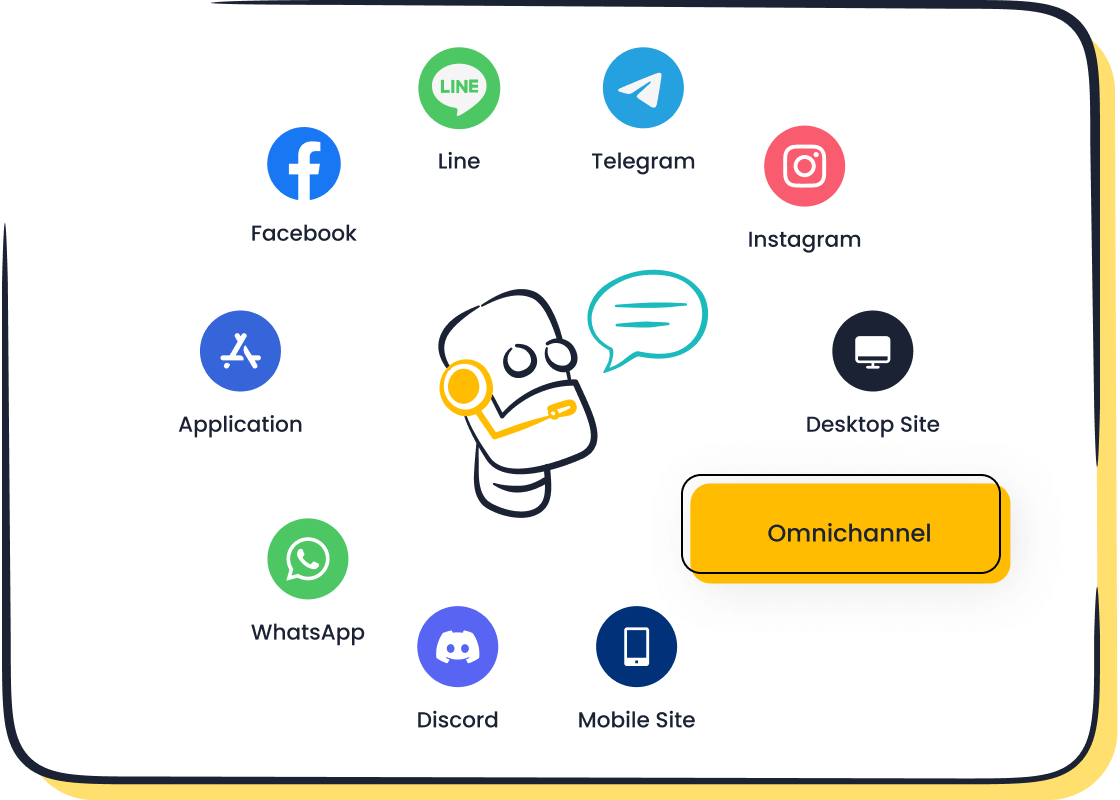
Choosing the right tool means looking for specific capabilities that drive results. The best bots do more than just answer questions; they actively improve your sales and support operations. Understanding the key features of an effective ecommerce chatbot helps you select a solution that delivers real value. Let's explore the essential functions you should look for.
Omnichannel Support
Today's customers interact with your brand across multiple channels. They might see a product on Instagram, ask a question on your website, and then follow up via WhatsApp. An omnichannel e-commerce chatbot ensures this journey is seamless. It unifies all conversations into a single, continuous thread.
This means if a customer starts a chat on your website and later sends a message on another platform, the bot (and your human agents) will have the full context. They won't have to repeat their issue, which creates a smoother and more positive customer experience.
Did you know? A unified customer view allows your team to see the complete interaction history. This makes it easier to provide personalized and efficient help, eliminating the frustration of fragmented conversations.
Solutions like Sobot, an official WhatsApp Business Solution Provider (BSP), excel at this. They allow your e-commerce chatbot to operate across your website, SMS, and popular messaging apps like WhatsApp, ensuring you can meet your customers wherever they are.
No-Code, Easy-to-Use Interface
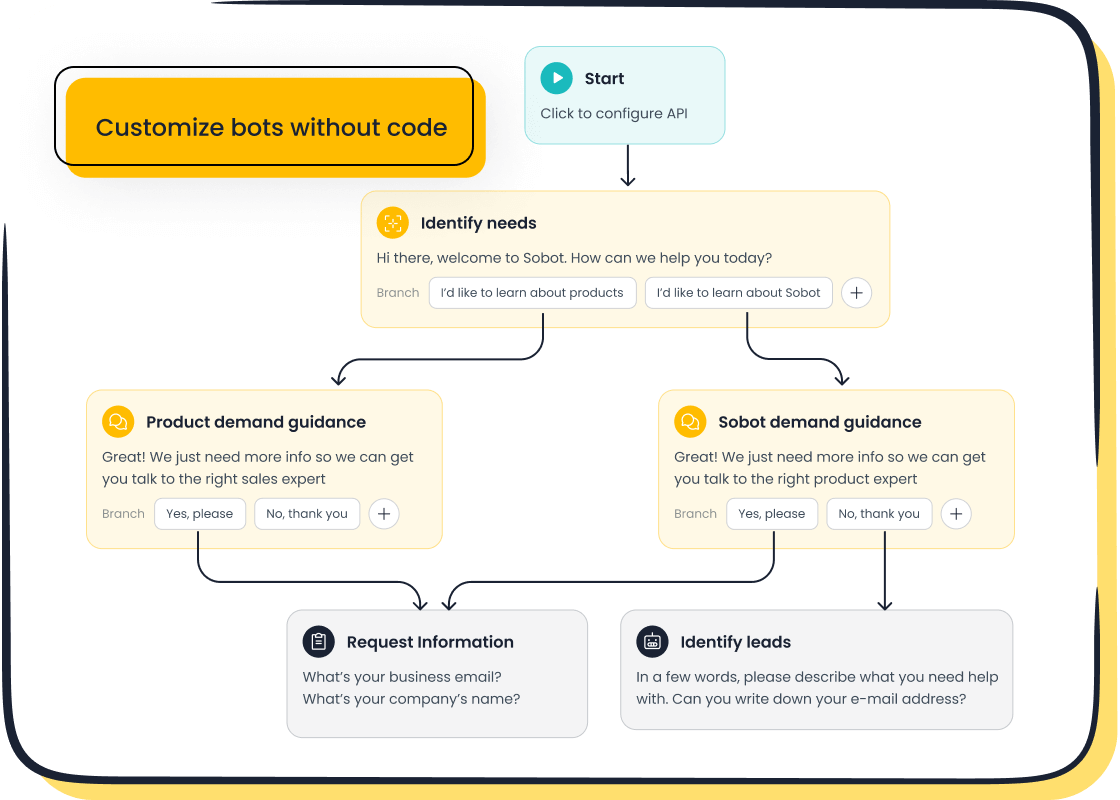
You shouldn't need a team of developers to build and manage your chatbot. A key feature of an effective ecommerce chatbot is a no-code, easy-to-use interface. This empowers your team to create and modify conversation flows without writing a single line of code.
Modern platforms provide visual builders with simple point-and-click or drag-and-drop functionality. For example, solutions like Sobot offer a point-and-click builder that lets you design and deploy a powerful e-commerce chatbot in a fraction of the time it would traditionally take.
| Development Time | No-Code AI Chatbots | Traditional Chatbots |
|---|---|---|
| Time to Market | Hours to days | Weeks to months |
This speed allows you to adapt quickly to changing customer needs and launch new automated campaigns without long development cycles.
Proactive Customer Engagement
A basic bot waits for a customer to ask a question. A great AI chatbot for ecommerce takes the first step. Proactive engagement means the bot initiates conversations with visitors based on their behavior. This transforms your bot from a simple support tool into one of your sales-focused chatbots.
Here are a few ways an e-commerce chatbot can be proactive:
- Abandoned Cart Recovery: If a shopper is about to leave your site with items in their cart, the bot can pop up with a helpful message. It can ask if they have questions about shipping, offer a small discount, or provide a direct link back to checkout. This real-time intervention can recover sales that would otherwise be lost.
- Personalized Offers: The bot can target visitors on specific product or pricing pages. For example, it might send a message like, "Hi there! Since you're looking at our new collection, here's a 10% discount code to help you decide."
- Lead Generation: An e-commerce chatbot can engage visitors who linger on a page, offering to answer questions or sign them up for a newsletter. This helps you capture more qualified leads.
By actively engaging shoppers, you can guide them through the buying journey, answer their questions before they become objections, and ultimately boost your conversion rates.
Advanced Reporting and Analytics
How do you know if your AI chatbot for ecommerce is actually working? The answer lies in data. Advanced reporting and analytics are crucial for measuring performance and identifying areas for improvement. A good dashboard will give you insights into key metrics, including:
- Automated Resolution Rate: What percentage of conversations does the bot handle without needing a human agent? A high rate means your bot is effectively deflecting inquiries.
- Customer Satisfaction (CSAT): Are customers happy with the bot's help? Simple "thumbs up/down" feedback on bot responses can reveal which answers are helpful and which need refinement.
- Human Handoff Rate: How often do conversations need to be escalated to a human agent? A high rate might indicate that your bot's knowledge base is missing information on certain topics.
- Goal Completion Rate: Is the bot successfully guiding users to take desired actions, like making a purchase or signing up for a newsletter?
By analyzing these metrics, you can pinpoint common customer pain points. For instance, if many users ask the same question that the bot can't answer (a high fallback rate), you know you need to add that information to its knowledge base. This data-driven approach allows you to continuously optimize your chatbots ecommerce strategy for better results.
Core Benefits for Your Business
Integrating an e-commerce chatbot offers tangible advantages that directly impact your bottom line. These tools are more than just a trend; they are a strategic asset for growth. Understanding the core benefits of using chatbots helps you see their true value. Let's explore how an e-commerce chatbot can transform your business operations.
Increase Sales and Conversions
An e-commerce chatbot acts as a proactive digital salesperson. These sales-focused chatbots engage visitors, answer product questions, and guide them toward a purchase. This immediate assistance can significantly boost your sales. Studies show that websites using an AI chatbot for ecommerce see conversion rates improve by over 20%.
Your bot can also offer personalized recommendations based on a shopper's activity. This creates a tailored shopping journey for each visitor.
- It can suggest complementary items to increase order value.
- It can recover abandoned carts by offering timely help or a discount.
- It provides an expert assistant experience available 24/7.
This level of personalization makes customers feel understood and valued.
Reduce Customer Support Costs
One of the most significant benefits of using chatbots is cost reduction. An e-commerce chatbot automates answers to routine questions about order status, shipping, and returns. This frees your human agents to handle more complex issues that require a personal touch.
By automating simple queries, customer support chatbots can reduce your overall support costs by up to 30%. A single query handled by a bot costs significantly less than one handled by a human agent.
This efficiency allows your team to become more productive. They spend less time on repetitive tasks and more time solving unique customer problems, which improves both employee and customer satisfaction.
Elevating the Customer Experience
A great customer experience is built on speed and convenience. An ecommerce chatbot delivers both by providing instant, 24/7 support. Shoppers no longer have to wait for business hours to get answers. This immediate availability builds trust and loyalty. The chatbots ecommerce relies on must provide a seamless journey.
A modern e-commerce chatbot also enhances the customer experience through personalization. It remembers past interactions and preferences to offer relevant help.
- It can speak multiple languages, supporting a global customer base.
- It provides consistent answers across all your channels.
- It makes every shopper feel like they are receiving one-on-one attention.
This creates a smooth, frustration-free path from browsing to buying.
The Impact of Chatbots Ecommerce: A Case Study
Theory is helpful, but seeing a real-world example shows the true power of an e-commerce chatbot. Let's look at how a leading global brand, OPPO, transformed its customer service with the right technology. This case study demonstrates how you can turn support challenges into sales opportunities.
The Challenge: Managing High Inquiry Volume
Imagine your busiest sales season. Orders are flooding in, and so are customer questions. This was the exact situation OPPO faced. During peak shopping festivals, the company experienced an overwhelming surge in customer inquiries. This led to several problems:
- Long Wait Times: Human agents could not keep up with the volume, leaving customers waiting for answers.
- Agent Burnout: Support teams were stretched thin answering the same repetitive questions about orders, shipping, and product details.
- Lost Sales: Shoppers with pre-purchase questions often left the site if they could not get an instant response.
OPPO needed a solution that could handle a massive number of queries efficiently without sacrificing the quality of the customer experience.
The Solution: Human-Machine Cooperation
OPPO partnered with Sobot to implement a powerful solution combining an AI chatbot with a smart ticketing system. This created a human-machine cooperation model that leveraged the strengths of both AI and human agents.
This symbiotic relationship works by letting technology handle speed and scale, while humans provide creativity and complex problem-solving.
Here is how the solution worked:
- AI as the First Responder: The e-commerce chatbot became the first point of contact. It used Natural Language Processing (NLP) to understand customer questions and instantly answered thousands of common queries about order status, device features, and return policies. This freed up human agents from repetitive tasks.
- Intelligent Ticketing System: For complex issues the bot could not solve, the system automatically created a ticket. It used intent detection and sentiment analysis to classify and route the ticket to the best-suited human agent.
- Seamless Handoff: The system ensured a smooth transition from bot to human. Agents received the full chat history, so customers never had to repeat themselves. This preserved context and reduced frustration.
Sobot also helped OPPO optimize its knowledge base. This allowed the bot to pull accurate information instantly, reducing the manual effort to maintain Q&A pairs by 90%.
The Results: Improved Efficiency and Sales
The results of implementing this chatbots ecommerce strategy were immediate and impressive. By automating routine tasks and empowering human agents, OPPO achieved remarkable improvements across the board.
The numbers speak for themselves:
| Metric | Result | Impact |
|---|---|---|
| Chatbot Resolution Rate | 83% | The vast majority of queries were solved instantly without human help. |
| Positive Feedback Rate | 94% | Customers were highly satisfied with the fast and accurate support. |
| Increase in Repurchase Rate | 57% | A better support experience directly led to stronger customer loyalty and more repeat sales. |
These results show that an AI-powered solution does more than just cut costs. It directly boosts customer satisfaction and drives revenue. By providing instant, reliable support, OPPO turned its customer service department into a powerful engine for growth.
An ecommerce chatbot is more than a support tool. It is a sales and customer experience engine working for you 24/7. This e-commerce chatbot increases sales, with AI recovering up to 35% of abandoned carts. It also lowers support costs and makes customers happier with instant answers. An e-commerce chatbot delivers powerful results. Explore a solution like Sobot to see these benefits for yourself. You can start to embark on your contact journey today.
FAQ
What is the main purpose of an ecommerce chatbot?
An ecommerce chatbot automates customer conversations. It answers common questions instantly and guides shoppers to products. This improves your customer experience and helps you increase sales 24/7.
Is it difficult to set up an AI chatbot?
No, it is very easy. Modern platforms like Sobot offer a no-code, point-and-click interface. You can design and launch your chatbot without any programming experience. This allows you to get started in hours, not weeks.
Can a chatbot speak multiple languages?
Yes. A powerful ecommerce chatbot is multilingual. It can interact with your customers in their preferred language. This helps you support a global audience and provide a more personalized shopping experience for everyone.
How does a chatbot reduce support costs?
A chatbot handles routine questions around the clock. This automation means you need fewer agents to answer repetitive queries. By solving common issues instantly, a chatbot can save your business up to 50% on support costs.
See Also
Elevating E-commerce Customer Happiness Through Intelligent Chatbot Solutions
Driving E-commerce Revenue Growth With Dynamic Live Chat Software
Best Live Chat Platforms for E-commerce Success This Year
Simple Steps to Integrate Effective Chatbot Examples on Your Website
Effortlessly Building a Custom Chatbot for Your Business Website

