Inbound vs Outbound Calls Which Do You Need?


What are inbound calls and outbound calls? The right strategy depends on a primary business goal. An inbound call is for reactive customer service and customer support for your customers. An outbound call is for proactively initiating contact with customers. These outbound calls can show a significant return on investment.
Note: Proactive outbound strategies can significantly boost ROI.
Scenario Reported ROI Increase Using outbound sales automation 25% average boost Implementing automation tools Up to 300% or more Using AI and automation in sales Up to 300%
A unified platform often provides the best solution for managing all calls. The Sobot call center, powered by Sobot AI, helps businesses manage every inbound call and outbound call effectively. Sobot unifies all calls for a better customer experience.
What Are Inbound Calls and Outbound Calls?
Understanding what are inbound calls and outbound calls is the first step in building a strong communication strategy. An inbound call happens when a customer contacts a business. An outbound call is the opposite; the business initiates the telephone communication with a customer. Both types of calls serve unique purposes. Inbound and outbound call centres are structured to handle these different interactions effectively.
The Purpose of Inbound Calls
The primary purpose of inbound calls is to provide support and build customer relationships. Customers initiate this type of call when they need help. An inbound call center acts as the frontline for customer service. Agents in an inbound call centre handle a variety of incoming calls.
Common examples of inbound calls include:
- Customer Support: A customer calls to resolve a billing error or ask about a product.
- Technical Help: A user needs assistance because they are locked out of their account.
- Order Processing: A person calls to place an order or check its status.
- General Inquiries: A potential customer has questions about a service before making a purchase.
A strong inbound strategy delivers significant business benefits. It directly improves customer satisfaction and loyalty. Happy customers often become repeat buyers. In fact, acquiring a new customer can be up to 25 times more expensive than keeping an existing one. An effective inbound call center helps businesses retain their valuable customers, creating a stable foundation for growth. Handling each incoming call well strengthens a brand's reputation.
The Purpose of Outbound Calls
The main goal of outbound calls is proactive business growth. Companies use this strategy to reach potential or existing customers. An outbound call center focuses on activities that expand the business's reach. Agents in an outbound call centre make outgoing calls to achieve specific sales and marketing objectives.
Typical examples of outbound calls are:
- Lead Generation: Agents call potential customers to gauge their interest and qualify them as leads.
- Appointment Setting: An agent schedules a meeting between a sales representative and a prospect.
- Market Research: The team conducts surveys to gather valuable feedback on products or market trends.
- Customer Follow-ups: A business proactively contacts existing customers to offer new services or check on their satisfaction. For example, a healthcare company saw a 20% increase in plan renewals after making an outgoing call to previous patients with special offers.
Outbound calls are a powerful tool for driving sales and market expansion. This direct approach can lead to faster customer acquisition. A consistent outbound call strategy keeps the sales pipeline full. It also creates opportunities to upsell or cross-sell to current customers. Making an outgoing call helps a brand stay top-of-mind and build trust through personalized contact.
Key Differences at a Glance
So, what are inbound calls and outbound calls when compared side-by-side? While both are crucial, they differ in their goals, agent skills, and technology. Inbound and outbound call centres require different approaches to succeed. Understanding these distinctions helps businesses allocate resources effectively.
Here is a quick breakdown of the key differences:
Aspect Inbound Calls Outbound Calls Initiator The customer or prospect initiates the call. The business or agent initiates the call. Primary Goal Resolve issues, provide support, and increase customer retention. Generate leads, set appointments, and drive sales growth. Agent Skills Empathy, active listening, and strong problem-solving abilities. Persuasion, resilience, and the ability to handle rejection. Core Technology Interactive Voice Response (IVR) for smart routing of each incoming call. Customer Relationship Management (CRM) to track leads and manage campaigns.
Ultimately, the choice between an inbound call and an outbound call strategy depends on your immediate business objectives. Many businesses find they need both to create a complete customer journey, from initial outreach to long-term support.
Mastering the Inbound Call for Superior Support

An inbound call strategy is crucial for any business focused on customer satisfaction and retention. When customers have questions or issues, a well-managed inbound call centre becomes the face of the company. This approach is vital for handling high volumes of inquiries effectively and building lasting trust with customers.
When Your Business Needs an Inbound Focus
Certain signs indicate a need to prioritize your inbound call strategy. If your team is overwhelmed with calls or customer complaints are rising, it is time to act. An inbound focus is essential for businesses that want to deliver excellent customer service.
Is it time for an inbound focus? Check for these signs:
- High Call Volume: Your team struggles to answer every inbound call, leading to long wait times.
- Increasing Complaints: Customer satisfaction scores are dropping, and negative reviews are increasing.
- Missed Opportunities: You are losing potential sales because every incoming call is not being answered promptly.
- Rapid Growth: Your business is expanding, and the current customer support team cannot keep up with the volume of inbound calls.
Many industries depend on strong inbound call centre services. These include:
- Healthcare
- Banking and Finance
- Retail
- Transportation
For these businesses, every inbound call represents an opportunity to strengthen a customer relationship.
Essential Tools for Inbound Success
Success with inbound calls requires more than just friendly agents; it demands powerful technology. The right tools ensure every inbound call is handled efficiently, turning a good customer experience into a great one. A reliable inbound call center is built on a stable and intelligent platform.
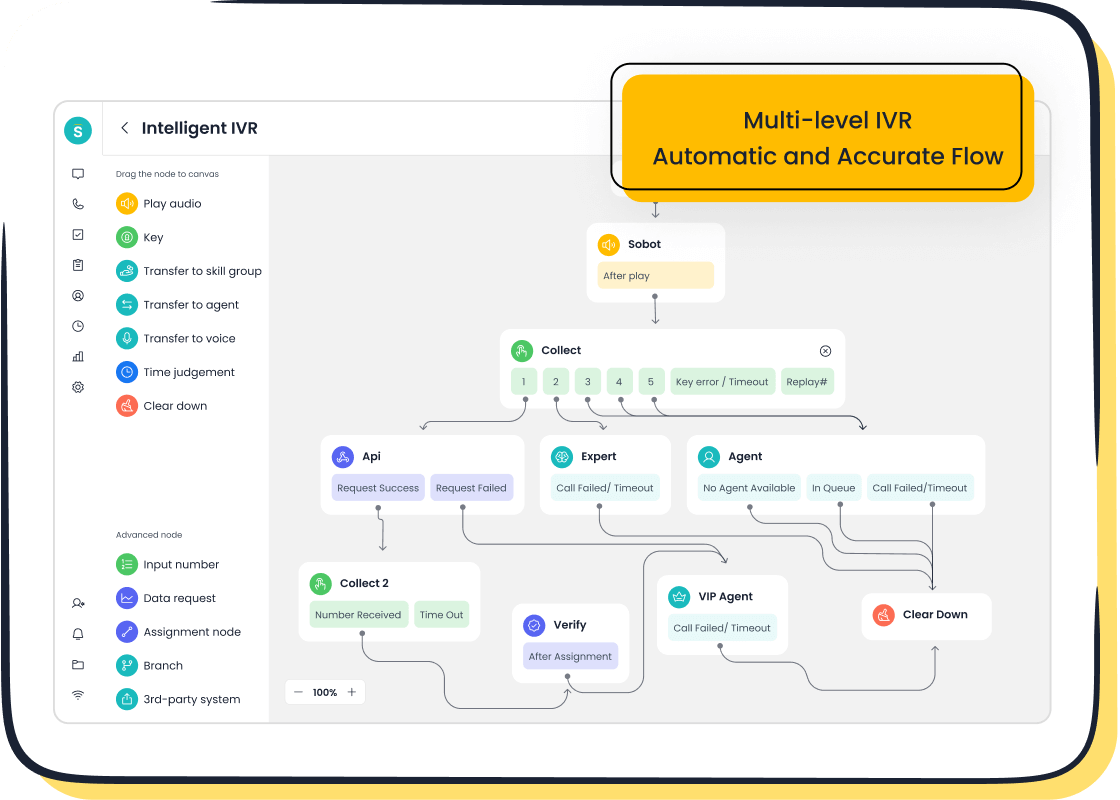
Sobot’s Voice/Call Center provides the essential features for a superior inbound call strategy.
- Intelligent IVR: A drag-and-drop Intelligent IVR system automatically routes each incoming call to the right agent or department. This smart routing reduces wait times and improves first-call resolution, ensuring customers get help faster.
- Unified Workspace: Integrating your inbound call center with a CRM gives agents a complete view of the customer. Sobot’s Unified Workspace provides this 360-degree profile, allowing agents to offer personalized and informed customer service on all calls.
- System Stability: A support line must be dependable. With 99.99% system stability, Sobot ensures your phone lines are always open. This level of uptime prevents dropped calls and builds customer trust, as they know they can reach you when they need to.
Measuring Inbound Performance
To manage your inbound call centre effectively, you must measure its performance. Key Performance Indicators (KPIs) help you track efficiency and identify areas for improvement. Monitoring these metrics ensures your team consistently meets customer expectations on all inbound calls.
Common KPIs for an inbound call center include:
- Average Speed of Answer (ASA): The average time it takes for an agent to answer a call. A low ASA means customers are not waiting long.
- Average Handle Time (AHT): The average duration of a single call, including talk time, hold time, and follow-up work. A lower AHT often indicates agent efficiency.
- Service Level: The percentage of calls answered within a specific time frame. A common goal is answering 80% of calls in 20 seconds.
Tracking these numbers helps optimize both inbound and outbound call centres for peak performance.
Leveraging the Outbound Call for Proactive Growth

While inbound calls build loyalty, an outbound call strategy actively drives business expansion. An outbound call centre focuses on reaching new customers and creating sales opportunities. Making an outgoing call is a direct way to accelerate growth. This approach is essential for businesses that want to control their sales pipeline and market presence. An effective outbound call strategy turns potential interest into real revenue.
When to Launch an Outbound Strategy
An outbound call strategy is not for every business, but it is powerful in the right situations. Companies often launch outbound calls to achieve faster growth than inbound methods can provide. This proactive approach helps businesses gain direct traction in the market.
An outbound call focus is ideal in these scenarios:
- A company knows its ideal customers well.
- A business sells a high-ticket product or service.
- A startup is launching into a new market.
- A B2B firm needs to connect with specific decision-makers.
Core Tools for an Outbound Team
An efficient outbound call center relies on smart technology to manage a high volume of calls. The right tools help agents spend more time talking to qualified customers. These systems automate repetitive tasks and organize campaign data.
Sobot’s platform offers features designed for a high-performing outbound call centre.
- Bulk Outbound Task: This feature automates outbound campaigns. It allows managers to assign leads to agents based on priority, ensuring a steady workflow. This is a core part of effective outbound call centre services.
- Dialers: Tools like predictive dialers automatically make calls and connect agents only when a person answers. This maximizes agent talk time and boosts the number of calls made.
- CRM Integration: Seamless integration with your CRM gives agents instant access to customer information for every outgoing call. This helps them personalize the call and manage leads effectively.
A professional platform also helps businesses manage compliance for all outbound calls, which is critical for building trust with customers.
Key Metrics for Outbound Campaigns
Measuring performance is vital for any outbound call strategy. Key metrics show what is working and where to make improvements. Tracking these numbers helps optimize campaigns for better results and a higher return on investment from your outbound calls.
Important metrics for outbound calls include:
- Conversion Rate: This is the percentage of customers who take a desired action, like making a purchase. A high rate shows your message is effective.
- Cost Per Acquisition (CPA): This metric calculates the average cost to gain a new customer from your calls. Keeping CPA low is crucial for profitability.
- Response Rate: This tracks how many customers reply or engage during an outbound call. It helps measure the quality of your contact list and script.
Monitoring these metrics helps both inbound and outbound call centres improve their overall performance and deliver better experiences for customers.
The Hybrid Approach: Unifying Calls with Sobot
Choosing between an inbound call and an outbound call is not always necessary. Most businesses discover that a blended strategy creates the most complete customer journey. This hybrid approach combines the reactive nature of handling inbound calls with the proactive growth from making outbound calls. It allows a company to support existing customers while actively seeking new ones. A single customer might require both types of calls during their relationship with a brand.
Why You Might Need Both Strategies
A business needs both strategies to cover the full customer lifecycle. An inbound call is perfect for providing immediate customer support when customers reach out. An outbound call allows your team to follow up, offer new products, or gather feedback. Using only one method leaves gaps. An inbound-only focus may miss growth opportunities, while an outbound-only focus can neglect existing customers. A balanced approach ensures you are available for every incoming call and can also make a strategic outgoing call. This creates a robust system for both retention and acquisition, serving all your customers effectively.
Implementing a Blended Call Model
Implementing a blended model requires a platform that can manage different types of calls seamlessly. Sobot’s Omnichannel Solution is ideal for this. It unifies voice, chat, and email into a single workspace. This means agents in inbound and outbound call centres can handle any interaction without switching systems. An agent can answer an inbound call for customer service and then make an outbound call to a sales lead from the same interface. This integration is essential for an efficient inbound call strategy and a powerful outbound call strategy. A unified platform supports both the inbound call centre and the outbound call centre.
Creating a Seamless Customer Journey
A unified system creates a better experience for customers. Agents have a full view of a customer's history across all calls and channels. This context helps them provide faster, more personalized customer service.
Success Story: Weee! America's largest online Asian supermarket, Weee!, used Sobot's voice product to manage both inbound calls and outbound calls. They handled a high volume of inbound calls for customer support and made outbound calls for follow-ups. The result was a 20% increase in agent efficiency and a 96% customer satisfaction score. Read the full story here.
This example shows how a blended approach, powered by the right technology, improves operations and keeps customers happy. The ability to manage every inbound call and outbound call from one place is key to modern inbound call centre services and outbound call center operations.
Understanding what are inbound calls and outbound calls is key. Inbound calls provide customer support, while outbound calls drive sales. A hybrid approach with both inbound calls and outbound calls offers total customer engagement. A business can manage every call for better customer service.
To find your focus, assess your main goal. Prioritize outbound calls for customer acquisition when launching a new business. Focus on inbound calls for customer retention if you have an established base of customers.
A unified inbound call center and outbound call center platform like Sobot’s Voice/Call Center scales with your needs. It handles every inbound call and outbound call. Embark on Your Contact Journey.
FAQ
How does a business choose between inbound and outbound calls?
A business chooses its strategy based on its primary goal. Companies seeking sales growth often prioritize outbound calls. Businesses focused on customer retention should emphasize inbound support. This decision shapes the focus of the call center.
Can one agent handle both inbound and outbound calls?
Yes, agents can manage both types of calls. A blended model works best with a unified platform. This technology allows a single agent to handle both customer support and sales outreach efficiently from one workspace.
What is an IVR and how does it help with inbound calls?
IVR means Interactive Voice Response. This automated system greets customers with a menu. It routes each caller to the correct agent or department. This process reduces wait times and improves the overall customer experience.
What are the benefits of a unified call center platform?
A unified platform boosts agent efficiency. It combines all communication channels into one workspace. Agents gain a complete customer view, enabling faster and more personalized service for all inbound and outbound calls.
See Also
Comparing the Best Interactive Voice Response (IVR) Software Solutions Available
Your Comprehensive Guide to Omnichannel Call Center Software Solutions
Unveiling the Efficiency: How Call Center Automation Transforms Operations
Genesis Call Center Versus Genesys: A Detailed Comparison to Decide
Demystifying Live Chat Outsourcing Costs: What You Need to Know

