Ecommerce Chatbots A Guide to How They Work

Ecommerce chatbots are AI-powered software designed to simulate human conversation on your online store. Top brands use these tools to enhance the customer journey and drive sales. An effective ai chatbot for ecommerce, such as the solution from Sobot, can completely transform your customer interactions.
Did you know? 74% of internet users prefer using chatbots for simple questions, and brands like ASOS have seen a 27% higher conversion rate with them.
These ecommerce chat bots are essential tools in a rapidly growing market. Having the right ecommerce chatbots helps you meet customer expectations instantly.
What Are Ecommerce Chatbots?
You can think of ecommerce chatbots as your store's most dedicated employees. They work around the clock, speak multiple languages, and never get tired. These digital tools replace traditional website navigation with simple conversation. Instead of clicking through menus, your customers can just say what they want. This shift toward dialogue is a key part of conversational commerce.
Defining the Digital Shopping Assistant
An ecommerce chatbot is more than just a question-and-answer tool. It is a true digital shopping assistant. It uses powerful technology to understand and act on customer requests. This assistant combines several key functions to create a seamless shopping experience.
- Natural Language Understanding: This allows your customers to describe their needs in their own words. They do not need to use specific keywords.
- Behavioral Personalization: The chatbot learns from a customer's browsing patterns and purchase history. It uses this data to offer relevant product suggestions.
- Backend Integration: It connects to your store’s systems. This lets it check real-time inventory, apply promotions, and even help with checkout.
- Multi-step Task Completion: A great chatbot can assemble a complete solution for a customer. For example, it can help a shopper find an entire outfit, not just a single shirt.
These ecommerce chatbots interpret a customer's goal. They then coordinate multiple steps to guide the shopper toward a purchase decision. They do not just answer questions; they provide solutions.
The Primary Goal: Enhancing the Customer Journey
The main goal of all ecommerce chatbots is to make the customer journey better. They help you create a personalized and efficient experience from the moment a visitor lands on your site until after they make a purchase.
A chatbot acts as a personal shopping guide. It can ask interactive questions about a customer's preferences for size, color, or budget. This helps narrow down your product catalog and prevents endless scrolling. For example, a customer can ask for "running shoes under $150," and the chatbot will instantly show the right options.
Real-World Example: Amazon Amazon's chatbot is a master of post-purchase support. You can use it to track packages, get delivery updates, or handle returns without ever needing to speak to a person. This provides convenience and builds trust.
Effective ecommerce chatbots also improve the journey by:
- Upselling and Cross-selling: During checkout, a chatbot can suggest complementary products. If a customer buys a laptop, the bot might recommend a case or mouse. This feels helpful, not pushy, and increases your average order value.
- Reducing Cart Abandonment: Many shoppers leave items in their cart. A chatbot can send a timely reminder or offer help if the customer seems stuck on the payment page. This recovers potentially lost sales.
- Providing Post-Purchase Support: After a sale, the journey continues. Chatbots can answer questions about order status, shipping, and returns. This frees up your human customer service team for more complex issues.
By personalizing every step, these tools make shopping feel easy and intuitive. This boosts customer satisfaction and encourages them to return.
Rule-Based vs. an AI Chatbot for Ecommerce
When choosing a solution, you will encounter two main types of ecommerce chatbots: rule-based and AI-powered. Understanding the difference is crucial for your business.
A rule-based chatbot operates on a simple script. It follows a predefined decision tree. You create a set of rules, and the bot responds based on the keywords or buttons a customer selects. These bots are great for answering basic, frequently asked questions. However, they struggle with unexpected queries or complex language. If a customer asks something outside the script, the bot will fail.
An AI chatbot for ecommerce, on the other hand, uses artificial intelligence (AI) and machine learning. These advanced ecommerce chatbots can understand context, learn from conversations, and handle nuanced language. They do not just recognize keywords; they understand intent.
Here is a simple breakdown of the two types of ecommerce chatbots:
| Feature | Rule-Based Chatbot | AI-Powered Chatbot |
|---|---|---|
| Operation | Follows predefined rules and decision trees. | Uses machine learning to understand context and intent. |
| Responses | Provides scripted answers to specific queries. | Offers dynamic, personalized, and nuanced responses. |
| Context | Low. It often forgets previous messages in the chat. | High. It remembers preferences and conversation history. |
| Adaptability | Limited. It requires manual updates to change its logic. | Learns from interactions and continuously improves. |
| Primary Goal | Deflect simple support tickets to reduce costs. | Guide purchase decisions to generate revenue. |
For a modern online store, an AI-powered solution is far more effective. An AI chatbot can act like an expert salesperson in your showroom. It understands complex requests, provides tailored product recommendations, and adapts to each shopper's unique needs. This level of intelligence is what turns a simple chat into a powerful sales and support tool. The future of online retail lies with smart, adaptive ecommerce chat bots that can deliver truly personal experiences.
How Ecommerce Chat Bots Work: The Core Mechanisms

Ecommerce chatbots seem to work like magic, but their power comes from a few core technologies working together. Understanding these mechanisms helps you see how they can transform your online store from a simple catalog into an interactive shopping environment. Let's look under the hood at the engine that drives modern ecommerce chat bots.
The Role of Natural Language Processing (NLP)
The "brain" of any smart chatbot is Natural Language Processing (NLP). This is a field of artificial intelligence (AI) that gives software the ability to understand human language as it is spoken and written. Instead of forcing your customers to use specific keywords, NLP allows them to ask questions naturally. This chatbot technology is what makes the conversation feel human.
When a customer types a message, the AI chatbot for ecommerce uses NLP to figure out what they want. This process involves several key steps:
- Normalizing: The chatbot first cleans up the text. It might convert everything to lowercase and remove unimportant details.
- Tokenizing: It then breaks the sentence down into individual words or "tokens" to analyze them one by one.
- Intent Classification: This is the most important step. The AI analyzes the tokens to identify the customer's goal, or "intent." For example, it recognizes that "Where is my package?" and "track my order" both share the same intent: checking order status.
- Recognizing Entities: The chatbot also identifies specific details, or "entities," like product names, order numbers, or prices. In the phrase "I need blue running shoes under $100," the entities are "blue," "running shoes," and "$100."
- Generation: Finally, the AI uses all this information to find or create the best possible response and sends it to the customer.
By understanding both intent and entities, ecommerce chatbots can handle complex requests and provide truly helpful answers, moving far beyond the limits of simple, scripted bots.
How Ecommerce Chat Bots Integrate with Store Systems
An ecommerce chatbot becomes truly powerful when it connects to your other business systems. These integrations allow it to do things, not just say things. A standalone chatbot can answer questions, but an integrated chatbot can solve problems.
Your chatbot should connect directly to your backend platforms. This creates a seamless flow of information.
- Ecommerce Platforms (e.g., Shopify, Magento): By integrating with your store platform, the chatbot can access real-time product data, check inventory levels, and even help customers manage their shopping carts. This is essential for creating effective order tracking and post-sale service chatbots.
- Customer Relationship Management (CRM) Systems (e.g., Salesforce): A connection to your CRM gives the chatbot a complete view of the customer. It can see past orders and previous conversations to offer personalized service.
Sobot's Omnichannel Solution is a great example of how this works. It acts as a central hub, connecting your ecommerce chatbots to various systems like your CRM and ecommerce platform. This allows the bot to perform powerful actions in real-time.
With these integrations, your chatbot can handle tasks that would normally require a human agent, such as:
- Checking an order status using a customer's name or order number.
- Creating a new lead record in your CRM when it gathers a visitor's email.
- Updating customer information directly in Salesforce.
- Triggering an email follow-up after a conversation ends.
This level of integration transforms your chatbot from a simple FAQ tool into an automated customer service and sales assistant.
Building a Knowledge Base for Instant Replies
For a chatbot to answer questions accurately, it needs access to information. This information is stored in a "knowledge base." Think of it as the chatbot's library. The better the library, the smarter the chatbot. A well-built knowledge base is a key part of how to make an ai chatbot for ecommerce that truly helps customers.
Traditionally, building this knowledge base was a slow, manual process. You had to write out every possible question and answer. Today, the process is much simpler. Modern ecommerce chatbots, like the solution from Sobot, streamline this process. You can build a comprehensive knowledge base simply by uploading existing documents like:
- PDFs and Word documents
- Help center articles and FAQ pages
- Website content and product descriptions
- Internal policy documents
The AI scans these files and automatically learns the information. This dramatically speeds up deployment, allowing you to launch effective customer support chatbots in minutes, not weeks. When a customer asks a question, the chatbot instantly searches its knowledge base to find the most relevant answer. This ensures that your bot can handle a wide range of customer support queries with speed and accuracy, which is fundamental to successful conversational commerce. This is how to make an ai chatbot for ecommerce that scales with your business.
Key Features of an Effective Ecommerce Chatbot
Not all ecommerce chatbots are created equal. The best solutions offer a specific set of tools designed to maximize sales and customer satisfaction. The key features of an effective ecommerce chatbot turn it from a simple Q&A tool into a powerful business asset. Let's explore the essential features you should look for, using a powerful solution like the Sobot AI Chatbot as an example.
24/7 Omnichannel Availability
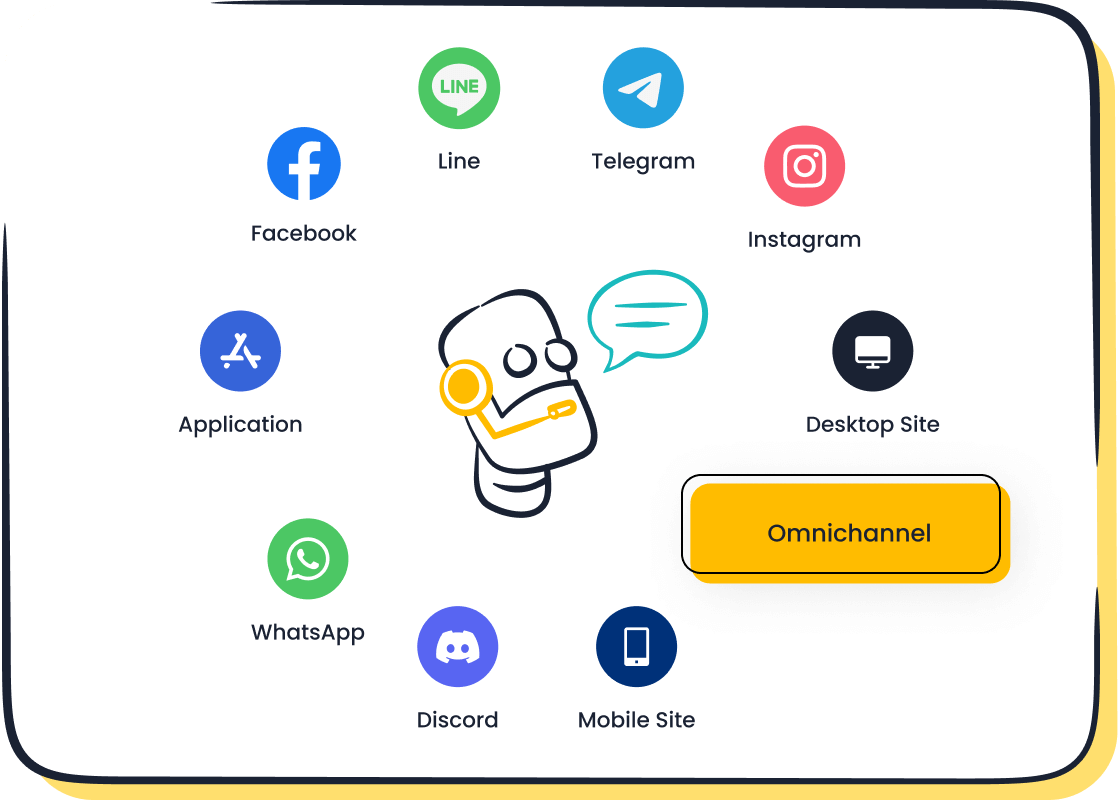
Your customers expect support on their favorite channels, at any time of day. An omnichannel chatbot meets them where they are. This means being available not just on your website but also on platforms like WhatsApp, SMS, and social media. WhatsApp is especially important, as its messages have an open rate of over 90%. By being present on these channels, you create a seamless and convenient experience. Sobot’s solution, for instance, unifies these interactions so your bot can provide consistent support everywhere.
No-Code, Point-and-Click Setup
You shouldn't need a team of developers to build a powerful chatbot. Modern solutions offer a no-code, point-and-click interface. This allows you to design and launch your ai chatbot using simple drag-and-drop building blocks. Platforms like Sobot empower your team to create complex conversational flows without writing a single line of code. This accessibility means you can get your chatbot running quickly and make adjustments on the fly as your business needs change.
Multilingual Support for Global Customers
If you sell internationally, speaking your customer's language is non-negotiable.
Did you know? 72% of consumers are more likely to buy from a brand that communicates in their native language.
Multilingual ecommerce chatbots automatically detect a user's language and respond accordingly. This creates a comfortable and natural conversation, which is essential for building trust and driving sales in global markets. A solution like Sobot's chatbot offers this capability, helping you connect with a wider audience.
Advanced Reporting and Analytics
To improve your customer service, you need data. Advanced reporting is one of the key features of an effective ecommerce chatbot because it shows you what's working and what isn't. You can track important metrics such as:
- Fallback Rate: How often the bot couldn't understand a query.
- Customer Satisfaction Score: Direct feedback on the bot's performance.
- Human Takeover Rate: How often an agent had to step in.
This data provides actionable insights to refine your bot's responses and improve the overall customer journey.
The Benefits of Using Chatbots for Ecommerce

Implementing ecommerce chatbots delivers powerful results for your online store. These AI tools go beyond simple support to actively improve your bottom line. The benefits of using chatbots for ecommerce range from higher sales to lower costs, creating a win-win for you and your customers. Let's explore how they achieve this.
Increase Conversions and Lead Generation
An ai chatbot for ecommerce is a proactive sales tool. It engages visitors, asks intent-focused questions, and guides them toward a purchase. This approach helps you drive sales and capture valuable leads.
- Smart Engagement: Chatbots can proactively offer help or discounts to visitors, turning browsers into buyers. Solutions like Sobot can boost conversions by 20% using this strategy.
- Lead Qualification: Your chatbot can ask key questions to identify serious prospects. It then routes qualified leads to your sales team, ensuring you never miss a warm opportunity.
- Personalized Guidance: By understanding a shopper's needs, the bot provides tailored recommendations, making the path to purchase smooth and efficient.
Cut Operational Expenses
One of the biggest benefits of using chatbots for ecommerce is significant cost savings. These AI tools automate repetitive tasks, reducing the need for a large customer service team.
Industry reports from Gartner and others show that AI can reduce operational costs by up to 30%. With a solution like Sobot, you can save up to 50% on agent costs by having the bot handle routine queries 24/7.
This allows you to reallocate your budget to other growth areas. Your business saves money on hiring, training, and overhead while still providing excellent support.
Improve Agent Productivity and Efficiency
Customer support chatbots make your human agents more effective. By handling common questions, the AI frees up your team to focus on complex, high-value interactions. This boosts morale and performance. Sobot's AI, for example, can improve agent productivity by 70%. Your agents spend less time on repetitive tasks and more time solving unique customer problems, which increases job fulfillment and efficiency.
Boost Customer Satisfaction and Loyalty
Fast, accurate, and available 24/7 support leads to happier customers. Ecommerce chatbots provide instant answers, eliminating frustrating wait times. This immediate assistance is key to building trust and improving customer satisfaction.
Real-World Success: Michael Kors The luxury brand Michael Kors used Sobot's solution to transform its customer experience. They achieved an 83% reduction in response time and an incredible 95% customer satisfaction rate.
This level of service excellence in conversational commerce encourages repeat business and turns shoppers into loyal brand advocates. High customer satisfaction is the foundation of long-term growth.
Ecommerce chatbots work by combining conversational AI with deep system integrations. This powerful AI automates support and delivers a personalized shopping experience. The benefits are clear: you improve efficiency, lower costs, and boost customer satisfaction. These ecommerce chat bots are essential tools for growth. An effective ai chatbot for ecommerce actively drives sales by guiding customers.
Ready to see how AI can transform your business? Explore a solution like Sobot to see how our ecommerce chatbots can help you succeed.
FAQ
How quickly can you set up an ecommerce chatbot?
You can launch a chatbot very quickly. Modern platforms like Sobot use a no-code, point-and-click interface. This allows you to build and deploy a powerful bot in minutes by uploading existing documents like FAQs or product descriptions to create its knowledge base.
Do you need coding skills to build a chatbot?
No, you do not need coding skills. Leading solutions offer simple drag-and-drop builders. You can design complex conversation flows without writing any code. This makes chatbot creation accessible to your marketing or support teams, not just developers.
What are the future trends in ai chatbots for ecommerce?
The future trends in ai chatbots for ecommerce focus on hyper-personalization and proactive engagement. Bots will use advanced AI to predict customer needs and offer help before you even ask. Expect more seamless integrations and human-like conversational abilities.
See Also
Elevating E-commerce Customer Happiness Through Intelligent Chatbot Solutions
Driving E-commerce Revenue Growth With Dynamic Live Chat Software
Best Live Chat Platforms for E-commerce Success This Year
Simple Steps to Deploy Effective Chatbot Examples on Your Website
Effortlessly Integrate a Chatbot Onto Your Website With Simple Guidance