Supercharge Your Team Use AI to Assist Human Agents

Integrating AI into your customer service creates a powerful partnership. This strategy lets AI assistants handle routine tasks. Your agents can then focus on complex customer support. The goal is to use AI to assist human agents in customer support, creating a supercharged team for your business. You combine AI's efficiency with human expertise. Many businesses see success with AI in customer service:
- ServiceNow's AI agents currently manage 80% of customer support inquiries autonomously.
A successful AI integration is crucial. Sobot provides AI customer service solutions to enhance customer service with powerful AI assistants.
Automate Repetitive Tasks with AI in Customer Service

You can significantly boost your team's performance by using AI in customer service to handle routine work. This approach frees your agents from repetitive tasks. They gain back valuable time, with some studies showing employees can recover over two hours daily. This allows them to focus on high-value interactions that require a human touch. Effective automation is the first step toward building a supercharged customer service team. Your business can achieve improved efficiency by targeting the right tasks for customer service automation.
Implement AI for Ticket Triage and Routing
Your customer service team likely deals with a constant flow of incoming support tickets. Manually sorting, categorizing, and assigning these tickets is a slow process prone to human error. This is where AI provides immediate value. An AI-powered system automates the entire triage process.
AI instantly analyzes incoming tickets to understand their content and intent. It then uses this information for several key actions:
- Accurate Categorization: The AI identifies the ticket type, category, and urgency. This prevents agents from wasting time on misdiagnosed issues.
- Smart Prioritization: The system assesses priority based on impact and urgency, ensuring your team focuses on the most critical issues first.
- Automatic Routing: Tickets are immediately sent to the correct agent or department. This minimizes hand-offs and delays, which are major sources of customer frustration.
By implementing AI for this process, you can reduce average ticket handling time by up to 38%. Your team achieves better first-time fix rates, leading to faster resolutions and stronger SLA performance for your business.
Use the Sobot Chatbot to Answer FAQs
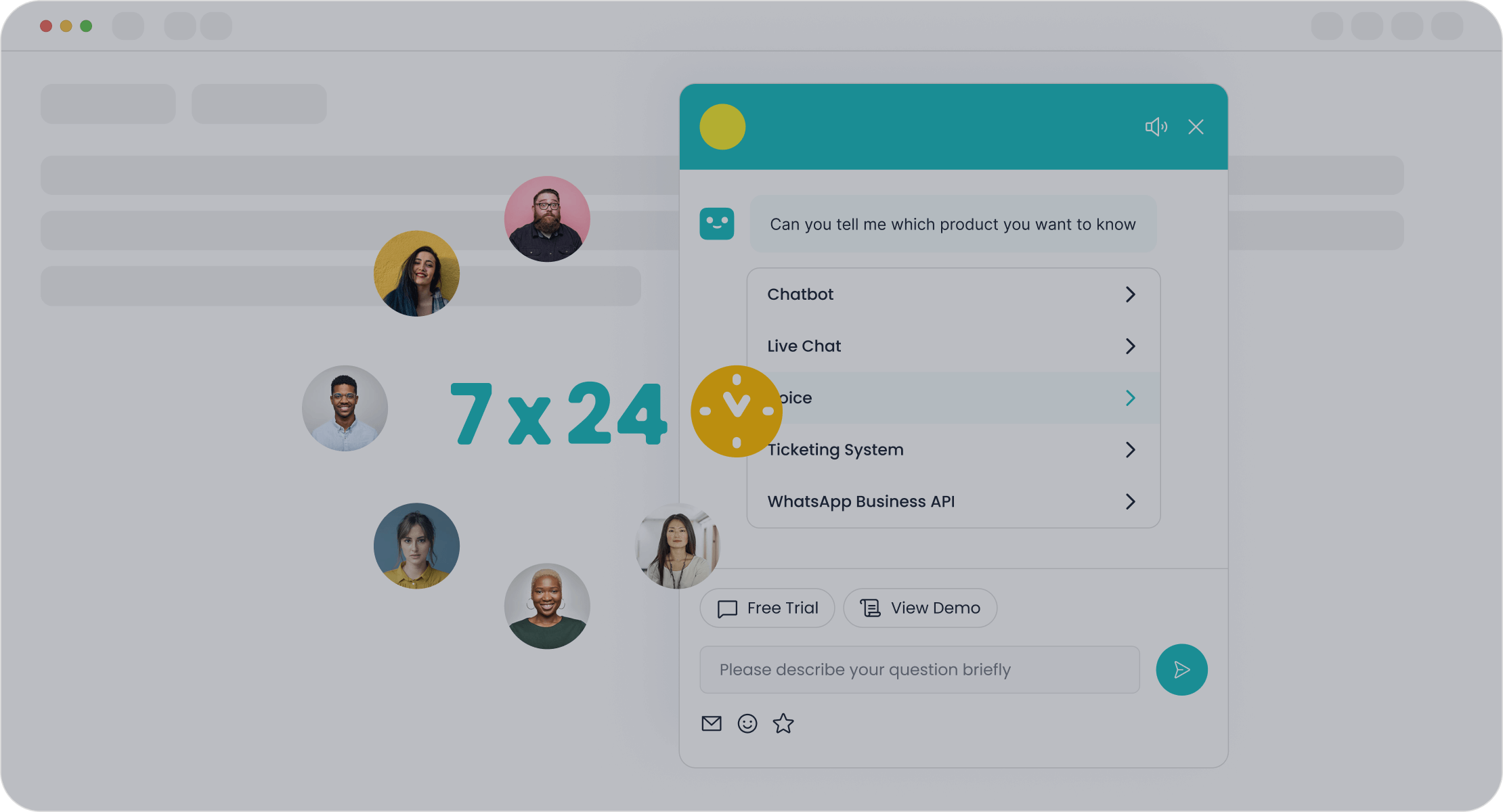
How much time do your agents spend answering the same questions every day? Common customer inquiries often include:
- "Where is my order?"
- "What is your return policy?"
- "How do I reset my password?"
These questions are necessary to answer but consume significant agent capacity. AI assistants, especially chatbots, are the perfect solution. Tools like the Sobot Chatbot can autonomously handle these regular queries, improving productivity by up to 70%. Because these AI assistants operate 24/7 and can handle multiple languages, you can provide instant support to your global customer base while saving up to 50% on agent costs.
Note: A well-trained AI can resolve up to 80% of routine support tickets without any human help. This level of automation gives your customers the immediate answers they want and builds trust through consistent, accurate information.
This 24/7 availability from chatbots directly boosts customer satisfaction by eliminating wait times—a primary source of frustration. When customers get instant, correct answers anytime, their perception of your service and business improves.
Leverage AI for Data Entry and Summarization
The work of a customer service agent doesn't end when a conversation does. They often spend valuable time on manual post-interaction tasks, such as writing conversation summaries, updating customer records, and logging ticket details. This administrative work is tedious and takes them away from helping the next customer.
AI tools can completely transform this part of the workflow. AI-powered efficiency shines in process automation for data entry and summarization.
- Automated Summarization: AI can generate objective, standardized, and comprehensive summaries of entire conversations in seconds. This eliminates the risk of missed details or inconsistent notes, saving each employee up to four hours per week.
- Accurate Data Entry: With automation, AI assistants can accurately log all relevant information into your CRM or ticketing system. This ensures your customer data is clean, reliable, and ready for analysis.
By leveraging AI for these tasks, you not only give time back to your agents but also improve the quality of your data. Tools like Sobot's ticketing system use this automation to streamline workflows and manage SLAs, further freeing up your team. This creates a foundation of rich, structured data that your business can use to identify trends and continuously improve the customer experience.
Use AI to Assist Human Agents in Customer Support
Automating tasks is just the beginning. The true power of AI in customer service comes from empowering your human agents. You can use AI to assist human agents in customer support, creating a partnership where technology enhances human skill. This collaboration turns your team into a high-performing unit. Agents handle complex, empathetic conversations while AI provides instant data and guidance.
A great example of this human-machine cooperation is the success of OPPO. By integrating Sobot's AI solutions, OPPO achieved an impressive 83% chatbot resolution rate and a 94% positive feedback rate. This shows how the right AI tools can elevate your customer service.
Provide Real-Time Agent Assistance
Your agents face immense pressure during live customer interactions. They must find correct information, follow company policies, and provide personalized support, all at once. AI assistants act as a copilot, giving them the help they need in the moment. These assistants listen to conversations and provide real-time guidance.
Sobot’s AI Copilot is a powerful tool designed for this purpose. It directly empowers your agents during live chats and calls. The AI Copilot helps your team by:
- Composing Responses: The AI drafts accurate, context-aware replies in seconds. This reduces typing time and ensures consistent messaging.
- Summarizing Conversations: It uses generative AI to create concise summaries of calls and chats, saving agents from manual note-taking.
- Autofilling Details: The system automatically extracts key information from a conversation to populate ticket fields, ensuring data accuracy.
This level of support transforms the agent's role. Instead of handling basic transactional tasks, they can provide more consultative advice. This shift improves job satisfaction and creates better career paths.
Great Lakes Credit Union found that AI elevated their agents' job descriptions. The role moved from transactional to advisory support, leading to a higher pay grade and a better career path for employees.
By using AI assistants, you reduce agent stress and improve efficiency. This process can reduce average handling time by as much as 30%, allowing your team to help more customers.
Use Sentiment Analysis to Prioritize Issues
Every customer interaction is different. Some customer inquiries are simple questions, while others are urgent complaints. Your team needs a way to identify and prioritize the most critical issues. AI-powered sentiment analysis provides this capability. This technology uses Natural Language Processing (NLP) to analyze text and voice data. It detects emotions like frustration, anger, or happiness in customer messages.
This AI process gives your customer support operations a major advantage. You can automatically:
- Prioritize Urgent Tickets: The system flags messages with negative sentiment. This moves unhappy customers to the front of the queue for immediate attention.
- Prevent Escalations: Agents receive real-time alerts about a customer's emotional state. This allows them to de-escalate negative situations before they worsen.
- Reduce Customer Churn: By identifying unhappy customers early, your business can proactively offer solutions. Some companies have reduced customer churn by 20% using this method.
Responding faster to negative feedback builds incredible loyalty. Studies show 68% of customers who receive a quick response to a complaint are more likely to become repeat customers. Sentiment analysis makes your customer service proactive, turning potential detractors into loyal advocates for your business.
Improve Internal Knowledge Management
Your agents can only be as effective as the information they can access. A disorganized or outdated knowledge base forces them to spend valuable time searching for answers. This slows down your customer service and frustrates both agents and customers. AI tools can completely overhaul your internal knowledge management.
AI-powered search uses NLP to understand the context and intent behind an agent's query. Instead of just matching keywords, the AI finds the most relevant articles, guides, and answers instantly. This ensures your agents can resolve issues confidently with the most up-to-date information.
This is where Sobot's AI made a huge impact for OPPO. By using AI to organize and maintain its product information, OPPO reduced its knowledge base maintenance efforts by 90%. This massive reduction in manual work allowed the team to focus on creating better support content.
Modern AI tools also help your business identify and fill knowledge gaps. The AI analyzes search queries and user interactions to:
- Detect frequently searched topics that have poor results.
- Flag outdated or incorrect content for review.
- Uncover missing information that customers are asking for.
By implementing these AI tools, you create a reliable, self-improving knowledge base. This empowers your agents to find answers faster, enhance customer service, and resolve issues on the first contact.
Manage a Phased and Agent-Centric AI Integration
A successful AI integration puts your team at the center of the strategy. You should introduce AI assistants as partners, not replacements. This approach requires careful planning, training, and clear processes. By managing the change effectively, your business can avoid common pitfalls like staff resistance and technical silos. A phased implementation ensures your team adapts smoothly and your customer service quality improves. This process is key to a successful AI integration.
Start with a Pilot Program for AI Assistants
You should not overhaul your entire customer service operation overnight. Instead, begin with a pilot program. This allows your business to test AI in a controlled environment. You can identify high-impact, low-risk use cases to prove the value of AI assistants. This strategy builds confidence and momentum for a wider rollout.
A pilot program helps you:
- Define and measure key performance indicators (KPIs).
- Gather initial feedback from agents and customers.
- Address technical challenges before a full-scale implementation.
Starting small is one of the best practices for AI customer service. It lets your business learn and adapt, ensuring your long-term AI strategy is built on a solid foundation.
Focus on Comprehensive Team Training
Your agents are crucial to a successful AI integration. Integrating AI changes their roles, so you must invest in comprehensive training. This training should go beyond basic software instructions. It needs to cover how to collaborate effectively with AI assistants. Your team must understand that AI is a tool to support them, not replace them.
Effective training programs emphasize:
- New Workflows: Teach agents how to work alongside AI assistants.
- Ethical AI Use: Cover topics like data privacy and avoiding bias.
- Soft Skills: Focus on empathy and complex problem-solving, which AI cannot replicate.
Proper training reduces fear and resistance. It empowers your team to embrace AI, leading to higher job satisfaction and better customer service outcomes.
Establish Clear AI-to-Human Handoffs
A poor handoff from an AI chatbot to a human agent is a major source of customer frustration. Studies show that a bad transfer process can cause customer satisfaction to drop by nearly 20%. You must design a seamless transition to prevent this. The goal is a "warm handoff," where the human agent receives all the context from the AI interaction.
A clear handoff process ensures that:
- The customer does not have to repeat information.
- The agent understands the issue immediately.
- The AI routes the query to the right person for quick support.
When you get this right, the AI and human agents work together as one unified team. This integration improves efficiency and delivers the high-quality service your customers expect from your business.
Measure AI Impact and Continuously Improve
Your AI integration does not end after the initial implementation. To truly supercharge your team, you must continuously measure the impact of AI and refine your strategy. This ongoing process ensures your AI assistants deliver real value to your agents, your customers, and your business. A successful AI journey is about evolution, not a one-time setup.
Define and Track Key Performance Indicators
You need clear data to understand how AI is affecting your customer service operations. Defining and tracking Key Performance Indicators (KPIs) is the first step. These metrics give you objective proof of your AI's performance and highlight areas for improvement.
Key metrics for your business to monitor include:
- First Response Time (FRT): Measures how quickly the AI acknowledges a customer query.
- Resolution Rate (RR): Shows the percentage of tickets the AI resolves without human help.
- Customer Satisfaction (CSAT): Gathers immediate feedback on a specific interaction.
- Net Promoter Score (NPS): Gauges long-term customer loyalty.
Tracking these numbers reveals the direct impact of AI on efficiency and service quality. For example, OPPO’s successful AI implementation led to better customer service, which resulted in a 57% increase in their repurchase rate. This shows how strong AI performance translates to tangible business growth.
Gather Agent and Customer Feedback
Quantitative data tells you what is happening, but qualitative feedback tells you why. Gathering input from both agents and customers is one of the best practices for AI customer service. This dual approach provides a complete picture of your AI's effectiveness.
For customers, you can use post-chat surveys and review interaction logs to identify pain points. This helps you find and fix conversations where the AI provided no solution. For your agents, you should observe how they use the AI assistants. Analyzing where they struggle or what questions they ask helps you improve the tools. This feedback process is critical for a successful integration and ensures the AI truly helps your team provide excellent customer service.
Iterate on AI Training and Workflows
The final step is to use your data and feedback to make improvements. Your AI is not a static tool; it should learn and adapt over time. This iterative process allows you to refine AI responses, update knowledge bases, and streamline workflows. You should establish a regular review cycle to assess AI performance and identify optimization opportunities.
It is also important to focus on interpretability. Your team should understand why the AI makes certain decisions. Clear documentation and transparent workflows help build trust and make the AI easier to use. By continuously iterating on your AI implementation, you ensure your customer service technology evolves with your business needs. This creates a powerful, self-improving system that enhances your support and empowers your agents.
Your business can achieve a successful AI integration. You must automate tasks, empower your team with AI tools, manage a phased rollout, and measure your AI strategy. The future of exceptional customer service depends on this partnership. You use AI to assist human agents in customer support, combining AI's speed with human empathy. Integrating AI this way creates better customer service. Sobot's AI customer service solutions can help your business. Explore our AI tools to see how AI in customer service can supercharge your team. Let our AI assistants support your business. Use AI to assist human agents in customer support for better customer service. This is the best AI in customer service.
FAQ
How does AI help agents beyond automation?
AI assistants act as a copilot for your team. The AI provides real-time response suggestions and summarizes conversations. This AI support allows agents to focus on complex problem-solving. The AI enhances their skills. This AI makes your team more effective.
Is it difficult to set up an AI chatbot?
You can set up an AI chatbot without any coding. Tools like the Sobot AI Chatbot use a point-and-click interface. This simple process allows you to design and deploy your AI quickly. Your new AI can start helping customers right away.
Will AI replace our customer service team?
No, the goal of this AI is to assist, not replace. The AI handles repetitive tasks. This frees your human agents for high-value work that requires empathy and critical thinking. This AI partnership creates a supercharged team. The AI makes their jobs better.
How do we start implementing AI?
You should begin with a pilot program. This process lets you test the AI in a controlled way. You can measure the AI's impact and gather feedback. This approach ensures a smooth and successful AI integration for your business. This AI strategy builds confidence.
See Also
Elevating Customer Service Efficiency with Advanced AI Software Solutions
Discovering the Best 10 AI Tools for Enterprise Contact Centers
Transforming Customer Support: The AI Agent Revolution Is Here
An In-Depth Review of Leading AI Enterprise Call Center Solutions
Your Essential Guide to Call Center Artificial Intelligence Software