Decoding Outbound Call Center Metrics


Outbound call center metrics are key numbers that measure performance in proactive calling. These metrics track the success of sales, marketing, and customer support efforts. A modern outbound call center uses this data to improve how it connects with each customer. With over 120 million global outbound calls daily, effective strategies are vital. This guide helps managers build a data-driven approach for their teams. They can use powerful call center software, like the Sobot call center powered by Sobot AI, to turn performance data into better customer outcomes and stronger customer relationships. An outbound call center can support every customer interaction with the right tools.
Essential Outbound Call Center Metrics for Agents
Agent performance is the engine of any successful outbound call center. Tracking the right outbound call center metrics helps managers optimize agent productivity and improve the customer experience. These key figures show how efficiently agents handle their outbound tasks.
Calls Per Agent Per Hour
This metric measures the number of outbound calls an agent completes in one hour. Monitoring calls per agent helps managers spot patterns. An agent with a low number of calls per agent may need more training to improve their efficiency. This focus on individual performance boosts overall team productivity.
Average Talk Time (ATT)
ATT tracks the average duration of an agent's conversation with a customer. A lower ATT often means higher efficiency. Agents can reduce talk time without sacrificing quality.
- Using smart, flexible scripts helps guide the conversation.
- Empowering agents to make decisions reduces escalations.
- This approach helps an agent resolve a customer issue faster.
After-Call Work (ACW)
After-Call Work (ACW) is the time an agent spends on tasks after an outbound call ends. This includes updating the customer relationship management (CRM) system, sending follow-up emails, or scheduling callbacks. Modern outbound call center software automates many of these tasks. AI-powered summaries and automated workflows free up agents to handle the next outbound call, increasing the sales per agent.
Agent Utilization vs. Occupancy
These two metrics are often confused, but they measure different aspects of agent productivity.
Occupancy is the percentage of time an agent is logged in and actively handling customer interactions. Utilization is the percentage of an agent's total paid hours spent on both customer-facing and non-customer-facing work, like training and meetings. A healthy utilization rate is between 75% and 85%. This balance prevents burnout while maximizing performance.
First Call Resolution (FCR)
First call resolution measures the percentage of outbound calls that resolve a customer's issue on the first attempt. A high FCR, or first-call close rate, is vital for customer satisfaction and support efficiency. To improve first call resolution, an outbound team should equip agents with the right tools and knowledge. Promoting "total contact ownership" encourages agents to see a customer case through to the end. This focus on a first-call close builds customer trust and boosts sales per agent.
Conversion Metrics for Your Outbound Call Center
While agent productivity is vital, conversion metrics measure the ultimate success of your outbound efforts. These outbound call center metrics connect agent performance directly to business outcomes like sales and customer retention. A successful outbound call center uses this data to refine its strategy and drive revenue.
Contact Rate (Hit Rate)
Contact Rate, or Hit Rate, measures the percentage of outbound calls where an agent successfully connects with a person. A low contact rate means agents are wasting time on unanswered calls or invalid numbers. Using a predictive dialer can boost this metric by automatically filtering out voicemails and disconnected lines. High-quality lead lists and local caller IDs also significantly improve the chances of a customer answering.
Pro Tip: B2B campaigns often see higher contact rates (15-40%) than B2C campaigns (10-30%) because their calling lists are typically more targeted.
Conversion Rate
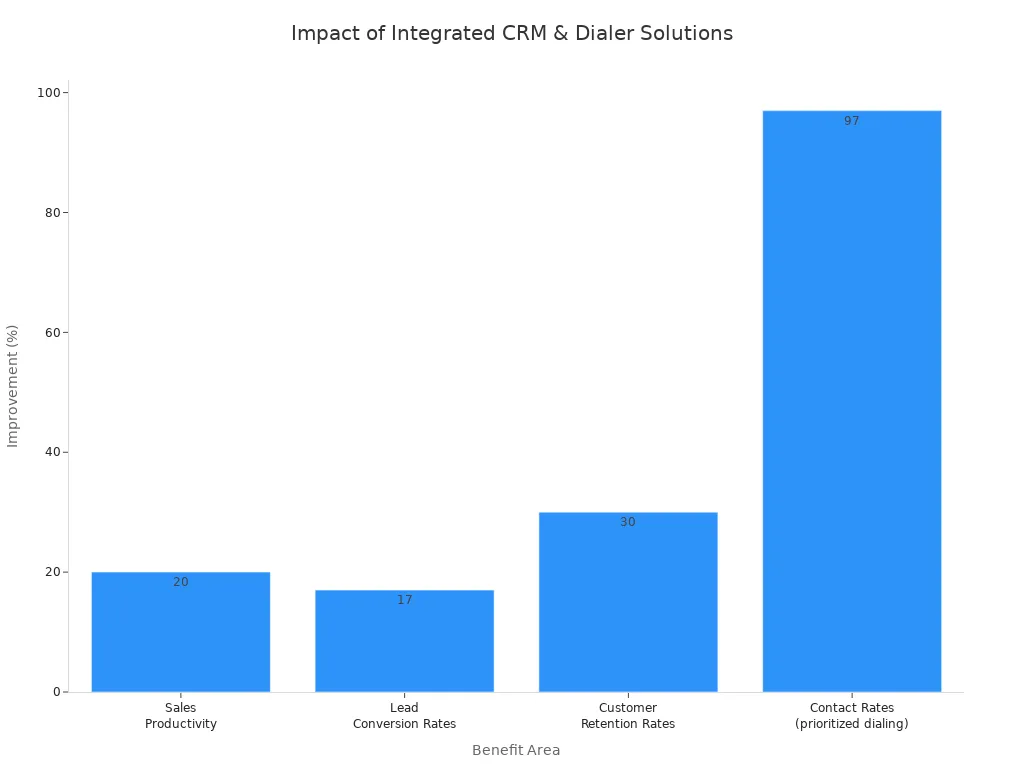
The conversion rate is the percentage of calls that result in a desired outcome, such as a sale, appointment, or successful lead qualification. This is a primary indicator of an outbound campaign's effectiveness. Integrating your dialer with a customer relationship management (CRM) system provides agents with valuable customer history, enabling more personalized and effective conversations.
For example, financial services platform Opay used Sobot's integrated solution for targeted marketing support. This unified approach gave their team the tools to better understand and engage each customer. As a result, Opay increased its conversion rate by an impressive 17%, turning more outbound interactions into valuable customer actions. This also helped improve their customer retention rate.
Cost Per Acquisition (CPA)
Cost Per Acquisition measures the total cost of the outbound campaign divided by the number of new customers acquired. This metric reveals the financial efficiency of your sales or marketing efforts. To lower CPA, an outbound call center must optimize every part of its operation.
A unified platform that combines calling, analytics, and customer data management reduces wasted resources. By implementing Sobot’s all-in-one contact center solution, Opay streamlined its customer support and outbound marketing. This increased efficiency led to a remarkable 20% reduction in overall costs, directly lowering their CPA and improving their return on investment.
Revenue Per Call (RPC)
Revenue Per Call (RPC) tracks the average amount of revenue generated from each outbound call. For a more precise view, many businesses calculate revenue per successful call. This metric is essential for sales-focused outbound teams. It helps managers understand which agents, scripts, or campaigns are most effective at generating income. Tracking RPC ensures the outbound call center contributes directly to the company's bottom line and supports long-term customer retention.
Dialer and Operational Efficiency Metrics
The technology powering your outbound call center directly impacts its performance. A stable and intelligent system is crucial for optimizing operations. These dialer and operational efficiency metrics reveal how well your call center software supports your team's outbound efforts. Tracking these numbers helps identify technical bottlenecks and improve the overall customer journey.
Call Abandonment Rate
Call Abandonment Rate is the percentage of outbound calls that a customer answers but hangs up before speaking to an agent. A primary cause is an insufficient automatic dialer that connects with a customer when no agent is free. This creates a poor first impression. Technical issues like poor audio or dropped connections also contribute.
FTC regulations state that an outbound campaign's abandonment rate must not exceed 3% over a 30-day period. Keeping this KPI low is essential for compliance and customer experience.
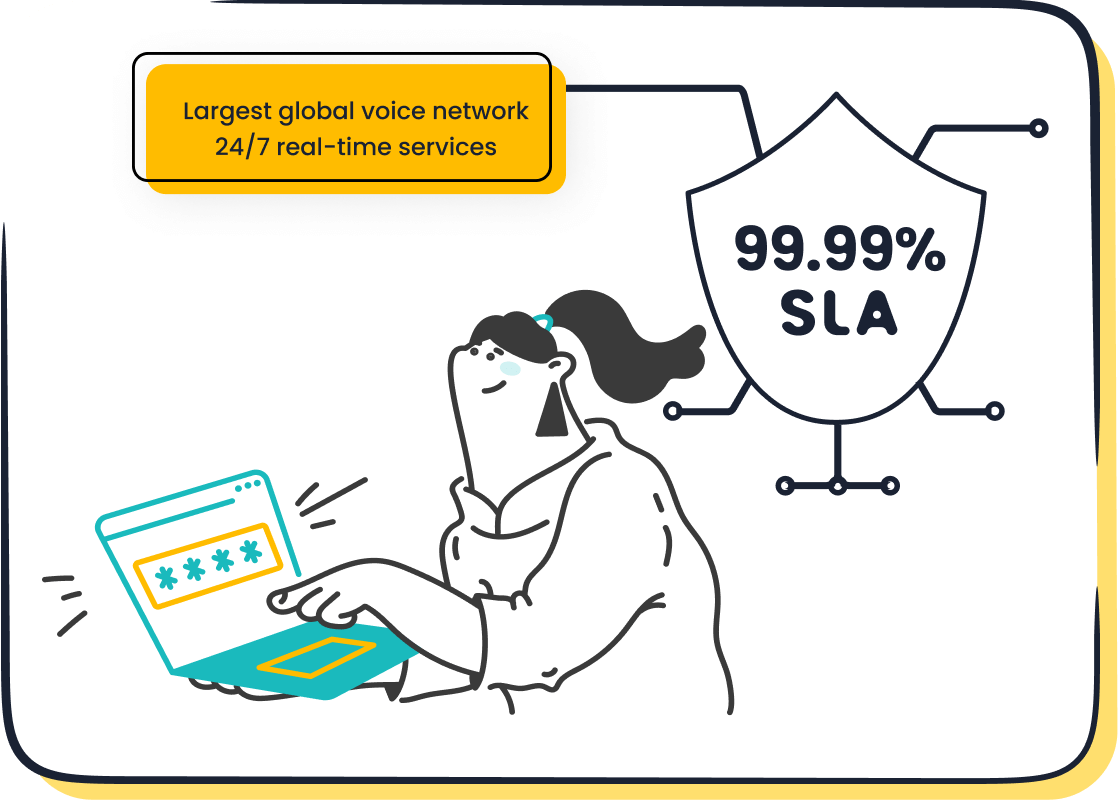
An acceptable rate varies by industry, but a good benchmark is 2-5%. A reliable outbound call center platform is the best defense. Sobot’s Voice/Call Center, for example, ensures stability with a 99.99% SLA and robust global network support, which minimizes dropped connections and helps keep this metric low.
Average Speed of Answer (ASA)
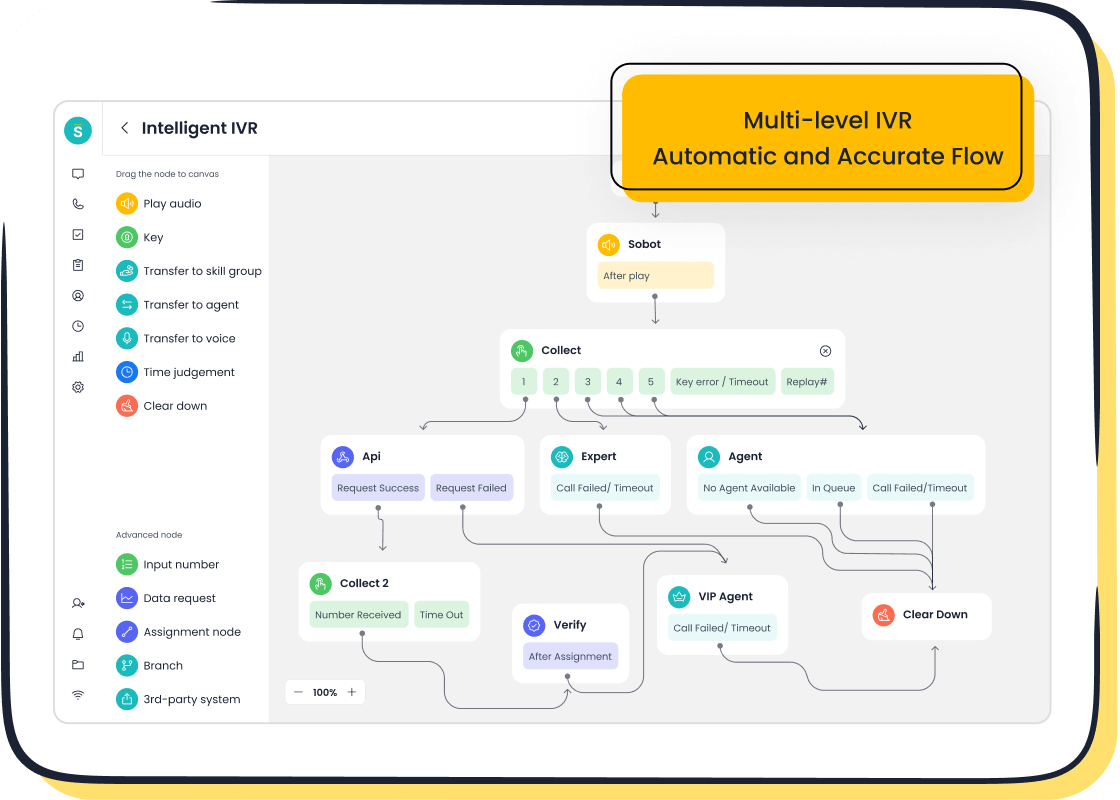
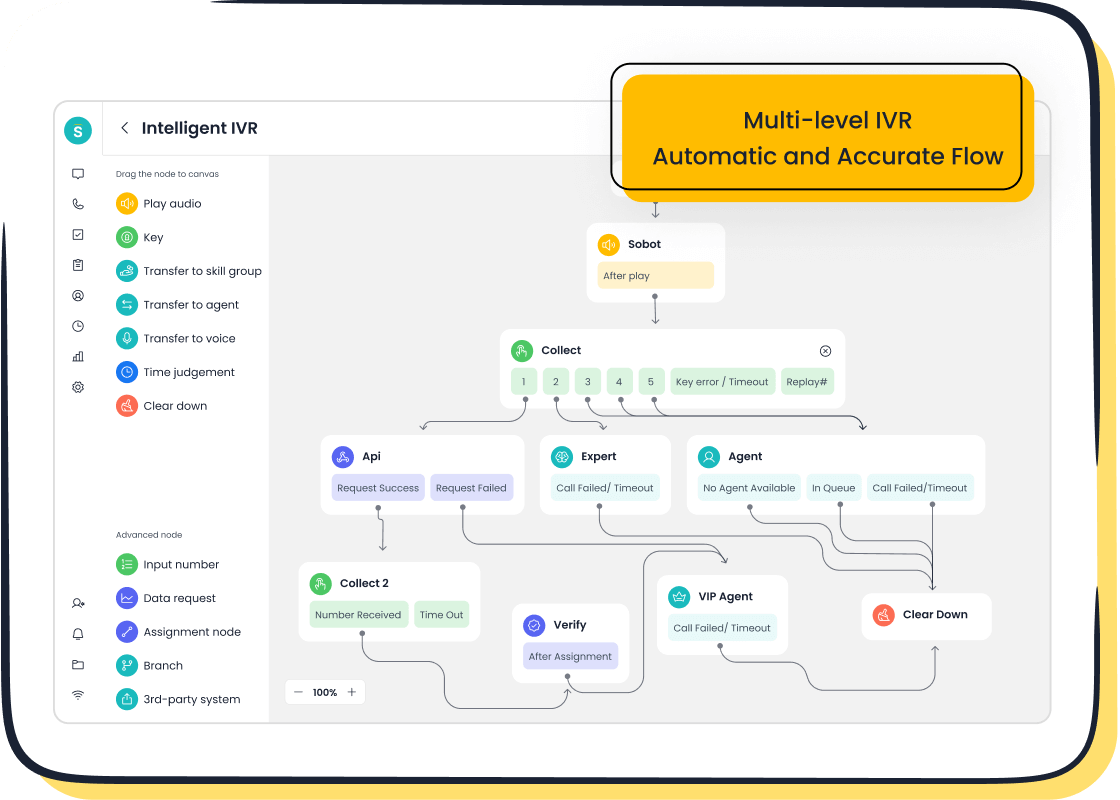
Average Speed of Answer (ASA) measures the average time it takes for an agent to answer an inbound call, but it's also relevant for certain outbound scenarios, like callbacks. When a customer returns a missed outbound call, a long wait time can ruin the opportunity. A low ASA shows that your team and technology are working together to provide prompt support. Advanced call center software improves this KPI. Features like Sobot's Smart Call Routing and intelligent IVR direct the customer to the right agent quickly, ensuring no customer is left waiting.
List Penetration Rate
List Penetration Rate tracks the percentage of contacts on a calling list that your agents have successfully reached. This is one of the most important outbound call center metrics for measuring campaign progress. A low rate indicates problems with the list quality, the dialer's efficiency, or agent productivity. An effective outbound call center uses technology to maximize this metric. A powerful dialer works through the list systematically, making sure every potential customer has been contacted. This ensures your outbound team makes the most of every lead and maximizes campaign performance.
Quality and Customer Experience Metrics
Efficiency and conversions are important, but the quality of customer interactions defines long-term success. Quality and customer experience metrics measure how well your outbound team represents your brand. A focus on these outbound call center metrics builds trust, boosts satisfaction, and drives customer retention. A great outbound call center balances productivity with a positive customer journey.
Quality Assurance (QA) Scores
Quality Assurance (QA) scores evaluate an agent's performance during an outbound call. Managers or QA specialists listen to call recordings and score them against a predefined scorecard. This process ensures agents meet company standards for professionalism and effectiveness. Key criteria often include:
- Agent delivered a clear and compliant opening.
- Agent effectively handled customer objections.
- Agent clearly explained the product's value.
- Agent successfully qualified the lead or set an appointment.
Consistent scoring provides fair and actionable feedback. This helps improve agent performance and boosts the customer retention rate.
Customer Satisfaction (CSAT)
Customer Satisfaction (CSAT) directly measures how happy a customer is with an interaction. After an outbound call, you can collect customer feedback through various channels. This feedback is vital for understanding the customer's perspective. Common methods for gathering this information include:
- IVR Surveys: An automated survey right after the call lets a customer give immediate feedback.
- SMS Surveys: A quick text message with a simple question provides a fast way to measure satisfaction.
- Email Surveys: Sending a survey link via email allows for more detailed customer feedback.
High CSAT scores are linked to better retention and brand loyalty. Tracking this metric helps an outbound team understand what truly matters to each customer.
Compliance Rate
The Compliance Rate tracks how well agents follow legal regulations and company policies. Adherence is non-negotiable in an outbound setting. Rules like the Telephone Consumer Protection Act (TCPA) and the Health Insurance Portability and Accountability Act (HIPAA) carry heavy penalties for violations. Call recording and monitoring are essential tools for ensuring compliance. They help managers review agent conversations, confirm that required disclosures are made, and protect sensitive customer data. A high compliance rate protects the business and builds customer trust.
Improving Metrics with Sobot's Voice Center
Modern call center software provides the tools to improve these crucial metrics. Sobot’s Voice Center offers a unified platform to enhance quality, satisfaction, and compliance. Its call recording and monitoring features allow managers to review outbound interactions for QA and training. AI-powered analytics can even evaluate 100% of calls, offering unbiased insights to improve agent support. This helps standardize performance across the team.
For customer satisfaction, Sobot integrates with other tools to streamline the collection of feedback. By connecting call data with your customer relationship management system, you gain a full view of the customer journey. This enables better support and higher retention. Finally, features like automated call logging ensure every outbound interaction is documented, which is critical for maintaining a high compliance rate.
Mastering outbound metrics transforms an outbound call center from a cost center into a revenue driver. A balanced focus on agent productivity, outbound conversions, operational efficiency, and customer quality leads to sustainable success. An outbound call center needs the right call center software to track performance. This support helps every outbound team improve its customer interactions. The right call center software provides the support needed for any outbound campaign. An outbound call center can improve how it helps each customer. This outbound approach helps every customer. The call center software helps the outbound team reach each customer. This outbound strategy helps every customer. The outbound team can help each customer.
Ready to gain full visibility into your performance? Explore how Sobot's Voice/Call Center provides the analytics and tools to track and improve every outbound metric discussed. Embark on Your Contact Journey today.
FAQ
What is the most important outbound metric?
Conversion Rate is often the most critical outbound metric. It directly measures the success of an outbound campaign. This number shows how effectively an agent turns a conversation with a customer into a desired action, proving the value of the outbound effort for each customer.
How does technology improve outbound productivity?
Modern call center software boosts outbound productivity. It automates tasks like dialing and logging calls. This allows agents to focus more on customer interactions. Better technology helps an outbound team connect with each customer more efficiently, improving overall performance and helping every customer.
How do outbound metrics affect customer retention?
Outbound metrics like First Call Resolution and CSAT directly impact customer retention. A positive experience with an outbound agent builds trust for the customer. This focus on the customer improves the customer retention rate. Good service encourages a customer to stay loyal, boosting long-term retention.
How can a team balance outbound efficiency and customer experience?
A team balances efficiency and experience with the right tools and training. An outbound strategy should prioritize a quality conversation with every customer. This means not rushing a customer. Good scripts and agent empowerment help create a positive interaction for the customer during any outbound call.
See Also
Elevating Call Center Performance Through Effective Monitoring Strategies
Leading Call Center Analytics Software Solutions for 2024
Implementing Optimal Quality Management Practices in Call Centers
Leading Speech Analytics Tools for Call Centers in 2024
Understanding Call Center Voice Analytics Technology and Its Applications

