7 IVR Flaws Ruining Customer Experience


Did you know over half of all consumers have abandoned a business due to a poor Interactive Voice Response (IVR)? That's a huge loss of revenue. A bad traditional ivr customer experience creates frustrated customers and deepens customer frustration. These common IVR mistakes lead to major business inefficiencies.
You've likely felt this pain yourself. A confusing IVR menu, no way to reach a person, and repeating information are common issues.
Your customer deserves a better experience. The good news is that these problems have solutions. A modern Sobot call center, powered by Sobot AI, can fix these deep-rooted IVR issues and transform your support.
Flaw 1: The Confusing Menu Maze

Have you ever called a company and felt trapped in a phone menu? You listen to a long list of choices, but none of them match your problem. This is a classic example of a poorly designed phone menu. It’s one of the most common IVR mistakes, and it’s a major reason why 51% of customers will simply hang up and leave your business for good.
The Trap of Irrelevant Menu Options
A confusing menu forces your customer to guess. When they are presented with too many irrelevant menu options, they might end up hitting the wrong button out of sheer frustration. This sends them down the wrong path, wasting their time and making a simple problem much worse. An IVR should be a helpful guide, not a puzzle. When your menu is packed with irrelevant menu options, you create a negative experience before an agent even says hello.
Why One-Word Answers Fail Customers
Traditional IVR systems often rely on simple, one-word answers or number presses. But customer issues are rarely that simple. This rigid structure fails to understand what the caller actually needs. The system can't handle complex questions, leading to endless loops or dead ends. This is where a more advanced, conversational IVR can make a huge difference by understanding natural language instead of just keywords.
Designing Intuitive Call Flows
You can avoid these issues by designing a better journey. A great IVR experience is built on logic and simplicity.
Pro-Tip: Build a Better Menu 💡
- Keep it simple: Limit your main menu to five options or fewer.
- Put popular choices first: Analyze call data to see what most people need.
- Use clear language: Avoid internal jargon your customer won't understand.
- Always offer an out: Make sure there is an easy, obvious way to reach a live person.
Building a logical flow from scratch used to be difficult. But modern tools have changed the game. For example, Sobot’s flexible, drag-and-drop IVR builder lets you create and adapt call flows with ease. You can design logical paths that solve problems quickly. This is exactly how the online supermarket Weee! transformed its support, creating an intuitive IVR that guides its diverse customer base to the right solution fast.
Flaw 2: The Blocked 'Agent Escape'
Ever found yourself shouting "Agent!" into your phone, only to be sent back to the main menu? You're not alone. The difficulty reaching a live agent is a top complaint, with over 50% of consumers reporting frustration when an IVR fails to connect them to a person. This intentional design creates a dead end, leaving your customer feeling trapped and ignored.
The Difficulty Reaching a Live Agent
A good IVR should solve simple problems. But what happens when the issue is complex? Many systems make it nearly impossible to find the option for a live representative. This often happens because the IVR is designed to deflect calls and reduce agent workload. While chatbots and automated menus can handle basic questions, they can't replace human empathy for complex issues. When a customer truly needs help, hitting a wall instead of a person is infuriating.
When Cost-Cutting Hurts the Customer
Blocking agent access is usually a cost-cutting move. Fewer agent calls mean lower operational costs, right? In theory, yes. But in reality, this strategy creates frustrated customers and long-term business inefficiencies. When you make it hard to get help, you risk losing business forever. In fact, 32% of customers would abandon a brand they love after just one bad experience. Saving a few dollars on a phone call isn't worth losing a loyal customer.
The Importance of a Seamless Handoff
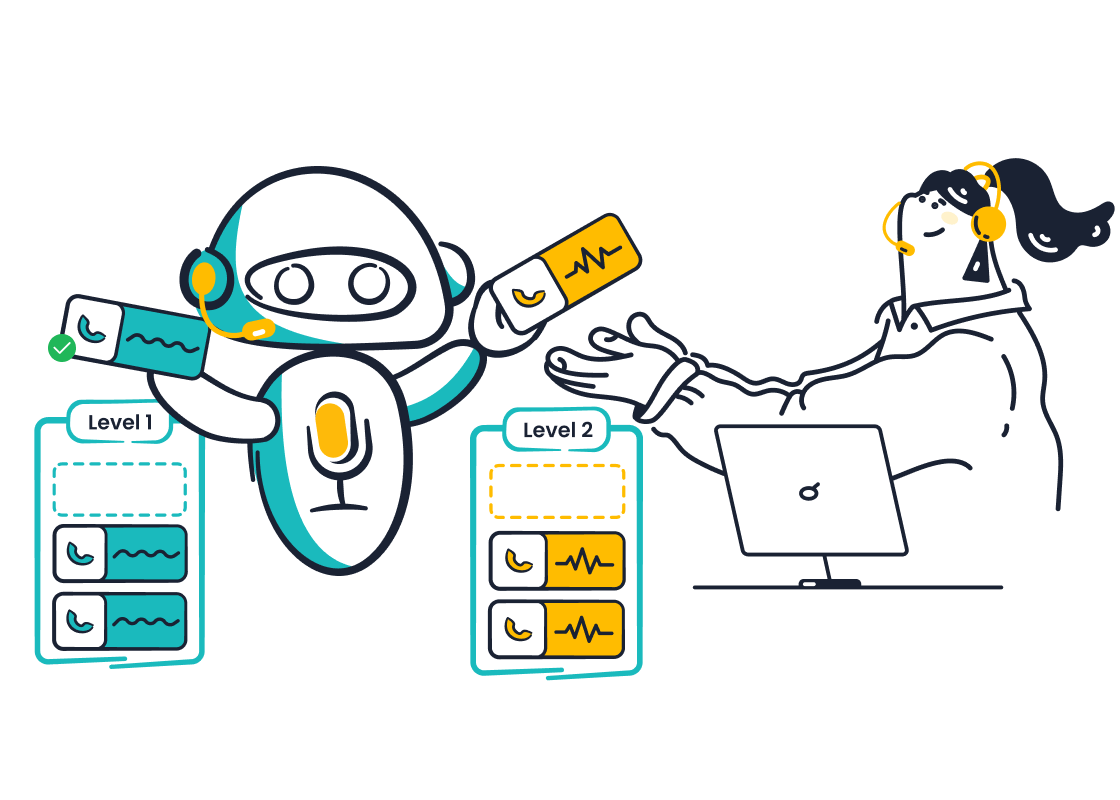
When a customer needs to speak to an agent, the transition should be effortless. A modern conversational IVR recognizes when to escalate and makes the handoff smooth. The goal is to eliminate repetition, which is a major source of frustration.
A seamless handoff does more than just improve the experience. Research shows that passing context from the IVR to the agent can reduce call handle times by 34% and boost customer satisfaction by 28%.
This is where technology transforms your customer service. Sobot’s Voicebot intelligently gathers information and, when needed, transfers the call to an agent through our Omnichannel Solution. All the context—who the customer is and what they need—appears in the agent's unified workspace. The agent is fully prepared, and the customer never has to say, "I already told the machine all of this."
Flaw 3: Unintelligent, Repetitive Loops
"Please enter your account number." You type it in. A few minutes later, an agent asks for it again. Sound familiar? This loop is a major flaw in many IVR systems. It makes your customer feel unheard and unimportant. In fact, having to repeat information is the most frustrating part of customer service for 33% of consumers.
The Annoyance of Repeating Information
When your IVR asks for details it should already have, it creates a frustrating experience. These repetitive IVR prompts waste time and signal to your customer that your systems are disconnected. Over half of all callers get annoyed when they have to repeat themselves. This simple mistake can damage trust and make people feel like you don't value their time. An intelligent IVR should remember information, not ask for it over and over.
The Failure to Use Customer Context
This problem stems from a lack of context awareness. A basic IVR is a one-way street; it doesn't know who is calling or why. It treats every caller the same, whether they are a new lead or a loyal customer with an open support ticket. This lack of context awareness leads to generic menus and repetitive questions, creating significant business inefficiencies and poor customer interactions.
Creating a Unified Customer Journey
You can create a smarter journey with a system that knows your customer. A modern conversational IVR uses personalization to greet callers by name and understand their history.
Imagine an IVR that already knows about a customer's recent order or open ticket. That's the power of integration.
Sobot's Voicebot connects directly to your CRM and ticketing systems through APIs. This allows the IVR to instantly recognize callers and their past issues. This level of customer personalization transforms the call from a frustrating loop into a helpful, intelligent conversation from the very first second.
Flaw 4: Poor Recognition and Error Handling
"I'm sorry, I didn't get that." This phrase is one of the most infuriating parts of a bad IVR experience. When your system can't understand what a customer is saying, it creates an immediate roadblock. These recognition and error-handling failures are common IVR problems that make customers feel completely powerless.
Common Voice Recognition IVR Problems
Traditional IVR systems often struggle with the diversity of human speech. This is one of the biggest IVR mistakes a business can make. Your customers don't all sound the same, and your system needs to account for that.
A study found that 66% of users see accent or dialect-related issues as a major challenge for voice technology.
Common recognition issues include:
- Accents and Dialects: An IVR trained on a limited data set will fail to understand callers with different accents.
- Background Noise: Customers might call from a car, a busy street, or a noisy home. An older IVR can't separate their voice from the noise.
- Speech Patterns: People speak at different speeds and use different words. A rigid system can't keep up.
"I'm Sorry, I Didn't Understand"
When a customer hears that dreaded "I didn't understand" message, their frustration skyrockets. It forces them to repeat themselves, often multiple times. This loop makes your business seem incompetent. A modern conversational IVR, powered by advanced NLP and LLM technologies like Sobot's Voicebot, is designed to understand natural human language, not just simple keywords. This technology dramatically reduces these frustrating moments.
The Dead End of No Error Correction
Even worse than not being understood is having no way to recover. Poor error handling turns a simple misunderstanding into a dead end. When the IVR fails and doesn't offer a clear next step, like transferring to an agent, customers feel trapped. This poor error handling is a direct cause of abandoned calls. A complicated or malfunctioning IVR makes people hang up in frustration, which means you lose business. Your IVR must always provide an escape route when things go wrong.
Flaw 5: Long Holds with No Alternatives

How long are you willing to wait on hold before you hang up? If you’re like most people, it’s not very long. Forcing your customer to endure long wait times is a clear sign of disrespect. It tells them their time isn't valuable to you. This is a critical mistake, as it creates a poor experience that directly leads to lost business.
Disrespecting the Customer's Time
Your customer is busy. When they call for support, they want a quick solution, not annoying hold music. The data on long wait times is clear: most callers hang up after an average of 1 minute and 55 seconds of waiting on hold.
A study found that two-thirds of customers are only willing to wait on hold for two minutes or less. Even worse, 34% of people who hang up will never call back.
These long wait times are a direct path to customer churn. When your IVR system creates a queue with no end in sight, you are actively pushing people away.
The Lack of Self-Service Options
The surprising truth is that most people don't even want to talk to an agent for simple tasks. Research shows that 81% of all customers attempt to resolve issues themselves before contacting a live representative. The lack of self-service options forces them into long queues for problems they could have solved on their own. This is where a modern IVR shines.
Sobot’s Voicebot is a powerful self-service tool that automates over 90% of interactions. It works 24/7, so your customer can get answers instantly without any wait. This powerful self-service capability eliminates the frustration caused by the lack of self-service options and empowers users to find solutions on their own terms. This approach to self-service respects their time and improves satisfaction.
The Value of an Automated Callback
Of course, some complex issues still require a human touch. But even then, no one should be forced into waiting on hold. A modern conversational IVR should always provide an alternative. Offering an automated callback is a proven strategy to lower call abandonment rates and reduce frustration. Instead of making someone wait, you give them the power to schedule a call when it's convenient for them. This simple feature shows you value their time and transforms a potentially negative experience into a positive one.
Flaw 6: Intrusive and Forced Advertising
You call a company for help with a broken product. Instead of getting a solution, the first thing you hear is a long ad for a new service. This is a huge mistake. When your customer needs support, the last thing they want is a sales pitch. Forcing them to listen to ads creates a terrible first impression and shows you care more about selling than helping.
When Marketing Obstructs Support
Your customer has a problem. They are likely already frustrated. Using your support line to push promotions only makes things worse. This approach puts your marketing goals ahead of your customer's needs. It creates a roadblock to getting help. A support call should be a clear path to a solution, not a detour through your marketing department. This is one of the most annoying issues a caller can face.
The Negative Impact of Unwanted Promotions
Unwanted ads do more than just annoy people. They can seriously damage your brand's reputation. When you force a customer to listen to a promotion, you send a clear message.
You are telling them: "My sales pitch is more important than your problem."
This makes your customer feel disrespected and unheard. It breaks their trust and makes them question if you truly care about their experience. A support ivr should build confidence, not create resentment.
Prioritizing Resolution Over Up-selling
A great customer experience always puts the customer first. The main goal of any support interaction should be to solve the problem quickly and efficiently. Your ivr system should be designed to guide callers to a resolution, not trap them in an advertisement. Once you have solved their problem and they are happy, you might have an opportunity to mention other services. But resolution must always come first. Prioritizing support over sales is the key to building long-term customer loyalty.
Flaw 7: Impersonal and Inconsistent Branding
Your brand has a unique voice and personality. A poor traditional ivr customer experience can completely undermine it. When a customer calls, the IVR is often their first point of contact. A robotic, disjointed system creates a jarring experience that makes your brand feel cold and uncaring. This impersonal interaction can quickly erode trust before a conversation even begins.
The Poor Traditional IVR Customer Experience
A traditional ivr customer experience often makes people feel like just another number. The system treats every caller the same, with no memory of their history or needs. This lack of personalization is a major source of frustration. When your IVR fails to recognize a loyal customer, it sends a clear message: you don't know them, and you don't value their business. This poor traditional ivr customer experience can tarnish your brand's reputation and push people toward competitors who offer a more tailored interaction.
Robotic Voices vs. Human-like Interaction
The sound of your IVR matters. Robotic, monotone voices are sterile and off-putting, especially to a frustrated caller. A human-like tone, on the other hand, conveys empathy and builds trust.
A natural, conversational flow keeps customers engaged and leads to faster resolutions. It makes people feel heard, not processed.
This is where modern technology makes a huge difference. Sobot’s Voicebot uses advanced NLP and LLM tech to provide a truly human-like, multilingual experience. This conversational ivr understands natural language and emotion, adapting its tone to create a supportive and fluid dialogue. It transforms a frustrating process into a positive interaction, boosting customer satisfaction.
How Audio Quality Reflects Your Brand
Every sound in your IVR system, from the voice prompts to the hold music, reflects your brand's professionalism. Clear, high-quality audio signals competence and attention to detail. A poor traditional ivr customer experience with bad audio quality suggests the opposite. It makes your brand seem unprofessional and careless.
Achieving a consistent, high-quality audio experience is key to building trust. For example, the online supermarket Weee! needed to serve a diverse, multilingual customer base. By implementing Sobot's solution, they provided a seamless and personal experience for every caller. This focus on customer personalization helped them achieve an incredible 96% customer satisfaction score.
Confusing menus, blocked agent access, and repetitive loops are critical ivr mistakes that drive customers away. Your outdated ivr is a liability, but you can fix it with powerful, accessible technology. It's time to move past these flaws and deliver the experience your customers deserve.
Embark on Your Contact Journey 🚀
Discover how Sobot's Voicebot and Omnichannel Solution can transform your customer service.
FAQ
What makes a good IVR experience?
A good IVR experience guides you to a solution quickly. It uses simple menus, understands what you say, and always gives you an easy option to speak with a person. It respects your time by not making you repeat information.
How can an IVR understand different accents?
Modern systems like Sobot's Voicebot use advanced AI, including NLP and LLM technologies. This tech is trained on huge amounts of data, helping it understand various accents, dialects, and natural speech patterns, which reduces errors and frustration for your customers.
Can a new IVR work with my current systems?
Yes. A modern conversational IVR should connect easily to your tools. Sobot's Voicebot uses APIs to integrate with your existing CRM and ticketing systems. This creates a unified view of the customer and provides a more personalized, intelligent interaction.
How can an IVR support customers who speak different languages?
A great IVR offers multilingual support. Sobot’s Voicebot is truly multilingual, allowing you to create a personalized and consistent brand experience for all your customers, no matter what language they speak. This was a key to success for our client Weee!.
See Also
Setting Up Your IVR Software: A Comprehensive Interactive Voice Guide
Discovering The Best Interactive Voice Response Software Solutions For 2024
Exploring Essential Features Of Modern IVR System Software Solutions
Understanding The Inner Workings Of IVR Voice Recognition Technology
Artificial Intelligence Agents Are Revolutionizing Customer Service Support Today

