How to Strengthen Your Customer Care Strategy


Have you ever wondered why some brands keep customers coming back, while others lose them after one bad experience? Today, customer expectations are higher than ever, and your customer care strategy must rise to meet them. Nearly half of customers will switch brands if customer service disappoints them. Strong customer care goes beyond quick answers—it builds trust, drives customer loyalty, and fuels business growth. When you focus on customer experience best practices, you create a customer experience that stands out. Tools like Sobot AI and the Sobot call center help you deliver the customer service your customers expect.
Know Your Customers
Getting to know your customers is the first step to building strong customer relationships. When you really understand customer needs, you can create a customer experience that feels personal and memorable. Let’s look at how you can do this.
Anticipate Needs
You want to stay one step ahead of your customers. When you anticipate customer needs, you show them you care. Data analytics helps you spot patterns in customer behavior. For example, you can use predictive analytics and machine learning to see what your customers might want next. This lets you offer solutions before they even ask. Personalization matters here. Most people expect you to tailor your service to them. If you don’t, they might feel disappointed and look elsewhere. By using real-time and historical data, you can make quick decisions and improve the customer experience. This proactive approach builds trust and keeps your customers coming back.
Tip: Combine your sales records, CRM data, and social media analytics for a complete view of your customers. This helps you understand customer needs and deliver better service.
Gather Insights
You have many ways to gather insights about your customers. Try these methods:
- Run customer surveys and questionnaires to get direct feedback.
- Use focus groups or interviews for deeper conversations.
- Monitor social media with listening tools to catch trends and opinions.
- Track website and app behavior with analytics tools like Google Analytics.
- Map out the customer journey to spot pain points and happy moments.
- Test new ideas with A/B tests or pilot campaigns.
- Segment your customers by age, interests, or habits for targeted messages.
- Use AI-powered platforms to predict what your customers want and personalize their experience.
These tools help you understand customer needs and improve the customer experience. When you listen and adapt, your customers feel valued. That’s how you build loyalty and keep your business growing.
Personalize Customer Service
Tailor Interactions
You want every customer to feel special. When you tailor your interactions, you show customers that you see them as individuals, not just numbers. Personalized support makes a big difference. Customers notice when you remember their names, past purchases, or preferences. This simple step can turn a regular chat into a memorable customer experience.
Research shows that companies who personalize customer service see big results. You can increase customer satisfaction by 20% and boost revenue by up to 40%. Most customers say they will spend more with brands that send personalized messages or recommend products just for them. When you use customer data to offer the right help at the right time, you improve customer service and build trust.
Here are some customer service tips to help you tailor interactions:
- Greet customers by name and reference their history.
- Suggest products or solutions based on what they like.
- Send follow-up messages after a purchase or support call.
- Use customer segmentation to create targeted offers.
- Respond with empathy and a fast response to show you care.
Personalized marketing and AI-driven platforms help you anticipate needs and deliver unique experiences. This approach encourages repeat purchases and deepens your connection with customers.
Customers who feel understood are more likely to return and recommend your brand to others.
Use Sobot Live Chat
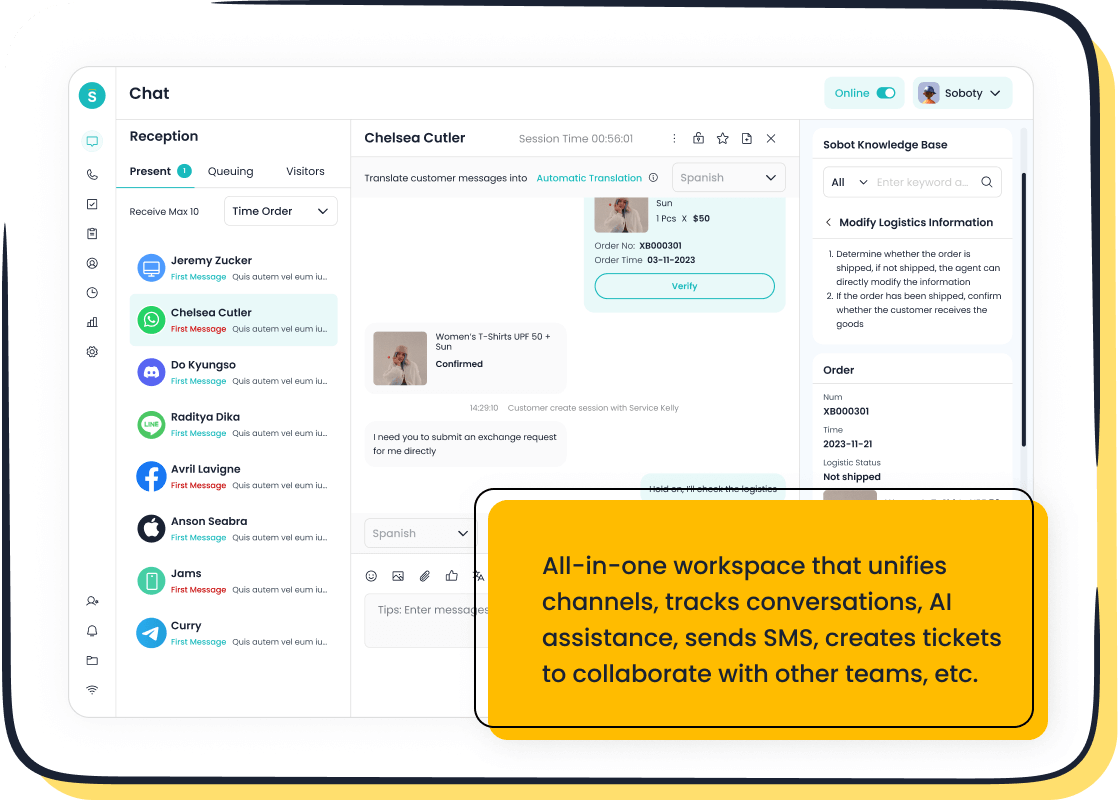
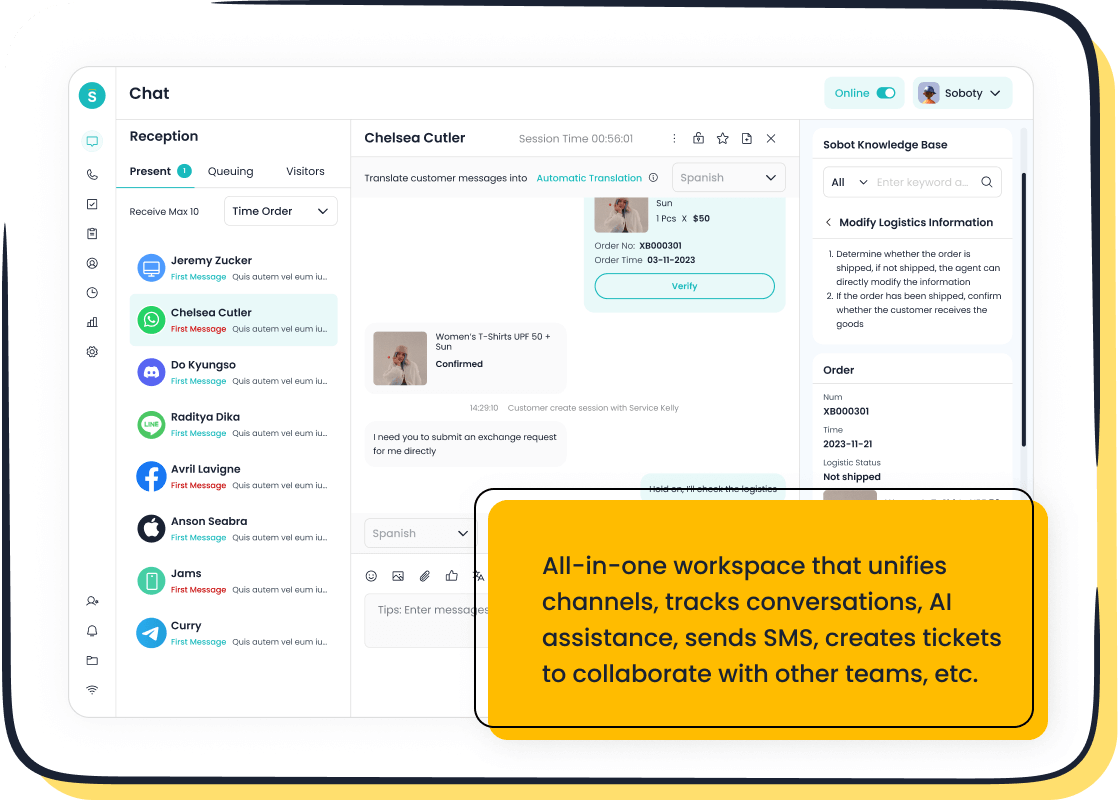
Sobot Live Chat makes it easy to improve customer service and deliver fast response times. You can connect with customers on their favorite channels, like websites, apps, or social media. The platform uses AI to help you answer questions quickly and accurately.
Here’s what businesses have seen after using Sobot Live Chat:
| Improvement Metric | Measurable Result |
|---|---|
| Increase in customer satisfaction scores | Up to 15% increase |
| Reduction in customer complaints | 20% decrease |
| Improvement in customer retention | 10% increase |
| Revenue growth | 5% increase |
| Operational cost savings | $1.3 million or more saved |
| 24/7 support availability | Enabled by AI-powered chatbots |
Sobot Live Chat helps you improve customer service by keeping all conversations in one place. You can send personalized messages, track customer needs, and provide a fast response every time. This tool supports your team and helps you create memorable customer experiences that keep customers coming back.
Empower Your Team
Training Essentials
You want your team to feel confident and ready for anything. Great customer service starts with strong training. When you invest in your team, you see real customer service improvement. Here are some essentials you should include in your training program:
- Keep your knowledge base up to date and easy to use. Your team needs trusted information to help customers quickly.
- Give your agents the freedom to solve problems on their own. This builds trust and helps them improve customer service every day.
- Set up rewards and recognition programs. Celebrate wins and motivate your team to keep doing their best.
- Make sure you have clear communication. Let your team share ideas, ask questions, and get feedback.
- Offer coaching and mentoring. Help your team grow their skills and handle tough customer service situations.
- Use role-playing and simulations. Practice real-life customer interactions to build confidence.
- Mix in both technical and soft skills. Teach empathy, product knowledge, and problem-solving.
- Try gamification. Make learning fun with leaderboards and small rewards.
When you focus on these areas, you help your team deliver better customer service and create a positive experience for your customers.
Encourage Collaboration
Teamwork makes a big difference in customer service improvement. When your team works together, you solve problems faster and keep customers happy. Take a look at how collaboration helps:
| Aspect of Collaboration | Impact on Customer Care Effectiveness | Explanation |
|---|---|---|
| Unified Customer Service Voice | Consistent, high-quality customer experience | Training and teamwork create a shared approach and tone for all customers. |
| Collective Problem Solving | Faster, more accurate issue resolution | Teams use their different skills to help customers quickly. |
| Employee Engagement | More motivated and resilient team | Clear roles and recognition boost morale and ownership. |
| Clearly Defined Roles | Quicker response times and consistent service | Everyone knows their job, so customers get help faster. |
| Collaboration Software | Centralized communication and less overlap | Shared inboxes and notes keep everyone on the same page. |
| Internal Notes & Knowledge | Improved accuracy and smoother handoffs | Private notes help agents keep track of customer needs. |
| Collision Detection | Avoids redundant work | Alerts stop agents from working on the same customer issue at once. |
| Continuous Training | Builds teamwork and skills | Workshops and cross-training help everyone improve customer service. |
You should always encourage clear communication and teamwork. When your team shares information and supports each other, you see better customer service improvement. Customers notice when your team works as one.
Leverage Technology

Technology can take your customer care strategy to the next level. You can use smart tools to connect with customers, solve problems faster, and create a better customer experience every time.
Omnichannel Support
You know your customers want to reach you on their favorite channels—maybe it’s chat, email, phone, or social media. With omnichannel support, you give them a seamless experience across all these platforms. No more repeating information or starting over with each new agent. You keep the conversation going, no matter where your customers are.
- 76% of customers expect the same level of service, whether they contact you by phone or online.
- Brands with unified omnichannel experiences keep 89% of their customers.
- Customers spend more when you solve their issues on their preferred channel.
Sobot’s Omnichannel Solution brings all your customer support channels together. Your team can see every interaction in one place. This means you can offer fast, personalized customer service and never miss a beat. Customers feel recognized and valued, which leads to higher satisfaction and loyalty.
Tip: Omnichannel support helps you resolve issues faster and makes your customers feel heard. You build trust and keep them coming back.
Let’s look at OPPO, a global smart device brand. OPPO used Sobot’s omnichannel platform to connect with customers across many touchpoints. They reached a 90% positive customer experience rate and reduced churn by 25%. OPPO’s story shows how the right technology can boost customer loyalty and business growth.
Automate with Sobot
You don’t have to do everything by hand. Sobot’s AI-powered tools help you automate routine customer support tasks. Chatbots answer common questions, so your agents can focus on complex issues. This means faster response times and happier customers.
- Companies using Sobot have seen up to a 68% drop in staffing needs during busy seasons.
- Automation leads to quicker answers and better customer experience.
- Sobot’s platform helps you cut costs and improve agent productivity.
AI-powered customer service is now essential. Most customers expect fast, helpful support, and Sobot makes it easy to deliver. You can use data analytics to personalize every interaction and spot trends. This helps you stay ahead and keep your customers satisfied.
Note: Automating customer support doesn’t replace your team—it empowers them to give better service and focus on what matters most.
Act on Feedback
Listening to your customers is one of the best ways to improve customer satisfaction and create a better customer experience. When you seek customer feedback, you show that you care about what your customers think. This helps you spot problems early and find new ways to make your service better.
Collect Customer Feedback
You have many ways to seek customer feedback. Each method gives you a different view of the customer experience. Here’s a quick guide to some of the most effective ways to collect feedback:
| Method | Description & Benefits |
|---|---|
| Trusted, cost-effective, and familiar. Great for surveys after purchases. | |
| SMS | Simple and quick. Good for fast feedback like NPS scores. |
| Social Media & Review Sites | Lets you listen to what customers say online. You can spot trends and run surveys on platforms like Facebook. |
| In-product Feedback | Built right into your digital products. Customers can share thoughts while using your service. |
| Website Feedback | Feedback tabs or pop-ups on your site. Easy for customers to use while browsing. |
| In-app Feedback | Perfect for mobile apps. Lets you ask for feedback at the right moment. |
| Interviewing | One-on-one talks give deep insights, but take more time. |
| Focus Groups | Group discussions help you learn what customers think together. |
You can mix these methods to reach more customers and get a full picture of your customer satisfaction levels. When you seek customer feedback often, you learn what matters most to your customers.
Tip: Make it easy for customers to share their thoughts. The simpler the process, the more likely they are to respond.
Drive Improvement
Collecting feedback is just the start. You need to act on what you learn to see real customer service improvement. When you use customer feedback to fix problems, you improve customer satisfaction and build trust. Customers notice when you listen and make changes.
Acting on feedback helps you spot pain points and improve the customer experience. You can use feedback to guide product changes, train your team, and set new goals for customer experience management. When you follow up with customers about changes you made, you boost customer satisfaction levels and show that their opinions matter.
Companies that act on feedback see big results. They improve customer satisfaction, keep more customers, and grow their business. Studies show that even a small boost in customer satisfaction levels can lead to higher revenue and a stronger reputation. When you close the feedback loop, you create loyal customers who feel valued.
Remember: Customer service improvement never stops. Keep seeking feedback, act on it, and watch your customer experience reach new heights.
Build a Customer-Centric Culture
Foster Positive Attitudes
You set the tone for your team. When you show a positive attitude, your team follows your lead. Happy employees create better customer experiences. They act as ambassadors for your brand. When your team feels engaged, they turn problems into chances to build stronger customer relationships. Customers notice when your team cares. About 70% of how people see your brand comes from their interactions with your team. If your team feels valued and motivated, they deliver memorable customer experiences that keep customers coming back.
Here are some ways you can foster positive attitudes:
- Recognize and reward great service.
- Offer regular training focused on empathy and communication.
- Encourage open feedback and celebrate wins.
- Give your team the tools they need to succeed.
When your team feels empowered, they solve problems faster and make customers feel special. This leads to higher customer retention and more loyal customers.
Tip: A simple thank you or public praise can boost engagement and inspire your team to go the extra mile.
Align with Customer Journey
You want every step of the customer journey to feel smooth and personal. Start by mapping out each touchpoint. Work with different teams to spot pain points and find ways to improve. Use real customer data and feedback from your front-line team. Set clear goals, like improving customer retention or raising satisfaction scores.
Here’s how you can align your business with the customer journey:
- Map the journey with cross-functional teams.
- Set clear objectives and track key metrics like NPS and customer retention.
- Use technology, such as CRM and analytics tools, to see the full picture.
- Train your team to understand each stage of the journey.
- Keep improving by listening to feedback and making changes.
When you focus on the customer journey, you create a better customer experience at every stage. This approach builds engagement and helps you turn new customers into loyal customers. A strong customer-centric culture supports your customer experience strategy and drives long-term success.
Measure Customer Experience
You can’t improve what you don’t measure. Tracking your customer experience helps you see what’s working and where you need to make changes. When you use the right tools and metrics, you get a clear picture of how your customers feel and how your team performs.
Track Key Metrics
Start by choosing the most important metrics for your business. These numbers show you how well your customer experience management is working. Here are some key metrics you should track:
- Customer Satisfaction Score (CSAT) – Shows how happy customers are after an interaction.
- Customer Effort Score (CES) – Tells you how easy it was for customers to get help.
- Net Promoter Score (NPS) – Measures if customers would recommend your brand.
- First Response Time (FRT) – Tracks how fast your team replies to customers.
- Average Resolution Time (ART) – Shows how long it takes to solve problems.
- Customer Churn and Retention Rate – Lets you know how many customers stay or leave.
- Customer Sentiment – Looks at the feelings behind customer feedback.
Sobot’s analytics and reporting features make it easy to track these metrics. You get real-time dashboards and detailed reports. This helps you spot trends, find problems, and make smart decisions for better customer experience management.
Tip: Don’t just look at one number. Use a mix of metrics to get the full story.
Continuous Improvement
Measuring is only the first step. You need to act on what you learn. Here’s how you can keep improving your customer experience:
- Collect feedback from surveys, social media, and support chats.
- Build a team with people from different departments.
- Map out your current process and look for slow spots.
- Make a plan with clear goals and steps.
- Test new ideas with a small group before rolling them out.
- Watch your metrics and adjust as needed.
- Use technology like Sobot’s analytics to help you track progress.
- Keep your team in the loop and celebrate wins.
When you focus on continuous improvement, you show customers that you care. You build trust and keep your customer experience strong. Sobot’s tools help you stay on top of your data, so you can make changes quickly and keep your business growing.
You can build a winning customer care strategy by following a few key steps:
- Motivate and train your team to deliver great customer service.
- Unify your channels for seamless support.
- Use AI tools to speed up responses and personalize help.
- Track important metrics like NPS and satisfaction scores.
- Act on feedback and keep improving.
Start today and watch your customer loyalty grow. Solutions like Sobot help you create a strong customer experience strategy that drives long-term business success.
FAQ
How can I make my customer care more personal?
You can use customer data to remember names, past purchases, and preferences. Sobot Live Chat helps you send messages that feel personal. Customers notice when you treat them as individuals.
What is omnichannel support, and why does it matter?
Omnichannel support lets you help customers on any channel—chat, email, phone, or social media. You keep all conversations in one place. This makes it easy for customers to reach you and get fast answers.
How does Sobot help my team work better?
Sobot gives your team a unified workspace. Everyone sees the same customer info. You can use AI tools to answer common questions. This helps your team solve problems faster and work together smoothly.
What metrics should I track to measure customer experience?
You should watch CSAT, NPS, response times, and customer retention. Sobot’s analytics dashboard shows these numbers in real time. This helps you spot trends and make smart changes.
Can I try Sobot before buying?
Yes! Sobot offers a free trial. You can test features like Live Chat and analytics. Visit Sobot’s website to sign up and see how it works for your business.
See Also
Top Strategies To Enhance Customer Satisfaction In Live Chat
Effective Methods For Managing Quality In Call Centers
How To Successfully Deploy Omnichannel Contact Center Systems

