AI for B2B Customer Support A Simple Guide

Are you managing high-volume inquiries for key b2b accounts? You may struggle with slow resolution times. You can use ai customer support as a powerful strategy. It directly tackles these complex b2b support issues. This guide offers simple steps. You can find the right solution for your business. It helps you evaluate top-rated ai tools for customer support in b2b, like Sobot.
Why AI for B2B Customer Support is a Game-Changer
AI is transforming B2B support. It moves your team from a cost center to a strategic asset. You can leverage AI to build stronger client relationships and drive growth. This technology offers powerful tools for modern business challenges.
The Role of AI Customer Support in B2B
AI customer support in B2B is different from B2C. B2C interactions are often transactional. B2B relationships are deeper and have higher value. Your AI strategy should focus on insight, not just speed.
- B2B AI Focus: You can uncover adoption trends and risk signals.
- B2B AI Outcome: You will drive account growth and retention.
- B2B Interaction Nature: You manage complex service requests with a hybrid human-AI approach.
AI-powered customer service helps you turn team knowledge into scalable expertise. It supports complex troubleshooting and identifies patterns across products. This predictive role helps you spot friction and opportunities throughout the customer journey.
Reduce Costs and Increase Team Efficiency
Customer service automation significantly lowers operational expenses. Your team can handle more with less effort. AI automates repetitive tasks. This frees your agents to focus on high-value customer interaction. The savings are substantial.
| Metric | Reduction/New Cost |
|---|---|
| Cost per ticket | 50% (from $22 to $11) |
| Overall support costs | 20–30% |
| Contact center operating costs | 25% |
Deliver Faster Resolutions for Complex Issues
Complex B2B issues demand quick and accurate answers. AI provides your team with the intelligence needed for instant resolutions. For example, one company used an AI platform for its field service. Its first-time fix rate jumped from 67% to 89% in six months. Technicians arrived on-site with full account knowledge. This preparation enabled faster, more informed troubleshooting for customer queries.
Enhance the B2B Customer Experience
An enhanced customer experience is key to loyalty. AI-powered customer service delivers this through personalization. Conversational AI uses data to tailor every interaction. It can recommend relevant content and provide contextual messaging across all channels. This leads to higher customer satisfaction. You create dynamic experiences that boost engagement and build stronger relationships.
Scale Support Operations Seamlessly
Your business needs customer support solutions that grow with you. Conversational AI allows you to scale your b2b support operations effortlessly. Conversational AI provides 24/7 assistance for common questions. It routes complex issues to the right teams. This conversational AI capability reduces response times and maintains high satisfaction. Your support function evolves from a simple help desk into a strategic experience center, ready for any growth phase.
Step 1: Define Your B2B Support Goals
Before you choose any tool, you must first understand your own needs. A clear strategy ensures you select an AI solution that solves your real-world b2b challenges. This step helps you build a strong foundation for success.
Audit Your Current Support Workflows
First, you need to map out your existing processes. A thorough audit gives you a clear picture of how your team operates today. It shows you what works well and where you can improve your customer service workflows.
🔍 Where to Start Your Audit:
- Analyze your ticket reasons to see what drives requests.
- Identify gaps in your team's knowledge base.
- Map the customer journey for your key account segments.
- Document all current communication channels and their ticket volumes.
- Survey your team about their biggest operational challenges.
Identify Your Biggest Bottlenecks
Next, pinpoint the exact areas that slow your team down. Bottlenecks create friction for both your agents and your customers. Identifying them helps you target where AI can have the most impact. Common problems often include:
- Slow response times due to agents manually searching for information.
- Poor knowledge management, forcing employees to spend hours finding answers.
- Broken handoffs between sales and support teams, which erodes customer trust.
- Communication gaps between departments that lead to inconsistent messaging.
Set Clear Objectives for AI Implementation
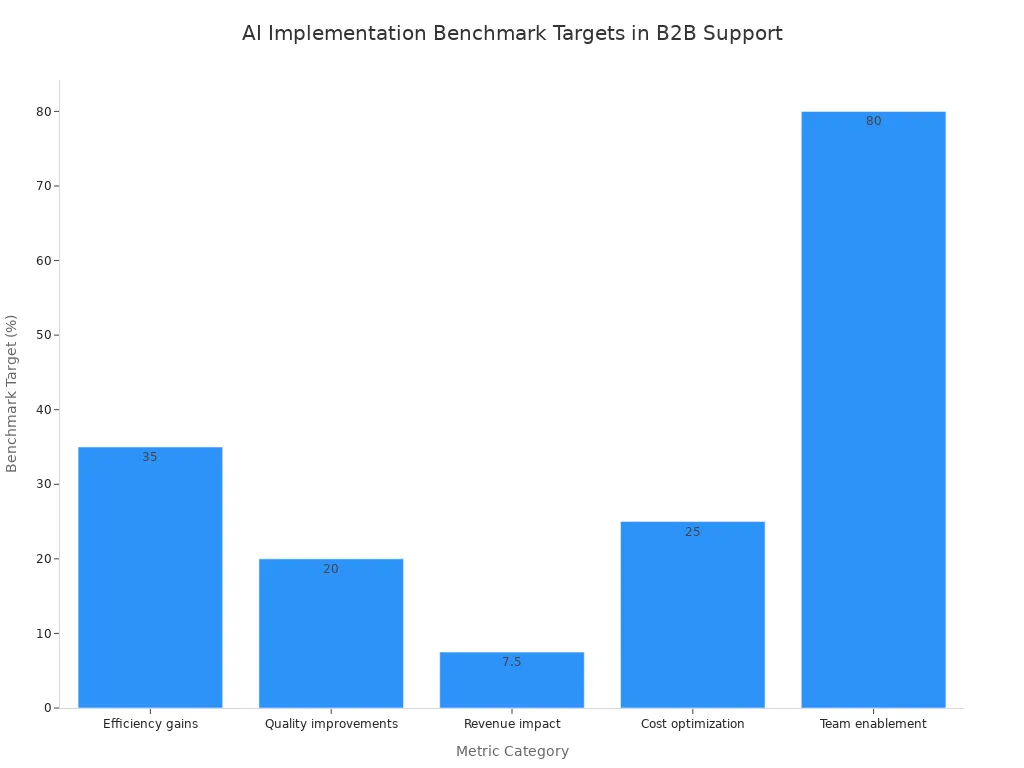
With your bottlenecks identified, you can set measurable goals. Your objectives should connect directly to business outcomes. This helps you measure the return on investment (ROI) from your workflow automation.
| B2B Support Goal | AI Solution | Key Metrics |
|---|---|---|
| Reduce resolution time | AI-powered knowledge search | Average resolution time |
| Scale support efficiently | Automated tier-1 support | Tickets per agent, automation rate |
| Improve customer retention | Proactive issue detection | Net revenue retention, churn rate |
| Increase account expansion | Usage analytics, upsell alerts | Expansion revenue, feature adoption |
These goals give you clear benchmarks for success.
Involve Key Sales and Account Stakeholders
Finally, remember that b2b support does not operate in a silo. You should involve your sales and account management teams in the planning process. They offer valuable insights into customer needs and contract value. This collaboration ensures your AI strategy aligns with broader account health and revenue goals for your b2b business.
Step 2: Key Features of AI Customer Support Software
After defining your goals, you need to identify the right features. The best ai customer support software offers more than just automation. It provides intelligent tools that empower your team and elevate your customer service. You should look for solutions that integrate smoothly into your existing workflows.
Intelligent Ticket Routing and Prioritization
Your high-value accounts deserve top-tier attention. Intelligent routing ensures they get it. This feature uses AI to analyze incoming tickets and direct them to the right person or team. It moves beyond simple keyword-based rules.
AI agents can assess multiple factors in real time.
- They analyze keywords, customer sentiment, and account value to flag urgent issues.
- They route tickets for key accounts or sensitive cases directly to senior agents.
- This allows your team to focus on high-priority situations first.
This automated triage means your experts spend their time solving complex problems, not sorting through an inbox. It is a foundational feature for efficient b2b support.
Seamless CRM and Helpdesk Integration
Your ai customer support software must work with your other systems. Seamless integration with your CRM (like Salesforce) and helpdesk is critical. This creates a unified view of every customer interaction. When your systems communicate, you unlock powerful benefits.
Benefits of an Integrated System:
- Automated Data Enrichment: Your AI can automatically update contact records, keeping your CRM data clean and complete.
- Smarter Lead Scoring: AI analyzes real customer behavior to predict which leads are most likely to convert.
- Personalized Engagement: You can deliver tailored content and product recommendations at scale.
- Workflow Automation: You can automate repetitive tasks like triggering follow-up sequences based on customer actions.
Top-tier ai tools for customer service, like Sobot, offer a no-code interface. This makes it easy to connect your systems without needing a developer. This integration turns your ai software for customer service into a central hub for all customer data.
AI-Powered Agent Assistance
AI does not have to replace your human agents. Instead, it can act as a powerful assistant. AI-powered agent assistance, or a "copilot," gives your team superpowers. This technology listens to conversations and provides real-time support. This is where advanced conversational ai shines.
For example, while an agent is on a call or in a chat, the conversational ai can:
- Suggest relevant articles from the knowledge base.
- Provide instant answers to common customer queries.
- Generate summaries of conversations automatically.
- Handle routine tasks to reduce agent workload.
This allows your agents to focus on building relationships and solving complex problems. Solutions that are ChatGPT-enabled, like Sobot’s conversational ai, can even help draft empathetic and accurate responses. This ensures your team delivers high-quality support with every customer interaction. These ai tools help you automate issue responses effectively.
Centralized Knowledge Management
Inconsistent answers frustrate customers and erode trust. A centralized knowledge base powered by conversational ai solves this problem. It ensures everyone—both customers and employees—receives the same correct information across all channels.
💡 All your content resides in one hub. This gives you consistent answers in your chat, email, and help center. AI models also detect outdated content and suggest updates. This keeps your knowledge base fresh and reliable.
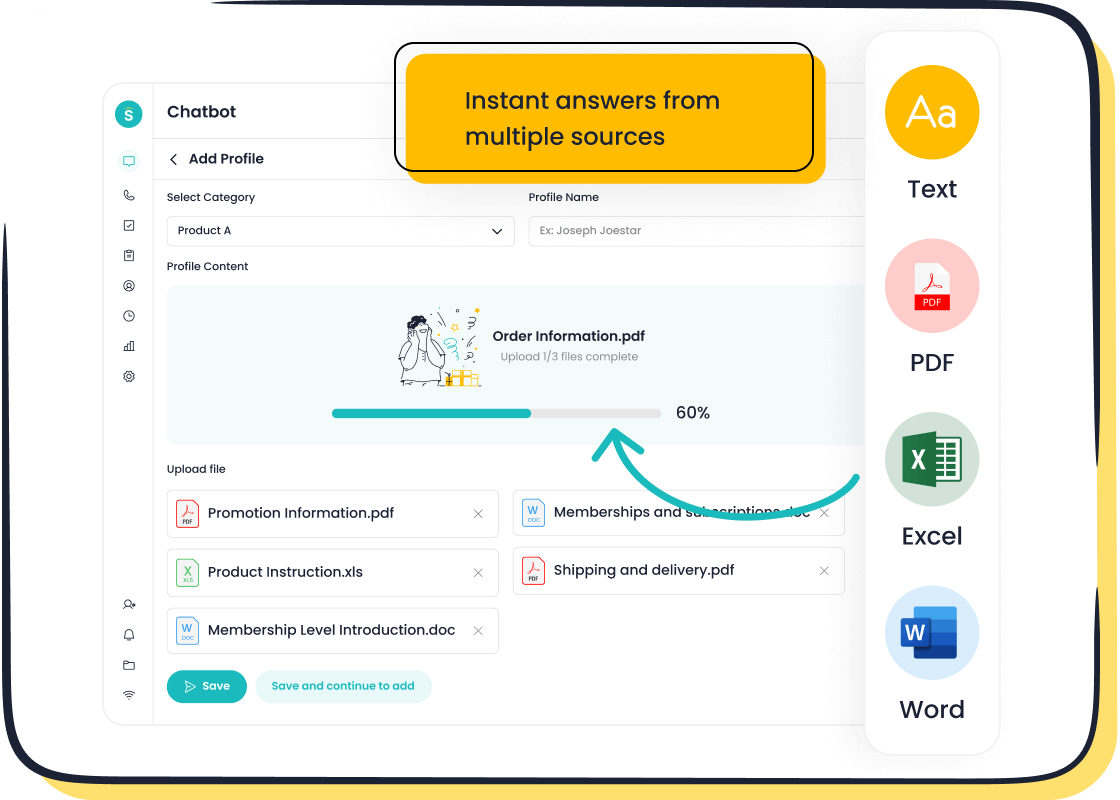
Modern ai customer support software uses this central hub to power self-service portals and ai chatbots. For instance, Sobot’s conversational ai can build a knowledge base from your existing PDFs, articles, and text snippets. This allows you to deploy helpful ai chatbots that provide accurate, 24/7 multi-channel support without extensive manual setup.
Advanced Analytics and Account-Level Insights
To be truly strategic, your b2b support team needs data. Advanced analytics move you from being reactive to proactive. The right ai customer support software provides deep, account-level insights that help you predict customer behavior.
Look for ai tools that offer:
- Predictive Analytics: AI can forecast future trends, helping you manage accounts proactively.
- Real-time Sentiment Analysis: You get an early warning system that flags customer dissatisfaction before it leads to churn.
- Dynamic Customer Health Scores: AI combines CRM data, product usage, and support history into a single score, alerting you to at-risk accounts.
This level of ai-powered customer service helps you identify upsell opportunities and prevent churn. With multilingual conversational ai, you can even gather these insights from your global customer base. This data transforms your support team into a vital source of business intelligence for your entire organization.
Step 3: How to Choose Your Customer Support Automation Software
You have defined your goals and identified key features. Now you can begin the evaluation process. Choosing the right customer support automation software is a strategic decision. It requires careful research and a clear understanding of how different solutions fit your unique b2b needs. This step will guide you through comparing vendors and making a confident choice.
Evaluating Top-Rated AI Tools for Customer Support in B2B
The market for ai customer support software is crowded. You should start by creating a shortlist of potential vendors. Many top-rated ai tools for customer support in b2b cater to different business needs, from large enterprises to high-growth startups. Your goal is to find the ones that align with your objectives from Step 1.
🔍 A Starting Point for Your Research:
- Zendesk: A good option for helpdesk-first companies with high ticket volumes.
- Salesforce Service Cloud: Ideal for businesses already deep in the Salesforce ecosystem.
- Intercom: Best for product-led SaaS companies focused on conversational support.
- Freshdesk: A strong choice for growing teams that need a fast setup.
- Ada: Designed for organizations that want to maximize ticket deflection with AI.
Once you have a list, you need to dig deeper. Compare their features, AI capabilities, and pricing side-by-side. This helps you see the real differences between the top-rated ai tools for customer support in b2b.
| Platform | Key Features | AI Capabilities | Best For |
|---|---|---|---|
| Forethought | Multi-Agent Architecture, AI Copilot | Enterprise-level AI that trains on historical data | Enterprise teams needing modular AI and smarter routing. |
| Kommunicate | No-Code Chatbot Builder, 100+ Languages | AI-based customer-service automation | Teams needing quick, no-code multilingual chatbots. |
| Freshworks (Freddy AI) | Bot templates, proactive messaging | Robust AI for customer-facing bots and internal tools | Companies needing scalable, sophisticated automation. |
| Zoho Desk | AI assistant (Zia) for sentiment analysis | Limited AI that assists agents rather than acting independently | Businesses already using other Zoho products. |
This initial evaluation helps you narrow your focus to the few top-rated ai tools for customer support in b2b that are a true potential fit.
Request Demos with Your Specific Use Cases
Reading about features is one thing; seeing them in action is another. You should request personalized demos from your top 2-3 vendors. Do not settle for a generic sales pitch. Insist that the demo addresses your specific use cases and bottlenecks.
💡 Pro Tip: Come to the Demo Prepared Before the call, give the vendor a list of your biggest challenges. For example:
- "Show us how your tool can reduce resolution time for complex Tier-2 tickets."
- "Demonstrate how your AI routes a high-value client's issue directly to a senior agent."
- "Walk us through how an agent uses the copilot to find an answer during a live chat."
A tailored demo proves whether the ai customer support software can solve your actual problems. It moves the conversation from theoretical benefits to practical application.
Assess Implementation Support and Training
A powerful tool is useless if your team cannot use it. The implementation process and ongoing support are just as important as the software itself. You need to understand what level of assistance the vendor provides.
Some platforms offer different approaches:
- No-Code Platforms: These tools provide visual builders that allow your support managers to create conversation flows without any coding. This makes it easy for non-technical staff to manage and optimize the AI.
- Open-Source Frameworks: These give your technical team complete code control for deep customization and data privacy. They often rely on community support for troubleshooting.
During your evaluation, ask how the AI will be trained. The best ai tools use your real customer conversations and historical ticket data. This ensures the AI understands how your customers ask questions. You should also confirm that the vendor provides support for continuous improvement, helping you review conversations and update the knowledge base as your business evolves.
Analyze Pricing Models and ROI
Understanding the total cost of ownership is crucial. Pricing for ai software for customer service can be complex, so you need to look beyond the sticker price. Most vendors use one of several models:
- Subscription Pricing: A fixed monthly or annual fee, often tiered by features.
- Usage-Based Pricing: Costs are linked to consumption, such as the number of chatbot conversations or API calls.
- Tiered Feature Access: Basic AI is included in lower tiers, while advanced capabilities come at a premium.
- Hybrid Models: A base subscription fee combined with extra charges for exceeding usage limits.
To justify the cost, you must calculate the potential return on investment (ROI). A simple formula can give you a starting point:
ROI (%) = (Benefits – Costs) / Costs × 100
- Benefits: Include "hard benefits" like labor cost savings from customer service automation and "soft benefits" like improved customer satisfaction.
- Costs: Factor in all expenses, including license fees, integration, data cleaning, and employee training.
A positive ROI shows that the ai customer support software will generate more value than it costs, making it a sound investment for your b2b support operations.
Check Customer Reviews and Case Studies
Finally, look for proof. Customer reviews and case studies show you how the top-rated ai tools for customer support in b2b perform in the real world. They provide unbiased insights into a platform's strengths and weaknesses.
What to look for in a strong case study:
- A Clear Problem: Does the customer's challenge sound similar to yours?
- A Specific Solution: What exact features did they implement?
- Measurable Results: Does the case study provide concrete data and metrics?
For example, when the smart device innovator OPPO partnered with Sobot to manage high inquiry volumes, the results demonstrated clear ROI. By implementing Sobot's chatbot and ticketing system, OPPO achieved an 83% chatbot resolution rate. This efficiency gain directly contributed to a better customer experience and higher satisfaction, leading to a 57% increase in their repurchase rate.
This kind of data is powerful. It proves that the right ai customer support software does not just cut costs—it drives revenue and builds loyalty. When you find case studies with clear, impactful metrics, you can be confident that the solution delivers on its promises.
Choosing an AI support tool is a strategic decision. It directly impacts your team's efficiency and customer relationships. You can confidently select the right solution for your unique b2b needs. Just follow the simple steps to define your goals, identify key features, and evaluate your options. This process ensures you find a partner that helps you grow.
Ready to improve your customer experience? Start your internal audit today. You can also explore a solution like Sobot to begin your journey.
FAQ
Do I need coding skills to set up an AI chatbot?
No, you do not need coding experience. Modern AI customer support software, like Sobot, offers a point-and-click interface. You can design and launch automated workflows easily. This empowers your team to manage the system without developers.
How does an AI chatbot save my business money?
An AI chatbot handles common questions 24/7. This reduces the need for additional agents. Solutions like Sobot can cut support costs by up to 50% by automating responses and freeing up your team for more complex issues.
Can AI support customers in different languages?
Yes, it can. Top AI platforms provide multilingual support. For example, the Sobot AI Chatbot is ChatGPT-enabled and can interact with your global customers in their preferred language. This helps you scale your support internationally.
See Also
Elevate SaaS Customer Service Through Effective Live Chat Tactics
Become a Live Chat Expert for Superior Customer Assistance
Ten Steps to Implement Shopify Live Chat for Your Business
Selecting Social Media Customer Service Software: Ten Essential Tips

