Best Inbound Contact Center Solutions for Business Success


You need the best inbound contact center solution to deliver outstanding customer experiences and drive business growth. Adoption of cloud-based platforms and AI-driven automation is surging in 2025, with over 60% of contact centers choosing these advanced technologies. Sobot call center offers omnichannel support and predictive analytics that boost operational efficiency, reduce costs, and enhance customer service outcomes. Powered by Sobot AI, this inbound contact center solution provides scalable tools tailored for businesses of all sizes. Choosing Sobot empowers your team to meet diverse customer service needs across various industries.
Top Inbound Contact Center Solutions

Sobot Voice/Call Center Overview
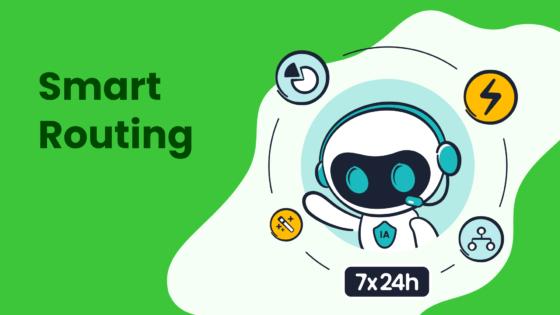
You need a contact center solution that adapts to your business size and industry. Sobot Voice/Call Center stands out as a cloud-based contact center designed for scalability and reliability. Sobot offers a unified workspace for agents, intelligent IVR, smart call routing, and global number availability. You can deploy Sobot quickly and integrate it with your existing CRM or technology management systems. Sobot supports omnichannel communication, including voice, SMS, WhatsApp, and live chat, so you reach customers wherever they are. AI-powered automation and real-time analytics help you optimize every interaction. Sobot’s system stability reaches 99.99%, supporting over 6 million online communications and 3 million phone calls daily. Brands like Samsung, OPPO, Agilent, and Luckin Coffee trust Sobot to deliver seamless customer experiences.
Learn more about Sobot Voice/Call Center: Sobot Voice/Call Center
Tip: Sobot’s AI-powered assistance and omnichannel support let you unify customer service, sales, and marketing in one platform.
Leading Call Center Software in 2025
You have many options when choosing the best inbound call center software. Here are the top 20 contact center solutions for 2025, each offering unique features and industry fit:
- Sobot Voice/Call Center – All-in-one cloud contact center solution with omnichannel support, AI-powered automation, and global scalability.
- Dialpad Support – Proprietary AI for real-time transcription, sentiment analysis, and predictive CSAT.
- RingCentral RingCX – Strong telephony, ACD, IVR, and agent assist features.
- Zendesk – Unified customer service platform with ticketing automation and omnichannel workspace.
- Talkdesk – Advanced AI, IVR flow builder, and industry-specific suites.
- NICE CXone – Workforce optimization, self-service IVR, and AI automations.
- Five9 – Enterprise automation, workflow tools, and agent desktop.
- Nextiva – Simplicity, self-service, and unified communications.
- CallHippo – Basic automation, suitable for small teams.
- Freshcaller – Simple inbound call center software for startups.
- LiveAgent – Omnichannel support, scalability, and 24/7 customer service.
- Genesys Cloud CX – AI-powered assistance, omnichannel support, and analytics.
- Avaya OneCloud – Cloud-based contact center with strong telephony.
- 8x8 Contact Center – Unified communications and global reach.
- Aircall – Cloud-based call center with easy integration.
- CloudTalk – Real-time analytics and call routing.
- Zoho Desk – Omnichannel support and ticketing automation.
- Vocalcom – AI-powered automation and omnichannel support.
- Twilio Flex – Programmable contact center platform.
- Mitel MiCloud Connect – Cloud-based call center for SMBs.
You can find more details about these solutions on their official websites.
Note: Sobot leads with its all-in-one approach, AI-powered automation, and omnichannel support, making it ideal for businesses seeking scalability and integration.
Key Features Comparison
You want to compare the best inbound call center software based on automation, AI integration, and omnichannel support. The table below shows how top contact center solutions stack up:
| Solution | Automation & AI Integration | Omnichannel Support | Pricing (Starting) |
|---|---|---|---|
| Sobot Voice/Call Center | AI-powered voicebot, intelligent IVR, smart routing, real-time analytics, unified workspace | Voice, SMS, WhatsApp, Live Chat, Email, Social | Custom (Contact Sobot) |
| Dialpad Support | Proprietary AI (transcription, call summaries, sentiment analysis, live coaching); predictive CSAT; customizable routing | Voice, SMS, Chat, Video, Team Messaging | $80 per agent/month (annual billing) |
| RingCentral RingCX | AI summaries and agent assists (extra cost); strong telephony, ACD, IVR, skills-based routing | Voice, SMS, Chat (standard) | $65 per user/month |
| Zendesk | Ticketing automation; lacks built-in telephony; unified omnichannel workspace | Calls, Email, Chat, Tickets (unified workspace) | $55 per agent/month |
| Talkdesk | AI capabilities; IVR flow builder; quality management; industry-specific suites | Voice and digital channels (varies by plan) | $85-$105 per user/month |
| NICE CXone | Workforce optimization; self-service IVR; AI automations | Voice and digital channels (varies) | $94 per user/month |
| Five9 | Enterprise automation; advanced workflow tools; IVR; agent desktop | Voice and digital channels (varies) | $119 per user/month (36-month contract) |
| Nextiva | Simplicity and self-service; priority and skills-based routing; simple IVR | Unified communications (phone, video, messaging) | $75 per user/month |
| CallHippo & Freshcaller | Basic or limited AI and automation features; suitable for smaller teams | Limited omnichannel support | N/A |
You see Sobot excels in AI-powered automation, omnichannel support, and real-time analytics. Sobot’s cloud-based contact center solution integrates with your CRM and scales globally.
Pros and Cons
You need to weigh the advantages and disadvantages of the best inbound call center software before making a decision. Here are the main points based on user feedback and expert analysis:
Advantages of Top Contact Center Solutions:
- Cloud-based contact center solutions provide flexibility and support remote teams.
- Unlimited calling supports scalability for high call volumes.
- Advanced features like IVR, call routing, call recording, and AI-powered automation improve operational efficiency.
- User-friendly interfaces enhance agent productivity and reduce errors.
- Integration capabilities with CRM systems enable unified customer experience.
- Reliable customer support minimizes downtime.
- Enhanced operational efficiency via automation and AI-driven analytics.
- Improved agent productivity through real-time analytics and performance tracking.
- Scalability with cloud-based call center solutions supporting remote teams and unlimited calling.
- Robust security and compliance with GDPR, PCI, and HIPAA standards.
- Comprehensive omnichannel support integrating multiple communication channels.
- Outsourced centers offer cost savings, specialized expertise, 24/7 availability, and multilingual support.
Disadvantages to Consider:
- High upfront and operational costs for in-house setups.
- Complexity in integration and customization.
- Dependence on reliable customer support to minimize downtime.
- Costs vary and should be evaluated against ROI.
Note: LiveAgent is praised for scalability, ease of use, omnichannel support, and 24/7 customer service. Sobot’s cloud-based contact center solution offers similar benefits with added AI-powered assistance and global reach.
Latest Trends Shaping Contact Center Solutions in 2025:
- Conversation analytics transforms every interaction into actionable insights, enabling personalized service and proactive engagement.
- AI-driven coaching, flexible scheduling, and gamified training prioritize agent wellbeing and retention.
- Hybrid physical and remote models enhance flexibility and operational resilience.
- Digital-first strategies with AI, automation, and cloud-based platforms improve cost efficiency and customer satisfaction.
- Expanding CX self-service options like smart IVRs and chatbots deflect call volume and free agents for complex tasks.
- Security policies now include VPNs, multi-factor authentication, and remote work compliance for data protection.
- Advanced analytics and remote inside sales teams accelerate revenue growth and customer loyalty.
- AI-driven, gamified, and asynchronous learning supports agent performance and engagement.
You should choose a contact center solution that aligns with your business goals, supports omnichannel communication, and leverages AI-powered automation for better customer experiences. Sobot’s cloud-based contact center stands out for its reliability, scalability, and innovative features.
What Is an Inbound Contact Center Solution
Definition and Core Functions
You rely on an inbound contact center solution to manage all incoming customer interactions across channels like phone, chat, social media, and messaging apps. This type of call center software focuses on helping you deliver fast, accurate, and consistent customer support. The core functions of inbound call center software include:
- Handling product and technical support, such as troubleshooting and account updates.
- Managing customer support tasks, including booking appointments, processing returns, and answering billing questions.
- Collecting customer feedback and using AI for sentiment analysis.
- Routing sales inquiries to the right teams.
- Using IVR and virtual receptionists to guide customers to the right agent.
- Recording calls for compliance, security, and training.
- Automating workflows to help agents and reduce call handling times.
- Integrating with CRM and workforce management systems for better agent efficiency.
With these features, you can improve customer experience management, ensure regulatory compliance, and gain insights to optimize your business.
Inbound vs Outbound
You may wonder how inbound call center software differs from outbound solutions. The main difference lies in the direction of customer communication and business goals. Here’s a quick comparison:
| Aspect | Inbound Contact Centers | Outbound Contact Centers |
|---|---|---|
| Primary Focus | Handling incoming customer communications for support, technical assistance, and orders | Proactive outreach including sales, lead generation, market research |
| Key Technologies | IVR, CRM, AI chatbots | Predictive dialers, lead management software, data analytics |
| Business Outcomes | Quick issue resolution, high customer satisfaction, efficient support | Driving sales, generating leads, measuring campaign effectiveness |
| Agent Skills & Training | Customer service, empathy, problem-solving | Sales skills, persuasive communication, resilience to rejection |
| Metrics | Call volume, average call resolution time, first call resolution, customer satisfaction | Call volume, lead generation rates, sales conversion rates, marketing campaign effectiveness |
| Omnichannel Support | Phone, email, chat, social media, SMS for seamless customer experience | Similar channels but focused on outreach and engagement |
Inbound call center software helps you build strong relationships and deliver excellent customer service, while outbound solutions focus on sales and outreach.
Role in Customer Experience
You play a key role in shaping customer experience management with the right inbound contact center solution. Advanced call center software uses features like automatic call distribution and skill-based routing to reduce wait times and increase first-call resolution. CRM integration gives your agents a complete view of customer interactions, allowing for personalized and consistent support. Mobile app integration lets agents respond from anywhere, keeping service quality high. AI-driven tools provide real-time guidance, helping agents deliver better customer service. Analytics and predictive tools help you manage call volumes and agent performance, ensuring you meet customer needs quickly. IVR systems offer self-service options, making it easy for customers to get help anytime. By streamlining workflows and supporting omnichannel communication, inbound call center software helps you deliver timely, efficient, and personalized customer support. This approach builds loyalty and trust, making customer experience management a true business advantage.
Comparing Contact Center Solutions
Feature Table
When you compare contact center solutions, you should focus on the features that drive efficiency and customer satisfaction. The table below highlights the most important categories and their key functions:
| Feature Category | Key Features & Descriptions |
|---|---|
| Unified Management | Single dashboard, real-time queue monitoring, centralized channel control |
| Omnichannel Capabilities | Voice, email, chat, social media, SMS integration; seamless channel switching |
| Intelligent Routing | Skills-based routing, customer history, high-value prioritization, language matching |
| AI and Automation | AI chatbots, sentiment analysis, predictive routing, automated callbacks, call transcription |
| Integration Capabilities | CRM/helpdesk integration, knowledge base access, custom API support |
| Reporting & Analytics | Custom dashboards, real-time and historical reporting, predictive analytics |
| Quality Management | Call/screen recording, quality scoring, compliance monitoring |
| Agent Workspace | Unified desktop, customer history, scripting tools, quick response templates |
| Workforce Management | Scheduling, forecasting, performance tracking, training modules |
Tip: You should always look for call center software that offers strong omnichannel support and unified management to streamline your operations.
Pricing Overview
You will find that pricing models for call center software vary based on your business size and needs. Here is a quick comparison:
| Pricing Model | How It Works | Pros | Cons | Typical Cost Range | Suitable For |
|---|---|---|---|---|---|
| Per-Minute Pricing | Pay for call duration | Flexible for variable calls | Unpredictable costs | $0.30 - $0.85 per minute | Variable call volumes |
| Per-Call Pricing | Fixed rate per call | Predictable costs | Not ideal for long/complex | Varies by industry | Predictable call lengths |
| Per-Agent Pricing | Fixed fee per agent | Predictable, quality focus | Inefficient if volume shifts | $6 - $30 per hour (location-based) | Service quality focus |
| Hybrid Pricing | Mix of models | Customizable | Complex to manage | Varies | Growing businesses |
You should also consider extra costs like agent salaries, technology, compliance, and hidden fees. Cloud contact center solutions often help you reduce upfront costs and scale as you grow.
Integration and Scalability
You need a call center management solution that integrates easily with your existing systems and grows with your business. Leading cloud-based contact center platforms offer:
- Seamless CRM and helpdesk integration for unified workflows.
- Omnichannel support, including voice, chat, and social media, to ensure consistent customer experiences.
- Flexible cloud contact center plans that scale with your team size and call volume.
- Real-time analytics and automated call distribution to boost efficiency.
- User-friendly interfaces and free trials for smooth adoption.
- Reliable vendor support to keep your operations running smoothly.
Note: Integration challenges can include syncing with legacy systems, managing multiple channels, and training agents. You should prioritize solutions with robust APIs, unified agent desktops, and strong vendor support to minimize disruptions.
Choosing the Right Inbound Call Center Software
Key Criteria
You want to select the best inbound call center software for your business. Start by focusing on the most important criteria. The table below outlines what you should consider:
| Criteria Category | Key Considerations | Relevance to Business Sizes and Industries |
|---|---|---|
| Essential Features | IVR systems, call routing, analytics, CRM integration | Adapts to complex workflows and industry needs |
| Deployment Model | On-premise or cloud-based, control, cost, scalability | Cloud suits small businesses; on-premise fits regulated industries |
| Scalability & Flexibility | Add/remove agents, handle call volume, customize workflows, remote work support | Crucial for growth and changing demand |
| Security & Compliance | Encryption, multi-factor authentication, GDPR, HIPAA, PCI DSS | Protects sensitive data and builds trust |
| Vendor Considerations | Reputation, support, training, innovation | Ensures long-term success and software evolution |
| Cost Considerations | Pricing models, additional fees, total cost of ownership | Helps you budget and choose the right plan |
Sobot stands out as the best inbound call center software because it handles large call volumes, supports omnichannel communication, and integrates with your CRM. You get flexible pricing, strong security, and reliable support. Sobot’s real-time analytics and AI-powered automation help you deliver the best customer experience.
Business Needs Assessment
You need to match the best contact center software to your unique needs. Follow these steps:
- Check the provider’s reputation by reading reviews and case studies.
- Make sure the inbound call center software can scale with your team and call volume.
- Compare costs, agent numbers, and required features for the best value.
- Confirm your network and internet can support the software and tools.
- Plan for installation, integration, and training.
- Verify CRM and helpdesk integration for seamless data access.
- Review security features for data protection and compliance.
- Test the software’s interface for agent productivity.
- Try a demo to see if the inbound call center software fits your workflow.
- Ensure the provider is financially stable for long-term support.
Sobot’s omnichannel platform makes integration easy and supports rapid scaling. You can rely on Sobot for secure, cost-effective, and user-friendly solutions.
Implementation Tips
You want a smooth transition when adopting the best inbound call center software. Use these best practices:
- Monitor agent performance and quality with real-time analytics.
- Use data-driven tools to forecast needs and optimize resources.
- Set up automated notifications to reduce call volume and improve customer experience.
- Deploy self-service options like IVR and AI chatbots for 24/7 support.
- Manage workforce schedules to keep service levels high.
- Train agents regularly and empower them with clear guidelines.
- Roll out the software in phases to minimize disruption.
- Update and maintain the system to keep up with new features and security needs.
Tip: Sobot’s AI-powered analytics and omnichannel support help you monitor performance, automate tasks, and deliver consistent service. You can improve customer satisfaction and agent productivity with these strategies.
Real-World Customer Experience

Sobot and Agilent Case Study
You want to see real results from inbound contact center solutions. Agilent, a leader in life sciences, partnered with Sobot to transform its customer service operations. By integrating Sobot’s omnichannel workbench and AI-powered chatbot, Agilent achieved:
- Sixfold increase in customer service efficiency.
- 25% reduction in operational costs.
- 95% customer satisfaction score.
- 24/7 customer support, allowing agents to focus on complex issues.
- Unified customer interactions across website and social media.
- Intelligent routing for faster problem resolution.
Agilent’s story shows how Sobot’s technology improves customer experience and drives measurable business outcomes.
Read more about Agilent’s results.
Industry Success Stories
You can see how inbound contact center solutions deliver value across industries. Companies report impressive improvements in customer support and operational efficiency. The table below highlights key metrics:
| Improvement Area | Reported Metric/Result |
|---|---|
| Agent Onboarding Speed | 41% faster onboarding |
| First-Contact Resolution Rate | 29% improvement |
| Inbound Call Volume | 24% reduction |
| Cost Savings per Deflected Interaction | $5.50 average savings |
| Schedule Adherence | 36% improvement |
| Operating Costs | 22% reduction |
| Average Handle Time | 47% reduction |
| First-Call Resolution Rate | 52% improvement |
| Average Speed of Answer | 38% reduction |
| Call Abandonment Rate | 33% decrease |
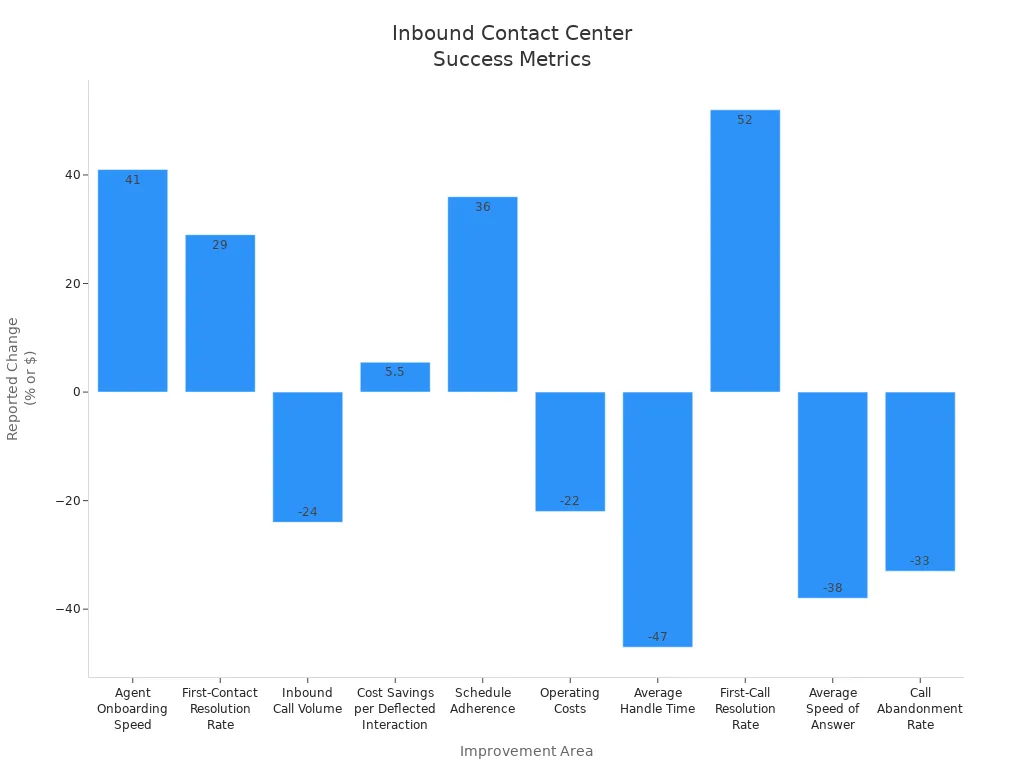
You notice that unified knowledge management, AI automation, and omnichannel support drive these results. Companies also benefit from self-service options, which younger customers prefer.
Best Practices
You can maximize the impact of your inbound contact center by following proven strategies:
- Analyze call data to identify common issues and optimize routing.
- Design clear IVR menus to reduce wait times.
- Use Automatic Call Distribution to connect customers to the right agents.
- Integrate CRM systems for real-time customer data.
- Employ AI tools to prioritize urgent calls and allocate resources.
- Continuously train agents to improve service quality.
You should prioritize customer experience, build a strong company culture, and select reliable cloud-based software. Real-time omnichannel support and flexible team scaling ensure you deliver consistent customer service and boost customer satisfaction.
Selecting the right inbound contact center solution helps you grow your business and improve customer satisfaction. You benefit from features like prompt call routing, efficient queue management, and integrated CRM systems. Consider these factors when evaluating solutions:
- Track key metrics such as first contact resolution and average handle time.
- Use automation and AI-powered tools to boost agent productivity.
- Choose platforms that offer scalability and secure data management.
Sobot’s AI-driven platform delivers reliable, innovative service across channels. You should assess your needs and use this comparison to guide your decision.
Explore Sobot’s solutions or request a demo to start your journey toward better customer experiences.
FAQ
What is an inbound contact center solution?
An inbound contact center solution helps you manage all incoming customer communications. You use it to handle calls, chats, emails, and social media messages. This software improves customer support, boosts efficiency, and helps your business grow.
How does Sobot ensure data security in its call center software?
Sobot uses encrypted data transfer and secure dialing. You get 99.99% system uptime and compliance with global security standards. This protects your customer information and builds trust in your inbound contact center solution.
Can Sobot integrate with my existing CRM or helpdesk systems?
Yes, you can integrate Sobot with popular CRM and helpdesk platforms. The software offers seamless API connections. This lets you unify customer data and streamline workflows in your inbound contact center solution.
What industries benefit most from Sobot’s inbound contact center solution?
You see strong results in retail, finance, gaming, education, and enterprise services. Sobot’s flexible call center software adapts to your industry needs. You improve customer experience and operational efficiency across different business types.
See Also
Best Contact Center Platforms Evaluated For The Year 2024
How To Successfully Deploy Omnichannel Contact Center Solutions
Leading Cloud-Based Contact Center Services Rated For 2024
Best Artificial Intelligence Tools For Enterprise Contact Centers