Understanding Multilingual Chatbots

Multilingual chatbots are AI conversational tools that communicate in multiple languages. They break down language barriers for global businesses. A multilingual chatbot automatically detects a user's language. It then facilitates a seamless, two-way translated conversation in real time. This capability is vital, as research shows 76% of online shoppers prefer buying products when information is in their native language. Leading platforms like Sobot deliver these essential tools to provide multilingual customer support, significantly enhancing the customer experience and building global trust.
How Multilingual Chatbots Work
Multilingual chatbots seem to perform magic, but their abilities come from a sophisticated, multi-step process. They combine several powerful technologies to detect, translate, and respond to users in their native languages. This process ensures that the conversation is not only translated but also contextually aware and natural. Let's explore the engine that powers these essential business tools.
Language Detection
The first and most critical step is language detection. A multilingual chatbot must accurately identify the user's language to provide a relevant experience. This process happens almost instantly and uses several methods.
A common approach involves these steps:
- Analyze Incoming Message: The chatbot first receives a message from a user. It sends this text to a language detection API.
- Identify the Language: The API analyzes the text and returns the identified language, such as Spanish, French, or Japanese. Advanced systems can do this by analyzing just the first few free-text inquiries from a user.
- Set the Conversation Language: The chatbot then sets the user's language for the rest of the conversation. Some systems can even detect the language of the website a user is on and automatically adjust.
What if a user mixes languages? In complex conversations where a user might switch between languages, modern multilingual chatbots prioritize the most confidently detected language. This helps maintain a coherent and logical dialogue flow, preventing confusion.
Ultimately, the goal of language detection is to establish a foundation for a seamless conversation. Once the language is known, the chatbot can move on to the next phase: translation.
The Translation Process
After language detection, the chatbot begins the real-time translation process. Effective ai chatbot translation is more than just converting words from one language to another. It involves understanding intent and maintaining conversational context to provide accurate and helpful responses.
The journey of a single message typically follows this path:
- Input Translation: The user's message is translated into the chatbot's primary operating language (often English).
- Intent Recognition: The translated message is processed by the chatbot's core engine to understand the user's goal (intent) and extract key details (entities).
- Response Generation: The chatbot formulates a response in its primary language based on the user's intent.
- Output Translation: This response is translated back into the user's original detected language.
- Delivery: The final, translated response is sent to the user.
To keep conversations coherent, advanced multilingual chatbots use smart dialogue management. This allows the system to remember the context of the conversation, even if the user changes topics. For example, if a user asks "What are my shipping options?" and then follows up with "How much is the first one?" in a different language, the chatbot understands the connection. This is a key part of successful ai chatbot translation. Furthermore, enterprise-level platforms use custom glossaries to ensure brand names and specific jargon are translated correctly, preserving brand voice across all markets.
Core Technologies
Several core technologies work together to make a multilingual chatbot intelligent and effective. These systems are the building blocks that enable understanding, translation, and human-like conversation.
-
Natural Language Processing (NLP) NLP is the technology that allows machines to understand and interpret human language. It has two main components:
- Natural Language Understanding (NLU): This helps the chatbot grasp the user's true meaning. It analyzes intent, extracts key information, and understands context.
- Natural Language Generation (NLG): Once the chatbot understands the query, NLG constructs a grammatically correct and natural-sounding response.
Together, NLU and NLG power a fluid conversational experience, making the ai chatbot translation feel less robotic.
-
Large Language Models (LLMs) Modern multilingual chatbots, like those from Sobot, are often powered by advanced Large Language Models (LLMs). These AI models are trained on massive amounts of text data from multiple languages. LLMs significantly enhance ai chatbot translation capabilities by:
- Instantly translating knowledge base content.
- Understanding queries and generating responses with native-level proficiency.
- Ensuring consistent service quality across all supported languages.
-
Speech-to-Text and Text-to-Speech For voice-enabled bots, two other technologies are crucial:
- Automatic Speech Recognition (ASR): This technology converts a user's spoken words into written text that the chatbot can process.
- Text-to-Speech (TTS): This technology converts the chatbot's written response into spoken audio for the user to hear.
These core technologies combine to create a powerful multilingual chatbot that can break down language barriers and deliver exceptional customer support worldwide.
Key Business Benefits: Tools to Provide Multilingual Customer Support
Adopting multilingual chatbots is more than a technical upgrade; it is a strategic business decision. These powerful tools to provide multilingual customer support unlock significant advantages that drive growth, build customer loyalty, and streamline operations. For companies aiming to compete on a global scale, understanding these benefits is the first step toward unlocking their full potential. By breaking down language barriers, businesses can connect with a wider audience and deliver a consistently high level of service.
Global Market Expansion
Multilingual chatbots act as a key to unlock new international markets. Businesses often hesitate to expand globally because of the high cost and complexity of setting up local customer support teams. A multilingual chatbot removes this major barrier. It allows a company to offer instant, 24/7 customer support in multiple languages from day one. This capability empowers businesses to test new regions and build a customer base without a massive upfront investment.
The return on this strategy is well-documented.
- Some companies see their international user base grow by 100% after adding multilingual support.
- Businesses report a 23% improvement in search visibility when they expand into new languages.
- Every dollar invested in localization can generate up to $25 in revenue.
Emerging markets show the highest demand for these services. The Asia-Pacific (APAC) region, especially China and India, is growing rapidly. Latin America (LATAM) and the Middle East & Africa (MEA) also present major opportunities. Multilingual chatbots are essential tools to provide multilingual customer support in these diverse regions, enabling companies to establish a strong local presence quickly.
Enhanced Customer Experience
A positive customer experience is built on clear communication and understanding. When customers can interact with a brand in their native language, it builds immediate trust and comfort. Research confirms this, showing that 76% of online shoppers prefer to buy products with information in their own language. In fact, half of all consumers state that getting information in their language is more important than price.
Over 70% of consumers spend most of their time online engaging with content in their native language. Failing to provide native-language support means missing the opportunity to connect with a huge portion of the global market.
This is where a multilingual chatbot shines. It ensures that every customer feels heard and valued, regardless of their language. This directly impacts loyalty, as 75% of consumers say they are more likely to become repeat customers if a brand offers multilingual customer care.
A real-world example of this is Weee!, America's largest online Asian supermarket. The company needed to serve a diverse customer base speaking multiple languages. By implementing Sobot's solutions to overcome language barriers, Weee! achieved incredible results.
- Customer satisfaction soared to 96%.
- Resolution time was reduced by 50%.
This case demonstrates how effective tools to provide multilingual customer support can transform the customer journey. By delivering fast, accurate, and linguistically fluent assistance, businesses create loyal advocates for their brand.
Improved Operational Efficiency
Supporting a global customer base traditionally requires a large, expensive, and complex operation. Companies need to hire agents fluent in different languages and staff them across multiple time zones. Multilingual chatbots dramatically simplify this model and improve efficiency.
These advanced bots automate responses to common questions, which can deflect 30% to 60% of incoming support tickets. This frees up human agents to focus on more complex issues that require a personal touch. A single multilingual chatbot can handle conversations in dozens of languages, eliminating the need to hire specialized staff for each one. This allows a business to scale its customer support operations without proportionally increasing headcount.
The cost savings are significant.
- Automated responses cost under $1.00 per interaction, while escalations to a human agent can cost up to $6.00.
- By automating workflows, businesses have seen operational cost reductions of 30% to 50%.
Furthermore, multilingual chatbots provide 24/7 customer support across all time zones without extra staffing costs. Customers in any part of the world can get instant answers at any time of day. This round-the-clock availability not only improves customer satisfaction but also makes the entire customer support operation more efficient and cost-effective. Ultimately, these tools to provide multilingual customer support are a smart investment that pays for itself through reduced costs and improved productivity.
Choosing the Right Multilingual Chatbot Platform
Selecting the right platform is crucial for success. The market offers many options, so businesses must evaluate them carefully. A good choice will support your current needs and scale with your future growth. Companies should look for a balance of powerful features, easy integration, and reliable support. This ensures the technology becomes a true asset for global customer service.
Key Features to Evaluate
When evaluating different multilingual chatbots, businesses should focus on core features that deliver both power and ease of use. A platform's true value lies in its ability to be deployed quickly and managed efficiently.
Key features to look for include:
- No-Code Interface: A platform should allow teams to build and modify conversation flows without writing any code. A visual, point-and-click interface makes setup faster and more accessible.
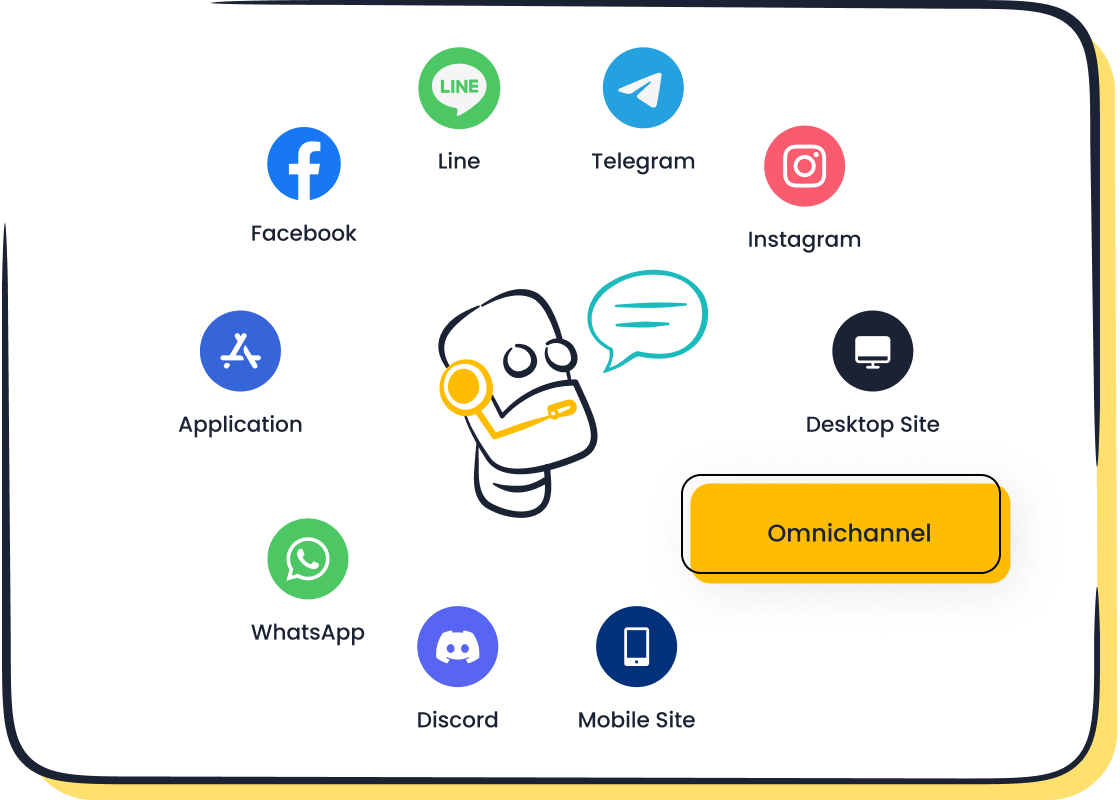
- Omnichannel Support: Customers connect on various channels. The best multilingual chatbots operate seamlessly across a website, WhatsApp, SMS, and social media from a single setup.
- Advanced AI Engine: The bot must understand user intent accurately. Platforms powered by advanced Large Language Models (LLMs) provide superior translation and generate more natural, helpful responses.
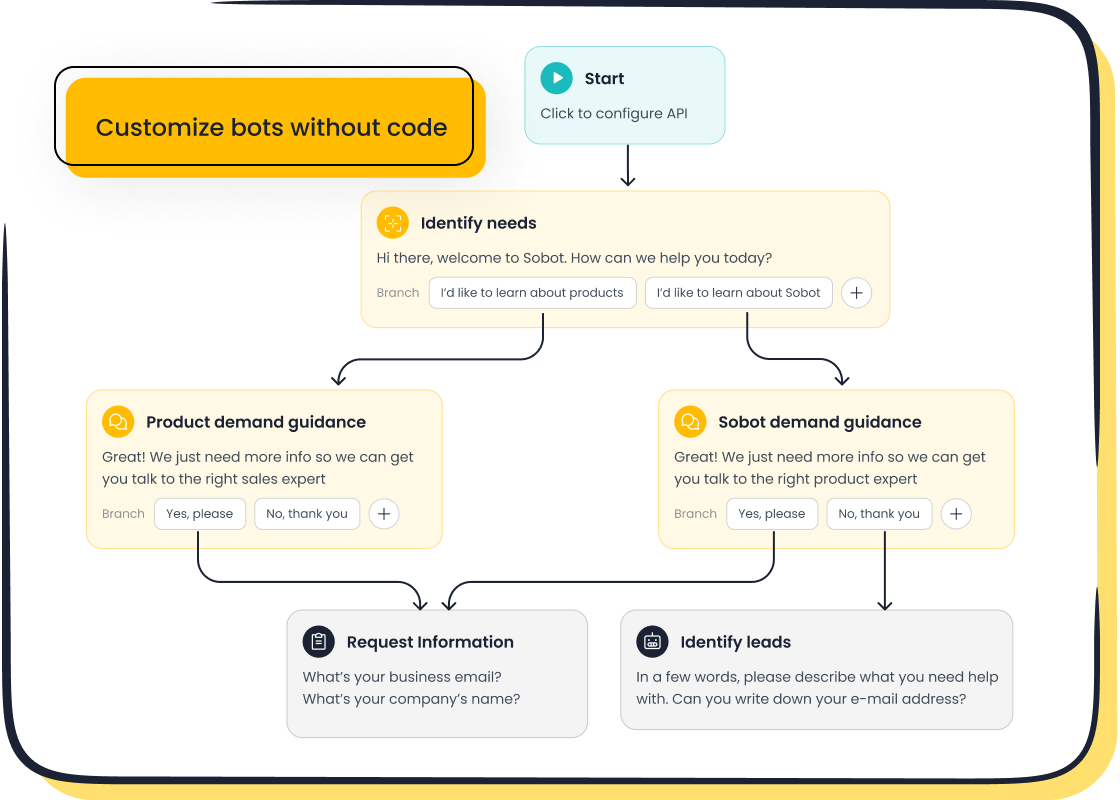
For example, Sobot's AI Chatbot is an accessible yet powerful choice. It offers a no-code interface that simplifies bot creation. Its strong multilingual capabilities allow it to support customers on preferred channels like WhatsApp. The platform is powered by advanced LLMs, ensuring high-quality interactions.
Integration Capabilities
A multilingual chatbot should not operate in isolation. It must connect with the software your business already uses. This creates a unified system for customer data and support workflows. Application Programming Interfaces (APIs) act as a bridge, allowing the chatbot to "talk" to other tools.
Think of an API as a virtual handshake. It lets your chatbot and other software connect to push and pull data between each other. This allows the chatbot to retrieve order information from your e-commerce platform or create a support ticket in your helpdesk system.
A platform should offer clean APIs and pre-built connections to popular systems. Look for integrations with:
- CRM Software: HubSpot, Salesforce, Zoho
- Helpdesk Systems: Zendesk, Freshdesk
- E-commerce Platforms: Shopify, Magento
This connectivity ensures a smooth flow of information. It prevents data silos and gives agents a complete view of the customer's journey.
Scalability and Support
Your business will grow, and your multilingual chatbot platform must grow with it. Scalability means the system can handle an increasing volume of conversations without a drop in performance. When choosing a platform, consider its technological foundation and pricing model to ensure it can support future expansion.
Equally important is the level of support the vendor provides. Implementing new technology can be complex. A good partner offers more than just software. They provide:
- Technical Guidance: Expert help during the setup and integration process.
- Ongoing Optimization: Support for analyzing performance data and improving the bot's effectiveness.
- Reliable Hosting: A secure and stable environment for your chatbot to operate 24/7.
Choosing a vendor that offers a comprehensive solution, like Sobot's all-in-one contact center platform, ensures you have a partner for the long term. Their suite of tools, from AI agents to a full ticketing system, provides a scalable path for your customer service operations.
Main Implementation Challenges
Implementing multilingual chatbots brings great rewards, but it also presents unique challenges. Businesses must navigate issues related to translation quality, technical management, and cultural adaptation. Overcoming these hurdles is key to creating a truly global and effective customer support tool.
Translation Accuracy
Achieving perfect ai chatbot translation is a primary challenge. While modern AI is powerful, it can still miss context or nuance. A direct, word-for-word translation often fails to capture the user's true intent. This can lead to confusing or incorrect responses, damaging the customer experience.
To maintain high accuracy, businesses should adopt a hybrid workflow.
- Use AI for the First Draft: Let the AI handle the initial, high-volume translation work.
- Refine with Human Experts: Have human translators review and edit the output. They can correct grammar, adjust tone, and ensure precision.
- Create a Glossary: Develop a list of approved terms for brand names and industry jargon to ensure consistent ai chatbot translation.
- Provide Feedback: Continuously give feedback to the AI system. This helps it learn and improve its ai chatbot translation over time.
This hybrid approach is highly effective. Organizations using it report cost savings of 40-60% compared to traditional methods, while maintaining accuracy rates above 95%.
Technical Complexity
Managing multilingual chatbots requires more than just launching the software. A successful implementation demands a team with a diverse skill set. The system must be built on a scalable technical architecture and have robust backup options.
Key skills needed for the management team include:
- Conversational and UX Design: To create intuitive and engaging user experiences across different languages.
- Technical Expertise: To handle integrations, manage NLP libraries, and implement language detection algorithms.
- Quality Assurance: To establish review processes with native speakers and continuously monitor conversation quality.
Without these skills, a business risks deploying a system that is difficult to maintain and fails to meet user expectations.
Cultural Localization
The biggest challenge often lies beyond words. Cultural localization is about adapting content to fit local customs, values, and communication styles. A simple ai chatbot translation can easily miss important cultural nuances, leading to misunderstandings or even offense.
For example, some cultures are "high-context" (like Japan), where communication is indirect and relies on shared understanding. Others are "low-context" (like the United States), where people are very direct. A chatbot's tone must adapt accordingly. History is filled with examples of failed translations, such as when a Parker Pen slogan was mistranslated in Mexico to suggest their pens could prevent pregnancy. Effective multilingual chatbots must collaborate with local experts to ensure all content, from greetings to emojis, is culturally appropriate.
Multilingual chatbots are essential tools for global business. They use natural language processing and machine translation to connect companies with a worldwide audience. These systems are evolving to create a more seamless and connected world. As digital ambassadors, multilingual chatbots help businesses grow across diverse cultures.
Businesses looking to adopt this technology can follow a simple plan:
- Define your target languages and business goals.
- Evaluate technology platforms like Sobot.
- Create a plan for content localization and rigorous testing.
FAQ
What is a multilingual chatbot?
A multilingual chatbot is an AI tool that communicates with users in many different languages. It automatically detects a user's language. The chatbot then provides real-time, two-way translated conversations to offer support and information to a global audience.
Is it difficult to set up a multilingual chatbot?
No, it does not have to be difficult. Modern platforms like Sobot offer a no-code, point-and-click interface. This feature allows businesses to design and launch a powerful multilingual chatbot without needing any programming experience, making the process quick and accessible.
How does a chatbot understand so many languages?
Chatbots use advanced technologies like Natural Language Processing (NLP) and Large Language Models (LLMs). These systems analyze a user's message to understand its meaning. The chatbot then generates an accurate response and translates it back into the user's native language.
Can a multilingual chatbot really save my business money?
Yes, it can lead to significant savings. A multilingual chatbot automates responses to common questions 24/7. This reduces the need for a large, multilingual support staff, lowering operational costs while improving efficiency and customer satisfaction.
See Also
Effortlessly Deploying Effective Chatbot Examples on Your Website
Achieving Excellence in Customer Support Through Live Chat Mastery
Your Essential Guide to Selecting Optimal Chatbot Software Solutions
Elevating E-commerce Customer Satisfaction: The Power of Chatbots
Building a Successful Website: Your Guide to Chatbot Creation

