10 Tips for Choosing Omnichannel Management Software

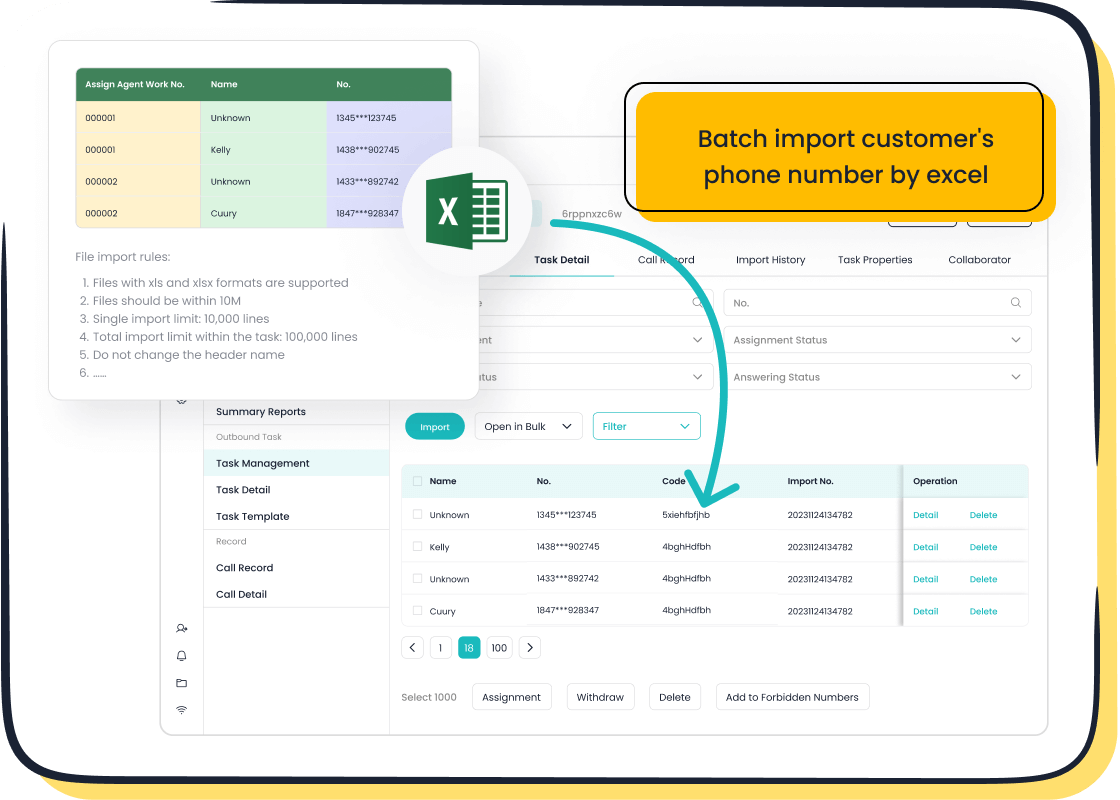
You want to choose the right omnichannel platforms for your business, but selecting the best omnichannel management software can feel overwhelming. Here are the 10 tips you need: define business goals, map customer journeys, centralize data, ensure integration, plan for scalability, leverage automation, use analytics, streamline fulfillment, prioritize ease of use, and compare costs and support. Sobot stands out with high customer satisfaction, proven engagement results, and strong fulfillment features. Sobot AI and Sobot call center help you deliver a winning customer experience strategy across every channel.
Define Business Goals
Before you choose any omnichannel management software, you must assess your goals and needs. This step helps you focus on what matters most for your business. Omnichannel marketing and marketing automation work best when you know exactly what you want to achieve. You can use these tools to reach customers on every channel, but you need clear goals to guide your efforts.
Customer Service Needs
You want your customers to have a seamless experience, no matter how they contact you. Omnichannel marketing and marketing automation help you connect live chat, email, social media, and phone support. When you assess your goals and needs, think about how you want to unify customer data and provide fast, personalized service. Many companies use omnichannel solutions to:
- Give agents access to customer profiles and past interactions.
- Use AI-powered chatbots for 24/7 support.
- Keep conversations consistent across all channels.
- Connect online and offline data for better personalization.
Did you know that 71% of customers expect personalized service? If you do not meet this need, 76% of customers feel frustrated. Omnichannel marketing and marketing automation let you deliver tailored messages and support. Sobot’s unified workspace gives your agents the tools to see every customer’s journey and respond quickly. This approach boosts satisfaction and loyalty.
Omnichannel Marketing Objectives
Omnichannel marketing and marketing automation help you reach your business goals. You want to grow your brand, increase sales, and keep customers coming back. With omnichannel strategies, you can engage people on social media, your website, and in stores. You can also use marketing automation for targeting and running targeted campaigns.
Here are some common objectives for omnichannel marketing and marketing automation:
| Marketing Objective | Explanation and Impact |
|---|---|
| Create 1:1 Personalized Engagements | Give each customer a unique experience across all channels. |
| Grow Customer Retention and Loyalty | Encourage repeat purchases and build loyalty with consistent rewards. |
| Improve Brand Recognition | Stay top of mind by engaging customers everywhere they shop. |
| Increase Revenue | Use data and personalization to boost sales and save costs. |
| Accurate Analytics and Reporting | Track campaign results and customer behavior in real time. |
Omnichannel marketing and marketing automation can increase order rates by 494% when you use three or more channels. Customers who get value from your service are 97% more likely to share positive feedback. Sobot’s omnichannel platform helps you manage all these objectives in one place. You can use marketing automation for targeting, segmenting your audience, and measuring satisfaction. This way, you can optimize your strategies and reach new markets.
Tip: Set clear goals for your omnichannel marketing and marketing automation. Decide if you want to focus on targeting new customers, improving loyalty, or increasing sales. This clarity will help you choose the right software and get the best results.
Map Customer Journeys

Understanding the customer journey is key to building a strong omnichannel marketing strategy. You need to know how customers move from discovering your brand to becoming loyal advocates. When you map the journey, you can improve engagement at every stage and deliver a personalized experience that keeps people coming back.
Touchpoint Analysis
You interact with customers at many points, both online and offline. Each of these customer touchpoints shapes how people feel about your brand. If you want to boost customer satisfaction, you must make every interaction smooth and consistent. Customers often get frustrated by glitchy websites or confusing automated systems. When you provide seamless engagement, you build trust and encourage repeat business.
Here are the main stages in a typical customer journey for ecommerce businesses using omnichannel marketing:
- Research: Customers look for information about your products or brand.
- Consideration: They compare options and think about what fits their needs.
- Purchase: They decide and complete the transaction.
- Loyalty: After buying, they stay engaged and may recommend your brand.
Tip: Identify where your customers prefer to connect—social media, email, phone, or in-store. Use a customer engagement platform like Sobot to unify these channels and ensure real-time responses.
You can use technology tools such as chatbots, live chat, and video calls to enable smooth engagement across all channels. Balance automation with human support to create a personalized experience. Self-service options like FAQs and tutorials empower customers and improve your brand’s image. Make sure transitions between channels are seamless so customers never have to repeat themselves.
Personalization
Personalization is the heart of successful omnichannel marketing. When you tailor messages and offers to each customer, you create a personalized experience that drives engagement and loyalty. Studies show that AI-driven hyper-personalization in omnichannel platforms can increase customer retention by 40%. Customers are up to 75% more likely to return to brands that offer a personalized experience (source).
A customer engagement platform like Sobot uses data-driven insights to segment your audience and adapt content in real time. For example, Sobot’s omnichannel solution lets you track behavior and send targeted messages, such as cart abandonment reminders or special offers. This approach increases open rates and click-through rates, leading to higher engagement and more sales.
Personalization also helps you optimize every step of the customer journey. You can use behavioral triggers to send timely messages, which improves engagement and customer satisfaction. Companies that use hyper-personalization see up to 30% revenue growth and lower marketing costs. When you deliver a consistent, personalized experience across all channels, you turn first-time buyers into loyal fans.
Note: Mapping the customer journey and using a robust customer engagement platform will help you deliver the right message at the right time, every time.
Centralize Customer Data
Centralizing customer data is one of the most important steps in building a strong omnichannel management system. When you bring all your customer information into one place, you make it easier to deliver fast, accurate, and personalized service. You also improve your ability to manage inventory and track customer needs across every channel.
Unified Workspace
A unified workspace gives your team a single view of every customer interaction. You can see emails, chat messages, phone calls, and social media conversations all in one dashboard. This setup helps you avoid missing important details and lets you respond quickly to customer questions. You also get a clear picture of your inventory, so you can answer questions about product availability or shipping times without switching between systems.
Here are some key benefits of a unified workspace:
- You reduce data redundancy and lower operational costs.
- You get real-time visibility into customer interactions and inventory status.
- You can personalize service because you have access to each customer’s full history.
- You generate reports that show trends in customer behavior and inventory movement.
- You improve cross-selling and upselling by knowing what inventory is available and what customers want.
A unified workspace also helps your team work together better. Everyone can see the same information, so you avoid confusion and speed up response times. For example, if a customer asks about an item’s inventory status, any agent can check and reply right away. This approach builds trust and keeps customers happy.
Sobot Integration
Sobot makes it easy to centralize customer data and manage inventory across all your channels. You can connect Sobot with your CRM, ecommerce platform, and other business tools. This integration brings all your customer and inventory data into one place, so you never lose track of important information.
Sobot’s platform offers:
- An all-in-one contact center that unifies customer conversations and inventory updates.
- Integration with popular CRM systems and APIs for flexible connections.
- A ticketing system that tracks customer issues and inventory requests.
- A knowledge base that stores answers about products, inventory, and policies.
- AI-powered tools that analyze customer behavior and inventory trends for better decision-making.
With Sobot, you can automate routine tasks, such as sending inventory alerts or updating customers about order status. The analytics dashboard gives you over 300 statistical reports, helping you spot patterns in customer requests and inventory changes. You also get role-based access control, so only the right team members can view or edit sensitive data.
By centralizing your customer and inventory data with Sobot, you create a seamless experience for both your team and your customers. You can answer questions faster, keep inventory levels accurate, and make smarter business decisions. This approach leads to higher customer satisfaction and more efficient operations.
Tip: Centralizing your data and inventory with a platform like Sobot helps you deliver a consistent brand experience and keeps your business running smoothly.
Integration with Existing Systems
Choosing omnichannel management software means you must connect your current tools for the best results. You want seamless integration with your CRM, ecommerce, and support platforms. This step helps you avoid slow order processing, manual work, and errors. When you use the right software, you create a single source of truth for all your data. This approach supports accurate fulfillment and a smooth customer experience.
CRM and Ecommerce
You need your omnichannel management software to work with your CRM and ecommerce platforms. This connection lets you share customer data, sales, inventory, and fulfillment details in real time. You avoid scattered data and make better decisions. Integration with CRM helps you collect and analyze customer data. You can personalize marketing, improve service, and build loyalty. Ecommerce integration ensures product info, inventory, and fulfillment stay up to date. You process orders faster and reduce mistakes.
Common integration challenges include:
- Ineffective integration of channels and systems slows fulfillment and increases errors.
- Scattered data makes it hard to manage fulfillment and customer service.
- Legacy systems may not support seamless integration with new software.
- Lack of centralized analytics tools delays fulfillment decisions.
- Inconsistent promotions and pricing hurt customer trust.
- Poor inventory visibility leads to fulfillment issues and lost sales.
- Manual processes increase fulfillment errors and costs.
When you solve these problems, you get a unified view of your business. You can track fulfillment, sales, and customer needs in one place. Sobot’s omnichannel software offers seamless integration with leading CRM and ecommerce platforms. You get real-time data, better fulfillment, and a consistent customer experience.
Sobot Voice/Call Center

Sobot Voice/Call Center brings all your communications into one software platform. You can manage calls, chat, and fulfillment requests from a single workspace. This setup improves efficiency and helps your team respond faster. Sobot’s AI-powered voicebot handles routine calls, freeing agents for complex fulfillment tasks. You can automate outbound calls and track fulfillment status in real time.
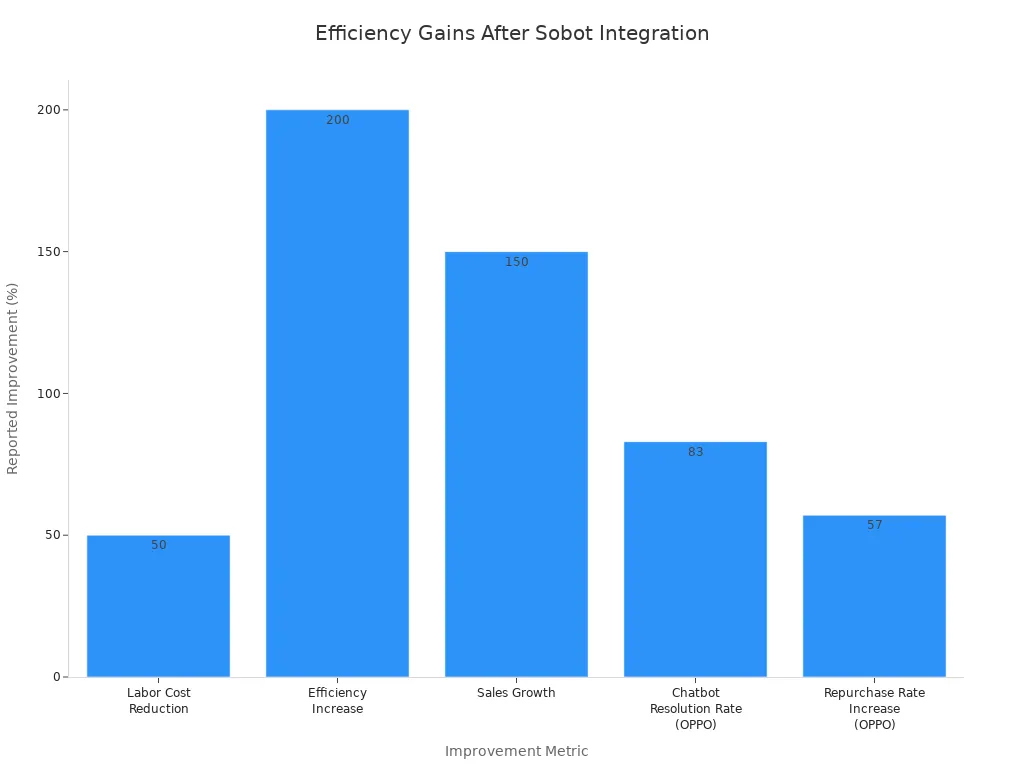
Businesses using Sobot Voice/Call Center report big improvements:
| Efficiency Metric | Improvement |
|---|---|
| Labor Cost Reduction | 50% lower labor costs |
| Efficiency Increase | 200% higher efficiency |
| Sales Growth | Over 150% increase in sales |
| Chatbot Resolution Rate (OPPO) | 83% resolution rate via AI chatbot |
| Repurchase Rate Increase (OPPO) | 57% increase after AI chatbot integration |
You can see these results in the chart below:
Sobot’s software supports global fulfillment and communication. You get stable, secure, and scalable solutions for every channel. With seamless integration, you reduce fulfillment errors and boost customer satisfaction. Sobot helps you manage fulfillment, orders, and support in one place, making your business more efficient.
Tip: Choose omnichannel management software that offers seamless integration with your CRM, ecommerce, and fulfillment systems. This choice ensures you deliver fast, accurate, and reliable fulfillment every time.
Scalability and Growth
Multi-Channel Expansion
You want your business to grow without limits. Omnichannel marketing gives you the tools to reach customers on every channel. As your business expands, you need software that can handle more orders, more customers, and more fulfillment requests. The right platform lets you add new channels like SMS, email, chat, and phone support as your needs change. You can manage all these channels in one place, making fulfillment faster and more reliable.
A strong omnichannel marketing platform should offer:
- Cloud-based flexibility so you can scale up or down without buying new hardware.
- Automation for routine tasks like ticket assignment and fulfillment updates.
- AI-powered chatbots that answer questions and help with fulfillment 24/7.
- Real-time analytics to track fulfillment speed, customer satisfaction, and agent performance.
- Integration with your ecommerce and CRM systems for smooth fulfillment and data sharing.
For example, AFG Distribution used an integration platform to connect their ERP with marketplaces like Amazon and eBay. This change cut manual work and let them oversee fulfillment from seven marketplaces in just 10 minutes a day. Their quarterly growth jumped by up to 30%. This shows how omnichannel marketing and automation can drive fulfillment efficiency and business growth.
Sobot’s omnichannel marketing solution supports multi-channel expansion with a unified workspace. You can add new channels as your business grows and manage all fulfillment tasks in one dashboard. This approach keeps your operations smooth and your customers happy.
Tip: Choose a platform that grows with you. Look for modular features and easy channel integration to keep fulfillment on track as your business expands.
Global Support
If you serve customers in different countries, you need global support. Omnichannel marketing platforms must help you manage fulfillment across regions, languages, and time zones. You want to give every customer the same great experience, no matter where they are.
Key global support features include:
- Unified agent workspace showing all customer interactions and fulfillment status.
- 360° customer profiles for personalized service and accurate fulfillment.
- Real-time analytics to monitor fulfillment and spot trends worldwide.
- AI-driven tools like IVR and smart routing to handle high volumes and direct fulfillment requests to the right team.
- Cloud-based solutions that adapt to new markets and support compliance with local laws.
| Global Support Capability | Description | Example Outcome |
|---|---|---|
| Unified Inventory System | Manage fulfillment and inventory in one place | Real-time tracking across regions |
| Synchronization Across Channels | Keep fulfillment data accurate everywhere | Fewer errors and faster service |
| Advanced Order Management | Control every step of the fulfillment process | Higher customer satisfaction |
| Scalable, Flexible Cloud-Based Solutions | Grow your fulfillment operations in new countries | Easy compliance with local rules |
| Comprehensive Training and Support | Train teams for better fulfillment | 50% efficiency boost after workshops |
| Real-Time Analytics and Monitoring | Track fulfillment and spot problems early | 20% increase in logistical efficiency |
| Strategic Implementation Planning | Plan rollouts for smooth fulfillment transitions | Large retailers integrate new warehouses with less disruption |
Sobot’s cloud-based omnichannel marketing platform gives you the tools for global fulfillment. You can manage orders, inventory, and customer support from anywhere. The system supports multiple languages and time zones, making fulfillment easier for international teams. Real-time analytics help you track fulfillment and improve your service in every market.
Note: Global support is not just about language. You need real-time fulfillment tracking, strong analytics, and a platform that adapts to your business as it grows.
Automation and AI
Automation and AI have become essential in omnichannel management. You can use these tools to improve engagement, speed up responses, and reduce manual work. Today, about 70% of companies use AI in their go-to-market workflows, including omnichannel management. This trend shows that automation and AI are now a core part of customer engagement platform strategies. By 2025, AI-assisted interactions in customer-retailer engagement will reach 95% (source).
Intelligent Workflows
Intelligent workflows help you automate tasks and improve engagement across every channel. You can set up automated alerts, triggers, and routing rules in your software. This approach reduces manual work for your support teams and lets them focus on complex issues. Marketing automation tools make it easy to send the right message at the right time, boosting engagement and customer satisfaction.
Here is how intelligent workflows in omnichannel management software reduce manual workload:
| Feature/Capability | How it Reduces Manual Workload for Support Teams |
|---|---|
| Automated alerts and multi-event triggers | Quickly identify and resolve SLA issues without manual monitoring. |
| Elimination of repetitive tasks | Automates monotonous work, freeing agents from manual processes. |
| Integration across multiple systems | Connects CRM, billing, and other systems in real time, avoiding manual data aggregation. |
| Intelligent routing and prioritization | Automatically routes leads and tickets to preferred agents, reducing manual sorting. |
| Proactive customer outreach | Automates notifications via SMS, email, and other channels, reducing manual follow-ups. |
| Low/no-code workflow automation | Enables quick creation and modification of workflows without IT support. |
| Real-time data aggregation | Provides comprehensive views of data and performance, eliminating manual data compilation. |
| Pre-built integrations library | Accelerates system integration, reducing manual integration work. |
You can use a customer engagement platform like Sobot to centralize all communication channels. This setup makes it easier to manage engagement and automate marketing automation campaigns. You save time, reduce errors, and deliver a better experience for your customers.
Tip: Automate repetitive tasks with intelligent workflows to let your team focus on high-value engagement.
Sobot Chatbot
Sobot Chatbot brings AI-powered automation to your customer engagement platform. You can provide 24/7 support, answer common questions, and guide users through the sales funnel. This chatbot reduces operational costs by handling repetitive inquiries and qualifying leads faster. It also gathers data from every interaction, giving you insights to improve your marketing automation and engagement strategies.
Some key benefits of using Sobot Chatbot include:
- 24/7 customer support, so customers never wait for basic answers.
- Lower operational costs by automating routine engagement tasks.
- Fast lead qualification and personalized recommendations.
- Seamless integration with CRM and support software.
- Real-time data access for personalized engagement.
- Enhanced brand reputation through advanced support solutions.
Sobot Chatbot improves engagement by providing immediate responses and freeing up your agents for complex issues. It supports lead generation and helps you deliver a consistent experience across all channels. You can use marketing automation to trigger chatbot messages based on customer actions, making your engagement more effective.
Sobot’s chatbot works with your customer engagement platform to boost satisfaction and business growth. You can rely on its AI to handle routine tasks, while your team focuses on building deeper relationships with customers.
Note: Sobot Chatbot helps you deliver fast, reliable, and personalized engagement, making your marketing automation and support software even more powerful.
Analytics and Reporting
Analytics and reporting play a big role in omnichannel marketing. You need to see what is happening across all your channels. This helps you make smart choices and improve your business. Good analytics tools give you clear visibility into customer actions, sales, and support. When you use strong analytics, you can spot trends, fix problems, and grow faster.
Real-Time Insights
You want to know what your customers do right now, not just yesterday. Real-time insights let you see customer behavior as it happens. This helps you react quickly and give better service. For example, if you see a spike in chat requests, you can add more agents right away. Real-time inventory visibility lets you update customers about product stock instantly, which builds trust.
Here are some ways real-time insights help you in omnichannel marketing:
- You get immediate data and insights about customer preferences and actions.
- You can personalize offers and support based on live information.
- You solve problems before they grow, like fixing a checkout issue as soon as it appears.
- You improve operational efficiency by acting at the right moment.
- You see the full customer journey, which helps you create seamless experiences.
Sobot’s omnichannel marketing platform gives you real-time dashboards and alerts. You can track conversations, orders, and inventory across every channel. This level of visibility means you never miss a chance to help a customer or close a sale. Sobot also uses AI to spot patterns and suggest actions, making your team even more effective.
Tip: Use real-time insights to empower your team. Give agents the tools and authority to make quick decisions that keep customers happy.
Performance Metrics
Tracking the right metrics is key to success in omnichannel marketing. You need to measure what matters most for your business. Performance metrics show you how well your channels work together. They also reveal where you can improve.
Here are some important metrics to track:
| Performance Metric | What It Shows | Why It Matters | How to Track |
|---|---|---|---|
| Customer Journey Mapping | The path customers take from first contact to purchase | Finds key touchpoints and areas to improve | Use Sobot, Google Analytics, or CRM systems |
| Channel-Specific KPIs | Results for each channel, like email clicks or chat rates | Helps you optimize each channel | Centralize data in dashboards |
| Customer Lifetime Value (CLV) | Total revenue from a customer over time | Shows long-term value and loyalty | Analyze purchase history and retention |
| Conversion Rate | How many users complete a desired action | Measures marketing effectiveness | Set up goals in analytics tools |
| Customer Satisfaction & NPS | How happy customers are and if they recommend you | Links to loyalty and repeat business | Use surveys and feedback tools |
You also want visibility into assisted sales, cross-channel influence, and engagement quality. These metrics help you understand how in-store visits affect online sales or how chat support boosts conversions. Real-time inventory visibility is another key metric. It shows you what products are available, so you can avoid overselling and keep customers informed.
Sobot’s analytics tools unify all your data and insights. You get customizable reports, customer journey maps, and multi-touch attribution. This helps you see the big picture and make better decisions. Sobot also supports compliance with privacy laws, so your reporting stays safe and reliable.
Note: Strong analytics and reporting give you the visibility you need for successful omnichannel marketing. Use these tools to track progress, spot trends, and keep improving.
Inventory and Order Fulfillment

Omnichannel Order Fulfillment Software
You want your customers to get their orders fast and without mistakes. Omnichannel order fulfillment software helps you reach this goal. This software brings all your sales channels together, so you can manage orders and inventory in one place. You see every order as it comes in, no matter if it is from your website, a marketplace, or a physical store.
Here is how omnichannel order fulfillment software improves delivery speed and accuracy:
- You get centralized inventory management, which gives you real-time stock visibility. You can ship from the nearest warehouse to save time and money.
- The software consolidates orders from every channel, so you process them quickly and correctly.
- Automation handles order routing, inventory sync, and shipping label creation. This reduces manual errors and speeds up fulfillment.
- You can offer multiple fulfillment options, like buy online pick up in store (BOPIS), same-day delivery, or ship-from-store. These choices make customers happy.
- Real-time updates and clear communication keep orders accurate and build trust.
- You can train your staff on new processes, making cross-channel fulfillment smooth.
- The software lets you track key metrics, like fulfillment time and order accuracy, so you can spot problems and fix them.
Sobot’s omnichannel order fulfillment software connects with your CRM and ecommerce tools. You get a single dashboard for all your fulfillment needs. This setup helps you deliver on time and keep customers coming back.
Inventory Management
Managing inventory across many channels can be hard. Without the right software, you might lose track of stock or make mistakes. Omnichannel order fulfillment software solves these problems by giving you a unified view of your inventory.
Common inventory challenges include:
- Poor inventory visibility when you sell on many channels.
- Segmented supply chains that make record keeping tough.
- Hard-to-predict demand, which can lead to overstocking or stockouts.
- Errors in inventory data that cause fulfillment mistakes.
- Trouble handling returns and exchanges across channels.
With omnichannel order fulfillment software, you get:
- Centralized control and real-time inventory updates.
- Automated reordering alerts and advanced analytics for better stock decisions.
- Integration with ERP and POS systems, so all inventory data stays in sync.
- Multiple fulfillment options, so you can balance stock and meet customer needs.
- Predictive analytics to help you plan for future demand.
Sobot’s software gives you these tools. You can manage inventory, track fulfillment, and offer multiple fulfillment options from one platform. This approach keeps your business efficient and your customers satisfied.
Tip: Use omnichannel order fulfillment software to keep your inventory accurate and your fulfillment process smooth. This will help you avoid costly mistakes and deliver a better customer experience.
Ease of Use
User Experience
You want omnichannel management software that feels easy from the start. A smooth user experience helps your team work faster and keeps your customers happy. When you compare features and functionalities, focus on how the software looks and feels across every device. The best platforms offer:
- Personalization based on customer data, so each user sees what matters most.
- Unified interfaces on web, mobile apps, and even in-store systems, making navigation simple.
- Real-time support through live chat or direct messaging, so help is always available.
- Device-appropriate calls to action that guide users at every step.
- Mobile apps for quick access and push notifications, keeping everyone connected.
- Self-service options like AI chatbots, which reduce wait times and empower users.
- Shared inboxes and CRM integration to keep all communication in one place.
Tip: Design for users, not just channels. Make sure transitions between web, mobile, and physical stores feel seamless. This approach builds trust and keeps customers coming back.
Sobot’s unified workspace brings all your channels together. You can manage chats, calls, and tickets from one dashboard. This setup helps you compare features and functionalities easily, so you know what works best for your team. Sobot also uses advanced analytics to personalize the experience and keep your data secure.
Training and Onboarding
A great platform should make onboarding simple for everyone. You want your team to feel confident using new tools. Leading software providers offer a range of training resources:
- Interactive product tours and tooltips that guide you step by step.
- Personalized onboarding flows for different roles or departments.
- Walkthroughs, checklists, and contextual hints to help users learn quickly.
- Centralized support with knowledge bases, live chat, and shared inboxes.
- Video tutorials and webinars for visual learners.
- Analytics tools to track onboarding progress and spot areas for improvement.
Sobot supports new users with in-app guides, a detailed knowledge base, and live chat support. You can access video tutorials and join webinars to learn best practices. Sobot’s onboarding process helps your team get up to speed fast, so you can focus on serving customers.
Note: Continuous training and feedback keep your team sharp. Use analytics to measure onboarding success and adjust your approach as needed.
When you compare features and functionalities, always check the quality of training and support. Easy onboarding means less downtime and better results for your business.
Cost and Support
Pricing Models
You need to understand how different pricing models affect your business. Some omnichannel management software uses a subscription model. Others charge based on the number of users or features. You might see tiered pricing, where each level gives you more tools or support. Some platforms offer pay-as-you-go plans, which can help if your needs change often.
Here is a table to help you compare common pricing models:
| Pricing Model | How It Works | Best For |
|---|---|---|
| Subscription | Pay monthly or yearly | Steady usage |
| Tiered | Pay more for extra features | Growing businesses |
| Pay-as-you-go | Pay only for what you use | Seasonal or changing needs |
| Per-user | Pay for each user or agent | Teams of different sizes |
When you look at pricing, always evaluate costs and benefits. A low price may not include all the features you need. Sobot offers clear pricing with no hidden fees. You get access to advanced tools like AI chatbots, unified workspaces, and global support. This helps you plan your budget and avoid surprises.
Tip: Ask for a detailed pricing breakdown before you decide. Make sure you know what is included and what might cost extra.
Vendor Reputation
Vendor reputation matters when you choose software. You want a provider with a strong track record and reliable support. Look for customer reviews, industry awards, and case studies. For example, Sobot serves over 10,000 brands, including Samsung, OPPO, and Luckin Coffee. These companies trust Sobot for stable service and high system uptime (99.99%).
Good support can save you time and money. Sobot provides 24/7 technical help, onboarding resources, and regular updates. You can reach their team by email or live chat. Many users report fast response times and helpful answers.
When you evaluate costs and benefits, consider the value of strong support and a trusted vendor. A reliable partner helps you solve problems quickly and keeps your business running smoothly.
Note: Choose a vendor with proven experience and positive feedback. This reduces risk and gives you peace of mind.
Choosing omnichannel management software with a methodical, needs-based approach helps you match technology to your real business needs. Research shows that aligning software with customer expectations and operational goals leads to better satisfaction and growth. When you follow these 10 tips, you set your business up for seamless customer journeys and long-term success. Start by making a shortlist of omnichannel management software options, then schedule demos with trusted providers like Sobot to see which solution fits best.
FAQ
What is omnichannel management software?
Omnichannel management software lets you manage customer interactions across channels like chat, email, phone, and social media. You get a single dashboard for all conversations. Sobot’s platform helps you unify data and improve customer service. This software boosts efficiency and customer satisfaction.
How does Sobot integrate with my existing systems?
You can connect Sobot’s omnichannel management software with your CRM, ecommerce, and support tools. Sobot offers simple API integration and supports platforms like Salesforce and Shopify. This integration keeps your customer data and order information up to date in real time.
Why is real-time analytics important in omnichannel management software?
Real-time analytics help you track customer behavior and service performance as it happens. You can spot trends, fix problems fast, and make better decisions. Sobot’s omnichannel management software gives you dashboards and reports for instant insights. This leads to faster responses and higher satisfaction.
Can Sobot’s omnichannel management software support global teams?
Yes! Sobot’s omnichannel management software supports multiple languages and time zones. You can manage customer service for teams around the world. Sobot’s cloud-based platform ensures stable connections and 99.99% uptime, so your business stays connected everywhere.
What makes Sobot’s omnichannel management software easy to use?
Sobot’s omnichannel management software has a unified workspace, simple navigation, and in-app guides. You can access live chat, video tutorials, and a knowledge base for quick help. This design helps your team learn fast and serve customers better.
Tip: Try a demo of Sobot’s omnichannel management software to see how easy it is to manage all your channels in one place.
See Also
Comprehensive Overview Of Omnichannel Call Center Platforms
Step-By-Step Process For Deploying Omnichannel Contact Centers
Essential Advice For Selecting Social Media Support Tools

