Surprising steps for good customer service skills success


You might think good customer service skills start with a smile or a quick reply. The real secret is listening to what your customer does not say. Samsung discovered this when it worked with Sobot to create a unified customer experience. This approach led to a 97% satisfaction rate and a 30% boost in agent efficiency. When you focus on what matters most to your customer, you build loyalty and trust. The numbers speak for themselves:
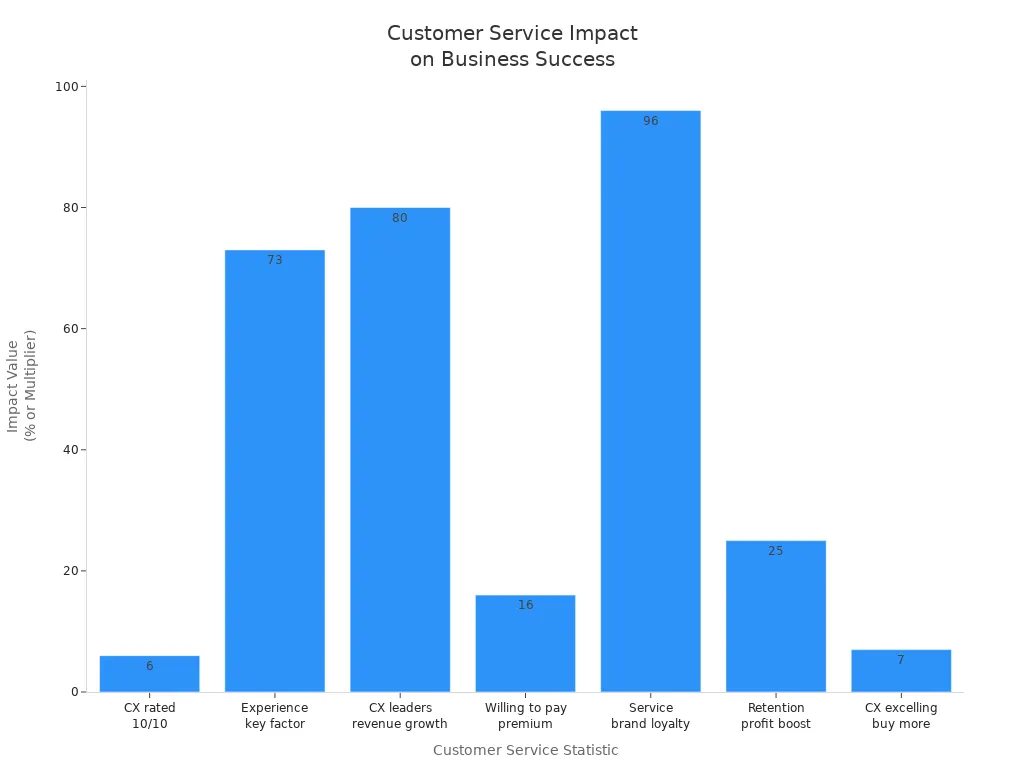
Listening Beyond Words

Active Listening in Customer Service

You can master good customer service skills by practicing active listening. This means you focus on what the customer says, not just your response. You avoid interrupting and give your full attention. You repeat back what the customer says to confirm understanding. You validate their feelings, especially when they are upset. You check for correct information and take action on issues discussed. Communication experts agree that active listening is key to clear communication and building trust. Sobot’s Voice/Call Center uses AI-powered voicebots and a unified workspace to help you listen better. These tools provide instant, intelligent responses and natural language processing. They allow customers to speak naturally and get answers quickly. You can handle routine inquiries with automation, freeing up time for complex customer interactions. This boosts agent productivity and improves customer satisfaction scores. Learn more about active listening.
Reading Non-Verbal Cues
Good customer service skills go beyond words. You need to read non-verbal cues like tone, body language, and facial expressions. These cues show emotions and concerns that customers may not express directly. For example, a customer’s voice may sound tense even if their words seem calm. You can use positive gestures, such as nodding and smiling, to show you care. Sobot’s call center and live chat features help you notice these cues by recording and analyzing conversations. You can study cultural differences in non-verbal communication to avoid misunderstandings. For instance, eye contact means confidence in the U.S., but it shows respect in some Asian cultures. Understanding these cues helps you build trust and loyalty.
| Aspect | Explanation |
|---|---|
| Body Language | Open posture and gestures show engagement and friendliness. |
| Cultural Differences | Recognize diverse interpretations to avoid communication breakdowns. |
| Customer Reactions | Negative cues can lead to adverse feelings, even if words are positive. |
| Listening Skills | Effective listening enhances emotional connection with customers. |
| Trust and Loyalty | Improved non-verbal communication fosters confidence and loyalty. |
Responding to Unspoken Needs
You can deliver good customer service by responding to unspoken needs. Customer journey mapping helps you anticipate what customers want at each step. Data-driven decision making connects interactions and predicts future needs. Empathy lets you understand emotions and build trust. Proactive service means you solve problems before customers ask. Sobot’s unified workspace and AI tools let you track customer interactions and optimize user experience. You remove friction points and make every customer support interaction smooth. This approach leads to higher satisfaction and loyalty.
Tip: Use Sobot’s AI-powered voicebot to automate 90% of customer interactions. This improves efficiency and reduces operational costs by up to 60%. You can provide consistent support without wait times, making customers feel valued.
Empathy Over Efficiency
Why Empathy Matters
You might think speed is the most important part of strong customer service. In reality, empathy often matters more. When you show empathy, you make customers feel listened to and valued. This emotional connection leads to higher satisfaction and loyalty, even if you cannot always say yes to every request. Studies show that customer satisfaction scores rise by 35% when agents use empathy in their communication (source). Empathy also reduces the need for escalation and lowers stress for both customers and customer service professionals. In healthcare, greater empathy improves outcomes and creates a positive experience for everyone involved.
Balancing Empathy and Productivity
You need to balance empathy with productivity to deliver good customer service skills. Many organizations use training programs to help customer service professionals build emotional intelligence. They also measure success with customer satisfaction scores and net promoter scores. The table below shows common strategies:
| Strategy | Description |
|---|---|
| Training Programs | Develop empathy and emotional intelligence in customer service representatives. |
| Measuring Success | Use customer satisfaction and net promoter scores to track performance. |
You can foster a culture of empathy by using positive language and making sure human agents handle complex issues. This approach leads to better communication and a more positive customer experience.
Sobot’s Approach to Customer Care
Sobot’s omnichannel solution helps you put empathy first. With tools like AI-powered chatbots, live chat, and a unified workspace, you can respond quickly while still showing you care. Samsung used Sobot’s customer contact center to unify communication channels and improve agent efficiency by 30%. This led to a 97% satisfaction rate and a positive experience for every customer. Sobot’s ability to use positive language and clear communication helps you meet customer needs and build trust. When you focus on empathy, you create strong customer service and lasting loyalty.
Asking Uncommon Questions

Open-Ended Question Strategies
You can transform customer engagement by asking open-ended questions. These questions invite customers to share more about their experiences, needs, and motivations. Instead of asking, "Do you like our service?" try, "What has your experience been like with our service?" This approach encourages customers to open up and provide details you might not expect.
Open-ended questions allow for deeper insights and encourage participants to share unexpected information, motivations, and experiences, which can enhance understanding and improve service delivery.
You can use strategies like starting questions with "How," "What," or "Why." Avoid leading questions that suggest a specific answer. Show you value the customer's input by listening actively and responding with positive feedback. This method helps you build rapport and trust.
| Strategy | Description |
|---|---|
| Use less direct language | Start with "How...", "What...", or "Why..." |
| Avoid biased questions | Do not lead the customer to a specific answer |
| Foster comfort through listening | Use verbal and physical cues to show engagement |
Uncovering Customer Needs
When you ask uncommon questions, you uncover hidden needs and concerns. Customers often reveal motivations and challenges you did not anticipate.
The greatest benefit of open-ended questions is that they allow you to find more than you anticipate. You don’t know what you don’t know. People may share motivations you didn’t expect and mention behaviors and concerns you knew nothing about.
Sobot’s unified workspace and AI-driven analytics help you analyze customer responses across channels. These tools use predictive analytics and sentiment analysis to identify trends and anticipate needs.
| Evidence Description | Source Link |
|---|---|
| AI-driven analytics provide personalized and proactive customer experiences. | CX Foundation |
| Predictive analytics help identify customer churn risks and service needs. | CX Foundation |
| AI systems anticipate customer needs by analyzing data and previous interactions. | NICE |
| AI integrates with multiple channels for consistent customer support. | NICE |
You can use Sobot’s tools to track engagement, analyze call topics, and spot patterns in customer feedback. This process leads to a better customer experience and more positive outcomes.
Building Deeper Connections
Building rapport with customers starts with listening and engagement. You create a positive environment by showing empathy and treating each customer as an individual. Personalization goes beyond using a name; it means understanding unique needs and responding with care.
| Technique | Description |
|---|---|
| Effective Communication | Positive interactions build trust and credibility, making customers feel valued and understood. |
| Empathy | Enables representatives to connect with customers, showing genuine understanding and care. |
| Personalization | Encourages treating customers as individuals rather than just following scripts. |
| Active Listening | Essential for understanding customer needs and building trust. |
| Feedback Utilization | Using customer feedback to inform and improve interactions enhances understanding of customer feelings. |
You can use Sobot’s AI-powered chatbots and live chat to maintain engagement and provide immediate support. These tools help you listen to customer concerns and respond with positive solutions. When you focus on listening and engagement, you build lasting relationships and improve every customer interaction.
Owning Mistakes Publicly
Transparent Error Admission
You build trust with customers when you admit mistakes openly. Many leading companies have shown that transparency leads to stronger relationships and better business outcomes. For example, Coca-Cola, Netflix, and SpaceX all admitted errors and took action. The table below shows how these companies benefited:
| Company | Actions Taken | Outcome |
|---|---|---|
| Coca-Cola | Acknowledged the mistake, returned original formula as "Coca-Cola Classic" | Increased stock price and market share, reaffirmed brand value. |
| Netflix | Reversed decision based on feedback, CEO apologized, refined approach | Became the world's leading streaming service, demonstrating growth and innovation. |
| SpaceX | Shared details of failures, analyzed issues, persisted through failures | Successfully launched Falcon 1, became a leader in the space industry with numerous firsts. |
When you admit errors, you show customers that you value honesty. This approach encourages loyalty and sets your customer support apart from others. Sobot’s ticketing system helps you track every issue, making it easy to communicate updates and resolutions. You can use this system to keep customers informed and show that you take responsibility.
Effective Apology Steps
A good apology can turn a negative experience into a positive one. You need to follow clear steps to make your apology effective. Research shows that the best apologies include:
| Step | Description |
|---|---|
| 1 | Use responsibility-oriented apologies to foster decisional forgiveness. |
| 2 | Incorporate figurative language to enhance emotional forgiveness. |
| 3 | Ensure perceived sincerity to mediate the effects of the apology. |
You should always take responsibility, use clear language, and show genuine care. Sobot’s customer support tools, like live chat and AI agents, help you respond quickly and sincerely. These tools let you address concerns in real time, which increases customer satisfaction.
Turning Mistakes into Opportunities
Mistakes can lead to customer service improvement if you handle them well. You can use errors as a chance to collect customer feedback and improve your service. Here are some ways to turn mistakes into loyalty:
- Customers share data if they see value, which builds trust.
- Collect only necessary data and act on it quickly.
- Use guided discovery tools to personalize experiences.
You can also:
- Adjust your loyalty program based on customer feedback systems.
- Analyze customer data to understand preferences.
- Use real-time metrics to boost engagement.
Sobot’s ticketing system creates a structured environment for resolving issues. It centralizes communication, automates tasks, and gives you access to historical data. This system helps you respond faster and more transparently, which builds confidence in your customer support. Listening to customers and acting on their feedback leads to lasting loyalty and real customer service improvement.
Personalizing Every Interaction
Beyond Using Names
You can personalize every customer interaction by going beyond just using names. Sobot’s omnichannel solution lets you access customer history and preferences in real time. You can tailor your responses based on past purchases, support tickets, and feedback. This approach helps you deliver contextual support and create moments of delight. For example, you can use Sobot’s AI-powered chatbot to predict needs and offer proactive solutions. Many shoppers prefer personalized rewards and recommendations. Research shows that 73% of shoppers want personalized loyalty program rewards, but only 45% of brands provide them (source). You can stand out by leveraging customer data and using AI to enhance personalization.
- Leverage customer data for contextual support.
- Be empathetic and proactive in communication.
- Tailor solutions to individual needs.
- Create moments of delight with small gestures.
- Use AI tools to predict needs and provide personalized solutions.
Customizing Solutions
You can improve customer satisfaction by customizing solutions. Sobot’s unified workspace and live chat tools help you identify specific needs and preferences. You can recommend products based on historical purchase data and offer personalized discounts. Personalized service shows your commitment to understanding and fulfilling customer needs. Businesses that use customer data for recommendations see greater engagement and retention. Customized solutions are essential for delivering support that resonates with customers. You can use Sobot’s voicebot and ticketing system to automate personalized responses and track customer interactions.
- Personalization is a top method for retaining customers.
- Customers value services tailored to their preferences.
- Using customer data for recommendations enhances engagement.
- Customized solutions demonstrate commitment to customer satisfaction.
| Outcome | Description |
|---|---|
| Increased Customer Retention | Tailored approaches and exclusive loyalty programs lead to higher retention rates. |
| Enhanced Customer Experience | Prioritizing personalized experiences improves satisfaction across service categories. |
| Improved Brand Loyalty | Personalized communication strengthens relationships and reduces churn. |
| Competitive Advantage | Bundled services and effective communication provide a unique selling proposition. |
Making Customers Feel Valued
You make customers feel valued by recognizing their unique needs and going the extra mile. Sobot’s customer support tools, like live chat and AI agents, help you respond quickly and positively. You can use customer feedback to improve service and create positive experiences. Samsung’s VIP customer support is a great example.
Samsung Canada rewarded a loyal customer with a customized phone featuring their dragon design. The customer had requested a free Galaxy S3 with a drawing of a cute dragon. Samsung responded with its own drawing, and the playful exchange went viral. In the end, Samsung sent the customer a personalized phone with their dragon drawing.
This story shows how personalized gestures can turn a simple interaction into a memorable customer experience. You can use Sobot’s contact center to deliver similar positive moments. Customer service professionals who personalize interactions build stronger relationships and increase satisfaction. When you focus on each customer, you create loyalty and a positive customer experience.
Self-Care for Service Excellence
Self-Care and Performance
You need to take care of yourself to deliver excellent customer service. When you practice self-care, you improve your mood and energy. This helps you handle each customer interaction with patience and positivity. Studies show that mindfulness practices in healthcare settings lead to higher job satisfaction among nurses. Higher job satisfaction means better teamwork and a healthier workplace. These factors reduce burnout and help you perform better in every customer interaction. You can use short breaks, deep breathing, or stretching to reset your mind during a busy day. Sobot’s unified workspace makes it easier to manage customer requests without feeling overwhelmed. You can focus on meaningful customer interaction instead of juggling many tasks at once.
Routines for Customer Service Teams
You can build strong routines to support your team’s well-being. Start each day with a quick team check-in. Share positive customer stories to boost morale. Use Sobot’s automation tools to handle repetitive tasks, so you spend more time on real customer needs. Recognize top performers with praise and incentives. Create visible career paths and offer ongoing training. These steps help you and your team stay motivated and ready for every customer interaction.
- Recognize top performance with praise and incentives
- Create visible career paths and development plans
- Invest in ongoing training and certification opportunities
Preventing Burnout
Burnout can hurt your ability to serve each customer well. Automation helps by removing tedious tasks that cause stress. Sobot’s AI-powered analytics and smart call-routing systems let you focus on important customer issues. By automating routine inquiries, you reduce your workload and improve customer satisfaction. This also lowers support costs and keeps your team healthy. You can use Sobot’s chatbot, live chat, and ticketing system to streamline every customer interaction. When you take care of yourself, you give better service and build stronger customer relationships. For more on burnout prevention, see Mayo Clinic’s guide.
Tip: A healthy team creates a positive customer experience. Make self-care a daily habit for lasting success.
You can master good customer service skills by focusing on surprising steps like active listening, empathy, asking uncommon questions, owning mistakes, personalizing every customer interaction, and practicing self-care. Experts highlight attentiveness, resourcefulness, and adaptability as key traits. Sobot empowers you with tools like AI Agent, live chat, and a unified customer contact center. The results speak for themselves:
| Metric | Result |
|---|---|
| Customer satisfaction | 93% for OPPO |
| Agent workload | Reduced by 60% |
Try one new strategy today and share your customer support story!
FAQ
What makes Sobot’s customer contact center different?
You get an all-in-one solution. Sobot combines live chat, AI Agent, voicebot, and ticketing system. You manage every customer interaction in one workspace. This helps you respond faster and keeps your customer happy.
How does Sobot improve customer satisfaction?
Sobot uses AI-powered tools to analyze customer data. You see patterns and trends. You can personalize every customer conversation. Samsung saw a 97% satisfaction rate after using Sobot’s customer contact center.
Can Sobot help with customer support across multiple channels?
Yes. You use Sobot’s omnichannel solution to connect with customers on chat, email, phone, and social media. You keep every customer conversation in one place. This makes your customer support seamless.
How does Sobot’s ticketing system help customer service teams?
You track every customer issue with Sobot’s ticketing system. You automate tasks and follow up quickly. Your customer gets updates and resolutions faster. This builds trust and improves your customer experience.
What are the benefits of using Sobot’s AI Agent for customer interactions?
Sobot’s AI Agent answers customer questions 24/7. You reduce wait times. Your customer gets instant help. You handle routine customer requests automatically. This lets your team focus on complex customer needs.
See Also
Enhancing Customer Satisfaction Through Effective Live Chat Strategies
Top Strategies for Effective Call Center Quality Management
A Comprehensive Guide to Implementing Omnichannel Solutions
Transforming Customer Support with AI-Powered Service Agents
Guidelines for Selecting the Right Social Media Support Tools

