How to Build a Customer Satisfaction Policy Example Step by Step

Are you ready to create a customer satisfaction policy example that truly works for your business? You know how much customer loyalty matters. With Sobot, you can boost customer trust and retention. Take a look at these numbers:
- 88% of customers who trust a store will return as repeat buyers.
- 73% of consumers stick with brands that deliver great customer experiences.
| Statistic | Description |
|---|---|
| 45% | Customers switch brands due to poor customer service. |
| 88% | Customers who trust a store will return as repeat buyers. |
| 73% | Consumers are willing to stay with brands that deliver a great customer experience. |
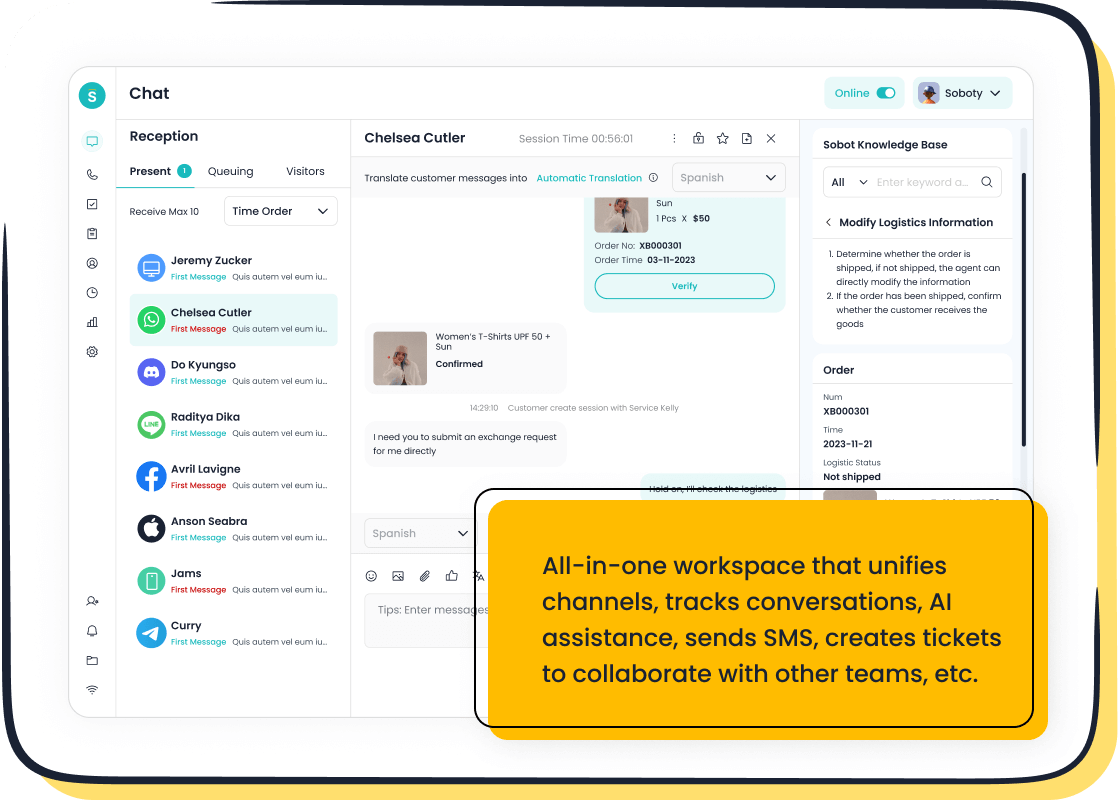
A strong policy backed by Sobot AI and Sobot call center helps you keep every customer happy and coming back.
What Is Customer Satisfaction?
Definition
When you think about customer satisfaction, you probably picture a happy customer leaving your store or giving your service a thumbs up. In business, customer satisfaction means how well your product or service meets or even goes beyond what your customer expects. If you want to break it down, here’s what it really means:
- Customer satisfaction shows the degree to which your customer feels their expectations have been met or exceeded.
- This is a key way to see if you are delivering real value to your customer.
- It is measured by how well your product or service matches what your customer hoped for.
- You can measure it through surveys, feedback forms, and by looking at how your customer interacts with your business.
You might use different tools to measure customer satisfaction. Here are some common ones:
| Metric | Description | Industry Applications |
|---|---|---|
| Customer Satisfaction Score | Measures satisfaction regarding specific interactions, products, or services. | Logistics: Gauge satisfaction with shipping times. Education: Measure satisfaction with programs. Healthcare: Assess patient interactions. |
| Customer Effort Score | Measures how easy it is for customers to interact with a business. | Accounting: Simplify document collection. Financial Services: Improve digital banking interfaces. Logistics: Enhance shipment tracking. |
| Churn Rate | Represents the percentage of customers who stop doing business. | Accounting: Monitor client dissatisfaction. Financial Services: Identify churn causes and implement strategies. |
Why It Matters
Customer satisfaction is not just a nice thing to have. It is the heart of your business. When your customer feels satisfied, they come back, tell their friends, and help your business grow. Studies show that 73% of people say their experience is a big part of their buying decision. If you improve how your customer feels, you can see a 25% jump in profits with just a 5% increase in customer retention.
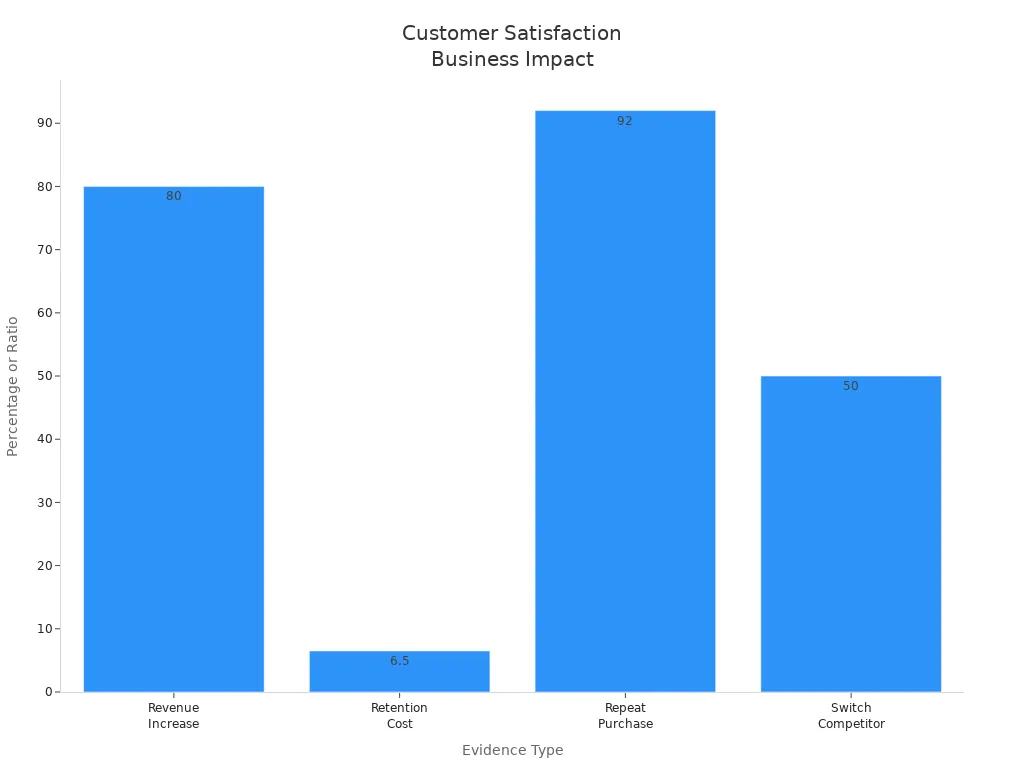
Take a look at this chart to see how customer satisfaction affects your business:
Here are some facts you should know:
- A positive customer experience leads to repeat business. Most customers will buy again if they feel satisfied.
- Keeping your customer happy costs less than finding a new one. It is 6-7 times more expensive to get a new customer than to keep an existing one.
- If your customer has a bad experience, over half will switch to a competitor after just one mistake.
As Don Peppers said, Customers are the link between the profit you make today and the profit you are likely to make tomorrow. The customer relationship directly connects today's profits and costs to your company's overall shareholder value.
When you focus on customer satisfaction, you build loyalty, boost profits, and set your business up for long-term success.
Customer Satisfaction Policy Example
Key Elements
When you build a customer satisfaction policy example, you want to make sure it covers all the bases. A strong policy helps your team deliver great service every time a customer reaches out. Here are the key elements you should include:
-
A Company-Wide Mission
Start with a clear mission that puts the customer first. This mission guides every decision and action. -
A Recruitment Process to Hire the Right People
Bring in team members who care about customer happiness. The right people make a big difference. -
A Commitment to Ongoing Training
Keep your team sharp. Regular training helps everyone stay up to date on best practices and new tools. -
A Customer Service Policy
Set clear rules for how your team should treat every customer. This keeps service consistent. -
A Focus on Empowering Your Team
Give your team the power to solve problems quickly. Empowered employees can turn a bad experience into a good one. -
An Effective Feedback Loop
Make it easy for customers to share feedback. Use their ideas to improve your service.
You can see these elements in action at top companies. For example:
- Disney creates magical moments with personalized technology and friendly staff.
- Starbucks uses its loyalty program and app to make every customer feel special.
- Amazon makes shopping easy with fast returns and smart recommendations.
- Apple offers personal help at the Genius Bar, making customers feel valued.
- Zappos surprises customers with thoughtful gestures and quick solutions.
These brands show that a great customer satisfaction policy example leads to loyal customers and strong business growth.
Sobot’s Approach
“Our ‘AI-First’ strategy doesn't just automate processes; it aims to provide intelligent but more human-like services.”
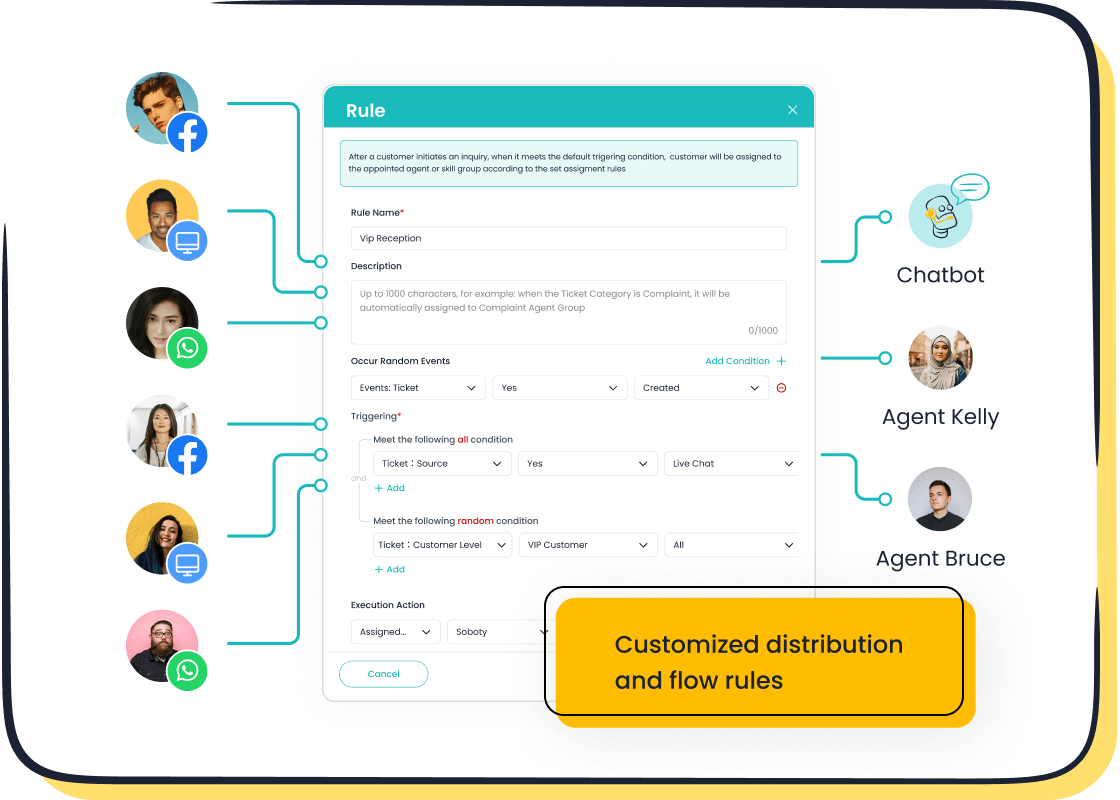
When you use Sobot, you get more than just a basic customer satisfaction policy example. Sobot’s approach stands out because it puts the customer at the center of every interaction. You can connect with your customers across all channels—web, app, social media, and more—using Sobot’s omnichannel AI. This means your customer never feels lost or ignored.
Sobot also offers scenario-based AI. You can tailor your customer satisfaction policy example to fit your industry, whether you work in retail, finance, or gaming. Sobot’s multi-faceted AI supports your customers, your agents, and your managers. Everyone gets the help they need.
With Sobot, you can collect feedback, track every customer conversation, and use built-in analytics to spot trends. This helps you improve your customer satisfaction policy example over time. Sobot’s tools, like live chat and AI-powered chatbots, make it easy for your team to respond quickly and personally. You can see how Samsung used Sobot to reach a 97% customer satisfaction rate by unifying all their channels and empowering their agents.
If you want a customer satisfaction policy example that really works, Sobot gives you the tools and support to make it happen.
How to Build a Policy
Building a customer satisfaction policy can feel overwhelming, but you can break it down into simple steps. When you follow a clear process, you make sure your customer service policies work for your business and your customers. Let’s walk through each step together.
Set Your Vision
Start with a vision. This vision acts like a guiding star for your team. When you set a clear vision, you help everyone understand what great service looks like. You want your vision to be simple, specific, and tied to a real business goal. For example, you might say, “We want every customer to feel valued and supported at every touchpoint.”
A well-defined customer service vision acts as a guiding star for your organization, ensuring that every team member has a shared understanding of what excellent service looks like. This vision becomes the foundation of your entire customer service strategy, aligning your customer service goals with broader business objectives and driving tangible results.
You can make your vision even stronger by connecting it to your customer satisfaction strategy. Set a goal like increasing retention or boosting your Net Promoter Score. When you do this, you give your team a reason to care about every customer interaction.
Here’s a quick way to set your vision:
- Write a vision statement that explains your customer satisfaction strategy.
- Make it specific—avoid vague words.
- Connect your vision to a real outcome, like higher retention or better reviews.
When you use Sobot, you can share your vision across all channels. Sobot’s omnichannel tools help your team stay focused on your customer satisfaction goals, no matter where your customers reach out.
Define Service Goals
Once you have your vision, you need clear goals. These goals help you measure success and keep your team on track. Leading companies use the SMART method—make your goals Specific, Measurable, Attainable, Relevant, and Time-bound.
Here are some examples of customer satisfaction goals you might set:
- Raise your Net Promoter Score by 5 points.
- Increase positive social media mentions by 25%.
- Boost customer email newsletter open rates by 5%.
When you set these goals, you make your customer satisfaction strategy real. You can track progress and celebrate wins. Sobot’s Live Chat gives you built-in analytics, so you can see how your team is doing in real time. You can spot trends, measure retention, and adjust your customer service policies as needed.
Understand Customer Needs
You can’t build a strong policy without knowing what your customers want. Start by listening. Use surveys, feedback forms, and direct conversations to gather insights. You can also create buyer personas to help your team picture your ideal customer.
Here are some ways to understand customer needs:
- Collect feedback directly from customers.
- Analyze customer data to spot patterns.
- Build buyer personas to guide your customer satisfaction strategy.
Sobot makes this easy. With Sobot Live Chat, you can collect feedback right after a conversation. You can also use analytics to see what customers ask about most. This helps you adjust your customer service policies to fit real needs.
Draft Guidelines
Now it’s time to write your customer service policies. These guidelines tell your team how to act in different situations. You want your policies to be clear, simple, and easy to follow.
Customer service experts recommend including these points:
- Respond quickly to every customer.
- Communicate openly and honestly.
- Take responsibility for solving problems.
- Show empathy and understanding.
- Go above and beyond when possible.
- Stay available on all channels.
- Keep a positive attitude.
- Offer consistent service everywhere.
- Empower customers with helpful tools.
- Use automation to make things easier.
You can use Sobot’s omnichannel platform to make sure your team follows these guidelines. For example, Sobot Live Chat lets you set response time targets and track if your team meets them. You can also use AI-powered chatbots to handle simple questions, so your agents can focus on more complex issues.
Establish Standards
Standards help you measure if your customer service policies are working. You want to set benchmarks that match your industry and your business goals. Look at what top brands do, and compare your results to industry averages.
Here’s a simple table to help you think about standards:
| Standard Type | Example Benchmark | How to Track |
|---|---|---|
| Response Time | Reply to all chats within 2 minutes | Sobot Live Chat analytics |
| Customer Satisfaction | 90% positive feedback on surveys | Post-chat surveys |
| Retention Rate | 80% of customers return within 6 months | CRM or Sobot analytics |
| Resolution Time | Solve issues within 24 hours | Ticketing system reports |
You can use Sobot’s analytics to see how you stack up. The platform gives you access to over 150 indicators, so you can track everything from response times to retention. This helps you keep your customer satisfaction strategy on target.
Train Your Team
Your customer service policies only work if your team knows how to use them. Training is key. Use different methods to match how your team learns best. Some people like hands-on practice, while others prefer videos or online courses.
Here are some proven training methods:
- Role-playing real customer scenarios.
- Practicing de-escalation techniques.
- Using e-learning modules for flexibility.
- Leveraging AI-powered tools for instant feedback.
Sobot’s Omnichannel Solution makes training easier. You can use real-time analytics to spot gaps in knowledge. You can also create custom training paths for each team member. This helps everyone stay sharp and ready to deliver on your customer satisfaction goals.
| Insight | Description |
|---|---|
| Retention | Employees retain more information when training matches their learning style. |
| Engagement | Catering to diverse styles boosts engagement and participation. |
| Effectiveness | Training becomes more effective when it aligns with individual preferences. |
| Inclusivity | Inclusive methods ensure all employees have equal opportunities to succeed. |
Review and Improve
Your customer satisfaction policy is not a one-and-done project. You need continuous monitoring and improvement to keep up with changing customer needs. Set up regular reviews to see what’s working and what needs to change.
Best practices for review include:
- Check customer expectations often—they change with trends.
- Use feedback loops to gather ideas from customers and staff.
- Follow up after solving issues to show customers you care.
- Use standardized metrics to measure satisfaction.
- Empower your team to make quick decisions.
Sobot helps you with continuous monitoring and improvement. You can use built-in surveys to collect feedback after every interaction. The analytics dashboard shows you where you shine and where you need to improve. This keeps your customer satisfaction strategy fresh and effective.
Tip: Add feedback questions to your loyalty program. Loyal customers often give the best insights for improvement.
Step-by-Step Table for Building a Customer Satisfaction Policy
Here’s a handy table to summarize the key steps and how you can put them into action:
| Step Number | Key Step Description | How to Implement with Sobot |
|---|---|---|
| 1 | Understand Customer Expectations | Use Sobot Live Chat for direct feedback |
| 2 | Cultivate a Customer-Centric Culture | Share your vision through omnichannel tools |
| 3 | Invest in Employee Training | Offer e-learning and real-time analytics |
| 4 | Offer Quality Products or Services | Track quality with customer feedback |
| 5 | Ensure Consistent Brand Experience | Use unified messaging across all channels |
| 6 | Deliver an Omni-Channel Experience | Integrate Sobot for seamless communication |
| 7 | Personalize Experiences | Use CRM data and AI-powered chatbots |
| 8 | Practice Effective Communication | Set clear guidelines and monitor responses |
| 9 | Conduct Customer Satisfaction Surveys | Automate surveys after each interaction |
| 10 | Implement Customer Feedback | Use analytics to drive improvements |
| 11 | Engage in Proactive Customer Engagement | Plan outreach with Sobot’s campaign tools |
| 12 | Streamline Complaint Resolution | Centralize tickets in Sobot’s system |
| 13 | Design Loyalty Programs | Integrate feedback into loyalty programs |
| 14 | Make Data-Driven Decisions | Use Sobot’s analytics dashboard |
| 15 | Embrace Technological Adoption | Leverage AI chatbots and automation |
When you follow these steps, you build a customer satisfaction policy that grows with your business. You keep your customer satisfaction strategy strong, your customer service policies clear, and your retention rates high. Sobot gives you the tools to make every step easier, from collecting feedback to training your team and tracking your progress.
Remember: The best customer satisfaction strategy is one you review and improve often. Stay flexible, listen to your customers, and use technology like Sobot to keep your customer service policies ahead of the curve.
Policy Template
Template Structure
You want a customer satisfaction policy that your team can use every day. A clear template helps everyone know what to do and how to treat each customer. Here’s a table showing the main sections you should include in your policy template:
| Key Section | Description |
|---|---|
| Vision and Values | Share your goals and what matters most to your business. |
| Mission Statement | Explain what your company does for each customer. |
| Scope | Tell who the policy covers and what actions are needed. |
| Procedures | List the steps your team should follow to help every customer. |
| Expectations | Set clear rules for how employees should act with customers. |
| Guidelines | Give tips for handling complaints and making customers happy. |
| Training and Resources | Make sure your team has the tools and training to serve customers well. |
You can use this template to build your own policy. Start with a company overview, then add your customer service team’s goal. Include how you want your team to talk with customers, organize support, and measure satisfaction. Add sections for service standards, feedback collection, complaint resolution, and employee responsibilities.
Here’s a quick example of a policy template you can edit:
# Customer Satisfaction Policy Template

## Vision and Values
Describe your business goals and values.

## Mission Statement
Explain your promise to every customer.

## Scope
List who the policy applies to.

## Procedures
Step-by-step guide for helping customers.

## Expectations
What you expect from your team.

## Guidelines
Tips for handling complaints and feedback.

## Training and Resources
How you train and support your team.

## Measuring Satisfaction
How you track customer happiness.
Customization Tips
You can make your policy template fit your business. Change the language so it matches your brand. Add examples from your own customer service. If you use Sobot Live Chat, mention how your team uses it to answer questions fast and collect feedback after every chat.
Editable templates help your team work together. They give everyone a clear outline and make training easier. You can celebrate wins by sharing great customer stories. Sobot Live Chat lets you track customer satisfaction and see where you can improve.
Try adding Sobot’s omnichannel tools to your policy. You can set goals for response times, use built-in surveys, and automate complaint resolution. This makes your customer satisfaction policy stronger and helps you deliver better service every day.
Improving Customer Experience
Customer Satisfaction Strategy
If you want to deliver a great customer experience, you need a clear strategy. Start by understanding your customer through data. Look at what they like, what they need, and how they interact with your business. When you use data-driven insights, you can spot trends and fix pain points before they become problems.
A strong customer satisfaction strategy includes these steps:
- Understand your customer using data and feedback.
- Create a seamless customer experience across every channel.
- Personalize every interaction to make your customer feel special.
- Train your team so they can solve problems fast.
- Use proactive service to help your customer before they ask.
- Add AI and automation to speed up your service.
- Give your customer self-service options for quick answers.
- Build a customer-focused culture in your company.
- Track and improve your customer experience metrics.
- Respond quickly to every customer need.
You can see these strategies in action at top companies. For example, many brands collect feedback through surveys and use it to improve their service. Others use technology like AI chatbots to answer questions faster. When you empower your team, they can solve issues on the spot. This makes your customer experience smoother and more enjoyable.
| Strategy | Description |
|---|---|
| Integrating Customer Feedback | Use surveys and chats to learn what your customer wants. |
| Leveraging Technology | Use AI tools and CRM systems for faster, better service. |
| Empowering Employees | Train your team to handle issues quickly and with confidence. |

Using Sobot Live Chat
Sobot Live Chat helps you create a seamless customer experience. You can talk to your customer on their favorite channel—website, app, or social media. No matter where your customer starts, you keep the conversation going. This makes your customer feel heard and valued.
With Sobot Live Chat, you save time and money. Brands have seen up to a 30% drop in support costs and saved millions of hours by using automation and AI. When you personalize your service, your customer is 56% more likely to come back. Some companies even see a 15% jump in revenue when they use personalized recommendations (source).
Sobot Live Chat brings all your customer data into one place. Your team can see every past conversation, so your customer never has to repeat themselves. You can also use built-in surveys to measure how your customer feels after every chat. This helps you spot ways to improve the customer experience right away.
If you want to boost your customer experience, Sobot Live Chat gives you the tools to do it. You get faster response times, smarter service, and a seamless customer experience every time.
You now have a clear path to build a strong customer satisfaction policy. Here’s a quick recap:
- Align your service vision with your company’s goals.
- Identify industry standards and customer expectations.
- Audit your current efforts and set new benchmarks.
- Document your policy and keep it updated.
When you use Sobot and Live Chat, you help your team resolve 90% of queries in under 11 messages and boost customer satisfaction. Most customers want fast, friendly support, and Sobot makes that possible. Start today—define your goals, listen to feedback, and turn every customer interaction into a win. If you need help, reach out for a demo or support.
FAQ
What is the best way to collect customer feedback for my policy?
You can use surveys, live chat, or follow-up emails to gather customer feedback. Try asking customers for their thoughts right after a purchase or support chat. This helps you improve your policy and customer service experience quickly.
How often should I review my customer satisfaction policy?
You should review your policy every few months. Customer needs change fast. Regular reviews help you spot trends in customer feedback and adjust your strategy. This keeps your policy fresh and your customer retention rate high.
Why does a customer-centric policy improve customer retention rate?
A customer-centric policy shows customers you care about their needs. When you listen to customer feedback and act on it, customers feel valued. This boosts your customer retention rate and helps your business grow.
How can I measure the success of my customer satisfaction strategy?
Track your customer satisfaction score, customer feedback, and customer retention rate. Use these numbers to see if your strategy works. If customers give positive feedback and stay loyal, your policy and customer-centric initiatives succeed.
What role does customer feedback play in shaping my strategy?
Customer feedback guides your strategy. It shows what customers like or dislike. You can use this feedback to update your policy, improve the customer service experience, and create better customer-centric initiatives. Listening to customers helps you build a winning strategy.
See Also
10 Strategies to Enhance Live Chat Customer Experience
Understanding QMS Principles for Effective Call Centers
Top Practices for Quality Management in Call Centers
Navigating Quality Assurance Software for Call Centers
10 Essential Steps for Omnichannel Contact Center Implementation

