Skills required for customer service without the jargon


You need the right skills required for customer service to make every interaction count. Here are the essentials, in plain language:
- Empathy
- Active listening
- Clear communication
- Problem-solving
- Patience
- Product knowledge
- Adaptability
These skills help you boost customer satisfaction, solve problems on the first call, and improve the quality of every conversation. Top brands like Samsung use Sobot to support their teams and deliver excellent customer service across industries.
| Metric | Description | Importance |
|---|---|---|
| First Call Resolution | Resolve customer issues on the first contact | Leads to higher satisfaction scores |
| Customer Satisfaction | Reflects how happy customers feel with your service | Key for loyalty and experience |
| Customer Service QA | Checks the quality of your customer service interactions | Shows where you can improve |
Skills Required for Customer Service: Comparison
Leading Sources Overview
You can find many lists of customer service skills from experts. Most experts agree on a few key skills. These include empathy, communication, problem-solving, patience, and product knowledge. Some sources also mention collaboration, resiliency, relationship building, intuition, a proactive mindset, time management, tech proficiency, and digital literacy. These skills help you handle different customer needs and situations.
Here is a simple list of the most common skills required for customer service, based on leading sources:
- Empathy
- Communication
- Problem-solving
- Patience
- Product knowledge
- Collaboration
- Resiliency
- Relationship building
- Intuition
- Proactive mindset
- Time management
- Tech proficiency
- Digital literacy
Comparison Method
To compare these skills, you can look at how often they appear in expert lists. The more often a skill appears, the more important it is for customer service. For example, empathy and communication show up in almost every list. Skills like tech proficiency and digital literacy are becoming more important as customer service moves online.
| Skill | Common in Expert Lists | Why It Matters for Customer Service |
|---|---|---|
| Empathy | Yes | Helps you understand customer feelings |
| Communication | Yes | Makes information clear for customers |
| Problem-solving | Yes | Lets you fix issues quickly |
| Patience | Yes | Keeps conversations calm and positive |
| Product knowledge | Yes | Builds trust with customers |
| Tech proficiency | Sometimes | Supports digital customer service |
| Time management | Sometimes | Handles many requests efficiently |
Sobot’s Approach to Skill Integration
Sobot helps you use these skills in real customer service situations. The Sobot Voice/Call Center gives you tools to listen, respond, and solve problems fast. You can use the unified workspace to see all customer information in one place. This helps you show empathy and communicate clearly. The AI-powered Voicebot answers simple questions, so you can focus on complex issues that need problem-solving and patience.
Samsung used Sobot’s all-in-one contact center to improve customer service. Their agents could see all customer data and answer questions without switching systems. This made it easier to use the skills required for customer service, like empathy and clear communication. Samsung’s customer satisfaction rate reached 97%, and agent efficiency increased by 30%. You can read more about their story on Sobot’s website.
Sobot’s platform supports you in building the skills required for customer service. You get the right tools to handle calls, chats, and tickets, making your work easier and your customers happier.
Common Customer Service Skills

Empathy and Active Listening
Empathy means you understand and care about how customers feel. When you show empathy, you make customers feel valued and heard. This is one of the main skills that sets great customer service apart. For example, if a customer calls upset about a late delivery, you can say, “I understand how frustrating this must be for you. Let’s see how I can help.” This simple statement can calm the situation and build trust.
Active listening is another main skill. It means you pay close attention to what the customer says. You do not interrupt. You use phrases like “I see” or “That makes sense” to show you are listening. You can also repeat what the customer says to make sure you understand. For example, “So you received the wrong item, and you want to exchange it. Is that right?” This helps avoid confusion and shows you care.
Empathy significantly enhances customer satisfaction by acknowledging and validating customer emotions, leading to a more positive experience. When customers feel understood, their anxiety can be alleviated, resulting in immediate satisfaction and trust in the brand. Empathetic service creates emotional ties that encourage customer loyalty, even in challenging situations.
Some ways to practice active listening in customer service include:
- Avoid distractions and focus fully on the customer.
- Never interrupt while the customer is speaking.
- Use positive language to reduce stress.
- Ask questions to clarify the issue.
- Listen for emotions, not just facts.
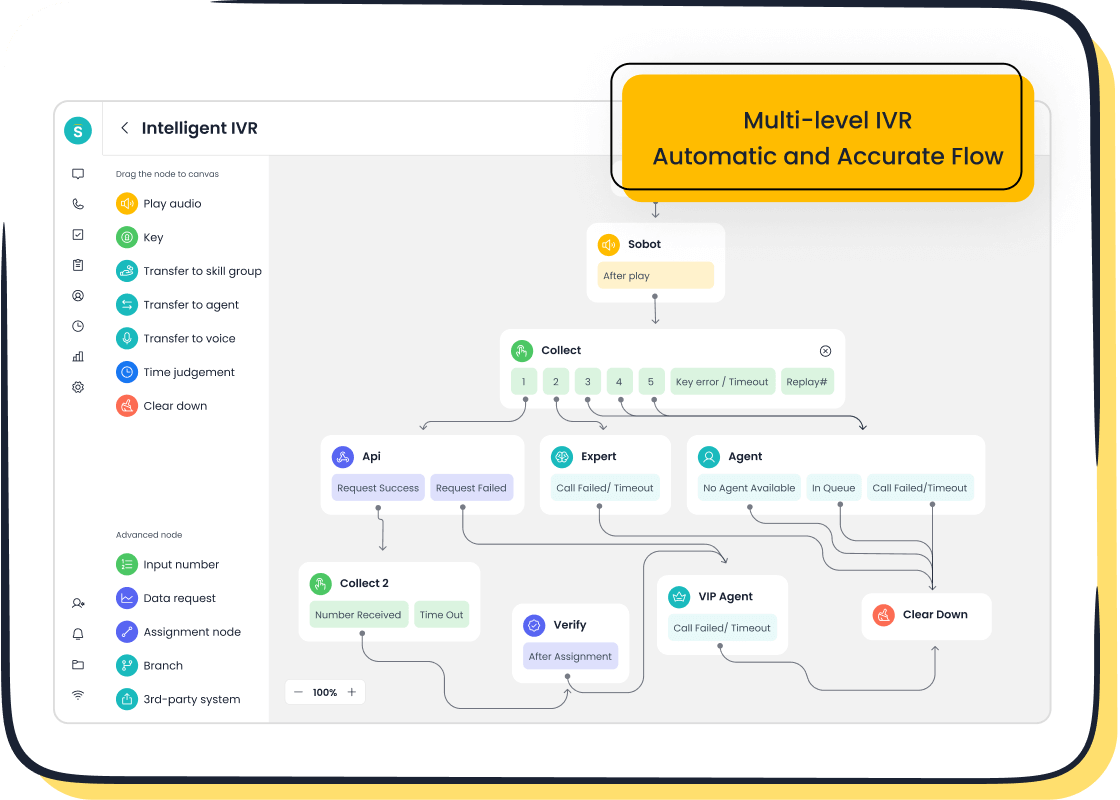
Sobot’s Voice/Call Center helps you develop these skills. The unified workspace lets you see all customer information at once, so you can respond with empathy and accuracy. The AI-powered Voicebot handles simple questions, giving you more time to listen and solve complex problems. This approach helps you meet the skill requirements for excellent customer service.
Clear Communication
Clear communication is one of the most important main skills in customer service. You need to explain things in a way that customers can easily understand. This means using simple words, speaking slowly, and checking that the customer understands. For example, if a customer asks about a refund, you can say, “I will process your refund today. You should see the money in your account within three business days.”
Clear communication reduces misunderstandings. Studies show that chat conversations have almost zero “Don’t understand you” moments, while phone calls have more confusion. When you use chat, you can take your time to write clear answers. You can also use templates and guides to help you explain things better.
Some barriers to clear communication include:
- Language differences and cultural misunderstandings.
- Stress or anxiety, which can make it hard to listen or speak clearly.
- Poor systems that make it hard to find the right information.
You can overcome these barriers by:
- Training in language skills and cultural awareness.
- Creating a supportive environment for agents and customers.
- Using tools that organize information and make it easy to share.
Sobot’s Omnichannel Solution supports clear communication by bringing all messages, chats, and calls into one place. You can see the full history of each customer, so you do not have to ask the same questions again. This helps you answer quickly and clearly, improving the customer service experience.
Problem-Solving and Patience
Problem-solving is a main skill that helps you fix customer issues quickly. You need to listen to the problem, think of solutions, and act fast. For example, if a customer cannot log in, you check their account, reset the password, and guide them step by step. This makes the customer service experience smooth and stress-free.
Patience is just as important. Sometimes customers are upset or confused. You need to stay calm, listen, and give them time to explain. This helps you avoid mistakes and find the best solution.
Patience allows customer service representatives to remain calm, listen actively, and respond thoughtfully, which can lead to better outcomes in challenging situations.
Here is how effective problem-solving improves customer service:
| Benefit | Explanation |
|---|---|
| Reduces customer effort | Resolving issues on the first contact minimizes customer effort, leading to increased satisfaction and loyalty. |
| Improves employee satisfaction | Agents feel more accomplished when they resolve issues quickly, boosting their morale and job satisfaction. |
| Cuts down contact center costs | Fewer interactions are needed to resolve issues, reducing operational costs and additional staffing needs. |
| Increases customer retention | High FCR rates lead to stronger customer loyalty and improved long-term retention. |
| Enhances overall efficiency | Agents can handle more inquiries in less time, increasing productivity. |
| Boosts company reputation | Consistently resolving issues on the first contact improves the company’s reputation for delivering excellent customer service. |
Sobot’s Voice/Call Center gives you tools to solve problems fast. You can access customer data, call recordings, and previous tickets in one place. The system routes calls to the right agent, so customers get help from someone who knows how to fix their issue. This improves first contact resolution and makes the customer service experience better for everyone.
Product Knowledge and Adaptability
Product knowledge is a main skill that helps you answer questions and solve problems. When you know your products well, you can explain features, fix issues, and give good advice. For example, if a customer asks how to use a new feature, you can guide them step by step. Research shows that 89% of consumers are more likely to buy again after a positive customer service experience. This shows how important product knowledge is for building trust and loyalty.
Adaptability means you can handle changes and new situations. Customer needs change all the time. You might get new products, new rules, or new types of questions. You need to learn quickly and adjust your approach. For example, if your company launches a new app, you learn how it works so you can help customers right away.
Some ways to stay adaptable include:
- Build a Voice of the Customer Program to collect feedback.
- Take a proactive approach to solving problems before they grow.
- Train regularly to keep up with new products and tools.
- Use technology that helps you work faster and smarter.
Sobot’s Omnichannel Solution helps you stay adaptable. You can manage chats, calls, and emails from one dashboard. The system updates in real time, so you always have the latest information. You can also use AI-powered chatbots to handle routine questions, giving you more time to learn and adapt to new challenges.
The Main Skills in Action
The main skills required for customer service—empathy, active listening, clear communication, problem-solving, patience, product knowledge, and adaptability—work together to create a great customer service experience. Sobot’s solutions help you develop and use these skills every day. You get the tools you need to listen, solve problems, and build strong relationships with customers.
When you focus on these skill requirements, you improve first contact resolution, boost customer satisfaction, and build loyalty. Customer feedback shows that companies using Sobot, like Samsung, see higher satisfaction rates and more efficient teams. These results prove that mastering the main skills leads to better outcomes for both customers and businesses.
Skill Meanings in Plain Language
Everyday Definitions
You need to understand what each customer service skill means in your daily work. Here are simple definitions you can use:
- Empathy means you care about how customers feel.
- Active listening means you pay close attention to what customers say.
- Clear communication means you explain things in a way customers understand.
- Problem-solving means you find answers to customer problems.
- Patience means you stay calm, even when customers feel upset.
- Product knowledge means you know your company’s products well.
- Adaptability means you can handle changes and new situations.
When you use plain language, you make customer service training easier. You help everyone understand what to do. You do not assume people know technical terms. You organize information so agents can learn quickly and avoid confusion.
Real-World Examples
You see customer service skills in action every day. Here are some common situations:
| Scenario | Description | Skills in action |
|---|---|---|
| Shipping delay | A customer asks about a late order. You check the status and give a new delivery date. | empathy, communication, time management, problem-solving |
| Billing confusion | A customer calls about a charge. You listen, explain the charge, and offer a summary. | de-escalation, product knowledge, communication |
| Self-service to assisted support | A customer cannot follow online steps. You adapt the instructions and update the help article. | adaptability, attention to detail, professionalism |
| Online chat across time zones | A customer messages at night. You confirm the time and use clear words to set an appointment. | cultural sensitivity, written communication, active listening |
Sobot’s Voice/Call Center helps you handle these customer service moments. You get all customer information in one place. You can listen, respond, and solve problems without switching screens.
Impact on Customer Experience
When you use customer service skills well, you improve the customer experience. Here is how:
- You solve problems faster and make customers happy.
- You build trust by personalizing each conversation.
- You help customers feel comfortable, even if they speak another language.
- You use technology to give the same quality service every time.
- You collect feedback and make your service better.
- You answer questions quickly, which customers love.
- You offer support on the phone, chat, or email, so customers choose what works best.
Sobot’s Voice/Call Center gives you the tools to practice these customer service skills. You can handle calls, track issues, and use AI to answer simple questions. This helps you focus on what matters most—making every customer feel valued.
Unique Skills and Sobot’s Value

Less Common Skills
You often hear about empathy and communication in customer service. However, some skills appear less often in expert lists but still make a big difference. These include friendliness, intuition, and a proactive mindset. You might not see these skills in every customer service training, but they help you stand out and deliver excellent customer service.
- Friendliness creates a welcoming atmosphere. Customers feel comfortable and trust you more.
- Intuition helps you sense what a customer needs, even if they do not say it directly.
- A proactive mindset means you solve problems before they grow. You reach out to customers with solutions, not just answers.
These less common skills help you provide good customer service that feels personal and genuine. They also build loyalty and keep customers coming back.
Why They Matter
You need more than the basics to deliver excellent customer service. Less common skills set you apart in a crowded market. When you use friendliness, you make every customer feel special. Intuition lets you spot issues early and fix them fast. A proactive mindset shows customers you care about their experience, not just their questions.
Empathy helps you understand customer emotions and needs, leading to a more personalized service experience. Friendliness creates a welcoming atmosphere, enhancing customer trust and engagement. Both skills contribute to customer satisfaction and loyalty, differentiating service quality in a competitive market.
Good customer service is not just about solving problems. It is about making every interaction positive. These unique skills help you do that.
Sobot’s Omnichannel Solution in Practice
Sobot’s Omnichannel Solution helps you use these unique skills every day. You see all customer conversations in one place. This makes it easy to spot patterns and act quickly. You can personalize your service and build strong relationships.
| Feature | How It Helps You Deliver Excellent Customer Service |
|---|---|
| Centralized channels and conversations | Improves team coordination and service quality |
| Data-driven personalized services | Lets you create targeted, meaningful interactions |
| Automated workflows | Frees you to focus on complex customer support and skill-building |
Agilent Technologies used Sobot’s Omnichannel Solution to manage more support requests. They brought all messages into one interface and used an AI chatbot for routine questions. This let their team focus on good customer service and develop new skills. Automation improved efficiency and gave agents more time for training.
You can use Sobot’s tools to practice less common skills, deliver excellent customer service, and make every customer support moment count.
You need key customer service skills to achieve success. These include patience, empathy, active listening, clear communication, and ownership. When you focus on these abilities, you build trust and improve customer satisfaction. Sobot’s solutions help you practice these skills every day, making feedback easier to collect and act on. Strong customer service leads to higher satisfaction, more feedback, and lasting success. Remember, clear communication and empathy drive customer satisfaction and positive feedback.
FAQ
What skills help you improve customer experience in customer service?
You use empathy, active listening, clear communication, and problem-solving. These skills help you understand customers, solve issues, and build trust. Sobot’s Voice/Call Center gives you tools to practice these skills and create a positive customer experience for every customer.
How does Sobot support agents in delivering excellent customer experience?
You get a unified workspace with Sobot. This lets you see all customer information and respond quickly. The AI-powered Voicebot handles simple questions. You focus on complex issues and improve customer experience by solving problems faster and making customers feel valued.
Why is clear communication important for customer experience?
You make information easy to understand for customers. Clear communication reduces confusion and helps customers feel confident. Sobot’s Omnichannel Solution brings all messages together. You answer questions quickly and improve customer experience across every channel.
How can you build customer retention and loyalty with Sobot?
You use Sobot’s tools to personalize every customer interaction. You listen, solve problems, and follow up. This builds trust and encourages customer retention. Customers feel valued and return for more support, which increases customer loyalty and strengthens your business.
What makes Sobot’s solutions unique for customer support?
You manage calls, chats, and tickets in one place. Sobot’s platform uses AI to automate routine tasks. You spend more time helping customers and improving customer experience. The system updates in real time, so you always have the latest information to support customers.
See Also
Transforming Customer Support With AI-Powered Agents
Essential QMS Principles for Effective Call Centers
Excelling in Live Chat for Retail Success

