Top 10 Skills for Inbound and Outbound Success


To thrive as a call center agent, you need the right toolkit. Your ultimate set of essential skills includes: Active Listening, Empathy, Clear Communication, Adaptability, Product Knowledge, Problem-Solving, Resilience, Persuasion, Time Management, and Tech-Savviness. Mastering these key call center agent skills is your path to delivering the best customer experience, whether you're handling inbound or outbound calls. After all, 88% of customers say good service makes them more likely to purchase again. You can learn and improve these essential call center skills. With practice and powerful tools like the Sobot call center platform, enhanced by Sobot AI, you can exceed your goals. Sobot understands the crucial difference between inbound and outbound calls, equipping agents with the features needed for both.
Skill 1: Active Listening
Defining Active Listening
Active listening is more than just hearing what a customer says. It means you fully concentrate on their words, understand their context, and recognize their emotional state. This skill requires you to pay close attention to tone and intent. A strong listening ability is one of the most critical skills for any call center agent. It forms the foundation for all other customer interactions.
The Role of Listening in Customer Calls
Effective listening is essential for both inbound and outbound calls. For an inbound call, you use listening to grasp the customer's problem quickly and accurately. For an outbound call, it helps you gauge a prospect's interest and tailor your pitch. Research shows that when a customer feels heard, their satisfaction increases. This positive experience makes the customer feel valued and builds trust. Good listening skills help agents understand customer needs precisely, leading to better collaboration and innovative solutions.
Actionable Tips to Develop This Skill
You can sharpen your active listening skills with practice. Improving these skills will make you a more effective agent. Here are some common mistakes to avoid:
Mistake 1: Interrupting the customer. Always let the customer finish speaking. This shows respect and ensures you get all the necessary information.
Mistake 2: Making assumptions. Listen with an open mind. Avoid jumping to conclusions about the customer's issue or needs.
Mistake 3: Getting distracted. Give the customer your full attention. Multitasking can make a customer feel unimportant and cause you to miss key details.
By focusing on what the customer is truly saying, you build rapport and solve problems more efficiently. These listening skills are vital for success.
Skill 2: Empathy and Emotional Intelligence
Defining Empathy in Customer Service
Empathy is the ability to understand and share the feelings of another person. In customer service, this means you connect with a customer on an emotional level. You see the situation from their perspective. This skill goes beyond just solving a problem. It involves acknowledging the customer's frustration, excitement, or concern. Developing customer empathy is one of the most powerful skills a call center agent can have. It transforms a simple transaction into a positive human interaction.
Importance for Building Rapport
Empathy builds trust and rapport with every customer. When you show a customer you genuinely care, they feel valued and respected. This positive feeling is crucial for providing quality customer service. Empathetic agents can significantly improve First Call Resolution (FCR) rates. Resolving an issue in a single call boosts efficiency and shows the customer you are competent. Even if you cannot solve the problem on the first try, an empathetic approach leaves the customer more satisfied. Simple actions, like repeating the problem back to the customer, show you understand their issue. This builds a strong foundation for customer loyalty and a better overall service experience.
Actionable Tips to Develop Empathy
You can strengthen your empathy skills with conscious effort. These skills will help you connect better with each customer.
Practice Perspective-Taking: Before responding, take a moment to imagine yourself in the customer's situation. How would you feel? What would you need?
Use Empathetic Phrases: Use statements like, "I can understand why you're frustrated," or "That sounds very difficult." These phrases validate the customer's feelings.
Go Above and Beyond: Look for opportunities to show you care. For example, the company Chewy is known for its empathy. They once sent flowers to a grieving customer who lost their pet after trying to return unused food. This small act showed deep care beyond the business transaction.
Developing these skills helps you provide exceptional customer service and makes your role more rewarding.
Skill 3: Clear and Effective Communication

Defining Clear Communication
Clear communication means you convey information simply and directly. Your customer should understand you without any confusion. This is one of the most vital skills you can develop. Barriers to effective communication often arise from using technical jargon or complex terms the customer does not know. Even differences in accents or cultural norms can create misunderstandings. Strong customer communication ensures your message is received exactly as you intend.
The Difference Between Inbound and Outbound Calls
Understanding the difference between inbound and outbound calls is key to your success. Your communication approach must adapt.
- Inbound Calls: A customer calls you for help. Your goal is to understand their problem and provide a solution. Clear communication here means being direct and easy to follow.
- Outbound Calls: You call a customer or prospect. Your goal is often to sell, follow up, or gather information. Your communication needs to be persuasive and engaging.
The difference between inbound and outbound calls requires agents to have flexible communication skills. For example, an inbound customer might have an urgent issue, while an outbound prospect may not be expecting your call. Recognizing the difference between inbound and outbound calls helps you adjust your tone and strategy. This is a major difference between inbound and outbound calls that all agents must master. The fundamental difference between inbound and outbound calls shapes the entire interaction.
Actionable Tips for Better Communication
You can improve your communication skills with practice. These tips will help you become a more effective call center agent.
Speak with Confidence and Clarity Project confidence by speaking slowly and clearly. Avoid rushing your words. A calm, steady pace makes you sound experienced and trustworthy to the customer.
Use a Flexible Script A script is a great guide, but it should not sound robotic. Use it as a framework. This allows you to have a natural conversation. Practice your responses so they feel authentic.
Match the Customer's Tone Pay attention to the customer's speaking pace and energy. Matching their tone helps build rapport and shows you are listening. If they are speaking slowly, you should slow down too.
Skill 4: Adaptability and Flexibility
Defining Adaptability
Adaptability is your ability to adjust your approach quickly. In a call center, no two calls are the same. You might face a new customer personality, an unexpected technical issue, or a sudden change in company policy. These skills allow you to handle any situation with confidence. A flexible call center agent can pivot their communication style or problem-solving strategy on the spot. This makes you a valuable asset to any team.
Why Adaptability is One of the Essential Call Center Skills
Adaptability is one of the most essential call center skills because every customer interaction is unique. Your ability to be flexible directly impacts customer satisfaction and resolution times. Agents must be prepared for anything. For example, you might need to handle various challenging scenarios that require different skills.
- The Angry Customer: You may speak with a customer who is upset about a delayed product. You need to adapt by showing empathy and finding a solution quickly.
- The Unclear Request: A customer might be frustrated with confusing support documents. You can adapt by offering to walk them through the steps together.
- The Billing Discrepancy: You might get a call about a bill that is higher than expected. Your flexibility allows you to review the statement and resolve the issue promptly.
In every call center scenario, your ability to adapt helps you navigate the conversation effectively. This is one of the most important call center skills for success.
Actionable Tips to Become More Flexible
You can train yourself to become more adaptable. Improving these skills will help you manage stress and perform better in your call center role.
Embrace a Growth Mindset View every challenging call as a learning opportunity. Instead of getting frustrated by the unexpected, ask yourself what you can learn from the experience. This mindset helps you stay positive and open to new approaches.
Practice Role-Playing Ask a colleague or manager to role-play different customer scenarios with you. Practice handling angry, confused, or happy customers. This prepares you for real-life situations and builds your confidence.
Stay Updated Keep up with changes in products, services, and company policies. The more you know, the better equipped you are to handle unexpected questions. Knowledge gives you the power to adapt.
Skill 5: Product and Service Knowledge
Defining Product Expertise
Product expertise means you have a deep understanding of your company's products and services. This is one of the most important skills you can develop. It goes beyond just memorizing features. You need to know how the service works in real-world situations. A customer will trust you more when you can explain how a product solves their specific problem. This knowledge allows you to provide accurate and helpful customer service.
Importance for Agent Confidence
Strong product knowledge directly boosts your confidence. When you are well-trained, you gain the assurance needed to handle any customer inquiry. This confidence helps you manage complex situations without hesitation. Studies on training show that confident agents perform better and feel more satisfied in their roles. Your assurance makes the customer feel they are in capable hands. This confidence improves your performance and encourages clearer communication, making you a more effective call center agent. Great agents use their knowledge to provide an excellent service experience for every customer.
Actionable Tips to Build Knowledge
You can build your product knowledge skills with consistent effort. Stronger knowledge will make you a more valuable resource for any customer.
Use Your Knowledge Base 📚 Your company’s knowledge base is your best friend. Regularly review product guides, FAQs, and training materials. Make it a habit to look up information you are unsure about.
Learn from Every Call 🎧 Each customer interaction is a learning opportunity. Pay attention to the questions customers ask most often. These questions highlight what is most important or confusing to them.
Participate in Training 🧑🏫 Take every chance to join product training sessions. Ask questions and engage with the material. These sessions are designed to build the skills you need to succeed.
Skill 6: Problem-Solving and Critical Thinking
Defining Problem-Solving
Problem-solving is the process you use to identify a customer issue, analyze it, and find the best solution. It involves thinking critically to understand the root cause of a problem, not just its symptoms. Your problem-solving abilities allow you to handle unexpected challenges with confidence. These skills are about more than following a script. They empower you to think on your feet and deliver real solutions that help the customer. Developing strong problem-solving skills is crucial for any call center agent.
Why These are Essential Skills for Agents
Problem-solving and critical thinking are essential call center skills because they directly impact efficiency and customer satisfaction. Agents with strong problem-solving abilities can resolve issues faster, reducing handle times and improving the customer experience. When you combine these skills with powerful tools, the results are even more impressive.

For example, Weee!, America's largest online Asian supermarket, enhanced its agents' problem-solving abilities by implementing Sobot's Voice/Call Center solution. This helped them overcome challenges like language barriers and inflexible systems. The result was a 50% reduction in resolution time and a 96% customer satisfaction score. This shows how the right technology empowers agents to use their problem-solving skills more effectively, turning a complex customer issue into a successful resolution. These are essential skills for every agent.
Actionable Tips for Better Problem-Solving
You can sharpen your problem-solving abilities with a structured approach. Improving these call center skills will make you more effective in helping each customer.
The 4-Step Method:
- Identify the Problem: Listen carefully to the customer to understand the real issue.
- Analyze the Situation: Gather all necessary information and explore potential causes.
- Generate Solutions: Brainstorm multiple ways to solve the problem.
- Implement and Confirm: Choose the best solution, apply it, and check with the customer to ensure their issue is resolved.
This simple framework for problem-solving helps you stay organized and find the best outcome for the customer.
Skill 7: Resilience and Stress Management
Defining Resilience in a Call Center
Resilience is your ability to bounce back from difficult situations. In a call center environment, you face constant pressure, from handling upset customers to meeting performance targets. These skills help you manage stress and stay positive, even after a challenging call. Resilience is not about ignoring stress. It is about developing healthy coping mechanisms that allow you to recover quickly and maintain your focus. Building these skills is essential for long-term success and well-being in a demanding call center role.
Importance for Agent Well-being
Your well-being is critical, and resilience directly supports it. The call center industry faces high rates of burnout and turnover. Without strong coping skills, agents can feel overwhelmed. This leads to exhaustion and a desire to leave the job. High stress levels impact not only your health but also your performance.
Recent data highlights the challenge agents face. Burnout is a major issue, with a significant number of agents leaving their roles.
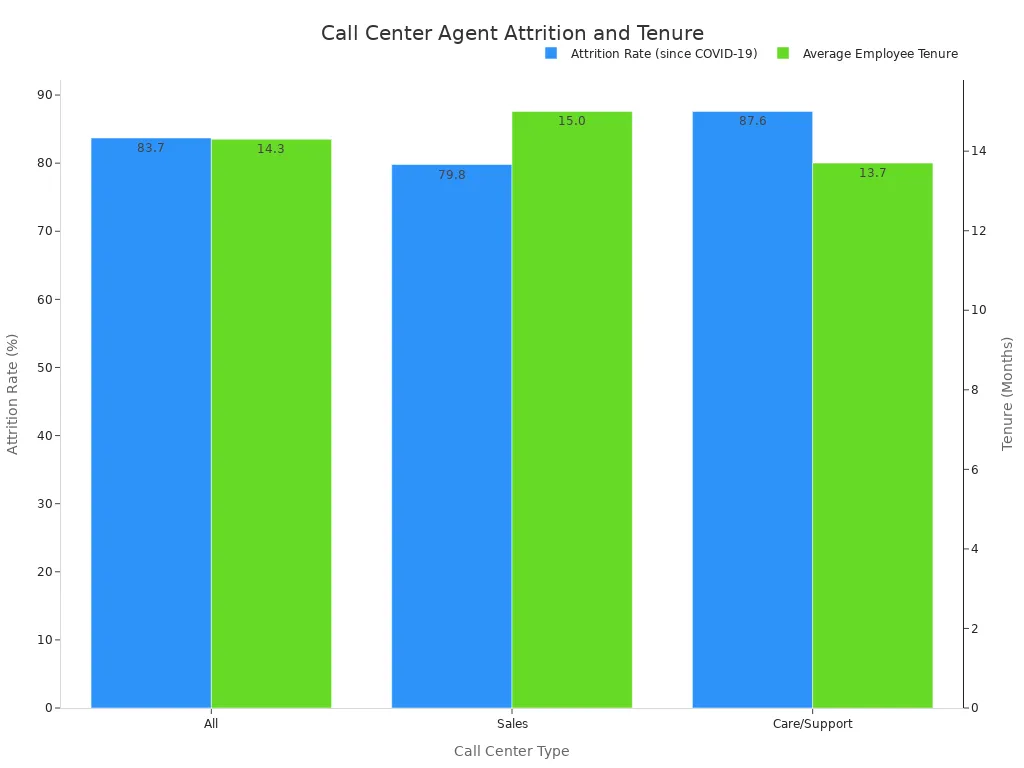
Developing resilience helps you navigate the pressures of the job. It protects your mental health and improves your job satisfaction. When you feel equipped to handle stress, you become a more effective and reliable call center agent.
Actionable Tips to Build Resilience
You can strengthen your resilience skills with intentional practice. These habits will help you manage workplace stress and thrive in your role.
Take Short Breaks 🚶 Step away from your desk for a few minutes after a tough call. A short walk or some deep breaths can help you reset your mind. This prevents stress from building up throughout the day.
Focus on What You Can Control 🧘 You cannot control a customer's mood, but you can control your response. Focus your energy on providing the best service possible. Let go of factors outside your influence.
Celebrate Small Wins 🎉 Acknowledge your accomplishments, no matter how small. Did you successfully de-escalate a tense situation? Did you receive positive feedback? Recognizing your successes builds confidence and motivation.
Skill 8: Persuasion and Negotiation
Defining Persuasion
Persuasion is the ability to guide a customer toward a mutually beneficial outcome. It is not about being pushy or tricking someone. Instead, these skills help you build a strong case for your solution. You use logic and empathy to help a customer understand why a certain action is in their best interest. For any call center agent, persuasion is about creating agreement and fostering trust. It empowers you to lead the conversation confidently and effectively.
Importance for Sales and Support
Persuasion and negotiation are vital skills for both sales and support agents.
- For Sales Agents: Your goal is to convince a potential customer that your product or service is the right choice. You negotiate terms and close deals. Strong persuasion skills directly lead to higher conversion rates.
- For Support Agents: You often need to persuade a customer to accept a proposed solution or follow troubleshooting steps. Sometimes, you negotiate a fair resolution for a service issue. These skills help you de-escalate conflicts and increase customer satisfaction.
Effective agents know how to adapt their approach for each customer, making the interaction feel helpful rather than forced.
Actionable Tips to Improve Persuasion
You can strengthen your persuasion skills with practice. A more persuasive approach helps you better serve every customer.
Focus on the Customer's Needs 🎯 Always frame your conversation around what the customer wants to achieve. Use the word "you" often to keep the focus on them. When you show how your solution directly solves their problem, they are more likely to agree. Using the customer's name also builds rapport and makes them feel valued.
Turn Objections into Opportunities 🔄 Do not view an objection as a dead end. Instead, agree with the customer's concern and then explain how your product addresses that specific point. For example, you could say, "I understand you're worried about the price, and that's a valid point. That's exactly why we offer a flexible payment plan, because we want to make it affordable." This technique turns a weakness into a strength.
Skill 9: Time Management and Organization

Defining Time Management
Time management is one of the most practical skills you can master. It is your ability to plan and control how you spend your time on specific activities. In a busy call center, this means you handle your calls and administrative tasks efficiently. Good time management skills help you stay productive without feeling overwhelmed. You learn to prioritize what matters most. This allows you to give each customer the attention they deserve while keeping up with your workload.
Importance for Meeting KPIs
Your time management skills directly affect your ability to meet Key Performance Indicators (KPIs). A call center environment is driven by metrics like Average Handle Time (AHT) and calls per hour. Effective organization helps you minimize downtime between calls and complete after-call work quickly. This improves your performance and contributes to the team's success. When agents manage their time well, the entire call center operates more smoothly. Strong organizational skills are essential for all call center agents who want to excel in their roles.
Actionable Tips for Better Organization
You can improve your organizational skills with the right strategies and tools. Better organization makes your job as a call center agent much easier.
Leverage Your Tools 🛠️ Modern call center software is designed to help agents stay organized. For outbound teams, a feature like Sobot's "Bulk Outbound Task" automation is a great example. It helps you manage your workload by automatically assigning leads. This lets you focus on high-priority calls instead of manual list management.
Prioritize Your Tasks ✅ At the start of your shift, identify your most important tasks. You might need to follow up with a customer or handle a complex ticket. Tackle these high-priority items first. This ensures critical work gets done and reduces stress later in the day.
Skill 10: Tech-Savviness and Call Center Software Proficiency
Defining Tech-Savviness
Tech-savviness is your ability to use digital tools and technology with confidence. For a call center agent, this means you can quickly learn and master the software your job requires. These skills are no longer optional in a modern call center. They are essential for providing fast and effective customer service. Your comfort with technology allows you to navigate systems smoothly. This helps you find information for a customer without delay. Developing these tech skills is a key part of your success.
Importance for Modern Call Centers
Proficiency with your tools is non-negotiable today. A modern call center relies on complex software to manage customer interactions. Your ability to use these tools well directly impacts your efficiency and the quality of service you provide. Call center agents who are tech-savvy can handle more customer inquiries and resolve issues faster.

All-in-one platforms like the Sobot Voice/Call Center simplify this for agents. Sobot provides a "Unified Workspace" that brings everything together. It integrates call management, customer data, live chat, and the ticketing system into one screen. This means you do not have to switch between multiple applications to help a customer. This integrated approach reduces confusion and helps you focus on the customer. It is one of the most important call center skills for improving your performance.
Actionable Tips to Master Your Tools
You can improve your technology skills with a little effort. Better tech skills will make you a more effective agent.
Explore Your Software 💻 Spend time clicking around your call center software during downtime. Get familiar with all its features. The more you explore, the more comfortable you will become.
Ask for Training 🙋 Do not be afraid to ask for more training. Your manager wants you to succeed. Good training helps all agents build the skills they need to support every customer.
Create a Cheat Sheet 📝 Make a personal guide with shortcuts and notes for common tasks. This helps you remember key steps and find information quickly when you are on a call with a customer.
These 10 essential call center skills create your formula for success. When you pair these skills with powerful tools, you become an unstoppable call center agent. Continuous development of your skills benefits your career. In fact, 94% of employees would stay longer at a company that invests in their development. This commitment improves customer satisfaction and strengthens the brand's reputation. Better skills lead to higher satisfaction for every customer. The best agents in any call center know that learning never stops. This improves customer satisfaction and overall job satisfaction.
Embark on Your Contact Journey 🚀
Invest in these skills and explore solutions like Sobot that empower agents to deliver outstanding customer satisfaction.
FAQ
Which skill is most important for a new agent?
Active listening is the most important starting skill. It is the foundation for all other skills. Good listening helps you understand customer needs from your very first call. Your initial training will help you build this ability.
How can I improve my skills faster?
You can improve faster with consistent practice and targeted training. Ask your manager for feedback after calls. Focus on one skill each week. This dedicated training helps you make steady progress. Good training builds confidence quickly.
Is ongoing training necessary for experienced agents?
Yes, ongoing training is crucial. Products change and customer expectations evolve. Continuous training keeps your skills sharp and up-to-date. This regular call center training ensures you always provide the best service. Effective training supports career growth.
What is the goal of call center training?
The main goal is to equip you with the skills for success. This training helps you handle calls efficiently and confidently. Good call center training improves both your performance and the customer's experience. It is a key part of your development.
See Also
Leading AI Innovations for Enhanced Enterprise Contact Center Operations
Best Call Center Analytics Software Platforms to Elevate Performance in 2024
Essential Speech Analytics Tools for Modern Call Centers This Year
A 10-Step Guide to Deploying Effective Omnichannel Contact Center Solutions
Discover the Top 10 Companies Hiring Remote Call Center Agents

